Backflow Prevention Testing and Certification Etobicoke
Backflow prevention testing and certification in Etobicoke for condos and rentals. RPZ testing, cross connection control, repairs and annual compliance.
Backflow Prevention Testing and Certification Etobicoke
Quick summary: Backflow prevention testing in Etobicoke is not just a paperwork exercise. For condominium corporations and rental buildings, it is part of cross connection control, municipal compliance and protecting the domestic water system from contamination when pressure conditions change. In Etobicoke, the work is shaped by the area’s mixed building stock, from older apartment towers west of Islington to newer condominium buildings along The Queensway and the lakeshore corridor, each with different mechanical room layouts, device ages and access issues.
Why backflow prevention shows up as a real issue in Etobicoke buildings
Etobicoke is not one type of building. A property manager dealing with a 1960s or 1970s rental tower near Kipling and Eglinton is usually managing a very different plumbing system than a board at a 1990s condominium near Humber Bay or a newer mixed-use building closer to The Queensway. That matters for backflow prevention because the age of the building usually tells you how the domestic water service was arranged, how much room was left around the incoming main, what type of valves were installed, and whether the original assembly has already been changed once.
In older Etobicoke apartment stock, mechanical rooms often have tight clearances, older gate valves upstream and downstream of the assembly, minimal floor drainage and years of layered modifications. Testing may be straightforward on paper but awkward in practice if the test cocks are hard to access or the shutoffs do not seal properly. In newer condominium towers, the backflow assembly may be more accessible, but there can be other complications: higher incoming pressure, additional irrigation or make-up water connections, retail components at grade, or mechanical rooms laid out tightly for space efficiency.
Etobicoke buildings are served within Toronto’s municipal water system, and cross connection control requirements apply to buildings where premise isolation devices have been installed. Annual certified testing is commonly required. For managers, that means the question is usually not whether testing is needed, but whether the building has a complete inventory of devices, whether they are accessible, and whether the documentation trail is in order. If your records are incomplete, it is worth pairing annual testing with a broader review of the plumbing room and valve condition, or even a valve audit and charting program so shutdowns and future service calls are less disruptive.
Fall is also the right season in Etobicoke to get this work done. Boards are preparing next year’s operating numbers, winter pressure swings can expose weak shutoff valves and marginal assemblies, and managers want compliance items closed before year-end. Buildings that leave testing until the deadline often end up paying more for after-hours access, repeat visits or emergency repairs.
How backflow prevention problems present in Etobicoke
Most Etobicoke property managers do not call saying, “our RPZ has failed.” They call because they received a notice about annual testing, because a previous report identified deficiencies that were never addressed, or because building staff noticed discharge from the relief port, corrosion around the assembly, or water on the mechanical room floor.
Other common reports include:
- repeated dripping or intermittent discharge from the relief valve
- a device that passed last year but now fails differential testing
- isolation valves that will not close fully during a test
- uncertainty about which device protects the domestic service versus irrigation, boiler feed or other systems
- missing tags, unreadable serial numbers or no prior test records
In Etobicoke’s older high-rise stock, nuisance discharge is often the symptom that finally gets attention. The assembly may have been in service for years with little more than annual paperwork, and then a combination of debris, worn elastomers and a pressure event exposes the problem. In newer buildings, the issue is sometimes not age so much as operating conditions. A domestic system that has not had recent pressure reducing valve maintenance can see pressure behaviour that contributes to wear on downstream components, including backflow assemblies.
Managers should also remember that cross connection control is broader than one annual test. If the building has undergone amenity renovations, commercial tenant changes, irrigation modifications, or added equipment in the mechanical room, the hazard profile may have changed. That is when it makes sense to have a licensed plumber review the overall arrangement and not just test the same device in isolation.
What backflow prevention testing and certification in Etobicoke should involve
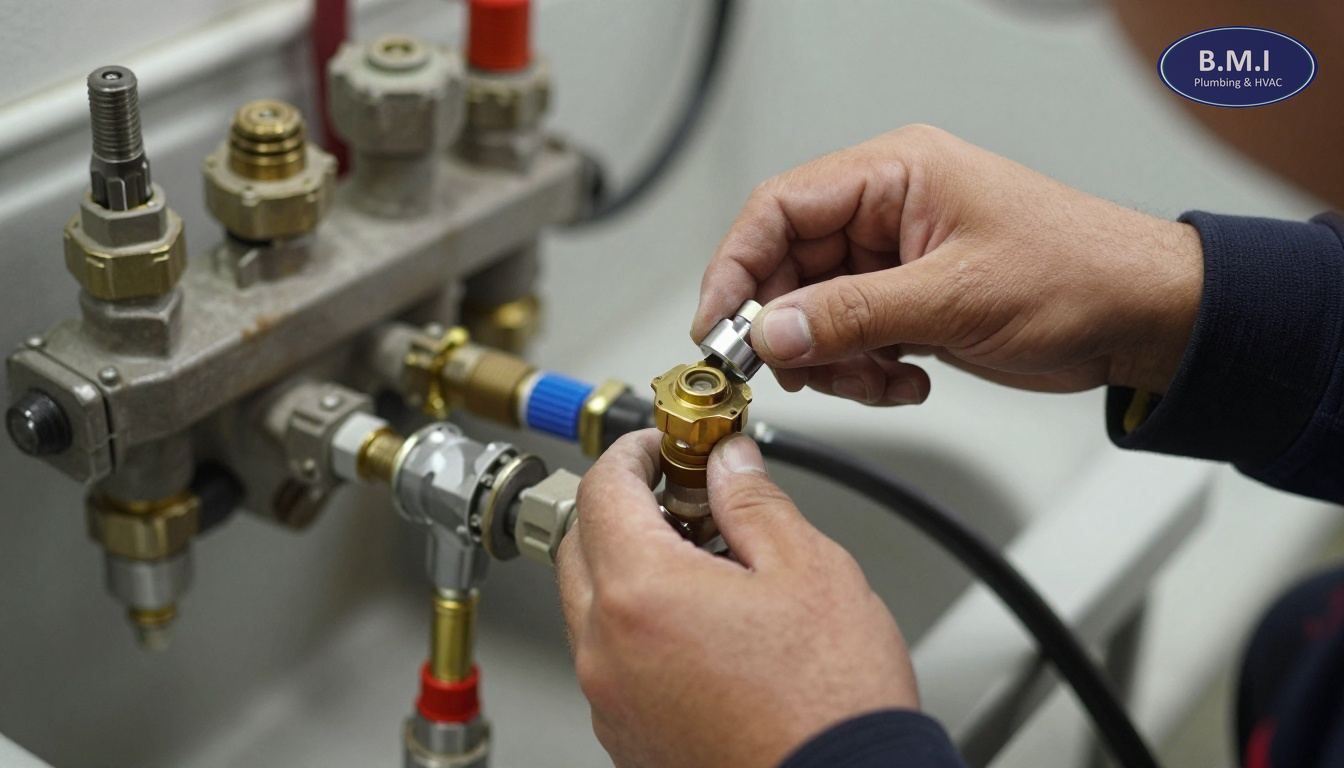
A proper backflow prevention visit in Etobicoke should produce more than a pass/fail line item. The technician should confirm the device type, location, size, manufacturer, serial number and orientation; inspect the assembly and surrounding piping; verify that the shutoff valves are operable; perform the differential pressure test with calibrated equipment; and document the result in a form suitable for municipal submission where required.
For condominium and multi-residential buildings, we recommend insisting on three things.
First, confirm exactly what is being tested. Some buildings have a main premise isolation assembly on the domestic incoming service plus separate devices on irrigation, cooling, boiler feed or service connections. If only one assembly gets tested every year because “that is the one we always do,” you may not actually have a complete compliance picture. A building review tied to backflow prevention testing and certification is often the fastest way to clean up that record.
Second, ask whether the upstream and downstream isolation valves are fit for service. Many failed certifications are not really about the internals of the RPZ alone. If the shutoff valves do not hold, the assembly cannot be properly tested or repaired in place. In that case, the backflow issue quickly becomes a valve issue, and the building may need sectional and isolation valve replacement before certification can be completed reliably.
Third, ask for evidence that supports budgeting. A useful report should note active leakage, corrosion, poor support, lack of clearance, missing drains or any condition that will make next year’s testing or future replacement more expensive. For boards in budget season, that information matters. The annual test is an operating expense; a deteriorated assembly with failing isolation valves may be a near-term capital item.
For older Etobicoke buildings in particular, access planning matters. Mechanical rooms can be crowded, and if the assembly is above other equipment or tucked behind domestic mains, the job may require a short water shutdown, debris protection, or temporary removal of nearby obstructions. If the work affects resident water service, managers should coordinate notice periods and timing carefully. A licensed plumbing contractor should also be mindful of municipal discharge requirements if the assembly needs to be drained or rebuilt.
A representative Etobicoke backflow prevention service call
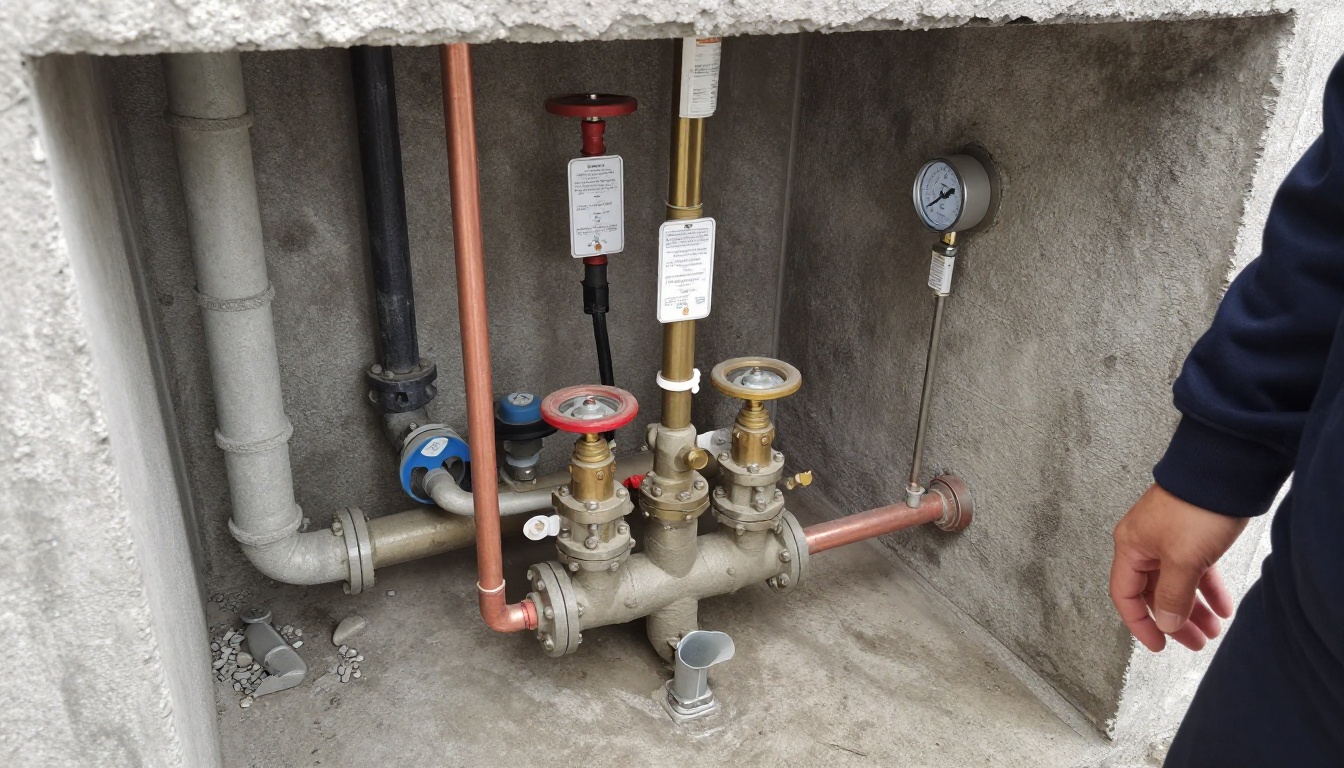
A representative project would be a 19-storey condominium from the late 1980s near The Queensway, with roughly 160 suites and a domestic water service entering a compact basement mechanical room. The corporation had received its annual reminder for testing, but the prior year’s records were incomplete and building staff had noticed occasional discharge from the relief port onto the floor near the drain.
On the first visit, the assembly was identified as an older reduced pressure zone device serving as premise isolation. The test showed one check not holding to required differential and the relief valve opening outside acceptable parameters. More importantly, one of the shutoff valves was passing enough to complicate a proper rebuild in place. The assembly itself was heavily scaled externally but still structurally sound, so immediate full replacement was not the first recommendation.
The repair plan involved a scheduled daytime shutdown with resident notice, rebuilding the internals of the RPZ, replacing the defective shutoff valve, cleaning up supports and re-testing the assembly after work was completed. The work took most of one day on site with two plumbers, plus a return visit for final paperwork and records confirmation. The rough market cost for a job like that in Etobicoke would typically land around $2,500 to $5,500 depending on device size, parts availability, valve condition and how much access preparation is required.
If the body of the assembly had been badly corroded, if replacement parts were obsolete, or if the room configuration made future testing impractical, full replacement would have been the better decision. In those cases, the total can move well above that range, especially if new valves, supports or piping modifications are needed.
Costs and timelines for Etobicoke condo backflow work
Backflow prevention costs in Etobicoke depend on four things more than anything else: device size, device type, accessibility and whether the shutoff valves are serviceable.
As a realistic GTA market estimate for condominium and apartment buildings:
- annual testing of one accessible testable assembly: often a few hundred dollars
- testing of multiple assemblies in one building during the same visit: typically more efficient per device
- minor repairs and re-test after failure: often high hundreds to low thousands
- shutoff valve replacement associated with testing failure: commonly low thousands depending on size and access
- full replacement of a larger RPZ assembly with associated valve work and shutdown coordination: often several thousand dollars and sometimes materially higher in difficult rooms
These are not quoted prices. They are planning ranges, and Etobicoke buildings vary a lot.
Timelines also vary. A straightforward annual test can often be completed in one visit, with certification paperwork following promptly. A failed device with common parts available may be repaired within days. A full replacement can take one to several weeks from decision to completion once submittals, access, resident notice and material lead times are considered.
This is one reason many managers tie compliance work into planned service rather than waiting for a deadline notice. If your building is also due for other winter-readiness items such as pressure reducing valve maintenance and replacement or a broader review under maintenance programs for condominium plumbing, bundling the work usually produces cleaner shutdown planning and better records.
Testing versus replacement in Etobicoke: how to decide
Not every failed backflow assembly in Etobicoke should be replaced, and not every older one should be rebuilt again. The right decision depends on age, parts availability, body condition, valve condition, access and the building’s tolerance for repeat service calls.
Testing and repair usually make sense when:
- the assembly body is sound
- the manufacturer still supports the model
- the failure is limited to checks, relief components or seals
- the isolation valves are in usable condition
- access for future annual testing is acceptable
Replacement usually becomes the better decision when:
- the body is badly corroded or damaged
- repair kits are obsolete or unreliable to source
- the shutoff valves are at end of life
- the assembly is installed in a way that makes safe testing and service difficult
- the building has had repeated failures and repeat call costs are adding up
For boards, this is a reserve planning question as much as a maintenance question. The Condominium Act framework and reserve fund study cycle are relevant because recurring plumbing components and service valves eventually become scheduled expenditures, not surprises. A one-year deferral may look cheaper in the operating budget, but if it causes another failure, another shutdown and another emergency visit, it is often false economy. Where the broader domestic system is also aging, managers should look at the context: a backflow replacement may be part of a larger sequence involving domestic water riser replacement or even broader building re-piping work.
What deferring backflow prevention costs an Etobicoke building
The first cost of deferral is administrative. Unresolved testing deficiencies create compliance headaches, repeated notices and extra management time. The second cost is operational. A leaking or failing assembly can damage mechanical room finishes, create slip hazards, waste staff time and complicate any future domestic water shutdown.
The larger risk is insurance and liability. Backflow prevention exists to protect potable water from reverse flow or backsiphonage conditions. If a building has known deficiencies and does not address them, that is difficult to defend after an incident. Even where no contamination event occurs, poor records and overdue corrections can create problems during insurer reviews, engineering reviews or due diligence around reserve planning.
Deferral also tends to broaden the scope. A modest repair during annual testing can turn into a larger job if the isolation valves seize, the assembly body corrodes further, or an emergency shutdown reveals that adjacent valves are not operable. In Etobicoke’s older towers, limited mechanical room access can make reactive work more expensive than scheduled work simply because crews have less time to plan protection, drainage and shutdown sequencing. If your building is already dealing with related plumbing issues such as recurring service calls, fixture complaints or ageing valves, it may make sense to combine the compliance visit with a broader repairs and service review or, if there is any uncertainty about piping condition, a camera inspection where applicable for related systems.
FAQs about backflow prevention testing in Etobicoke
How often does backflow prevention testing need to be done in Etobicoke?
For most condominium and multi-residential buildings in Etobicoke, premise isolation backflow preventers are tested annually as part of the municipal cross connection control program. The exact requirement depends on the device type and the building’s hazard classification, but annual certified testing is the normal cycle property managers should plan for. If a device fails, repairs and a re-test are typically required before the paperwork can be closed out.
What is the difference between an RPZ and other backflow preventers in an Etobicoke condo building?
An RPZ, or reduced pressure zone assembly, is a testable device used where the risk to the water supply is considered higher. Other assemblies such as double check valve assemblies may be used in lower-hazard applications, but they are still part of a formal testing and certification process when required by the building’s cross connection control program. In Etobicoke high-rise and multi-use properties, the correct device depends on the building use, connected equipment and municipal requirements.
Why do Etobicoke buildings fail backflow prevention tests?
The most common causes are fouled checks, debris on seating surfaces, relief valve issues, shutoff valves that do not hold, and poor mechanical room conditions around the assembly. In Etobicoke, buildings from different eras present different problems: older stock may have corroded valves and limited clearance, while newer towers sometimes see failures caused by pressure fluctuations, debris after water shutdowns, or neglected maintenance. A failed test does not always mean full replacement, but it does mean the device needs corrective work and a documented re-test.
Can backflow prevention testing in Etobicoke be done during one site visit?
Often yes, if the assembly is accessible, the shutoff valves operate properly and no repair parts are needed. A straightforward annual test on one or two devices can usually be completed in a single visit with certification submitted afterward. If the device fails, access is poor, or the isolation valves are seized, the work can turn into a two-step job involving repairs, replacement parts or a planned shutdown.
What should a property manager in Etobicoke ask for after RPZ testing?
Ask for the full certified test report, the make and model information, serial number, device size, location, pass/fail results and any deficiencies noted. You should also receive clear recommendations on repairs, replacement timing if the assembly is near end of life, and whether related items such as upstream strainers, drain connections or isolation valves need attention. Good documentation matters because it supports compliance, budgeting and future reserve planning.
How much does backflow prevention testing cost for an Etobicoke condominium?
As a market estimate in Etobicoke, annual testing of a single accessible testable backflow assembly often falls in the low hundreds of dollars, while multiple assemblies, difficult access, after-hours shutdowns or repair work will increase the total. Minor repairs such as check kit or relief valve work can move the cost into the higher hundreds or low thousands, and full replacement of a larger assembly can run several thousand dollars depending on size, access and whether valve work is also required. Buildings should budget for both the annual compliance visit and the possibility of corrective work after testing.
Next steps for Etobicoke property managers and boards
If your Etobicoke building has an annual testing deadline coming up, start with the records. Confirm how many testable backflow devices the property has, where they are located, when they were last tested and whether any deficiencies remain open. If that information is unclear, do not wait until the deadline month. A short site review can usually determine whether the building simply needs annual certification or whether there are bigger issues with valves, access or assembly condition.
Fall is a practical time to do it. It aligns with budget planning, helps avoid winter scheduling pressure, and gives the board real numbers if repairs or replacement are needed. For buildings where the backflow assembly is only one part of a larger plumbing picture, BMI can also help connect the dots between compliance work, shutdown planning and longer-term capital needs through project plumbing solutions for multi-residential buildings, completed project references and building examples, or a direct service request through BMI contact.
BMI serves Etobicoke and the surrounding GTA from its Toronto shop, with two decades of experience in roughly 200 condominium and multi-residential buildings. If you need annual testing, corrective repairs after a failed RPZ test, or a practical review of your building’s cross connection control setup, the next step is to book a site visit and get the device inventory and condition documented properly.
Contact BMI
- Contact BMI
- Phone: (416) 845-3756
- Emergency: (416) 845-3756, answered 24 hours a day
- Email: info@brial.ca
More on condominium plumbing
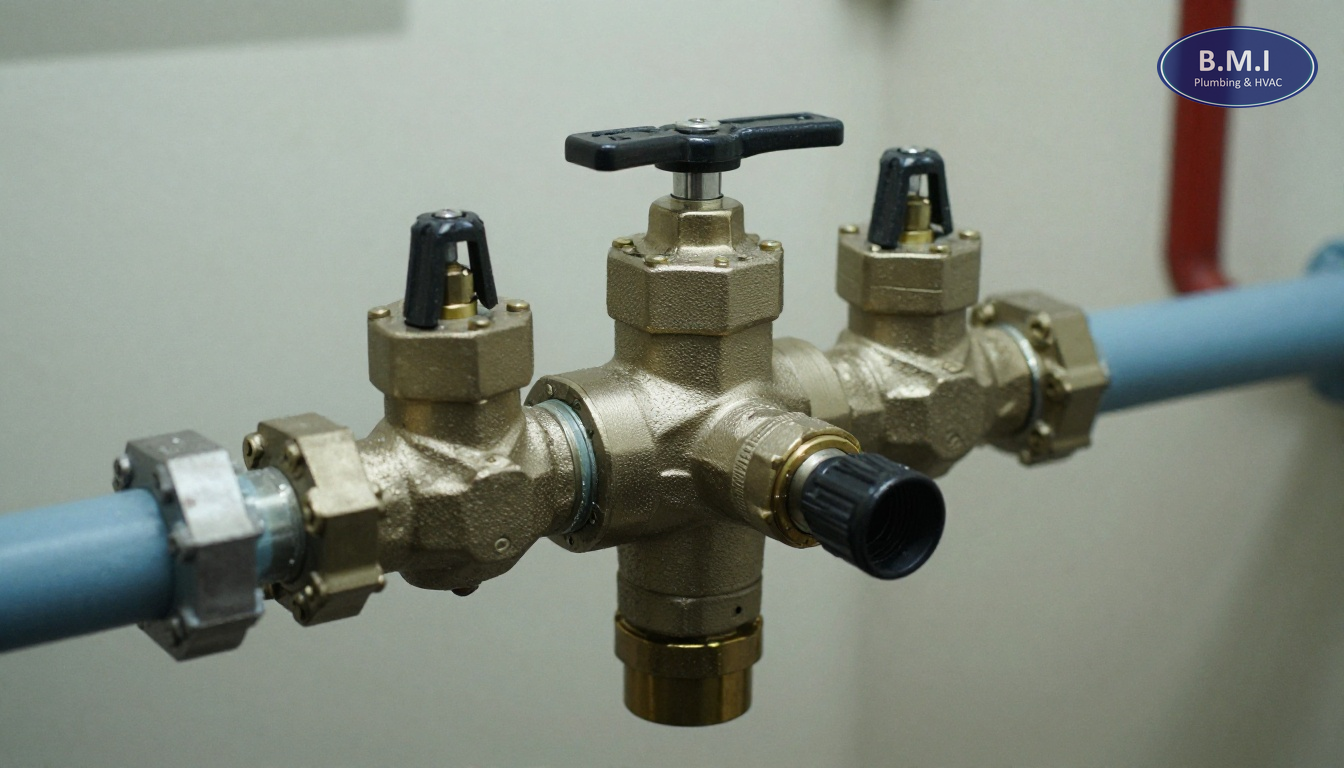
Backflow Prevention Testing and Certification in East York
Backflow prevention testing and certification in East York for condos and multi-residential buildings, with local …
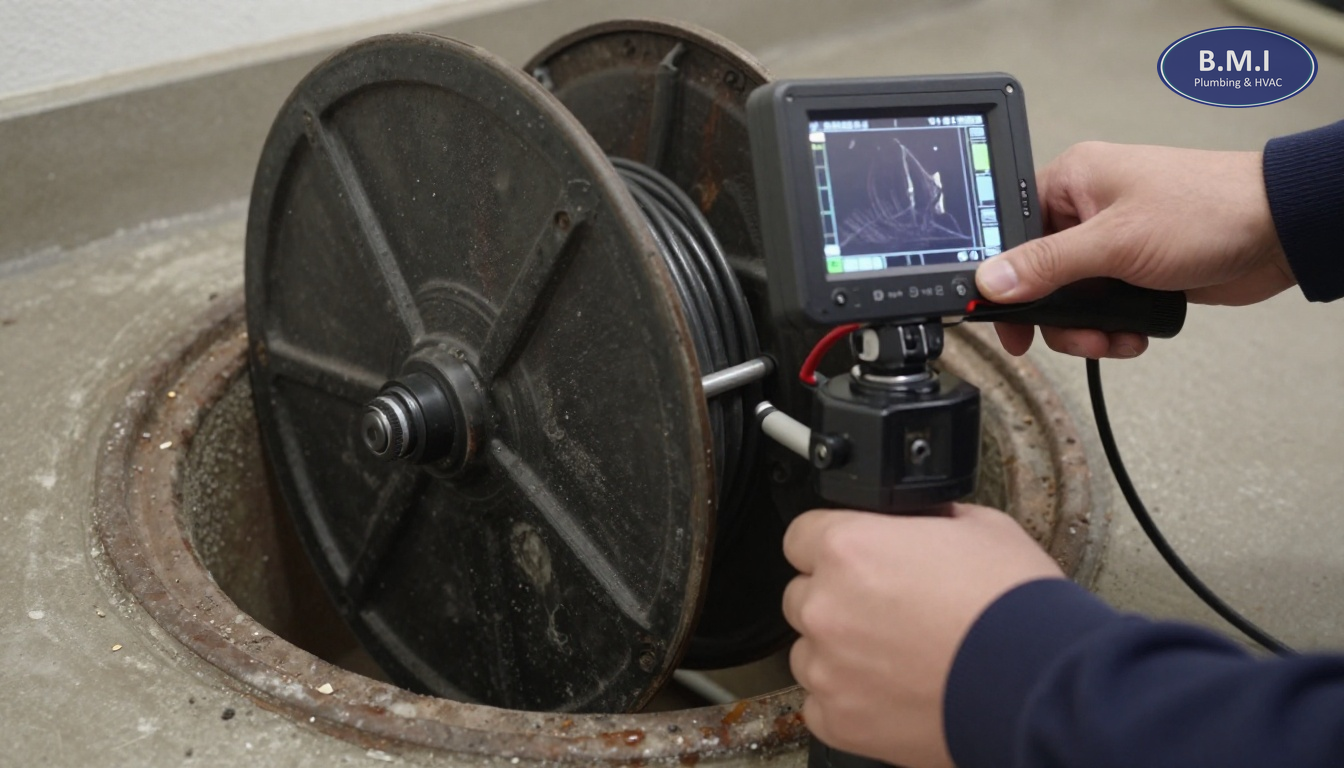
Camera Pipe Inspection in Etobicoke Condominiums
Camera pipe inspection in Etobicoke for condos and rentals. Learn how CCTV drain surveys diagnose stack, branch and …
Water Submetering and Consumption Problems in Markham
A practical guide to water submetering and high water consumption problems in Markham condos, with inspection steps, …
Need a plumber in your building?
BMI services roughly 200 condominium and multi-residential buildings across Toronto and the GTA. Emergencies are answered at any hour.