Building Pressure Test in Toronto: What the Numbers Mean
A practical guide to building pressure test results, water pressure reading patterns, costs, and next steps for Toronto condo managers.
Building Pressure Test in Toronto: What the Numbers Mean
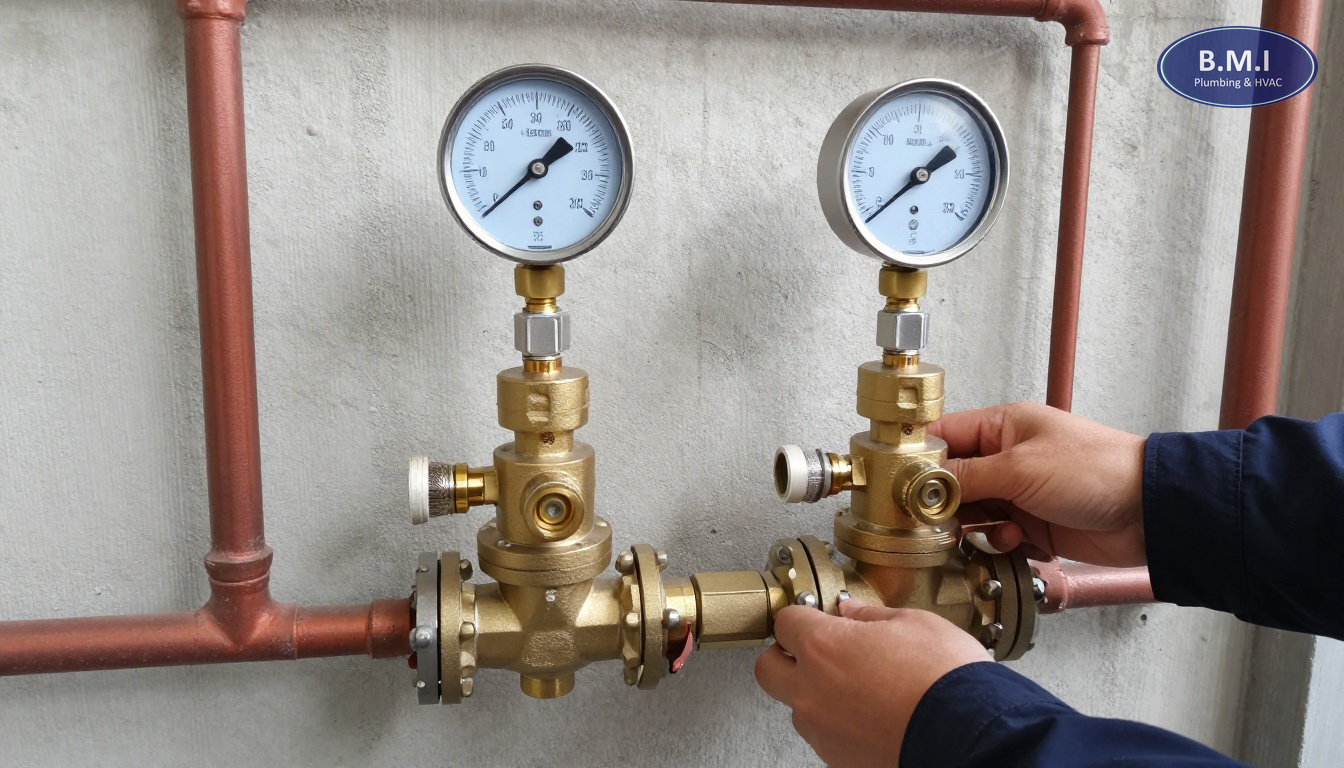
Quick summary: A building pressure test is not just a yes-or-no check. The pattern of the readings, where they are taken, and whether they are static or flowing tells you if your problem is a failing PRV, a restricted riser, a partially closed valve, municipal pressure swings, or simply unrealistic expectations from residents on upper floors. In Toronto condominiums, especially during fall budget season, a few accurate water pressure readings can prevent the wrong capital project, the wrong chargeback, and a winter of avoidable leaks.
A common mistake in condominium buildings is treating pressure complaints as fixture complaints. The resident says the shower is weak, the superintendent changes a cartridge, and the complaint returns two weeks later because the real issue is a pressure drop through a worn pressure reducing valve station or a half-seized butterfly valve in the domestic cold water line. In buildings we service in Toronto, North York and Vaughan, the useful question is rarely “do we have pressure?” It is “what is the pressure at the right place, under the right conditions, and what changed from the last test?”
Fall is the right time to ask that question. As outdoor irrigation is shut down, occupancy patterns shift, and municipal demand changes heading into colder weather, buildings often see different pressure behaviour than they did in summer. This is also when boards are setting next year’s maintenance and capital budgets. If your building has not had a documented pressure review recently, it is worth pairing a building pressure test with a review of the pressure reducing valve maintenance program and, where isolation is questionable, a valve audit and charting program.
What a pressure test is actually telling you
A proper building pressure test is not one gauge reading at the mechanical room. It is a comparison of readings at several points in the system, usually including:
- Incoming municipal pressure ahead of the PRV station
- Outlet pressure after the PRV station
- Static pressure at one or more lower-floor suites
- Static and flowing pressure at mid-level and upper-floor suites
- Hot and cold side readings where relevant
- Pressure behaviour during peak use and low-demand periods
That distinction matters because pressure and flow are not the same thing. A suite can show 65 psi static at the lavatory and still perform poorly if a strainer, stop, balancing valve or corroded branch line is choking volume under demand. Conversely, a building can appear to “flow well” at one fixture but still be running dangerous peak static pressure overnight. That is why a pressure reading without context often leads to the wrong conclusion.
In older Toronto and East York high-rises, we often find operators relying on one permanently mounted gauge near the PRV station. Those gauges are useful, but they are frequently inaccurate by 5 to 15 psi after years of vibration and no calibration. When a board is deciding whether to spend $8,000 on a PRV rebuild or $25,000 to $60,000 on a more complete valve and station upgrade, a bad gauge can push the decision in the wrong direction. This is one reason many buildings combine pressure diagnostics with scheduled repairs and service instead of treating each complaint separately.
The numbers that matter most
For most condominium buildings, there are four numbers that matter more than anything else:
- Incoming static pressure from the city
- Controlled outlet pressure after the PRV station
- Pressure drop under flow at the point of use
- Pressure variation over time, especially overnight
In Toronto, Scarborough and parts of Mississauga, incoming municipal pressure can vary more than many boards expect. It is not unusual to see 75 to 90 psi by day and materially higher readings overnight when neighbourhood demand falls. In some low-elevation areas or buildings near water mains with strong supply, the street side can push above 100 psi. If the building’s PRV station is healthy, that change should be absorbed and the downstream pressure should remain relatively stable. If it is not, the suites feel the swing.
A stable building often shows something like 90 psi incoming and 62 psi downstream, with only a few psi of movement through the day. A troubled building may show 92 psi incoming at 2 p.m., 64 psi downstream, then 108 psi incoming at 2 a.m. and 84 psi downstream because the PRV seat is worn or debris is preventing tight control. That 20 psi difference is enough to explain repeated toilet fill valve failures, braided hose bursts and dripping tempering cartridges.
For that reason, a one-time daytime reading is often not enough. If the complaint pattern suggests night-time spikes, a data logger or repeated spot checks are worth the effort before approving major work. Buildings planning pressure reducing valve maintenance or replacement should insist on actual inlet and outlet numbers, not just “pressure seems high.”
Why buildings lose pressure or see unstable readings
Failing PRVs are only one part of the story
The obvious suspect is the pressure reducing valve, and often that is correct. Large building PRVs from manufacturers such as Watts, Wilkins and Zurn can drift out of setpoint as internal seats, diaphragms and springs wear. On domestic lines from 2 inches to 4 inches, especially in 1970s and 1980s concrete towers, scale and debris can also foul the pilot or seat area. But a PRV is not the only cause of bad readings.
A common mistake we see in early-1990s North York towers is assuming every low-pressure complaint is a bad PRV when the real problem is a valve that was never fully reopened after a repair. A butterfly valve left 20 degrees off full open can create a pressure drop that only shows up during peak demand. The building appears normal at 10 a.m. and performs badly from 6 to 8 a.m. when showers, dishwashers and laundry all hit at once. That is why valve audits are not paperwork exercises; they directly affect pressure diagnosis.
Pipe material and age change the reading
Pipe age matters because pressure loss is often friction loss. In buildings with older galvanized steel domestic water lines, internal diameter can be reduced dramatically by corrosion products. A nominal 2-inch line with heavy internal buildup does not hydraulically behave like a clean 2-inch line anymore. Copper systems also lose performance, though usually in a different way: localized restriction at valves, strainers, balancing devices and branch fittings is more common than full-bore occlusion.
In purpose-built rentals and condominiums in York and Scarborough built before the 1980s, residual galvanized sections are still sometimes found above ceilings, in service rooms or at legacy equipment connections. A pressure test that shows acceptable mechanical room pressure but poor upper-floor flow may be pointing to hidden restrictive piping rather than a control valve problem. When the pattern is unclear, a camera inspection or selective opening can be more useful than another round of fixture replacements.
Hot water pressure complaints are often not cold water problems
Another non-obvious issue is that residents frequently describe a hot-side problem as “low water pressure.” If domestic cold is stable but hot pressure drops at peak times, the issue may be in the hot water recirculation loop, balancing, strainers, check valves, or heat exchanger side fouling rather than the incoming service. On a 300-unit building, we would expect at least a few complaints every winter that sound like pressure issues but are actually temperature and recirculation lag.
That distinction matters because a cold-side PRV replacement will not solve a hot-side distribution problem. If the contractor is not separating hot and cold readings during the test, the diagnosis is incomplete.
How pressure problems usually present in a condominium
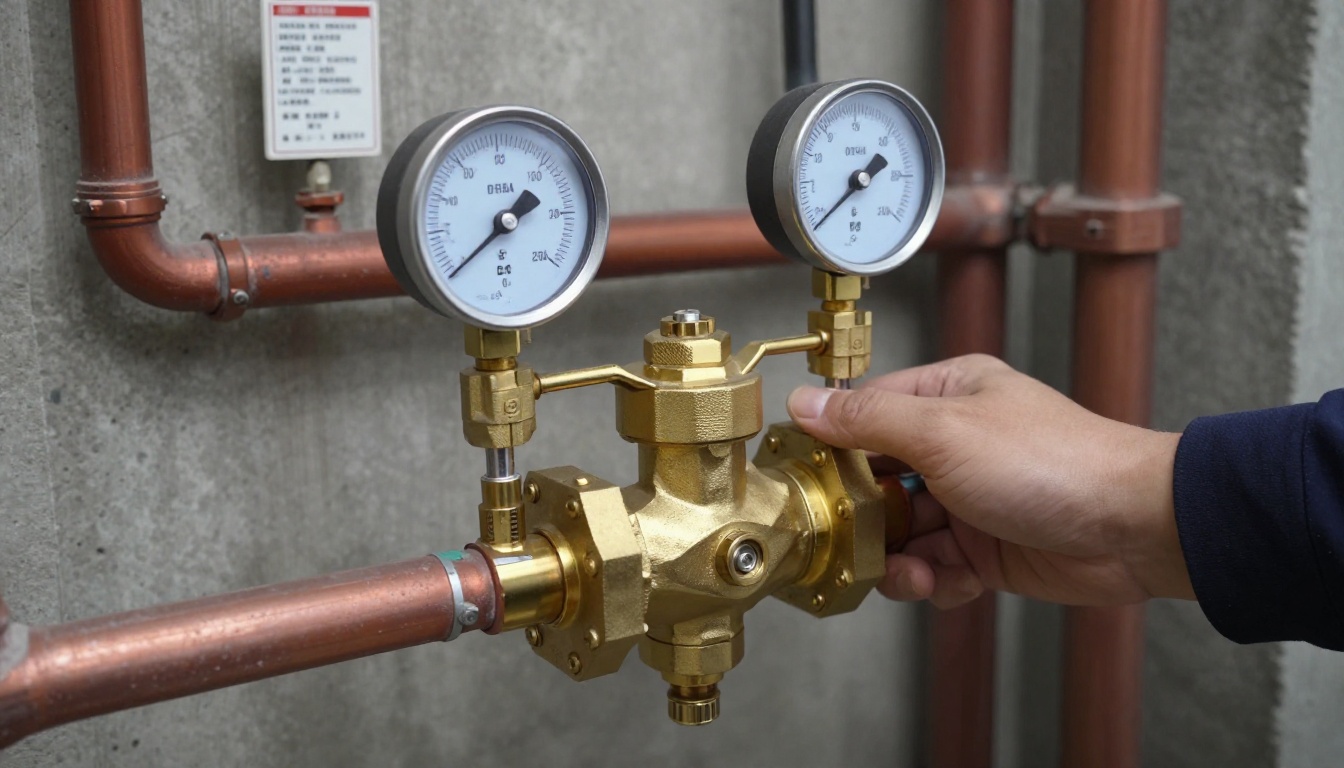
Managers rarely receive a ticket that says “please conduct a differential pressure analysis.” They get practical complaints. The wording of those complaints often tells you where to look.
Complaint patterns that usually point to building-side issues
These are the patterns that most often justify a real building pressure test:
- Multiple suites on upper floors report weak showers during the same two-hour morning window.
- One vertical line of suites, such as stack 03 from floors 8 to 18, reports low pressure while adjacent stacks are normal.
- Residents report banging, dripping faucets or repeatedly failing toilet fill valves after midnight or early morning.
- The kitchen sink and lavatory feel normal, but the tub/shower pressure collapses only when another fixture runs.
- Hot water pressure is poor during peak occupancy but cold water is acceptable.
- The building has repeated leaks at braided supplies, ice-maker lines or fixture stops with no obvious workmanship pattern.
The last point is more important than it sounds. In post-2010 glass towers in downtown Toronto and parts of Vaughan, repeated “small” leaks are often treated as random suite events. Sometimes they are. But when those failures cluster across floors and fixture types, the building should be checking overnight pressure control before writing them off as resident maintenance.
When the issue is probably in-suite, not common element
Not every complaint is a common-element problem. If one suite has poor pressure at a single faucet while the shower, toilet and kitchen are normal, the issue is often a local stop, cartridge, aerator, braided supply or fixture body. If the building declaration assigns fixture components to the owner, that matters for chargeback and access planning. BMI handles a lot of in-suite plumbing repairs, but the key for management is to avoid sending a common-element contractor on a building-wide hunt when the symptom pattern is clearly local.
The practical dividing line is this: if the complaint follows one fixture, think local first. If it follows a time window, a riser, or a vertical stack of suites, think building system first.
What a defensible pressure investigation should include
A board does not need a dramatic report. It needs evidence it can rely on. For a pressure issue, that usually means:
- Actual gauge readings with locations noted
- Date and time of each reading
- Static versus flowing conditions identified
- Inlet and outlet readings at the PRV station
- Notes on valve position and valve condition
- Identification of the affected pressure zone or riser
- A written recommendation tied to the observed numbers
If the building has more than one pressure zone, those zones need to be tested separately. In taller high-rises, lower floors may be served at one set pressure, upper floors by a booster or separate zone, and penthouse mechanical levels differently again. A single “building pressure” number is not meaningful if the system is zoned.
Where the diagnosis suggests a control issue, the next step is often a targeted PRV maintenance review. Where the diagnosis suggests poor isolation, undocumented valves or uncertainty about which lines feed which areas, it often makes sense to combine the test with a valve charting and exercise program. Where the system appears more broadly degraded, the findings may support a larger project solutions review or even staged riser replacement.
One Ontario-specific point that boards sometimes overlook: if pressure instability is contributing to repeated leaks and insurance claims, the issue is no longer just maintenance housekeeping. It becomes part of the corporation’s duty to manage common elements prudently under the Condominium Act framework. That does not mean every complaint requires capital work. It does mean undocumented, recurring pressure-related failures are harder to defend once the pattern is established.
Repair, adjust, or replace: a practical decision framework
When adjustment is enough
Adjustment may be enough when the PRV is fundamentally sound and the readings are consistently close to target, but the setpoint is not ideal. For example, a building running 78 psi downstream with no control instability may simply be set too high for the fixture mix. Bringing that down to 62 to 68 psi can materially reduce nuisance leaks without affecting resident comfort in most suites.
This is often the least expensive outcome, but only if the station responds properly to adjustment and holds the setpoint after demand changes.
When maintenance or rebuild makes sense
If the valve body is sound, parts are available, and the issue is wear rather than obsolescence, maintenance or rebuild can be reasonable. On a 2-inch or 3-inch commercial PRV, replacing internal trim, diaphragm assemblies, strainers and gauges may restore reliable control. This tends to make sense where:
- The station is accessible and properly valved
- Isolation valves actually hold
- The body is not cracked or heavily dezincified
- The building has not had repeated failures after recent service
In Toronto-market terms, a planned PRV service or rebuild can be far less disruptive than replacement, especially if shutdown windows are tight. But there is a catch: if the station’s associated valves are seized or unreliable, the savings disappear quickly because isolation becomes the real problem.
When replacement is the better answer
Replacement is usually more defensible when the building has:
- Repeated pressure drift after prior service
- Obsolete valve models with poor parts availability
- Corroded or unreliable isolation valves
- Inaccurate or missing gauges
- A station layout that makes future maintenance difficult
In older Etobicoke and North York towers, we often see PRV stations that could theoretically be rebuilt, but the adjacent gate valves no longer isolate and the bypass arrangement is undocumented or unusable. In that case, a piecemeal repair often costs more in total over two or three visits than a planned valve replacement project with a modern PRV arrangement.
Real cost ranges in Toronto for pressure testing and related work
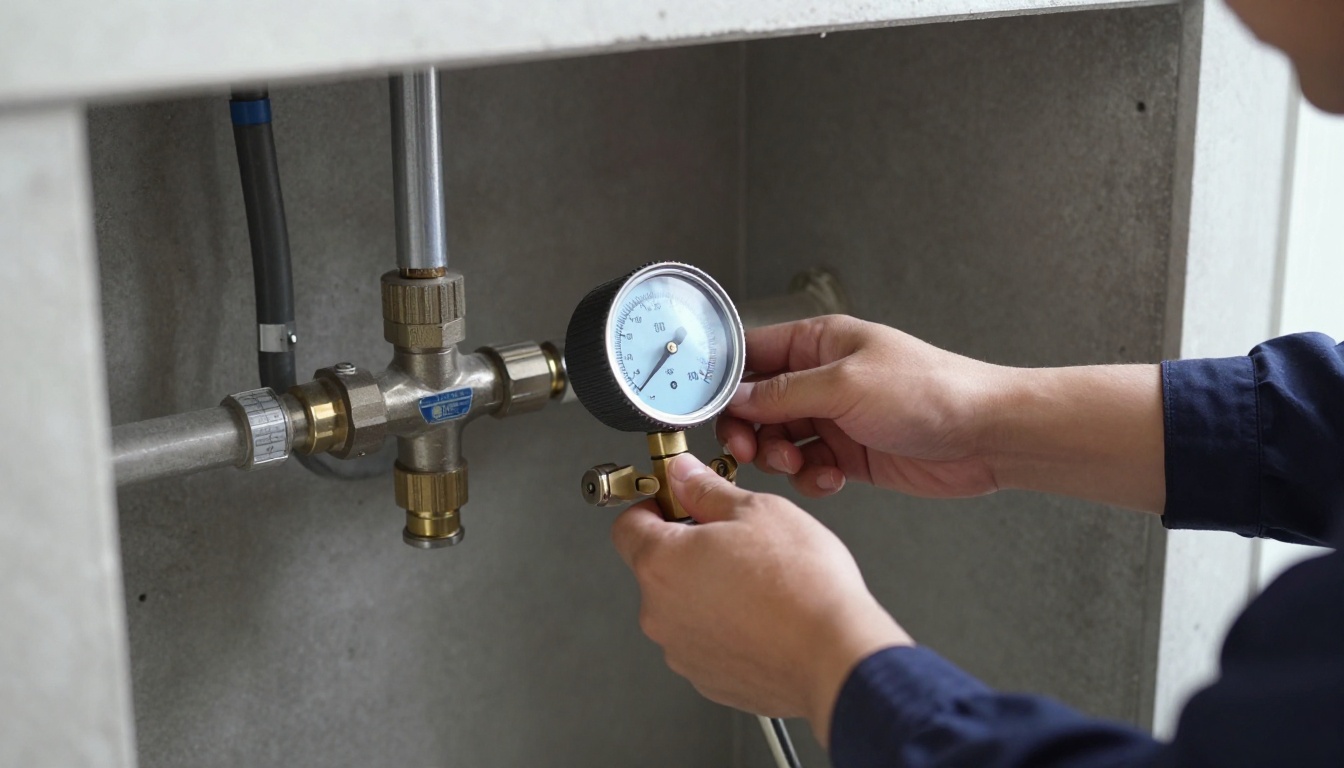
The numbers below are realistic GTA planning ranges, not quotations. Access, after-hours shutdowns, bypass arrangements, asbestos protocols, and valve condition can move the number significantly.
| Scope | Typical Toronto-area range | What affects the number |
|---|---|---|
| Basic pressure investigation with mechanical room readings and limited suite checks | $400-$1,200 | Number of suites tested, travel, after-hours access, written reporting |
| Multi-point pressure survey with several suites and a written summary | $1,000-$2,500 | Number of zones, resident coordination, repeat visits, data logging |
| 24-72 hour pressure logging or more involved diagnostics | $1,500-$4,000+ | Logger setup, return visits, building complexity, off-hours checks |
| PRV maintenance/service on a commercial station | $1,500-$5,000+ | Valve size, parts availability, isolation condition, number of valves |
| PRV replacement with associated isolation work | $5,000-$15,000+ | 2-inch vs 4-inch size, shutdown logistics, valve replacement, room access |
| Broader station rework with new valves, gauges and layout changes | $12,000-$30,000+ | Piping modifications, multiple zones, bypass work, redundancy |
On a 25- to 35-storey condominium with multiple pressure zones, the cost of not diagnosing correctly can exceed the cost of the test very quickly. One unnecessary domestic riser investigation can cost more than a proper pressure survey. So can a winter leak claim tied to uncontrolled pressure.
Where the findings point beyond the station itself, boards should also look at the bigger picture. A building with aging domestic infrastructure may need a staged domestic water riser replacement or, in more advanced cases, a building re-piping strategy. If the concern is water consumption as much as pressure, some buildings also review MEV valve options as part of a broader water management plan.
Scheduling, shutdowns, and resident logistics
A pressure test is less disruptive than most plumbing work, but logistics still matter. Mechanical room readings can often be taken with little impact. Suite-level readings require access coordination, and that is where many investigations lose momentum.
For a 200- to 300-unit building, a meaningful survey might involve:
- Mechanical room testing the same day
- 4 to 10 suites sampled across low, mid and high floors
- At least one affected stack and one unaffected comparison stack
- Peak-use testing in the morning or evening if complaints are time-specific
If the issue appears tied to PRV operation, a shutdown may not be needed just to diagnose. But if the recommendation is to service or replace the station, the building should plan for notice, elevator protection where material is moving, and a realistic shutdown window. In many occupied towers, a straightforward PRV replacement can still require half a day once drainage, isolation confirmation and recommissioning are included.
The fall budgeting angle is important here. If you wait until January to investigate a known pressure issue, you may be scheduling corrective work during the period when winter failures are most disruptive. A better approach is to test in fall, decide whether the work belongs in operating or reserve planning, and then either complete it before year-end or put it into the first practical shutdown window. Buildings already reviewing maintenance programs often bundle pressure checks with other seasonal plumbing reviews.
What happens if you defer it
Pressure problems are easy to defer because they often present as small annoyances before they become expensive events. The risk is that the failure mode changes from “resident complaint” to “insurance claim.”
Here is what typically happens when unstable or excessive pressure is left alone:
- Toilet fill valves fail more often, leading to running water and avoidable consumption charges.
- Braided supplies, fixture stops and cartridges leak at a higher rate.
- Existing weak points in older suites begin to fail one by one, making the problem look random.
- Contractors spend more time chasing symptoms than correcting the actual control issue.
- The board loses the opportunity to budget the work calmly and ends up approving it after an emergency.
In buildings along the waterfront and in parts of downtown Toronto, we have seen overnight pressure behaviour drive leak patterns that were initially blamed on fixture age alone. Once the downstream pressure was stabilized, the frequency of those “small” leaks dropped. That is not a guarantee in every building, but it is a pattern seen often enough that boards should take it seriously.
Deferral also affects reserve fund logic. A pressure test itself is generally an operating expense, but the results may support reserve-funded common-element work if they show system deterioration rather than routine adjustment. That distinction matters during reserve fund study updates and board approvals. If the evidence is weak, the recommendation is harder to defend. If the evidence includes actual water pressure readings, zone comparisons and a clear failure pattern, it is much easier.
For buildings with chronic leaks or a sudden loss of control, urgent attendance may be warranted through emergency plumbing response rather than waiting for routine scheduling.
FAQs
What is a normal water pressure reading in a Toronto condo building?
At street entry, many Toronto-area buildings see incoming pressure somewhere around 70 to 110 psi, although some low-lying areas and overnight conditions can run higher. Inside the building, most managers want controlled domestic pressure in a range that protects fixtures and valves, often around 55 to 75 psi depending on the zone, building height and equipment. Once static pressure starts spending time above 80 psi at fixtures, toilet fill valves, braided supplies and mixing cartridges tend to fail more often.
What does it mean if pressure is fine during the day but spikes at night?
That usually points to a control issue rather than a supply shortage. Municipal demand drops overnight, so street pressure rises; if the building PRV station is drifting, bypassing or incorrectly set, a daytime 65 psi reading can become an 85 to 100 psi overnight event. In high-rises in North York and Mississauga, this is one of the most common reasons for repeated in-suite leaks that seem unrelated until the pressure log is reviewed.
Can a single low-pressure complaint identify a riser problem?
Sometimes, but not reliably without comparative readings. If one stack of suites on floors 12 through 18 reports weak shower pressure while adjacent stacks are normal, that often suggests a localized valve, balancing, or riser restriction issue rather than a whole-building problem. A proper building pressure test compares static and flowing readings at the PRV station, mid-level suites and upper floors to show whether the loss is building-wide, zone-specific or confined to one line.
How much does a building pressure test cost in Toronto?
For a condominium or rental building in Toronto, Scarborough or Vaughan, a focused pressure investigation with gauges, fixture flow checks and a written summary often falls in the low hundreds to low thousands depending on scope, after-hours access and the number of test points. A simple visit to confirm PRV operation may cost far less than a full multi-zone survey with data logging over 24 to 72 hours. If camera work, valve isolation work or PRV teardown is needed afterward, that is usually priced separately.
Is pressure testing only about low pressure complaints?
No. In practice, pressure testing is often more valuable for high pressure, unstable pressure and pressure differential between zones than for simple low flow complaints. A building can have plenty of pressure but still perform badly because of clogged strainers, undersized branch piping, failing PRVs, closed valves or recirculation issues on the hot side.
When should a condo board approve PRV work instead of more testing?
If the building already has repeat evidence of pressure instability, such as rising overnight readings, frequent fill valve failures, multiple braided hose leaks, or a PRV station that will not hold set pressure, more testing may not be the best use of budget. In many 1970s to early-1990s GTA towers, once the PRV internals are worn and the isolation valves are unreliable, replacement of the PRV station and associated valves is more defensible than repeated service calls. The decision is easier when the contractor provides actual inlet and outlet readings, not just a verbal opinion.
What to do next if your readings are unclear
If your building is seeing repeated suite complaints, unexplained fixture failures, or a pattern of leaks that does not make sense, do not jump straight to a capital project. Start with a documented building pressure test that compares the right locations and the right times of day. If the stack or zone pattern suggests a broader domestic water issue, the next step may be a staged review of riser replacement options or a larger building re-piping plan. If the evidence points back to controls, the priority is usually PRV maintenance or replacement and confirmation that the isolation valves are usable.
For fall planning, the practical recommendation is simple: if your building has not had pressure readings documented in the last 12 to 24 months, or if you have had more than a handful of pressure-related suite complaints this year, get the system checked before finalizing next year’s budget. The cost of the investigation is usually modest compared with the cost of approving the wrong repair.
BMI attends the building before quoting larger corrective work, and maintenance programs are set up on a schedule rather than sold one service call at a time. If you want examples of the kind of multi-residential plumbing work this leads to, the BMI project portfolio and the rest of the BMI blog are good places to start.
Contact BMI
If you need a building pressure test in Toronto, or you want a second opinion on a water pressure reading that does not match what residents are reporting, BMI can review the building, identify the likely cause, and recommend whether the issue belongs in maintenance, repair, or capital planning.
- Contact BMI
- Phone: (416) 845-3756
- Emergency: (416) 845-3756, answered 24 hours a day
- Email: info@brial.ca
More on condominium plumbing
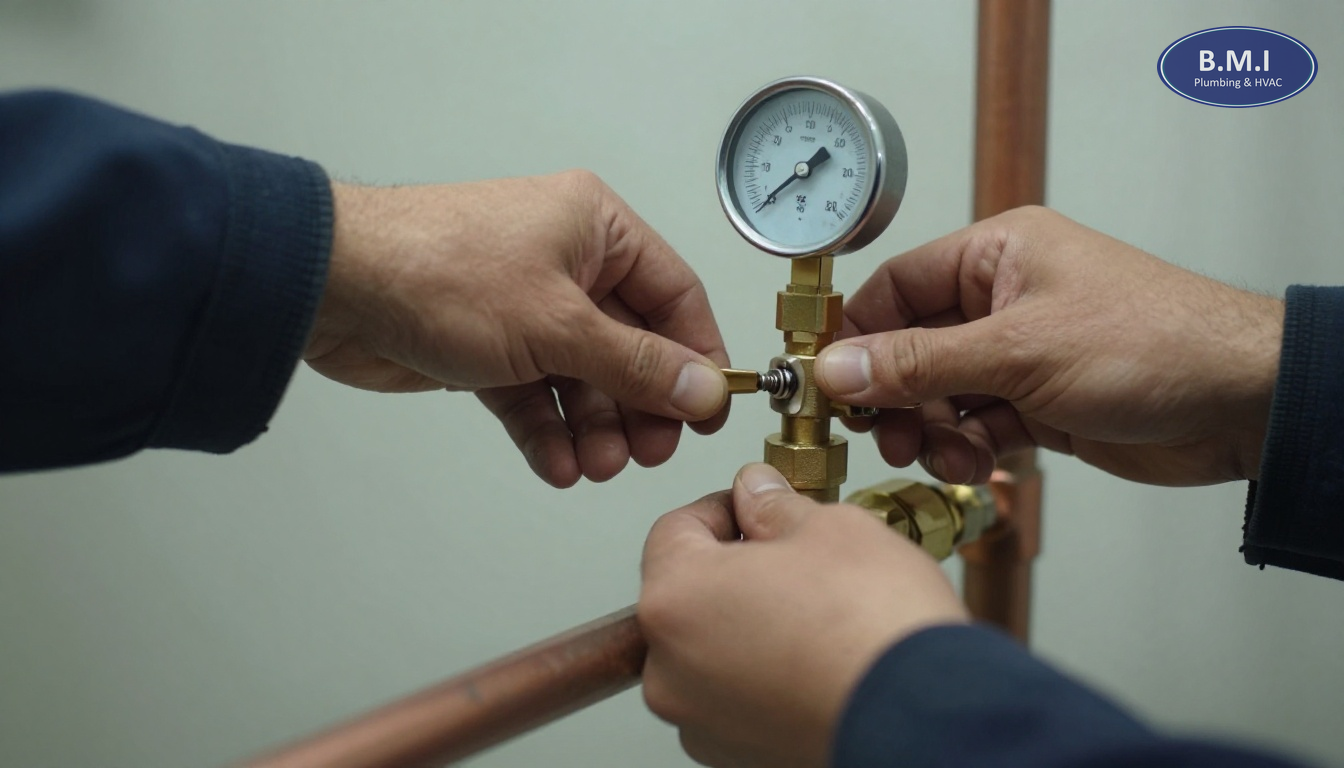
PRV Inspection Schedule for Multi-Zone Buildings in Toronto
Plan a defensible PRV inspection schedule for multi-zone pressure in Toronto condos, with costs, timelines, warning …
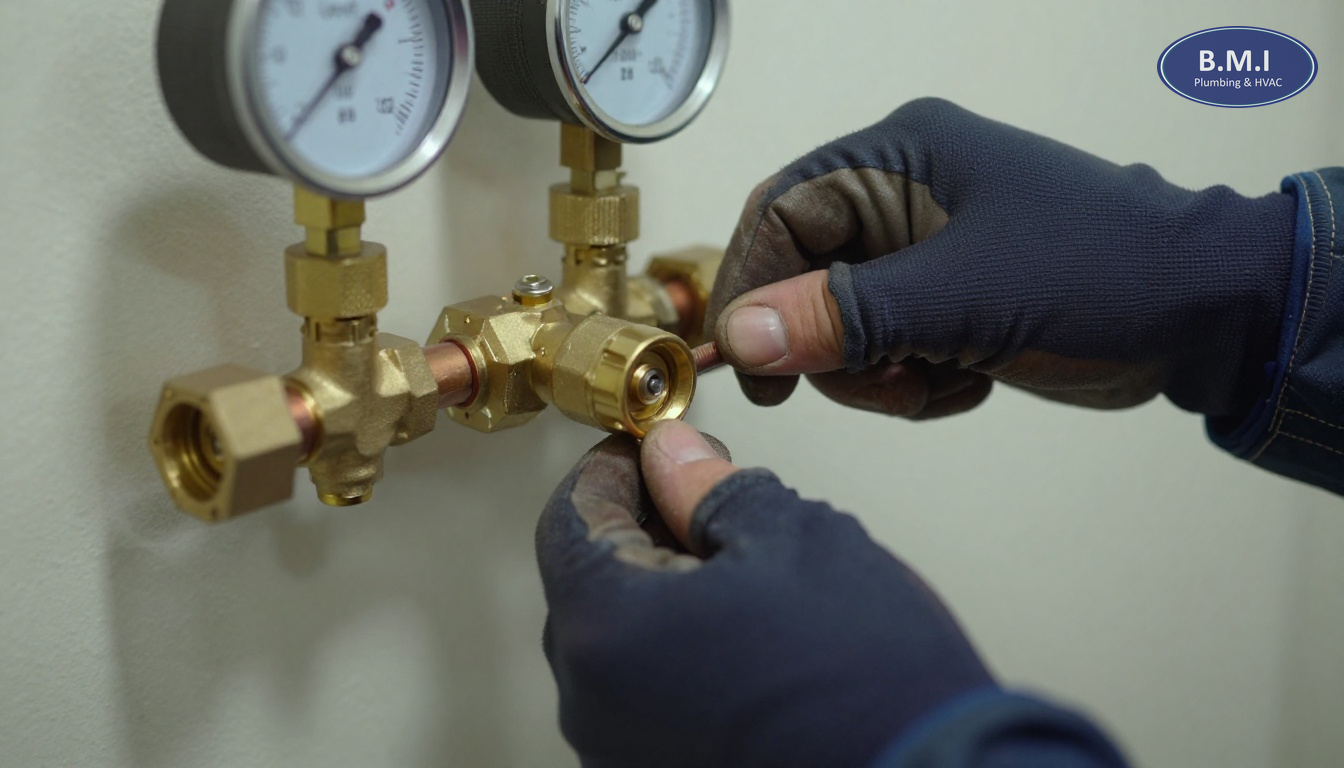
PRV Replacement Cost in Toronto Condos: Downtime Guide
Understand PRV replacement cost, downtime and scheduling for Toronto condos, with real GTA price ranges, shutdown …
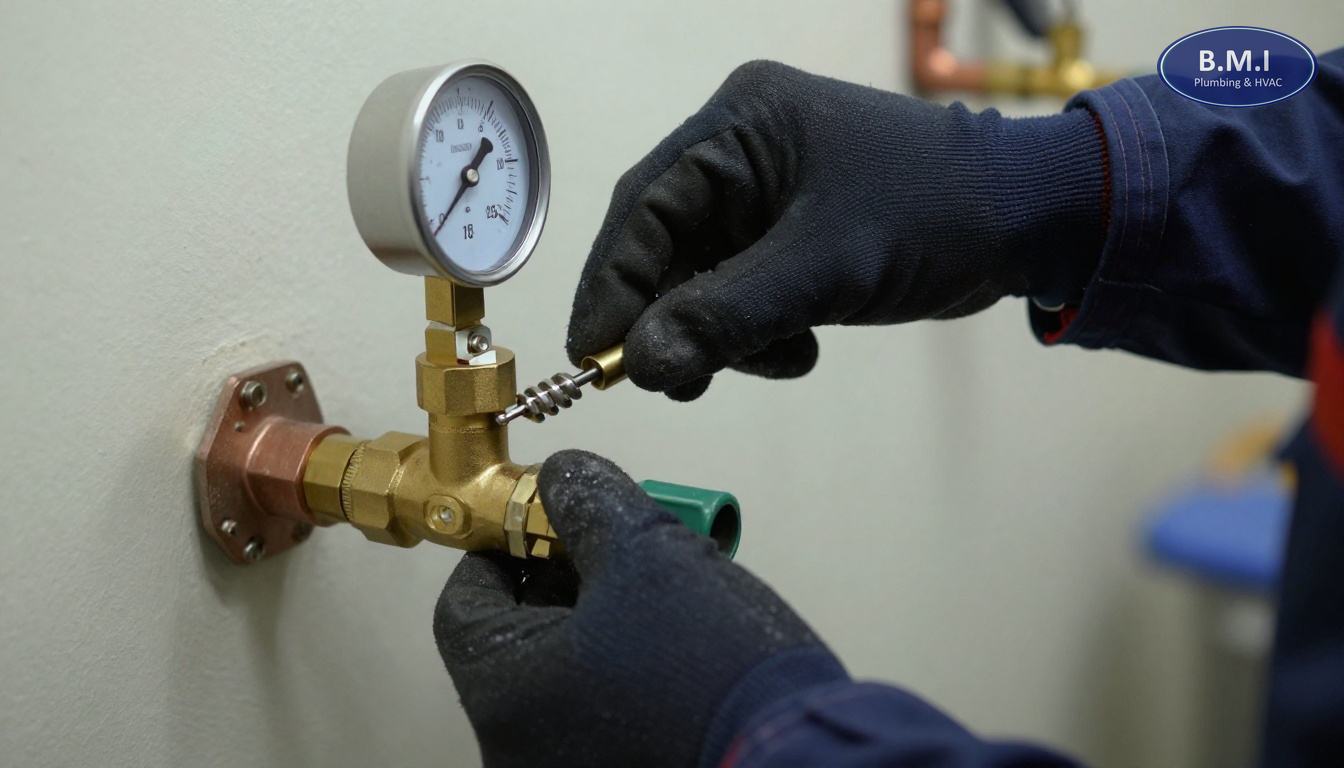
PRV Failure Symptoms in Toronto Condo Buildings
Learn the real PRV failure symptoms behind condo water pressure problems, with Toronto cost ranges, testing steps and …
Need a plumber in your building?
BMI services roughly 200 condominium and multi-residential buildings across Toronto and the GTA. Emergencies are answered at any hour.