Camera Pipe Inspection in Etobicoke Condominiums
Camera pipe inspection in Etobicoke for condos and rentals. Learn how CCTV drain surveys diagnose stack, branch and underground piping issues.
Camera Pipe Inspection in Etobicoke Condominiums
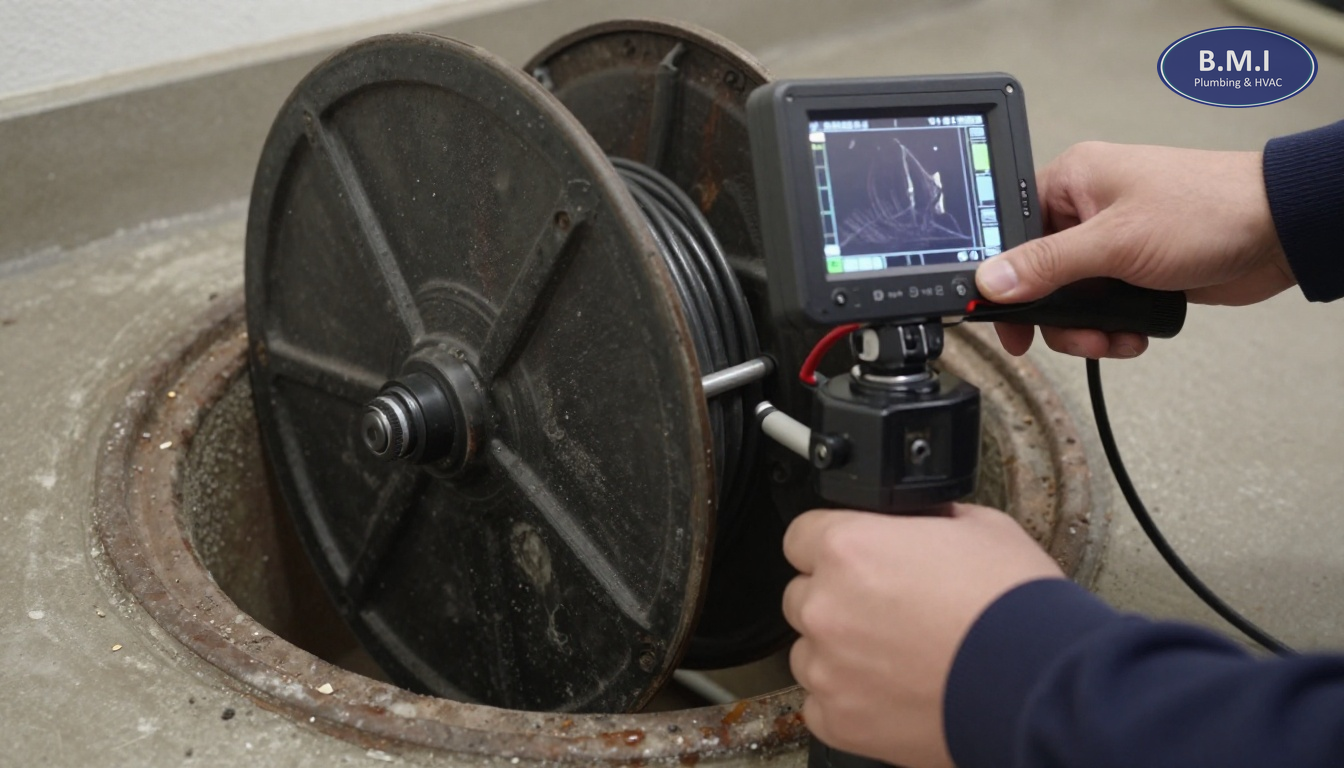
Quick summary: In Etobicoke, camera pipe inspection is one of the most useful ways to separate a routine blockage from a failing stack, offset branch line or deteriorated underground drain. For condominium managers and board directors, a proper CCTV drain survey provides evidence you can budget against: footage, locations, pipe condition and a clear recommendation on cleaning, repair or replacement.
Etobicoke is not one uniform building market, and that matters for pipe inspection. A slab-style rental near The Queensway, a 1970s tower along Bloor west of Islington, and a newer condominium closer to Humber Bay do not fail in the same way. The piping materials, access points, original cleanout locations and likelihood of buried sewer issues are different, so the inspection plan has to fit the building rather than just sending a camera down the nearest opening.
Why camera pipe inspection shows up so often in Etobicoke buildings
Etobicoke has a broad mix of multi-residential stock. Older apartment and condominium buildings from the 1960s through 1980s often still have original cast iron sanitary stacks and branches, with decades of internal scaling, tuberculation and rust buildup reducing carrying capacity. In those buildings, residents may report repeated slow drainage, stack backups or sewer odours long before anyone sees an actual leak. A camera inspection is often the first time management gets visual confirmation of how much wall loss or buildup is really inside the pipe.
In mid-rise and high-rise properties built through the 1990s and early 2000s, the issue is not always age alone. We often see a mix of materials, transitions between cast iron and plastic, poorly located or difficult-to-access cleanouts, and branch lines hidden above finished corridor ceilings or behind bulkheads. In these buildings, a simple service call can turn into guesswork unless it is paired with camera pipe inspection and a clear mapping of the affected line.
Etobicoke also includes older low-rise rental and townhouse-style developments where buried sanitary and storm lines outside the building envelope are part of the problem. Tree roots, settlement and bellies in underground runs are more common in these properties than in a downtown tower sitting tight to the street line. A CCTV drain survey can confirm whether repeated backups are happening inside the building, under the slab or out toward the property line, which makes a major difference to scope and cost.
Municipal water and sewer conditions also matter indirectly. In buildings where pressure conditions vary by elevation or where older drainage systems are already carrying grease, wipes or scale, colder fall and winter operation can expose drainage weaknesses that were tolerable through summer. That is one reason many Etobicoke managers combine fall inspection work with preventive kitchen stack cleaning and broader maintenance programs before the holiday cooking season starts.
What Etobicoke managers and residents actually report before a CCTV drain survey
Most managers do not call asking for a camera right away. They call because the same complaint keeps coming back.
In an Etobicoke condominium, the report may be that suites on a vertical line have had repeated kitchen sink backups over three months, usually in the evening when usage is highest. In an older rental building, the symptom may be a first-floor floor drain backup after heavy use higher up the stack. In a parking garage or service room, staff may notice intermittent seepage at a cleanout cap or staining at the base of a cast iron stack without any clear source from above.
Other common triggers include:
- repeated calls for the same branch line after snaking
- sewage odour in one corridor or bank of suites
- slow drainage in multiple units on the same stack
- backups that worsen during peak occupancy periods
- suspected root intrusion in a buried line
- uncertainty before opening walls, ceilings or slab
The point of the inspection is not just to find a blockage. It is to answer a management question: is this an operating issue, a localized repair, or the beginning of a capital problem. That is particularly important during fall budget season in Etobicoke, when boards need real numbers rather than a vague note that the line is “old.”
Where recurring pressure issues are also part of the complaint, especially banging, fixture stress or inconsistent flow, it can be sensible to review pressure reducing valve maintenance and replacement at the same time. Not because PRVs cause drain blockages, but because boards often discover multiple plumbing systems are aging together and should be assessed as one budget conversation.
What a proper pipe inspection in Etobicoke should involve, and what evidence to insist on
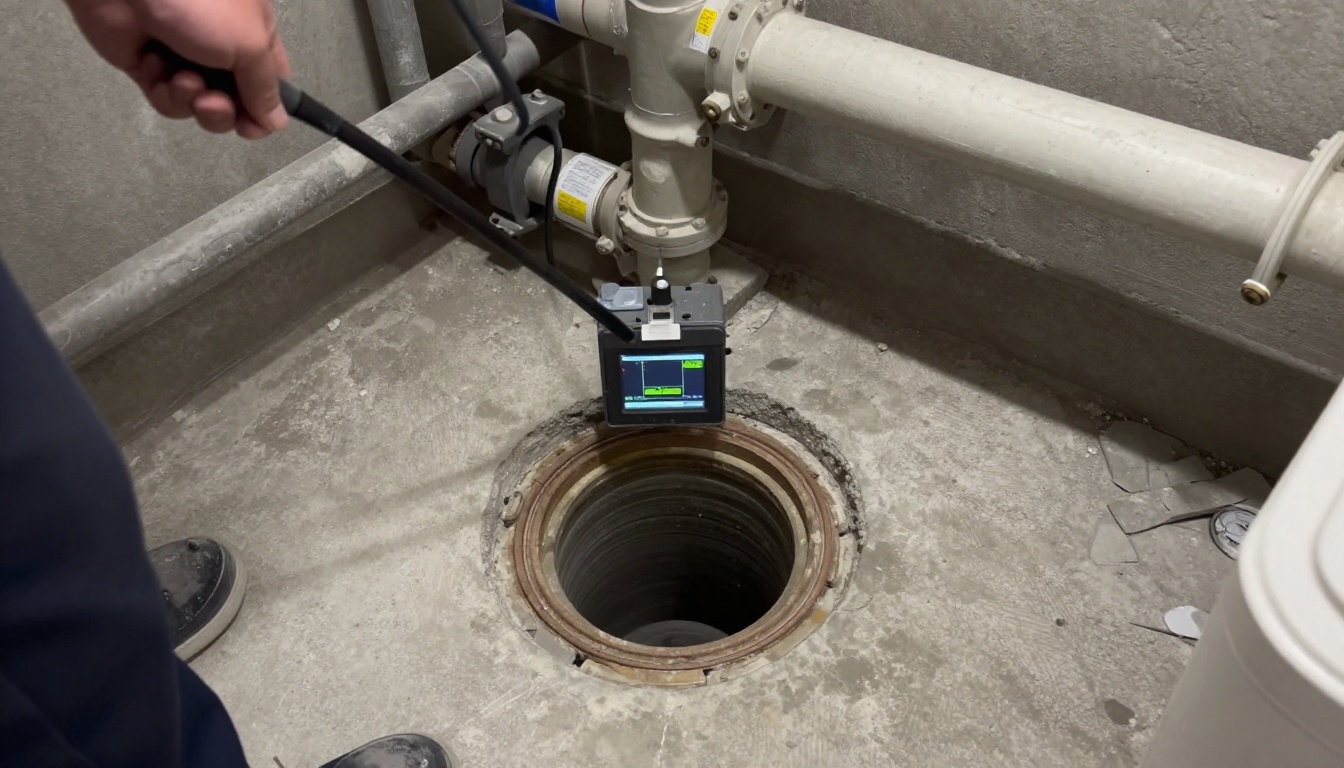
For a condominium or rental building, a camera inspection should produce more than verbal impressions. Management should expect a defined scope, documented access points, footage or stills, and a recommendation tied to actual pipe condition.
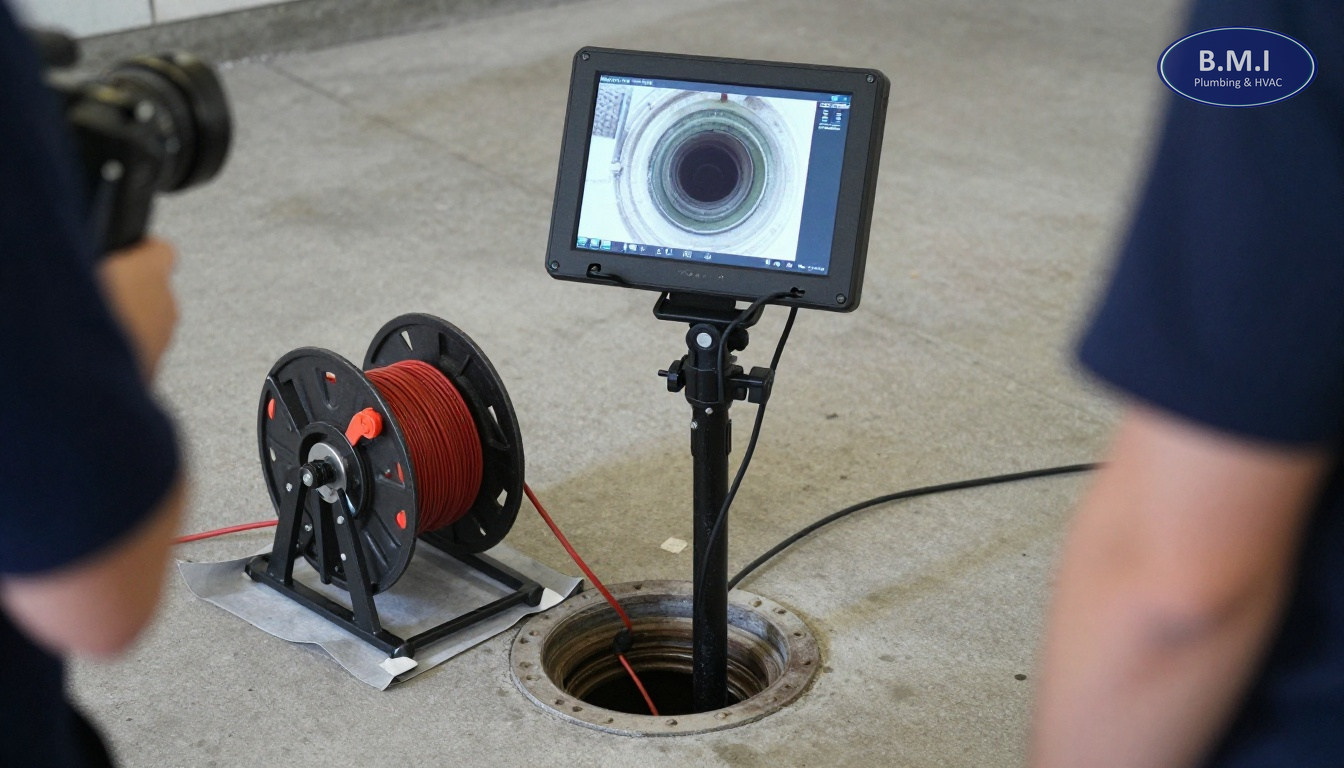
A typical process starts with identifying the system involved: sanitary, storm or domestic waste branch, plus whether the complaint is vertical, horizontal or underground. The plumber then confirms access through an existing cleanout, roof vent, removed fixture, trap arm connection, garage ceiling opening or service room access point. In older Etobicoke buildings, access is often the real challenge. Original cleanouts may be hidden behind millwork, buried above hard ceilings or located in tight janitor rooms that were not designed for modern service equipment.
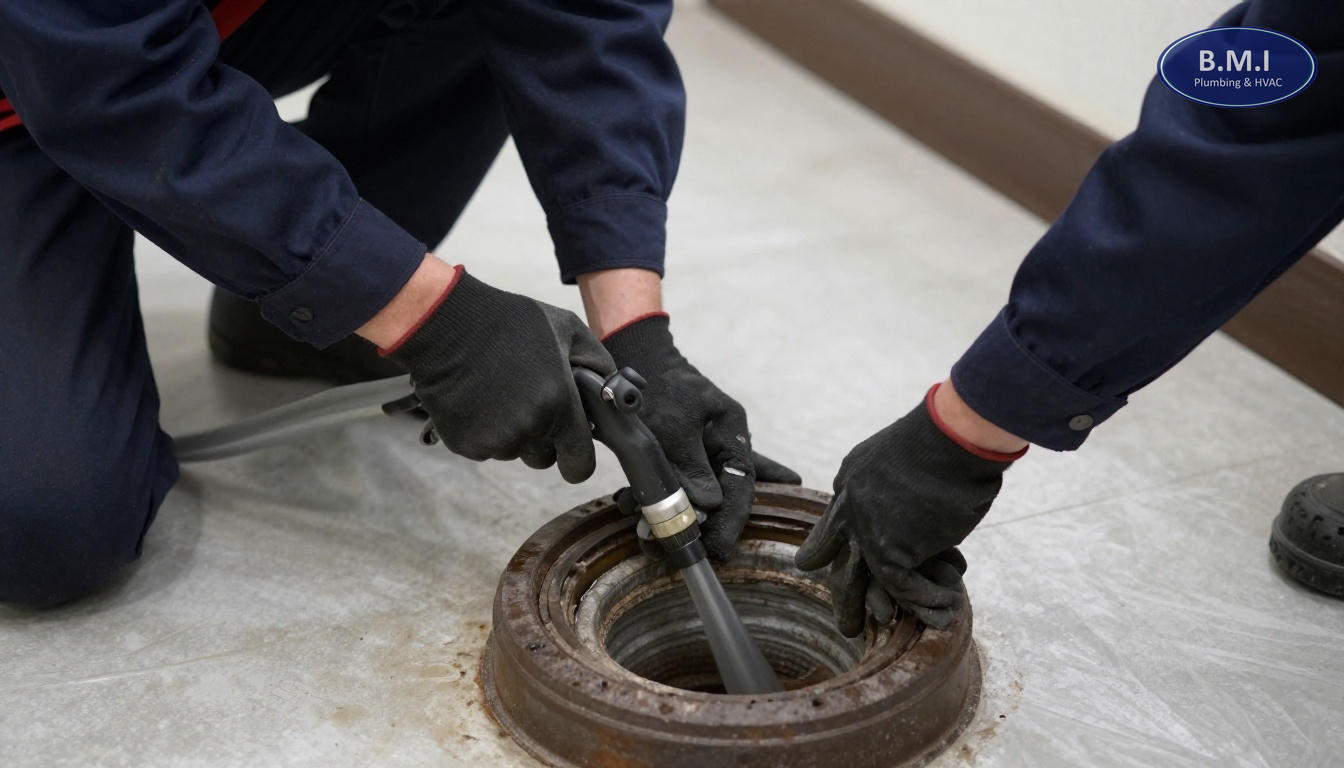
If the line is obstructed, some level of cleaning may be required before the camera can tell you anything useful. That can mean snaking, flushing or jetting first through drain cleaning and snaking. Without that step, the camera may only show standing waste or a grease plug, which confirms the immediate blockage but not the underlying condition of the pipe behind it.
A useful report should identify:
- the line inspected and direction of travel
- approximate distance to each defect or change in condition
- whether the problem is grease, scale, roots, offset, belly, crack, separation or collapse
- whether the pipe is likely restorable by cleaning
- whether the defect appears isolated or repeated
- recommended next steps, with urgency
In a multi-residential setting, insist on evidence that can be shared with the board and reserve planner. A statement like “line in poor condition” is not enough. You want footage, screenshots and a plain-language explanation of what was seen, where it was seen and how confident the diagnosis is. If walls, ceilings or slab openings are being recommended, the visual record should justify that disruption.
This is also where broader system awareness helps. If the inspection shows an inaccessible branch or an isolation problem affecting repair planning, it may be worth pairing the work with a valve audit, charting and exercise program or reviewing related all repairs and service needs so future shutdowns are shorter and better controlled.
A representative Etobicoke camera inspection project
A representative call would be a 19-storey condominium from the late 1970s near Bloor and Kipling, with repeated kitchen sink backups affecting suites on two adjacent vertical lines. The building had already paid for several snaking calls over the prior year, and each time service restored flow temporarily. Complaints increased in October as occupancy patterns shifted and heavier kitchen use returned.
Initial reporting suggested a simple grease problem, but the pattern did not fully fit. Backups were occurring in mid-level suites as well as lower floors, and staff had also noticed staining around a cleanout in a service area. We started by tracing the affected stack and branch arrangement, confirming cleanout access and performing limited cleaning so the camera could travel.
The CCTV drain survey found two related issues. First, the original cast iron kitchen stack had substantial internal scaling and grease accumulation, reducing the effective diameter far beyond what snaking alone could address. Second, a horizontal branch connection above a corridor ceiling had a pronounced offset at a fitting, creating a recurring catch point for waste. The camera footage also showed that wall condition in the main vertical section was aged but still largely serviceable after proper cleaning.
The immediate work included targeted kitchen stack cleaning, follow-up camera confirmation, and opening a limited corridor ceiling section to repair the offset branch fitting. The building did not need full stack replacement at that stage. The service portion took one day, with a second day for the localized opening and repair, followed by ceiling restoration by others. A realistic GTA market cost for that package would typically fall in the rough range of $4,500 to $9,000 depending on access, after-hours coordination and restoration exclusions.
The important outcome was not just that the drains worked again. The board had evidence showing the difference between a maintainable vertical stack and one defective horizontal connection. That allowed them to approve a small capital repair and place the stack on a planned cleaning and monitoring cycle instead of reacting to every suite complaint as a separate emergency. For boards comparing longer-term options, reviewing completed projects and building references and broader all capital project work can help frame when recurring service tips into replacement.
Costs and timelines for camera inspection in Etobicoke multi-residential buildings
Costs vary widely because access and scope vary widely. In Etobicoke, two buildings of the same height can have completely different service conditions depending on whether cleanouts are exposed in service rooms, buried in finished spaces or accessible only by fixture removal inside occupied suites.
As a general GTA market estimate:
- single accessible line camera inspection after a simple blockage: about $600 to $1,500
- inspection requiring initial snaking or flushing to obtain usable footage: about $900 to $2,000
- multiple line CCTV drain survey for a stack group, branch network or recurring issue investigation: about $2,000 to $7,500
- underground drain or parking garage line investigation with multiple access points and reporting: about $3,000 to $10,000+
- targeted exploratory opening, if recommended after inspection: additional cost depending on finishes, containment and restoration
Timelines are usually short for the inspection itself and longer for coordination. A straightforward camera call may be completed in a few hours. A broader Etobicoke condominium survey involving several lines, resident notices, suite access and limited shutdowns may take one to three days. If the work identifies a need for branch replacement, stack repair or buried line excavation, the timeline shifts from diagnostics into project planning.
Fall is often the right time to do this work. Before winter, managers can still inspect garage and exterior-adjacent lines without the complications that come with frozen conditions, and boards can get numbers into year-end or next-year budgets. If the inspection points to aging domestic piping in parallel with drainage issues, some buildings also use that information to start planning domestic water riser replacement or full building re-piping discussions in a more orderly way.
Repair versus replacement in Etobicoke: using inspection evidence to make the call
Camera inspection is most valuable when it prevents the wrong decision.
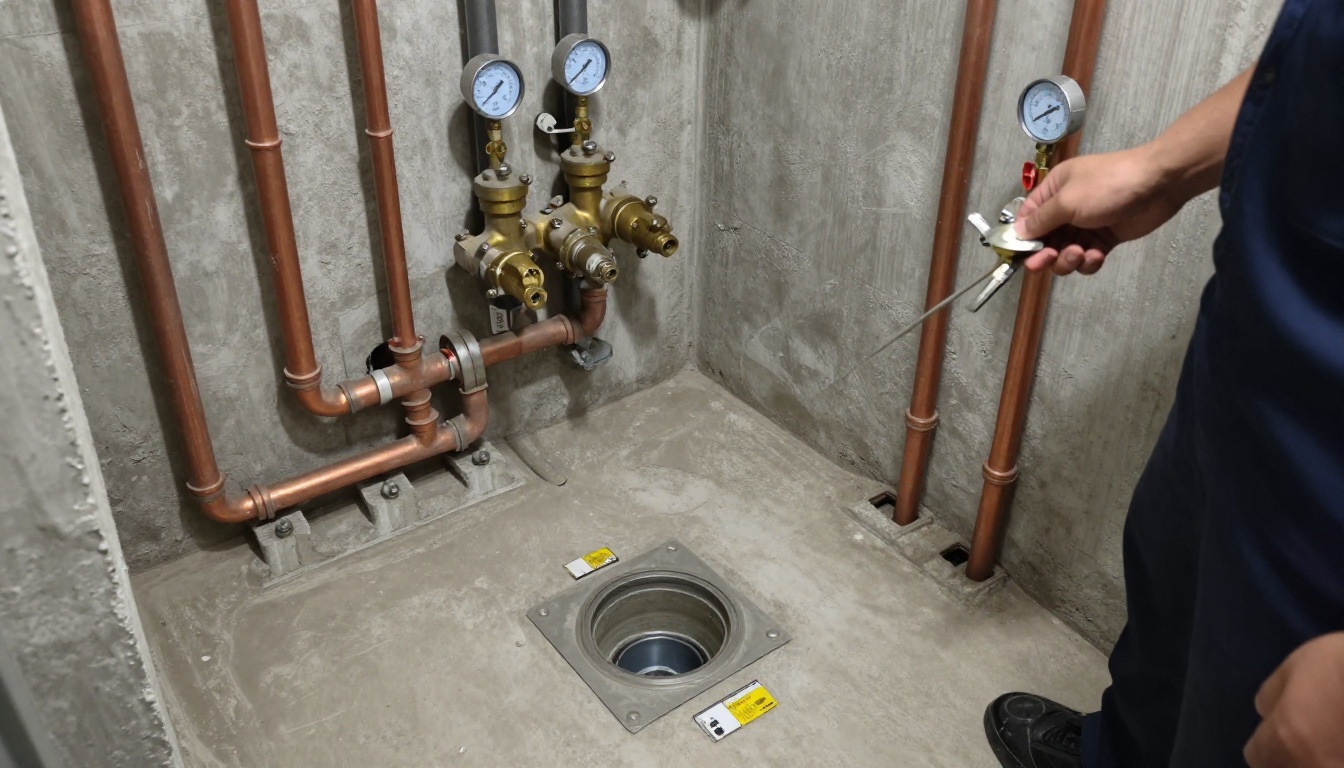
If the footage shows grease, sludge or moderate scale in a pipe that still has sound wall thickness and proper grade, then cleaning and scheduled maintenance are usually the right answer. If it shows a localized offset, separated fitting or short damaged section, then opening and repairing only that area may be justified. But if the camera records recurring defects across multiple sections of the same line, channel rot, severe scaling through the stack, repeated joint failure or a belly in an underground run that cannot self-drain, continued reactive cleaning becomes harder to defend.
For boards and managers, the decision is usually financial as much as technical. A line that costs a few thousand dollars every year in emergency calls, resident disruption and cleanup may be a better candidate for planned replacement than another round of temporary service. This is where evidence matters. A recommendation for sectional and isolation valve replacement, branch repair or a larger building re-piping scope carries more weight with the board when it is backed by footage and a defect log rather than assumptions.
Etobicoke buildings also have practical constraints. Some older towers have narrow service corridors, limited staging space and elevator booking rules that make repeated emergency response more disruptive than a coordinated project. Newer buildings may have better access but more finished surfaces to protect and stricter resident communication expectations. Inspection lets management choose a planned window instead of waiting for the line to choose one.
What deferring camera inspection costs an Etobicoke board
Deferral usually looks cheap until it does not.
A recurring blockage without visual diagnosis often leads to repeated service calls that treat symptoms but not cause. In the short term, that means overtime callouts, resident complaints, manager time and repeated cleanup. In the longer term, it can mean suite damage, common element damage, insurance deductibles, chargeback disputes and difficult questions about whether the corporation responded reasonably once a pattern was obvious.
For condominium corporations in Ontario, documented condition information also feeds into governance and planning. Reserve fund studies and updates are only as useful as the underlying system knowledge. If a building knows certain drainage components are original and problematic but has no inspection evidence, it is harder to prioritize repairs against other capital needs. A good CCTV drain survey helps translate recurring anecdotal complaints into a condition-based decision.
There can also be related compliance issues. If the same mechanical spaces or service rooms contain devices subject to testing under municipal cross-connection control programs, a board may choose to coordinate drainage diagnostics with backflow prevention testing and certification and other access-dependent work during the same visit. That does not reduce the need for a licensed plumber to perform the work, but it can reduce disruption and improve planning.
For buildings dealing with active leakage or sewage escape while the cause is still unclear, immediate 24/7 emergency leak response may be the first step, followed by camera inspection once the line is stabilized.
FAQs about camera pipe inspection in Etobicoke
When should a condominium in Etobicoke order a camera pipe inspection instead of another drain cleaning call?
A camera inspection makes sense when the same stack, branch or underground line keeps backing up after snaking or jetting, or when the symptoms do not match a simple blockage. In many Etobicoke buildings, especially older rentals and towers with cast iron drainage, recurring kitchen or bathroom complaints can point to scale, offsets, channel rot or partial collapse rather than a one-time obstruction. A CCTV drain survey gives the board or manager actual footage and a location-based diagnosis before authorizing larger repair work.
What kinds of piping problems do camera inspections find in Etobicoke high-rises and multi-residential buildings?
In Etobicoke, we commonly use camera inspection to confirm heavy internal scaling in cast iron, grease accumulation in kitchen waste stacks, root intrusion in older buried sewers, separated joints, bellies in underground lines and foreign objects lodged at changes in direction. In 1990s and 2000s buildings, camera work can also help identify construction debris left in branch lines, damaged cleanout fittings and transitions between different pipe materials. The value is that management can distinguish a localized repair from a broader replacement issue.
How disruptive is a camera pipe inspection in an occupied Etobicoke condominium?
Most camera inspections are far less disruptive than residents expect. If the line is accessible from an existing cleanout, ceiling access panel, suite fixture removal point or parking garage access, the work can often be done with limited interruption to a stack or a small group of suites. The bigger issue in Etobicoke buildings is often logistics: booking elevator use, protecting finished corridors, controlling noise within permitted hours and coordinating access to mechanical rooms, janitor closets or parking levels.
Does a camera inspection in Etobicoke also tell us whether we need drain cleaning, sectional repair or full replacement?
Yes, that is one of the main reasons to do it. Good inspection footage should show whether the line is serviceable with drain cleaning and snaking, whether hydro jetting or kitchen stack cleaning is likely to restore capacity, or whether the pipe wall has deteriorated to the point that cleaning alone is no longer a responsible answer. In other cases, the footage supports targeted opening and repair rather than a broad and expensive exploratory demolition program.
How much does camera pipe inspection cost for an Etobicoke condominium or rental building?
As a GTA market estimate, a straightforward camera inspection from an accessible cleanout for one problem line may run from roughly $600 to $1,500, while a broader CCTV drain survey covering multiple stacks, branches or an underground run can range from about $2,000 to $7,500 or more depending on access, number of lines, reporting and whether cleaning is needed first. Larger Etobicoke properties sometimes combine inspection with camera pipe inspection reporting for reserve planning or with emergency diagnostic work after repeated backups. Final cost depends heavily on whether ceilings must be opened, fixtures removed or after-hours shutdowns coordinated.
Can camera inspection help an Etobicoke board with budgeting and reserve fund decisions?
Yes. Boards often know they have recurring drain complaints but not whether they are dealing with isolated trouble spots or a building-wide aging issue. Video evidence, still images and a line-by-line condition summary can support operating-budget maintenance, targeted capital repairs, or future reserve fund planning, which is especially useful in Etobicoke buildings from the 1960s through early 1990s where original drainage components are reaching the stage where reactive service becomes more expensive than planned work.
Next steps for Etobicoke property managers and boards
If your Etobicoke building has recurring backups, unexplained odours, repeated service calls on the same line or uncertainty about whether to clean, repair or replace, start with evidence. A defined camera pipe inspection scope can usually tell you whether the problem is grease, scale, roots, a fitting defect, poor grade or broader age-related deterioration.
For fall planning, it is often sensible to group the inspection with preventive work before winter demand and holiday occupancy patterns expose weak points. That may include kitchen stack cleaning, review of pressure reducing valve maintenance and replacement, or a broader look at all maintenance programs and all capital project work if multiple plumbing systems are aging at once.
BMI serves Etobicoke and the surrounding GTA from its Toronto shop. To discuss a recurring drain issue, budget pricing for a CCTV drain survey or emergency diagnostic support, use Contact BMI.
Contact BMI
- Contact BMI
- Phone: (416) 845-3756
- Emergency: (416) 845-3756, answered 24 hours a day
- Email: info@brial.ca
More on condominium plumbing
Camera Pipe Inspection in Mississauga Condominiums
Camera pipe inspection in Mississauga for condos and rentals. Learn when CCTV drain surveys are needed, what they show, …
In-Suite Plumbing Repairs in Whitby Condominiums
Practical guidance on in-suite plumbing repairs in Whitby condominiums, including diagnosis, costs, timelines, and …
Condo Kitchen Stack Cleaning Frequency in Toronto
How often should a condo kitchen stack be cleaned? Toronto guidance on stack cleaning schedule, costs, warning signs and …
Need a plumber in your building?
BMI services roughly 200 condominium and multi-residential buildings across Toronto and the GTA. Emergencies are answered at any hour.