Camera Pipe Inspection in Mississauga Condominiums
Camera pipe inspection in Mississauga for condos and rentals. Learn when CCTV drain surveys are needed, what they show, and typical costs.
Camera Pipe Inspection in Mississauga Condominiums
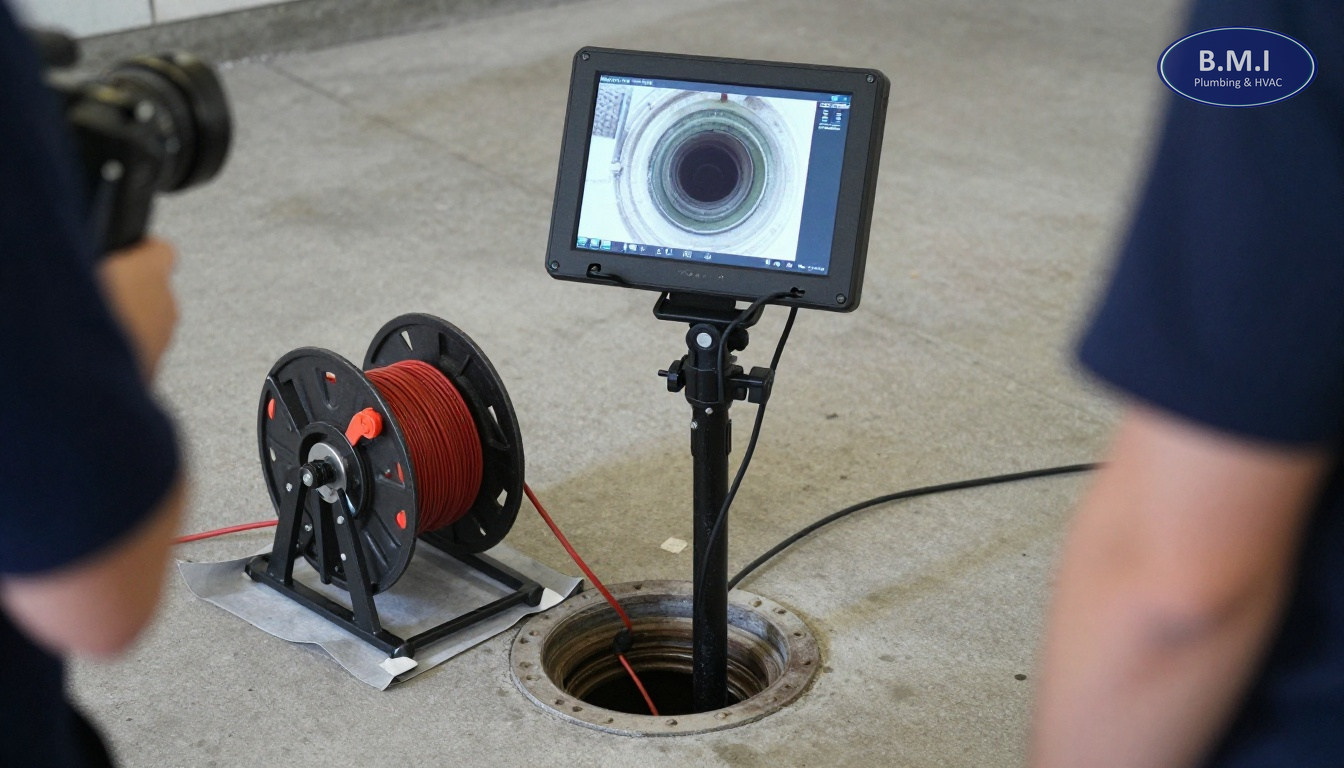
Quick summary: Camera pipe inspection in Mississauga is not just a way to look inside a drain. For condominium managers and boards, it is how you distinguish between a one-off blockage and a building-wide piping problem, especially in older Cooksville towers, 1990s high-rises around Square One, and rental stock along major corridors where cast iron and original branch piping are now well into their service life.
A good CCTV drain survey should produce usable evidence: video, line location, observations by section, and a practical recommendation on whether the next step is cleaning, repair, or replacement. In Mississauga, that matters because access, building vintage, and pressure and usage patterns vary a lot from one property type to another.
Why camera inspection shows up so often in Mississauga buildings
Mississauga has a wide mix of multi-residential stock, and the plumbing issues are different depending on when the building went up. In older apartment and condominium buildings from the 1970s and 1980s, especially in established areas such as Cooksville and parts of Erin Mills, the drainage system is commonly original cast iron with decades of scale, channel rot, and rough interior surfaces that catch debris. In those buildings, a recurring backup is often not a simple clog. A camera pipe inspection is what confirms whether the line is just dirty or whether the pipe wall itself is failing.
Then there are the many Mississauga towers built in the 1990s and early 2000s around Hurontario, Burnhamthorpe, and the Square One area. These buildings often have a mix of copper domestic water systems and aging drainage branches that have seen years of kitchen grease, wipes, and tenant turnover. The symptom may be “intermittent backup” rather than a full blockage. That is exactly where CCTV is useful, because it can show a partial obstruction, a belly in horizontal piping, or a bad transition at a previous repair.
Newer glass towers in City Centre and along the Hurontario corridor are not immune either. The piping is newer, but camera inspection is still used to isolate construction deficiencies, foreign objects, improper tie-ins from renovations, and localized issues after fit-outs or in-suite alterations. Under the Condominium Act, section 98 alterations can affect plumbing layouts in ways that are not obvious from a complaint alone. Video evidence helps separate suite-level work from common-element issues.
Municipally, Mississauga properties are served through the Region of Peel water and wastewater system, which matters because building performance is influenced not just by internal plumbing condition but by local operating conditions and elevation. Buildings in different parts of the city can see different effective pressures, and that affects how fixtures behave and how complaints are described. A resident may report “gurgling and slow draining” while the real issue is a partially restricted branch line and pressure fluctuations elsewhere in the system. Camera work often pairs well with pressure reducing valve maintenance and replacement when the building is trying to sort out whether a complaint is on the supply side, the drainage side, or both.
From a logistics standpoint, Mississauga buildings also vary a lot in access. Older buildings may have limited cleanouts, small janitor closets, and service corridors that make equipment movement slower. Newer towers may have tighter move-in rules, loading dock scheduling, and elevator booking requirements. If you are planning a broader inspection program rather than a single trouble call, that logistics piece affects both cost and duration.
How pipe problems present in Mississauga condos and rentals
Property managers usually do not call asking for a camera because they want a video. They call because the building is giving off patterns that ordinary drain clearing has not resolved.
In Mississauga, common reports include repeated kitchen sink backups on the same vertical stack, tub or floor drain backups after peak morning use, sewage odour from a lower-floor janitor room, and intermittent overflows in a parkade service area after heavy occupancy periods. In some rental buildings, staff may report that one line is being snaked every few months with no lasting improvement. In a condominium, the pattern may be more political than technical at first: several owners on different floors complain over time, but each event clears before management can see it.
That is where a drain cleaning and snaking call and a camera inspection start to diverge. Snaking is for restoring flow. Camera inspection is for understanding why flow keeps being lost. If the line has heavy internal scale, the snake may punch a temporary channel and leave most of the restriction behind. If the line has a sag in a horizontal run above the parking garage ceiling, the blockage may reform because water and solids are never fully clearing.
Mississauga buildings with shared kitchen stacks often see grease-related issues in fall, before and during the holiday season. Boards planning maintenance before winter should think about inspection together with kitchen stack cleaning, not as separate topics. The camera can confirm whether the stack simply needs jetting and maintenance, or whether the interior is deteriorated enough that cleaning alone will not buy much service life.
Another common use case is pre-project verification. Before authorizing a localized drain repair, a manager may want to know whether the visible leak is the only defect or just the first one to show up. A short camera run upstream and downstream can keep a building from spending money on a neat small repair while the rest of the section is near failure.
What a camera pipe inspection in Mississauga should include
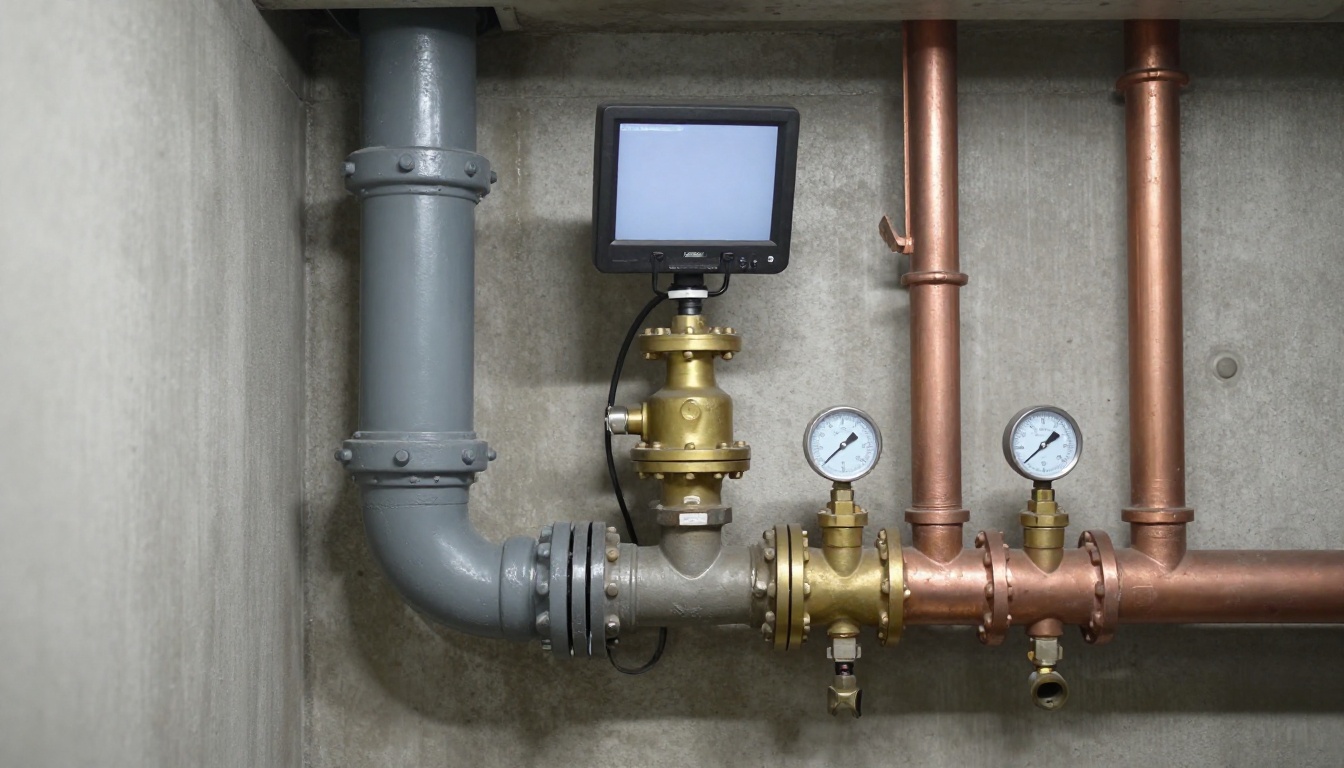
A proper camera inspection is not just feeding a cable into a line and announcing that it looks bad. For condominium plumbing in Mississauga, the inspection needs to be structured so the results can support a maintenance decision, an engineering review, or a board discussion.
First, the plumber needs to choose the right access points. That may be a suite cleanout, a janitor sink branch, a base-of-stack cleanout, a main drain cleanout, or an access point in the parking garage service area. In older towers, not every line has ideal access, so part of the value is knowing what can be seen from which point and where the blind spots are.
Second, if the line is fully blocked or heavily fouled, it may need to be cleaned first. This is important because a camera pushed through heavy grease or solids can produce poor footage and weak conclusions. Often the right sequence is drain cleaning and snaking or jetting first, then CCTV to assess the pipe wall and geometry once the obstruction is removed.
Third, the output should be documented. For management and board purposes, insist on:
- video or still captures tied to the inspected line
- identification of the line inspected and the access point used
- approximate distance to observed defects
- a plain-language summary of the findings
- a recommendation that separates urgent work from planned work
Useful findings in Mississauga high-rises often include internal corrosion, joint offsets, standing water in horizontal runs, grease accumulation, construction debris, failed transitions, and evidence of prior patch repairs. If the issue appears to involve a cross-connection or a backflow concern in a mechanical room, that may also trigger review of the building’s backflow prevention testing and certification program, especially because premise isolation devices require ongoing testing and documentation.
Where a drain problem may relate to broader system age, boards should also look at whether adjacent components have been assessed. Buildings that are investigating waste and drainage condition are often also due for a valve audit, charting and exercise program, because isolation becomes critical once repairs start.
A representative Mississauga project: repeated kitchen stack backups near Square One
A representative call would be a 24-storey condominium from the early 1990s near Hurontario and Burnhamthorpe. Management had a recurring complaint on one kitchen stack serving roughly a dozen suites. For about a year, the line had been snaked several times after sink backups on mid-level floors, but the relief never lasted more than a few months. Residents described slow draining, gurgling, and occasional backup during evening peak use.
BMI attended first for a service assessment and reviewed the stack history. Because the pattern suggested a shared line issue rather than isolated in-suite misuse, the next step was a targeted camera pipe inspection after clearing the stack. Access was through a base cleanout and selected suite points. The CCTV survey showed heavy grease accumulation through long sections of the kitchen stack, with severe internal scale and roughness in portions of the original cast iron branch piping. One horizontal section near the lower levels also held standing water, indicating a partial belly or settlement issue.
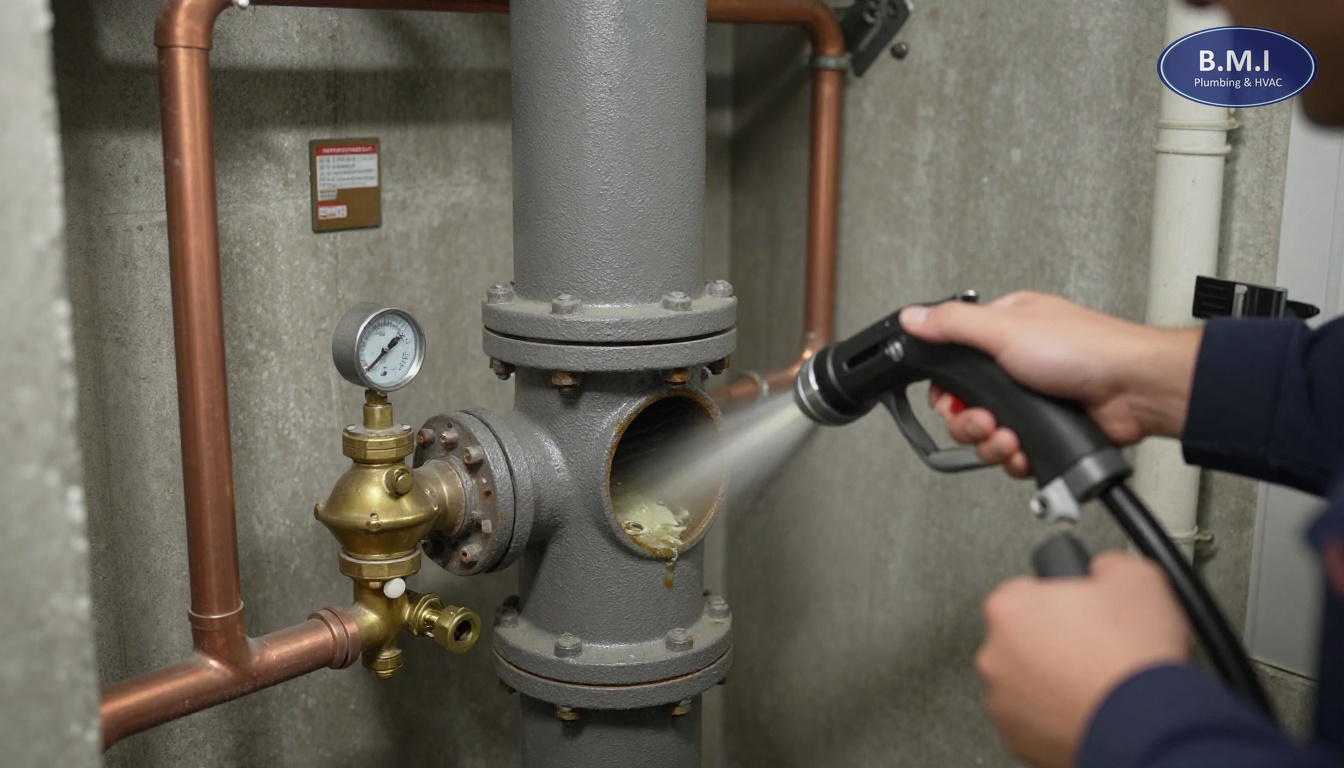
The immediate work was high-pressure cleaning of the affected kitchen line, followed by confirmation camera footage. BMI then provided management with a short report distinguishing three scopes: immediate restoration, short-term maintenance, and future capital planning. Immediate restoration solved the active issue. Short-term maintenance recommended scheduled kitchen stack cleaning before the holiday season and at defined intervals thereafter. Future capital planning flagged the lower horizontal section for localized replacement if backups returned despite cleaning.
The on-site work took one day for clearing and inspection, plus follow-up reporting. A realistic market cost for a job like that might fall around $1,500 to $4,000 for targeted clearing, CCTV, and documentation depending on access, suite coordination, and whether after-hours work is required. If the building proceeds to replace a localized horizontal section, that becomes a separate project with a very different cost profile.
Costs and timelines for camera inspection in Mississauga
For budgeting in fall, when many Mississauga boards are preparing next year’s operating and reserve numbers, it helps to separate camera work into three categories.
1. Targeted trouble-call inspection
This is for one known line with one known symptom. In the Mississauga market, a basic targeted camera inspection may start in the high hundreds and move into the low thousands depending on pipe size, access, cleaning required first, and reporting expectations. If no cleaning is needed and access is simple, it is faster and cheaper. If the line must be cleared first or multiple suites coordinated, cost rises.
2. Multi-line diagnostic survey
This is common where a building has recurring problems on more than one stack or wants to understand whether the issue is local or systemic. A CCTV drain survey covering several stacks or horizontal mains can run from a few thousand dollars into the low five figures. Duration is commonly one to several days depending on building size, elevator access, water-use restrictions, and the amount of cleaning needed before inspection.
3. Pre-capital-condition assessment
Where the board is deciding between patching and larger replacement, inspection may be paired with engineering review and more formal documentation. The camera work itself is only part of the cost. The value is in producing evidence that supports decisions on domestic water riser replacement, full building re-piping, or other larger plumbing scopes where drainage condition is related to overall system age.
In occupied Mississauga buildings, timelines depend heavily on access planning. A one-line inspection can often be completed the same day. A building-wide program usually needs notice to residents, elevator coordination, and sometimes after-hours work to minimize disruption. Fall scheduling tends to tighten because buildings are trying to complete maintenance before winter and before holiday occupancy peaks.
Repair versus replacement after a Mississauga CCTV drain survey
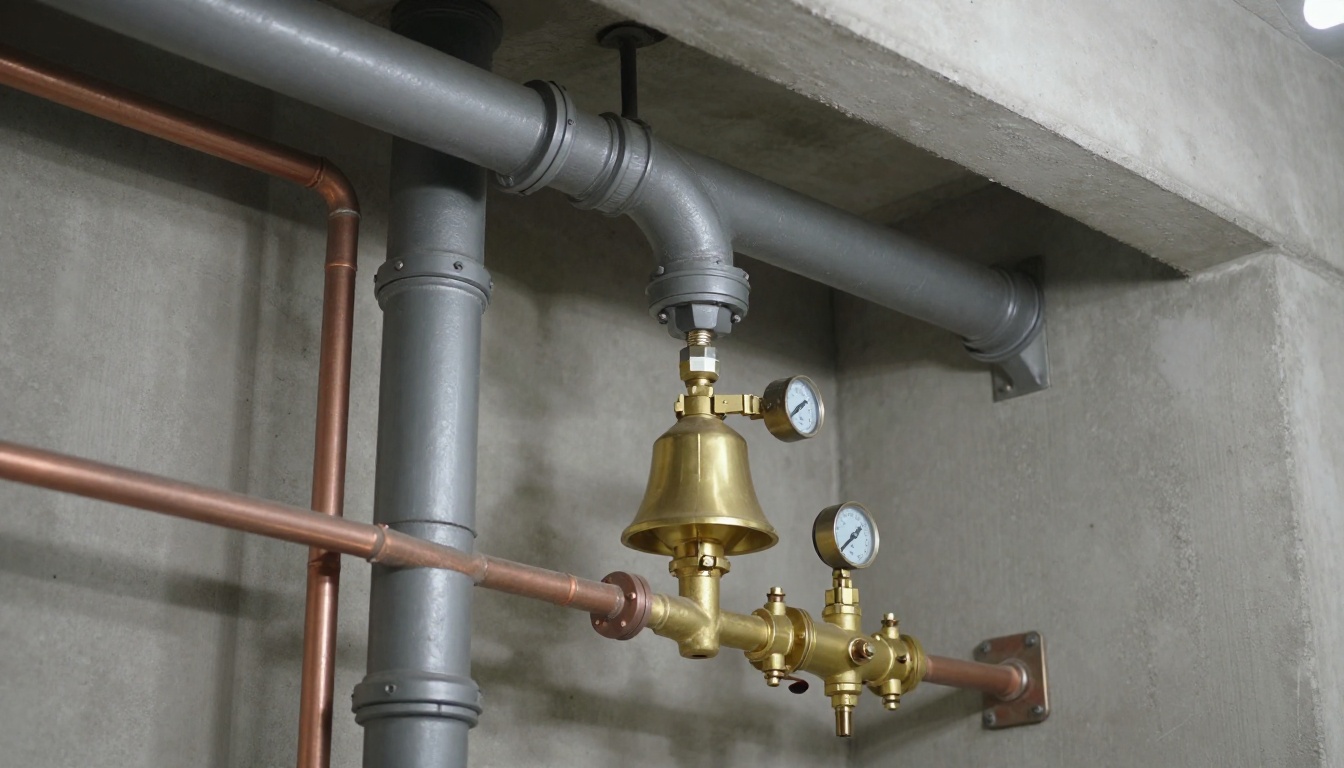
A camera inspection is only useful if it leads to the right next decision. In practice, that usually means choosing among maintenance cleaning, localized repair, or planned replacement.
Choose maintenance when the camera shows buildup but the pipe wall and alignment are still serviceable. That often applies to kitchen stacks and certain horizontal branches where periodic jetting can restore performance. In those cases, a building may be better served by a formal maintenance program than by waiting for each backup to become an emergency.
Choose localized repair when the defect is specific and accessible: a failed section of horizontal drain, a bad tie-in, a separated joint, or a localized belly. Here, the camera allows a building to avoid over-scoping. It also informs isolation planning, which is where a current sectional and isolation valve replacement strategy can matter if plumbing shutdowns will affect occupied suites.
Choose broader replacement when the footage shows widespread internal corrosion, repeated defects across multiple lines, or piping so rough and reduced that cleaning will only buy limited time. In some Mississauga buildings, especially older stock where several systems are aging together, the right answer may be to fold drainage findings into a larger project solutions discussion rather than continuing piecemeal repairs.
The key point for boards is that camera footage should not be treated as entertainment. It is evidence for scope selection. Ask what the building gains in service life from each option, how likely the issue is to recur, and what access conditions will look like if the work is delayed by another budget cycle.
What deferring camera inspection can cost a Mississauga board
Deferring the inspection step often means paying for the same problem several times. The building snakes a line, gets temporary relief, cleans up a minor overflow, manages resident complaints, and repeats the cycle without ever identifying the defect. That is not cheap operating practice. It is hidden reactive spending.
For Mississauga condominiums, the direct costs of delay can include repeated service calls, after-hours attendance, drywall and flooring damage from backups, sanitation cleanup, and resident chargeback disputes. If the backup affects common areas or multiple suites, management time rises quickly. If the event escalates, the building may need 24/7 emergency leak response instead of planned work, which is always the less efficient way to solve a known recurring issue.
There is also the reserve fund angle. Reserve fund studies and updates are only as good as the condition information available. If the board is guessing about whether a drain system needs spot repair or broader replacement, the budget discussion becomes vague and reactive. Camera evidence sharpens that discussion.
Insurance is another factor. When there is a history of repeat incidents, insurers and adjusters often want to know what the corporation knew and what it did with that knowledge. A documented inspection and a reasonable response plan put the board in a stronger position than a file full of repetitive emergency invoices.
Finally, there is resident confidence. Buildings that can explain, with evidence, why a problem happened and what the next step is tend to handle communications better than buildings that keep saying the line was “cleared again.”
FAQs about camera pipe inspection in Mississauga
When should a Mississauga condominium order a camera pipe inspection instead of just snaking a drain?
A camera pipe inspection makes sense when the same stack, branch or building drain keeps backing up after clearing, or when the symptoms vary by floor and time of day. In many Mississauga buildings, repeated snaking only restores temporary flow if the real issue is scale, a sag, a separated joint, grease accumulation or deteriorated cast iron. The camera record gives the board and manager evidence for whether the next step is cleaning, sectional repair or capital replacement.
What can a CCTV drain survey actually show in a Mississauga high-rise?
In condominium plumbing in Mississauga, CCTV can show internal corrosion in cast iron, offsets at fittings, standing water that suggests poor grade, root intrusion on site services, grease buildup in kitchen lines, and foreign objects lodged in branch piping. It can also confirm whether previous repairs tie in properly and whether a blockage is local to one suite stack connection or farther downstream. What it cannot do is see through water-filled sections or diagnose every leak source without access openings.
How disruptive is camera inspection work in an occupied Mississauga building?
Most camera inspections are far less disruptive than residents expect, but access planning matters. For a Mississauga tower, the plumber may need entry to selected suites, janitor rooms, cleanouts, parkade service rooms and the main drain area, with short water-use restrictions on the affected stack during active inspection. Older buildings near Cooksville or along Hurontario often have tighter service spaces and fewer convenient cleanouts, which can add time.
What does a camera inspection in Mississauga usually cost?
For budgeting purposes, a targeted camera inspection in Mississauga often starts around several hundred dollars for a simple line with good access and can run into the low thousands for multiple stacks, after-hours access, reporting and coordinated suite entry. A broader CCTV drain survey program for a multi-residential building can be several thousand to tens of thousands depending on the number of lines, the pipe diameters, whether jetting is needed first, and how formal the deliverables must be for engineering or reserve fund planning. These are market ranges, not quoted prices.
Is camera inspection useful before winter in Mississauga?
Yes. Fall is a practical time in Mississauga to inspect kitchen stacks and problem drains before the holiday cooking season increases grease loading and before winter staffing and access become harder to coordinate. It is also useful when boards are preparing next year’s operating and reserve budgets, because a camera report can separate maintenance work from larger capital items with better evidence.
Can camera inspection help with reserve fund and insurance decisions in Mississauga condos?
It can. A documented camera inspection gives the board a clearer basis for reserve fund timing, especially where there is debate between localized repair and broader replacement of aging drainage piping. It also helps support insurance discussions and internal chargeback decisions by showing whether a backup was caused by common-element deterioration, grease accumulation in shared piping, or a localized misuse issue.
Next steps for Mississauga property managers and boards
If your Mississauga building has a drain line that has been cleared more than once, or if you are heading into budget season with unresolved plumbing history, treat camera inspection as a decision tool rather than an optional extra. The right survey can tell you whether to schedule cleaning, prepare a repair, or start planning a larger capital scope.
BMI serves Mississauga and the surrounding GTA from its Toronto shop, with repair, diagnostic, and capital-project support for condominium and multi-residential buildings. If you need targeted troubleshooting, broader drain assessment, or support tying inspection findings to next-step work, review BMI’s repairs and service, see completed projects and building references, or request a quote or service call.
Contact BMI
- Contact BMI
- Phone: (416) 845-3756
- Emergency: (416) 845-3756, answered 24 hours a day
- Email: info@brial.ca
Need a plumber in your building?
BMI services roughly 200 condominium and multi-residential buildings across Toronto and the GTA. Emergencies are answered at any hour.