Camera Pipe Inspection in Newmarket Condominiums
Camera pipe inspection in Newmarket for condos and multi-residential buildings. Diagnose drains, stacks and underground piping with clear evidence.
Camera Pipe Inspection in Newmarket Condominiums
Quick summary: Camera pipe inspection in Newmarket gives condominium managers and boards evidence they can actually use: where the blockage, break, offset or scale buildup is, how severe it is, and whether the next step is cleaning, repair or replacement. In a market with a mix of older rental stock, 1990s and 2000s condo buildings, and newer mid-rise development, CCTV drain survey work is often the difference between repeated reactive calls and a planned scope.
Why camera pipe inspection shows up in Newmarket buildings specifically
Newmarket is not one uniform building type, and that matters. Around the historic core and older apartment areas, you still see low-rise and mid-rise multi-residential buildings where cast iron sanitary piping, older copper, and original buried drainage have had decades of service. In newer condominium pockets around Yonge Street corridors and more recent mid-rise development, the piping materials and failure modes are different: more plastic drainage, different cleanout access, and fewer age-related corrosion issues but still plenty of commissioning defects, settlement-related drainage issues and misuse-related blockages.
For property managers in Newmarket, the practical problem is that symptoms can look the same even when the cause is completely different. A stack backup in an older rental building may be heavy internal scaling in cast iron. A parking garage floor drain issue in a newer building may be debris accumulation at a long flat run or a sag in buried storm piping. Without a visual inspection, the building can spend months paying for repeat service calls that never answer the real question.
Municipally, Newmarket buildings are operating within York Region water servicing and local municipal infrastructure conditions, which means pressure and drainage behaviour can vary by location, elevation and building design. In practical terms, some buildings experience stronger pressure fluctuations, some have longer internal drainage runs to municipal connections, and some sites make access to exterior cleanouts or buried line entry points awkward. A camera inspection helps separate a building-side issue from something that may require coordination with the municipality.
This is also the time of year when boards in Newmarket are building next year’s numbers. In fall, a proper camera pipe inspection can support reserve planning, help justify emergency contingencies, and identify where preventive work like drain cleaning and snaking or kitchen stack cleaning should be scheduled before the holiday cooking season increases load on the system.
How drainage problems present in Newmarket condo buildings
Managers rarely call and say, “we need a CCTV drain survey.” They call with symptoms.
In Newmarket, the typical reports are more like these:
- repeated backups in the same kitchen line on several floors
- intermittent sewage odour near a janitor room or garage corridor
- water appearing at a slab joint or around a base cleanout after heavy use
- one vertical stack that needs snaking every few months
- slow drainage and gurgling in upper suites, but a more serious backup on lower floors
- storm or sanitary issues that seem to worsen during heavy rain or freeze-thaw periods
In older cast iron systems, the complaint is often recurring blockage with no obvious misuse event. The line gets opened, flow returns, and everyone assumes the issue is solved until the next surcharge. In reality, the pipe may have significant internal scale, channeling, corrosion pockets or a partially separated fitting. The camera confirms whether the blockage is operational or structural.
In newer Newmarket buildings, the complaint may be less about corrosion and more about installation geometry. Long horizontal runs above parking garages, below slab branches with limited pitch, or awkward transitions at cleanouts can hold debris and create repeat problems. A basic service call will not tell you whether there is a true belly in the line or simply a recurring soft blockage.
This is especially important where resident disruption is a concern. Repeated entries into suites, elevator bookings and after-hours callouts cost money and create friction. A single targeted inspection, paired where needed with 24/7 emergency leak response or follow-up in-suite plumbing repairs, often gives management a cleaner path than continued trial-and-error service.
What a camera inspection in Newmarket actually involves
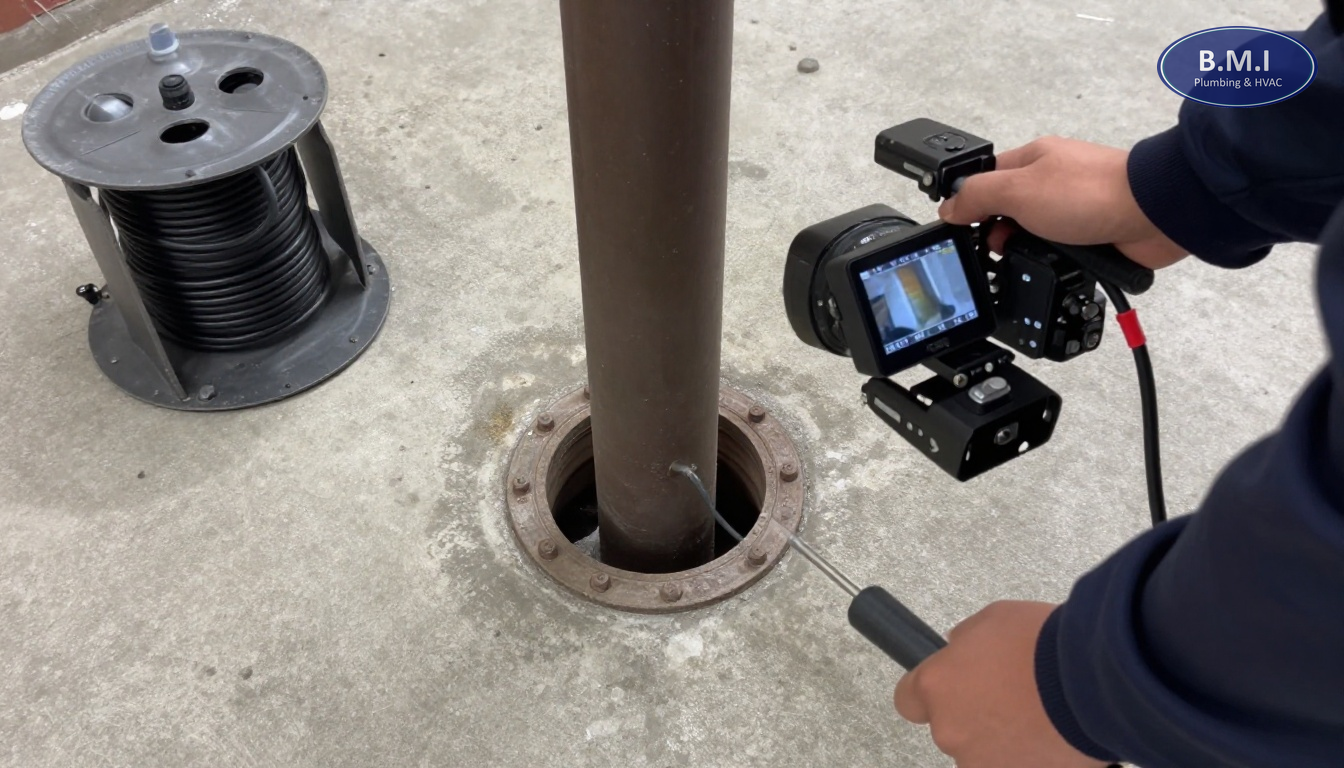
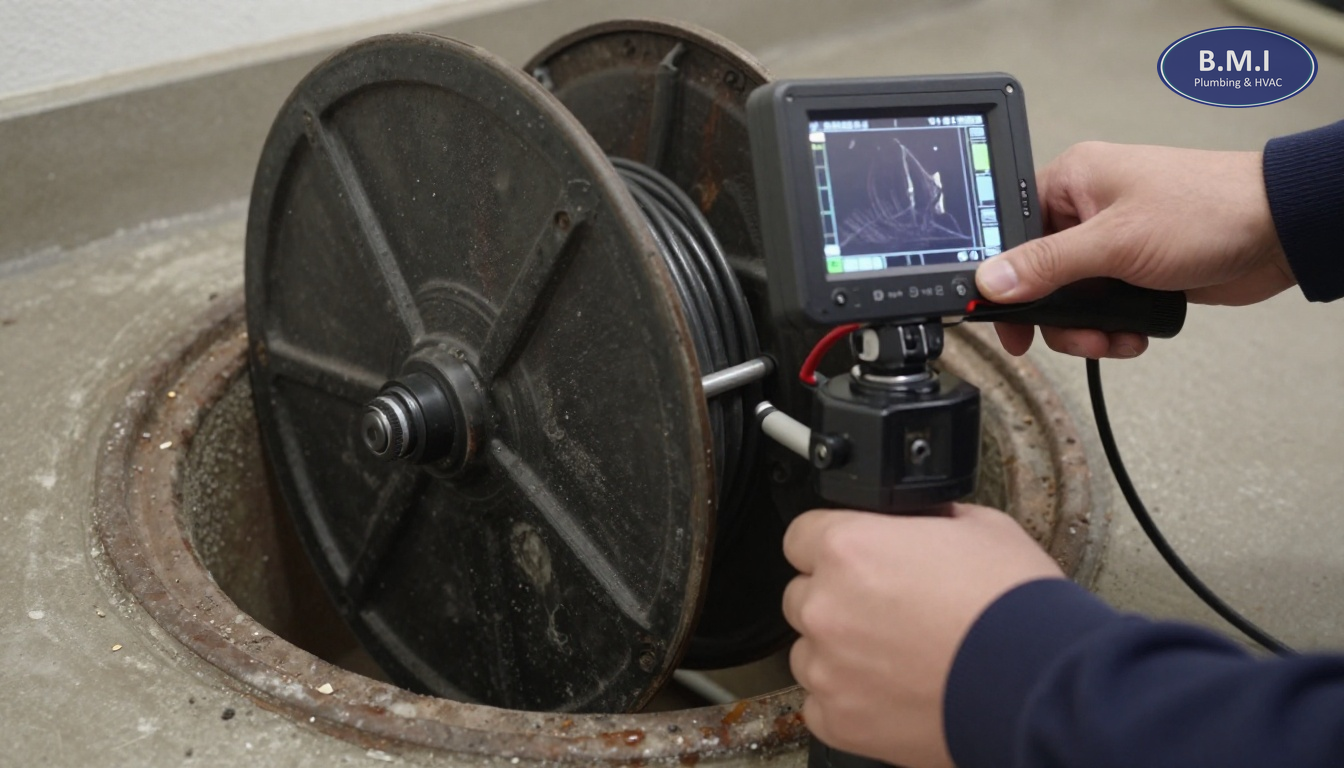
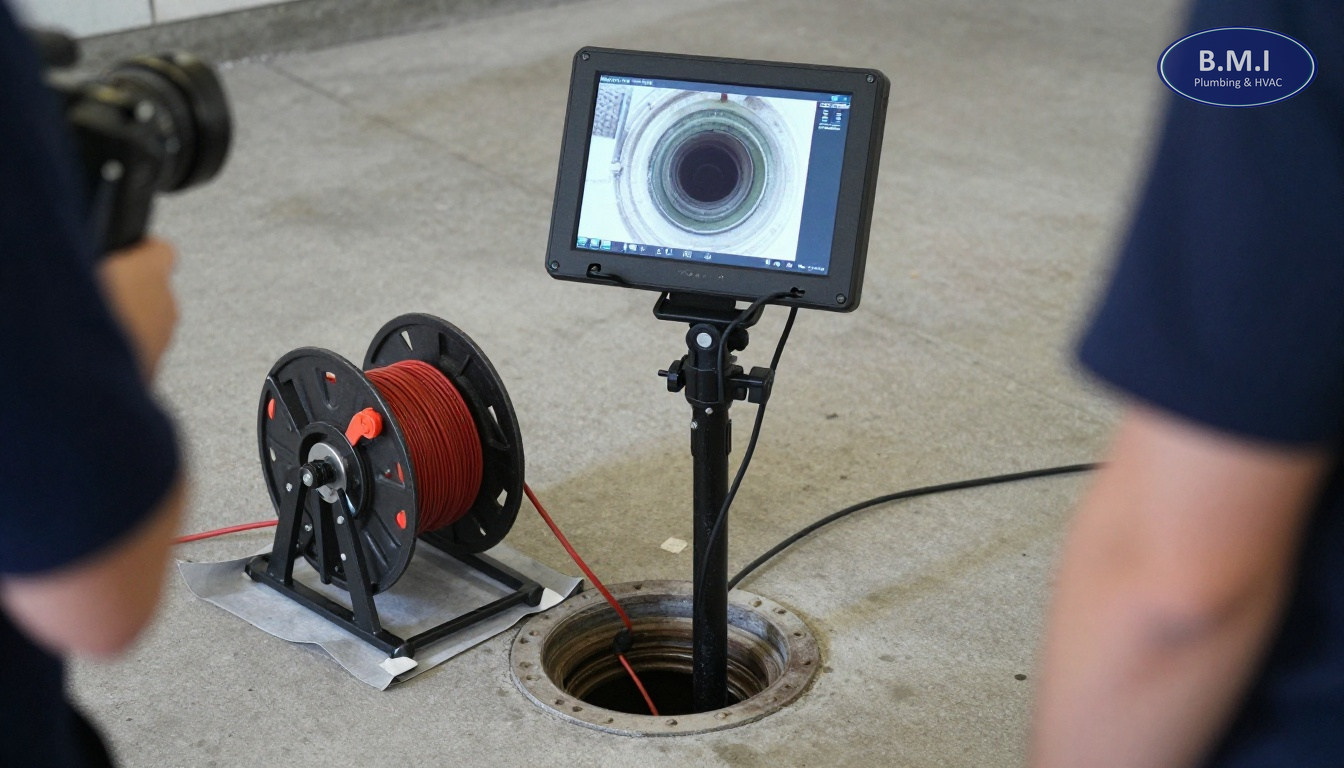
A proper camera pipe inspection is not just pushing a camera into a pipe and watching a monitor. In a condominium or multi-residential setting, useful inspection work has four parts: access planning, line preparation, video inspection and reporting.
First, access points have to be chosen carefully. That may mean base cleanouts in a service room, branch cleanouts in a corridor, access from a stack cleanout in a suite, or entry from a parking garage drain run. In older Newmarket buildings, access is often the hardest part because service spaces are tighter and original cleanout locations were not designed for modern inspection equipment.
Second, the line may need preparation. If the pipe is full of grease, paper, scale flakes or standing sludge, the camera image will be of limited value. This is why many inspections are paired with drain cleaning and snaking or jetting first. In kitchen waste lines, the most useful sequence is often clean first, inspect second, then decide whether the line belongs on an ongoing maintenance program.
Third, the actual CCTV drain survey records what is in the line. On a meaningful inspection, the operator should note distances, changes in direction, material transitions, root intrusion, offset joints, corrosion, fractures, standing water or evidence of previous repair. If the purpose is capital planning, the survey should not stop at the first problem. It should define the extent of deterioration so the board is not budgeting in the dark.
Fourth, you need evidence that can be used after the technician leaves. For a Newmarket property manager, that means video files, stills, a written summary and clear recommendations. “Line is bad” is not enough. The report should state whether the finding supports cleaning, spot repair, sectional replacement or broader project work.
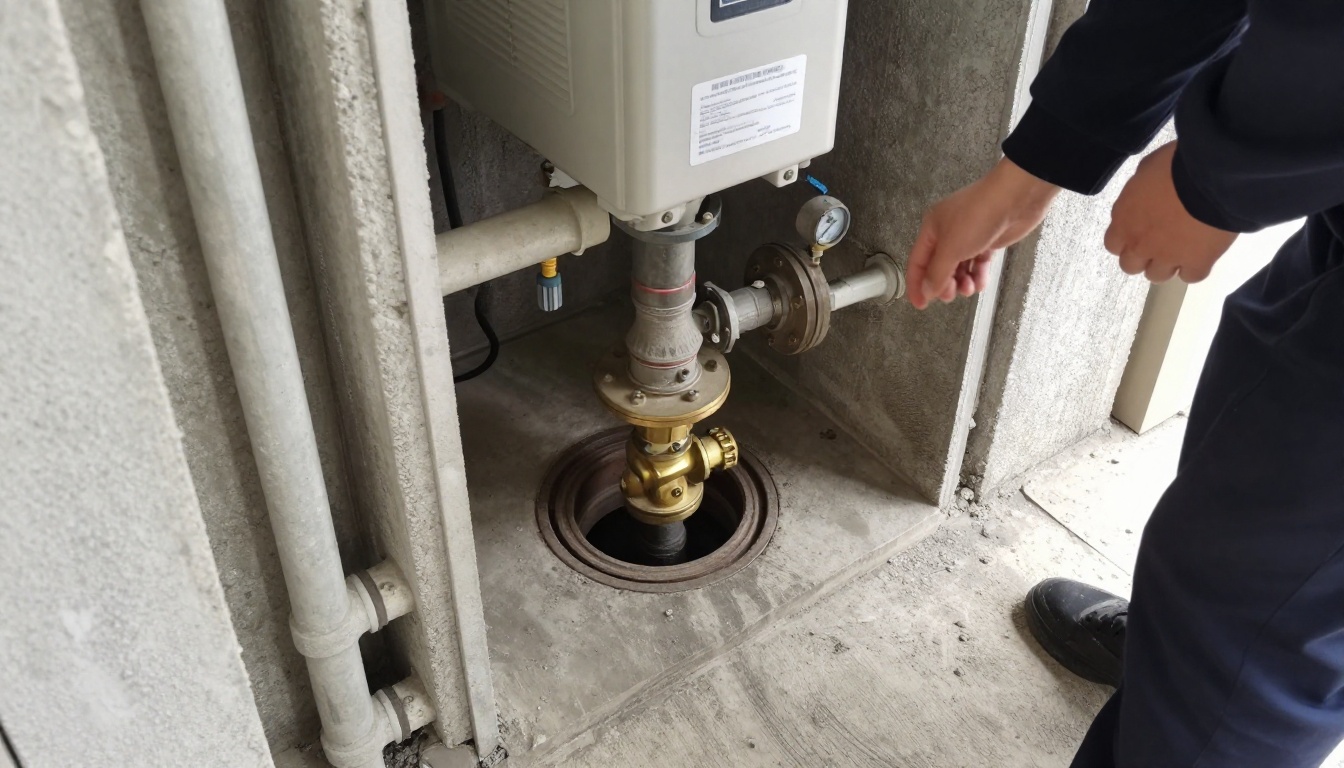
Where pressure or cross-connection issues are also suspected, CCTV may be only one part of the picture. It is not unusual during a broader investigation to review mechanical room conditions, isolation valves and backflow assemblies at the same time, especially in buildings that are overdue for valve audit work or backflow prevention testing and certification.
What evidence a Newmarket manager or board should insist on
For board reporting and budgeting, video alone is not enough. Good camera inspection work produces evidence that can answer three questions: what is wrong, where is it, and what is the least disruptive fix that will last.
Insist on the following:
- the approximate location of the defect by measured distance from the entry point
- identification of pipe material where visible
- still images showing the key defect, not only a full video file
- notes on whether the line was cleaned before inspection
- a statement on whether flow was restored and whether the issue is likely to recur
- a recommendation that distinguishes maintenance from capital repair
This matters because many Newmarket condominium decisions are not made on the day of the service call. They go to the property manager, then the board, sometimes to the engineer, and often into the reserve or operating budget process. If the report does not clearly support a decision, the building ends up paying twice: once for the inspection and again for another consultant or contractor to re-diagnose the same issue.
In Ontario, plumbing work and repairs must be carried out by a licensed plumber, and if the inspection leads to larger replacement scopes, the board should also think ahead to reserve fund timing and owner communication. If defects involve suite alterations, prior repairs or unauthorized connections, the findings can also intersect with condominium governance and section 98 alteration records under the Condominium Act, 1998.
For buildings trying to compare options, this is where it helps to look at the likely downstream path. If the survey points to a localized failure, that may lead to a small repair. If it reveals broad deterioration, the next conversation may be about building re-piping, valve replacement, or other planned project solutions rather than repeated service calls.
A representative Newmarket camera inspection project
A realistic example would be a 7-storey condominium from the early 2000s near the Yonge Street corridor in Newmarket. The property manager had recurring complaints from residents on lower floors about kitchen sink backups, with one more serious surcharge affecting two suites over a long weekend. The building had already paid for three separate drain snaking calls over the prior eight months.
The initial symptom suggested a routine blockage, but the repeat pattern made that unlikely. Access was arranged through a base cleanout and one in-suite cleanout on a lower level stack. The line was first cleared and flushed, then a camera inspection was completed. The CCTV drain survey found substantial grease accumulation along the kitchen waste stack, but more importantly it also showed internal scaling and a rough offset at a change in direction near the bottom of the stack where solids were repeatedly catching.
Because the inspection documented both an operational issue and a physical defect, the building was able to stop treating it as a simple service problem. The immediate work involved thorough cleaning of the stack and branch line, followed by a targeted repair scope to address the defective section. The building also put the line on a scheduled kitchen stack cleaning program before the holiday season.
The inspection and cleaning portion took one day with some suite coordination and a short service interruption. The targeted repair was completed separately over two working days. As a rough Newmarket-market estimate, the diagnostic and cleaning portion was in the range of $1,800 to $3,500, while the follow-up repair landed in the mid four figures, depending on access restoration and finishing. The more important result was that the board now had documentation showing why repeated snaking had not solved the problem.
Costs and timelines for camera pipe inspection in Newmarket
For budgeting purposes, camera inspection costs in Newmarket vary mainly with access, preparation and the amount of reporting required.
A targeted inspection of one problem area, where there is already a usable cleanout and minimal preparation required, may fall around $900 to $2,500. That would usually cover a single line or stack section and a straightforward report.
If the line needs cleaning first, or if access requires work in occupied suites, expect more. A combined cleaning and inspection scope for a kitchen stack or sanitary branch may run from roughly $1,800 to $4,500.
A broader CCTV drain survey across several stack bases, parking garage ceiling runs and selected underground lines may range from about $3,500 to $12,000 or more for a mid-size Newmarket condominium. If tracing, locating, after-hours work or extensive reporting is needed for consultants or insurers, costs can go higher.
Timelines are usually shorter than boards expect. A single-line diagnostic can often be completed in one visit. A building-wide survey program may take one to three days in the field, followed by report preparation. The schedule risk is usually not the camera work itself, but resident access, elevator booking, parked cars in service areas and whether the line has to be cleaned before inspection.
In fall, it is smart to book this before winter weather complicates exterior access and before holiday usage puts extra stress on kitchen and sanitary systems. Where pressure concerns are also part of the building’s operating picture, boards often pair this planning with seasonal pressure reducing valve maintenance and replacement reviews.
Repair versus replacement in Newmarket: using inspection results properly
The point of a camera inspection is not to prove that every bad line must be replaced. It is to decide correctly.
If the survey shows soft blockage, grease loading or localized debris accumulation in an otherwise sound line, scheduled maintenance is usually the right answer. This is where routine maintenance programs save money by turning emergency work into planned work.
If the survey shows a discrete defect, such as a cracked fitting, separated joint or localized collapse, a spot repair may be justified. That is especially true in newer Newmarket buildings where the overall system is still in decent condition.
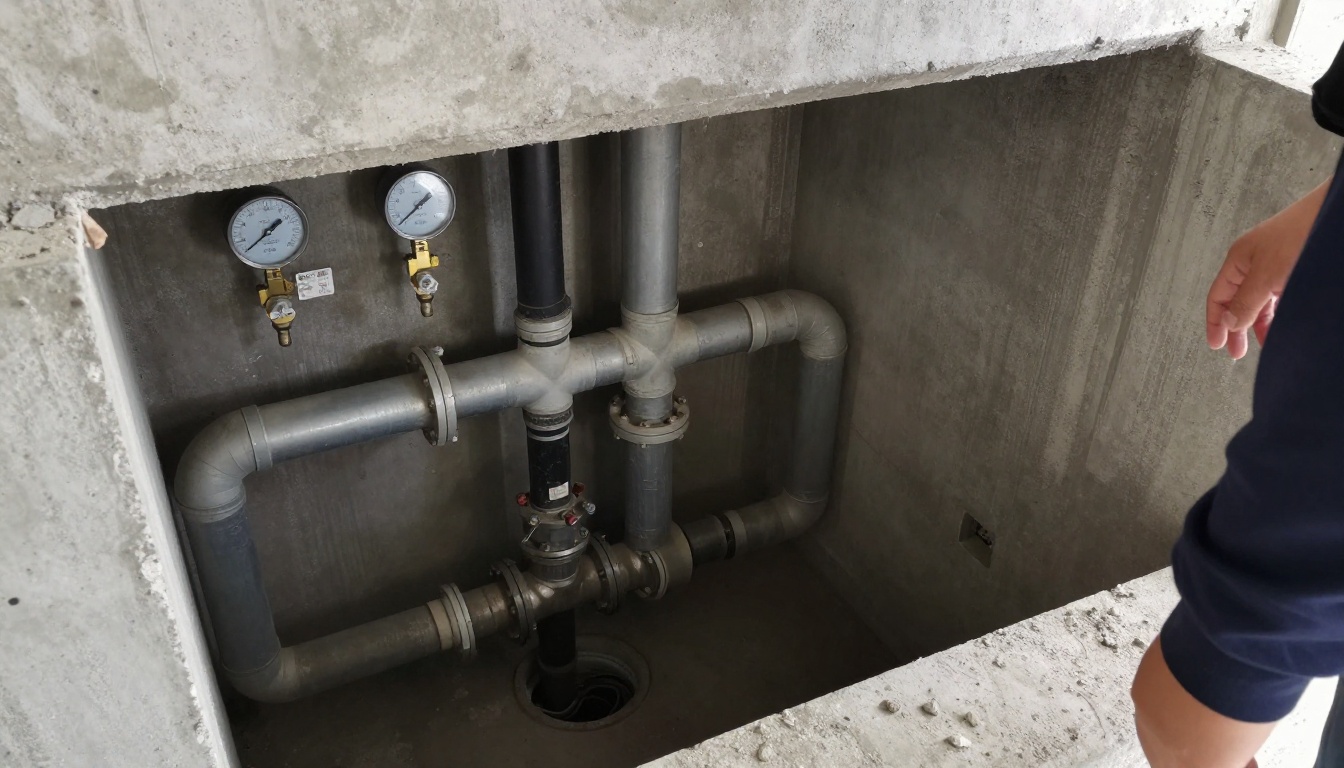
If the survey shows widespread internal corrosion, repeated offsets, multiple failing sections or chronic standing water across long runs, then the board should stop authorizing one-off reactive repairs and look at a planned capital scope. That may be phased, but it should be deliberate. The same logic applies if the inspection reveals several hidden deficiencies at once, such as inaccessible valves, failing isolation points and deteriorated drainage. In that case, a coordinated project can be more efficient than handling each failure separately.
A good diagnostic contractor should be comfortable saying when not to replace. But they should also be clear when evidence points beyond service work and into larger completed projects and building references-type scopes that need budgeting, engineering review or tendering.
What deferring camera inspection costs a Newmarket condominium
Deferring inspection usually means paying for uncertainty. In a Newmarket condo, that uncertainty shows up in four places.
First, service-call repetition. If a line backs up three or four times a year and every response is a temporary opening, the building is spending operating dollars without reducing risk.
Second, water damage and chargeback disputes. Without evidence, it is harder to determine whether the event came from resident misuse, common element deterioration or a previous failed repair. That complicates recovery discussions and owner relations.
Third, reserve fund distortion. If the board does not know whether it has a maintenance issue or a capital replacement issue, the reserve study and annual budget discussion become guesswork. In Ontario, reserve fund studies and updates are meant to support planned major repair and replacement decisions, not repeated surprises.
Fourth, insurance and claims history. A documented pattern of recurring drainage losses can affect deductibles, claims handling and the insurer’s view of building maintenance practices. A relatively modest inspection cost can be easier to defend than another preventable backup affecting several suites.
At minimum, boards should use camera work to answer whether the line belongs in routine service, near-term repair or long-term replacement planning. If the problem line is left unverified, the building often pays more in emergency response than it would have spent to diagnose the issue properly in the first place.
FAQs about camera pipe inspection in Newmarket
When should a Newmarket condo order a camera pipe inspection instead of another drain snaking call?
If the same kitchen stack, sanitary line or fixture group is backing up repeatedly, a camera inspection is usually the next sensible step. Snaking can restore flow temporarily, but it does not show whether the underlying issue is grease scale, a broken fitting, offset joints, standing water or a partially collapsed section. For Newmarket boards trying to budget properly, video evidence is what separates a maintenance problem from a capital repair problem.
What can a camera inspection actually tell us about our building piping?
A proper pipe inspection can confirm the material, condition and approximate location of defects in sanitary, storm and some domestic drain lines. In a Newmarket multi-residential building, that often means identifying cast iron scaling, root intrusion in buried lines, belly conditions in underground drainage, cracked cleanout branches and debris accumulation at changes in direction. The useful deliverable is not just video, but a marked-up report showing distances, observations and recommendations.
Can camera inspection be done in winter or late fall in Newmarket?
Yes. Fall is often one of the best times to carry out camera inspection in Newmarket because boards are finalizing next year’s budget and want evidence before winter access becomes harder. Interior CCTV work is routine year-round, and exterior line work can also be done as long as access points are available and the line can be safely prepared and flushed.
How much does camera pipe inspection cost for a Newmarket condominium?
For budgeting purposes, a targeted camera inspection of a single problem stack or branch in a Newmarket condo may run from roughly $900 to $2,500 depending on access, cleaning required and reporting. A broader CCTV drain survey of multiple stacks, garage ceiling runs and portions of underground piping can range from about $3,500 to $12,000 or more. Costs vary with building layout, the amount of prep work, after-hours access and whether jetting or tracing is needed first.
Does the line need to be cleaned before a camera inspection?
Often, yes. A camera cannot see through heavy grease, paper buildup, sludge or standing debris, so a useful inspection may require preliminary cleaning or jetting. In Newmarket buildings with older cast iron kitchen stacks, combining inspection with kitchen stack cleaning is common because the camera is most valuable after the obstruction and loose buildup have been removed.
What should a condo manager in Newmarket ask for after the inspection is complete?
Ask for the video files, a written summary, defect locations by distance, still images of key findings and a clear recommendation on whether the issue is maintenance, spot repair or replacement. If the inspection affects reserve planning, the board should also ask how the findings relate to longer-term work such as domestic water riser replacement, valve replacement or broader project solutions where applicable. Good evidence makes it much easier to justify spending to owners and insurers.
Next steps for a Newmarket property manager or board
If your Newmarket building has a line that keeps backing up, a garage drain run that never performs properly, or a mechanical room cleanout that tells you something is wrong but not what, start with a defined scope. Identify the problem area, gather the service history, and decide whether you need a targeted inspection or a broader survey.
For many buildings, the most cost-effective path is to combine cleaning and camera work in the same visit so the report reflects the actual condition of the pipe rather than the obstruction sitting inside it. If the findings point to maintenance, put the line on a schedule. If they point to repair or replacement, use the evidence to get numbers to the board during budget season rather than waiting for another overflow.
BMI serves Newmarket and the surrounding GTA from its Toronto shop. To review a recurring drainage issue, arrange a camera pipe inspection, discuss related repairs and service, or request a site review through the contact page. For more building-focused plumbing guidance, see the BMI blog.
Contact BMI
- Contact BMI
- Phone: (416) 845-3756
- Emergency: (416) 845-3756, answered 24 hours a day
- Email: info@brial.ca
More on condominium plumbing
Camera Pipe Inspection in Etobicoke Condominiums
Camera pipe inspection in Etobicoke for condos and rentals. Learn how CCTV drain surveys diagnose stack, branch and …
Camera Pipe Inspection in Mississauga Condominiums
Camera pipe inspection in Mississauga for condos and rentals. Learn when CCTV drain surveys are needed, what they show, …
Kitchen Stack Cleaning for Condominiums in Newmarket
Kitchen stack cleaning in Newmarket for condominiums. Learn how grease blockages develop, what cleaning involves, and …
Need a plumber in your building?
BMI services roughly 200 condominium and multi-residential buildings across Toronto and the GTA. Emergencies are answered at any hour.