
Cast Iron Stack Replacement in Toronto Condos at 50 Years
When aging cast iron stacks need cleaning, lining or replacement in Toronto condos, here is how to diagnose, budget and defend the decision.
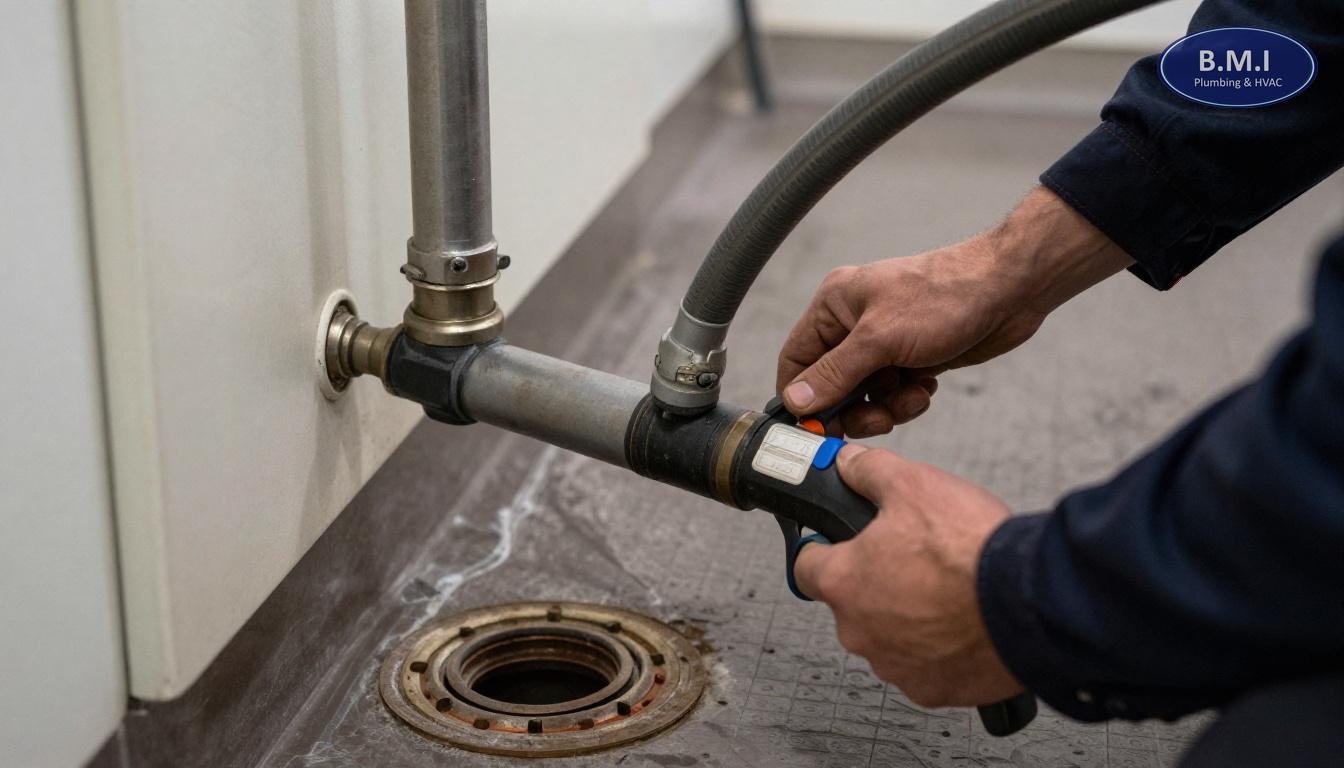
Cast Iron Stack Replacement in Toronto Condos at 50 Years
Quick summary: In many Toronto condominium buildings built in the 1970s and early 1980s, original cast iron stacks are now at the point where cleaning alone may stop being economical. The right decision is not automatically replacement: some stacks should be jetted and monitored, some can be lined, and some should be fully replaced before repeated backups, leaks and insurance claims make the decision for the board.
A common mistake at budget time is to treat all cast iron the same. In practice, a 4-inch bathroom stack that is still structurally round after 50 years is a different asset from a 3-inch kitchen stack with heavy bottom-channel corrosion and a horizontal offset above finished ceilings. The board decision should be based on evidence, not age alone.
The misconception that causes expensive mistakes
The phrase we hear most often in older high-rises is, “the stacks are 50 years old, so they all need to be replaced.” Sometimes that is true. Just as often, it is incomplete. In buildings we service in Toronto, North York and Etobicoke, the first major failures are rarely distributed evenly across all sanitary piping. Kitchen waste stacks usually deteriorate faster than bathroom stacks because grease loading, detergents, food solids and hot-cold cycling create a very different internal environment than a lavatory or WC line.
That matters because the cost difference between a targeted maintenance program and a full capital project is significant. A building that spends $8,000 to $25,000 on a structured season of kitchen stack cleaning and CCTV may defer six figures of replacement by several years if the pipe still has wall thickness and the problem is mostly accumulated scale and grease. The reverse is also true: a building that keeps snaking the same stack every few months may waste operating dollars on a pipe that is already structurally finished and should move into project solutions planning.
Fall is the right time to sort this out. Holiday cooking season increases grease loading, and budget season is when boards need real numbers, not generalities. If a stack is going to fail under winter occupancy, it is better to know in September than during a December backup when access is poor and contractors are triaging emergencies.
What is actually happening inside a 50-year-old cast iron stack
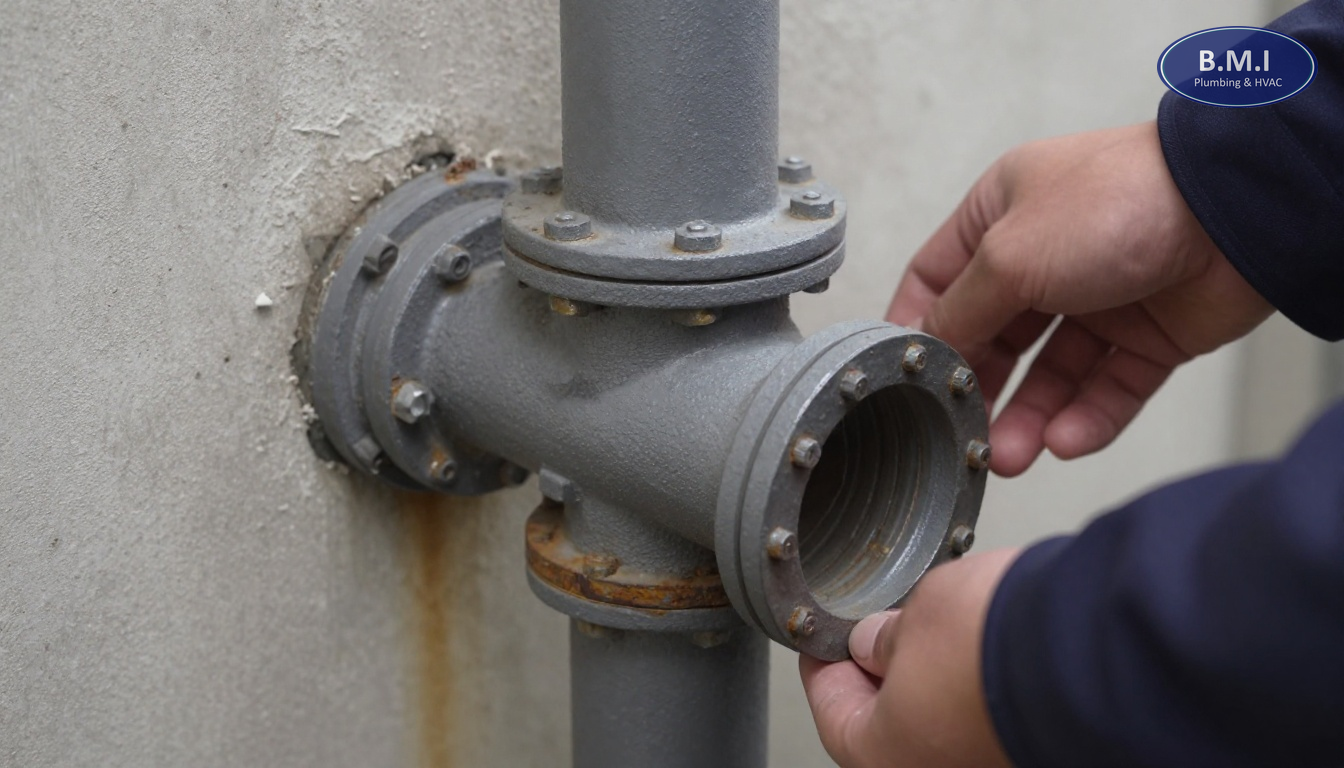
Cast iron sanitary stacks in 1970s concrete towers were commonly installed in 3-inch and 4-inch diameters for branch-connected waste stacks, with 6-inch mains and building drains in some basements. Many were hub-and-spigot cast iron with lead/oakum joints; later repairs may have introduced no-hub cast iron with shielded couplings. At 50 years, the issue is usually not that the entire wall disappears evenly. The more common pattern is channel rot at the bottom half of horizontal runs and offsets, scaling and roughness along the interior, and branch connections that have narrowed enough to catch solids.
In Toronto water conditions, domestic water chemistry is not the direct cause of sanitary cast iron failure the way it can affect domestic copper or brass. The bigger drivers are what moves through the pipe and how fast. Kitchen lines see emulsified grease that cools and re-adheres, dishwasher discharge that repeatedly heats and cools the pipe wall, and food particles that settle where slope is marginal. On early-1990s towers in Vaughan and Mississauga, the issue may be different because the cast iron is younger and often the weak point shifts to specific offsets or branch fittings rather than full-length deterioration.
The non-obvious point is that vertical pipe can look acceptable while the horizontal offset above the corridor ceiling is near failure. We see this often in slab buildings where the stack drops vertically through suites, then turns to run laterally before connecting into a larger main. The vertical section gets the attention because that is what residents think of as “the stack,” but the first leak may show up from the offset where water, paper and sludge sit longer. That is why a quote based only on visible piping in one riser room is not enough.
Another field reality: a stack that has reduced from a nominal 3-inch bore to an effective internal opening of 1 1/2 to 2 inches may still pass normal daily flow and only fail under peak load. That is why residents report, “my sink is usually fine, but it backs up when the suite above runs a dishwasher.” That symptom points strongly to a shared line restriction, not an in-suite trap issue. For active blockages, drain cleaning may be the immediate response, but the capital question still needs a proper diagnosis.
How the problem presents in a condominium building
Property managers usually do not get a technical description. They get a pattern of complaints. The pattern is often more useful than a single camera image.
Symptoms that point to a stack problem, not a suite problem
- A kitchen sink that drains on its own but backs up when an upper suite discharges a dishwasher or full sink load.
- Repeated blockages in the same line of suites, often between the 4th and 12th floors, where usage is high enough to expose a narrowing but not high enough at the top floors to be obvious every day.
- Leaks appearing at the underside of a slab penetration, bulkhead or corridor ceiling after a blockage clears, indicating the cleaning restored flow but exposed a thinned pipe wall.
- Sewer odour near a chase or riser closet without a visible fixture issue, often caused by a compromised joint or branch opening inside the shaft.
- A stack that needs snaking every few months even after residents have been warned about wipes and grease.
In older Scarborough and East York towers, another clue is that the building operator can name the same stack by unit line because it has become part of the building’s folklore. Once staff can predict which stack will block over a holiday weekend, the issue has usually moved beyond random misuse.
Why boards get conflicting opinions
One contractor sees an active blockage and recommends cleaning. Another sees age and recommends replacement. A lining contractor may recommend lining because the vertical run is continuous enough to accept a cured-in-place product. All three can be partly right. The question is not which trade is more persuasive; it is what condition evidence exists for that exact stack, including branches and offsets.
If the evidence is weak, insist on a written report with footage, locations, and a map of what was actually inspected. A statement like “stack is old” is not a capital plan. A useful report ties the defect to floors, pipe sizes, fittings, and whether the deterioration is structural or just obstructive. That is the standard BMI applies before recommending riser replacement, lining, or continued maintenance.
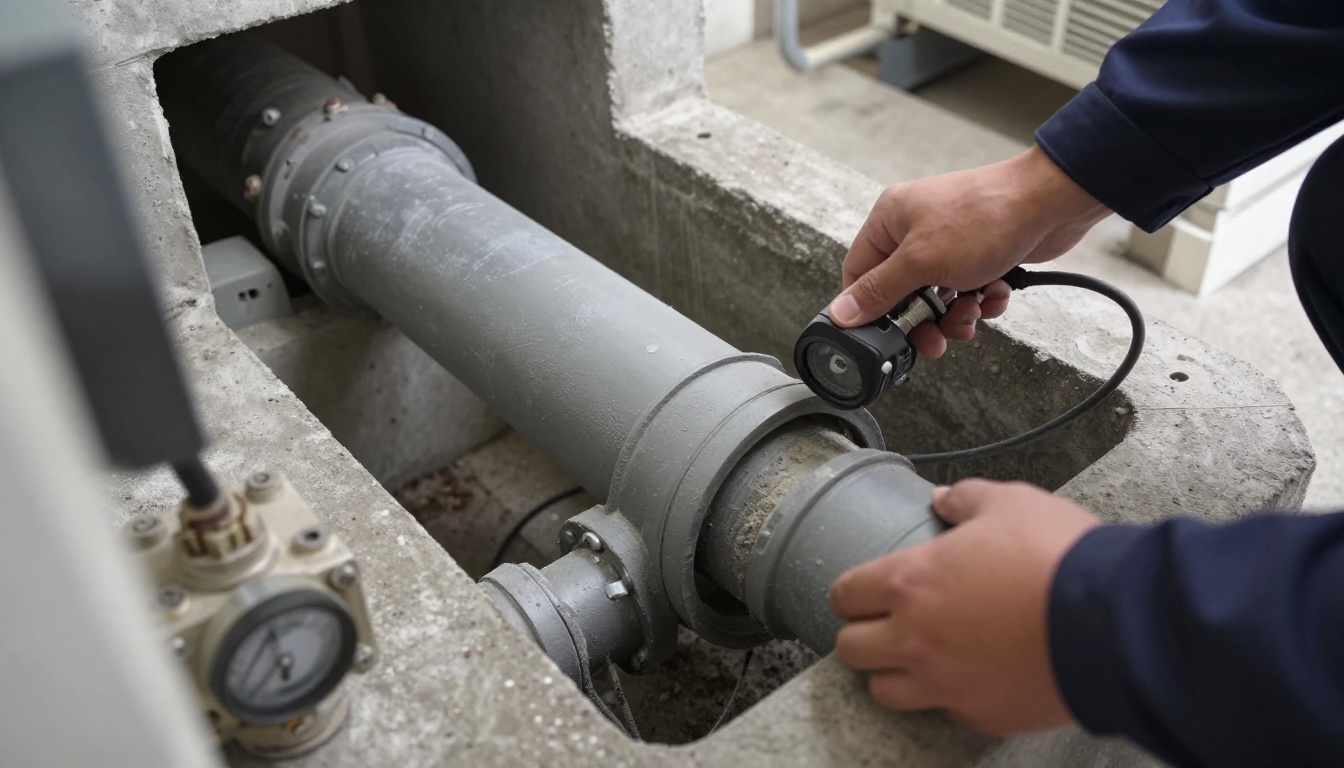
What a proper diagnosis should include before you budget anything
If a board is deciding between cleaning, lining or cast iron stack replacement, the inspection scope matters almost as much as the repair scope. A quick camera push through a single cleanout is not enough in most towers.
Minimum evidence worth paying for
A defensible diagnosis usually includes:
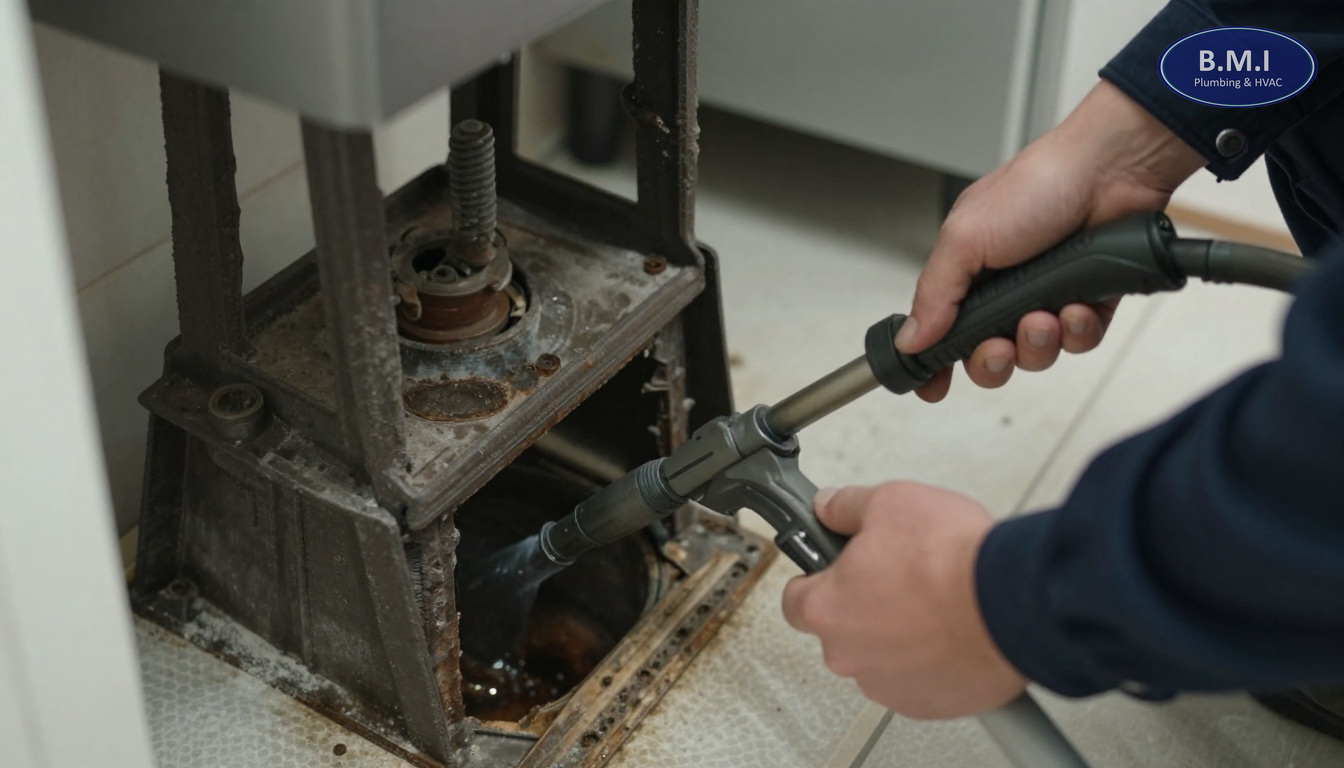
- High-pressure jetting or mechanical descaling first, if the pipe is badly loaded, so the camera sees the pipe wall rather than years of buildup. This is why kitchen stack cleaning often precedes capital recommendations.
- CCTV footage from the base upward and, where possible, from upper access points downward using a camera inspection.
- Identification of pipe diameter, fitting types, branch tie-ins, and horizontal offsets.
- Notes on whether defects are structural: cracks, open joints, channel rot, wall loss, or failed couplings.
- A marked-up riser diagram showing which suites and common areas are affected.
- Confirmation of access constraints, such as asbestos-containing insulation, tiled chases, millwork, or limited shaft space.
The insight many boards miss is that cleaning can change the diagnosis. We have seen stacks that looked “collapsed” on a dirty camera become serviceable after jetting removed a half-inch of grease and scale. We have also seen the opposite: a stack that flowed after years of partial blockage started leaking within days of proper cleaning because the buildup had been masking a paper-thin wall. That is not a reason to avoid cleaning; it is a reason to plan it with eyes open.
Ask where the weak point really is
The weak point is often not the full height of the stack. It may be:
- the first horizontal offset above the parkade or ground floor ceiling,
- a branch connection serving kitchens on one line,
- a section hidden behind a garbage chute room wall,
- or a transition from old hub cast iron to newer no-hub repair sections.
That distinction matters because a targeted project can sometimes replace only the failed section and defer the balance. Conversely, a lining proposal that ignores failed branch fittings can leave the corporation with a lined trunk and unchanged failure points in suites.
For buildings with poor shutoff documentation, combine the diagnosis with a valve audit. If the building cannot isolate domestic water or related service zones reliably, even simple stack access and restoration become more disruptive than they need to be.
Cleaning, lining or replacing: a decision framework that boards can defend
There is no universal answer, but there is a practical framework.
Option 1: Clean and monitor
Cleaning is the right choice when the stack is obstructed but still structurally viable. On a 20- to 30-storey building, a crew can often jet and inspect one to three stack lines per day, depending on access and how many cleanouts exist. For annual or biannual maintenance, this is usually the lowest-disruption option and fits well into maintenance programs.
Choose cleaning when:
- the pipe remains generally round and continuous,
- there are no active leaks or only isolated minor seepage at accessible joints,
- the stack has not been properly jetted in years,
- the building needs evidence before committing reserve fund dollars.
Do not choose cleaning as the long-term plan if the line reloads quickly. In our experience, if a properly cleaned kitchen stack is materially restricted again within 6 to 18 months, the pipe is often too rough, too scaled or too poorly configured to justify repeated operating spend.
Option 2: Line the stack
Condo stack lining can make sense where the vertical run is still stable enough to host a liner and where demolition avoidance is a major priority. Lining is most often considered for sanitary stacks where the corporation wants to reduce suite disruption, tile removal and restoration costs. It can be effective, but boards should understand what it does not solve.
Pros:
- Less demolition in suites than full replacement.
- Useful where access is difficult and the pipe path is relatively continuous.
- Can extend service life if the host pipe still has enough integrity.
Limits:
- Branch reinstatement is technical and can be the real cost driver.
- Existing offsets, failed fittings and badly deteriorated branches may still need open replacement.
- Internal diameter is reduced slightly; on already small or marginal lines, that matters.
- Not every stack geometry is a good candidate, especially where there are multiple sharp offsets or irregular branch tie-ins.
A non-obvious issue is that lining can shift the corporation’s maintenance profile rather than eliminate it. A lined stack may perform well, but branch lines outside the liner path can continue to block. If the board presents lining as a full cure without mapping those branches, resident expectations will outrun reality.
Option 3: Full or partial replacement
Full cast iron stack replacement is usually the best technical answer when the pipe has structural failure, multiple weak sections, or branch and offset deterioration that cannot be responsibly left in place. In occupied GTA towers, this often means opening walls, chases, bulkheads or cabinets stack by stack and replacing with no-hub cast iron for sanitary service, secured with shielded couplings and proper firestopping at penetrations.
Replacement is usually the better choice when:
- there are repeat leaks and backups on the same line,
- camera footage shows channel rot or severe wall loss,
- horizontal offsets are near failure,
- branch piping in suites is already compromised,
- restoration is being done anyway for a broader suite or corridor project.
In some towers, boards also use the opportunity to replace related components such as inaccessible isolation valves through a coordinated valve replacement project, or to schedule adjacent domestic piping work under a broader building re-piping plan if multiple systems are aging together.
What it costs in Toronto, and why numbers vary so much
Below are planning ranges, not quotations. Actual pricing depends on height, access, asbestos controls, restoration scope, work hours, and whether the project includes branches, offsets and finishes.
| Scope | Typical Toronto planning range | How it is usually priced |
|---|---|---|
| Jetting and CCTV of one stack line | $1,500-$4,500 | Per stack / per visit |
| Annual or biannual kitchen stack program | $8,000-$25,000+ | Per building, depending on stack count |
| Localized cast iron repair | $3,000-$15,000 | Per section / per incident |
| Condo stack lining | $12,000-$30,000+ | Per stack, simple vertical sections; more with branches |
| Partial stack replacement | $15,000-$60,000 | Per stack section / floor grouping |
| Full stack replacement in occupied suites | $2,500-$6,500 per suite | Or $40,000-$140,000+ per stack |
Why the spread is so wide:
- Access and restoration often cost more than pipe labour. Opening tiled tub walls, millwork or stone counters changes the number quickly.
- Asbestos-containing materials are still common in older Toronto and York buildings. Even a modest abatement scope can materially affect schedule and cost.
- Work hours matter. Daytime work is cheaper, but some buildings require noisy demolition after hours.
- Stack geometry matters. A straight vertical run is simpler than a line with multiple offsets and branch turns.
- Common element versus owner finishes changes who pays, but not the total project cost.
A useful budgeting approach for reserve fund discussions is to split costs into three buckets: pipe work, access/abatement, and restoration. Boards often focus on the first bucket because it sounds like the plumbing project. In practice, the second and third buckets decide whether the project is $60,000 or $160,000.
For context, if a 300-unit building has 10 to 16 sanitary stack lines and only 3 kitchen stacks are in poor condition, a targeted first phase may be more rational than a building-wide replacement. That kind of phasing is easier to defend to owners if it is backed by inspection evidence and tied to the next reserve fund update.
Timelines, resident access and shutdown logistics
By fall, managers should be thinking about what can realistically be done before winter and what should be designed now for next year’s capital season.
Cleaning and inspection timeline
A stack cleaning and CCTV program can often be organized within 1 to 3 weeks, depending on access, notices and whether after-hours work is needed. Individual stack work may take 2 to 6 hours per line for straightforward jetting, longer where heavy descaling or repeated passes are needed. For recurring backups, emergency plumbing response may stabilize the issue first, but that should feed into a planned scope, not replace it.
Lining timeline
Lining generally requires pre-cleaning, drying, access creation and curing windows. A single stack may be completed in a few days once prepared, but a multi-stack condominium project usually stretches over several weeks when you include mobilization, branch reinstatement and testing. The limiting factor is often not liner installation itself; it is suite coordination and confirming that all branches are reinstated correctly.
Replacement timeline
For occupied replacement projects, production varies widely. A crew may complete 2 to 6 suites per day on straightforward openings and less on heavy tile or cabinet work. A 25-storey stack can therefore take 3 to 8 weeks or longer once access, abatement, inspection and restoration are included. Water shutdowns are not always building-wide, but drainage restrictions on the affected stack must be clearly communicated.
Managers should plan for:
- 72 hours to 7 days notice to residents, depending on the declaration and access provisions,
- elevator booking and protection,
- corridor and suite dust control,
- quiet-hour restrictions,
- same-day debris removal routes,
- and clear instructions about fixture use during active work windows.
One lesson from older waterfront and downtown towers: if sectional valves are unreliable, a stack project can trigger unrelated complaints because broader shutdowns are needed than originally planned. Before major work, it is worth reviewing PRV maintenance and isolation strategy so winter pressure swings and shutdown recovery do not create a second problem while you solve the first.
What happens if the corporation defers the decision
Deferral is not always wrong. Some stacks can wait a year if the evidence supports it. But boards should understand the real downside of waiting without a monitoring plan.
The first risk is operating cost creep. Repeated service calls, after-hours backups and piecemeal repairs can consume a surprising amount of budget without improving the asset. The second risk is insurance friction. Once a building has a known history on a specific stack line, repeated water damage claims become harder to explain as sudden and accidental events. Even when the pipe itself is common element, deductible allocation and chargeback disputes can become more contentious if the corporation had warning signs and no plan.
The third risk is that emergency work produces the worst version of the project. An urgent opening behind finished millwork in December is rarely the cheapest or cleanest way to replace cast iron. You lose tendering time, resident communication time, and the chance to coordinate access with other capital work. That is why fall is the practical season to do the evidence-gathering and put numbers in front of the board.
For buildings already planning larger domestic water work, it may make sense to compare the stack issue against adjacent infrastructure needs such as expansion compensator replacement or broader riser replacement. Coordinating scopes does not always save money, but it often reduces repeated access, notices and restoration.
Common element versus in-suite responsibility
This question drives as many board meetings as the plumbing itself. In most condominiums, the vertical sanitary stack is a common element, but branch piping, fixture connections, and finish restoration can be split differently depending on the declaration and any owner alterations.
Three practical points:
- Do not assume the pipe path equals the cost path. A common-element stack inside a suite wall may still involve owner-responsible finish upgrades if the owner altered the area under a section 98 agreement or otherwise changed the original construction.
- Restoration language matters. Some corporations restore to standard unit finish only. Owners then pay the upgrade difference for custom tile, cabinetry or stone.
- Document pre-existing alterations before work begins. The dispute usually starts after the wall is opened, not before.
This is also why suite-level work should be coordinated by a contractor used to condominium access and resident communication. If branch reconnections or fixture resets are needed in occupied suites, they should be handled under a clear scope that bridges common element work and in-suite plumbing realities.
FAQs
How long do cast iron stacks usually last in Toronto condominium buildings?
In 1970s and early-1980s concrete high-rises in Toronto, North York and Scarborough, original cast iron sanitary stacks often reach 45 to 60 years before boards have to make a capital decision. That does not mean every stack fails at year 50; kitchen stacks usually deteriorate first because grease and detergents strip and trap solids, while bathroom stacks can remain serviceable longer. The useful life depends heavily on pipe diameter, slope on horizontal offsets, how often the building has been cleaned, and whether there have been repeated backups or leaks at hub joints and branch connections.
When is cleaning enough, and when is lining or replacement the better choice?
Cleaning is usually enough when CCTV shows a structurally round pipe with scale, grease or tuberculation reducing the bore but no major channel rot, open joints or wall loss. Lining can work when the stack is still continuous and stable but has moderate internal deterioration, especially on 3-inch and 4-inch vertical runs where access can be created at the base and upper floors. Replacement is the better choice when you have repeated leaks, paper-thin bottoms on horizontal offsets, failed branches inside suites, or a stack that loads up again within 6 to 18 months after proper jetting.
What does condo stack lining cost compared with cast iron stack replacement?
In the Toronto market, lining a vertical sanitary stack in a high-rise commonly lands around $12,000 to $30,000 per stack for simpler sections, but can rise materially once branch reinstatements, bypass planning and difficult access are added. Full cast iron stack replacement is usually priced very differently, often in the range of $2,500 to $6,500 per suite affected or roughly $40,000 to $140,000 per stack depending on height, finishes, asbestos controls, access hours and whether branches inside kitchens and bathrooms are included. Those are planning ranges only; on-site review and camera evidence are essential before a board budgets either option.
Can a condominium line only the vertical stack and leave the branch piping in suites?
Yes, but that is where some projects disappoint boards. A lined 4-inch vertical stack does not fix a 2-inch cast iron kitchen branch in the slab or behind cabinets that is already scaled down to half its diameter, nor does it solve a corroded horizontal offset above a corridor ceiling. In many 1970s towers, the branch piping and offsets are the actual weak point, so a partial approach should only proceed after a camera inspection maps what is common element and what sections are still worth keeping.
How disruptive is stack replacement in an occupied condo building?
More disruptive than annual maintenance, but manageable with planning. On a typical occupied high-rise, a replacement crew may complete 2 to 6 suites per day depending on access, asbestos conditions, tile removal and whether kitchens or bathrooms are affected, with water and drainage restrictions staged stack by stack rather than building-wide. The difference between a smooth project and a difficult one is usually notice, resident coordination, elevator protection, after-hours debris removal, and whether the building has reliable sectional isolation documented through a valve audit.
Who usually pays for stack work in a condominium: the corporation or the owner?
In most GTA condominiums, the vertical sanitary stack is a common element, but the exact answer depends on the declaration, description and any section 98 alterations. If an owner has altered cabinets, bulkheads, flooring or plumbing connections beyond original construction, reinstatement costs can split in ways residents do not expect even when the pipe itself is common element. Managers should have counsel and the declaration reviewed before tender, because chargebacks and insurance disputes often arise from finishes and access restoration, not from the pipe replacement itself.
What to do next if your building is in this age band
If your condominium was built in the 1970s or early 1980s and the board is hearing about recurring sanitary issues, do not jump straight from one backup to a building-wide replacement recommendation. Start with evidence on the worst-performing lines, especially kitchen stacks, and tie the findings to a reserve fund and phasing plan.
A practical fall sequence looks like this:
- Identify the stack lines with repeat incidents over the last 12 to 24 months.
- Perform cleaning and camera inspection on those lines before holiday loading increases.
- Separate obstructive issues from structural failures.
- Price three paths where appropriate: maintain, line, or replace.
- Bring the board a phased plan with operating and capital implications, not just a repair invoice.
If the stack is still loading up a year after proper cleaning, or if footage shows horizontal offsets and branches are already compromised, treat that as a capital planning issue rather than another drain call. BMI attends site before quoting, works in occupied condominium environments across Toronto and the GTA, and can help managers compare maintenance, lining and replacement options in a way that stands up in front of a board. For examples of related capital work, see completed project references or review other condominium-focused guidance on the BMI blog.
Contact BMI
If your cast iron stacks are around 50 years old and you need a defensible recommendation before next year’s budget is finalized, arrange a site review now. The right next step is usually not a generic quote. It is a building-specific assessment of the worst lines, with evidence the board can use.
- Contact BMI
- Phone: (416) 845-3756
- Emergency: (416) 845-3756, answered 24 hours a day
- Email: info@brial.ca
More on condominium plumbing
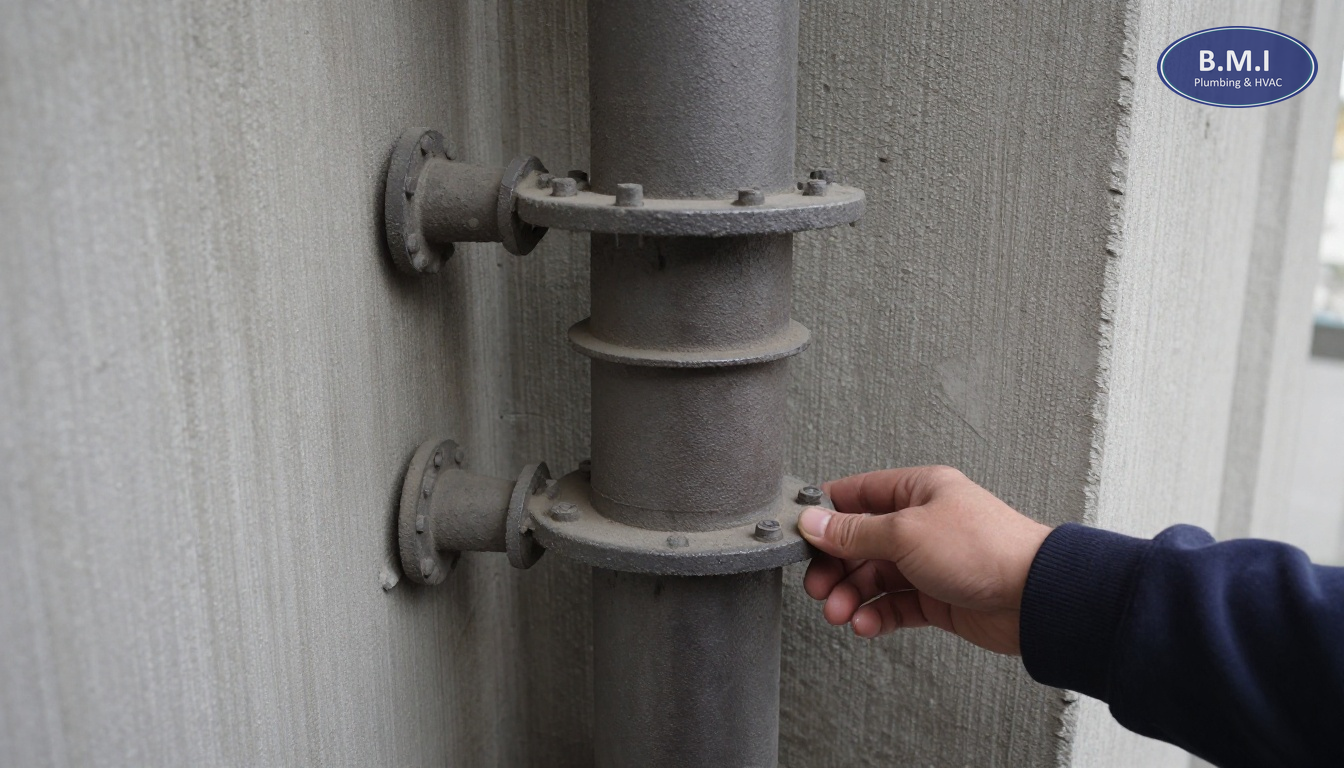
Condo Drain Backup Signs in Toronto: Is It the Stack?
Learn which suite complaints signal a condo drain backup caused by a stack issue, what evidence to gather, and when …
Kitchen Stack Cleaning Cost in Toronto Condos
What does kitchen stack cleaning cost in Toronto? Real condo pricing, scope, timelines, warning signs and budgeting …
Hydro Jetting vs Snaking Condo Waste Stacks in Toronto
Hydro jetting vs snaking for condo waste stacks in Toronto: what each method does, costs, timing, and when a board …
Need a plumber in your building?
BMI services roughly 200 condominium and multi-residential buildings across Toronto and the GTA. Emergencies are answered at any hour.