Condo Drain Backup Between Suites in Toronto
Why one condo suite floods when the suite above runs a dishwasher: how stack blockage happens, who pays, and Toronto repair costs.
Condo Drain Backup Between Suites in Toronto
Quick summary: If a lower condo suite floods when the suite above runs a dishwasher, the problem is often not the lower suite’s sink or trap. In Toronto condominium buildings, that pattern usually points to a shared kitchen waste stack blockage or a partially blocked branch connection, and the difference matters because it changes who pays, how urgently the building should act, and whether a one-time drain call is enough.
A common mistake in high-rises is treating this as an isolated in-suite service issue. In many 1970s to early-2000s towers across Toronto, North York, Mississauga, and Vaughan, the real failure is hidden in a 3-inch or 4-inch vertical cast iron stack that has slowly lost capacity to grease, soap scale, and corrosion until one upper-suite discharge pushes water into the suite below.
The pattern that tells you this is a stack problem
When a resident says, “My kitchen sink backs up only when the neighbour above uses the dishwasher,” that is already a strong diagnostic clue. A dishwasher discharge is not continuous flow like a tap; it is a pumped discharge that can send 10 to 20 litres into the drain line in a short burst, often with fats, detergent, and food fines. That short surge will expose a partially blocked shared stack long before a normal hand-washing sink use does.
In buildings we service in Toronto and Etobicoke, the most telling symptom is this: the lower suite’s sink may drain acceptably when tested alone, but backs up when the suite above runs a dishwasher or empties a full sink. That usually means the restriction is downstream of the lower suite branch tie-in but upstream of the next open relief point, so the water seeks the lower fixture opening as the easiest place to relieve pressure.
Another clue is timing. If the backup happens only on one vertical line of suites, often the same unit numbers from floor to floor, that points toward a shared stack rather than a random in-suite issue. This is why a manager should always ask which suite line is affected, not just which unit called first. A repeated issue in, for example, the 04 stack from floors 8 through 11 is operationally different from one sink blockage in suite 1104.
If you are dealing with an active backup, the first priority is to contain damage and get the line assessed by a contractor who does drain cleaning in occupied condominium buildings rather than detached homes. In an overflow or leak event, a 24/7 emergency plumbing response call is often justified because the cost of waiting can quickly exceed the cost of the service call.
Why it happens in condo buildings, not just in one sink
A lot of boards are told that “residents put grease down the drain,” which is true but incomplete. The more useful explanation is hydraulic and age-related.
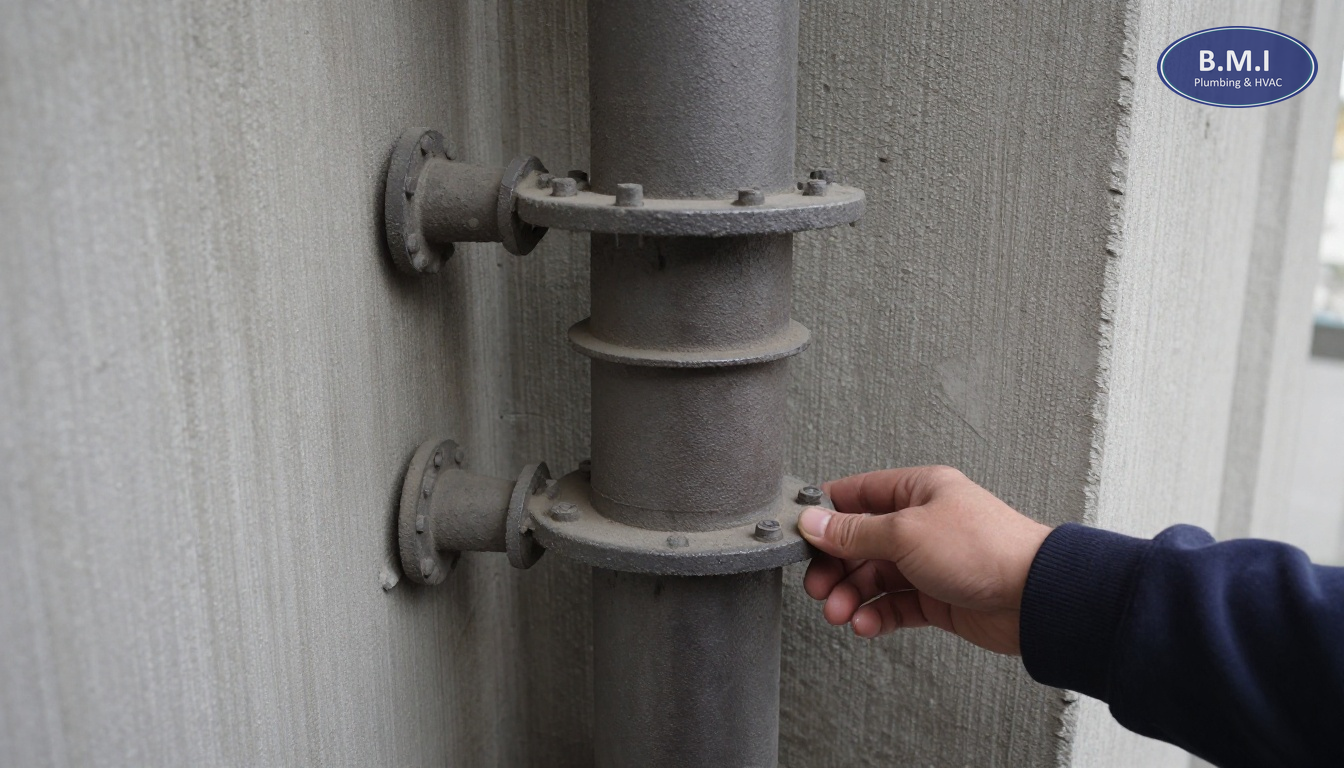
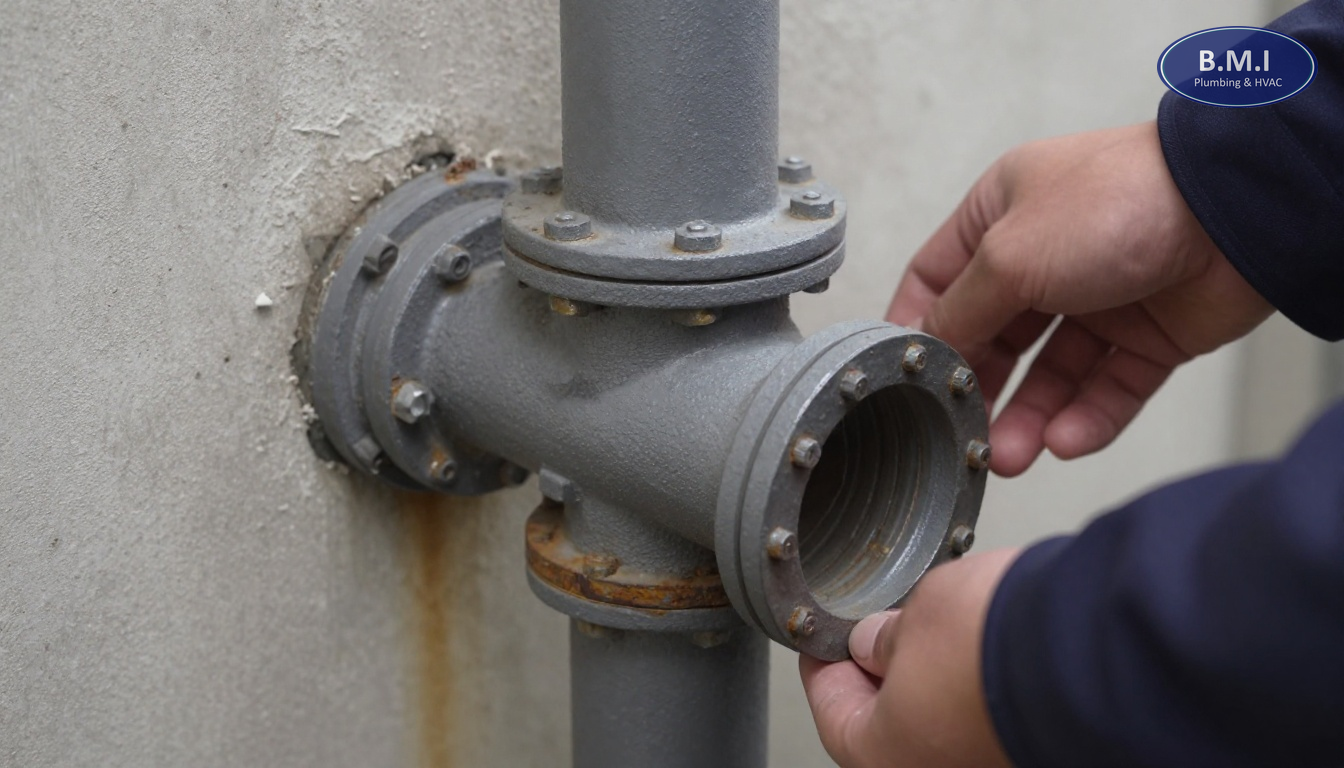
Most older condominium kitchen stacks in Toronto, Scarborough, and East York are cast iron no-hub or service-weight cast iron, commonly 3 inches in diameter for kitchen waste stacks and sometimes 4 inches depending on the building design. Over 25 to 50 years, grease does not just sit loosely in the line. It combines with detergent residue and mineral content to create a hard internal scale that can reduce the effective opening dramatically. We have opened stacks where a nominal 3-inch pipe had an effective flow path closer to 1 inch to 1.5 inches in spots.
That matters because dishwasher discharge is pressurized by the appliance pump. It hits the stack branch with more force than a slowly draining basin. If the stack wall is heavily furred up, the water column can momentarily rise above the lower branch connection and discharge into the lower suite’s sink. Residents often describe this as “my sink fills with dirty water when upstairs uses their machine,” which is a more precise symptom than simply “slow drain.”
Building age is a major factor:
- 1970s and 1980s concrete high-rises often have cast iron kitchen stacks with decades of grease scaling and branch fittings that are difficult to access without opening walls or ceilings.
- Early-1990s towers may still have cast iron drainage but often with different branch layouts; a common mistake we see in North York buildings from this era is assuming every repeat kitchen backup is resident misuse when the stack has never been properly jetted.
- Post-2010 glass towers usually have newer drainage materials and fewer corrosion issues, but they are not immune. Heavy grease loading, long horizontal offsets, and poor access planning can still create inter-suite backups.
- Condominium townhouse complexes can show the same symptom, but the shared piping layout is often more horizontal than vertical, which changes the diagnosis.
This is also why preventive kitchen stack cleaning before holiday cooking season makes sense in fall. The heaviest grease loading in many residential buildings starts around Thanksgiving and continues through December, and a stack that was marginal in August often fails in November.
What the resident reports versus what is actually happening
Property managers rarely receive a technically accurate first complaint. They receive fragments. The useful skill is translating those fragments into a likely failure location.
Here are complaint patterns that usually point toward a shared stack blockage rather than a single-suite fixture problem:
- “My sink is fine most of the day, but backs up when the upstairs neighbour runs the dishwasher.”
- “Dirty water comes up in the lower suite kitchen sink, then slowly drains away after 10 or 15 minutes.”
- “Two or three floors on the same line have had kitchen drain issues this year.”
- “Snaking the lower suite helped for a week, then the problem returned.”
- “The lower suite gets backup during dinner hours but not during morning bathroom use.” Kitchen stack problems often follow meal patterns, not bathroom patterns.
By contrast, these symptoms more often point to an in-suite branch issue:
- The sink backs up regardless of whether any upper suite is using water.
- Only one compartment of a double sink is affected and the blockage is close to the trap arm.
- The dishwasher in the same suite backs into that suite’s sink, but no upper-suite activity is involved.
- A recent renovation changed the in-suite kitchen layout and introduced a long flat waste arm or undersized branch.
For suite-specific work, the correct service is often in-suite plumbing rather than building-wide stack work. But a manager should be cautious about authorizing repeated suite-level calls on the same line without stepping back and asking whether the vertical stack is the real issue.
What a proper diagnosis should include
The right diagnosis in a condominium is not “we snaked it and it seems okay.” It should produce evidence you can use with a board, an owner, and if necessary an insurer.
At minimum, a defensible diagnosis should include:
Symptom mapping by floor line
- Which suites are on the same stack line.
- Which fixtures are affected: kitchen sink only, dishwasher discharge, laundry standpipe, or multiple fixtures.
- Whether the event is triggered by upper-suite discharge.
Access to the nearest relevant cleanout
- Usually at the base of stack in a service room, janitor room, or ceiling space.
- In some buildings, cleanouts are poorly located or concealed by millwork or later construction, which increases labour and diagnosis time.
The right clearing method for the suspected blockage
- A hand snake may confirm a soft blockage.
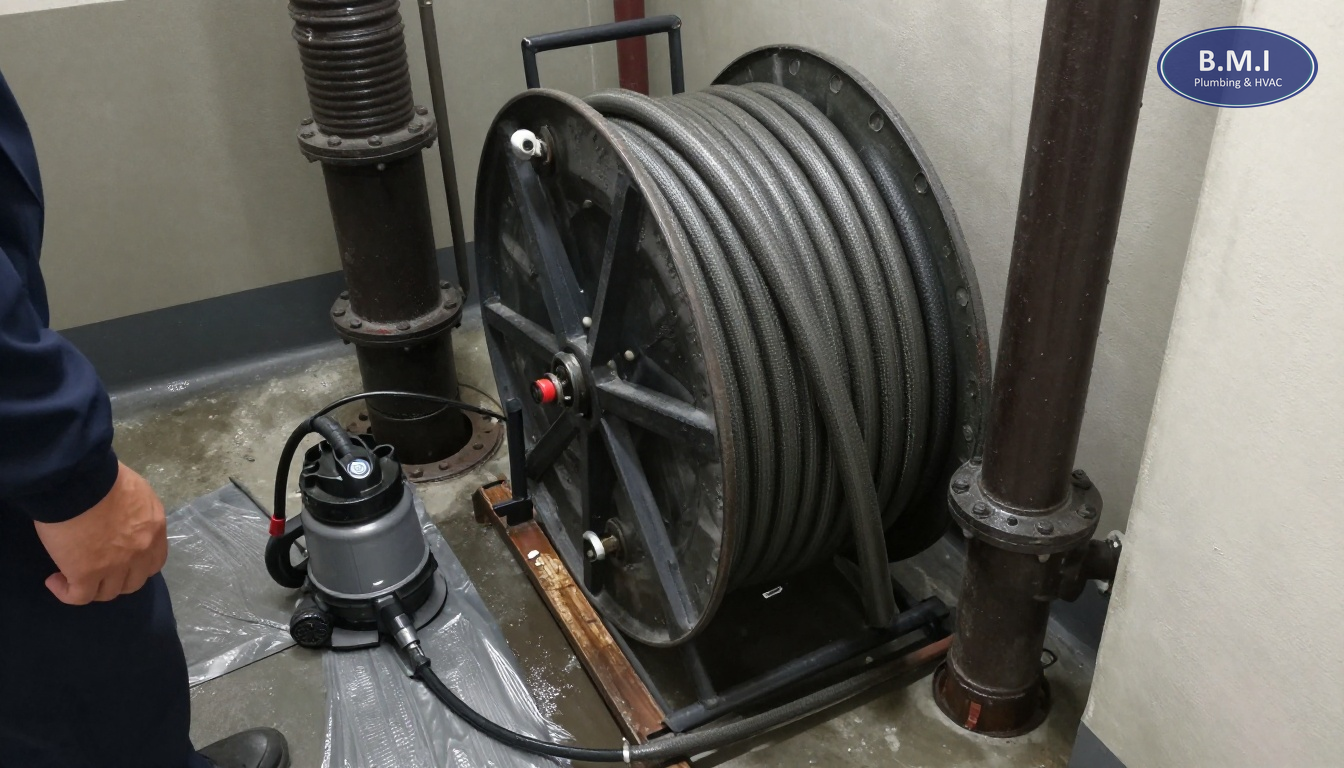
- A sectional machine or jetter is usually better for grease-heavy kitchen lines.
Evidence after clearing
- Written notes on what was removed.
- Whether flow was restored.
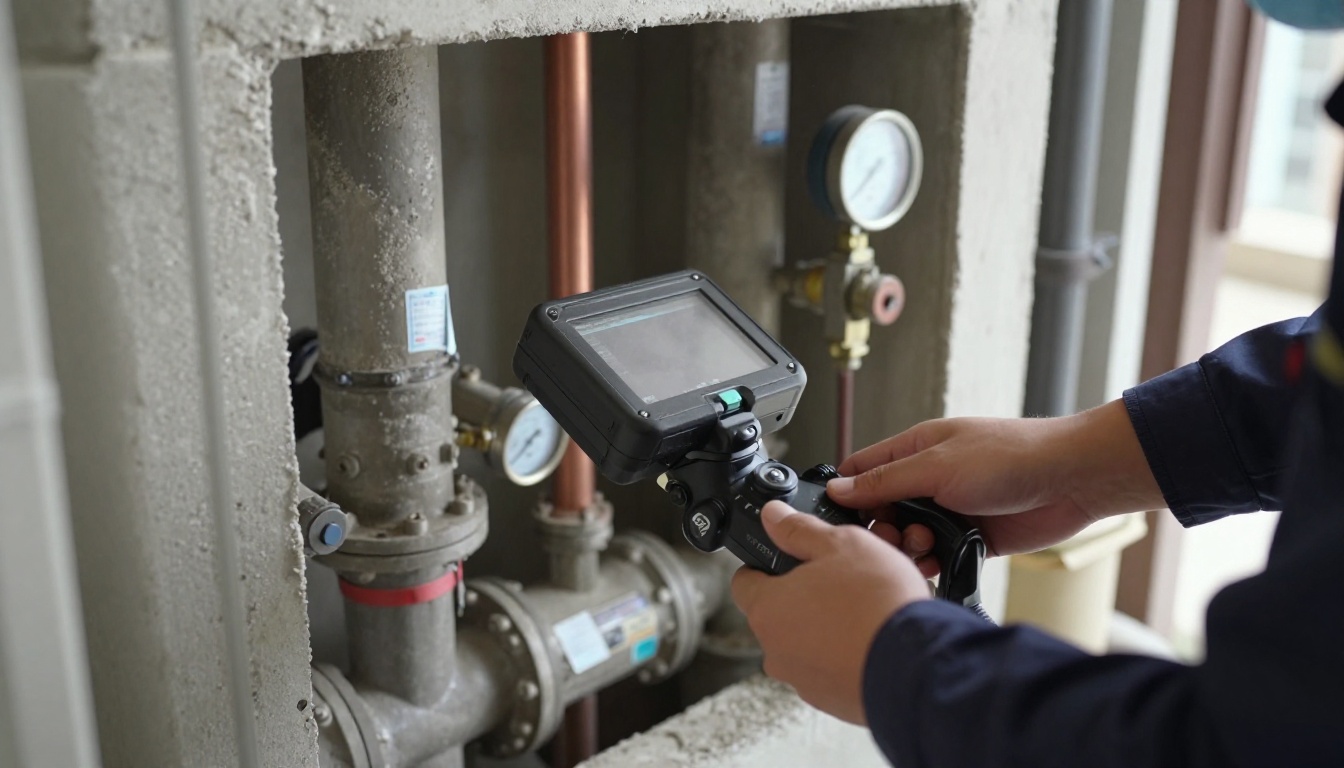
- Whether the contractor recommends a camera inspection to check scale, offsets, or pipe deterioration.
In a 20- to 30-storey Toronto tower, a proper camera review of a kitchen stack is not always simple. Grease-coated lines can obscure the camera lens, and some branch geometry makes it difficult to see every tie-in. But even limited footage is useful if it shows whether the pipe wall is relatively sound or whether there is deep scaling, channeling, or a structural defect.
A common mistake we see in Mississauga and Vaughan is authorizing emergency clearing, then closing the file with no record of which stack line was involved. Six months later, the same line floods again and nobody can tell whether it is a repeat condition or a new one. Good reporting matters.
Snaking versus jetting: the decision most buildings get wrong
For stack blockage in condo kitchens, the choice of cleaning method often determines whether the issue stays solved.
When snaking is enough
Snaking has a place. If the blockage is localized, recent, and caused by a soft obstruction, a cable machine can reopen flow quickly. It is also useful where access is tight or the pipe condition is unknown and aggressive jetting would be inappropriate until the line is better understood.
But a snake usually cuts a path through grease. It does not restore the full internal diameter of a heavily scaled cast iron stack. Think of it as making a tunnel through the blockage rather than removing the blockage from the wall.
When jetting is the better answer
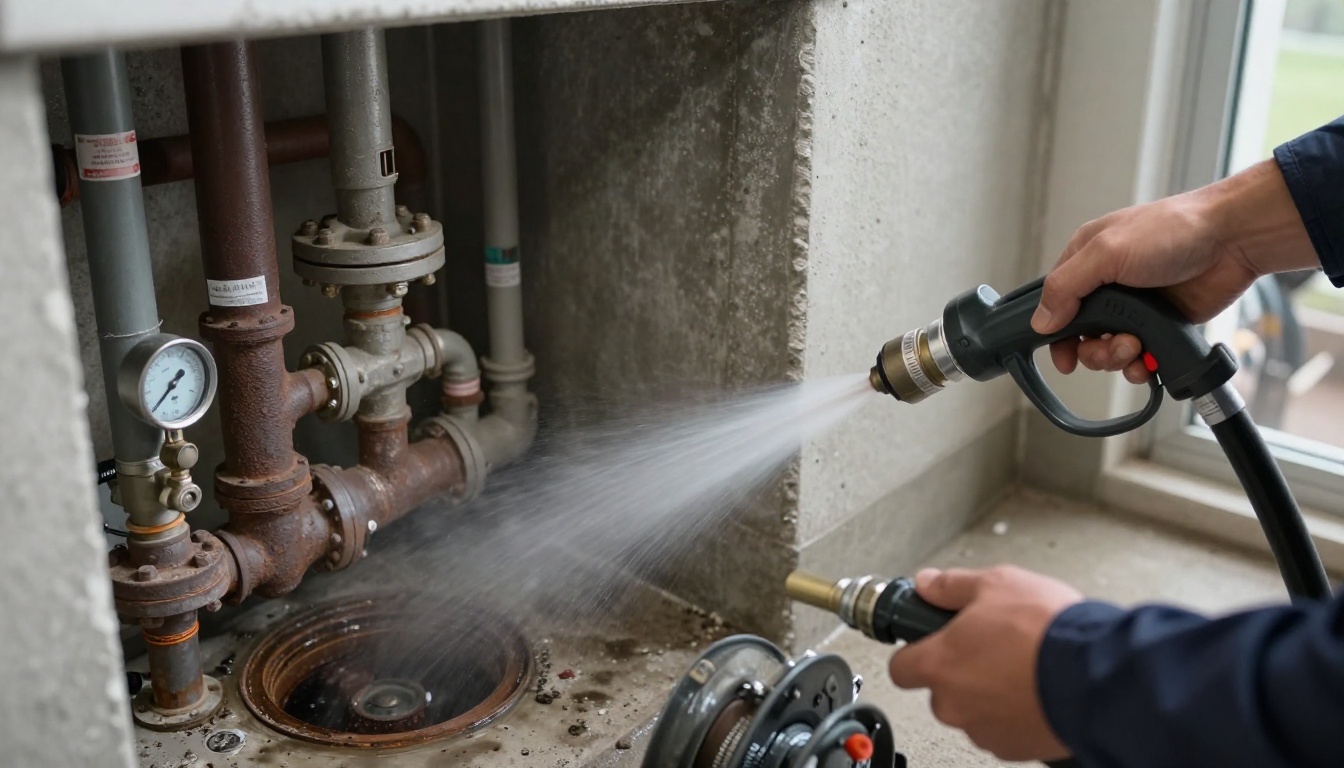
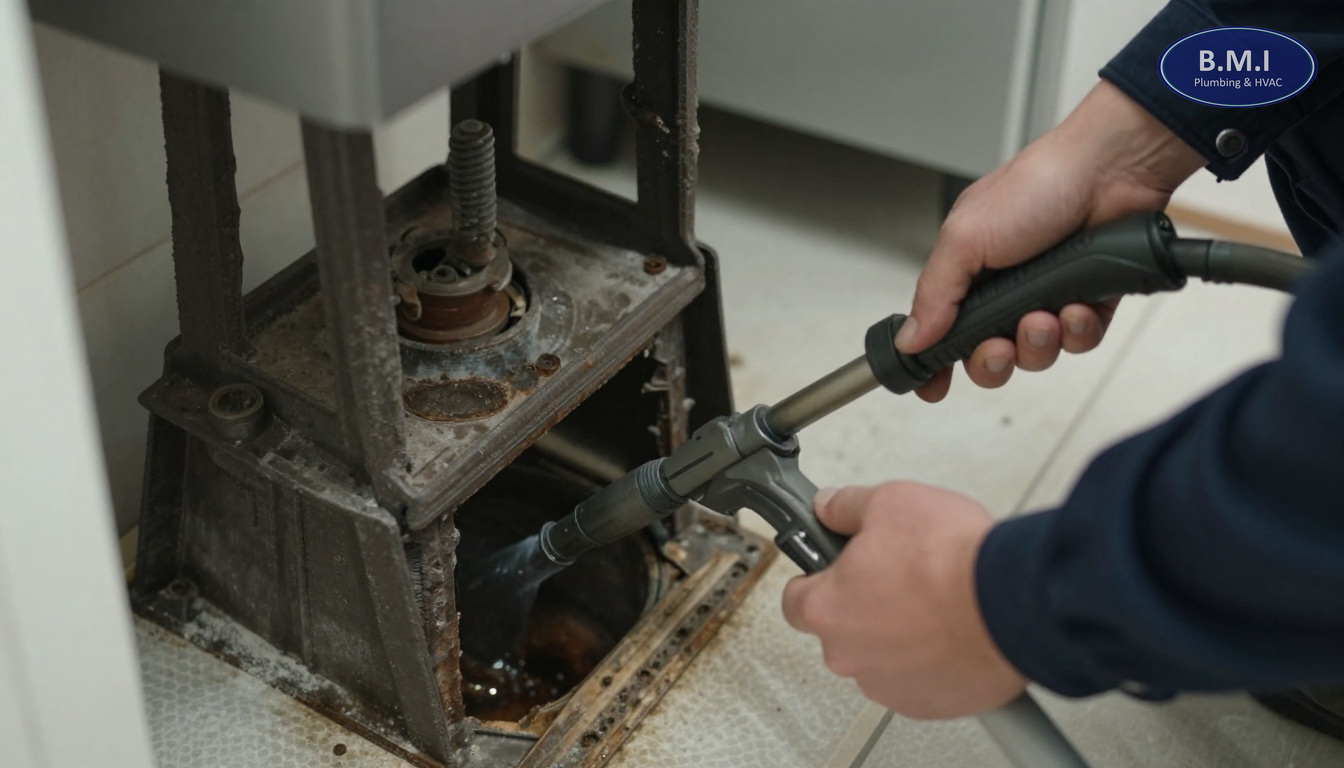
High-pressure jetting is usually the better long-term method for kitchen stacks because it strips grease and soap scale from the pipe wall. In older Toronto and Scarborough buildings, the difference is visible in the debris load and in how long the line stays open afterward. A stack that needed three emergency calls in one year often settles down once it is properly jetted on a schedule.
That is why many boards eventually move from reactive service to a kitchen stack cleaning program or broader maintenance program. The point is not to sell cleaning for its own sake. The point is to avoid paying emergency rates to rediscover the same hidden restriction.
When cleaning is no longer enough
If the line reloads quickly after cleaning, the issue may be structural rather than maintenance-related. Warning signs include:
- Repeat blockage in the same location within 6 to 12 months
- Camera evidence of severe internal corrosion or flaking
- Offsets at fittings or sagging horizontal sections
- Branch connections that trap solids because of poor pitch
- Previous alterations under section 98 agreements that changed suite layouts and increased branch length or grease loading
At that stage, targeted opening and replacement may be more defensible than repeated cleaning. If multiple systems are aging together, the building may need broader project solutions planning rather than one-off drain calls.
Who pays: common element versus suite responsibility
This is the question that creates most of the friction, and it is rarely answered correctly by instinct alone.
In many Ontario condominiums, the vertical stack is a common element, while the in-suite branch line from the fixture to the stack may be unit responsibility, common element, or part of the standard unit depending on the declaration. There is no universal answer across Toronto, Markham, or Richmond Hill because declarations differ.
The practical framework is:
- If the obstruction is in the shared vertical stack, it is usually treated as a common element issue.
- If the obstruction is in the suite branch before it reaches the stack, it may be the unit owner’s responsibility.
- If an owner altered the plumbing layout, a section 98 agreement may shift responsibility for that altered portion.
- If negligence is alleged, the corporation still needs evidence. Simply saying a resident used a dishwasher is not evidence of negligence.
Managers should also consider the insurance side. A small drain clearing invoice may be minor, but the resulting water damage can trigger the corporation’s deductible or a chargeback dispute. If the corporation intends to charge costs to an owner, the file should include a clear location of blockage, photos or footage where possible, and a written report. Without that, boards can end up defending a weak position.
For recurring in-suite leaks or fixture issues that are not stack-related, toilet and faucet repairs and other suite-level service are a different category entirely. The mistake is treating an inter-suite backup as if it were just another clogged sink.
What it costs in the Toronto market
The honest answer is that costs vary widely by access, timing, and whether this is a one-off blockage or part of a building-wide pattern. But property managers need real planning numbers, not vague statements.
Below are rough Toronto-market ranges for 2026 planning purposes. These are estimates that vary by building and are not quotations.
| Scope | Typical unit of pricing | Rough market range |
|---|---|---|
| After-hours emergency drain clearing for one affected line | per call | $650-$1,800 |
| Emergency clearing with multiple suite attendances and containment | per event | $1,200-$3,500 |
| Camera inspection of a drain line after clearing | per visit | $450-$1,200 |
| Planned kitchen stack jetting | per stack | $900-$2,500 |
| Stack jetting with camera documentation | per stack | $1,300-$3,200 |
| Opening ceilings or walls to access a failed branch section | per affected area | $1,500-$5,000+ |
| Targeted replacement of a deteriorated branch or stack section | per area/section | $3,000-$12,000+ |
A few points boards often miss:
- A 25-storey building may have a dozen or more kitchen stack lines, so a preventive cleaning program can look expensive until compared against even one flood with restoration costs.
- Access costs matter. If the cleanout is buried behind storage, millwork, or locked rooms, labour climbs quickly.
- After-hours and weekend work usually carries a premium, but waiting until Monday may turn a service call into an insurance claim.
- The drain invoice is often the smallest number in the event file. Drying, flooring, cabinet toe-kick damage, and resident claims often cost more.
If the building is seeing repeated failures in aging domestic systems as well, it can be worth coordinating drain work with a valve audit or valve replacement project so future shutdowns and access problems are easier to manage.
Timelines, access, and resident notice in an occupied building
Condominium plumbing work is as much logistics as pipe work. The technical fix is only half the job.
For a single active backup, a crew may clear and test the line in 1 to 3 hours if access is straightforward. If multiple suites need to be entered, if the stack cleanout is difficult to reach, or if camera work is added, that can extend to half a day or more.
For a planned stack cleaning program, production is usually measured per stack per day, not per suite. On a typical occupied high-rise, a crew may complete several stack lines in a day if cleanouts are accessible and suite coordination is limited, but production slows when the building requires repeated escorted access, elevator protection, or work in finished suite spaces.
Managers should plan for:
- Resident notice: usually at least 24 to 48 hours for non-emergency suite access, and longer if multiple suites may need attendance.
- Work windows: kitchen stack cleaning is often best scheduled during weekday hours when suite use is lower.
- Elevator booking and protection: especially if jetting equipment or vacs must move through finished areas.
- Building staff coordination: the superintendent or operator should know which stack line is being worked on and where the nearest shutoffs or cleanouts are.
- Noise expectations: cable machines and jetting are not silent; this matters in occupied towers.
Fall is also the right time to look at related preventive items. Buildings that have kitchen stack issues often also have deferred PRV maintenance or undocumented isolation valves. Before winter pressure swings and holiday occupancy, it is worth knowing whether the building can isolate a line cleanly if a drain or water issue escalates.
What happens if you defer it
Sometimes deferral is reasonable. One isolated event in an otherwise clean history, with clear evidence the line was fully restored, may justify monitoring and budgeting the next step. But repeated inter-suite kitchen backups are one of the more predictable ways a board turns a maintenance issue into a claims issue.
The main risks of deferral are:
1. The blockage returns at the worst possible time
In fall and early winter, kitchen grease loading rises sharply. A stack that is 70% restricted may still limp along until Thanksgiving weekends, holiday gatherings, or colder weather increase usage. Many managers first see the pattern after multiple residents cook heavily over a long weekend.
2. The corporation loses control of the file
Emergency work done with poor documentation creates disputes later. If the same stack backs up again and there is no record of the prior location, method, or findings, the board has little basis to approve a program or defend a chargeback.
3. Insurance and deductible exposure increase
A drain backup that damages cabinets, flooring, and adjacent finishes can exceed the original plumbing cost many times over. Even where the deductible is not triggered, repeated water events affect owner confidence and can draw uncomfortable questions during budget season.
4. Reserve fund planning gets distorted
Drainage failures are often treated as random operating expenses when they are actually telling you something about remaining service life. If several stack lines in a 1980s tower are repeatedly loading up, that may belong in the next reserve fund discussion alongside other aging piping systems. The answer is not always full replacement, but it should be assessed like an asset issue, not just a nuisance call.
If broader piping deterioration is evident, the next conversation may involve building re-piping or selective riser replacement planning. Not every building is there yet, and boards should be wary of jumping to capital work without evidence. But repeated backups are often an early warning that the system needs more than emergency attendance.
A practical decision framework for managers and boards
If you need to explain this issue to a board in one page, use this framework:
Treat it as a stack issue first when these three conditions are present
- The lower suite’s sink backs up mainly when an upper suite discharges.
- The affected suites are on the same vertical line.
- Prior suite-level snaking did not hold.
Ask for these deliverables from the contractor
- Exact stack line or suite line affected
- Location where the obstruction was found or suspected
- Method used: snake, sectional machine, or jetter
- Whether full flow was restored
- Whether camera inspection was completed or recommended
- Whether preventive cleaning of adjacent stack lines is advisable
Budget logic that boards can defend
- One isolated event: clear, document, monitor.
- Two events on the same line in 12 months: camera and planned jetting are usually justified.
- Multiple lines with repeat events: consider a building-wide stack cleaning program and review reserve fund timing.
- Structural defects or severe scaling: compare repeated maintenance against selective replacement.
For buildings trying to reduce reactive calls generally, it is worth reviewing all repairs and service options alongside preventive programs. The cheapest invoice is not always the lowest annual cost.
FAQs
If water appears in one suite when the suite above runs a dishwasher, is the problem usually inside the lower suite?
Usually not. If a sink drains normally on its own but backs up when an upper suite discharges 10 to 20 litres from a dishwasher or kitchen sink, the blockage is often in the shared kitchen waste stack downstream of the lower suite branch connection. In Toronto high-rises, that typically means a 3-inch or 4-inch cast iron stack with grease scaling, not an isolated trap blockage inside one unit.
Who is responsible to pay for a backup between suites in a condominium?
In many GTA condominiums, the shared vertical stack is a common element and the in-suite branch line from the fixture to the stack may or may not be, depending on the declaration and standard unit definition. That is why managers should not rely on assumptions: review the declaration, any section 98 alteration records, and the exact location of the obstruction before assigning cost. If the backup originated in a common stack, charging the lower owner for the entire event is often difficult to defend.
What is the right way to diagnose a stack blockage between suites?
A defensible diagnosis usually includes three things: symptom mapping by floor line, cleaning or opening the nearest accessible cleanout, and a written report supported by camera footage where conditions allow. In a typical 20- to 30-storey tower, a crew may test stack flow from several suites and inspect the base cleanout in the service room to confirm whether the restriction is grease, a belly, scale, or a failed branch connection. A manager should ask for before-and-after findings, not just a verbal statement that the line was ‘cleared.’
Is snaking enough, or does the stack need high-pressure jetting?
Snaking is often enough for a localized soft blockage or a foreign object, but it usually bores a hole through grease rather than restoring the full internal diameter of the pipe. In older Toronto, North York, and Scarborough towers with 30 to 50 years of buildup, high-pressure jetting is usually the more durable approach because it strips grease and soap scale off the stack wall. If the same stack blocks again within 6 to 12 months, a camera inspection is usually warranted before repeating the same cleaning method.
What does this kind of repair usually cost in Toronto?
For a straightforward call where access is good, after-hours emergency drain clearing in a condo building commonly lands in the high hundreds to low thousands of dollars, while a planned stack jetting program is usually priced per stack and can run roughly $900 to $2,500 per stack depending on height, access, and whether camera work is included. If the pipe is deteriorated and sections need opening or replacement, costs can move into several thousand dollars per affected area very quickly. Secondary costs such as resident coordination, flood cleanup, and damage deductibles often exceed the drain-clearing invoice.
Can this wait until next year’s budget if the line was cleared once?
Sometimes, but only if the evidence supports that decision. If the stack was fully restored, camera footage shows sound pipe wall, and the building has no pattern of repeat kitchen backups on that line, it may be reasonable to monitor and budget preventive cleaning for the next cycle. If there are repeat incidents, heavy grease loading before the holiday season, or visible internal scaling that has reduced a 3-inch stack to a much smaller opening, deferral is usually false economy.
Next steps if this is happening in your building
If one suite is backing up when the suite above runs a dishwasher, do not let the file stop at “sink clogged.” Identify the stack line, document the trigger pattern, and insist on a report that says where the restriction likely is and whether the line needs snaking, jetting, camera review, or replacement planning.
If your kitchen stacks have not been cleaned in more than two years, fall is the right time to review them before holiday loading starts. If you are preparing next year’s budget, this is also the right point to decide whether the building needs a one-time response, a scheduled kitchen stack cleaning program, or a broader maintenance plan.
BMI attends condominium buildings before quoting where the condition warrants it, and emergency response is available 24 hours a day. For examples of similar work in occupied multi-residential buildings, see completed project portfolio and building references or review more condominium plumbing guidance on the BMI blog.
Contact BMI
- Contact BMI
- Phone: (416) 845-3756
- Emergency: (416) 845-3756, answered 24 hours a day
- Email: info@brial.ca
More on condominium plumbing
Condo Drain Backup Signs in Toronto: Is It the Stack?
Learn which suite complaints signal a condo drain backup caused by a stack issue, what evidence to gather, and when …
Kitchen Stack Cleaning Cost in Toronto Condos
What does kitchen stack cleaning cost in Toronto? Real condo pricing, scope, timelines, warning signs and budgeting …
Hydro Jetting vs Snaking Condo Waste Stacks in Toronto
Hydro jetting vs snaking for condo waste stacks in Toronto: what each method does, costs, timing, and when a board …
Need a plumber in your building?
BMI services roughly 200 condominium and multi-residential buildings across Toronto and the GTA. Emergencies are answered at any hour.