Condo Garbage Disposal Rules in Toronto Buildings
Why condo garbage disposal bans are common in Toronto: stack loading, plumbing risk, costs, rule enforcement and what boards should budget for.
Condo Garbage Disposal Rules in Toronto Buildings
Quick summary: In most Toronto condominium buildings, a condo garbage disposal is not a convenience item. It is a shared-system risk. Boards ban or tightly control in-sink-erator condo rules because one owner’s food waste goes into common kitchen stacks that are expensive to clean, easy to block, and costly to defend when an overflow reaches multiple suites.
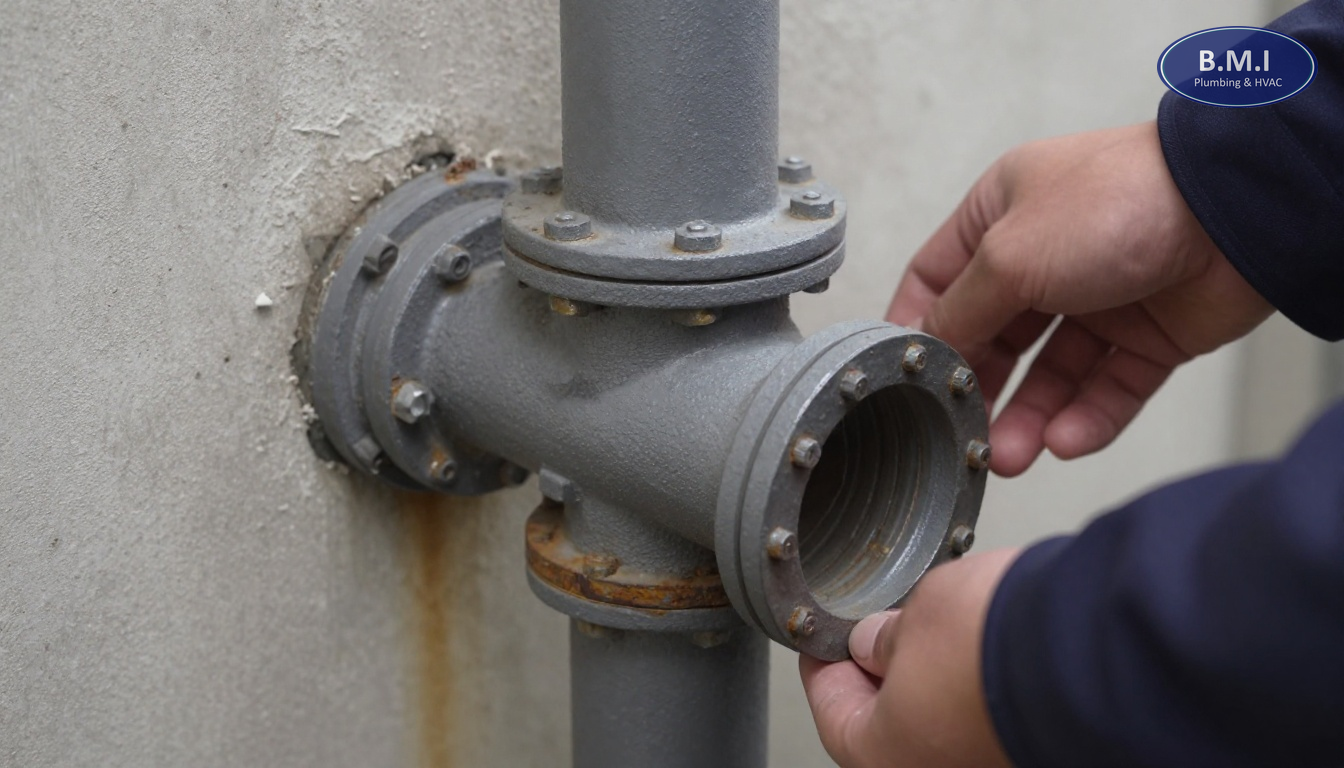
A second point that gets missed in board discussions: this is not mainly about the motor unit under the sink. It is about the building’s waste piping, which in many GTA towers was designed for greywater and ordinary food residue, not deliberate grinding of solids into a vertical 3-inch or 4-inch cast iron stack serving a dozen kitchens.
The misconception that causes the argument
The usual owner argument is simple: “It works in houses, so why not here?” That sounds reasonable until you look at how a condominium drainage system is laid out. In a detached home, the kitchen line is short, the user count is low, and if there is a blockage, it is usually confined to one property. In a high-rise in Toronto, North York or Mississauga, a kitchen stack may serve 10 to 25 floors, with branch lines tying in at each level, offsets in slab space, and cleanout access that is often limited to service rooms or a few suites.
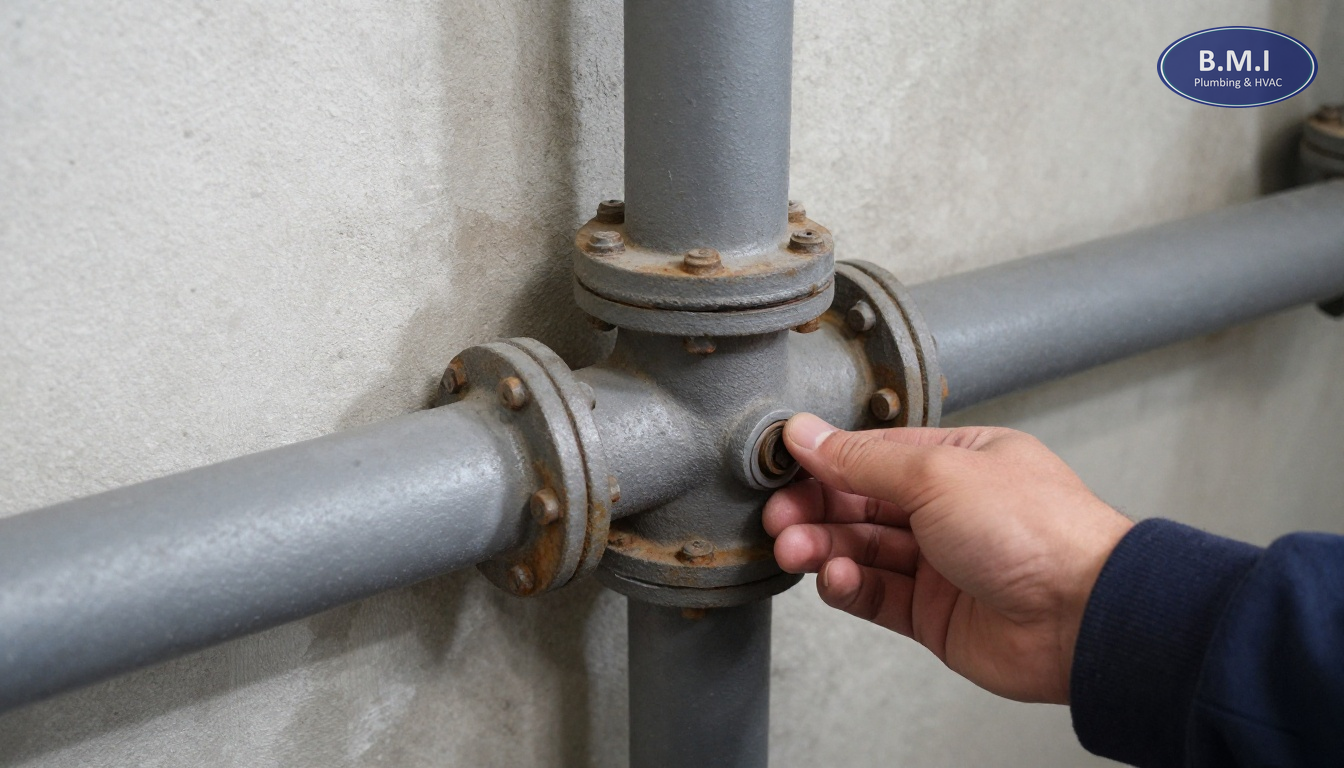
That difference matters because food solids do not dissolve. They settle, especially where the line pitch is marginal, where cast iron has internal scaling, or where grease has already coated the pipe wall. If a board is debating whether to permit disposals, it should first understand the building’s stack material and age. A 2018 glass tower with plastic branch piping and better access is not the same risk profile as a 1984 concrete high-rise in Scarborough with original cast iron kitchen stacks that have already been jetted three times in the past five years.
A related misconception is that the disposal itself is the only altered component. It is not. An owner may install a unit entirely within the suite cabinet, but the practical effect is on the common element drainage system. That is why many corporations treat it as an alteration requiring approval, and in some cases a section 98 agreement if the corporation’s lawyer concludes the installation affects common elements or creates an ongoing maintenance and indemnity issue.
If your building has recurring kitchen backups already, this is usually a sign to review your kitchen stack cleaning program before you debate any exceptions.
What is actually happening inside the pipe
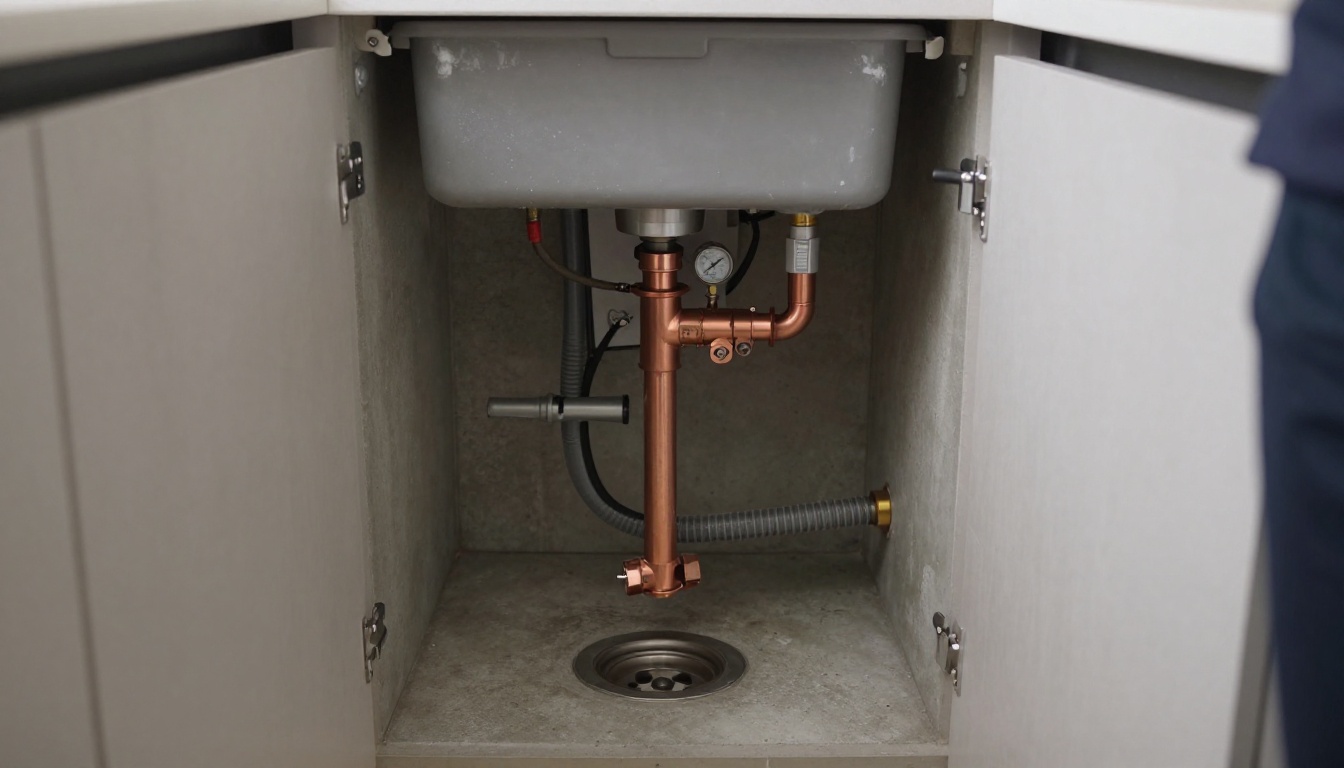
A garbage disposal reduces visible food scraps at the sink. It does not eliminate mass. It turns larger solids into smaller suspended solids, which then travel into shared piping. In buildings we service in Etobicoke and Vaughan, the most common trouble point is not the suite trap arm itself. It is the first section of horizontal kitchen branch after the cabinet connection, then the tie-in to the stack, and then lower stack offsets where velocity drops.
Here is the field reality:
- Kitchen stacks are commonly 3-inch or 4-inch cast iron in older towers.
- Branch connections from suites are often 1 1/2-inch or 2-inch.
- Once internal scale and grease reduce the effective bore, a nominal 3-inch stack may behave more like a pipe with substantially less carrying capacity.
- Dishwashers add intermittent surges of hot, greasy discharge that move solids temporarily, then let them settle lower in the system.
This is why residents often report a very specific symptom: their own sink drains fine most of the time, but backs up when the suite above runs a dishwasher or empties a sink. That is a stack symptom, not a simple in-suite clog. When ground food waste is part of the loading, the blockage is often soft enough to shift under snaking but not fully clear until the line is properly flushed or jetted.
The best evidence is usually a camera inspection of the drain line after the emergency is stabilized. Camera footage often shows a sludge shelf at a branch junction or a narrowed cast iron section with heavy tuberculation. Boards should insist on footage or stills if they are being asked to approve more frequent maintenance or to enforce a disposal ban.
Another point boards do not always hear from general contractors: food waste and grease together are worse than either one alone. Fall matters here. From September through December, kitchen stack loading rises in many buildings because residents cook more, host more, and wash more fats and starches into the sink. If a building already has a marginal cleaning cycle, allowing disposals before holiday season is the wrong direction.
Why boards ban them even when only a few suites have them
Boards are often accused of overreacting when only 5 or 10 suites out of 300 have disposals. From a plumbing management standpoint, that criticism misses how shared systems fail. You do not need building-wide adoption to create a building-wide maintenance issue. A handful of units on the same vertical stack can materially change the solids load on that stack, especially if those suites are concentrated on lower floors where owners renovate more often.
A common mistake we see in early-1990s North York high-rises is assuming that because the unit was installed years ago without complaint, it is acceptable. In reality, the stack may have been slowly accumulating material for years, and the first obvious event is the lower suite backup that triggers an after-hours call. Once that happens, management is no longer dealing with a lifestyle preference. It is dealing with flood response, restoration coordination, and owner-versus-corporation responsibility.
From a governance perspective, boards usually ban disposals for four practical reasons:
- Shared risk, private convenience: one owner gets the convenience; the corporation inherits the maintenance risk.
- Difficult causation: after a blockage, it is hard to prove which suite’s waste caused it unless there is a clear rule and documented unauthorized installation.
- Reserve fund pressure: repeated stack cleaning and premature pipe replacement are common-element costs.
- Insurance exposure: kitchen sink overflows can damage cabinets, flooring and suites below, and deductibles in Toronto condominiums are often high enough that even a moderate incident becomes a board-level issue.
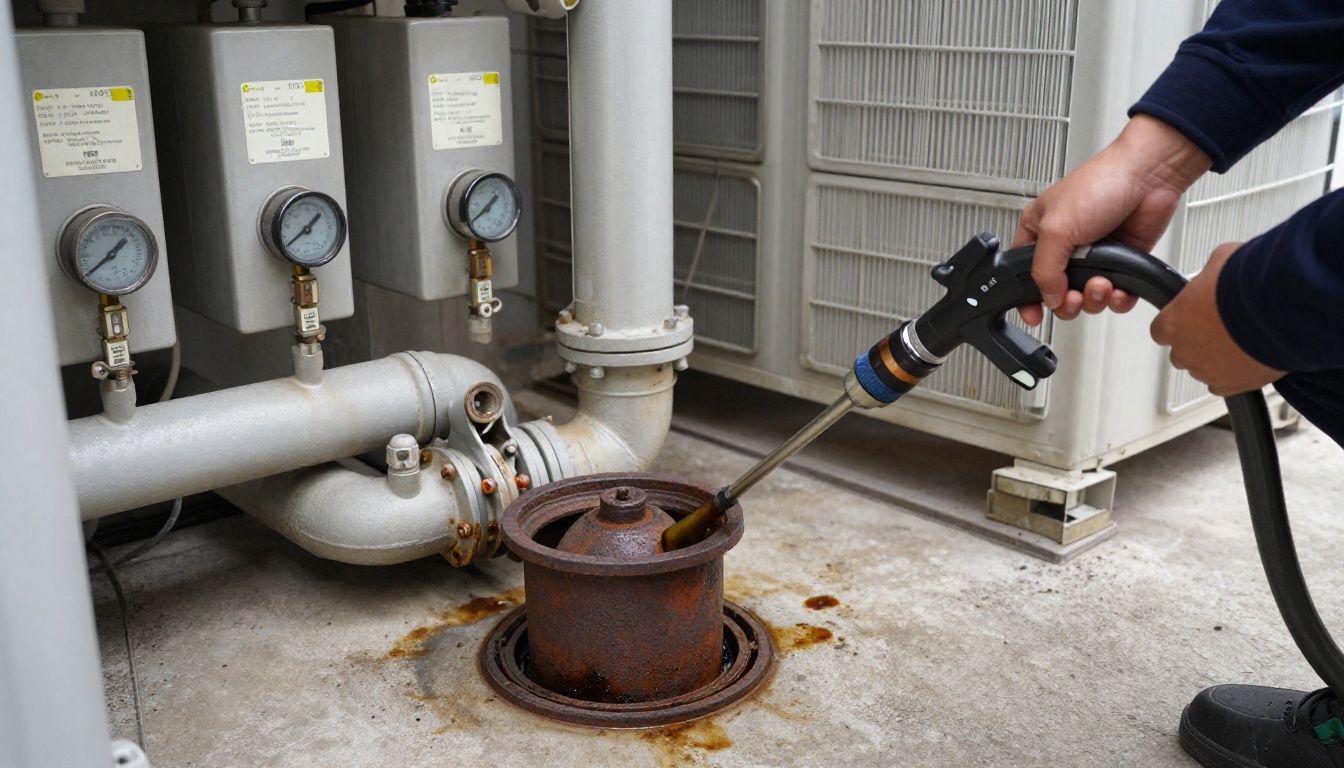
If the building has weak isolation or unknown valve condition, the problem is worse because emergency shutdowns become harder to manage. That is one reason many corporations combine policy enforcement with a valve audit and charting program so the building operator knows exactly what can be isolated when a stack-related incident affects adjacent services.
How the problem presents in a condominium
The complaint rarely arrives as “our owners have too many garbage disposals.” It shows up as a pattern. Property managers should pay attention to the wording in work orders because the pattern is often visible before the cause is formally confirmed.
Typical reports include:
- “Kitchen sink backs up only when upstairs neighbour uses water.”
- “Dishwasher discharge comes up into the double sink.”
- “Repeated sink clogs in the same line of suites, especially floors 2 to 8.”
- “After snaking, the sink is fine for a few weeks, then slow again.”
- “Food odour from sink with no fixture leak present.”
- “Lower-floor suite had dirty water in the sink during dinner hours.”
That timing matters. Blockages tied to evening peaks, weekends or holiday cooking periods point toward stack loading, not just a random in-suite stoppage. On a 250- to 350-unit building, if management sees three or four kitchen backup calls from the same stack line within 12 months, it is usually worth moving beyond spot service and into a planned review of stack condition.
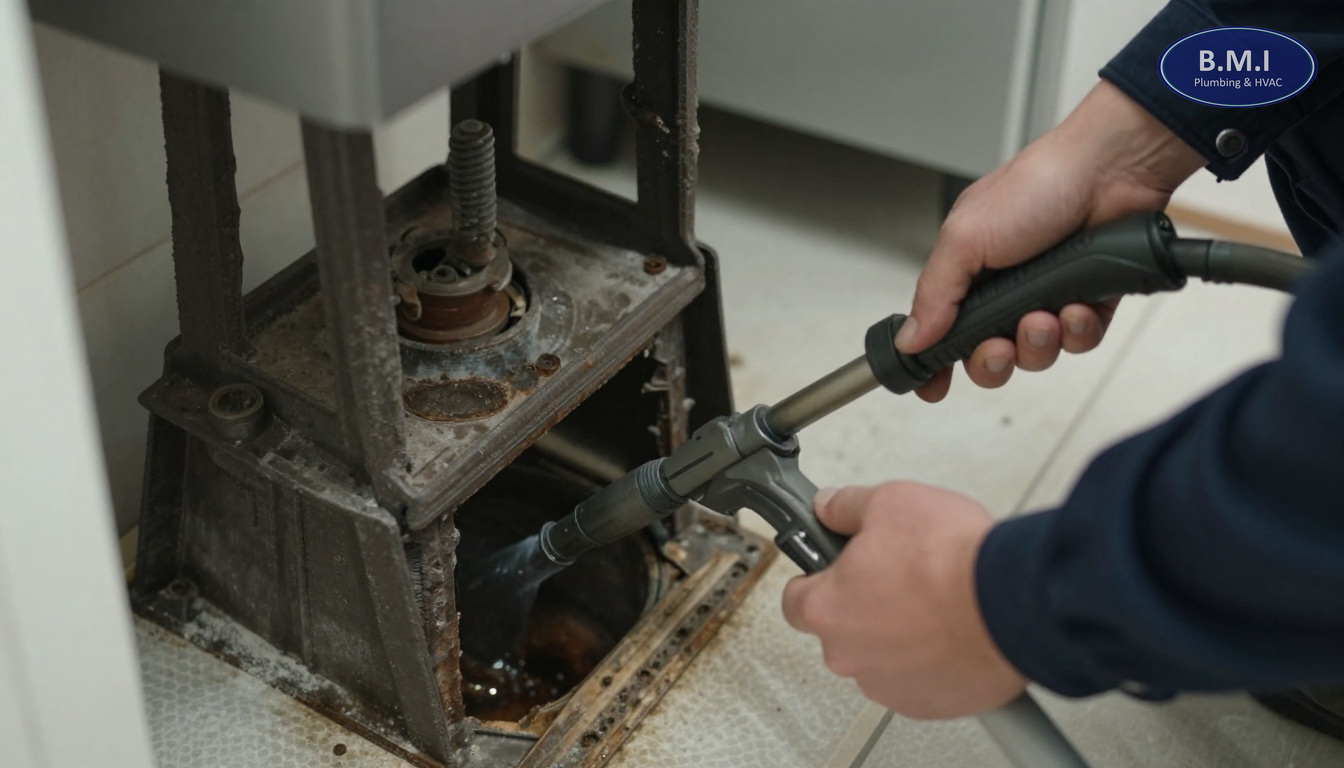
The first response may still be a drain cleaning service to restore function, but a board should not mistake that for a root-cause solution. Snaking can punch a hole through soft waste. It does not remove the grease film and settled organic solids that let the problem rebuild quickly.
For secondary readers trying to understand responsibility, this is where the line between in-suite and common element often becomes important. If the blockage is in the owner’s trap arm or immediately downstream of the sink connection, it may be treated as an in-suite issue. If the blockage is in the shared stack or a common horizontal line, it is usually a corporation issue first, subject to chargeback if an unauthorized alteration contributed. The declaration governs, but the plumber’s location of blockage is often the most important fact in the file.
What evidence management should insist on before making policy or chargeback decisions
Boards should not enforce a ban based on anecdotes alone, and they should not accept blanket statements like “the disposal caused it” without evidence. In practice, the strongest files have three things:
1. A written service report with blockage location
The report should state whether the obstruction was found in:
- the in-suite trap or branch,
- the branch connection to the stack,
- the vertical kitchen stack,
- or a lower horizontal common drain.
That distinction drives responsibility and determines whether a rule breach actually affected common elements.
2. Camera footage or still images where possible
A proper camera inspection can show grease shelves, settled food solids, offsets, corrosion, or a reduced internal diameter. In older cast iron, the useful insight is often not a dramatic break but a wall condition showing why the stack no longer self-scours at normal flow.
3. A record of prior incidents by stack line
If Suite 1504, 1404 and 1204 all had kitchen drainage issues in an 18-month period, that is much stronger evidence than isolated calls across unrelated stacks. Management should track problems by stack designation, not just by suite number.
If the building is deciding whether to formalize a ban, it is also worth checking whether the declaration already prohibits owners from altering plumbing fixtures that affect common systems. Many boards assume they need a new rule when the authority may already exist; they just have not enforced it consistently.
This is also budget season. If your board is preparing next year’s operating plan, a stack-by-stack maintenance history is more useful than a generic plumbing line item. Corporations that use scheduled maintenance programs usually make better decisions because they can compare cleaning frequency, emergency call volume and capital planning in one place.
Repair, maintenance or outright prohibition: a decision framework
Not every building needs the same policy. The right answer depends on pipe age, material, failure history and governance tolerance. The table below is a practical framework used in many GTA buildings.
| Building condition | Typical plumbing risk from disposals | Practical board approach |
|---|---|---|
| 1970s-1980s tower with original cast iron kitchen stacks and recurring backups | High | Prohibit disposals, enforce removal on renovation, increase stack cleaning and camera review |
| Early-1990s tower with moderate backup history and limited cleanout access | Medium-high | Prohibit new installations, grandfather only if rules allow, inspect affected stacks annually |
| Kitec-era or early-2000s building with better drainage condition but known grease issues | Medium | Usually still prohibit due to shared maintenance burden; consider written clarification to owners |
| Post-2010 tower with modern piping and no backup history | Low-medium, but not zero | Board may still prohibit for risk allocation reasons even if plumbing can tolerate occasional use |
| Condo townhouse complex with short individual runs and fewer shared vertical stacks | Variable | Review declaration carefully; plumbing risk may be lower, but corporation may still restrict for maintenance reasons |
The key insight is that boards do not need to prove disposals are impossible. They only need to show the restriction is reasonable in a shared building system. In older Toronto and Markham towers, that is usually not difficult.
If the building has broader piping issues, the disposal debate may be a symptom of a larger capital problem. A stack that repeatedly blocks even without disposals may be approaching the point where building re-piping or targeted riser replacement should at least be studied alongside cleaning.
What this costs in the Toronto market
Boards usually ask the right question late: what is the financial consequence of allowing them? The answer is not the purchase price of the unit. It is the maintenance and incident cost imposed on the common system.
Below are realistic Toronto-market estimate ranges that vary by building access, after-hours timing, pipe condition and number of affected suites.
Common cost ranges related to disposal-driven stack problems
| Item | Typical market range | Notes |
|---|---|---|
| Single in-suite kitchen drain clearing | $250-$650 | Usually daytime, simple access, no major common blockage |
| After-hours emergency response for kitchen backup | $500-$1,500+ | Increases quickly if multiple suites or cleanup are involved; see emergency plumbing response |
| Camera inspection of a kitchen line or stack section | $450-$1,200 | Depends on access and whether line must first be cleared |
| High-pressure jetting of one kitchen stack | $250-$600 per stack | Best paired with planned kitchen stack cleaning rather than one-off service |
| Multi-stack annual/biannual cleaning program | $3,000-$20,000+ | Depends on stack count, building height and frequency |
| Cabinet/interior restoration after overflow | $1,500-$10,000+ | Not plumbing scope, but often the largest cost driver |
| Rule enforcement/legal/admin cost | Variable | Real cost often underestimated by boards |
On a 300-unit building with 20 to 30 kitchen stacks, moving from a 30-month cleaning cycle to a 15-month cycle because of heavier solids loading can add several thousand dollars a year in direct maintenance alone. That is before one insurance claim, one deductible issue, or one owner dispute over unauthorized installation.
By comparison, the plumbing cost to remove an unapproved disposal and restore a conventional basket strainer assembly is often modest relative to repeated stack maintenance. Where access is straightforward, the work may be a few hundred dollars, though cabinetry, electrical disconnect requirements and owner scheduling can change that. If the owner insists the corporation is overreaching, a written policy backed by actual maintenance records is what wins the argument, not a general statement that “we do not like them.”
Fall is when boards should deal with this, not after the December backup
September through November is the right time to review disposal policy for a practical reason: holiday cooking season is when marginal kitchen stacks usually show their weakness. By December, contractors are dealing with more emergency calls, suite access is harder, and owners are less receptive to disruption.
A sensible fall plan for a condominium corporation looks like this:
- Review the declaration and rules for plumbing alterations and nuisance provisions.
- Identify whether disposals are expressly prohibited, conditionally permitted, or simply unaddressed.
- Compare that against actual work-order history by stack line.
- Schedule camera inspections on repeat-problem stacks.
- If stacks have not been cleaned in over two years, budget kitchen stack cleaning before year end or early in the new year.
- Issue a clear owner communication before the holiday season explaining what is and is not permitted.
This is also a good time to look at adjacent plumbing risks. In many high-rises, the same buildings that struggle with kitchen stack loading also have aging pressure control or weak isolation. A fall review of PRV maintenance and valve replacement can prevent winter pressure swings and make emergency response more controlled if a backup leads to broader service work.
What happens if the board defers the issue
Deferral is common because the problem feels political rather than technical. The risk is that the decision gets made for the board by the next incident.
If a corporation delays action, the usual sequence is:
- more frequent in-suite drain calls,
- one or two lower-floor sink overflows,
- an after-hours emergency with uncertain source,
- disagreement over whether the owner had approval,
- chargeback disputes,
- and then a rushed rule clarification after damage has already occurred.
There is also a reserve fund angle. Repeated cleaning does not necessarily mean immediate replacement, but if camera footage shows advanced internal corrosion, recurring solids retention and poor serviceability, those findings should be passed to the reserve fund planner. A Class 1 or Class 2 reserve fund study update is more defensible when it includes actual field evidence from stack condition, not just age assumptions.
Insurance is another reason not to leave the issue vague. If the corporation knows unauthorized disposals exist and has repeated stack incidents but takes no enforcement steps, that can become an uncomfortable fact pattern after a claim. The plumber does not decide coverage, but good documentation helps management show it acted reasonably to protect the common elements.
For buildings with broader system concerns, a policy review can be paired with a larger capital discussion around project solutions for aging plumbing systems or a look at comparable completed work in BMI’s project portfolio.
Practical policy language boards should think about
Boards do not need dramatic wording. They need clear wording. The most effective policies usually do three things:
- state whether garbage disposals are prohibited or require prior written approval,
- say that any owner-installed device affecting common drainage is subject to removal if it creates risk or violates rules,
- and reserve the corporation’s right to charge back costs where permitted by the declaration and governing documents.
The operational side matters just as much. If management circulates a rule but never checks renovation applications, the rule will be ignored. Disposal units are often discovered only when a suite has other in-suite plumbing work or fixture replacement, so renovation review and plumbing records should be aligned.
For secondary readers who already have a unit installed, the practical advice is not to assume silence equals approval. Ask management whether the installation was approved, whether the building has a prohibition, and whether removal will be required on sale or renovation. It is better to resolve that before a blockage puts the issue into a compliance file.
FAQs
Are garbage disposals usually allowed in Toronto condominiums?
In many Toronto condominiums, they are either expressly prohibited or only permitted with written approval because they put food solids into drainage systems that were never designed to carry that load. In 1970s to early-2000s high-rises with 3-inch or 4-inch cast iron kitchen stacks, even a small number of disposals can materially increase grease and solids accumulation. The answer ultimately depends on the declaration, rules and any section 98 alteration requirements, but from a plumbing standpoint boards are usually justified in restricting them.
Why do condo boards ban in-sink-erator units if they work fine in houses?
A detached house typically has one kitchen line and one user profile, while a condominium stack may serve 8, 12 or 20 kitchens vertically with long horizontal branch connections before reaching the stack. Ground food particles from one suite do not disappear; they combine with grease, detergent residue and scale inside shared piping, especially in older cast iron where the internal diameter has already narrowed. That is why a device that seems harmless inside one suite can create repeated common-element backups several floors away.
Who pays if a garbage disposal contributes to a kitchen stack blockage?
That depends on the condominium’s declaration, rules, standard unit definition and any alteration agreement, but many corporations treat the stack itself as a common element while charging back costs if an owner-installed device caused or materially contributed to the blockage. In practice, the corporation often pays first for emergency response to protect the building, then sorts out responsibility afterward using plumber reports, camera footage and rule enforcement. If there is no written approval on file, the owner’s position is usually weaker.
Can a condo corporation require an owner to remove an installed disposal?
Yes, if the device violates the corporation’s rules or was installed as an alteration without the required approval, the board can generally require compliance and removal through its normal enforcement process. In Ontario condominiums, that often turns on the declaration, the rules and whether the alteration affected common elements or building systems, which kitchen drainage almost always does. The practical step is to document the installation, confirm whether approval exists, and obtain a written plumbing opinion before sending compliance notices.
What does a garbage disposal do to kitchen stack maintenance costs?
In buildings that already need periodic kitchen stack jetting, disposals usually shorten the cleaning cycle rather than lengthen it. A stack that could otherwise be maintained every 24 to 36 months may start showing backups in 12 to 18 months once multiple suites are grinding food into it, particularly around holiday periods. In the Toronto market, routine stack jetting may run roughly $250 to $600 per stack, while an after-hours backup affecting several suites can quickly cost several thousand dollars once emergency response, cleanup and resident coordination are included.
If a building already has some disposals installed, what should management do now?
Start with facts rather than assumptions: confirm what the rules say, identify which suites have units, and compare that list against the building’s history of kitchen sink backups, especially in the fall and winter. If the building has recurring kitchen drainage issues, a camera inspection and a structured kitchen stack cleaning program usually provide better evidence than a general warning email. Boards make better decisions when they can tie the policy to actual stack condition, maintenance cost and flood risk.
Next steps for boards and property managers
If your corporation is debating condo garbage disposal policy, do not start with opinions. Start with your building’s plumbing history. Pull the last two to երեք years of kitchen drain calls by stack line, confirm what your rules already say, and inspect the stacks that generate repeat complaints. In many buildings, the evidence is strong enough to support a ban without any guesswork.
If your kitchen stacks have not been cleaned in over two years, or if you are seeing repeat sink backups before the holiday season, arrange a site review before finalizing next year’s operating budget. BMI attends the building before quoting, can set up scheduled preventive maintenance programs rather than one-off calls, and provides 24/7 emergency plumbing support when a backup cannot wait.
For readers comparing options, additional condominium plumbing guidance is available on the BMI blog.
Contact BMI
- Contact BMI
- Phone: (416) 845-3756
- Emergency: (416) 845-3756, answered 24 hours a day
- Email: info@brial.ca
More on condominium plumbing
Kitchen Stack Cleaning Cost in Toronto Condos
What does kitchen stack cleaning cost in Toronto? Real condo pricing, scope, timelines, warning signs and budgeting …
Hydro Jetting vs Snaking Condo Waste Stacks in Toronto
Hydro jetting vs snaking for condo waste stacks in Toronto: what each method does, costs, timing, and when a board …

Condo Kitchen Stack Cleaning Frequency in Toronto
How often should a condo kitchen stack be cleaned? Toronto guidance on stack cleaning schedule, costs, warning signs and …
Need a plumber in your building?
BMI services roughly 200 condominium and multi-residential buildings across Toronto and the GTA. Emergencies are answered at any hour.