
Condo Kitchen Stack Cleaning Frequency in Toronto
How often should a condo kitchen stack be cleaned? Toronto guidance on stack cleaning schedule, costs, warning signs and budgeting.
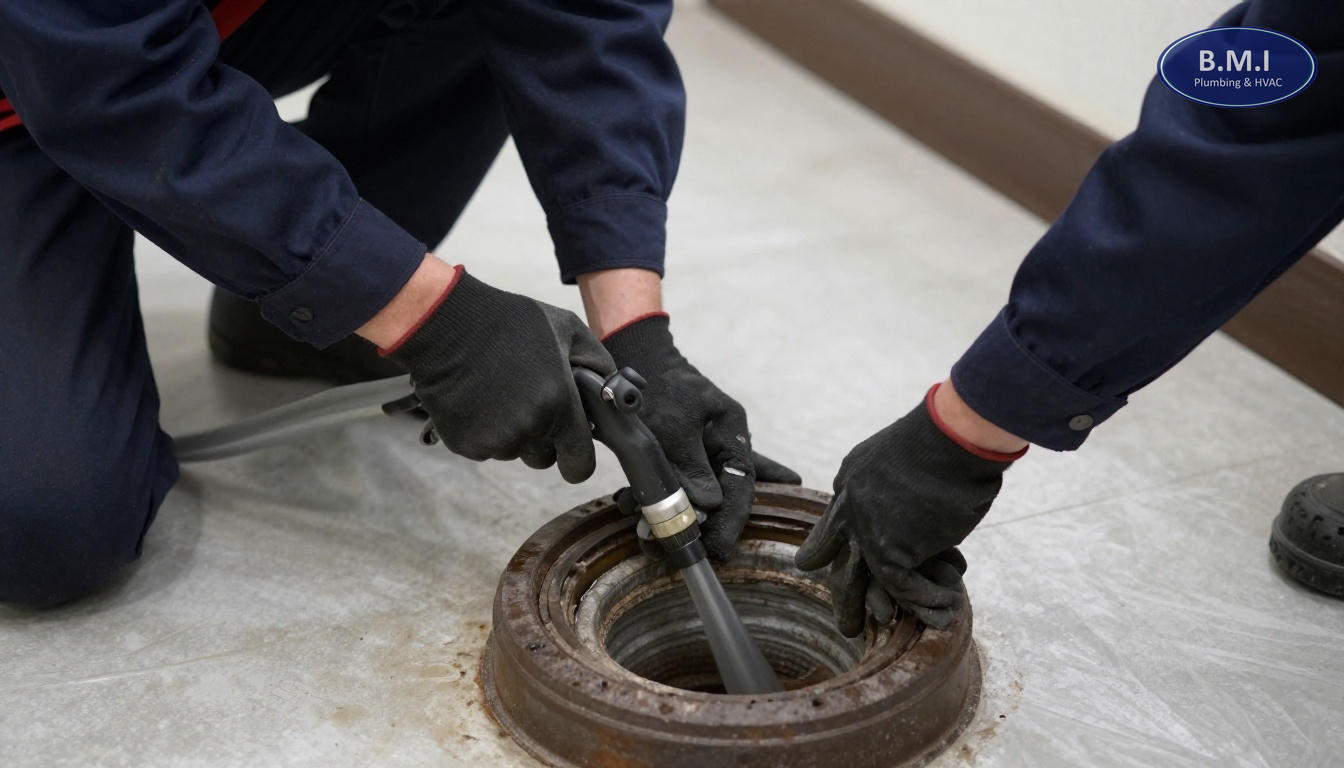
Condo Kitchen Stack Cleaning Frequency in Toronto
Quick summary: In most Toronto condominium buildings, kitchen waste stacks should be cleaned on a planned cycle of every 12 to 24 months, not only when they block. The correct stack cleaning schedule depends on pipe age, stack layout, number of suites, grease loading, and whether prior camera evidence shows the line is actually being restored to full flow.
A common budgeting mistake in fall is to treat kitchen stack cleaning as optional housekeeping. In practice, it is one of the few plumbing maintenance items that can prevent a holiday-weekend wastewater backup affecting several suites at once, especially in 1970s and 1980s concrete high-rises in Toronto, North York and Mississauga where the original cast iron has decades of grease scale on the walls.
The short answer: most buildings need a schedule, not a guess
If a board asks, “How often should we clean the kitchen stacks?” the honest answer is not one number for every building. A post-2010 glass tower with fewer years of buildup and better suite turnover habits may hold up on an 18- to 24-month cycle, while an early-1990s tower in Scarborough or Etobicoke with 20 to 30 suites tied into one vertical line may need annual jetting to stay ahead of repeat blockages.
The practical starting point BMI uses in many GTA buildings is this:
- Annual cleaning for older buildings with repeat history, heavy rental occupancy, many dishwasher discharges, or known grease loading
- Every 18 months for buildings with moderate history and decent results from the last cleaning
- Every 24 months only where the line has been camera-verified to remain open and service calls are low
- Immediate reassessment if the same stack has two or more blockage calls between planned cleanings
That schedule should be adjusted with evidence, not optimism. If your building has not had a formal kitchen stack cleaning program before, the first cycle should usually include at least some camera inspection so the next budget year is based on pipe condition rather than assumptions.
One of the most useful field indicators is not total building age but how quickly the same stack starts collecting service calls after jetting. If a stack is backing up again 8 to 10 months after a proper cleaning, the interval is too long, the cleaning was incomplete, or the pipe is so rough internally that cleaning is becoming a temporary measure rather than a durable one.
Why kitchen stacks foul faster than other drains
Kitchen stacks are different from bathroom waste stacks. Bathroom lines mostly see soap, hair and paper. Kitchen lines see fats, oils, grease, starches, coffee grounds, fine food solids and dishwasher discharge. Dishwashers matter because they send hot, emulsified grease into the line; it travels as liquid, then cools and plates onto the inside wall of the vertical cast iron and horizontal offsets.
In many condominium buildings, the dedicated kitchen waste stack is 3 inches in diameter, sometimes 4 inches in larger buildings or where the design combines more fixture load. On paper, that sounds generous. In reality, a 3-inch cast iron stack with 30 years of grease scale can lose a surprising amount of effective opening. We have seen lines where the remaining clear path was closer to 1 1/2 to 2 inches through the heaviest section, especially around offsets, base fittings and lower-floor tie-ins.
That is why a stack can seem fine for months and then fail suddenly over a long weekend. The line does not close evenly. It narrows gradually until one heavy discharge event, often several dishwashers and sinks running in sequence, catches solids at a rough section and turns a partial restriction into a full backup.
A common mistake we see in early-1990s North York high-rises is assuming newer-than-1970s means low risk. It does not. Those buildings often have original cast iron kitchen stacks now over 30 years old, plus much higher dishwasher use than the building had in its first decade. Occupant behaviour changed faster than the piping did.
If the building has original no-hub cast iron, the internal wall condition matters as much as the nominal size. Once the interior becomes pitted and rough, grease adheres more quickly after cleaning. That is one reason two buildings of the same age can end up on very different maintenance programs.
What managers and residents actually report when the stack is overdue
Residents rarely say, “Our kitchen waste stack needs jetting.” They report symptoms, and the pattern matters.
The most reliable stack-related complaints are:
- A kitchen sink that drains normally on its own but backs up when the suite above uses the sink or dishwasher
- Repeated kitchen backups on the same vertical line of suites
- Gurgling at the kitchen sink after an upper-floor discharge
- Water rising in the lower suite sink during evening peak cooking hours
- A blockage that clears temporarily after snaking, then returns within weeks or a few months
- More calls from middle and lower floors than from top floors, because restrictions often build near offsets and at the base
That first symptom is especially important for property managers. If Suite 904 says their sink backs up only when Suite 1004 runs a dishwasher, that is strong evidence the issue is likely in the common stack, not just in Suite 904’s trap arm. It changes both the scope of work and the likely cost responsibility.
Condominium corporations need to be careful about chargebacks here. If management sends a contractor only to clear one suite branch without checking the stack pattern, the corporation may misclassify a common-element issue as an owner issue. In many declarations, the vertical stack is common element while the short branch serving the suite may be unit responsibility. The evidence should come first, then the billing decision.
If your building is seeing recurring kitchen sink complaints in the same line, it is usually worth pairing the service response with drain cleaning records and a review of stack history before the next board meeting. Boards are more likely to approve preventive work when the service-call pattern is shown stack by stack rather than as a vague annual plumbing total.
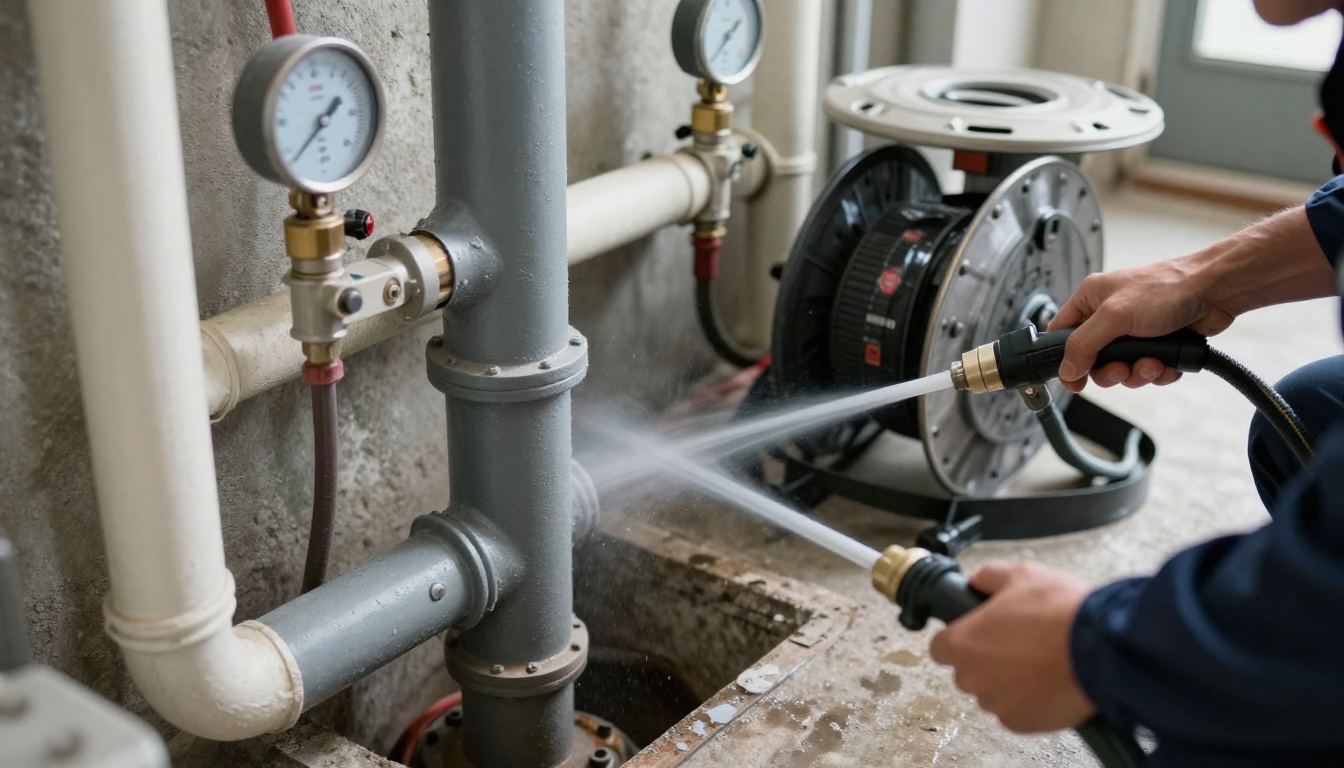
What a proper inspection should include before setting the schedule
A building should not adopt a permanent kitchen stack cleaning frequency based only on one emergency. The first step is to inspect enough of the system to answer four questions:
- Which stacks are actually kitchen stacks, and how many suites are on each one?
- Are the problem areas in the suite branches, the vertical stack, the horizontal offset, or the base of stack?
- Is the pipe wall smooth enough that cleaning will hold, or is the cast iron too deteriorated?
- Are there enough usable cleanouts and isolation points to service the line efficiently?
A useful inspection usually includes some combination of:
- Review of building drawings, if available
- Service-call mapping by stack or riser line
- Cleanout access review in suites, corridors or service rooms
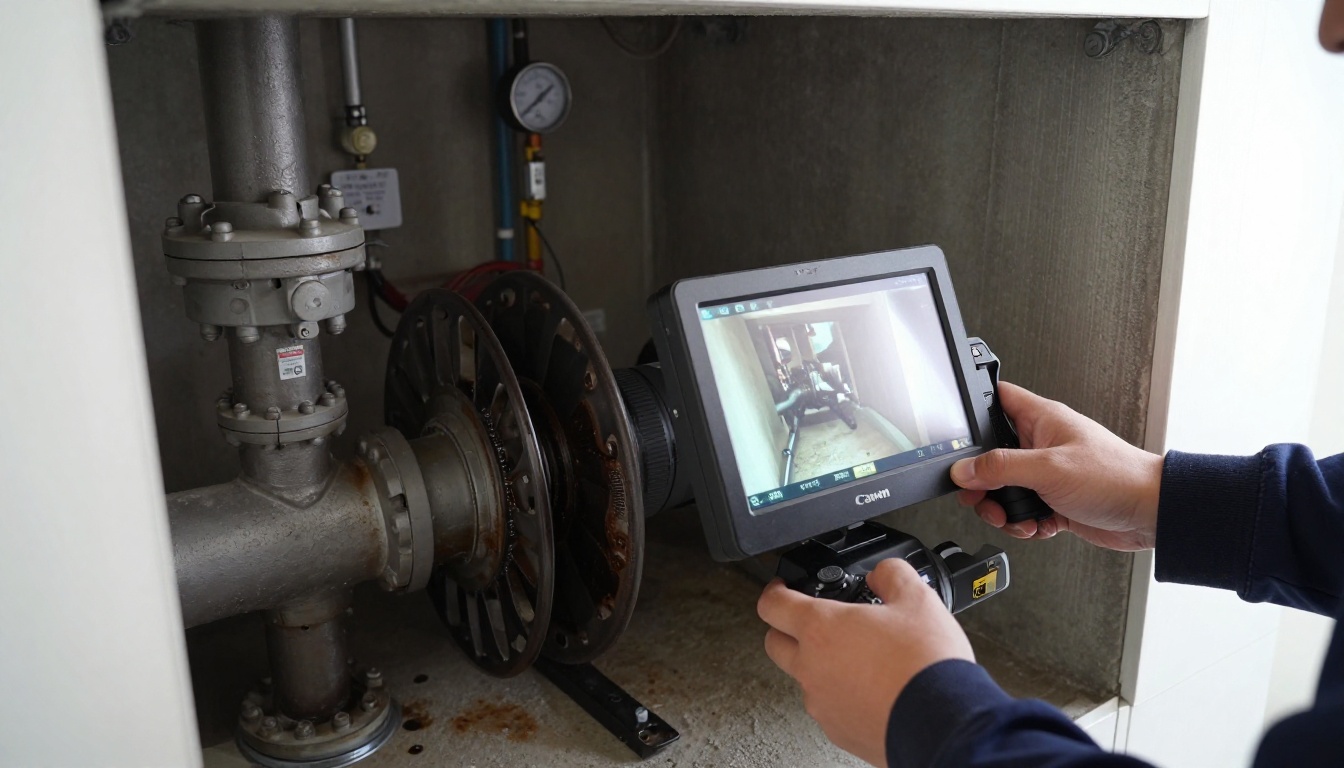
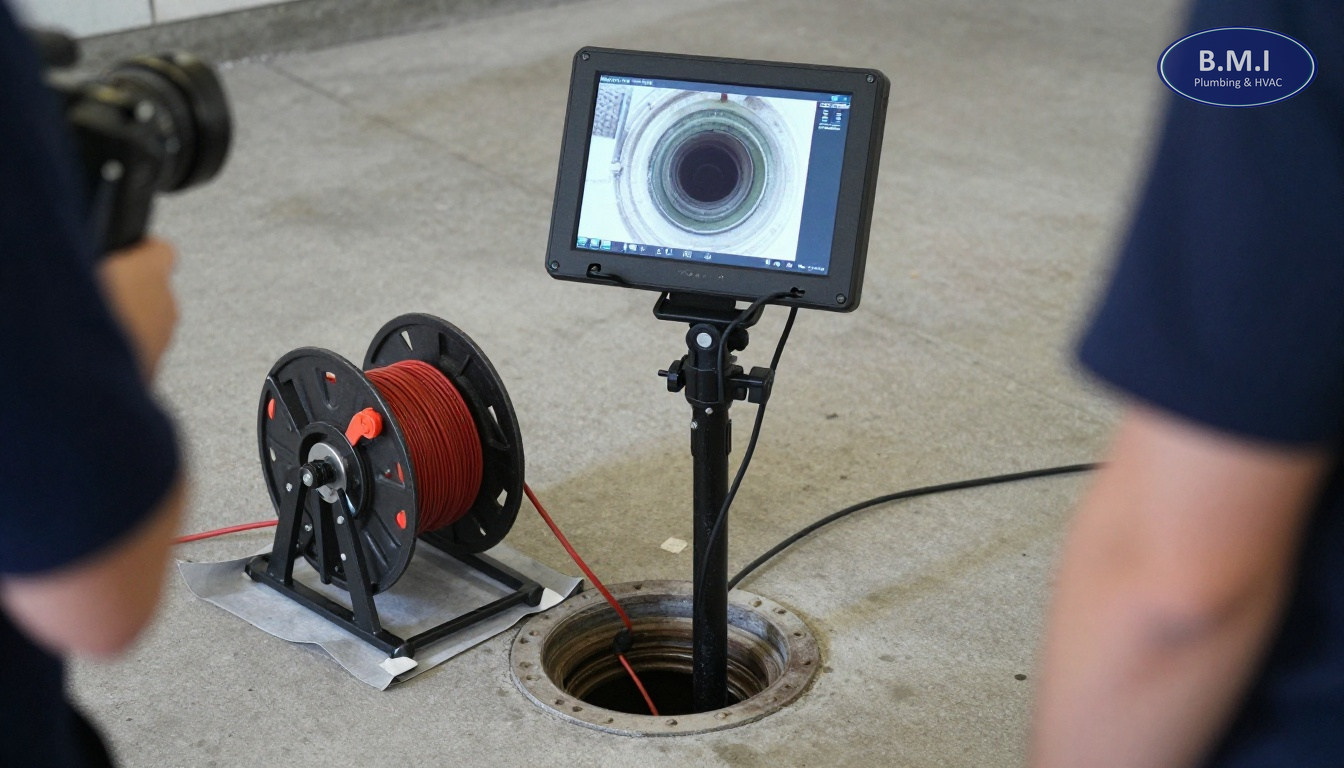
- Camera pipe inspection before or after cleaning
- Photographs or video of heavy buildup, offsets and damaged sections
- Written notes on pipe size, material and access limitations
Insist on evidence you can show a board. “The line was dirty” is not enough. Ask for camera footage, still images and a written recommendation stating whether the contractor is recommending annual, 18-month or 24-month cleaning, and why.
In a 20- to 30-storey tower, not every stack needs the same schedule. On a 300-unit building we would expect some kitchen lines to load faster than others because stack population is not always equal. One line may collect suites with larger households, more rentals, or more frequent cooking. Another may have a sharper horizontal offset at the base, making it the recurring problem stack. A building-wide flat interval can be administratively simple but technically wrong.
This is also where a valve audit and charting review can help. Cleanouts and valves get confused in older buildings, and during an after-hours backup the time lost hunting for access points is expensive. Buildings that know their service points respond faster and with less resident disruption.
Jetting versus snaking: not the same scope, not the same result
A lot of budget confusion comes from treating all drain work as interchangeable. It is not.
| Method | What it does | Best use | Limitation |
|---|---|---|---|
| Snaking | Punches through a blockage or retrieves localized obstruction | Emergency restoration of flow | Usually leaves grease coating on pipe walls |
| High-pressure jetting | Scours interior wall and flushes grease and soft buildup from the stack | Planned kitchen stack cleaning | Needs proper access and can expose severely deteriorated pipe |
| Camera inspection | Documents condition, confirms remaining restriction or damage | Setting schedule and deciding repair vs replacement | Diagnostic only, not cleaning |
For most condominium kitchen stacks, planned cleaning means high-pressure jetting, not just snaking. A snake can reopen a line but still leave a thick ring of grease behind. That is why a stack may seem fixed after an emergency visit, then back up again within a short period.
A proper kitchen stack cleaning program usually works from the cleanout and targets the full vertical line and relevant lower connection points. In practical terms, one stack may take 1.5 to 4 hours depending on height, access, and how badly it is loaded. If the cleanout cap is seized, buried behind millwork, or hidden above a finished ceiling, the cleaning time goes up and the cost follows.
One insight boards often miss: the lower third of the stack and the base fitting usually matter more than the top. Grease can accumulate all the way down, but the worst restrictions are commonly found where velocity drops, direction changes, or several branch discharges converge. Cleaning only from an upper access point without addressing the lower section can leave the real choke point behind.
How to choose the right stack cleaning schedule
The best schedule is a decision framework, not a rule of thumb. The factors below are the ones that actually move the interval.
1. Building age and pipe material
- 1970s and 1980s concrete high-rises with original cast iron kitchen stacks usually need the most frequent cleaning
- Early-1990s towers often behave similarly now that they are over 30 years old
- Post-2010 towers can sometimes run longer intervals, but only if usage and camera evidence support it
- Buildings with replaced sections may need mixed scheduling if some stacks are newer than others
If the stack is original cast iron and has never been on a formal cycle, annual cleaning is often the safest starting point.
2. Number of suites per stack
A 6-storey mid-rise with 6 or 8 suites on a kitchen line is not the same as a 25-storey tower with 25 or 30 suites loading the same vertical line. More suites means more dishwasher discharge, more grease, and more timing overlap in the evening. The fixture unit calculation may have worked on design day, but buildup changes the real carrying capacity over time.
3. Occupancy type
Purpose-built rentals and investor-heavy condo towers often generate different maintenance patterns from owner-occupied buildings. That is not a judgment issue; it is a turnover and reporting issue. Buildings in Mississauga and Vaughan with high rental churn often see more emergency calls because habits vary suite to suite and small warning signs are reported later.
4. History after the last cleaning
The most important metric is simple: how long did the stack stay quiet after the last proper cleaning?
- Quiet for 18 to 24 months: keep monitoring, consider a longer cycle only with camera support
- New calls at 10 to 14 months: annual is probably correct
- New calls at under 12 months after proper jetting: inspect for rough pipe, incomplete cleaning, or a deteriorated section that may need replacement
5. Access and logistics
If a stack is difficult to access, that is not a reason to delay cleaning. It is a reason to plan it better. In some buildings, once access notices, elevator protection and suite entry are organized, it is more efficient to clean all kitchen stacks on a route than to keep paying for one-off emergencies through the year.
If repeated access problems are preventing maintenance, it may be worth combining cleaning with in-suite plumbing access work or minor access panel modifications approved by the corporation.
What it costs in the Toronto market
No serious contractor should promise one universal number, but boards still need realistic ranges for budget season. In the GTA, planned kitchen stack cleaning is usually quoted by stack, by group of stacks, or as a building program, not by the hour alone.
Typical budget ranges
| Scope | Typical Toronto-market range | Notes |
|---|---|---|
| Single kitchen stack cleaning | $600-$1,500 | Depends on height, access, cleanout condition, and whether flushing/camera is included |
| Camera inspection added to a stack | $250-$700 | Often lower when bundled with cleaning and access is already open |
| Small mid-rise program | $2,500-$6,000 | Multiple stacks, daytime planned work |
| Larger high-rise program | $7,500-$18,000+ | Number of stacks, after-hours work, reporting and access drive cost |
| Emergency after-hours response for active backup | Usually higher than planned maintenance | Premium time, urgent access, restoration coordination |
These are budget estimates only, not quoted prices. In Toronto, Etobicoke and Scarborough, the biggest cost variables are usually:
- Number of kitchen stacks
- Building height and route complexity
- Whether cleanouts are usable or need repair first
- Need for resident notices and suite access coordination
- Daytime versus after-hours work
- Whether camera verification is included
- Whether the job is preventive or an active emergency
A useful financial comparison for boards is this: one planned cleaning program may cost less than a single significant multi-suite backup once after-hours labour, restoration coordination, and management time are counted. If your corporation has a high insurance deductible, the math becomes even more one-sided toward prevention.
For buildings that are also reviewing valve condition and pressure issues before winter, it can make sense to coordinate stack work with a broader fall maintenance review such as PRV maintenance or a building-wide repairs and service audit so access and contractor attendance are used efficiently.
Timing, resident notice and fall scheduling realities
September through November is the right time to deal with kitchen stacks. That is not because grease behaves differently in fall; it is because boards are setting next year’s budget while the building still has time to act before the holiday cooking season, when stack loading predictably increases.
In practice, a planned program usually involves:
- Site review and stack mapping
- Notice to affected residents, often 48 to 72 hours minimum, though many managers prefer longer
- Access coordination for cleanouts in suites, service rooms or common areas
- Daytime or after-hours cleaning route
- Follow-up notes, and sometimes camera verification on problem lines
For a mid-size building, a crew may cover several stacks in a day if access is straightforward. In a larger tower with difficult suite access, protected finishes, and staggered entry, production drops. The plumbing itself may be only part of the timeline; resident coordination is often the slower piece.
A common mistake is waiting until the first cold snap or the December holiday period. At that point, contractors are also dealing with winterisation issues, burst pipe calls, garage ceiling leaks, and PRV-related pressure complaints. Planned work gets harder to schedule, and the building loses leverage by turning a maintenance item into an urgent problem.
If your building is already planning winter readiness, this is also a good time to review whether domestic pressure control and isolation are in order. A neglected pressure reducing valve station will not cause a kitchen stack blockage, but it will create a second category of winter plumbing complaints that competes for the same budget and shutdown windows.
When cleaning is enough, and when the pipe is telling you it is done
Not every dirty stack needs replacement. Just as importantly, not every recurring stack should be cleaned forever.
Cleaning is usually still the right approach when:
- The pipe can be restored to near full bore
- The stack stays serviceable for 12 months or more after jetting
- Camera footage shows buildup rather than structural failure
- Joints are stable and there is no meaningful cracking or collapse
Replacement enters the conversation when:
- The stack re-loads quickly even after proper cleaning
- Camera footage shows severe scaling, channeling, cracking or offsets that trap solids
- Cleanouts are failing or access is poor enough that maintenance is becoming impractical
- The building is already planning related capital work such as riser replacement, valve replacement, or broader project solutions
A useful board-level test is this: if one stack has had multiple emergency calls, repeated cleaning, repeated resident disruption, and still cannot hold a reasonable interval, ask for a second opinion on repair versus replacement. That does not mean replace the whole building. It may mean one problem line has aged differently from the rest.
For reserve fund planning, the distinction matters. Routine stack cleaning belongs in operating maintenance. Stack replacement belongs in capital planning and should be reflected in reserve fund study updates when the condition evidence supports it. Under Ontario condominium governance, boards are expected to make decisions that are reasonable and documented; good footage and written recommendations help defend the timing.
What happens if you defer it
Deferral does not always create an immediate disaster, and it is worth saying that plainly. If a building was cleaned 10 months ago, has no repeat history, and camera evidence was good, it may be reasonable to wait. But many boards defer without evidence, and that is where problems start.
What tends to happen when the interval is too long:
- Emergency backups move from one suite to multiple suites on the same line
- After-hours access becomes necessary, which raises cost and resident friction
- Owners dispute whether the issue was common element or in-suite responsibility
- Restoration and insurance questions follow if wastewater escapes cabinets or flooring
- Management loses the ability to schedule work efficiently and starts paying premium rates reactively
In Toronto condos, insurance deductibles are high enough now that even a moderate wastewater event can create difficult conversations. If the corporation knew a stack was recurring and still chose not to maintain it, that decision can become part of the post-loss discussion. Preventive maintenance records matter.
Deferral also has a less obvious cost: it makes data worse. A building that only responds to emergencies never develops a true stack-by-stack history, so the board keeps debating maintenance from scratch every year. Buildings with documented cycles, photos and service logs make faster and better decisions.
If you are unsure whether your current program is too aggressive or too light, ask for a condition-based review and compare it against prior work records. In some cases the honest answer really is, “this can wait a year.” In others, especially where the same line is repeatedly involved, the building should act before December. The right next step is evidence, not guesswork.
For active backups or repeated overflows, the issue has already moved out of planning and into response. That is when 24/7 emergency plumbing service becomes necessary, but emergency work should feed back into a preventive schedule rather than remain the default operating model.
A practical recommendation for boards setting next year’s budget
If your condominium is in Toronto, North York, Mississauga or Scarborough and the kitchen stacks are original cast iron, use this fall to answer three board-level questions:
- When were the stacks last properly jetted, not just snaked?
- Which specific stacks generated service calls in the last 24 months?
- Do we have camera evidence showing whether annual, 18-month or 24-month cleaning is justified?
If the answer to any of those is unclear, the building probably does not yet have a defensible stack cleaning schedule. Start with a review, not a blanket assumption.
For many corporations, the most effective approach is a planned maintenance program that groups recurring kitchen stack cleaning with other predictable plumbing work. That tends to reduce emergency calls, simplify budgeting, and give the board a record it can rely on when owners ask why the work is necessary.
If you want examples of how these projects and maintenance programs are documented across multi-residential buildings, BMI’s project portfolio and building references and the broader BMI blog are useful places to compare scopes before going to tender.
FAQs
How often should a condominium kitchen stack be cleaned?
In most Toronto condominium buildings, a practical starting point is every 12 to 24 months for dedicated kitchen waste stacks. Buildings with heavy grease loading, many rentals, frequent dishwasher use, or repeated weekend backups often need annual cleaning, while some smaller or newer mid-rises can stretch to 18 to 24 months if camera evidence shows the pipe walls are staying open. The right answer should be based on stack history, pipe material, number of suites on the line, and whether previous jetting restored full bore.
What is the difference between snaking a blocked kitchen line and cleaning the full stack?
Snaking is a spot response to punch a hole through a blockage, usually from one suite or one cleanout, and it often restores flow without removing the grease coating on the pipe wall. Full kitchen stack cleaning typically uses high-pressure jetting from a cleanout to scour the inside of a 3-inch or 4-inch cast iron stack and flush accumulated grease, soap and food solids down to the base of the sanitary system. In practice, a stack that has been snaked three times in a year usually needs a proper building-level cleaning program, not another emergency call.
How much does condo kitchen stack cleaning cost in Toronto?
As a broad Toronto-market range, planned kitchen stack cleaning is often budgeted per stack rather than per suite, and many buildings see numbers around $600 to $1,500 per stack depending on height, access, cleanout condition, and whether camera work is included. A full program in a mid-size condominium can run from a few thousand dollars to well over $15,000 when multiple stacks, after-hours access, and reporting are involved. Emergency weekend backups usually cost more than scheduled maintenance because the contractor is solving a live incident, not working through a planned route.
What warning signs suggest the cleaning interval is too long?
A key sign is when a kitchen sink drains normally by itself but backs up when the suite above runs a dishwasher or empties a sink; that usually points to a shared stack restriction rather than an in-suite trap issue. Other signs include recurring backups on the same vertical line, gurgling at nearby fixtures, repeated calls from floors in the middle of the stack, and camera footage showing heavy wall buildup reducing a 3-inch line to a much smaller opening. If the same stack generates two or three service calls between annual budgets, the interval is probably too long.
Can a building wait until there is a blockage and clean the stack only on demand?
It can, but that approach usually costs more over time and creates avoidable resident disruption. By the time a kitchen stack blocks, wastewater often affects multiple suites, access becomes urgent, and management may be dealing with after-hours entry, restoration, and potential insurance questions about preventable maintenance. For older Toronto, North York and Scarborough towers with cast iron kitchen stacks from the 1970s to 1990s, reactive-only maintenance is rarely the cheapest strategy.
Who is usually responsible for paying for kitchen stack cleaning in a condominium?
In most condominium corporations, the vertical kitchen stack is a common element, so preventive cleaning of that stack is typically a corporation expense rather than an individual owner expense. The complication is that an owner may still be charged back if the blockage is proven to be caused by an in-suite condition or an alteration, such as a poorly installed sink connection under a Section 98 agreement. The declaration and rules control the final answer, so management should document whether the issue was in the suite branch or in the common stack before assigning cost.
Next steps
If your building’s kitchen stacks have not been jetted in more than two years, or if the same vertical line has produced more than one kitchen backup since the last cleaning, have the line reviewed before finalizing next year’s operating budget. Ask for stack-specific recommendations supported by service history, cleanout access review and camera evidence where needed.
BMI attends the building before quoting where the scope requires it, and maintenance work is typically set up as a schedule rather than sold one emergency call at a time. For planned kitchen stack cleaning in Toronto, a camera inspection, or a broader plumbing review tied to fall budgeting, request a site visit through BMI’s contact page.
Contact BMI
- Contact BMI
- Phone: (416) 845-3756
- Emergency: (416) 845-3756, answered 24 hours a day
- Email: info@brial.ca
More on condominium plumbing
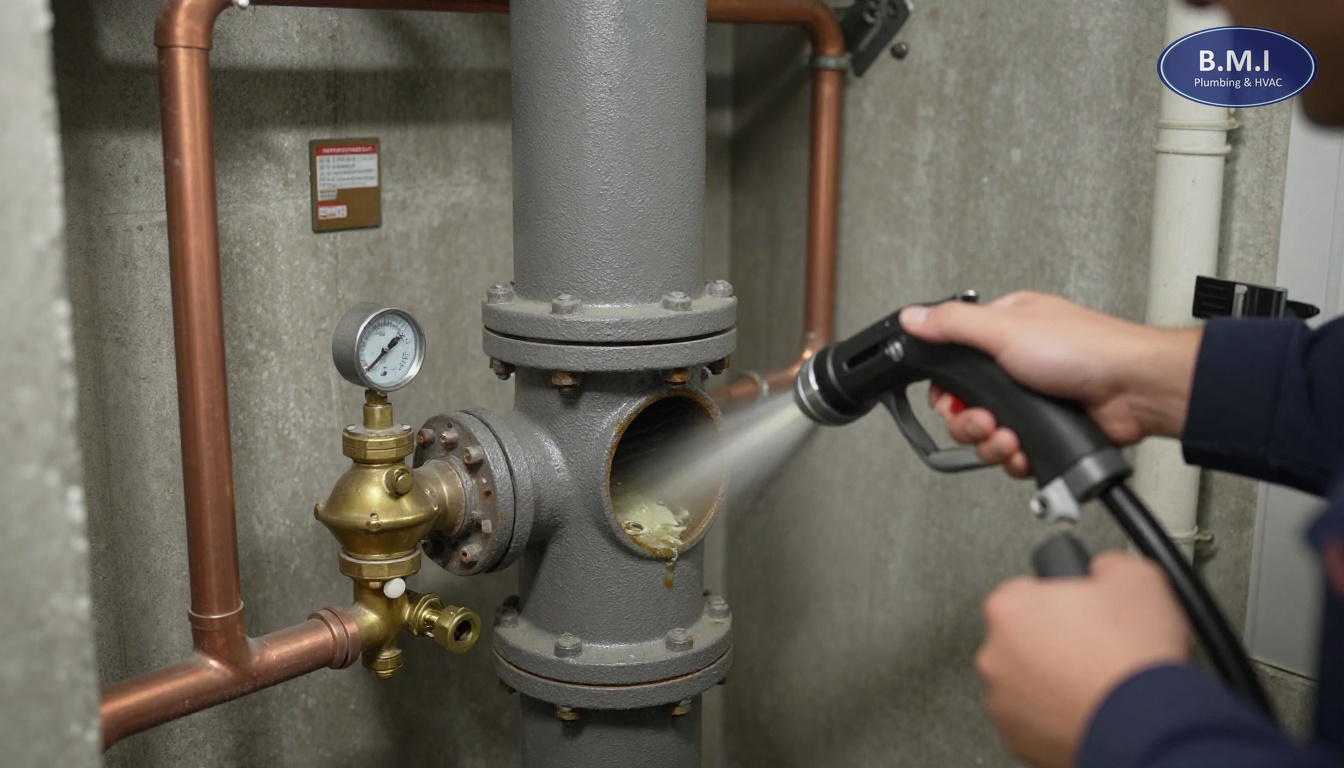
Why Kitchen Stacks Block in Toronto Condominiums
A practical guide to kitchen stack cleaning in Toronto condos: why grease buildup happens, what blockage signs mean, and …
Camera Pipe Inspection in Mississauga Condominiums
Camera pipe inspection in Mississauga for condos and rentals. Learn when CCTV drain surveys are needed, what they show, …
Need a plumber in your building?
BMI services roughly 200 condominium and multi-residential buildings across Toronto and the GTA. Emergencies are answered at any hour.