Copper vs PEX for a Toronto Condo Re-Pipe
Comparing copper vs PEX for a condo re-pipe in Toronto: costs, lifespan, shutdowns, insurance, access, and what boards should budget for.
Copper vs PEX for a Toronto Condo Re-Pipe
Quick summary: For a condominium re-pipe, the right question is usually not whether copper or PEX is “better” in the abstract. It is which re-pipe material makes the most sense for your building’s height, pressure, insurer, shaft access, restoration budget and long-term reserve plan. In many Toronto towers, the answer is not all one or all the other, but a deliberate mix of copper risers and PEX branch piping.
Every fall, boards in Toronto start asking for capital numbers before next year’s budget is locked. A common mistake is to compare copper and PEX as if the pipe material alone drives the job cost. On most condo projects, pipe is only one line item; access, shutdowns, firestopping, drywall restoration, asbestos protocols, and resident coordination often decide whether the project is manageable.
If you are budgeting a domestic water riser replacement or a broader building re-piping project, the material decision should come after a building-specific review, not before it.
Start with the building, not the material
In older Toronto, Etobicoke and Scarborough high-rises, the piping layout usually tells you more than the sales brochure for any material. A 1970s or 1980s concrete tower may have 2 inch to 4 inch domestic risers in narrow shafts, branch runs buried in kitchen bulkheads, and sectional valves that no longer isolate cleanly. An early-1990s North York tower often has copper throughout but with pinhole history on hot lines, especially where recirculation temperatures and water velocity were poorly controlled. A post-2000 building in Mississauga may have more accessible suite distribution but tighter firestopping requirements and more owner finishes to protect.
That matters because the same material behaves differently depending on where it is installed. Copper on a vertical riser in a service shaft is one decision. PEX above a bathroom ceiling serving a single suite is another. Before anyone argues about material, the board should know:
- Pipe sizes currently in place: 3/4 inch, 1 inch, 1-1/2 inch, 2 inch, 3 inch, 4 inch
- Static and residual pressure at lower, mid and upper floors, often 55 to 90 psi after PRV stations
- Whether hot water recirculation lines are stable or showing chronic balancing issues
- Whether isolation valves actually hold, which is where a valve audit often pays for itself
- Whether the project is a riser replacement, branch re-pipe, or full building re-pipe
A board that skips those basics can end up debating copper versus PEX when the real issue is that the building cannot be shut down in manageable sections because the valves are dead.
What copper does well in condo towers
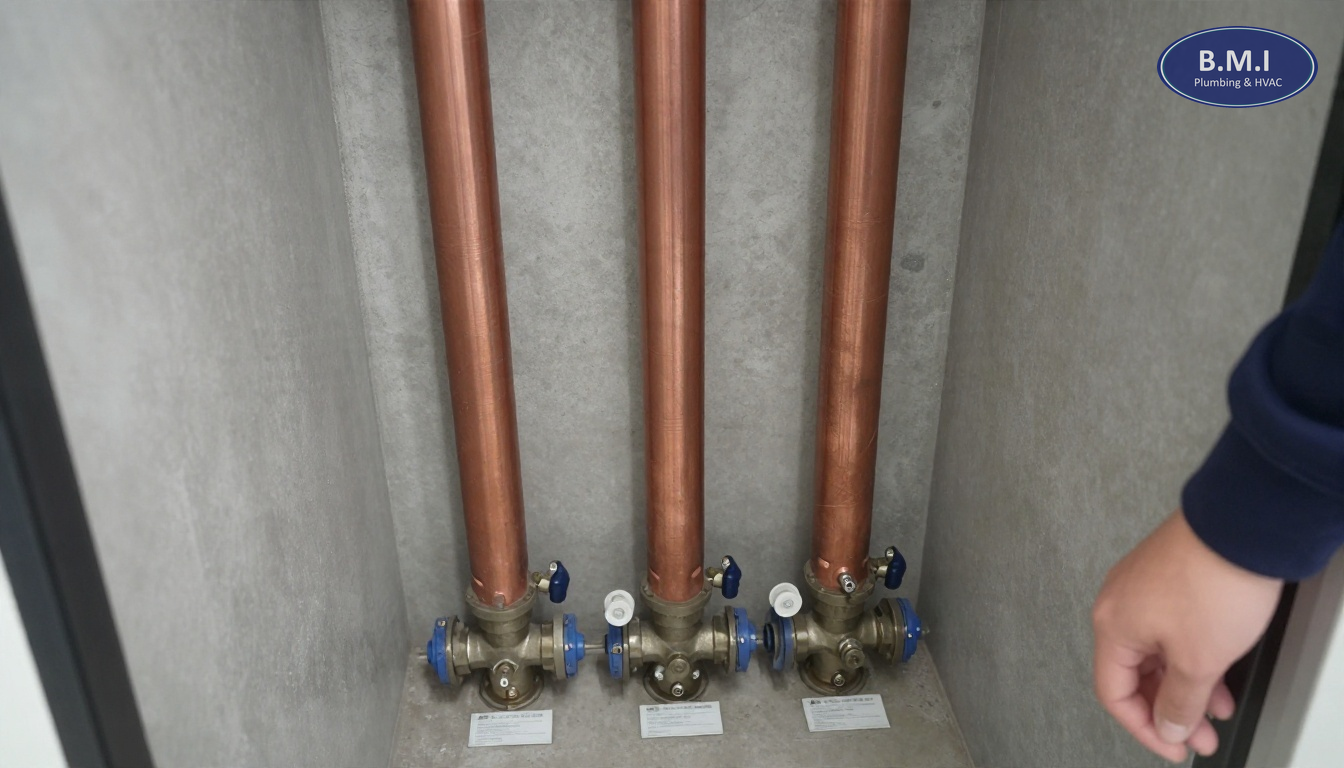
Copper remains the conservative choice for many high-rise condominium re-pipe projects in Toronto, Vaughan and Markham, particularly on domestic cold water risers, hot water risers and recirculation lines. In the field, the biggest reason is not nostalgia. It is that copper’s behaviour is familiar over decades, and most consultants, insurers and reserve fund planners know how to evaluate it.
On common-element vertical systems, copper gives several practical advantages:
- Predictable support and rigidity. In riser shafts, Type L copper can be anchored, guided and offset in tight spaces with less movement than flexible tubing.
- High temperature tolerance. On domestic hot water recirculation loops, especially where return temperatures may sit around 120°F to 140°F, copper remains a straightforward choice.
- Insurer comfort. Whether fair or not, some insurers ask fewer questions when the common-element piping remains metallic.
- Compatibility with existing mechanical room work. PRV stations, balancing valves, strainers, meters and grooved or soldered transitions are often already configured around copper or steel systems.
The downside is equally real. Copper is labour-intensive. In occupied suites, every extra fitting, offset and torch-safe work area adds time. In a finished condo with stone backsplashes and millwork, that matters more than the raw cost per foot of pipe.
There is also a technical point many boards miss: copper failures in condos are not just about age. They are often about velocity, water chemistry and installation quality. Toronto water is not unusually aggressive, but buildings with poorly controlled pressure, undersized branches or excessive recirculation velocity can erode copper from the inside. A hot 3/4 inch return line that has run too fast for years may fail sooner than a larger cold line installed the same day.
If your building is also planning pressure reducing valve maintenance, do that review alongside the re-pipe discussion. Material selection without pressure control is incomplete.
Where PEX makes sense, and where it does not
PEX is not a budget shortcut in the simplistic way it is often presented. In condo work, PEX is most compelling where the project involves in-suite branch distribution, difficult access, and a need to reduce wall opening and schedule. In a 250-unit tower, saving even 45 minutes per suite on branch installation can remove weeks from the live construction calendar.
The best use cases for PEX in condominiums are usually:
- Branch piping from a corridor or suite entry point to kitchen and bathroom groups
- Mid-rise buildings with moderate pressures and good zoning
- Projects where reduced fitting count lowers leak risk at concealed joints
- Occupied buildings where shorter access windows matter more than pipe material preference
The weak use cases are just as important:
- High-pressure zones without clear pressure management strategy
- Tight mechanical shafts where support, sleeving and firestopping become awkward
- Common-element risers where the board wants the most universally accepted material for reserve and insurance purposes
- Situations where the consultant or insurer has not signed off on the exact tubing and fitting system
A common mistake in Toronto and Richmond Hill towers is assuming all PEX systems are the same. They are not. Expansion-style systems, crimp systems and press-sleeve systems have different fitting profiles, tool requirements and long-term service considerations. If a contractor recommends PEX, ask exactly which joining method and fitting material is proposed, where it will be concealed, and whether replacement fittings will be easy to source 15 years from now.
Another non-obvious issue is noise. PEX can transmit movement and ticking differently than copper, especially on hot lines if it is not properly supported or isolated where it passes framing and sleeves. In owner-occupied condos, nuisance noise can become a post-project issue even when the piping is technically sound.
For broader context on capital planning options, BMI’s project solutions page outlines the kinds of building-wide plumbing projects boards typically stage over several budget cycles.
The hybrid approach is often the smartest answer
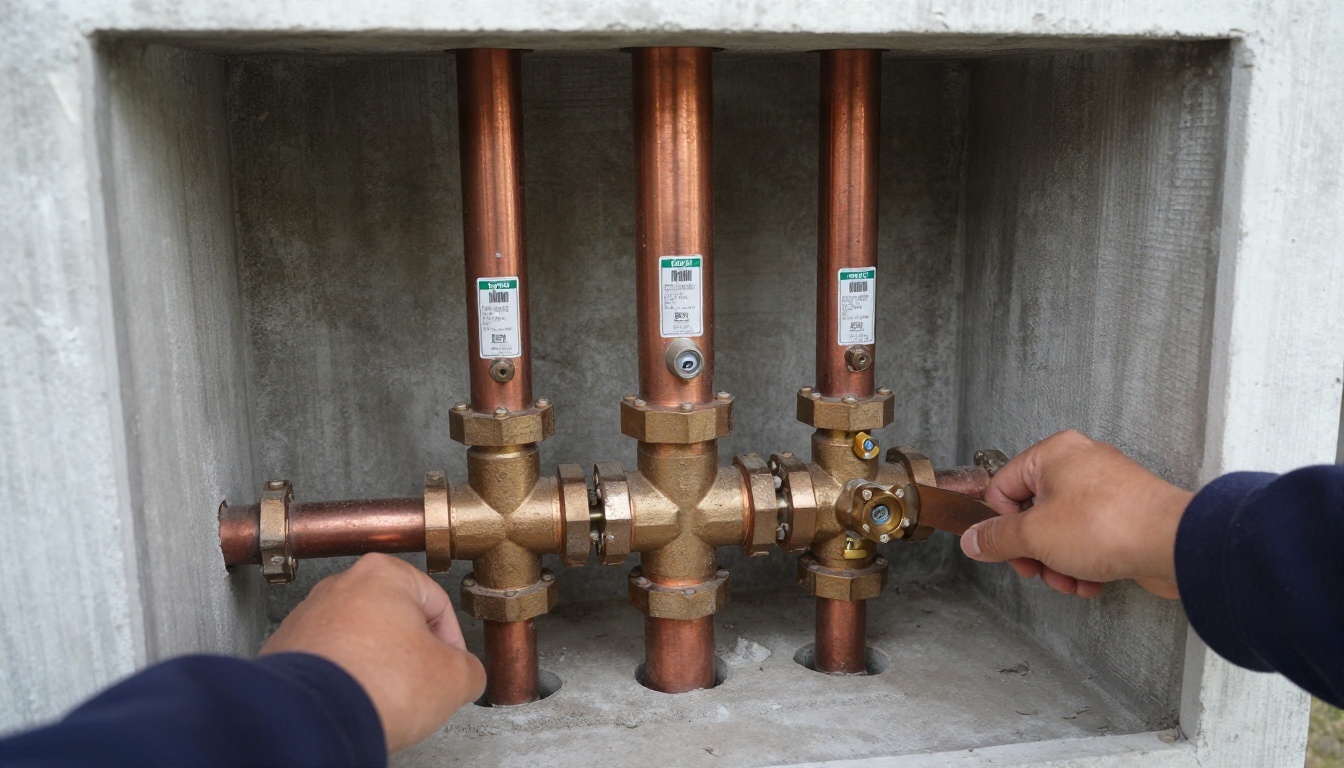
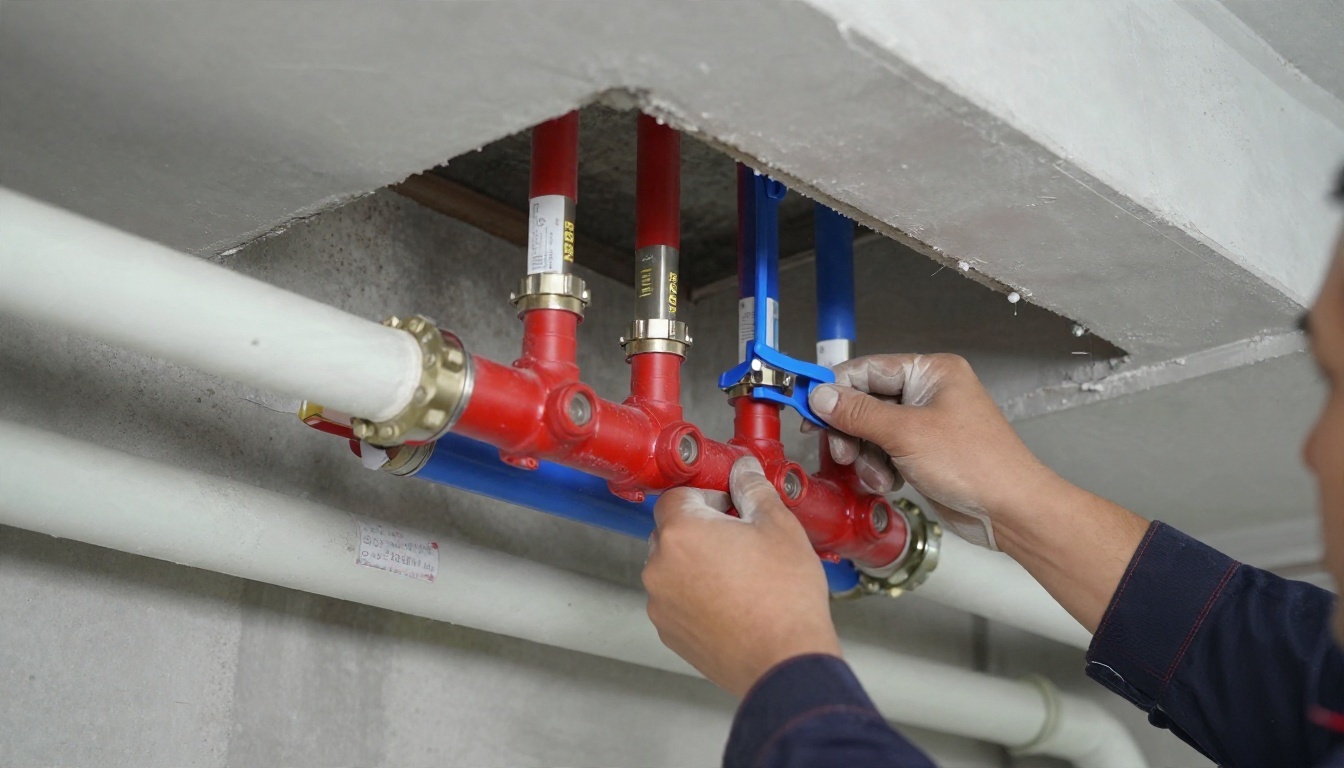
In buildings we service along the waterfront and in North York, the most defensible answer is often a hybrid system: copper in shafts and mechanical rooms, PEX in branch runs within suites or corridors. This is especially true where the building has tall vertical runs, limited shaft space, and residents who will not tolerate long in-suite disruptions.
Why hybrid works:
- Copper handles the common-element backbone where pressures and temperatures are most scrutinized.
- PEX reduces labour and restoration inside suites where flexible routing can avoid opening an entire wall line.
- Transitions can be concentrated in accessible locations such as riser closets, corridor ceilings or suite entry cabinets, rather than buried behind tile.
- Future repairs become more manageable because the common system stays conventional while branches are easier to replace.
This is also easier to explain to a board. Instead of forcing a binary decision, you can match the material to the risk profile of each part of the system.
That is often the difference between a project that gets approved and one that stalls for another year.
How the choice affects cost in the Toronto market
Boards usually ask for one number. The honest answer is a range, because material is only one part of a condo re-pipe cost.
Below are rough Toronto-area budgeting ranges for 2026 planning purposes. These are not quotes and vary with building access, asbestos, restoration scope, working hours and consultant requirements.
| Project type | Typical material approach | Budget range |
|---|---|---|
| In-suite branch re-pipe only | Mostly PEX | $4,500-$9,000 per suite |
| In-suite branch re-pipe only | Mostly copper | $5,500-$11,000 per suite |
| Domestic water riser replacement, mid/high-rise | Mostly copper | $18,000-$45,000 per riser line |
| Domestic water riser replacement with branch tie-ins | Hybrid copper + PEX | $22,000-$55,000 per riser line |
| Full building domestic re-pipe, 150-300 units | Mixed by design | $900,000-$3,000,000+ per building |
Three cost insights boards often miss:
1. Restoration can erase material savings
If copper adds $800 per suite in pipe and labour but the building already needs full drywall and paint restoration, the practical difference may be minor. On the other hand, if PEX allows access through smaller openings and avoids removing custom millwork, it can save far more than the pipe delta.
2. Shutdown logistics are expensive
A building that permits only one domestic shutdown per week may stretch a 12-week job to 18 weeks. That cost increase has nothing to do with copper or PEX. It is a project management issue. If the building’s sectional valves are unreliable, budgeting for valve replacement before or during the re-pipe may be more important than debating the branch material.
3. Mechanical room tie-ins are usually copper or steel anyway
Even on PEX-heavy projects, the lower mechanical room, meter room and PRV station tie-ins often remain metallic. That means the cheapest theoretical PEX design is rarely the real installed design in a high-rise.
For boards preparing next year’s capital plan, it is better to seek a site-reviewed budget than a generic per-door number. BMI typically attends the building before pricing major work because riser count, access and valve condition change everything.
What residents actually experience during each type of project
A material decision is also an occupancy decision. Owners do not care whether the branch line is Type L copper or PEX-A if they lose water for two full days and their kitchen ceiling is open over a weekend.
In practical terms:
- Copper branch work often means more rigid routing, more opened surfaces, and longer suite time where access is tight.
- PEX branch work can mean shorter suite visits and fewer openings, but not always. In older towers with concrete crossovers and awkward chases, access can still dominate.
- Riser work is disruptive regardless of material because the shutdowns, corridor access, firestopping and shaft work are the real drivers.
On a 300-unit building, a well-run branch project might average 4 to 8 suites per day per crew once access is stable. A riser replacement in a 25-storey building commonly runs 10 to 20 working days per riser group when demolition, pipe installation, pressure testing, insulation and restoration handoff are included. If owners are told only the “plumbing time,” they will feel misled when patching, drying and painting extend the visible disruption.
This is one reason fall planning matters. If you want summer construction in Toronto, Oakville or Mississauga, numbers often need to be in front of the board before year-end.
If the building is still dealing with active leaks while planning the capital job, temporary in-suite plumbing repairs and 24/7 emergency plumbing response may be needed to bridge the gap safely.
What evidence a board should insist on before choosing copper or PEX
Do not accept a material recommendation without a diagnosis package. On a proper condo re-pipe review, the board should expect:
- A survey of leak history by line type: hot, cold, recirc, branch, riser
- Pressure readings at representative low, mid and high floors
- Confirmation of PRV condition and whether pressure swings are contributing to failures
- Review of shaft access, ceiling access and restoration implications
- Identification of dead or missing isolation valves
- Clear statement of what is common element versus in-suite responsibility under the declaration
If the building has repeated localized failures but no one has tested the broader system, that is a red flag. A few emergency patches do not tell you whether the building needs selective replacement or a full building re-piping strategy.
Where drain or leak migration is muddying the picture, a camera inspection can help separate supply failures from waste-line issues. It is surprising how often a board thinks it has another domestic pinhole when the visible damage actually came from a loaded kitchen stack above.
Also ask one question that many boards forget: What is the fitting strategy? A PEX proposal with many concealed mechanical fittings deserves more scrutiny than one with long continuous runs and accessible transitions. The same is true for copper proposals loaded with hidden joints in inaccessible bulkheads.
Repair versus replacement: when this can wait, and when it should not
Not every building with a few leaks needs an immediate full re-pipe. Sometimes the right advice is to wait a year and gather better data.
A building can often defer if:
- Leaks are isolated and not accelerating year over year
- Failures are concentrated in a known area from poor original installation or renovation damage
- Pressure is stable and within design range
- Isolation valves still function well enough to contain repairs
- Reserve funding for a larger project is scheduled in the next study cycle
A building should move faster if:
- Leak frequency is rising on both hot and cold systems
- Multiple vertical zones are affected
- Nighttime pressure is spiking and PRVs are unstable
- The corporation is paying repeated emergency and restoration costs that now rival financing a capital project
- Insurance deductibles have climbed to the point where one escape-of-water claim wipes out the savings from deferral
This is where maintenance programs matter. If a board is not ready for a re-pipe this year, a documented valve exercise, PRV review and targeted inspection plan can make deferral defensible rather than negligent.
In Ontario condominium governance, the board’s job is not to eliminate all risk. It is to make a reasonable, documented decision. A written recommendation tied to reserve timing, leak history and operating condition is much easier to defend than “we decided to wait because the quote was high.”
Common element versus in-suite responsibility
This is where resident disputes start. In many condominiums, domestic risers and shared distribution piping are common elements, while fixtures and sometimes branch lines serving only one suite may be unit responsibility. But there is no universal rule. The declaration, description and any subsequent agreements control.
That matters for material selection because some corporations choose to replace only the common-element portions, leaving owner-side fixture connections for later. Others use a coordinated project to replace both common and in-suite piping in one campaign, then charge back owner-elected upgrades separately.
Two practical points:
- If owners previously altered plumbing under a section 98 agreement, their suite may contain non-standard materials or routing. That can affect tie-in cost and schedule.
- If the corporation replaces common-element piping but leaves old owner-side branches, future leak attribution can become more complicated, not less.
Boards should also think about insurance deductibles. In the current market, many GTA condominiums carry large water-damage deductibles. A single failure in an old branch line can trigger six figures of downstream restoration once flooring, cabinets and neighbouring suites are involved. That is why the cheapest immediate piping option is not always the lowest financial risk.
The fall decision framework for boards setting next year’s budget
November is the right time to narrow the question. Instead of asking, “Copper or PEX?” ask the board’s engineer, plumber or project consultant these five questions:
- Where exactly is the failure history: risers, branches, hot, cold, recirc, or all of the above?
- What are the actual operating pressures by zone, and are the PRVs stable? If not, review PRV maintenance and replacement in parallel.
- Can the building isolate by riser or stack without unacceptable shutdown risk? If not, plan for a valve audit and charting program.
- What does the insurer accept without qualification? Get that answer before tender close.
- What is the restoration assumption? A material comparison is meaningless if one price assumes paint only and the other assumes full drywall and tile patching.
On some buildings, the answer will be clear: all-copper risers with selective branch replacement. On others, especially where owner finishes are expensive and leak history is concentrated in suite branches, a hybrid or mostly PEX approach is more rational.
If the building also has unresolved legacy materials such as Kitec replacement work, do not evaluate that separately in a vacuum. Combining scopes can reduce repeated suite entries and repeated restoration.
FAQs
Is PEX allowed in condominium re-pipe projects in Toronto?
Yes, PEX is commonly used in Toronto condominium re-pipe work, provided the system, fittings and installation comply with the Ontario Building Code and the manufacturer’s listing. In practice, approval also depends on the building’s insurer, consultant and board appetite for concealed plastic piping versus copper. The technical answer is usually yes; the project answer is whether the full stakeholder group accepts it.
Is copper better than PEX for a high-rise condo?
Not automatically. Copper is still the default choice in many GTA high-rises because boards, consultants and insurers know how it behaves over 40 to 60 years, especially on domestic risers in the 1 inch to 4 inch range. PEX can reduce labour, wall opening and schedule on branch re-pipes, but in tall buildings with high pressures, recirculation lines, and limited shaft space, the better material depends on pressure control, support, firestopping, fitting strategy and the building’s long-term maintenance plan.
What is the cost difference between copper and PEX in a condo re-pipe?
In the Toronto market, PEX branch re-pipes often come in about 10% to 25% lower than copper where access is straightforward and the design allows home-run or manifold-style distribution. On full condominium projects, however, the total savings can narrow because drywall repair, suite access, asbestos protocols, after-hours shutdowns, temporary water logistics and firestopping often cost as much as the pipe itself. A per-suite difference that looks large on paper can shrink once common-area and restoration costs are added.
Can a condo mix copper risers with PEX in-suite piping?
Yes, and many buildings do exactly that. A common GTA approach is new copper domestic risers in shafts and mechanical rooms, with PEX branch distribution from corridor or suite entry points to fixtures, using engineered transition fittings and accessible isolation valves. That hybrid approach often gives boards the durability and insurer comfort of copper where pressures are highest, while reducing disruption inside suites.
How long does a condominium re-pipe take?
For a 20- to 30-storey tower in Toronto, Mississauga or North York, a full domestic water re-pipe typically runs 10 to 24 weeks depending on riser count, suite layout, restoration scope and whether work is phased stack by stack. A crew may complete 4 to 8 suites per day on branch work once access is flowing, but actual progress is often limited by missed entries, elevator booking windows and how many shutdowns the building will tolerate each week. Fall tendering is common because boards want numbers before budget approval and construction slots before summer fills up.
Does choosing PEX instead of copper affect insurance or reserve fund planning?
It can. Some insurers and reserve fund planners treat copper as the more familiar long-life asset, while PEX may trigger more questions about manufacturer, fitting type, warranty package and where the material is being used in the system. Boards should confirm insurer acceptance before tender close, because a material change that saves 15% in construction but complicates coverage, deductibles or reserve assumptions is not always a real saving.
Next steps for a board or property manager
If your building has had more than a handful of domestic water leaks in the last 12 to 24 months, do not reduce the discussion to a material debate. Start with a site review that maps where the failures are, what the pressures are doing, whether the valves isolate, and how much of the cost is really restoration rather than pipe.
A practical next step is to assemble:
- Leak history by suite and line type
- Current reserve timing
- Insurer feedback on acceptable materials
- Any consultant reports already on file
- Mechanical room and riser photos
Then request a building-specific review for riser replacement, building re-piping or other project solutions. If the building is not ready for construction, at least budget for the enabling work first: pressure review, valve correction, and a phased implementation plan.
BMI attends the building before quoting major condominium plumbing projects because the right answer in a 1980s Scarborough tower is often not the right answer in a 2010s Mississauga mid-rise. If you need a second opinion before taking a recommendation to the board, that is a reasonable time to ask for one.
For more condominium plumbing guidance, see the BMI blog or request a site visit through the contact page.
Contact BMI
- Contact BMI
- Phone: (416) 845-3756
- Emergency: (416) 845-3756, answered 24 hours a day
- Email: info@brial.ca
More on condominium plumbing
Signs Your Toronto Building Needs Riser Replacement
Learn the real riser replacement signs in Toronto condos, including pinhole leaks, pressure issues, costs, timelines and …
Suite Access Notice in Toronto Riser Projects
How to manage suite access notice and condo entry rights during a Toronto riser project, with timelines, legal context, …
Toronto Condo Water Shutdown Notice and Planning Guide
A practical guide to water shutdown notice and condo shutdown planning in Toronto: timing, access, costs, resident …
Need a plumber in your building?
BMI services roughly 200 condominium and multi-residential buildings across Toronto and the GTA. Emergencies are answered at any hour.