Expansion Compensator Failure in Toronto Condos
Understand expansion compensator failure and riser leak risk in Toronto condos: warning signs, costs, shutdowns, replacement timing and board decisions.
Expansion Compensator Failure in Toronto Condos
Quick summary: A failed expansion compensator is rarely just a bad fitting. In a Toronto condominium, it usually signals a broader riser problem involving thermal movement, poor guiding, seized isolation valves, pressure swings or aging supports, and that is why one “small leak” can turn into a major riser leak event. In fall, before winter pressure changes and heating loads increase, this is the right time to inspect suspect risers, confirm valve isolation and get realistic numbers in front of the board.
A common misconception is that expansion compensators fail because they are old, full stop. Age matters, but in the buildings we service in Toronto, North York and Mississauga, the part often fails because it has been forced to absorb movement it was never meant to take. When a domestic hot water riser expands and contracts through a 20- to 35-storey tower, the compensator should be handling controlled axial movement. If the guides are missing, the anchors are loose, or the riser is shifting sideways, the bellows starts doing structural work instead of movement work, and that is when leaks begin.
For boards and managers, the practical issue is not whether the leak can be wrapped for a day. It is whether the building can isolate that riser, how many suites lose water during the shutdown, whether adjacent valves will hold, and whether replacing one failed device simply postpones the next emergency. BMI deals with these as both service calls and planned capital scopes, which is why the first step is usually not just a repair, but an assessment of the whole riser section and its controls through repairs and service or, where warranted, a larger project solutions approach.
What an expansion compensator actually does, and why risers need it
An expansion compensator is installed inline on a vertical riser to absorb thermal expansion and contraction. On domestic hot water systems, that movement is not theoretical. Copper expands roughly 0.0000098 inches per inch per degree Fahrenheit. Over a 200-foot riser with a 70°F temperature swing, you can be dealing with roughly 1.6 inches of movement. On a 25-storey building, that is enough travel that if the riser is rigidly restrained, stress transfers to joints, valves, branches and slab penetrations.
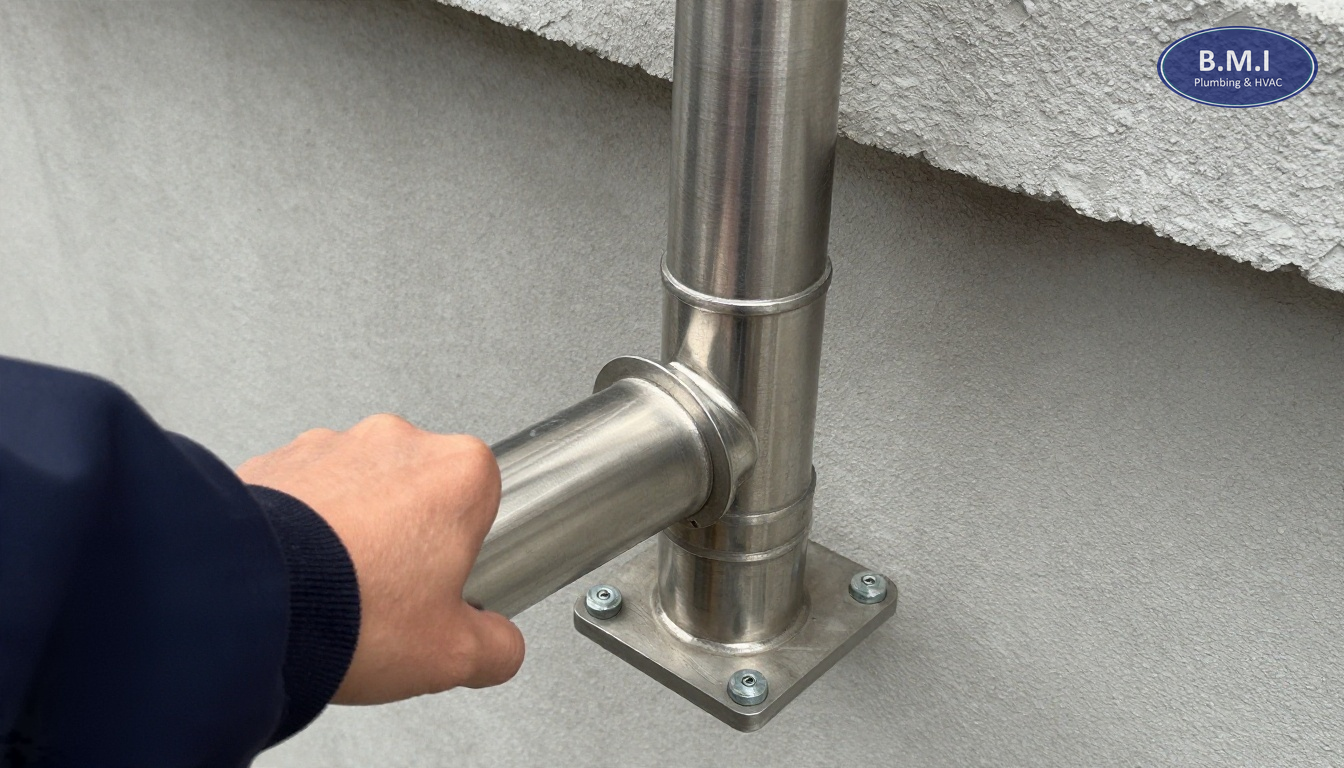
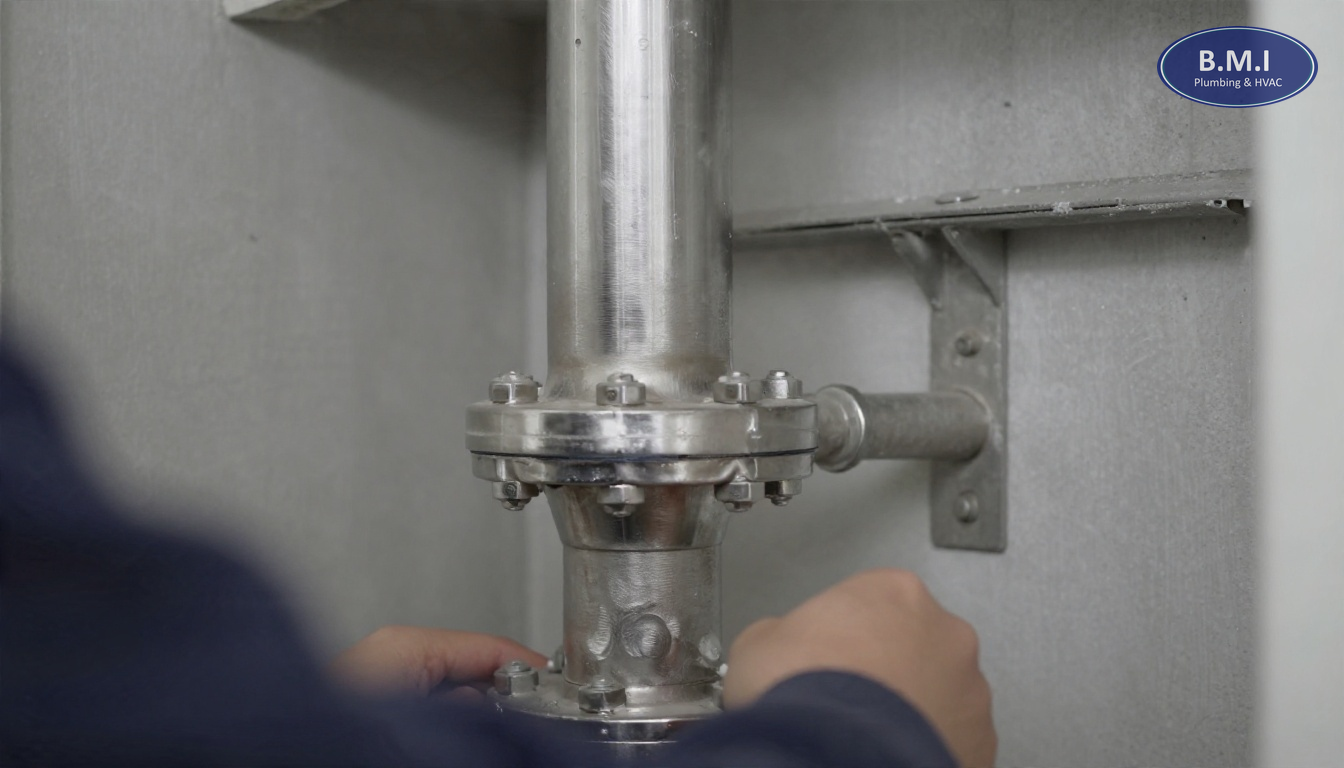
In most condominium towers built in Toronto, Scarborough and Vaughan from the late 1980s through the 2000s, these devices are found on domestic hot water risers, sometimes on recirculation lines, and less commonly where long vertical cold-water runs need movement accommodation because of temperature variation or building movement. Typical riser sizes are 1-1/2 inch, 2 inch, 2-1/2 inch, 3 inch and 4 inch copper or steel, with a compensator installed in a mechanical room, service shaft or lower-level riser zone. The device may be a bellows-style assembly or a spool-type unit, usually bracketed by guides and anchored points. If those supports are wrong, the compensator fails early even if the bellows itself was a good product.
One point many non-specialists miss is that the compensator is only one piece of a system. The riser needs:
- Proper anchors to control where movement occurs
- Correct guide spacing so the pipe moves axially, not laterally
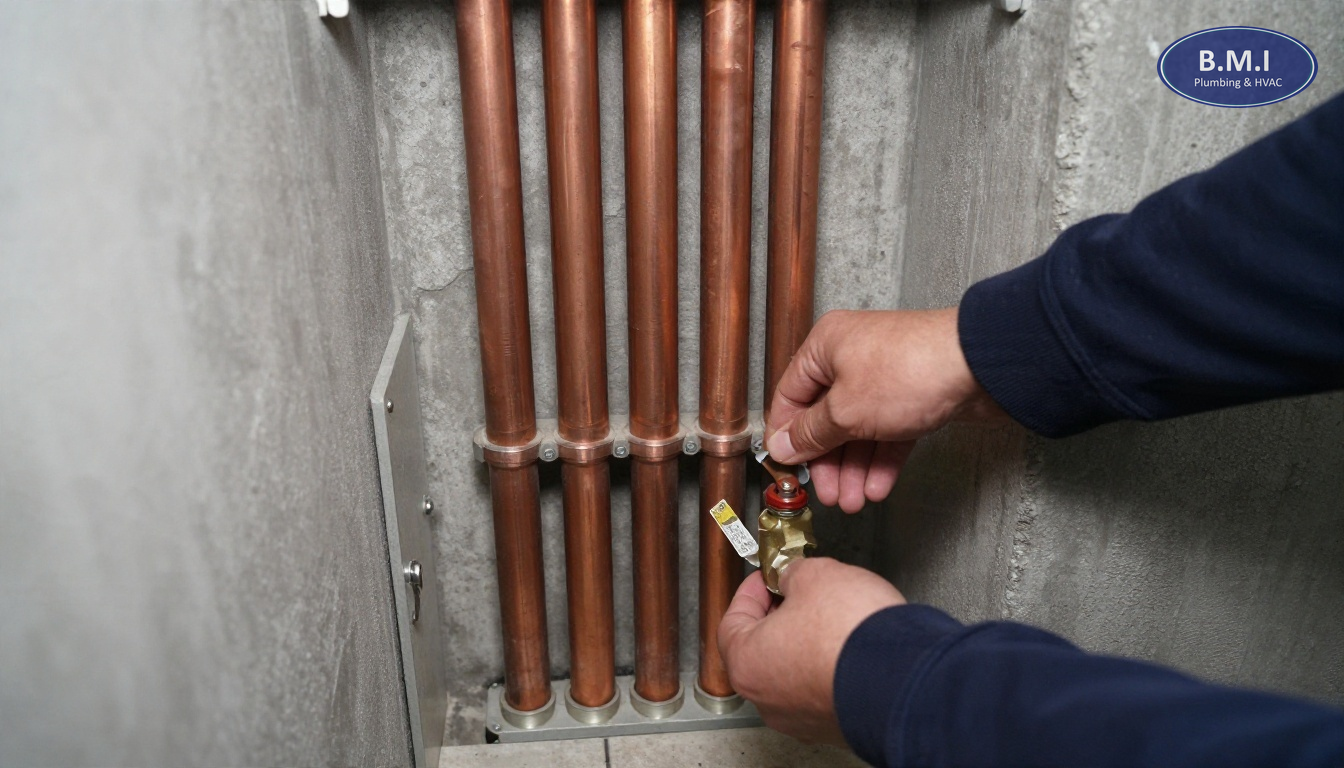
- Working sectional isolation valves for shutdowns
- Stable pressure, often tied to PRV station and booster performance
- Adequate clearance at penetrations and sleeves
If those conditions are not present, replacement of the compensator alone may be incomplete. That is why compensator failures often sit alongside work like pressure reducing valve maintenance, valve audits, valve replacement or even broader riser replacement.
How expansion compensator failure usually presents in a building
Managers are often told “there is a leak in the riser closet,” but the pattern matters. A true expansion compensator failure rarely starts with flooding into a corridor. It usually gives smaller warnings first, and those warnings are easy to misread if the building only sees the problem once every few years.
Typical early symptoms include:
- Intermittent moisture at the lower bellows or flange area during morning peak demand, often between 6:00 a.m. and 9:00 a.m. when temperature and pressure shift together.
- Rust staining or green oxidation on adjacent copper, supports or insulation jacketing, especially below the device rather than above it.
- Ticking, knocking or a short metallic thump when the domestic hot water recirculation loop changes temperature or when booster pumps stage on and off.
- A leak that appears only after a hot-water shutdown and restart, because the restart creates rapid temperature change and movement.
- Repeated pinhole leaks near the same riser section, which often means the compensator is not the only stressed component.
A useful diagnostic distinction for residents is this: if one suite reports a wet wall around a plumbing chase, that could be almost anything. If multiple vertically stacked suites report staining near the same chase line, especially after a shutdown or after heavy morning use, that points strongly to a common-element riser issue rather than isolated in-suite plumbing. In those cases, the right escalation is not a suite service call alone but an inspection of the common riser and its movement controls through in-suite plumbing where access is needed and camera inspection or mechanical review where visibility is limited.
Another pattern we see in early-1990s North York high-rises is a leak blamed on “bad copper” when the real issue is a seized guide shoe or missing anchor hardware. The copper is simply showing the stress first. Replacing a short section of pipe without correcting the movement path often buys six months to two years, then the problem returns one floor higher or lower.
Why compensators fail: the technical causes that actually matter
1. Thermal movement exceeds what the assembly is being allowed to do
The design assumption is axial movement. In the field, the riser often moves in a combination of axial, lateral and angular directions because supports have loosened over time. Buildings along the Toronto waterfront and in Etobicoke can show more movement-related wear simply because taller towers with exposed mechanical levels see more temperature variation and wind-related building movement than shorter mid-rises inland. The compensator is not there to correct structural drift.
2. Guides and anchors are missing, damaged or incorrectly spaced
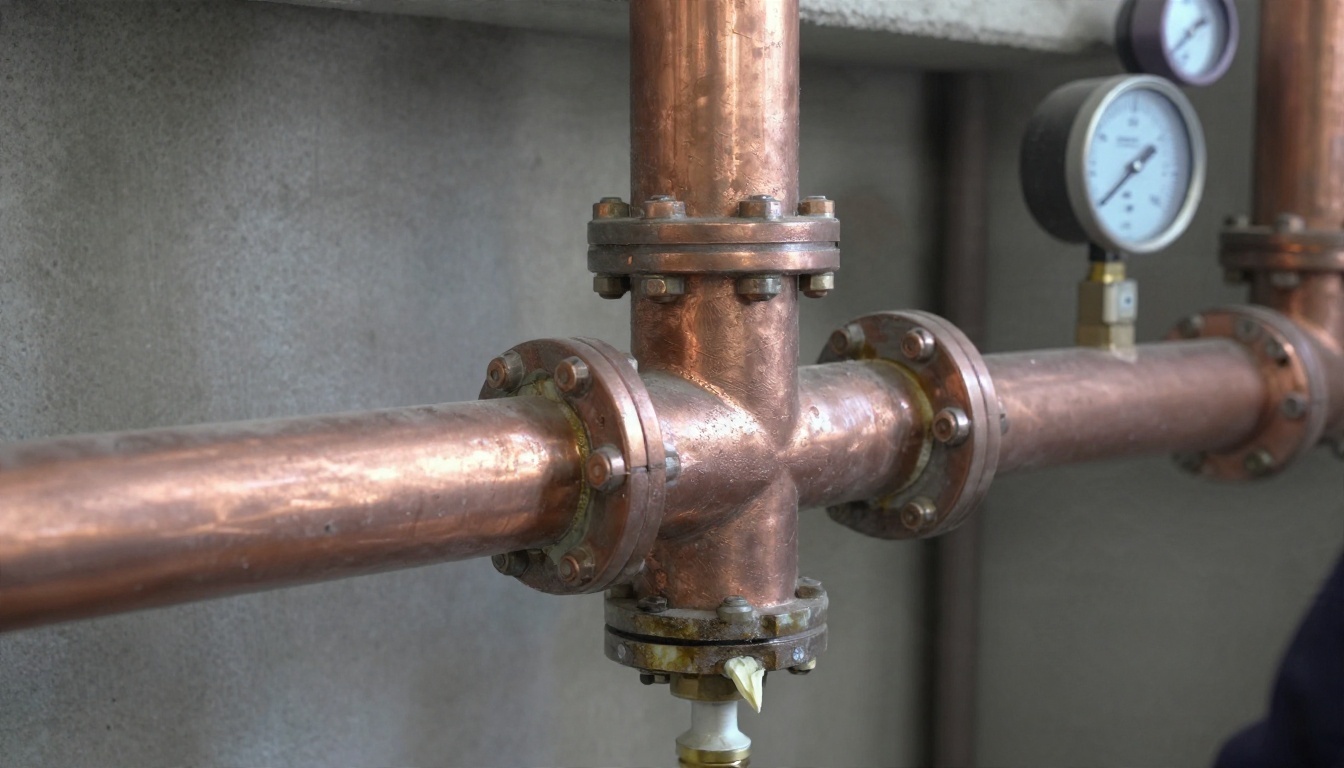
This is one of the most common root causes. A bellows compensator on a 2-inch or 3-inch riser may require the first guide within a short distance of the unit and subsequent guides at controlled spacing. In older buildings, insulation work, previous repairs or unrelated mechanical changes sometimes remove or alter these supports. Once the riser begins to snake slightly under expansion, the bellows flexes sideways, which shortens life dramatically.
3. Pressure swings and water hammer add fatigue
A domestic water system operating at 65 to 80 psi in lower zones and varying through a booster-controlled high zone behaves very differently from a stable low-rise system. If the building also has PRV issues, failed check valves or abrupt fixture valve closures, the compensator sees cyclic stress it was not meant to absorb. This is why a compensator leak and a pressure complaint can be related. Before budgeting only for the visible leak, it is worth checking the building’s PRV maintenance history and whether the riser isolation valves have been exercised through a maintenance program.
4. Corrosion at the ends, not just failure of the bellows
In Toronto water conditions, the bellows itself is not always the first point of failure. We often see trouble at threaded, soldered, brazed or grooved end connections where dissimilar-metal issues, poor drainage after previous work, or persistent condensation have attacked the assembly. In domestic hot water systems, insulation that stays damp can hide active corrosion for months. By the time a leak is visible, wall thickness can be materially reduced.
5. Valve failure turns a manageable repair into a major event
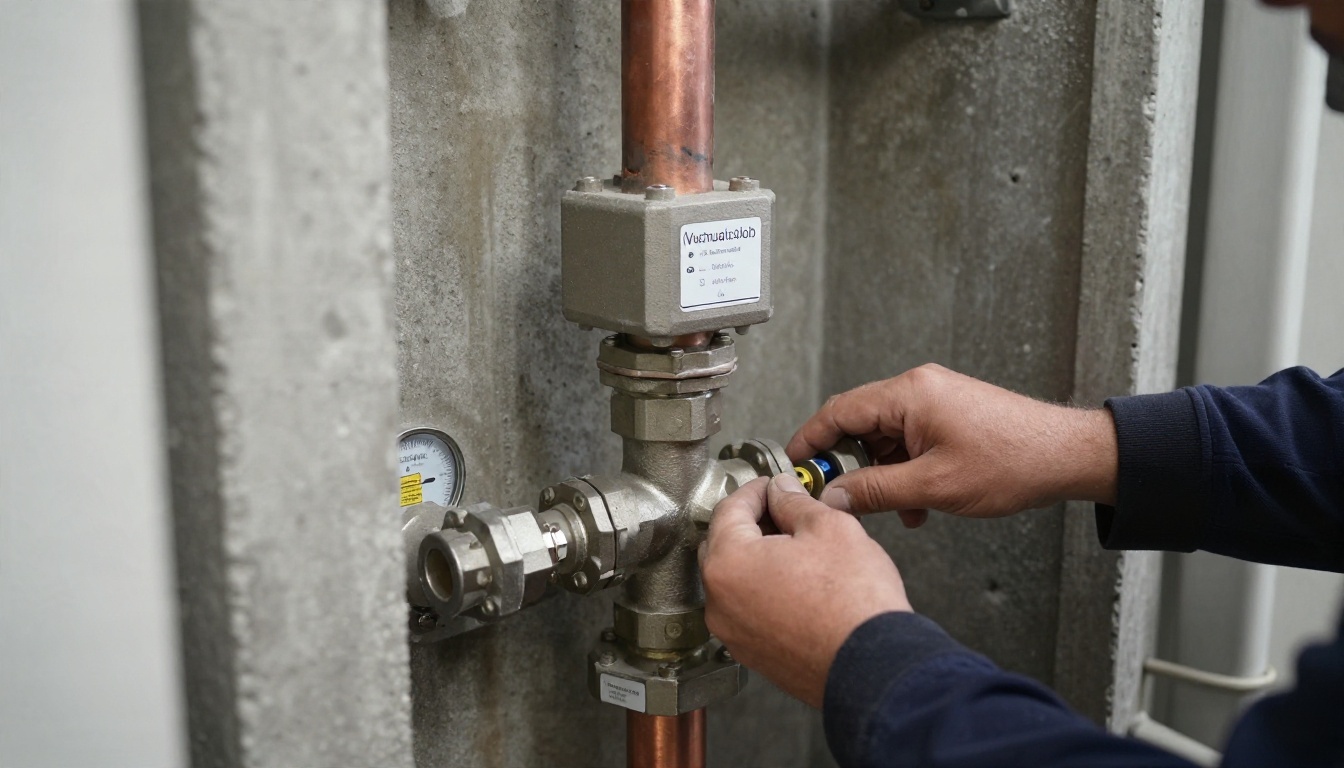
The compensator may be the part that leaks, but the real emergency occurs when the sectional valves above and below do not hold. In a 30-storey tower, a simple two-hour repair can become an all-day shutdown affecting 40 to 120 suites if isolation is poor. That is why the condition of the surrounding valves matters almost as much as the device itself. If the building has never done a proper valve audit, managers should assume some valves will not operate as intended until proven otherwise.
What a proper inspection should include before anyone recommends replacement
A credible diagnosis should go beyond “it’s leaking, replace it.” That may still be the right answer, but boards should insist on evidence, because the scope drives the cost.
A proper inspection usually includes:
- Visual confirmation of leak location: bellows, weld, flange, threaded end, adjacent pipe, guide or valve packing
- Operating pressure readings at the riser or nearby station, ideally under different demand conditions
- Temperature context: domestic hot water supply and recirculation temperatures, because aggressive swings accelerate movement
- Support review: anchors, guides, clamps and any visible lateral movement marks
- Isolation strategy: identification of valves needed to shut down the riser and whether they are expected to hold
- Access review: whether the work is all in a mechanical room or requires suite entry, ceiling openings or shaft access
- Written report with photos and a clear recommendation for repair, replacement or broader riser work
Where the leak has travelled and the source is not visually obvious, a camera inspection may help rule out adjacent drainage or wall cavity issues, and emergency stabilization may start under emergency plumbing if the building is actively taking on water.
An important fall-season step is to inspect now rather than after holiday shutdown constraints begin. In November and early December, many boards are finalizing next-year budgets. If a compensator is already weeping, this is exactly when to get a site review, because a planned weekday shutdown is materially cheaper than a holiday-period emergency with after-hours labour, resident complaints and elevator protection on short notice.
Repair versus replacement: the decision framework boards actually need
Most compensator leaks end in replacement, but the scope can vary a lot. The board decision is usually not “repair or replace the bellows.” It is “replace the immediate failed component only, or address the surrounding reliability issues at the same time.”
| Scenario | Likely Best Option | Why |
|---|---|---|
| Minor seepage at a nearby threaded fitting, compensator tests sound, supports intact | Localized repair | If the compensator is not the failed component, replacing it may add cost without reducing risk |
| Bellows or body leak, valves hold, guides and anchors appear correct | Replace compensator | Straightforward planned shutdown work with moderate risk |
| Bellows leak plus seized isolation valves | Replace compensator and valves | Avoids repeating shutdowns and leaves the riser serviceable for future maintenance |
| Repeated leaks on same riser, visible movement, poor support | Broader riser correction | The movement problem will likely continue after a one-part swap |
| Multiple similar devices of same age showing corrosion | Programmatic replacement | Often more economical than repeated emergency calls |
On a 300-unit condominium with three domestic hot water zones, it is not unusual to find that one failed compensator is simply the first visible device in a population of similar-age components. If three or four are of the same vintage and one has failed at 22 to 30 years, there is a fair argument for inspecting all comparable locations and budgeting a grouped replacement. That is the sort of planning issue better handled as project solutions than as isolated service calls.
Another specific lesson from GTA towers: if the riser shutoff valves are original gate valves from the building’s initial construction, and the building has no recent exercise record, assume at least some will not close fully. In that case, a “simple” compensator replacement can cascade into valve replacement or temporary broader shutdowns. That should be discussed before notices go out, not during the shutdown.
Toronto cost ranges: what to budget for an expansion compensator failure
Costs vary more by access, shutdown complexity and valve condition than by the compensator itself. The part is important, but it is rarely the main number.
Typical budgeting ranges in the GTA
| Scope | Typical Toronto-area range | Notes |
|---|---|---|
| Emergency attendance and leak stabilization | $750-$2,500 | Depends on time of day, access and whether water must be isolated immediately |
| Straightforward single compensator replacement | $4,500-$9,000 | Assumes accessible location, normal hours, reliable isolation |
| Replacement with adjacent pipe modifications and insulation reinstatement | $6,500-$12,000 | Common where older copper needs cutback or supports need minor correction |
| Replacement plus one or two failed sectional valves | $9,000-$18,000 | Valve condition often drives shutdown duration and labour |
| Multi-location planned program, 4-8 compensators | $25,000-$90,000 | Best handled as grouped work with coordinated notices |
| Broader riser correction including supports/guides and valve work | $15,000-$40,000+ per riser area | Highly building-specific |
These are realistic market ranges in Toronto, Markham and Mississauga as of late 2026, not BMI quote figures. Asbestos-containing insulation, tight shaft access, weekend work, fire watch requirements, drywall or ceiling restoration, and premium shutdown windows can all move the number.
A budgeting mistake we see every fall is boards carrying only the expected repair number, not the probable shutdown number. If the building must notify 30 to 80 suites, protect elevators, schedule after-hours access and keep staff on-site, the soft logistics cost can be significant even when the mechanical scope is modest. If the building is already discussing riser replacement, that context matters because repeated piecemeal repairs can make the eventual capital project more expensive.
Timelines, shutdowns and resident logistics
For managers, time is often a bigger problem than price. A compensator replacement may take only a few hours of physical work, but the planning around it is what determines whether the day goes smoothly.
Typical timeline
- Site review and diagnosis: 1-3 business days for non-emergency assessment
- Material confirmation and procurement: 2-10 business days depending on size and assembly type
- Resident notice period: commonly 48-72 hours minimum, though many corporations prefer 5-7 days for suite-impacting shutdowns
- Shutdown and replacement window: often 4-8 hours for a straightforward accessible location
- Recommissioning and leak checks: 1-2 hours, sometimes with return visit after thermal cycling
On a high-rise with multiple water zones, the shutdown plan should identify exactly which stacks or risers are affected. “Domestic water shutdown” is too vague for residents and creates avoidable complaints. Managers should know whether the work affects hot only, hot and cold, recirculation, or an entire vertical line of suites. If the building has poor as-builts, this is where a prior valve audit pays for itself.
In fall, there is another seasonal issue: once outside temperatures drop, buildings are less tolerant of long water interruptions that affect heating-related systems, janitorial operations and occupancy comfort. That does not mean work cannot proceed. It means shutdown windows should be tighter, valve isolation should be confirmed in advance, and any related PRV or booster concerns should be reviewed before winter demand patterns expose them.
What happens if the building defers it
Deferral can be reasonable in narrow circumstances. A dry unit with no active leak, good supports and a replacement already scheduled may wait. But a visible active leak, a moving riser or uncertain isolation usually should not.
The risks of deferral include:
- Escalation from seepage to spray leak, especially after a shutdown/restart cycle
- Water damage across multiple floors, because riser chases distribute water vertically before anyone sees it
- Insurance deductible exposure, which in many condos is far more painful than the plumbing repair itself
- Emergency shutdown under poor conditions, often after-hours or during holiday occupancy
- Collateral valve failures, where old gate valves fail when finally operated under emergency conditions
- Reserve fund distortion, because repeated emergency repairs consume operating funds but do not solve the capital issue
From a governance standpoint, a board that has documented evidence of active failure and no plan is in a weak position if the leak worsens. Under the Condominium Act, 1998, the corporation is responsible for common elements, and domestic risers and compensators are usually part of that common system unless the declaration says otherwise. The legal allocation of resulting damage can still vary, but the obligation to respond to a common-element risk is usually straightforward.
There is also a reserve fund angle. If the building’s reserve fund study has not specifically considered compensators, riser supports or related valve replacement, this is the season to update assumptions. Many Class 1, 2 or 3 reserve fund updates capture risers in broad terms but miss the accessory components that cause the first failures. A building does not need to replace every compensator on speculation, but it should know how many exist, what sizes they are and which ones share age and condition profiles.
Common element or in-suite responsibility: the question everyone asks first
In most condominium towers, the expansion compensator itself is part of the common domestic water system. That generally makes the corporation responsible for the device, the riser and the repair work. The confusion starts when damage appears inside a suite.
Three practical points matter:
- The pipe can be common even if the damage is in-suite. Water from a common riser leak entering a bathroom wall does not turn the riser into an owner responsibility.
- Alterations can complicate chargebacks. If an owner enclosed a riser chase, relocated finishes or made an improvement under a Section 98 agreement, restoration responsibility may differ from base-building repair responsibility.
- The declaration and standard unit definition control the answer. Managers should not rely on “what we did last time” if the deductible by-law or standard unit schedule has changed.
This is one reason a well-documented service report matters. If the corporation needs to explain to owners why the plumbing repair is common but some restoration costs may not be, the report should clearly identify the failed component, location and common-system relationship.
FAQs
What does a failed expansion compensator usually look like in a condo building?
Most failures start as a small domestic water riser leak at or near the bellows, end connections or adjacent guides rather than a dramatic rupture. In Toronto high-rises, managers often first notice staining in a riser closet, corrosion on insulation jacketing, or a pinhole spray at 60 to 90 psi during peak morning demand. If the anchors or guides are missing or loose, the riser may also visibly shift or knock when pumps cycle.
Is an expansion compensator leak an emergency or can it wait?
A damp compensator with no active dripping may allow time for a planned shutdown, but an active spray, bulging bellows, or movement in the riser should be treated as urgent. A 2-inch to 4-inch domestic riser under building pressure can release enough water to damage multiple suites and corridors very quickly, especially in 20-plus-storey towers. In practice, the decision turns on leak rate, pipe movement, valve isolation reliability and whether the building can shut down that zone safely.
How much does expansion compensator replacement cost in Toronto?
For budgeting purposes, a straightforward single compensator replacement in a GTA condo mechanical riser location often lands around $4,500 to $9,000, while difficult access, after-hours shutdowns, asbestos controls, insulation reinstatement or failed sectional valves can push the cost well above that. Multi-riser projects are commonly budgeted per location, and a building replacing several units at once may spend $25,000 to $90,000 depending on size, access and valve condition. These are market ranges, not fixed prices, and site conditions matter more than the part itself.
Why do expansion compensators fail in some buildings but not others?
Age is only one factor. Early-1990s to mid-2000s towers in Toronto, Mississauga and Vaughan often have good copper risers but poor guide spacing, seized isolation valves or pressure fluctuations that overwork the compensator. We also see failures where the device was installed to absorb thermal movement but the riser is actually moving laterally because of loose supports, pump vibration or water hammer from PRV and booster pump issues.
Can you repair an expansion compensator instead of replacing it?
Usually, no. Once the bellows or body is leaking, the defensible approach is replacement, because patching does not restore pressure integrity on a critical vertical riser. The real question is whether to replace only the failed unit or to treat the surrounding riser section, guides, anchors and isolation valves as one scope, which is often the better long-term decision.
Who pays for an expansion compensator failure in a condominium?
In most GTA condominiums, the expansion compensator and domestic water riser are common elements, so the corporation typically pays for the repair to the piping itself. Damage allocation is more complicated and depends on the declaration, standard unit definition, insurance deductible by-law and whether an owner alteration under a Section 98 agreement changed the risk. Managers should confirm the legal responsibility with the corporation’s documents before promising chargebacks or coverage.
What to do next if you have a suspected riser leak
If your building has a suspected riser leak at or near an expansion compensator, the most defensible next step is not to guess from one photo. Have the location reviewed in person, confirm whether the leak is from the compensator or adjacent piping, verify which valves isolate the riser, and get a written recommendation that addresses movement, support and valve condition together.
For boards preparing next year’s budget, this is also the right moment to ask three questions:
- How many compensators of similar age are in the building?
- Which risers can actually be isolated with existing valves?
- Is this a one-off repair or the first sign of a broader riser program?
If the building has not recently reviewed its riser valves, PRV performance or domestic water infrastructure, combine the leak response with a broader condition check. That often prevents the second emergency, which is usually the expensive one. BMI attends buildings before quoting, and where the issue is active, 24-hour response is available through emergency plumbing. For related reading, managers can also review the BMI blog and past completed project portfolio and building references.
Contact BMI
If your building in Toronto, North York, Mississauga or Vaughan has an active compensator leak, unexplained riser movement or a shutdown you need to plan before winter, arrange a site visit before it becomes a holiday emergency.
- Contact BMI
- Phone: (416) 845-3756
- Emergency: (416) 845-3756, answered 24 hours a day
- Email: info@brial.ca
More on condominium plumbing
Expansion Compensators in Toronto Condo Risers
What an expansion compensator does, when a riser expansion joint is failing, Toronto condo cost ranges, shutdown …
Suite Access Notice in Toronto Riser Projects
How to manage suite access notice and condo entry rights during a Toronto riser project, with timelines, legal context, …
Galvanised Pipe Replacement in Toronto Condos
Galvanised pipe replacement for Toronto condos: how old condo piping fails, what it costs, and when pre-1980 buildings …
Need a plumber in your building?
BMI services roughly 200 condominium and multi-residential buildings across Toronto and the GTA. Emergencies are answered at any hour.