
Expansion Compensators in Toronto Condo Risers
What an expansion compensator does, when a riser expansion joint is failing, Toronto condo cost ranges, shutdown logistics, and what boards should budget.
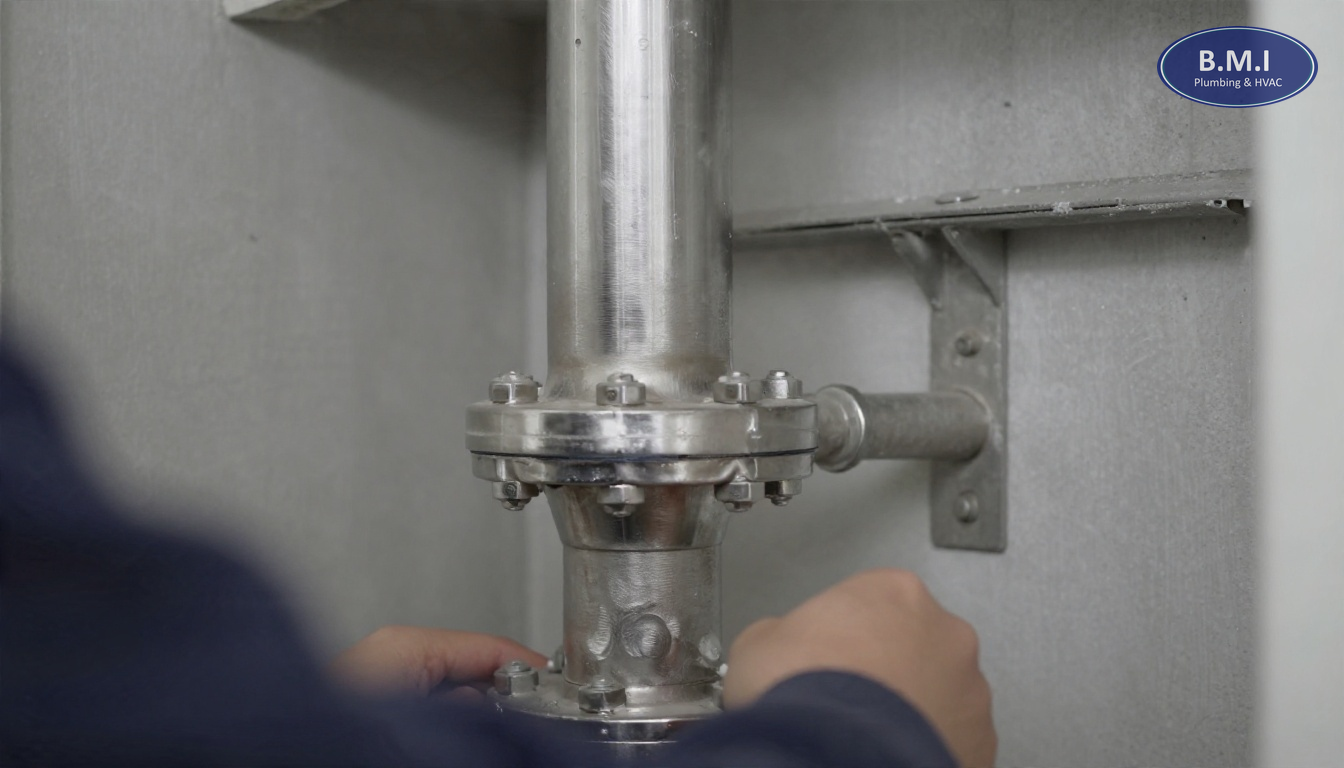
Expansion Compensators in Toronto Condo Risers
Quick summary: Expansion compensators are one of the least understood components in a condominium plumbing system and one of the easiest for boards to ignore until there is a leak, a seized riser, or a shutdown that grows into a capital project. In Toronto high-rises, especially 1970s to early-1990s concrete towers in North York, Scarborough and Mississauga, a failing riser expansion joint often shows up indirectly through recurring leaks at nearby fittings, distorted guides, or unexplained movement at slab penetrations long before anyone says the words “expansion compensator.”
A common mistake during budget season is to treat these as isolated mechanical-room parts. They are not. If an expansion compensator is failing, the issue is usually tied to the condition of the riser, the isolation valves, the guides and anchors, and the building’s ability to shut down work in a controlled way. That is why this component tends to become a project rather than a simple service call.
The part most boards do not know they have
In many reserve fund discussions, domestic water risers get attention and pressure reducing valves get attention, but expansion compensators are omitted because they are hidden in riser shafts, above ceilings, or wrapped in insulation. In buildings we service in Toronto and Vaughan, the board often first hears about them only after a consultant note says “replace expansion joints as required,” which is not enough detail to budget from.
An expansion compensator is installed in a vertical riser to absorb thermal growth and contraction. Hot water risers move more than cold, but cold lines can still see movement from temperature swings, pressure events and building settlement. In practical terms, a 2 1/2-inch or 3-inch copper riser running 20 to 25 storeys can experience enough cumulative movement that, without a working compensator and proper guides, the stress transfers to branch connections, valve bodies and slab sleeves. That is why buildings end up chasing leaks on the 8th floor, then the 14th, then the 21st, without initially connecting them to a movement problem.
Where this ties into capital planning is straightforward: if your building is budgeting for domestic water riser replacement, or even investigating recurrent riser leaks, the condition of the expansion compensators should be reviewed at the same time. Looking at one without the other is how boards end up paying twice.
What is actually happening inside the riser
The fast diagnosis is not “the joint is old.” The fast diagnosis is usually that the riser is no longer moving the way the original system intended.
Most GTA high-rises built in the late 1970s through early-1990s used copper domestic water risers, commonly Type L on larger mains and sometimes lighter wall material in branches depending on the original design. On hot water and recirculation lines, the pipe expands when demand rises and contracts when demand falls. If the riser has a bellows-type expansion compensator or other movement-absorbing assembly, that movement is meant to happen at a controlled point between anchors and guides.
When the system ages, five things commonly go wrong:
- The compensator itself fatigues or leaks. Bellows cycles add up over decades.
- Guides are missing, loose or no longer aligned. The joint then sees lateral movement it was never meant to handle.
- Anchors have been altered during previous work. A riser that was stable for 25 years can become unstable after a valve replacement or wall opening if support conditions change.
- Sectional valves do not hold. What should be a controlled replacement becomes a building-wide shutdown.
- The riser pipe is already thinned or pitted. Replacing only the compensator on a compromised riser can buy very little time.
That last point matters. In older Toronto and Etobicoke towers, it is not unusual to find the compensator problem only after a contractor opens a shaft and sees green staining, insulation saturation, or copper wall loss at the adjacent fitting. In that scenario, the project is no longer “replace one expansion joint.” It becomes “replace the expansion joint, adjacent pipe, supports, and likely the isolation valves serving that riser.”
For boards that want a plain-English explanation: the compensator is not just a part. It is the hinge point in a movement system. If the hinge fails, the force goes somewhere else.
Why Toronto-area buildings see this problem when they do
A common mistake we see in early-1990s North York high-rises is assuming that because the domestic water system is still operational, the movement components must be fine. In reality, many of these buildings are now at the age where original supports, guides and flexible elements have reached the same decision point as the risers themselves.
There are local factors too:
- Building age profile: Toronto, Scarborough and Mississauga have a large stock of 1970s-1990s concrete towers with long vertical risers and original support hardware.
- Temperature cycling: Domestic hot water systems in occupied buildings do not operate at a constant load. Morning and evening demand swings create repeated expansion and contraction cycles.
- Pressure conditions: Buildings with unstable pressure control, or neglected pressure reducing valve maintenance, often put extra stress on fittings and movement points. Many high-rises run domestic pressures in zones that can range roughly from 55 to 80 psi after regulation, but poorly controlled systems can spike higher.
- Deferred valve work: If the building has not kept up with a valve audit or timely valve replacement, any future compensator replacement becomes more disruptive and more expensive.
This is one reason fall is a useful time to review the issue. Boards are setting next year’s budget, winter demand patterns are coming, and it is easier to plan a controlled project now than to discover in January that a hot water riser cannot be isolated cleanly.
How the problem presents in a real condominium
Property managers are rarely told, “our expansion compensator is failing.” They hear symptoms.
The most common reports are:
- Repeated domestic water leaks in vertically aligned suites on the same riser
- Staining or damp drywall around riser closets or bulkheads
- A hot water riser that makes ticking, groaning or snapping sounds when demand changes
- A leak that stops when the line cools and reappears during heavy morning usage
- A branch valve or coupling near the riser that has been repaired more than once in a few years
- Evidence that pipe insulation is wet at one floor line but the source is not obvious
One specific sign non-experts often miss: if a leak keeps recurring at a fitting immediately above or below a slab penetration, the fitting may not be the root problem. The riser may be moving and loading that connection. Replacing the same fitting twice without checking the riser expansion joint is how buildings spend operating dollars on a capital issue.
In post-2010 glass towers, the issue is less often age-related fatigue and more often installation detail: poor guide spacing, constrained movement in a tight shaft, or previous fit-up work that left the joint unable to travel properly. In older purpose-built rentals and condo towers, the issue is more often simple age plus deferred support and valve work.
What a proper inspection should include
A board should not approve replacement of multiple expansion compensators from a one-line recommendation and a cellphone photo. At minimum, the diagnosis should show what is failing, what else is attached to it, and whether the building can isolate the work.
A proper inspection typically includes:
1. Physical review of the compensator and adjacent piping
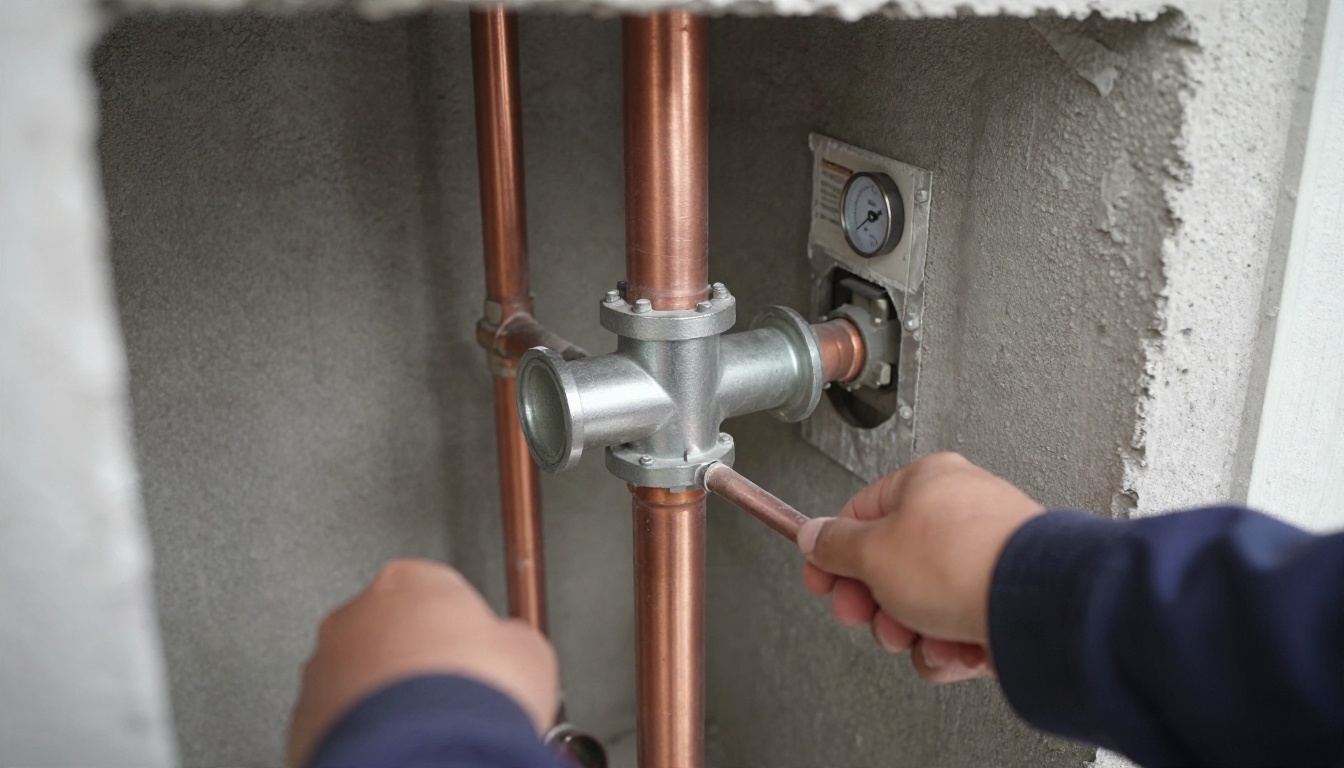
The contractor should document the pipe material, diameter and connection type. In condo work this is often 2-inch, 2 1/2-inch, 3-inch or 4-inch domestic hot, cold or recirculation piping, with soldered, flanged, grooved or threaded transitions depending on age and prior repairs. A report that does not identify line size is not ready for budgeting.
2. Review of supports, guides and anchors
This is the part many reports skip. The compensator cannot be assessed properly if no one comments on guide condition, anchor points and visible travel. If the guides are missing or bent, replacing the joint alone is incomplete work. For larger project planning, this belongs under expansion compensator replacement, not basic service.
3. Isolation verification
Before pricing any replacement, the contractor should identify which valves isolate the affected riser and whether they are likely to hold. In buildings that have not had a recent valve audit and exercise program, this is often where the budget changes. A seized or passing sectional valve can turn a half-day riser shutdown into a full-building event.
4. Pressure and system context
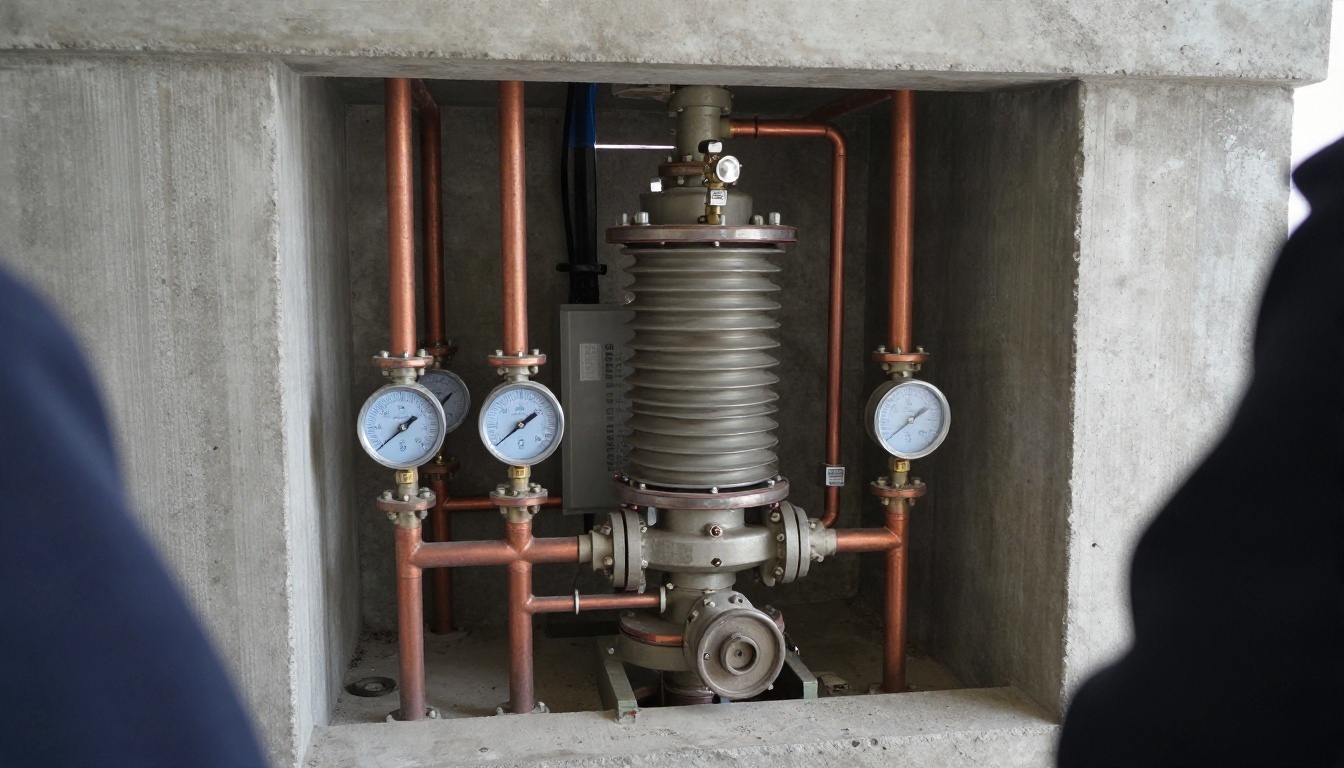
If the building has recurring pressure issues, gauge readings upstream and downstream of the PRV station matter. A neglected PRV setup can contribute to repeated stress on risers and fittings. This is why compensator planning often overlaps with project solutions for building plumbing systems, not just one isolated repair.
5. Written recommendations with scope options
The report should separate:
- replace compensator only
- replace compensator plus adjacent pipe and valves
- replace compensator as part of a riser renewal project
- defer with monitoring for a defined period
That last option is legitimate in some cases. Not every aging compensator requires immediate replacement this quarter. If the unit is dry, stable, and the riser project is already planned within 12 to 18 months, the honest recommendation may be to monitor and coordinate.
Repair versus replacement: the decision framework
Boards usually want to know whether this is maintenance, repair, or capital replacement. The answer depends on failure mode and context.
| Condition | Likely approach | Why |
|---|---|---|
| Minor external corrosion, no leak, guides intact, riser replacement planned soon | Monitor and plan | Spending on a stand-alone replacement may duplicate future work |
| Active leak at compensator body or bellows | Replace | Patching is rarely durable enough for an occupied condo riser |
| Recurrent leaks at adjacent fittings, movement evident | Replace compensator and correct supports | The fitting is often not the root cause |
| Compensator obsolete and sectional valves unreliable | Expand scope | Access and shutdown cost will exceed the part cost |
| Riser pipe wall loss or multiple historic repairs nearby | Consider riser section or full riser replacement | The compensator may be only one symptom |
In plain terms, if the labour is mostly in access, shutdown, drain-down, cut-out, reinstatement and resident coordination, then saving money on a partial fix is often false economy. This is the same logic boards use when deciding between repeated leak repairs and building re-piping in a system that has reached the end of useful life.
There are cases where waiting is reasonable. If a building in Markham or Richmond Hill has a dry but aging compensator and is already tendering riser renewal for next summer, it may make sense to monitor through winter rather than open finished areas twice. But that should be a conscious decision with photos, notes and a contingency plan, not simple deferral.
What replacement usually costs in Toronto
Cost is where many online articles become useless, so here are practical budgeting ranges for the GTA in 2026. These are not BMI prices. They are broad market estimates that vary by access, pipe size, insulation, shutdown complexity, asbestos-related constraints, after-hours requirements and reinstatement scope.
Typical budgeting ranges
| Scope | Typical Toronto/GTA budget range |
|---|---|
| Investigation and site review with access planning | $750-$2,500 |
| Single straightforward compensator replacement on a small riser with good isolation | $6,000-$9,000 |
| More complex replacement on 2 1/2-inch to 4-inch riser with difficult access or valve issues | $9,000-$15,000 |
| Add sectional valve replacement during same shutdown | add $2,000-$6,000 per valve depending on size and access |
| Multi-riser coordinated project | often lower per location than one-off emergency work |
| Shaft opening and architectural reinstatement | highly variable; can exceed plumbing component cost in finished areas |
Three budgeting realities matter here:
- The component is not the expensive part. The expensive part is controlled shutdown, safe access, coordination and reinstatement.
- One-off emergency work costs more. If the building calls after leakage starts, expect premium labour, resident disruption and less efficient sequencing.
- Valve condition drives cost. If isolation valves do not hold, the contractor may need larger shutdowns or preliminary valve work before touching the compensator.
On a 25-storey condo with several similar risers, a board should usually ask for both a one-off repair cost and a grouped project cost. The per-location number often improves when mobilization, access, and resident communication are handled once instead of repeatedly.
Timelines, shutdowns and resident logistics
This is where condominium work differs from commercial plumbing and from houses. The technical replacement may take a crew only a few hours. The building logistics can take weeks.
A typical sequence looks like this:
- Site review and scope confirmation: 1 to 2 visits
- Access planning and notices: usually 3 to 7 days minimum, sometimes longer by management policy
- Valve verification and pre-shutdown checks: 1 day or bundled into prep visit
- Replacement day: often 4 to 8 hours of water interruption for the affected riser if isolation works
- Reinstatement and closeout: same day to several days depending on wall or ceiling repairs
In occupied condos, the work may require access to mechanical rooms, service corridors, riser closets and a limited number of suites. Elevator protection, after-hours noise restrictions and concierge coordination all matter. In some Toronto towers, the only practical shutdown window is between 9 a.m. and 4 p.m. because early morning and evening water demand is too high. In others, particularly older purpose-built rentals, after-hours work may be preferred to reduce resident complaints but will increase cost.
If the riser serves domestic hot water recirculation, there is also a restart and balancing consideration. A sloppy restart can generate nuisance complaints about delayed hot water on upper floors even if the plumbing work itself was correct.
This is one reason a contractor that routinely handles in-suite plumbing access and condo service logistics tends to manage these jobs better than a contractor that mostly works in open commercial spaces.
What happens if the building defers it
Deferral is not automatically wrong. Unexamined deferral is the problem.
If a compensator is actively leaking, the main risks are obvious: water damage, emergency shutdowns, resident claims and deductible exposure. But there are quieter risks boards should understand:
- Repeated small leaks can damage adjacent finishes and insulation before a major event occurs. By the time staining appears in a suite, the leak path may already be established.
- Movement-related stress can create leaks away from the original component. The eventual flood may occur at a branch or valve, not at the compensator body.
- Emergency replacement narrows your contractor options. Planned capital work can be tendered; emergency work is whoever can safely respond.
- Reserve fund timing becomes harder to defend. If a consultant or contractor has documented end-of-life movement components and the board does nothing, the eventual emergency spend is harder to explain to owners.
For condominiums, the common-element question also matters. In most declarations, the riser and its movement components are common elements, while damage allocation and chargeback depend on the declaration, by-laws and the actual cause. Managers should avoid making quick promises to residents about “owner responsibility” before the source is confirmed. A leak showing in one suite may still originate from a common-element riser system.
If there is already active leakage, this is not a blog-problem. It is a 24/7 emergency plumbing response issue first, then a capital-planning issue second.
How this ties into other neglected components
Expansion compensators are rarely the only forgotten item in an older riser system. In buildings we service along the waterfront and in parts of North York, the same project often uncovers two or three related deficiencies:
- aging sectional valves that no longer isolate
- original PRV stations that have not been rebuilt or replaced on schedule
- expansion guides that were removed or altered during previous work
- recirculation balancing issues causing temperature complaints
- adjacent riser sections that should be renewed while access is open
That is why the smartest version of this project is often bundled. If a building already knows it needs pressure reducing valve maintenance or replacement, or has identified weak isolation requiring sectional valve replacement, the board should at least ask whether the shutdowns can be coordinated.
Similarly, if the building is seeing broader domestic piping failures, the right answer may be larger than one component. A targeted fix can still be correct, but only after someone has ruled out the need for full building re-piping or phased riser replacement.
What to ask for before you take a recommendation to the board
If you need a defensible recommendation for a board package or reserve fund discussion, ask for these five things:
- Photos of the actual component and adjacent supports
- Pipe size, service and location such as 3-inch DHW riser at level 12 shaft
- Isolation plan identifying which valves are relied on and whether they were tested
- Scope options from minimum necessary replacement to grouped project work
- A timing opinion stating whether this is urgent, monitor-for-budget, or coordinate-with-riser-project
If the contractor cannot provide that, get a second opinion. This is especially true if the recommendation is for multiple locations at once without a clear rationale.
For buildings building out next year’s maintenance and capital calendar, it is also worth reviewing whether other preventive work should be scheduled now, such as kitchen stack cleaning before holiday loading, camera inspection of suspect drains, or annual backflow prevention testing and certification. Fall is when avoidable winter emergencies are either prevented or budgeted for.
FAQs
What does an expansion compensator actually do in a condo building?
An expansion compensator, often called a riser expansion joint, absorbs vertical movement in a domestic water riser as the pipe heats, cools and changes length. In a 20- to 30-storey building, a hot water riser can move enough over its height that the stress shows up first at valves, branch takeoffs and slab penetrations, not at the compensator itself. Its job is to protect the riser, guides and anchors from that repeated thermal loading.
How long do riser expansion joints last?
There is no single life expectancy, but in Toronto high-rises it is common to see original units from the late 1970s, 1980s and early-1990s at the point where replacement should be actively planned. Buildings with poor guides, failed anchors, pressure fluctuations or repeated overheating often see earlier deterioration. Once a unit starts leaking, binding or showing distortion, it is usually a replacement job rather than a repair.
What are the warning signs of a failing expansion compensator?
The obvious sign is leakage at the bellows, packing area or adjacent flanges, but more often the early clues are movement-related: recurring leaks at nearby threaded fittings, groaning or ticking when hot water demand changes, and insulation stains at one floor line. A common field sign is a riser that has started pushing into a guide or rubbing a sleeve because the compensator is no longer travelling properly. If one compensator has failed in a bank of similar risers, the others are usually on borrowed time.
What does replacement cost in Toronto?
As a broad 2026 GTA budgeting range, replacement of a single domestic water riser expansion compensator in an occupied condominium often lands around $6,000 to $15,000 per location, depending on diameter, access, isolation quality, asbestos-related constraints and whether guides or valves also need work. A coordinated multi-riser project can be more efficient on a per-unit basis, while one-off emergency replacement after a leak is usually the most expensive way to do it. For reserve fund planning, boards should treat those numbers as building-specific estimates, not fixed prices.
Can an expansion compensator be repaired instead of replaced?
Sometimes a report will suggest tightening hardware or addressing adjacent supports, but a leaking or fatigued bellows-style unit is generally not something a condo should rely on after a patch. In practice, once the body, bellows or seals have deteriorated, replacement is the durable option because the labour is in the shutdown, access and reinstatement, not just the component. If the compensator is obsolete or installed without proper guides, replacement with corrected support conditions is usually the better use of capital.
How much disruption should residents expect during the work?
For a straightforward replacement with working sectional isolation, the typical resident impact is a planned water shutdown to the affected riser for part of a day, often 4 to 8 hours, plus access to a limited number of suites if the work area or valve locations require it. In taller buildings or where valves do not hold, the shutdown can extend to a full day or involve a larger stack of suites. Good notice, valve verification and a pre-project access plan matter more here than the actual cut-and-install time.
Next steps for boards and property managers
If your building has original riser movement components and no one has looked at them in years, this is the time to do it. November is budget season, and it is far easier to explain a planned 2027 capital line item than an unplanned winter shutdown with restoration costs attached.
A practical next step is to have the affected risers reviewed in person before requesting numbers. BMI attends the building before quoting because with expansion compensators, the real questions are access, isolation, support condition and whether the work should stand alone or be grouped with other riser work. If your building has not recently reviewed its riser valves, pair that visit with a valve audit program so the shutdown assumptions are real.
For managers comparing options, it is also worth asking for references to similar condo work and reviewing a contractor’s broader completed project portfolio. A contractor that understands stacked-suite access, resident notices and mechanical-room realities in occupied Toronto buildings will usually save the corporation money even if the line-item plumbing number is not the lowest.
If you need a site review, a budget number for reserve fund planning, or an urgent assessment of a leaking riser expansion joint, start with Brial Mechanical’s contact page or review related plumbing maintenance programs and repairs and service capabilities before the issue becomes an emergency.
Contact BMI
- Contact BMI
- Phone: (416) 845-3756
- Emergency: (416) 845-3756, answered 24 hours a day
- Email: info@brial.ca
More on condominium plumbing
Suite Access Notice in Toronto Riser Projects
How to manage suite access notice and condo entry rights during a Toronto riser project, with timelines, legal context, …
Galvanised Pipe Replacement in Toronto Condos
Galvanised pipe replacement for Toronto condos: how old condo piping fails, what it costs, and when pre-1980 buildings …
Signs Your Toronto Building Needs Riser Replacement
Learn the real riser replacement signs in Toronto condos, including pinhole leaks, pressure issues, costs, timelines and …
Need a plumber in your building?
BMI services roughly 200 condominium and multi-residential buildings across Toronto and the GTA. Emergencies are answered at any hour.