Floor Drains and Trap Primers in Aurora Condos
Floor drain and trap primer service in Aurora condos. Diagnose sewer gas smell, dry traps and failed primers in garages, mechanical rooms and amenity areas.
Floor Drains and Trap Primers in Aurora Condos
Quick summary: In Aurora condominium and multi-residential buildings, floor drain odours are often caused by dry traps, failed trap primers or partially blocked branch drains rather than a dramatic sewer backup. For property managers and boards, the important step is to confirm why the trap seal is being lost, document the condition properly, and decide whether the issue is an isolated repair or part of a wider common-area plumbing program.
Aurora is a distinct market for this problem because its condominium stock is a mix of lower-rise buildings, townhouse-style common areas, and mid-rise or taller developments built in different waves. That means the plumbing details vary: some buildings have older floor drains and primer lines that have simply aged out, while newer buildings may have trap seal maintenance devices that were installed but never properly mapped, tested or maintained.
Why floor drain and trap primer problems show up in Aurora buildings specifically
Aurora does not have the same concentration of very tall 1970s apartment towers seen in older parts of Toronto, and that matters. A lot of the multi-residential stock here was built later, with substantial phases of development around Yonge Street, Wellington Street, Bayview Avenue and more recent growth toward areas around Bayview and St. John’s Sideroad. In practical plumbing terms, that often means underground garage floor drains, mechanical room drains, vestibule drains and service-room drains in buildings from the late 1990s through the 2010s.
Those buildings typically rely on trapped floor drains in spaces that are not occupied every day and do not get routine water flow. A parking garage drain may only see seasonal washdown water, snowmelt or a housekeeping hose. A fan room or sprinkler room drain may sit untouched for months. When the trap seal evaporates, occupants report a sewer gas smell even though the line itself may not be blocked.
In Aurora, this becomes more noticeable in fall and winter. As outside temperatures drop, stack effect changes air movement through corridors, stairwells, shafts and service rooms. Odours that were faint in summer can become much more obvious by October or November. This is also when garages start receiving meltwater, sand and road debris, so a neglected floor drain can present both as an odour issue and a drainage issue. For many boards, that makes autumn the right time to combine floor drain review with drain cleaning and snaking, garage housekeeping planning and winter readiness checks.
Another local factor is building form. Aurora has many properties where access is tighter than managers expect: smaller mechanical rooms, low parking garage ceilings, and service spaces tucked behind storage or amenity areas. Older low- and mid-rise stock can have limited cleanout access, and some original record drawings are incomplete. That turns what looks like a simple odour complaint into a tracing exercise: which primer serves which drain, whether the primer line was capped during previous renovations, and whether section 98 alterations in common element-adjacent areas changed the original drainage layout.
For boards doing budget work in the fall, this is also where it helps to separate reactive calls from preventive work. If a building already has recurring drain odour issues, a broader review through BMI’s all repairs and service or all maintenance programs approach is usually more cost-effective than repeated one-off attendance.
How floor drain issues present in Aurora condo buildings
Managers rarely receive the complaint as “the trap primer has failed.” They hear:
- “There is a sewer smell in the P1 electrical room.”
- “The corridor near the garbage room smells worst in the morning.”
- “Residents on the ground floor are complaining about an odour near the amenity washroom.”
- “The garage drain did not overflow, but the room smells like sewage.”
- “After a long weekend, the mechanical room floor drain started smelling again.”
In Aurora buildings, the locations are usually predictable. Parking garage vestibules, loading-adjacent service rooms, mechanical rooms, garbage and recycling rooms, sprinkler rooms, storage corridors and sometimes unused janitor closets are common sources. In newer buildings, the issue can also appear at balcony-adjacent common drains or in lower amenity areas where floor drains were installed as a precaution but almost never receive water.
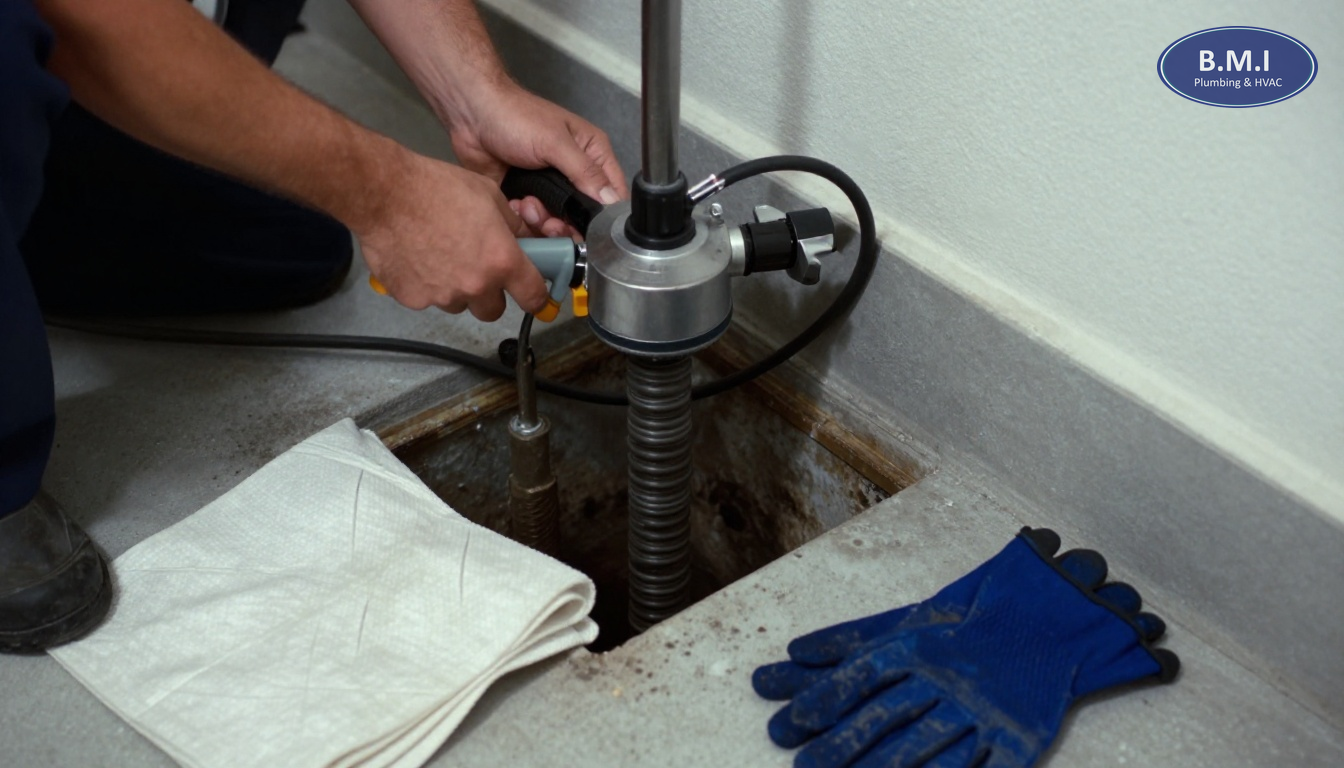
A true sewer gas complaint needs to be distinguished from a backup, a venting issue, or a cleaning issue. If the odour disappears temporarily after someone pours a bucket of water into the drain, that strongly suggests a lost trap seal. But that is not the end of the diagnosis. The next question is why the trap dried out. Was there never a functioning primer? Is the primer valve fouled with scale? Is the copper or plastic primer line blocked, kinked or disconnected? Has the floor drain trap body deteriorated? Is there a hidden leak where primer water is escaping before it reaches the drain?
This is also why managers should be cautious about repeated deodorizing instead of diagnosis. Odour control products may mask a problem for a day or two, but they do not restore trap seal protection. In a garage or service room, they can delay proper investigation until the first heavy winter melt event exposes a partially blocked drain.
Where the complaint overlaps with slow drainage, the scope often widens to include camera pipe inspection. In many common areas, the floor drain itself is not the only issue; sediment, rust scale, sand or grease from housekeeping sinks can also restrict the branch line serving the drain.
What diagnosis and inspection should include, and what evidence to insist on
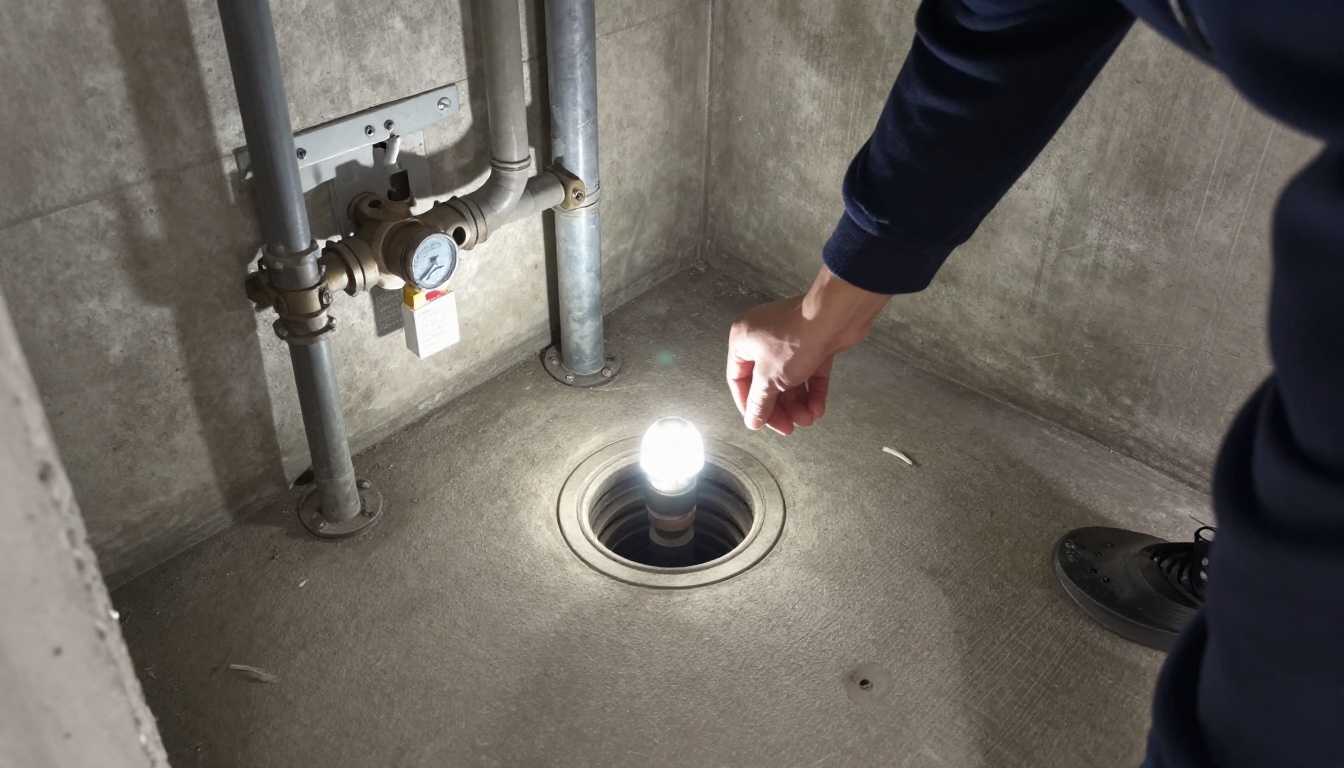
For an Aurora property manager, the minimum standard should be evidence, not assumptions. A proper inspection usually starts with confirming the exact drain location, the pattern of complaints and whether the odour is constant or intermittent. The plumber should then inspect the floor drain body, confirm whether water is standing in the trap, and determine whether the drain is intended to be primer-fed.
From there, the work may include:
- testing the trap seal depth
- locating the primer source and identifying whether it is pressure-drop activated, electronic, manifold-fed or another arrangement
- tracing visible primer lines above ceilings or in mechanical rooms
- checking nearby shutoffs and strainers
- opening the drain for cleaning if debris, scale or sediment is present
- using camera pipe inspection where the branch line may be obstructed
- documenting inaccessible conditions, missing access panels or concealed piping that affects scope
In real buildings, the key failure points are often simple. Primer valves can seize or foul. Small primer lines can block with mineral buildup or debris. Renovations may leave a primer abandoned. In some garages, the floor drain trap itself remains intact but the body or connection is badly corroded. In others, the problem is operational: the building has floor drains that depend on periodic manual priming, but no one has included them in routine rounds.
For common elements, ask for a clear written record of what was tested, which drains were confirmed to receive primer water, and which were not. If the drain line was scoped, ask for still images or video notes. If a repair is recommended, the report should say whether the issue is:
- a dry trap only,
- a failed primer,
- a blocked primer line,
- a blocked or partially blocked drain line,
- a failed drain body or trap, or
- a broader common-area deficiency.
That distinction matters for budgeting. A dry trap that needs a maintenance protocol is different from a garage slab repair. An isolated primer replacement is different from a building-wide review of trap seal protection. In older Aurora common areas, it is also worth checking whether the same rooms need related work such as backflow prevention testing and certification or valve identification under a valve audit, charting and exercise program, especially if the mechanical room records are incomplete.
A representative Aurora project: recurring sewer gas smell in a garage service corridor
A representative example would be a 6-storey condominium from the early 2000s near Yonge Street with two levels of underground parking and about 90 suites. The manager’s complaint was a recurring sewer gas smell in a P1 service corridor outside the electrical room and housekeeping closet, worst after weekends and during cooler weather.
Initial attendance found that the floor drain in the corridor had little to no standing water in the trap. Pouring water into the drain reduced the odour temporarily, but the smell returned within days. BMI traced the connected primer arrangement and found that the drain was intended to receive water from a nearby primer line, but the line was no longer delivering. Further inspection showed a fouled primer device and partial blockage in the small-diameter primer line. The floor drain branch itself also had sediment buildup, though not a full blockage.
The work included opening access, cleaning the affected drain branch, replacing the failed primer component, flushing the primer line, confirming flow to the floor drain, and documenting adjacent drains in the same common area that were at risk of the same problem. The active repair took roughly one working day, with a follow-up visit to confirm that the trap seal was being maintained properly.
The rough cost for that type of Aurora service call would usually fall in the low thousands, depending on access conditions and whether after-hours work is needed. If ceiling access, drywall repairs, or multiple drain locations are involved, the number rises quickly. In this case, the board also elected to add the garage and service-room drains to a recurring inspection list to avoid another winter odour cycle.
That kind of job often leads to a larger discussion. Once one failed primer is found, it is common to inspect the rest of the common-area drains and decide whether a planned program is more sensible than waiting for each location to fail separately. That is where BMI’s broader project solutions and completed projects and building references pages are useful context for boards comparing reactive and planned work.
Costs and timelines for Aurora floor drain and trap primer work
For Aurora multi-residential properties, costs depend heavily on whether the issue is one drain, one room, or a building-wide pattern. The ranges below are market estimates for planning only, not quoted prices.
Single complaint investigation: For one odour complaint in an accessible common-area drain, expect a few hundred to roughly $1,500 depending on travel, access, whether the issue can be confirmed quickly, and whether drain cleaning and snaking or after-hours attendance is required.
Drain cleaning and camera work: If the floor drain branch needs cleaning and scoping, many jobs land in the roughly $1,000 to $3,500 range. The higher end usually reflects longer branch runs, more difficult access, or multiple affected drains.
Trap primer repair or replacement: Replacing a failed primer device or restoring one serving a small group of common-area drains often falls in the roughly $1,500 to $5,000 range. Costs climb if ceilings or walls must be opened, if primer lines need rerouting, or if shutoffs and associated piping are also in poor condition.
Multiple common-area drains or garage-level program: Once the work involves several rooms, multiple drains, line tracing, slab or drain-body repair, and coordination with building operations, the budget can move into the $5,000 to $20,000-plus range.
Larger remedial work: If the investigation reveals corroded drain bodies, failed underground connections or broader common-element issues, the cost may become a capital project rather than a service call.
Timelines are equally variable. A straightforward inspection may happen in one visit. A modest repair can usually be completed in one day or two short visits. A broader Aurora building review may take one to three weeks from investigation to final report, depending on access, resident notice requirements, and whether openings, concrete work or additional trades are needed.
Fall is often the right time to get these numbers in front of the board. Before winter pressure and temperature swings, many properties also pair this work with pressure reducing valve maintenance and replacement and seasonal review of mechanical-room shutoffs.
Repair versus replacement: a practical framework for Aurora boards
The right decision is not always “replace everything” and it is not always “keep repairing.” In Aurora, a useful decision framework starts with three questions.
First, is this isolated or systemic? One drain in one room may be a repair. Five odour complaints across garage and service areas usually point to a broader deficiency.
Second, is the failure in the device, the piping, or the drain body? If the primer valve has failed but the lines and drains are sound, targeted replacement is sensible. If the lines are inaccessible, untraceable, or repeatedly blocked, replacing the primer arrangement or changing the trap seal maintenance strategy may be the better long-term option.
Third, what is the building’s remaining lifecycle? A building from the late 1990s or early 2000s may have several plumbing components reaching the same age band. Boards should ask whether the floor drain issue is part of a wider plumbing renewal cycle that includes sectional and isolation valve replacement, riser planning, or common-area drain rehabilitation.
For reserve fund planning, this distinction matters. Recurrent service costs rarely look expensive one call at a time, but over several years they often exceed the cost of a planned common-element repair. A board that is already updating its reserve fund study cycle should document where trap primer and floor drain deficiencies sit: operating budget, maintenance program or future capital line.
What deferring floor drain and trap primer work costs
The obvious cost is repeated odour complaints, but that is usually the smallest one. Deferral can lead to resident dissatisfaction, wasted staff time, repeated emergency attendance and poor records. When the first heavy snowmelt or cleaning cycle hits, the same neglected drain may then present as a slow-draining or overflowing floor drain.
There are also insurance and liability considerations. If a common-area floor drain fails to drain because it was never properly maintained, and water migrates into storage areas, electrical spaces or finishes, the board may be answering difficult questions about maintenance history. If odours persist and the building has no documentation showing inspection and corrective action, that is another avoidable problem.
For Aurora corporations, the operational cost is often hidden in staff workarounds: manually pouring water into drains without a schedule, deodorizing rooms, dispatching cleaners repeatedly, or calling different contractors each time the smell returns. A documented program is cheaper than confusion.
This is also why related systems matter. If the same mechanical room has unverified shutoffs, uncertain records, or aging distribution components, combine scopes where it makes sense. BMI frequently sees value in pairing floor drain reviews with a valve audit, charting and exercise program or broader all maintenance programs planning so the board gets one coordinated picture instead of several disconnected invoices.
FAQs about floor drains and trap primers in Aurora
Why do floor drains in Aurora condo buildings start to smell even when there is no visible backup?
In many Aurora buildings, the issue is a dry trap rather than an active blockage. Floor drains in parking garages, electrical rooms, fan rooms, storage areas and vacant service spaces may not receive regular water, so the trap seal evaporates and sewer gas enters the room. A failed or disconnected trap primer, poor grading that leaves little water in the trap, or a cracked trap body can create the same complaint.
What does a proper trap primer inspection involve in an Aurora multi-residential building?
A proper inspection goes beyond pouring water into the drain and seeing if the smell stops. The plumber should identify the type of primer, trace which floor drains it is intended to serve, confirm whether the primer line is open, and verify that water is actually reaching the trap. In many cases, camera pipe inspection of the connected drain line or opening nearby access panels is needed to determine whether the issue is the primer, the trap, or the branch drain.
Are trap primers required in Aurora condominium garages and mechanical rooms?
Where a floor drain trap is not likely to receive regular use, a means of maintaining the trap seal is generally required under code intent, whether by trap primer or another approved method. In practice, that matters most in garages, mechanical rooms, service corridors and other low-use spaces common in Aurora condominium buildings. For existing buildings, the question is usually not whether a primer should exist, but whether the original system still functions and whether replacement should match the current use of the area.
How much does floor drain and trap primer work usually cost in Aurora?
For an Aurora condominium or rental building, simple diagnostic service for one or two problem drains is often in the low hundreds to low thousands depending on access, ceiling openings and whether after-hours attendance is needed. Replacing a failed primer, opening walls or ceilings to trace a primer line, or repairing several garage drains can move the work into the low thousands to mid-five figures. Full common-area programs across multiple rooms or garage levels vary widely based on the number of drains, access conditions and whether drain cleaning, 24/7 emergency leak response or concrete restoration is also required.
Should Aurora property managers treat sewer gas complaints as urgent if there is no flooding?
Yes. A sewer gas complaint is often dismissed because there is no active overflow, but the underlying issue can still involve a failed trap, blocked branch, dried-out floor drain or an unprotected opening to the sanitary system. In an Aurora building, prompt diagnosis helps avoid repeated resident complaints, odour migration through corridors or shafts, and avoidable emergency calls when a partially blocked floor drain later receives heavy winter meltwater.
Is this usually a repair issue or a capital project in Aurora buildings?
It depends on whether the problem is isolated or systemic. One dry trap in a housekeeping room is a service repair; a garage level with multiple non-functioning primers, corroded drain bodies and poor records is closer to a planned common-element project. Aurora boards preparing fall budgets often benefit from starting with a building-wide review so they can separate immediate repairs from reserve-funded replacement work.
Next steps for Aurora property managers and boards
If your Aurora building has a recurring sewer gas smell, do not stop at adding water and hoping it holds. Ask for a proper diagnosis that identifies the specific drain, confirms whether a trap primer exists and functions, and documents whether the issue is the trap, the primer, the branch line or the drain body.
In fall, this is good budgeting work. Before holiday building use increases and before winter conditions stress garages and service spaces, get the common-area drains reviewed, identify which items belong in operating maintenance and which belong in capital planning, and make sure any urgent repairs are done by a licensed plumber. If you need help with a service call, investigation, or a broader condominium plumbing Aurora review, BMI serves Aurora and the surrounding GTA from its Toronto shop. For immediate issues, use 24/7 emergency leak response. For planned service or pricing, use contact BMI.
Contact BMI
- Contact BMI
- Phone: (416) 845-3756
- Emergency: (416) 845-3756, answered 24 hours a day
- Email: info@brial.ca
More on condominium plumbing
Kitchen Stack Cleaning Cost in Toronto Condos
What does kitchen stack cleaning cost in Toronto? Real condo pricing, scope, timelines, warning signs and budgeting …
Water Submetering and Consumption Problems in Oakville
Water submetering and high water bill issues in Oakville condos: how to diagnose abnormal water consumption and plan …
Hydro Jetting vs Snaking Condo Waste Stacks in Toronto
Hydro jetting vs snaking for condo waste stacks in Toronto: what each method does, costs, timing, and when a board …
Need a plumber in your building?
BMI services roughly 200 condominium and multi-residential buildings across Toronto and the GTA. Emergencies are answered at any hour.