Floor Drains and Trap Primers in East York Buildings
Floor drain and trap primer service in East York for condos and rentals. Diagnose sewer gas smells, dry traps and drainage issues with clear evidence.
Floor Drains and Trap Primers in East York Buildings
Quick summary: In East York multi-residential buildings, sewer gas complaints often trace back to a simple but overlooked issue: a floor drain trap that has dried out, or a trap primer that no longer feeds it. The right response is not deodorizer or repeated flushing, but a proper plumbing diagnosis that confirms whether the drain is trapped, primed, vented and connected the way the building drawings suggest.
Why floor drain problems show up in East York buildings specifically
East York has a mixed building stock, and that matters. Much of the area is still known for older low-rise rentals, post-war apartment buildings, and mid-century institutional or commercial-residential properties, with additional condominium infill and redevelopment along major corridors such as Danforth Avenue and around the East York Town Centre area. Those different vintages were built with different assumptions about floor drains, trap primers and service access.
In older East York apartment buildings from the 1950s through 1970s, basement and service-room floor drains were often installed in utility spaces that saw regular custodial use at the time. Decades later, rooms get repurposed, drains are covered by storage, janitor sinks are altered, and the fixture that once activated a primer line may no longer be used. The drain still exists, but the water seal is no longer maintained. In that setting, residents or staff report a sewer gas smell without any obvious flooding.
In somewhat newer condominium stock, especially where parking garages, garbage rooms and mechanical rooms are more compartmentalized, the problem is often a failed primer assembly, a closed isolation valve, or a disconnected primer branch after renovation work. We also see East York buildings where domestic water pressure has been adjusted over the years with little attention paid to downstream primer performance. If a building has not kept up with pressure reducing valve maintenance and replacement, pressure changes can affect how reliably some primer devices operate.
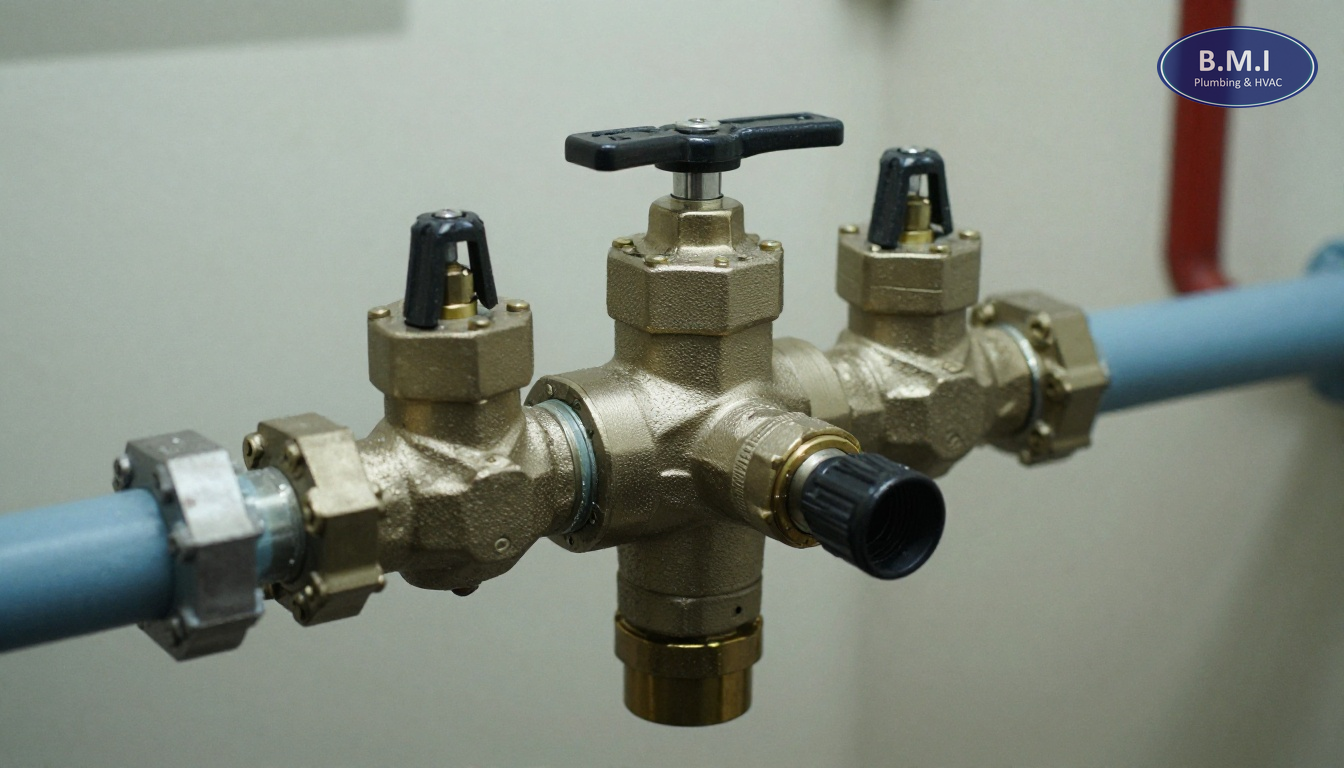
Municipally, East York is within the City of Toronto context, so building operators are dealing with Toronto water, Toronto sewer infrastructure and Toronto permitting and access logistics rather than a separate suburban utility model. In practice, that means older combined service conditions and older buried drainage connections can still influence what happens inside the building. It also means related cross-connection issues should not be ignored where primer supplies or nearby mechanical equipment are involved; if a building has premise isolation devices, annual backflow prevention testing and certification remains part of the broader plumbing compliance picture.
For managers, the key point is this: a sewer gas complaint in East York is often a building-vintage problem, not just a single bad drain.
How floor drain and trap primer issues present in East York
The complaint is rarely, “the trap primer has failed.” What managers usually hear is far more practical:
- “There is a sewage smell in the P1 electrical room.”
- “The garbage room smells worst first thing in the morning.”
- “A basement corridor near the laundry room has an intermittent odour.”
- “The mechanical room drain looks dry.”
- “We poured water in it last month and the smell came back.”
Those reports are useful because the timing matters. In East York buildings, an odour that is strongest after weekends, after a room has sat unused, or after the start of heating season often points to evaporation from an infrequently used trap. A smell that intensifies when exhaust fans run can indicate the room is under negative pressure, making any failed trap seal more noticeable. A smell that returns shortly after water is manually added may mean the trap is leaking, the drain body is cracked, or the primer is not functioning and the trap is drying out again quickly.
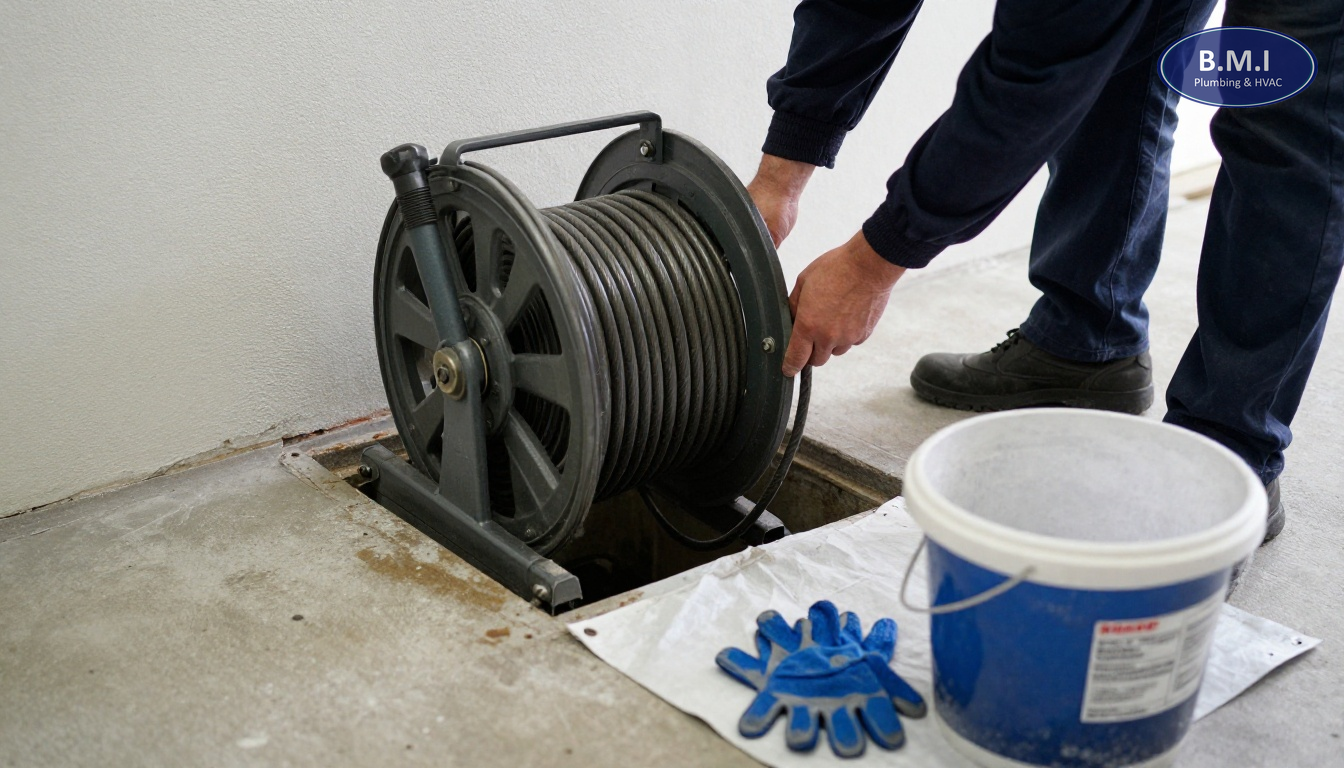
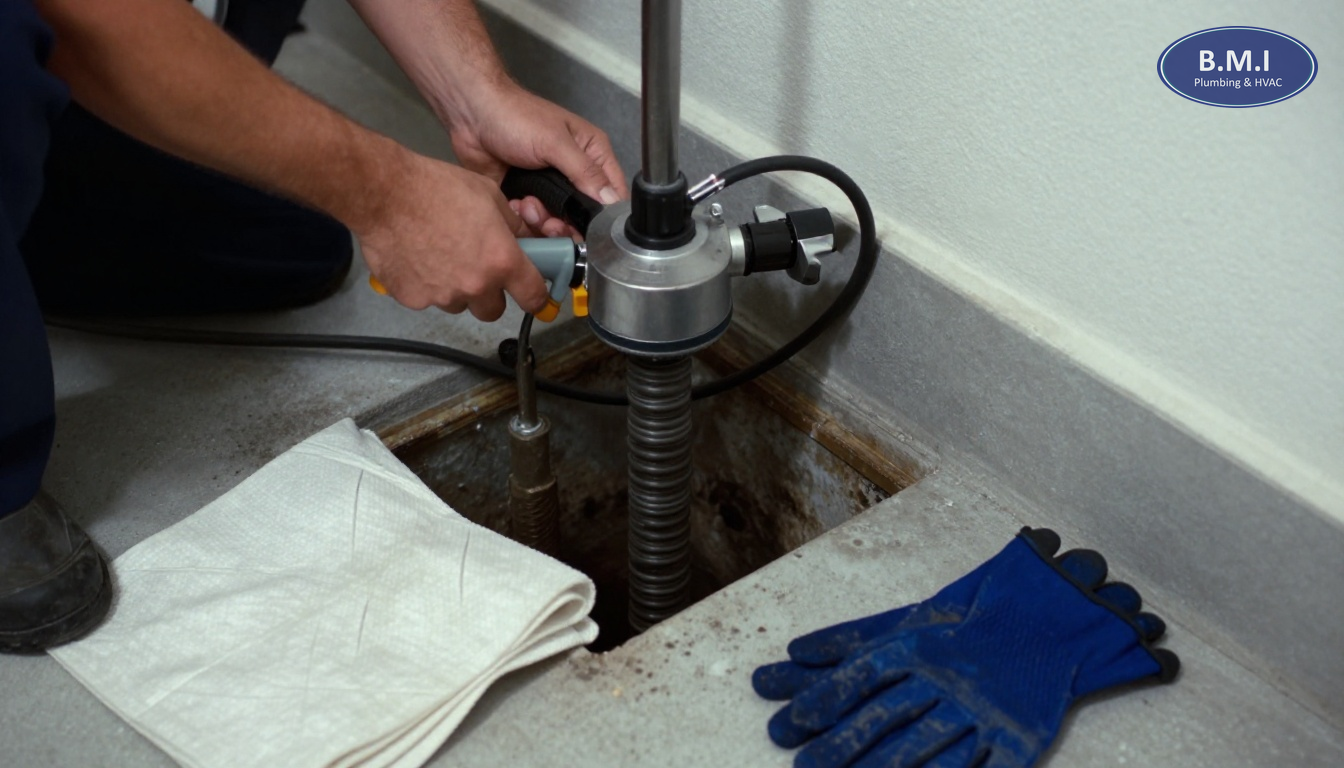
There is also a difference between a dry-trap odour problem and an actual drainage problem. If the floor drain is slow, gurgling, or backing up with wash water, then the branch may also need drain cleaning and snaking or further investigation. If the drain appears intact but the complaint persists, a camera pipe inspection can help distinguish between a trap-seal issue and a damaged or partially obstructed branch line.
East York access conditions shape the response too. In older low-rise and apartment stock, service corridors can be tight, cleanouts may be hidden behind stored materials, and ceiling spaces may have been closed in over many renovation cycles. In some condo buildings, loading access is constrained and mechanical rooms are close to occupied spaces, so diagnosis has to be planned around elevator use, resident traffic and building noise rules.
What a proper East York diagnosis should include
A good inspection is not someone pouring a bucket of water into the drain and leaving. For a property manager or board, the useful deliverable is evidence: what was tested, what was found, and what exactly needs repair.
A proper diagnosis in an East York building typically includes:
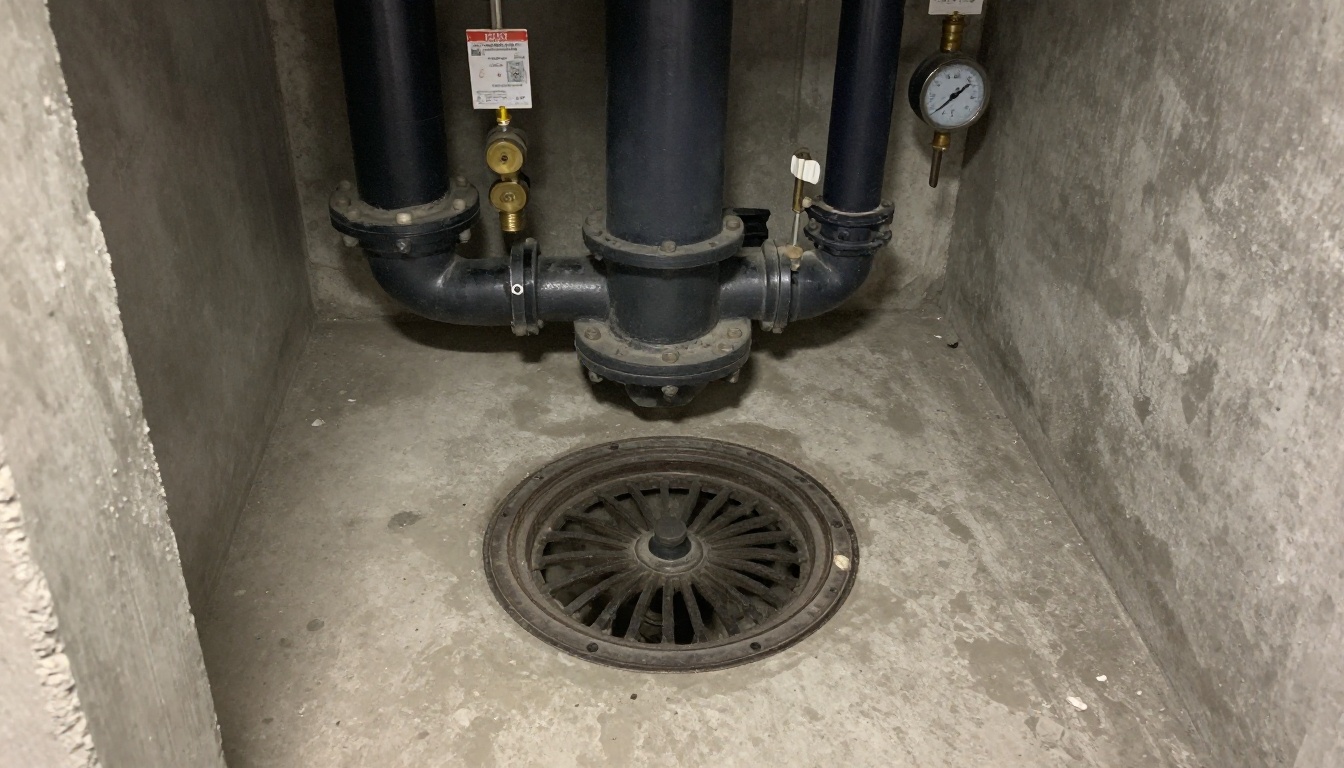
- Visual inspection of the drain location and surrounding piping. This includes confirming whether the drain is actually trapped, whether the strainer and body are intact, and whether there are signs of prior sealant, patching, or concrete repairs.
- Trap seal confirmation. We check whether water is present in the trap and whether it holds over time.
- Primer identification. Not every floor drain has an obvious accessible primer. Some East York buildings have concealed primer lines in walls or ceilings, and some older spaces rely on nearby fixture discharge rather than a dedicated visible device.
- Activation testing. If the primer is tied to a nearby sink or water line, that connection should be tested to see whether water is actually reaching the drain trap.
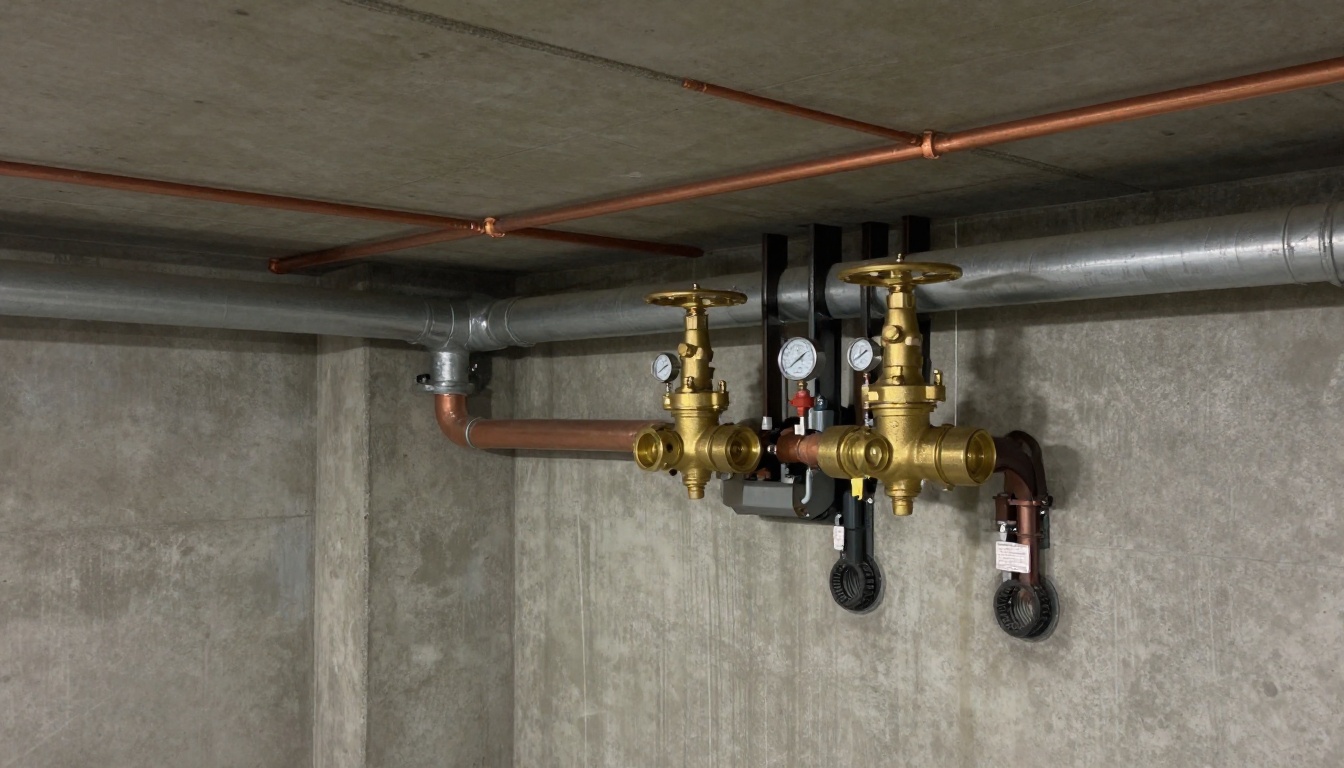
- Isolation valve and supply review. It is common to find a closed valve, a capped branch, or a corroded line that has silently taken the primer out of service.
- Odour-source elimination. Nearby cleanout plugs, toilet seals, abandoned drains and cracked branch fittings should be checked so the board is not paying to fix the wrong thing.
Where the complaint is recurrent or affects several rooms, it often makes sense to step back and review the area systematically. This is similar in spirit to a valve audit, charting and exercise program: the value is not just the immediate repair, but knowing what exists, what still works, and what has been altered over the building’s life.
For East York managers, ask for photos, test results and a clear statement of cause. “Odour addressed” is not enough. You want to know whether the drain was dry, whether the primer activated, whether branch cleaning was required, and whether any concealed access will be needed if the problem returns.
A representative East York service call
A representative example would be a 9-storey condominium from the late 1980s not far from Danforth Avenue, with one level of underground parking and a small ground-floor mechanical/service area. Building staff had been getting intermittent sewer gas complaints from the garbage room and a nearby electrical room for several weeks, especially early in the morning. No active backup had been reported, and housekeeping staff had been pouring water into both floor drains periodically, which only helped for a short time.
Our inspection found that the garbage room floor drain trap was dry and the adjacent electrical room drain had only a shallow seal. The garbage room drain was connected to an older primer arrangement tied to a nearby janitor sink line, but the primer branch had become restricted and was no longer delivering enough water. In the electrical room, the issue was compounded by a loose cleanout plug on an older cast iron branch, which made the odour appear worse than the trap condition alone would suggest.
The work involved opening a limited access panel above the janitor sink ceiling, tracing the primer branch, cleaning and restoring the primer function, resealing the cleanout connection, and confirming trap seal retention after testing. Because the branch serving the garbage room was also partially fouled, we performed localized drain cleaning and snaking to restore proper drainage at the same visit. The work took most of one day with a return visit the following week to confirm the trap remained charged and the odour had not returned.
The rough cost for that type of East York service call would often fall around $1,800 to $3,500 depending on access, the need for ceiling openings and reinstatement, and whether further branch inspection is required. If the primer line had been fully abandoned or concealed piping replacement was needed, the cost could have moved materially higher.
For broader recurring odour issues across multiple service rooms, we often recommend pairing the immediate repair with a building-wide review under all repairs and service or, if several aging components are involved, planning a more organized scope through all capital project work.
Costs and timelines in East York buildings
Costs for floor drain and trap primer work in East York depend less on the drain itself than on access, tracing and how much hidden piping is involved.
For budgeting purposes, typical GTA-market ranges in 2026 might look like this:
- Single drain investigation with basic testing: about $650 to $1,200.
- Investigation of two to four suspect drains in common areas: about $1,200 to $2,500.
- Minor trap primer repair or replacement with accessible piping: about $900 to $2,500.
- Drain branch cleaning plus diagnosis: about $1,200 to $3,000, depending on length of run and whether a camera is used.
- Concealed access, ceiling/wall openings and small-area piping corrections: often $2,500 to $6,500 before finishes restoration by others, depending on conditions.
- Multi-location odour and primer review across a garage or service level: often budgeted in the $3,500 to $10,000+ range depending on the number of drains and whether several failures are uncovered.
These are estimates, not quoted prices, and East York buildings vary widely. A straightforward mechanical-room repair in an accessible low-rise is very different from tracing concealed primer lines through a finished condo corridor or a parking garage ceiling.
In terms of timeline, a single complaint can often be inspected within a service-call window, with same-day correction if access is clear. A more involved East York diagnosis that needs tracing, branch cleaning, camera work or coordinated suite access may take several visits over one to three weeks. If the issue expands into broader aging piping concerns, managers should be prepared to review related needs such as domestic water riser replacement or full building re-piping separately rather than trying to bury them inside a drain complaint.
Repair versus replacement, and reactive versus scheduled work
Not every East York floor drain problem needs a capital project. But not every odour complaint should be treated as an isolated nuisance either.
A repair-first approach is usually reasonable when:
- the issue is limited to one or two drains,
- the primer is accessible and clearly repairable,
- the branch is otherwise sound,
- there is no history of repeat complaints in adjacent rooms.
A replacement or broader corrective approach becomes more sensible when:
- several drains of the same vintage have dry traps,
- primer lines are heavily corroded or repeatedly clogging,
- access openings reveal patchwork alterations from past renovations,
- branch piping is failing or leaking,
- the building has repeated odour complaints every heating season.
For East York boards in fall budget season, this is where planning matters. If the problem is recurring, it may be worth rolling floor drain review into a broader plumbing maintenance discussion, especially if the building also needs seasonal stack work before holiday use. In older multi-residential stock, a coordinated review of floor drains, primers and kitchen stack cleaning can prevent a December or January run of avoidable complaints.
Where common-element modifications are required, boards should also think about reserve planning and documentation under the Condominium Act context, especially if repeated alterations have changed original plumbing layouts. The right answer is not always immediate replacement, but it should be a documented decision rather than a repeated after-hours reaction.
What deferring floor drain and trap primer issues costs
The direct repair cost is usually not the expensive part. The expensive part is what happens when the issue is allowed to linger without a clear diagnosis.
First, recurring sewer gas complaints consume staff time and management time. Housekeeping pours water into drains, security writes incident notes, management answers resident emails, and the building still has no root cause identified.
Second, unresolved odours often trigger unnecessary cleaning, deodorizing and restoration work. Those costs add up without solving anything. In some East York buildings, a dry trap in a service room gets misdiagnosed as a garbage issue, a ventilation issue or a housekeeping issue for months.
Third, if the underlying problem is not just evaporation but a compromised branch, loose cleanout or deteriorated cast iron connection, deferral can turn an odour complaint into leakage, slab damage or an active drainage incident. At that point, the building may need 24/7 emergency leak response rather than a planned service call.
There is also a governance and budgeting cost. Boards are expected to make informed maintenance decisions. During reserve fund study update cycles, recurring plumbing complaints should be documented properly so that common-element deterioration is not hidden inside operating noise. If a suite alteration under section 98 has affected adjacent common-element plumbing access or abandoned a fixture that once served a trap primer arrangement, that needs to be identified and addressed correctly.
In short, deferral usually means paying several times: once in nuisance calls, again in diagnostics repeated by different trades, and eventually in a larger repair.
FAQs about floor drains and trap primers in East York
Why do East York floor drains start smelling even when there is no visible backup?
In many East York buildings, the issue is a dry trap rather than an active blockage. Mechanical rooms, garage rooms, electrical rooms and some suite laundry closets may have floor drains that receive little regular water, so the water seal evaporates and sewer gas enters the space. If the trap primer serving that drain has failed, been isolated, or was never properly maintained, the smell can come and go for weeks before anyone sees standing water.
What does a trap primer actually do in an East York condominium building?
A trap primer adds small amounts of water to a floor drain trap so the trap keeps its seal and blocks sewer gas. In East York multi-residential buildings, primers may be tied to nearby cold water lines, janitor sinks or washroom fixtures, and they can fail from debris, mineral buildup, closed valves or alterations over time. The correct fix depends on confirming whether the drain is trapped properly, whether the primer line is intact and whether the connected fixture still activates it.
Are sewer gas smells in East York always caused by the floor drain itself?
No. A floor drain is a common source, but not the only one. In East York buildings, we also see failed cleanout plugs, cracked trap seals, dried-out hub joints on older cast iron, loose toilet seals in nearby rooms and abandoned branch lines left after renovations. A proper diagnosis should include dye or flow testing, visual inspection, and where needed a camera pipe inspection to rule out a damaged branch.
Should a condominium board in East York repair one drain at a time or review all primers together?
If one trap primer has failed in an older East York building, others of the same vintage are often not far behind. For a single complaint, a local repair may be enough, but where multiple rooms have intermittent odours it is more efficient to review all floor drains, primer connections and isolation valves together. That approach gives the board a clearer budget number and reduces repeated service calls and after-hours complaints.
How much does floor drain and trap primer work usually cost in East York?
For East York condominium and rental buildings, a straightforward investigation of one or two suspect drains may run roughly $650 to $1,800 depending on access, tracing time and whether testing is required. Replacing a failed primer, opening walls or ceilings for access, or correcting multiple drains can move the work into the low thousands, while broader remedial work across a garage or service area is often budgeted as a small project rather than a service call. Costs vary with building layout, access restrictions and whether the piping is copper, cast iron or mixed material.
Is this something East York property managers should address before winter?
Yes. Fall is a practical time in East York to deal with floor drains and trap primers because heating season dries out infrequently used traps faster, and holiday staffing gaps make nuisance odour complaints harder to manage. It also fits budget season: a documented inspection now helps boards decide whether they need a simple repair, a scheduled maintenance item, or a larger plumbing correction to include in the next reserve or operating cycle.
Next steps for East York property managers and boards
If you are dealing with a sewer gas smell, an intermittently dry floor drain or uncertainty about trap primers in an East York building, start with a documented inspection rather than a temporary workaround. Ask for the source to be confirmed, the primer arrangement to be identified, and the repair options to be separated into immediate work versus longer-term corrections.
For buildings with repeated odour complaints, this is also a good time of year to review other deferred plumbing items before winter pressure swings and holiday occupancy put more stress on the system. Depending on what the inspection finds, that may include in-suite plumbing repairs, broader maintenance programs, or a scoped follow-up through completed projects and building references so the board can compare similar GTA building work.
BMI serves East York and the surrounding GTA from its Toronto shop. To discuss a floor drain, trap primer or sewer gas issue in a condominium, rental or multi-residential building, use the contact details below.
Contact BMI
- Contact BMI
- Phone: (416) 845-3756
- Emergency: (416) 845-3756, answered 24 hours a day
- Email: info@brial.ca
More on condominium plumbing
Floor Drains and Trap Primers in Aurora Condos
Floor drain and trap primer service in Aurora condos. Diagnose sewer gas smell, dry traps and failed primers in garages, …
Backflow Prevention Testing and Certification in East York
Backflow prevention testing and certification in East York for condos and multi-residential buildings, with local …
Grease Interceptor Condo Guide for Toronto Buildings
A practical Toronto guide to grease interceptor condo issues, commercial tenant plumbing risk, costs, maintenance, and …
Need a plumber in your building?
BMI services roughly 200 condominium and multi-residential buildings across Toronto and the GTA. Emergencies are answered at any hour.