Gate Valve vs Ball Valve in Toronto Condos
A practical guide to gate valve vs ball valve and condo valve types in Toronto buildings, with costs, shutdown planning and replacement advice.
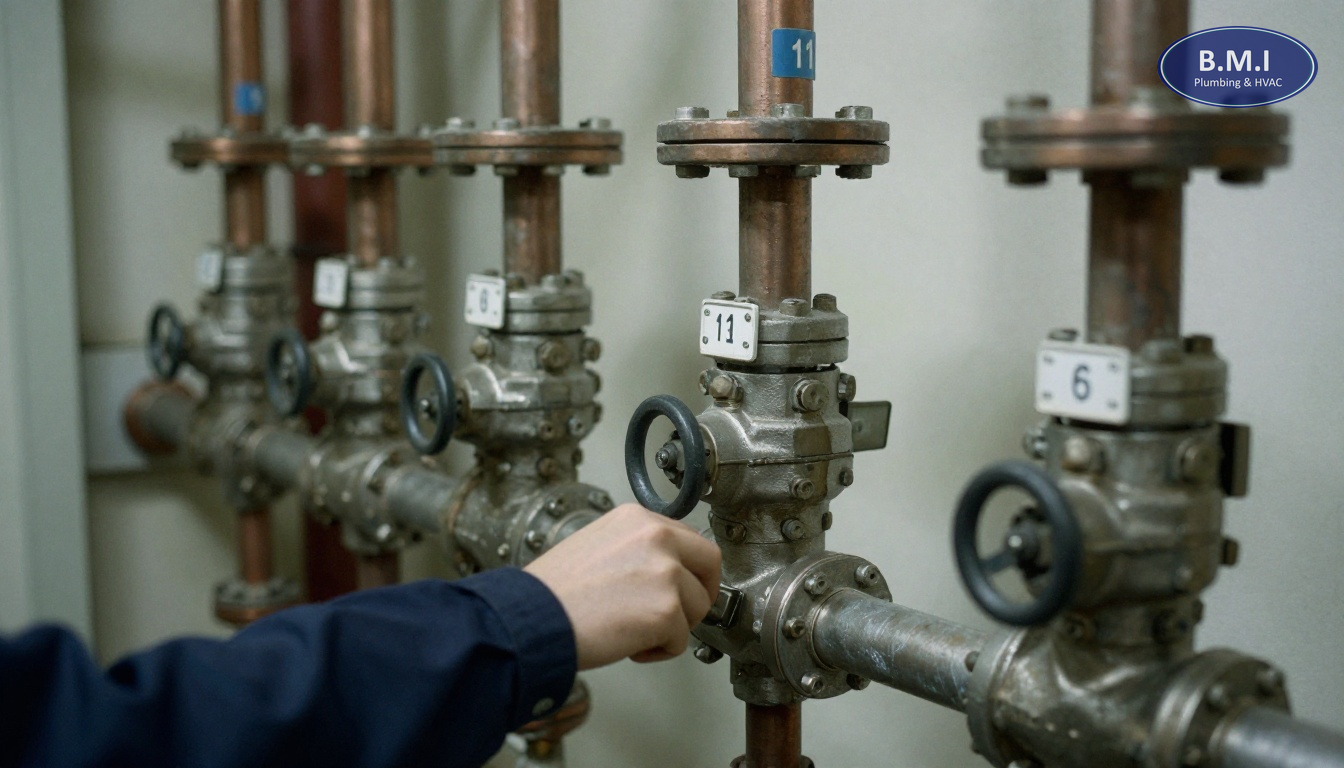
Gate, Ball and Butterfly Valves: What Belongs Where in Toronto Condos
Quick summary: In a condominium building, the right valve is not just a plumbing detail. It determines how much of the building must be shut down during a leak, whether a contractor can isolate one riser instead of 25 floors, and whether a board pays for planned work or emergency damage. In most Toronto condo applications, ball valves are the default choice for smaller isolation points, butterfly valves make sense on larger mains, and old gate valves are often the weak link that turns a manageable repair into a building-wide event.
A common board misconception is that “a valve is a valve.” In practice, the difference between a 2-inch gate valve that has not been exercised in 15 years and a 2-inch full-port ball valve can be the difference between isolating one domestic hot water riser in 10 minutes or shutting down an entire stack line for half a day. That matters in October and November, when many Toronto, North York and Mississauga buildings are finalizing next year’s budgets and trying to line up winter contingency planning.
Start with the real question: what are you trying to isolate?
The best way to decide between gate valve vs ball valve is not by brand preference or what was in the building originally. It is by function. In condominium work, the first question is whether the valve is meant to:
- isolate a single suite or branch line
- isolate a domestic water riser serving stacked suites
- isolate a mechanical room component such as a PRV, booster pump, backflow preventer or hot water tank line
- isolate a large building main where the pipe may be 4 inches, 6 inches or larger
- throttle or balance flow, which is a different job from simple shutoff
That distinction is where many specifications go wrong. A valve that is acceptable on a 3/4-inch suite shutoff is not automatically the right choice on a 6-inch domestic main, and a valve that is physically compact enough for a tight riser closet in a Markham or Vaughan mid-rise may be awkward or unnecessary in a spacious mechanical room. If your contractor cannot explain why a particular valve type belongs in that exact location, ask for a clearer basis before approving the work.
In buildings preparing broader shutdown planning, this is also the point where a valve audit and charting program pays for itself. Many older condos have valves that are mislabeled, painted over, seized, or tied to outdated as-built drawings. The board thinks it has sectional isolation when in reality it has only partial isolation.
Gate valves: why they were used, and why they cause trouble now
Gate valves were installed widely in 1970s and 1980s concrete high-rises across Toronto, East York and Scarborough because they were standard, available in larger sizes, and reasonably effective when new. Inside the body, a wedge or gate drops down into the flow path as the handwheel is turned. In theory that gives low restriction when fully open and solid shutoff when fully closed.
The problem is age and operating conditions. On domestic water systems, especially in older copper and galvanized sections, gate valves often fail in ways that are not obvious from the outside:
- the stem turns but the gate does not travel fully
- the gate binds due to scale or corrosion
- the packing leaks around the stem once the valve is disturbed
- the valve closes 80 or 90 percent, which sounds acceptable until a live line still feeds a repair zone
A non-expert often assumes a valve either works or does not. In the field, many gate valves are “almost closed,” which is exactly the wrong condition for condo work. When you are replacing a PRV, repairing a recirculation line, or opening a riser branch above occupied suites, 10 percent passing flow is enough to flood a work area.
Another issue is that gate valves are not good candidates for casual partial throttling. A half-open gate valve can vibrate, wear unevenly and collect debris at the seating surfaces. In buildings we service along the waterfront, where pressure swings and water demand can be more noticeable in taller towers, it is common to find old gate valves left in partly open positions because someone was trying to “tune” the system years ago. That usually creates a future failure point rather than a solution.
If the building is already planning a valve replacement project, old gate valves should be prioritized where they protect critical equipment or sectional shutdowns. A failed decorative valve in a low-risk branch is one thing. A failed 4-inch gate valve upstream of the domestic hot water plant is something else.
Ball valves: the modern default for most condo isolation points
For most condo valve types used on domestic water, a full-port ball valve is the most reliable choice up to about 2 inches, and sometimes 2 1/2 inches depending on the application. A ball valve uses a drilled sphere that rotates 90 degrees between open and closed positions. That quarter-turn action is more than a convenience. It gives the operator a clear visual indication of status, which matters during shutdowns at 6 a.m. when multiple trades are waiting.
The practical advantages in condo buildings are straightforward:
- fast isolation during leaks or planned shutdowns
- full-port flow path with minimal pressure loss compared with reduced-port designs
- better resistance to seizing when exercised periodically
- easier operation in tight mechanical spaces and riser closets
- clearer open/closed position than a handwheel valve with an uncertain stem travel
On a domestic cold or hot water riser serving 20 to 35 floors, the difference between a stiff multi-turn gate valve and a quarter-turn ball valve is not just labour time. It affects confidence. If the valve handle is parallel to the pipe, it is open; perpendicular, it is closed. That sounds basic, but on a busy shutdown with notices out to 300 units, clarity reduces mistakes.
Not all ball valves are equal. In condominium service work, the specification should distinguish between:
- full-port vs reduced-port
- threaded, press, solder, flanged or grooved ends
- brass, bronze or stainless trim depending on service
- domestic water rated vs hydronic-only products
A common mistake in early-1990s North York high-rises is replacing a failed valve with a lower-cost reduced-port ball valve simply because the line size matches. On a 1 1/2-inch domestic recirculation or branch line, that smaller internal opening can create more pressure drop than expected, particularly where the building already has marginal balancing. If the valve is being installed on a key domestic line, ask whether it is full-port.
Where building water pressure is part of the problem, valve work often overlaps with PRV maintenance and replacement. It is not unusual to discover during a PRV replacement that the upstream or downstream isolation valves are the real obstacle because they no longer hold.
Butterfly valves: where they make sense, and where they do not
Butterfly valves are often the right answer on larger mains, but they are also the valve type most likely to be misapplied by people who only know them as “the cheaper big valve.” A butterfly valve uses a disc rotating within the pipe. On 3-inch, 4-inch, 6-inch and larger lines, that design saves space, weight and often cost compared with a large ball valve.
In Toronto, Etobicoke and Vaughan high-rise mechanical rooms, butterfly valves are commonly appropriate for:
- domestic water mains
- heating and chilled water loops
- make-up water piping
- some service room and garage ceiling mains
- systems using flanged or Victaulic grooved connections
Their strengths are real. They are compact, quick to operate, and easier to fit where pipe spacing is tight. A 6-inch butterfly valve can often be installed in a space where a comparable gate valve replacement would be cumbersome. On larger projects, that can shorten shutdown windows.
But there are trade-offs. The disc remains in the flow path even when open, so there is some obstruction. In most building systems that is acceptable, but it is still a design consideration. More importantly, not every butterfly valve provides the same shutoff performance. Seat quality, pressure rating, and intended service matter. If the building needs dependable isolation on a critical domestic water main, the exact valve model and seat material should be reviewed, not assumed.
This becomes especially relevant when planning broader capital work such as domestic water riser replacement or full building re-piping. The valve choice should support future maintenance, not just today’s installation.
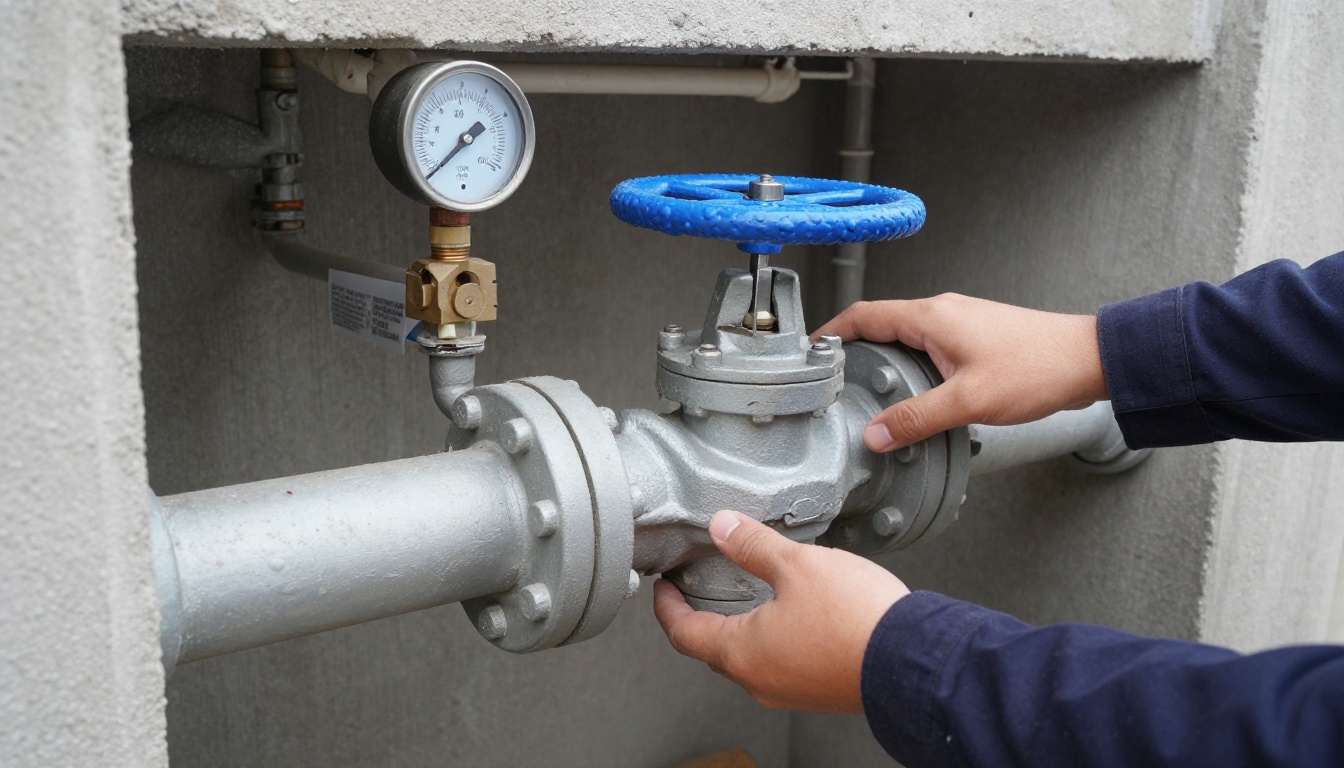
What managers and residents actually notice when the wrong valve is in the wrong place
Residents do not report “valve selection issues.” They report symptoms. The manager’s job is to connect those symptoms to the building system.
Typical examples include:
- a contractor cannot stop flow to one leaking fixture branch because the local isolation valve passes water
- a riser repair that was supposed to affect 8 suites turns into a shutdown for 60 or 100 suites
- domestic hot water work takes longer because old gate valves must be capped or lines frozen as a workaround
- a PRV station cannot be serviced safely because upstream isolation is unreliable
- a building operator closes a handwheel valve fully, but pressure downstream only drops slowly and never reaches zero
One of the least understood warning signs is this: if a planned shutdown repeatedly requires shutting down more of the building than the notice originally stated, suspect valve failure before blaming the contractor. In a well-sectioned condominium, most routine repairs should be isolatable by area, stack, or piece of equipment. When every job seems to become a building-wide event, the valve map is usually part of the problem.
Another useful clue appears in suite-level complaints. If several vertically stacked units in a 1980s tower lose hot water service during minor mechanical work, that often points to a riser isolation issue, not a fixture issue. In those cases, in-suite plumbing repairs are not the root answer; the common element isolation strategy is.
What a proper valve assessment should include
A board should not approve a six-figure valve replacement program based on “valves are old.” Age matters, but evidence matters more. A proper assessment should include at least four things.
1. A physical inventory
This means line size, service type, location, existing valve type, accessibility, and whether the valve is common element or tied to suite responsibility. In condominiums, that last point matters because the declaration may assign some in-suite shutoffs to the corporation and some fixture stops to the owner.
2. Operability testing
A valve that looks intact may still fail under load. Testing should record whether the valve:
- opens and closes smoothly
- leaks at the stem or body
- fully isolates or only partially throttles
- can be safely exercised without risking immediate failure
This is why scheduled maintenance programs matter. The first time a 30-year-old valve is touched should not be during an emergency.
3. Shutdown logic
The report should show what each valve actually isolates. This is often more valuable than the replacement recommendation itself. On a 300-unit building, knowing that one failed 3-inch valve forces shutdown of three riser banks gives the board a defensible reason to prioritize it.
4. Written recommendations with sequencing
Not every bad valve needs to be replaced this year. The useful report separates:
- critical valves that affect life-safety-adjacent operations or flood exposure
- important valves that affect project efficiency and resident disruption
- low-priority valves that can wait for related work
If the contractor recommends replacing every old gate valve in one phase, ask what can be bundled with other work such as PRV station upgrades, backflow prevention testing and service, or riser renewal.
A practical decision framework: gate, ball or butterfly?
Below is the simplified version boards can actually use.
| Location / Application | Typical Size | Usually Best Choice | Why |
|---|---|---|---|
| Suite shutoff, fixture branch, local mechanical branch | 1/2" to 1" | Ball valve | Quarter-turn, compact, reliable, clear position indication |
| Riser branch isolation, PRV bypass, recirc line isolation | 1" to 2" | Full-port ball valve | Better shutoff confidence, low pressure loss, easier maintenance |
| Larger domestic water mains | 2 1/2" to 6"+ | Butterfly valve in many cases | Compact, cost-effective, practical on flanged/grooved mains |
| Older existing main where replacement must match layout | 2" to 6"+ | Depends on system | Sometimes gate-to-gate is unavoidable, but often not ideal |
| Throttling / balancing application | Varies | Usually not a standard gate or ball valve | Use the correct balancing/control valve, not an isolation valve for throttling |
The key point is that valve type should follow function, service and maintainability. Boards get into trouble when they accept a one-size-fits-all answer.
Repair versus replacement: when is replacement the honest answer?
Valve repair is sometimes possible, but in condo plumbing it is often a false economy on older isolation valves. Repacking a leaking stem on a 25-year-old gate valve may stop visible leakage, but it does not restore dependable shutoff. If the valve is on a non-critical line and replacement requires major demolition, a temporary repair can be sensible. If the valve protects a riser, PRV station or main domestic branch, replacement is usually the more defensible decision.
As a rule of thumb:
- replace valves that do not isolate fully on critical lines
- replace valves that are seized, broken, heavily corroded, or inaccessible for safe operation
- consider repair only where the valve body is sound, the service is low-risk, and a future replacement is already scheduled
- bundle replacement with related capital work whenever shutdown logistics overlap
In fall budget season, this is where reserve fund planning comes in. Under the Condominium Act, boards are expected to plan major common element expenditures responsibly, and valve infrastructure often falls into the grey area between “maintenance” and “capital renewal.” If multiple main and sectional valves are beyond useful life, that should be reflected in reserve planning rather than handled indefinitely as reactive repairs.
For buildings already facing broader piping age issues, the smarter comparison may not be valve repair versus valve replacement, but valve replacement versus a coordinated project solutions program that includes risers, sectional valves and access sequencing together.
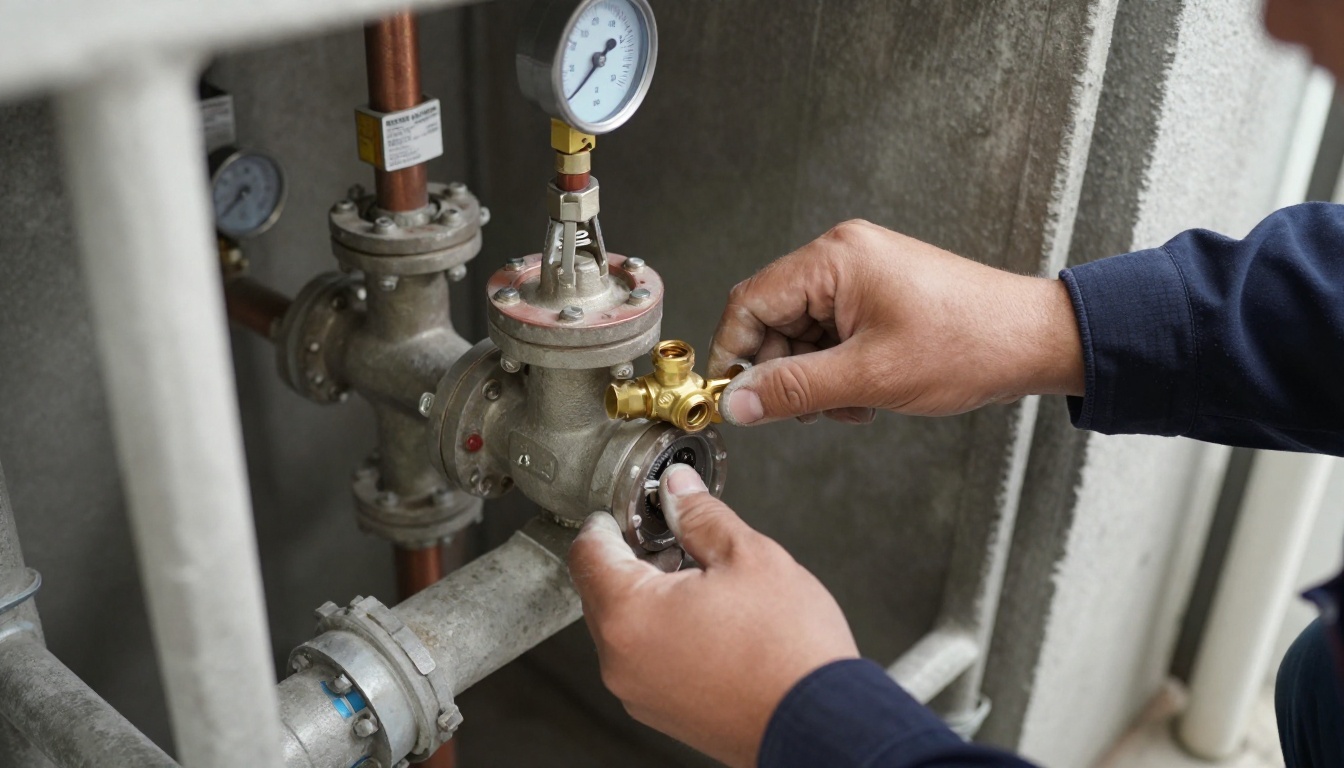
Toronto condo cost ranges: what boards should budget
These are Toronto-market planning ranges, not fixed prices. Access, shutdown complexity, asbestos controls, after-hours work, ceiling openings, and restoration can move numbers materially.
Typical valve replacement budget ranges
| Scope | Typical Range | Notes |
|---|---|---|
| 1/2" to 1" suite or branch ball valve | $450-$900 each | Usually straightforward if local isolation exists |
| 1 1/4" to 2" mechanical room full-port ball valve | $900-$2,000 each | Often affected by shutdown complexity more than material cost |
| 2 1/2" to 4" butterfly valve replacement | $2,500-$5,500 each | Grooved/flanged layout and access matter |
| 4" to 6" main valve replacement | $4,000-$8,000+ each | Can increase significantly with overnight shutdowns or bypass needs |
| Building-wide valve audit and charting | $3,500-$15,000+ | Depends on building size, number of valves and documentation quality |
| Targeted common-area valve renewal program | $15,000-$75,000+ | Often phased over 1-3 budget cycles |
Three cost realities boards often miss:
- The valve body is not the main cost driver on large work. Labour, isolation planning, draining, refilling, testing and resident coordination are often bigger factors.
- Drywall and ceiling restoration can exceed plumbing labour on in-suite or corridor branch work if access was not planned properly.
- Replacing one failed valve in isolation is often less efficient than replacing several in the same shutdown window.
If your board wants a defensible number before year-end, ask for a site review rather than a phone estimate. BMI typically attends the building before quoting because line size, access and actual shutdown logic matter too much to guess.
Timelines, notices and shutdown logistics
Valve work is usually sold as a short job, but the planning around it is what determines whether residents call it smooth or chaotic.
Typical timelines in occupied condo buildings:
- single branch or suite valve: often 1 to 3 hours on site once isolation is confirmed
- 1 1/2" to 2" mechanical room valve: often half a day to a full day including drain-down and refill
- 3" to 6" main valve replacement: commonly a full day, sometimes staged over two visits
- multi-valve renewal program: 2 to 10 working days depending on building size and shutdown sequencing
For resident communication, practical notice periods are usually:
- 48 to 72 hours minimum for routine planned shutdowns affecting suites
- 5 to 7 days where access to multiple occupied units is required
- longer if elderly residents, medical needs or commercial units are affected
A common mistake in Toronto high-rises is forgetting that valve replacement often triggers secondary tasks:
- draining and repressurizing domestic hot water loops
- air purging on recirculation lines
- booster pump restart checks
- leak observation after system refill
- verification that no old gate valve downstream has started leaking from stem packing after being disturbed
That is also why pairing valve work with a camera inspection or related repairs and service review can be worthwhile if the building is already opening access or mobilizing after-hours staff.
What happens if the board defers it
Some valve issues can wait. Many cannot. The risk is not always today’s leak; it is tomorrow’s inability to isolate.
The typical consequences of deferral are:
- larger shutdown areas during routine repairs
- longer resident outages
- higher emergency call costs after hours
- inability to service PRVs, booster pumps or backflow assemblies safely
- greater water damage if a winter leak cannot be isolated quickly
- more difficult insurance conversations when a known failed isolation point was left in service
In fall, this matters more because winter pressure swings and heating season occupancy patterns tend to expose weak points. Buildings in Toronto and Richmond Hill often see more domestic water complaints once seasonal demand patterns change and older valve stations are disturbed for related mechanical work. If the only way to isolate a burst branch in January is to shut down a whole riser bank because a sectional valve has been passing for years, the board will wish it had handled the valve in October.
There is also a governance point. A board does not need to replace every old component immediately, but it does need a reasoned record of why work was deferred. A written assessment, phased plan and budget note are much easier to defend than “we hoped it would hold.”
Common element or in-suite responsibility?
This is one of the most important condo-specific questions because it drives who pays.
In many GTA condominiums:
- main isolation valves, riser valves, mechanical room valves and sectional valves are common element responsibilities
- in-suite fixture shutoffs may be owner responsibility, but not always
- valves added during owner renovations may fall under a Section 98 agreement or alteration record, depending on the declaration and the nature of the work
There is no universal rule. The declaration governs. But from a practical standpoint, if failure of a valve affects multiple units or limits the corporation’s ability to isolate common systems, the corporation usually has a strong interest in dealing with it quickly whether or not a chargeback is later considered.
For managers handling owner questions, the plain-language explanation is often this: if the valve serves only your sink, it may be yours; if the valve controls a riser, a corridor branch, a PRV station or anything serving multiple units, it is almost certainly part of the building system.
FAQs
Are gate valves obsolete in condominium buildings?
Not entirely, but they are rarely the best choice for routine isolation in a condo today. Older 1970s to early-1990s Toronto and Scarborough buildings often still have 2-inch to 6-inch gate valves on domestic water and hydronic lines, but many no longer close fully because the wedge is worn, the stem is bent, or mineral buildup has accumulated in the body. For most replacement work, full-port ball valves up to about 2 inches and butterfly valves on larger lines are usually more practical because they quarter-turn, indicate position clearly, and are easier to exercise under a maintenance program.
When should a condo use a ball valve instead of a gate valve?
In most multi-residential plumbing systems, ball valves are the preferred choice for 1/2-inch to 2-inch branch lines, riser isolations, suite shutoffs, PRV bypasses and mechanical room sectional valves. A full-port brass or bronze ball valve gives a straight-through opening with minimal pressure drop, and in Toronto domestic water systems running roughly 55 to 80 psi downstream of a PRV, that matters more than many boards realize. If the valve will be opened and closed periodically for maintenance or emergency isolation, a ball valve is usually the better long-term choice.
Where do butterfly valves belong in a condo building?
Butterfly valves are generally most appropriate on larger piping where a ball valve becomes expensive, heavy or physically awkward, typically from 2 1/2 inches upward and especially on 4-inch, 6-inch and 8-inch mains. In high-rises in Etobicoke, Vaughan and Mississauga, they are commonly used on domestic water mains, heating loops, cooling water, and some garage or service-room piping because they install in tighter spaces and pair well with grooved or flanged systems. They are not automatically the right choice everywhere, though, because some applications require bubble-tight shutoff, and some lower-cost butterfly valves do not isolate as cleanly as a good full-port ball valve.
How much does valve replacement usually cost in a Toronto condo?
As a broad Toronto-market estimate, a straightforward in-suite or small branch ball valve replacement may run about $450 to $900 per valve, while a 1 1/2-inch to 2-inch mechanical room ball valve often lands around $900 to $2,000 depending on access, shutdown complexity and whether insulation or wall repairs are involved. Larger 3-inch to 6-inch butterfly or gate valve replacements can range from roughly $2,500 to $8,000 per valve, and major main isolation work can exceed that once after-hours shutdowns, bypass planning, traffic protection, asbestos protocols or multiple trades are added. The labour to isolate a live building safely is often a bigger cost driver than the valve body itself.
How can a manager tell whether a valve problem is local or building-wide?
The fastest clue is what still works after an attempted isolation. If one suite fixture keeps running after its local stop is closed, that is usually an in-suite valve issue; if an entire riser or stack cannot be isolated from the corridor or mechanical room, the problem is likely a common-element sectional valve. A proper diagnosis should include a valve chart, tag verification, and where needed a valve audit or pressure test so the board is not approving replacements based on assumptions.
Can a valve replacement wait until next year?
Sometimes yes, but only if the valve still operates, still seals adequately for its purpose, and the building has a workable backup isolation plan. In budget season, a common mistake is deferring a failed 4-inch main valve because it is not leaking today, then discovering during a winter pipe break that the only way to isolate the line is to shut down half the building. If a valve protects a PRV station, booster pump set, riser bank or domestic hot water loop, deferral should be weighed against emergency shutdown risk, insurance deductible exposure and resident disruption, not just the current leak status.
What boards should do this fall
If your building still relies heavily on original gate valves, October and November are the right months to get clarity before winter. Not every valve needs immediate replacement, but every building should know which valves are critical, which ones actually isolate, and which shutdowns would become much larger than expected if a repair had to happen in January.
A practical fall plan looks like this:
- Review valve-related service history from the past 24 months.
- Identify repeated shutdown problems where isolation was incomplete or broader than planned.
- Prioritize critical common-element valves around PRVs, risers, hot water recirculation and domestic mains.
- Bundle valve work with other building systems work where possible, especially PRV maintenance, backflow prevention service, or larger project solutions.
- Get a site-based budget number in front of the board before year-end.
If your building has not had a recent valve review, or if routine repairs keep turning into larger shutdowns than they should, BMI can attend the site, assess the isolation layout, and provide a practical recommendation rather than a generic replacement list. For urgent failures, 24/7 emergency plumbing response is available, and for planned work BMI also handles scheduled programs such as valve audits, valve replacement, and broader building system maintenance. You can also review related building-system articles on the BMI blog or examples of completed work in the project portfolio.
Contact BMI
- Contact BMI
- Phone: (416) 845-3756
- Emergency: (416) 845-3756, answered 24 hours a day
- Email: info@brial.ca
More on condominium plumbing
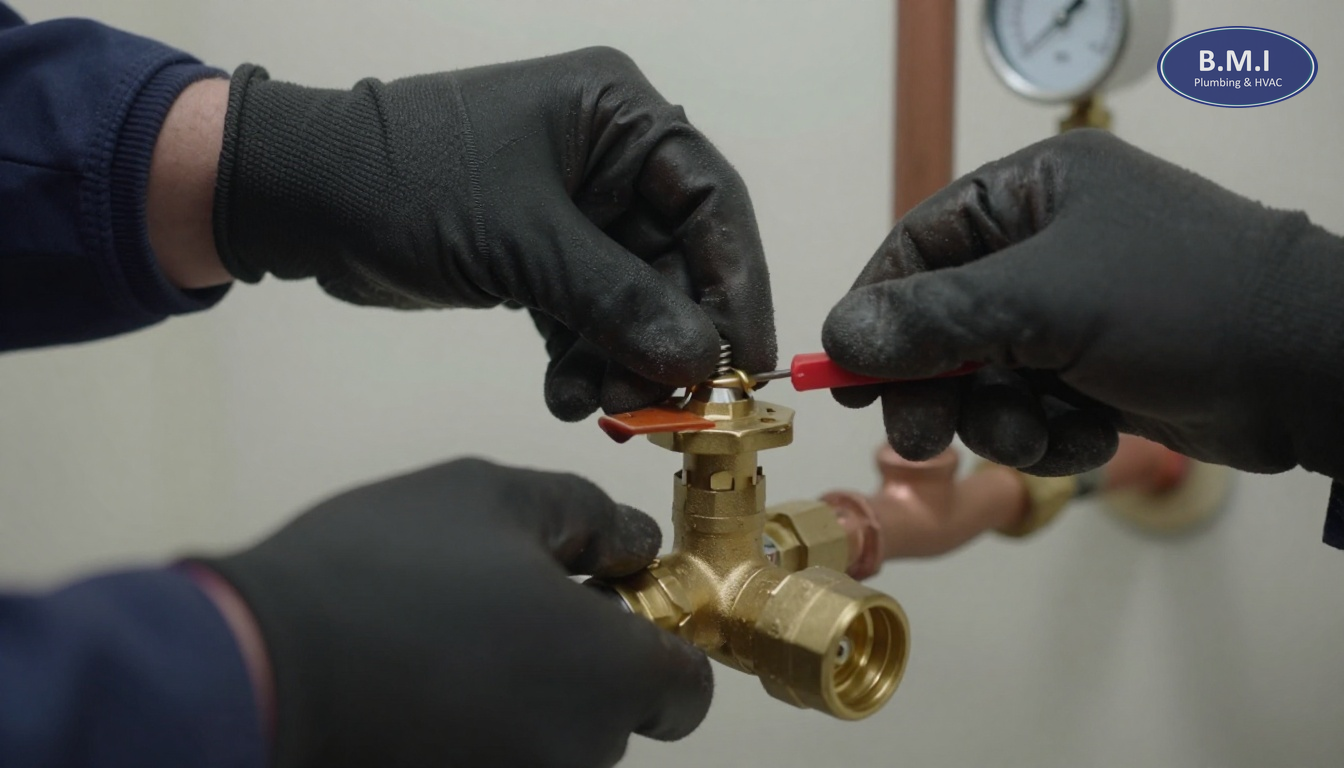
How Pressure Reducing Valves Work in a Toronto High-Rise
Understand pressure reducing valve operation in a condo high-rise, with Toronto cost ranges, failure signs, inspection …
Cast Iron Stack Replacement in Toronto Condos at 50 Years
When aging cast iron stacks need cleaning, lining or replacement in Toronto condos, here is how to diagnose, budget and …
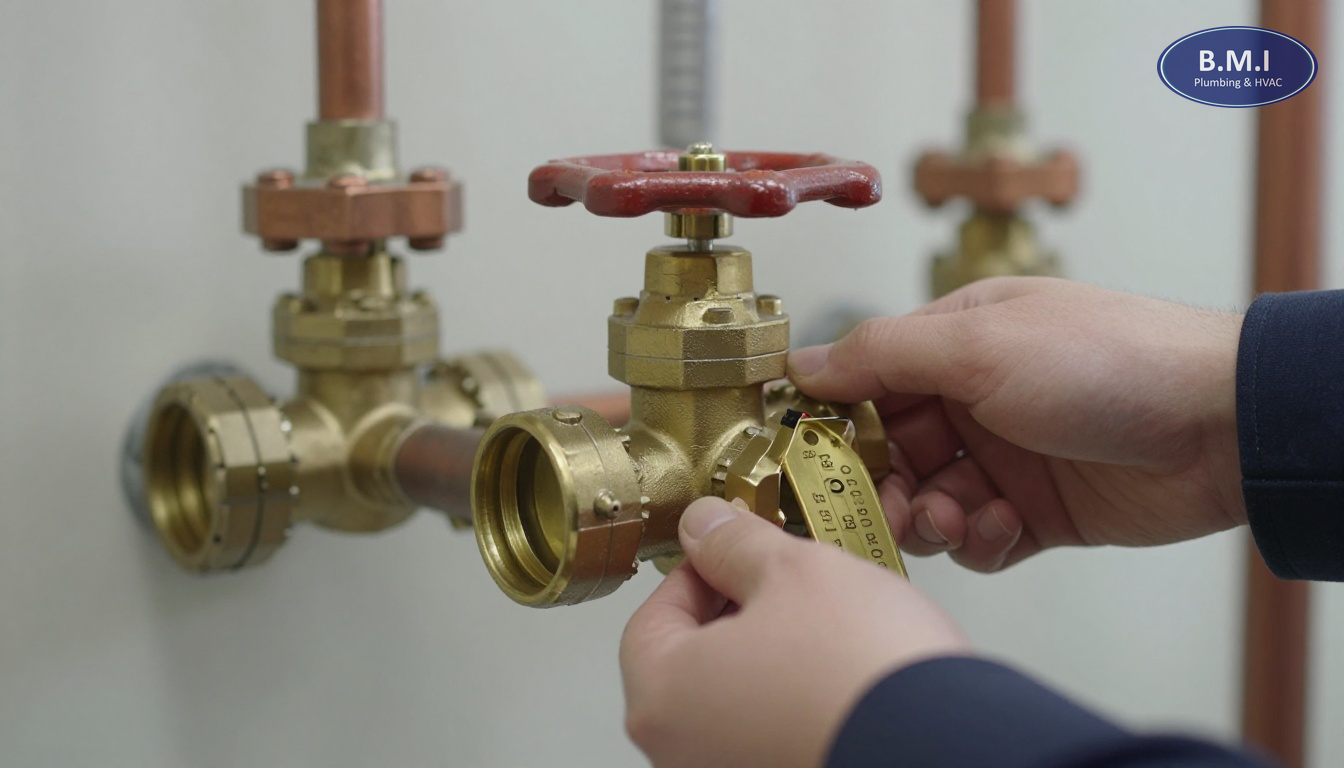
Valve Tagging and Valve Charts for Toronto Condos
Valve tagging and a usable valve chart help Toronto condos isolate leaks faster, avoid full-building shutdowns, and …
Need a plumber in your building?
BMI services roughly 200 condominium and multi-residential buildings across Toronto and the GTA. Emergencies are answered at any hour.