Grease Interceptor Condo Guide for Toronto Buildings
A practical Toronto guide to grease interceptor condo issues, commercial tenant plumbing risk, costs, maintenance, and board decisions.
Grease Interceptor Condo Guide for Toronto Buildings
Quick summary: In a mixed-use condominium with a ground-floor restaurant, the grease interceptor is not just the tenant’s problem. If it is undersized, poorly maintained, or incorrectly connected, it can foul common-element sanitary piping, trigger repeated emergency calls, and create a chargeback dispute that is far more expensive than routine maintenance.
October is when Toronto boards should be asking for records, because holiday cooking volume arrives before year-end budgets are approved. If your building has food service at grade and you do not know interceptor size, pumping frequency, downstream pipe condition, and who pays when the line blocks, you do not yet have control of the risk.
A common misconception in Toronto mixed-use buildings is that a restaurant grease issue stays inside the restaurant. In reality, once fats, oils, and grease get past the interceptor, they cool and plate out in downstream piping that the restaurant may not own. In 1970s and 1980s concrete towers in Toronto, North York, Mississauga, and Vaughan, that downstream piping is often cast iron under slab or in ceiling space, and a grease film only 1/4 inch thick around the wall of a 3-inch line reduces carrying capacity much more than most boards expect.
Why grease interceptor problems become condo problems
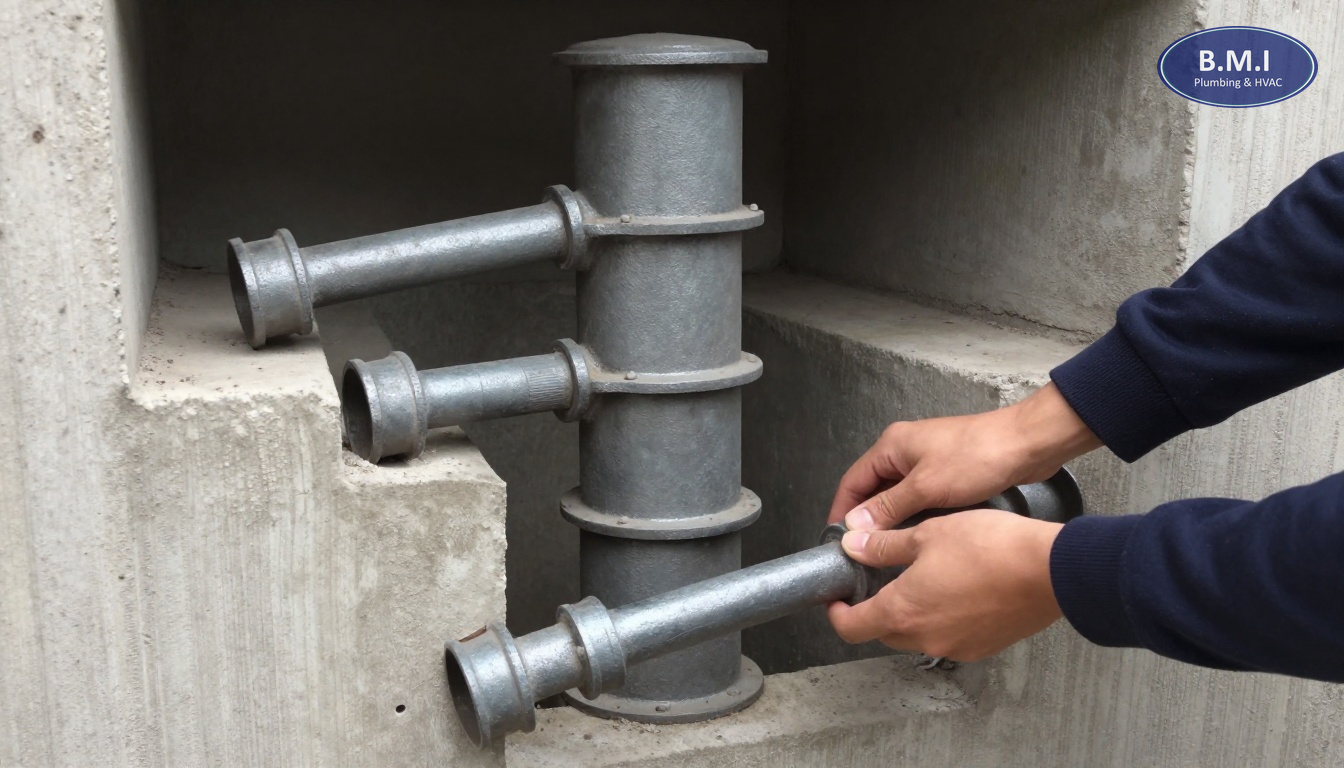
A grease interceptor condo issue usually starts with a tenant-space device that was installed to protect the building’s sanitary system and the municipal sewer from fats, oils, and grease. The trouble is that these systems are often treated as a restaurant housekeeping item when they should be managed as part of the building’s plumbing risk register, the same way boards manage PRVs, sectional valves, and backflow devices under a broader maintenance program.
In older mixed-use buildings across Toronto and Scarborough, we routinely see one of four conditions:
- The interceptor is present but undersized for the current food operation.
- The interceptor is being pumped, but not often enough for actual kitchen volume.
- The interceptor was bypassed, modified, or connected incorrectly during a fit-out.
- The interceptor works, but the downstream branch and stack are already lined with years of hardened grease.
That fourth condition matters because an interceptor does not clean old pipe. If the branch from the restaurant to the main sanitary line is already restricted, pumping the interceptor may reduce odour without solving backups. This is where a camera inspection gives a board something defensible: footage showing whether the issue is maintenance, pipe condition, or both.
From a responsibility standpoint, this is where condominium managers get trapped. The tenant may own or lease the restaurant plumbing up to a point, but the building corporation usually owns the common-element sanitary mains, stacks, and under-slab piping. If grease migrates beyond the tenant’s dedicated system, the event quickly becomes a commercial tenant plumbing issue with common-element consequences, and the declaration plus any indemnity or chargeback language becomes critical.
What is actually happening inside the piping
Grease does not usually block a line all at once. In a restaurant branch, hot effluent leaves sinks, dishwashers, and prep areas carrying suspended fats and food solids. If the interceptor has enough retention time, those materials separate. If it does not, warm grease moves downstream, cools, and sticks to the rough interior wall of cast iron, especially at offsets, wyes, and horizontal runs with marginal slope.
A non-expert often assumes the line is “plugged by grease.” The field reality is usually more specific:
- 3-inch cast iron branch lines are the most common trouble point.
- 4-inch no-hub cast iron performs better but still accumulates grease if velocity is low.
- Long horizontal runs above retail ceilings are worse than short direct runs.
- Dishwashers can emulsify grease enough to push it through a poorly sized interceptor, then it re-solidifies downstream.
- A branch that is 50% restricted by diameter has lost much more than 50% of its flow area.
That last point is worth quantifying. A nominal 3-inch line has an internal area of about 7.1 square inches. If grease build-up reduces effective diameter to 2 inches, area drops to about 3.1 square inches. That is roughly a 56% loss of carrying area, which is why a line can seem “mostly open” on a quick snake but still fail during dinner service.
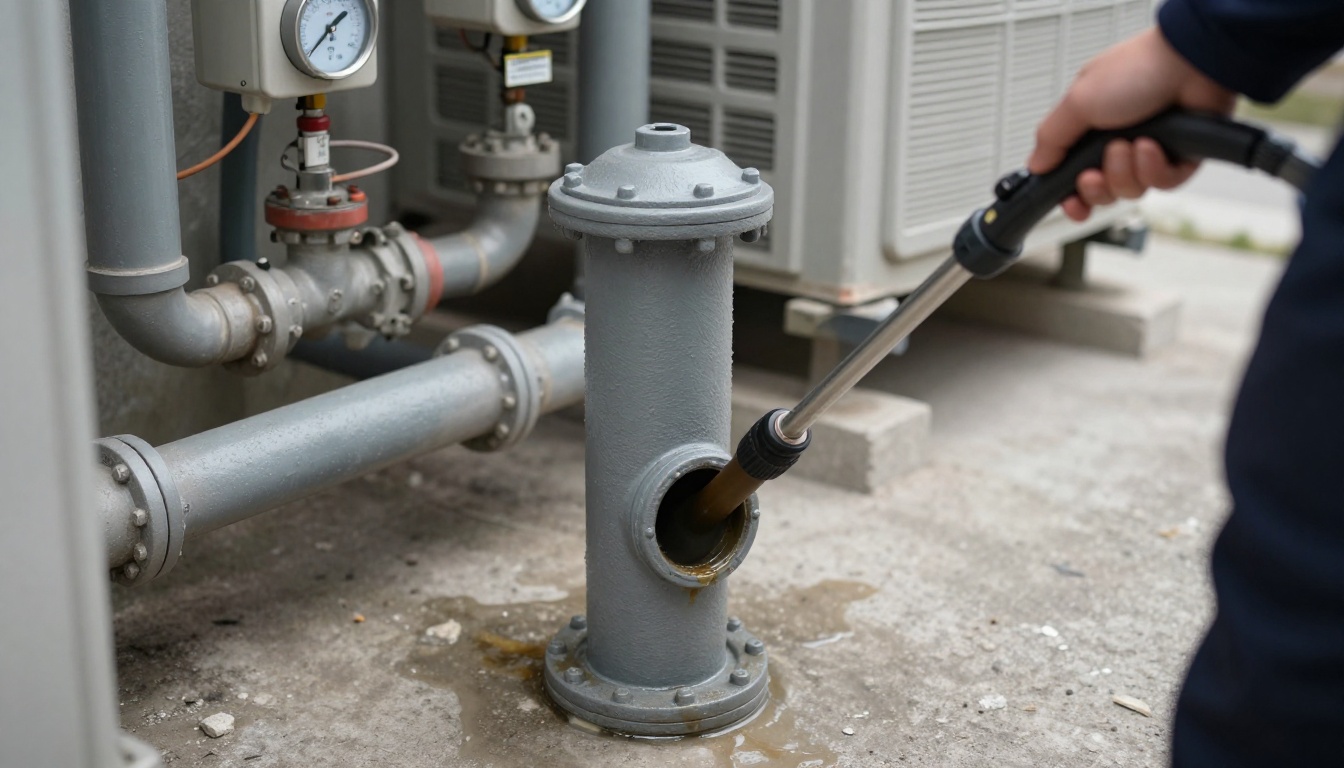
This is also why drain cleaning and kitchen stack cleaning are different conversations. Snaking can punch a path through soft blockage. It does not reliably restore full bore in grease-lined pipe. In restaurant-related sanitary lines, high-pressure jetting with the right nozzle and downstream recovery plan is usually the proper cleaning method, followed by camera confirmation.
How the problem presents in a mixed-use building
Managers rarely get the first call as “our grease interceptor is failing.” They get one of these reports instead:
- The restaurant says the three-compartment sink backs up during peak service.
- A retail floor drain near the kitchen smells sour even after cleaning.
- The building has had two or three emergency drain calls in six months at the same cleanout.
- Residential owners above report no issue, but the ground-floor commercial unit floods.
- Sewage appears at a lower cleanout cap when the dishwasher is running.
- Pest or odour complaints start in adjacent service corridors.
One useful diagnostic clue is timing. If the backup occurs only during lunch or dinner rush and clears later, that points to a capacity problem in the interceptor or branch, not a random obstruction. Another clue is vertical distribution. If suites on upper floors drain normally while the problem is isolated to the restaurant and immediate downstream cleanout, that is usually not a stack-wide blockage. Conversely, if the restaurant triggers backup in a lower residential suite or common-area floor drain, the issue may already involve common-element piping.
In waterfront Toronto towers and mixed-use podiums in Etobicoke and Markham, we also see a design mismatch in post-2010 buildings: attractive retail was added at grade, but the sanitary routing has long horizontal runs, multiple offsets, and limited cleanout access behind finished ceilings. That makes a simple maintenance failure much more expensive to diagnose because ceiling access, after-hours work, and tenant coordination enter the equation immediately.
If a building has not documented cleanout locations, now is the time to do it. A valve audit mindset applies here too: if your operator cannot tell a drain contractor where the upstream and downstream access points are, you lose time and often money during an after-hours blockage.
What a proper inspection should include
For boards and managers, the main mistake is accepting a verbal diagnosis after an emergency call. “We cleared it” is not enough if the same line has blocked twice. In a building with a commercial kitchen, a proper evidence package should include:
1. Interceptor details
You need the interceptor type, approximate volume, location, access method, and service history. Interior hydromechanical interceptors and larger gravity units behave differently, and pumping frequency that works for one restaurant concept can fail badly for another. A coffee shop with light reheating is not the same load as a full fryer-and-dishwasher operation.
2. Camera footage of downstream piping
If the line has recurring issues, insist on a camera pipe inspection after cleaning, not before only. Before-cleaning footage shows blockage; after-cleaning footage shows whether the pipe is actually restorable. In older cast iron, the distinction between grease accumulation and pipe wall scaling matters because one supports maintenance and the other may support replacement.
3. Written findings with distances and pipe sizes
A useful report should identify whether the affected line is 3-inch, 4-inch, or larger; whether it is cast iron, no-hub, ABS, or PVC; the estimated distance from access point to obstruction; and whether the issue is at a fitting, offset, sag, or transition. If a contractor cannot tell you where the restriction is, they have not given you enough to budget.
4. Responsibility map
The manager should know where tenant plumbing ends and common element begins. If there is any ambiguity, involve management and legal review early. This is especially important when the corporation intends to charge back emergency repairs and service costs or require a tenant to upgrade equipment.
5. Maintenance records and manifests
If the interceptor is being pumped, there should be dates, volumes, and disposal documentation. The absence of records is itself evidence of weak control. In practice, a tenant that cannot produce six to twelve months of service history is often also unable to prove compliance when an insurer or board asks questions after a backup.
Repair, maintenance, or replacement: a decision framework
Not every grease issue requires capital work. Some buildings genuinely need a better maintenance schedule, and some need a redesign. The right decision depends on recurrence, pipe condition, and operating load.
Situation A: First blockage, no history, pipe cleans well
If the branch line is cleaned, camera footage shows near-full bore, and the interceptor has simply been neglected, the answer may be tighter maintenance plus a scheduled kitchen stack cleaning or branch jetting program. In many buildings, this can wait for a planned service window rather than becoming a capital project.
Situation B: Repeated backups, interceptor records are poor, pipe walls are grease-lined
This is the classic mixed-use condo problem. Start with cleaning, camera confirmation, and a written pumping schedule. If the branch repeatedly loads up inside 3 to 12 months, the building should consider whether the interceptor is undersized or whether the tenant’s operation has changed from the original fit-out assumptions. A sushi counter, burger concept, and commissary-style prep kitchen do not impose the same grease load.
Situation C: Pipe is deteriorated or structurally compromised
If the camera shows heavy scaling, channel rot, offsets, or a belly in the line, maintenance alone will not hold. At that point the discussion shifts toward partial replacement, rerouting, or broader project solutions work. In older Toronto and York buildings, the hidden cost is often not the pipe itself but access through finished retail ceilings, slab penetrations, odour control, and coordination with business hours.
Situation D: Interceptor is too small or poorly located
This is common when a commercial space changes use without a plumbing redesign. The original interceptor may have been acceptable for light food prep and completely inadequate for a full commercial kitchen. In that case, replacing downstream pipe without addressing interceptor sizing just resets the clock.
A common board mistake is to ask, “Can we just clean it every few months?” Sometimes yes. But if the line needs emergency cleaning three or four times a year, that is not a maintenance strategy; it is deferred redesign.
Cost ranges Toronto boards should budget around
These are Toronto-market estimates and vary by building, access, tenant downtime constraints, and whether work is done during business hours or after hours. They are not BMI prices, but they are realistic planning numbers for 2026 budgeting.
| Item | Typical GTA range | Notes |
|---|---|---|
| Emergency drain cleaning at affected branch or cleanout | $350-$950 | Straightforward access, no major after-hours complications |
| High-pressure jetting of restaurant branch line | $700-$2,000 | Depends on line length, grease severity, containment, and access |
| CCTV camera inspection with report | $450-$1,200 | More if multiple access points or long runs are involved |
| Grease interceptor pumping/service visit | $350-$900 | Interior units at lower end; larger systems higher |
| Repeated annual maintenance program for affected line | $1,500-$6,000/year | Depends on frequency and number of service points |
| Small interior interceptor replacement | $8,000-$25,000 | Excludes major slab or ventilation changes |
| Larger interceptor upgrade with construction impacts | $30,000-$100,000+ | Common where slab cutting or major rerouting is required |
| Local sanitary branch replacement | $5,000-$25,000 | Ceiling access, material, and restoration drive cost |
The number boards often miss is the indirect cost of one bad event. A sewage backup affecting a restaurant, service corridor, and elevator lobby can easily create several trades, cleaning, security, and management time charges in a single night, even before discussing deductibles or tenant claims. In some corporations, two emergency incidents in a year cost more than implementing a proper maintenance program and annual camera verification.
Another practical budgeting point for fall: if a board is preparing next year’s numbers, it is better to carry a line item for inspection and scheduled cleaning now than to explain an unbudgeted emergency in January after holiday kitchen loading.
Scheduling, access, and the realities of occupied buildings
In condominium work, the plumbing is usually the easy part. Access is what makes the job succeed or fail.
A proper grease-interceptor-related maintenance or repair plan should account for:
- Tenant operating hours. Many restaurants cannot shut sinks and dishwashers down during lunch or dinner service.
- Entry notice and coordination. Even where the tenant controls the space, the corporation may need documented access arrangements if common-element piping is involved.
- Ceiling access and restoration. In finished retail areas, opening gypsum bulkheads can cost more than the pipe repair itself.
- Odour and sanitation controls. Work in food spaces often requires tighter housekeeping and containment than a normal service call.
- Elevator protection and waste removal routes. This matters if pumping or component replacement requires moving equipment through residential common areas.
For simple maintenance, a crew may clear and camera a line in 2 to 4 hours if access is good. A more involved branch jetting and verification visit may take half a day to a full day. Interceptor replacement can range from 1 day for a compact accessible unit to several days or multiple phases where carpentry, slab work, electrical isolation, and restaurant shutdown windows are involved.
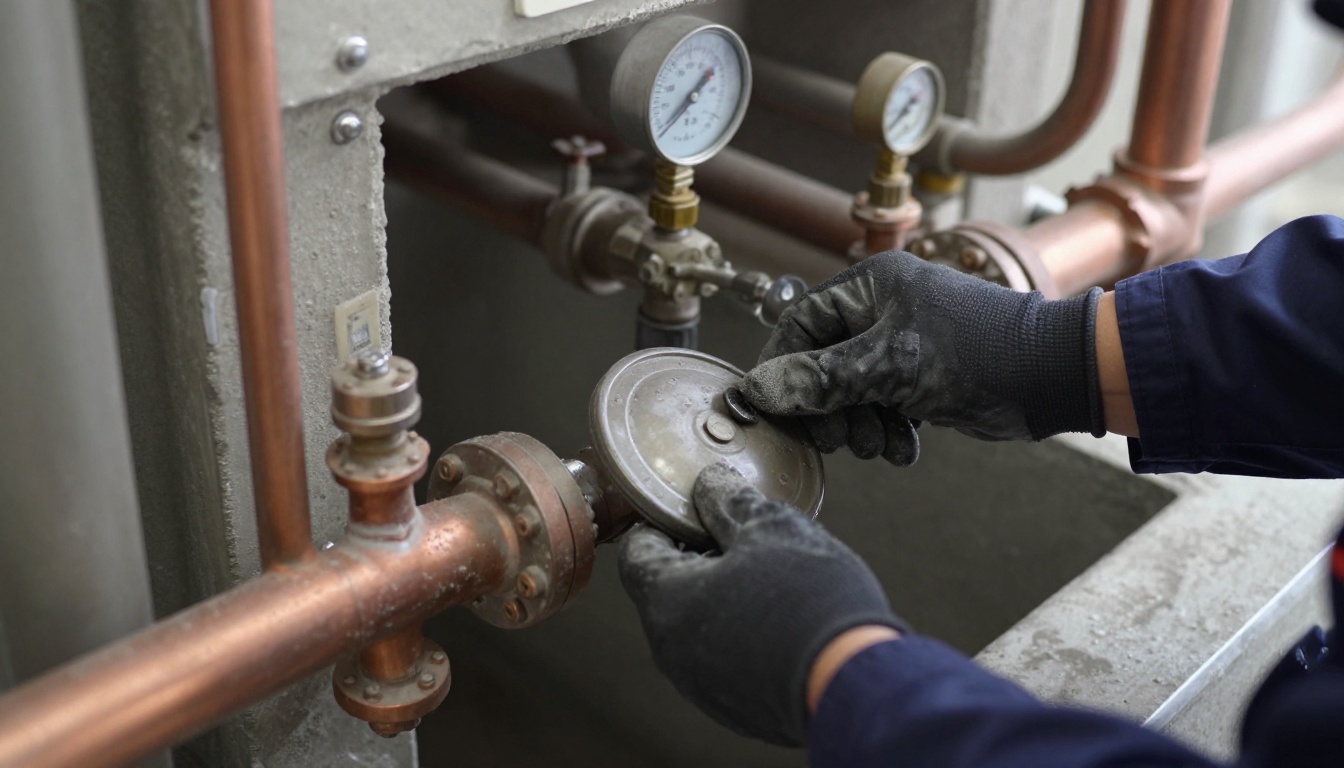
This is also why buildings should address nearby infrastructure at the same time. If the commercial branch isolation valves, cleanout access, or adjacent pressure-control equipment are poor, it may be sensible to combine work with valve replacement, a PRV maintenance review, or other planned mechanical work rather than mobilizing repeatedly.
What happens if you defer it
Deferral has a pattern. First, the restaurant has a nuisance backup and calls its own contractor. Then the same line blocks again and the building gets involved because the blockage is beyond the tenant space. Then the board discovers there are no records, no current drawings, and no agreement on responsibility. By the time the issue reaches legal or insurance review, the plumbing facts should have been established months earlier.
In Toronto, deferral also has a by-law and documentation dimension. While grease interceptor obligations can involve municipal sewer use requirements and tenant fit-out compliance, the building’s practical exposure is simpler: if grease from a commercial unit repeatedly impacts common-element sanitary piping, the corporation cannot credibly treat it as a surprise. Just as Toronto Municipal Code Chapter 851 requires annual testing documentation for premise isolation backflow devices through a program such as backflow prevention testing, restaurant-related drainage risk also needs records, schedules, and accountability.
From a reserve fund perspective, repeated emergency drain calls can distort planning. A reserve fund study is not meant to absorb avoidable operating failures that should have been controlled through maintenance or tenant enforcement. In several GTA buildings, the real value of a fall inspection is not just preventing a Christmas-week blockage; it is giving the board a rational basis to classify the problem as operating maintenance, tenant-recoverable expense, or capital replacement.
There is also a legal optics issue. If the corporation knows a ground-floor food tenant has recurring grease-related incidents and does nothing, it becomes harder to defend chargebacks, deductibles, or common-expense allocations later. Boards do not need to overreact, but they do need a paper trail.
A practical fall action plan for property managers and boards
October is a good month to get ahead of this because restaurants often see increased catering, private events, and year-end traffic from November into December. A sensible plan for a mixed-use building is:
- Identify every food-service tenant and confirm whether a grease interceptor exists, where it is, and what type it is.
- Request 12 months of pumping records and manifests from the tenant or operator.
- Review recurring service history for the branch, stack, or nearby cleanouts through your building’s plumbing records.
- Camera the downstream line if there has been more than one blockage or if no footage exists.
- Set a written maintenance frequency before the holiday period, not after the first December backup.
- Clarify chargeback authority under the declaration, rules, lease, or indemnity language.
- Budget 2027 work now if inspection shows undersizing, poor access, or deteriorated branch piping.
If a building has not looked at this issue in years, it is also worth reviewing adjacent common-element systems. Mixed-use podiums often have neglected valves, inaccessible cleanouts, and partially documented sanitary routing. A board that is already planning capital work should at least review related riser replacement, building re-piping, or broader project solutions where the building’s age and service history justify it.
For readers who want examples of how this work is approached in occupied multi-residential buildings, BMI’s project portfolio and blog are useful starting points.
FAQs
Who is usually responsible for a grease interceptor in a condo building with a restaurant tenant?
In most Toronto condominiums, responsibility depends on the declaration, the lease, and whether the interceptor serves only the tenant or also protects common-element piping downstream. A dedicated in-suite or tenant-space interceptor is often the tenant’s maintenance responsibility, but once grease affects the building’s sanitary system, stack, slab piping, or municipal connection, the corporation becomes involved quickly. The practical answer is to confirm ownership, maintenance, and access obligations in writing before a blockage occurs, because the chargeback argument is much harder after a flood.
How often should a restaurant grease interceptor be cleaned?
For a busy ground-floor restaurant, monthly pumping is common, and some high-volume kitchens need service every 2 to 3 weeks. The old rule of thumb is to clean when grease and solids reach 25% of the operating volume, but in mixed-use condo buildings we usually recommend a fixed schedule plus log review because one missed cleaning can load a 3-inch or 4-inch sanitary line with grease before anyone notices. Fall is the right time to tighten that schedule before holiday catering and year-end events increase kitchen output.
What are the warning signs that the interceptor is undersized or not being maintained properly?
The early signs are usually indirect: floor drain odours near the restaurant, repeated snaking of the same branch line, a sink that drains after service but backs up during peak meal periods, or grease showing up at downstream cleanouts. In a condominium, another clue is when upper residential suites report normal drainage while the ground-floor commercial area has recurring backups during lunch or dinner rush, which points to a local branch or interceptor issue rather than a building-wide stack failure. If the interceptor is pumped and the problem returns within days, that often means poor solids capture, bad inlet/outlet baffles, or an undersized unit.
What does it cost to maintain or replace a grease interceptor in the Toronto market?
Routine pumping and disposal for an interior interceptor in the GTA often runs about $350 to $900 per visit depending on size, access, and manifest requirements, while outdoor or larger vaults can be higher. A camera inspection of affected downstream piping is commonly $450 to $1,200, and a targeted drain cleaning call is often $350 to $950 if access is straightforward. Full replacement can range from roughly $8,000 to $25,000 for smaller interior systems and $30,000 to well over $100,000 where slab work, ventilation, odour control, permits, or restaurant downtime are involved.
Can a condominium corporation require proof of grease interceptor maintenance from a commercial tenant?
Yes, and many boards should. If the declaration, rules, or lease language is drafted properly, the corporation can require pumping records, manifests, service logs, and access for inspection where a food-service use creates elevated risk to common-element plumbing. In practice, the most effective approach is to require scheduled reporting quarterly or monthly, not just after an incident, because by the time sewage reaches a corridor or elevator lobby, the documentation problem has already become a claims problem.
What happens if the building defers action on a known restaurant grease problem?
Deferral usually turns a controllable maintenance issue into an emergency involving after-hours drain cleaning, contaminated common areas, tenant business interruption, and an avoidable insurance discussion. In older Toronto and North York mixed-use buildings, grease can harden on the walls of 3-inch cast iron branches until the effective bore is cut in half; once that happens, holiday-period loading can produce a full blockage with very little warning. Boards also risk reserve fund distortion when a foreseeable plumbing issue is repeatedly treated as emergency repair instead of planned maintenance or capital work.
Next steps for boards and managers
If your building has a ground-floor restaurant and you do not have current records for the interceptor, downstream pipe condition, and responsibility split, the next step is not guesswork. It is a site review, maintenance record check, and if needed a camera inspection of the affected branch so the board can budget with evidence.
If the same commercial line has blocked more than once, ask for a written recommendation that distinguishes between routine drain cleaning, scheduled kitchen stack cleaning, and capital correction. If you are building next year’s budget now, this is the month to do it rather than waiting for a holiday-period emergency.
BMI attends buildings before quoting where the situation warrants it, and maintenance programs are set up on a schedule rather than sold one call at a time. For urgent backups, emergency plumbing response is available 24 hours a day.
Contact BMI
- Contact BMI
- Phone: (416) 845-3756
- Emergency: (416) 845-3756, answered 24 hours a day
- Email: info@brial.ca
More on condominium plumbing
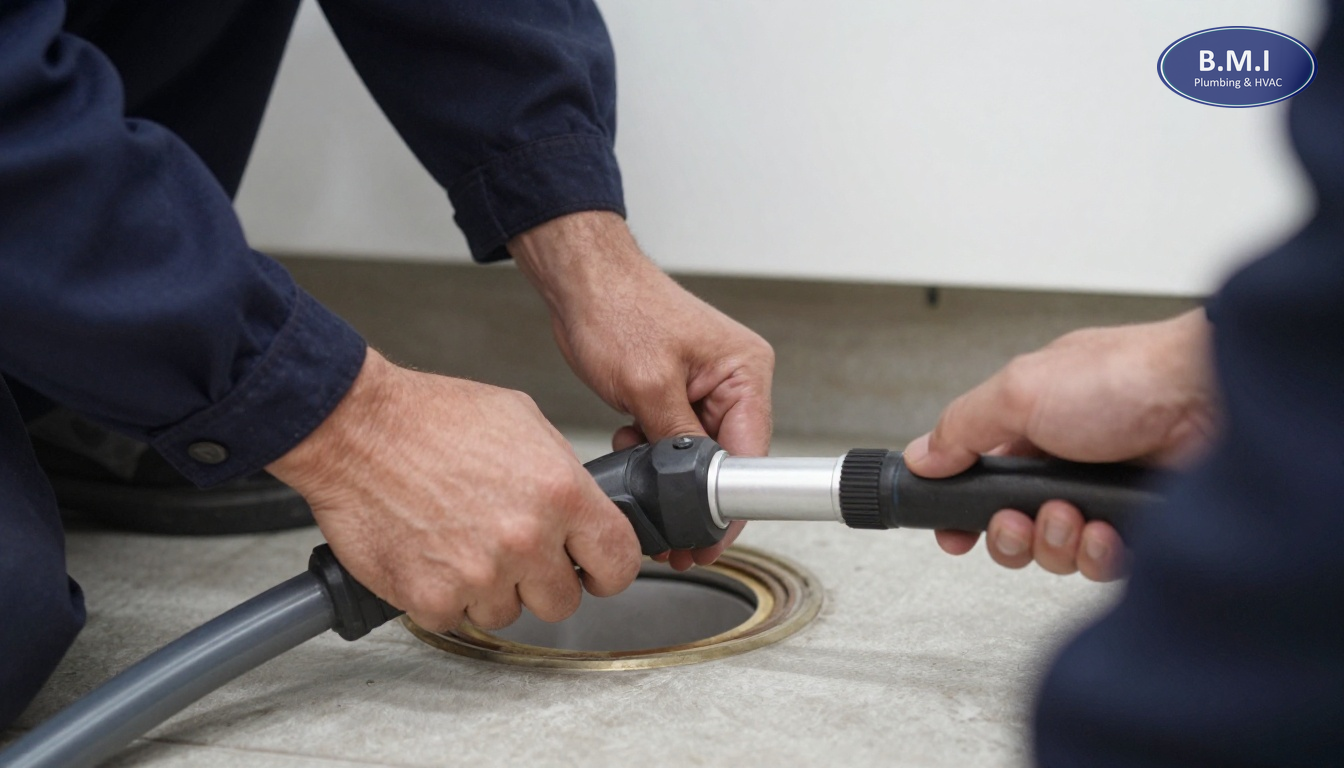
Toronto Condo Stack Cleaning ROI After 5 Years Deferred
Deferred maintenance cost adds up fast. See the real stack cleaning ROI for Toronto condos after five years without …
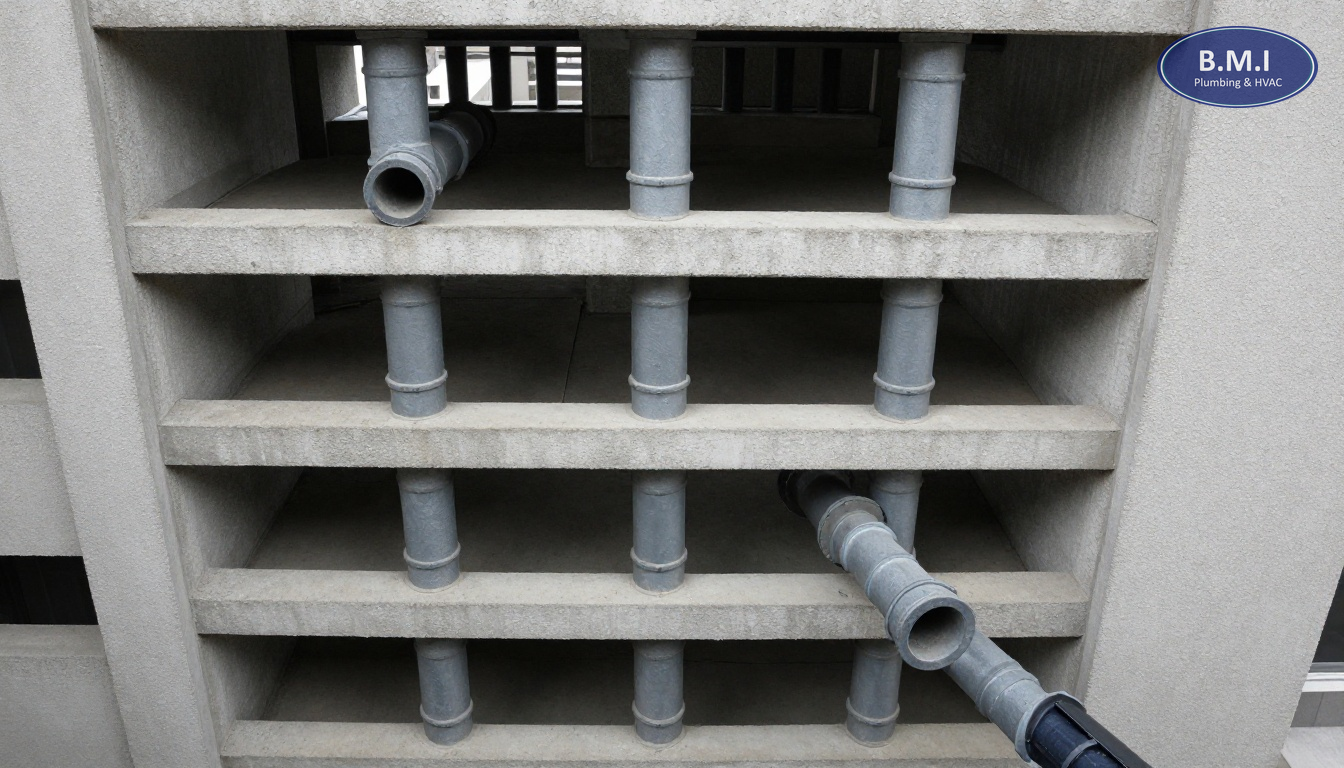
Toronto Condo Stack Cleaning Rotation: Multi-Year Plan
How to build a stack cleaning rotation and multi-year maintenance plan for large Toronto condo buildings, with costs, …
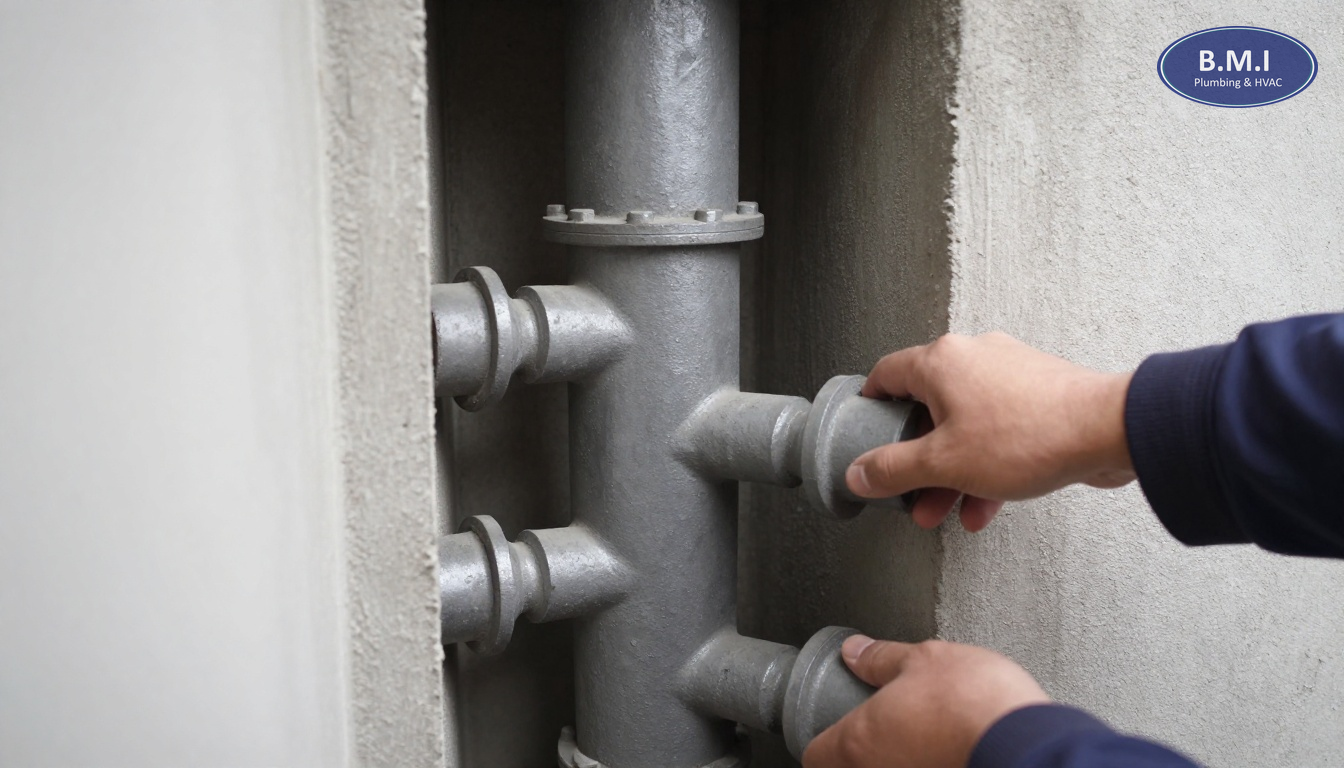
Holiday Kitchen Stack Cleaning in Toronto Condos
Holiday grease buildup causes December drain backup issues in Toronto condos. Learn warning signs, costs, timing and …
Need a plumber in your building?
BMI services roughly 200 condominium and multi-residential buildings across Toronto and the GTA. Emergencies are answered at any hour.