Holiday Kitchen Stack Cleaning in Toronto Condos
Holiday grease buildup causes December drain backup issues in Toronto condos. Learn warning signs, costs, timing and when stack cleaning is overdue.
Holiday Kitchen Stack Cleaning in Toronto Condos
Quick summary: In Toronto condominiums, holiday grease buildup is one of the most predictable causes of a December drain backup, yet many buildings still treat it as a surprise emergency. If your kitchen stacks have not been cleaned in 12 to 24 months, fall is the time to inspect, budget and schedule the work before holiday cooking loads turn a manageable maintenance item into a flood, chargeback dispute and after-hours call.
A common misconception is that December kitchen backups are caused by one resident doing something unreasonable over one long weekend. In reality, in many condo towers the failure has been building for months. By the time the first sink overflows in late November or December, the inside wall of the stack is often lined with a waxy grease film, coffee grounds, starch residue and soap scale that has reduced flow area far more than anyone realizes.
In buildings BMI services in Toronto, North York, Mississauga and Scarborough, the pattern is remarkably consistent: Thanksgiving starts the loading, cooler fall temperatures stiffen grease in older cast iron, and the holiday season exposes stacks that were already partially restricted. The board usually hears about it only when residents start reporting that “my sink is fine until the upstairs neighbour runs water,” which is a much more useful symptom than most people understand.
If your building is trying to decide whether to budget for a preventive program or continue reacting suite by suite, this article is meant to help you make that decision with evidence. It will also help you explain to owners why a stack issue is usually not solved by repeated spot snaking from inside individual suites. Buildings that need a structured program should look at kitchen stack cleaning as a maintenance item, not an emergency purchase.
Why holiday cooking puts kitchen stacks over the edge
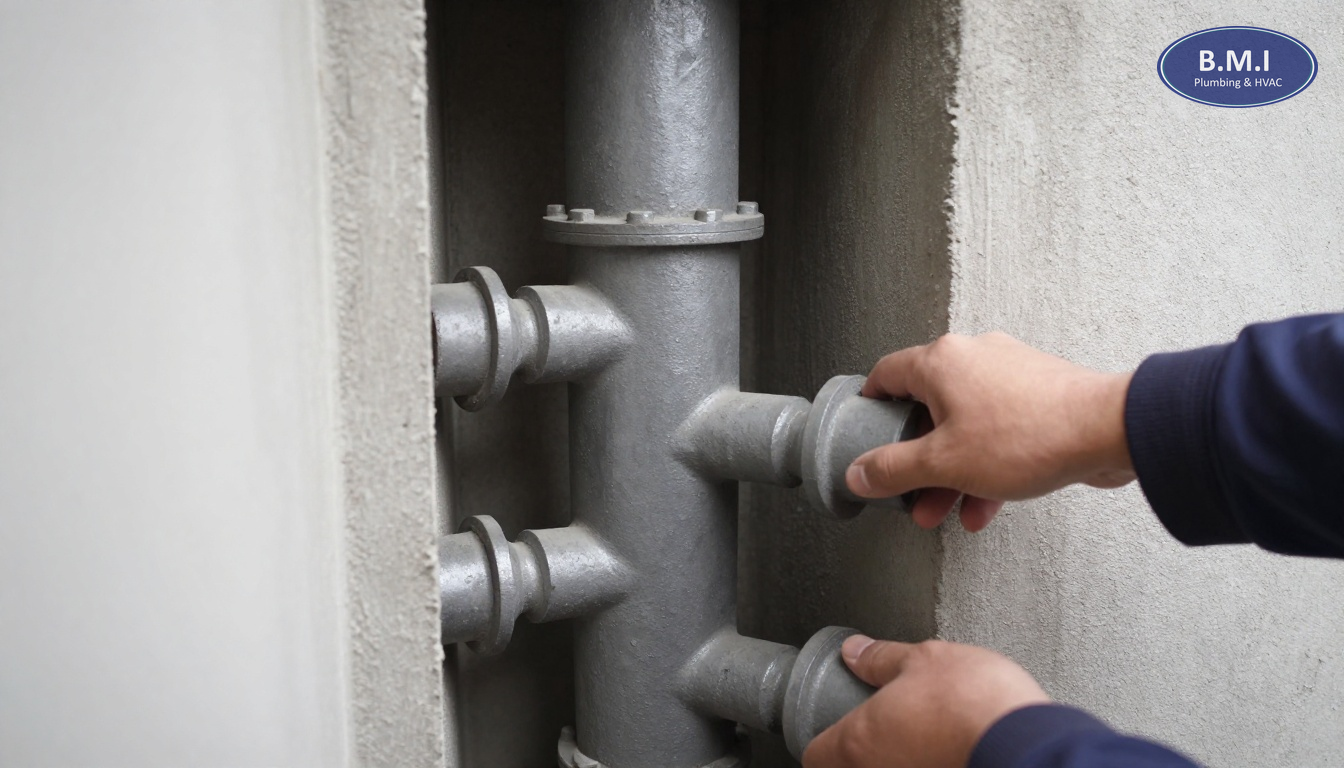
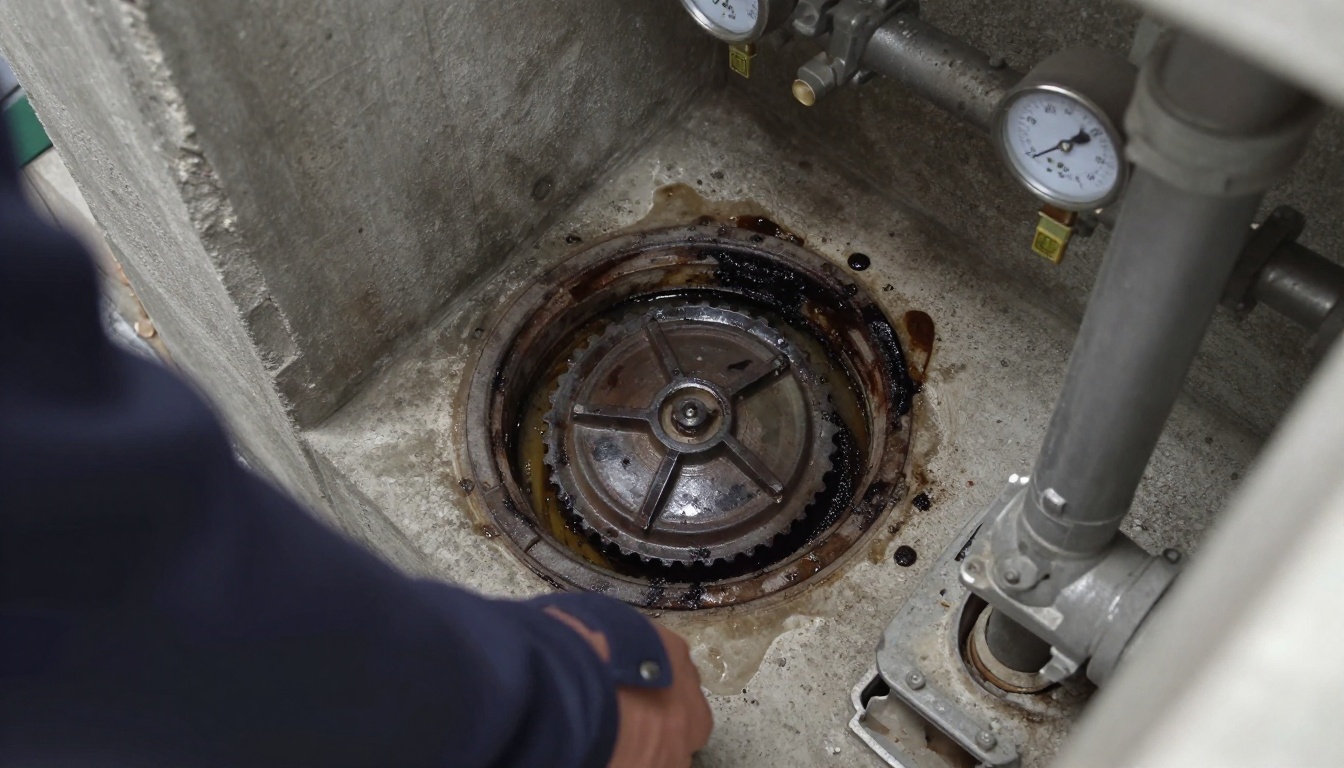
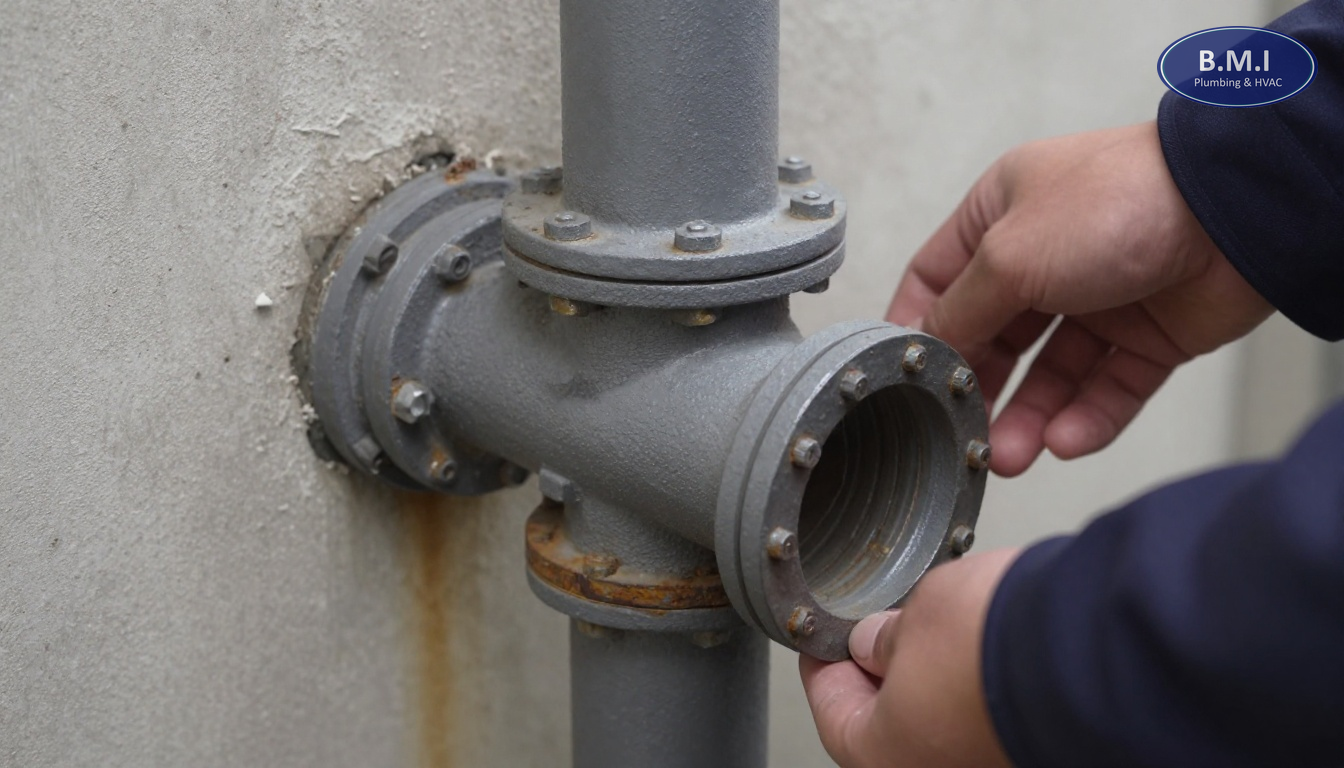
Kitchen stacks are different from bathroom waste stacks in one important way: they carry grease. Not just visible cooking oil, but emulsified fats from pans, dishwashers, salad dressings, sauces and food prep water. In a condominium building, that material cools as it travels down a 3-inch or 4-inch cast iron kitchen waste stack, and it does not coat the pipe evenly. It tends to accumulate at offsets, near lower-floor horizontal transitions, and at rough interior surfaces where old cast iron has tuberculation or scaling.
That matters because the effective opening can shrink quickly. A 3-inch pipe has an internal area of roughly 7 square inches when clean. If grease and scale reduce the effective diameter by even 1 inch, the open flow area drops by close to half. Managers are often surprised by how little buildup it takes before dishwashers start pushing water back into lower suites.
In many 1970s and 1980s concrete high-rises in Toronto and East York, kitchen stacks are original cast iron, and after 35 to 50 years the inside wall is no longer smooth. A stack that was serviceable with a two-year cleaning interval at age 20 may need annual jetting at age 45 because the rougher surface holds grease more aggressively. By contrast, some post-2010 glass towers have no-hub cast iron or plastic branch components that stay smoother internally, but even those buildings are not immune if occupancy is dense and residents rely heavily on dishwashers.
Another underappreciated factor is temperature. In fall and early winter, incoming domestic cold water is colder, and garage-adjacent or exterior-wall stack sections can cool waste faster. In waterfront towers and exposed podium buildings, we often see the first winter-season kitchen restrictions on lower levels where the stack passes through cooler service areas before reaching the building drain. This is one reason a stack can perform acceptably in July and fail in December without any dramatic change in resident behaviour.
Where a building has not reviewed its broader plumbing maintenance in some time, it is worth looking at maintenance programs together rather than treating every symptom separately. Kitchen stack cleaning, valve audits and pressure reviews tend to surface at the same time during fall budget planning for a reason.
What a manager actually hears when the stack is loading up
The resident rarely says, “our common element kitchen stack is partially occluded at the lower offset.” They say one of the following:
- “My sink is slow, but only at night.”
- “The dishwasher drains and then the sink gurgles.”
- “Water came up in my sink when the upstairs unit used their kitchen.”
- “It smells like rotten food in the cabinet, but the trap is full.”
- “The plumber cleared my sink last month and now it is backing up again.”
Those details matter. A kitchen sink that drains normally on its own but backs up when the suite above runs a dishwasher usually points to a shared stack restriction, not a local trap blockage. If a lower suite reports intermittent backup after upper-floor meal times, that is even more suggestive. In a true in-suite branch blockage, the sink is usually consistently slow regardless of what neighbouring suites are doing.
A second pattern managers should note is vertical clustering. If units 509, 609 and 709 all report gurgling or odour within a few days, the common stack deserves attention even if each suite can still be temporarily snaked. Repeated service calls to the same vertical line are often the most expensive way to avoid admitting that the building needs drain cleaning at the stack level.
The third symptom is recurrence after partial clearing. If a contractor opens a line from one suite and the problem returns within two to six weeks, the blockage probably was not fully removed. That is where a proper camera inspection becomes useful. It gives the manager something objective to show the board: remaining grease, scale, offsets, standing waste or a cracked section that is not worth cleaning again.
What proper diagnosis looks like before you approve work
A defensible recommendation starts with evidence, not just a verbal statement that the stack is “dirty.” In a condo environment, managers should insist on enough information to answer four questions:
- Is the restriction in the suite branch or the common stack?
- How many vertically aligned suites are likely affected?
- Is the pipe structurally sound enough to justify cleaning?
- Is this a one-off blockage or the sign of a recurring maintenance cycle?
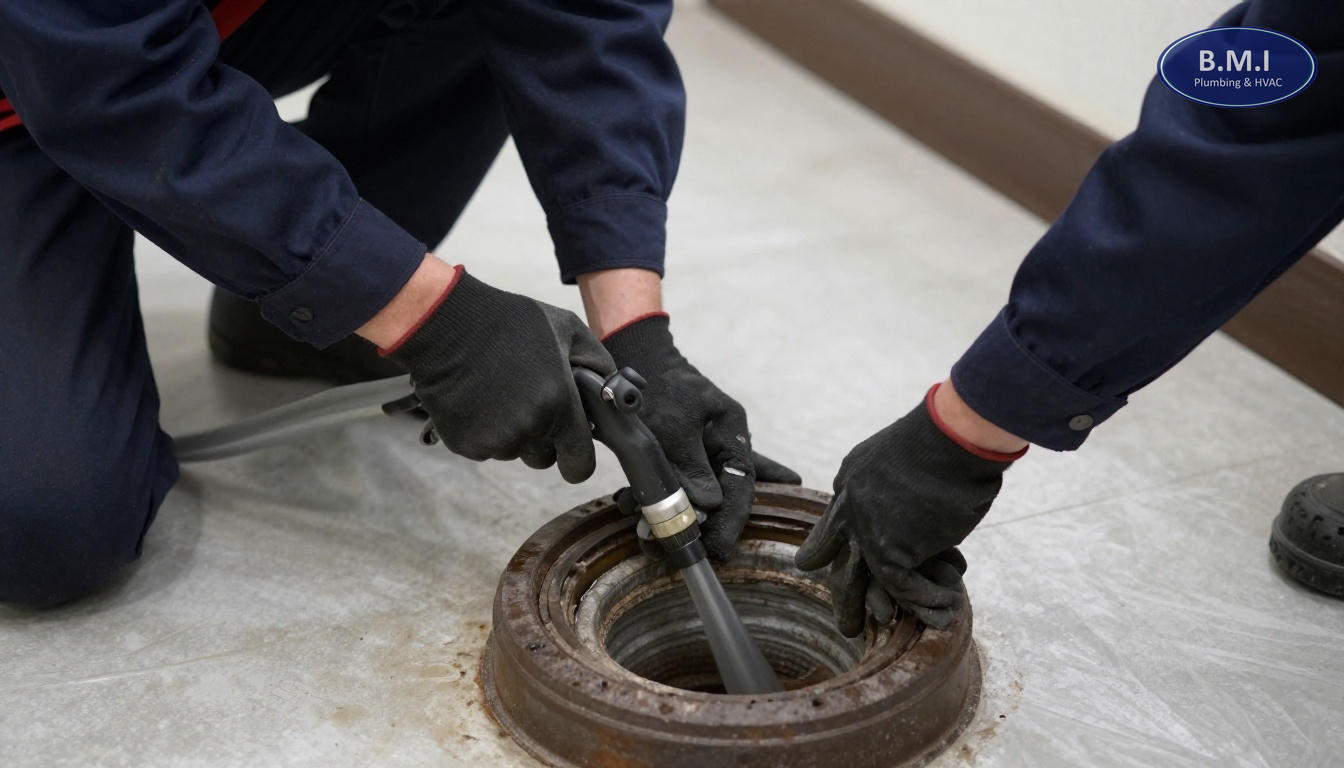
In practice, that usually means some combination of suite-level testing, stack access through a cleanout, and CCTV review. On a kitchen stack, the best evidence often comes from entering through a lower-floor cleanout in a janitor room, service corridor, parking level or accessible riser location. If no cleanout is usable, diagnosis gets slower and more expensive because access has to be created through suite branches or by opening walls in service areas.
A written report should identify the pipe material, pipe size, floors served, cleanout location, and whether the contractor used a snake or high-pressure jetting. It should also state whether the line was restored to full flow or only temporarily opened. That distinction matters when you are deciding whether to notify a board, issue resident communications or prepare for repeat callouts.
For buildings with poor valve records or uncertain isolation points, stack work can expose a second problem: nobody knows which valves actually work. Before a larger maintenance cycle or winter shutdown season, a valve audit can prevent a simple plumbing job from becoming a building-wide water interruption because an old gate valve will not fully close.
Jetting versus snaking: why the method matters
This is where many condominium boards spend money twice. Snaking and jetting are not interchangeable services.
Snaking
A drain snake is useful for:
- punching a hole through a localized obstruction
- restoring temporary flow in an emergency
- retrieving some soft debris near the access point
It is less effective for:
- removing grease film from the full circumference of the pipe
- cleaning long vertical runs thoroughly
- restoring a rough cast iron stack to a maintainable condition
A snake often creates a narrow channel through the blockage. Residents see water moving again and assume the problem is solved. Then holiday cooking resumes, grease catches on the remaining residue, and the stack blocks again.
High-pressure jetting
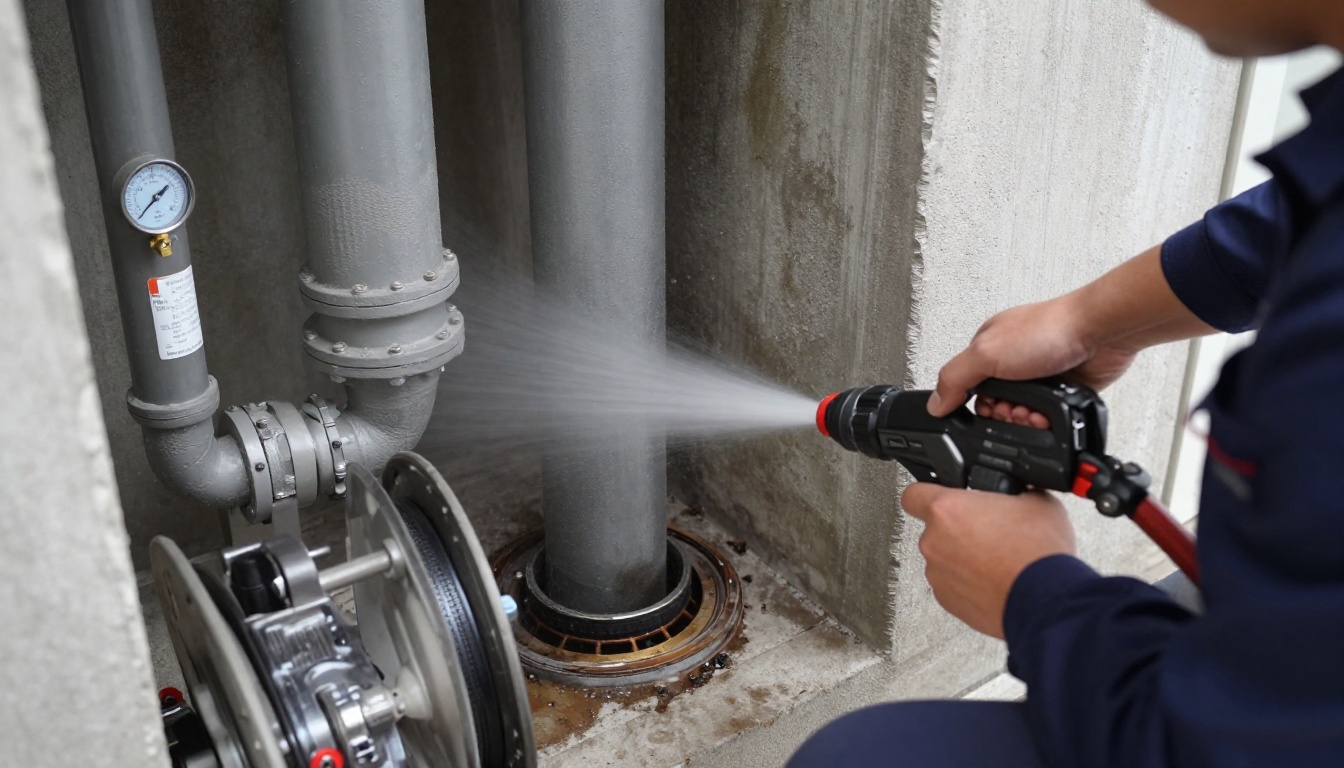
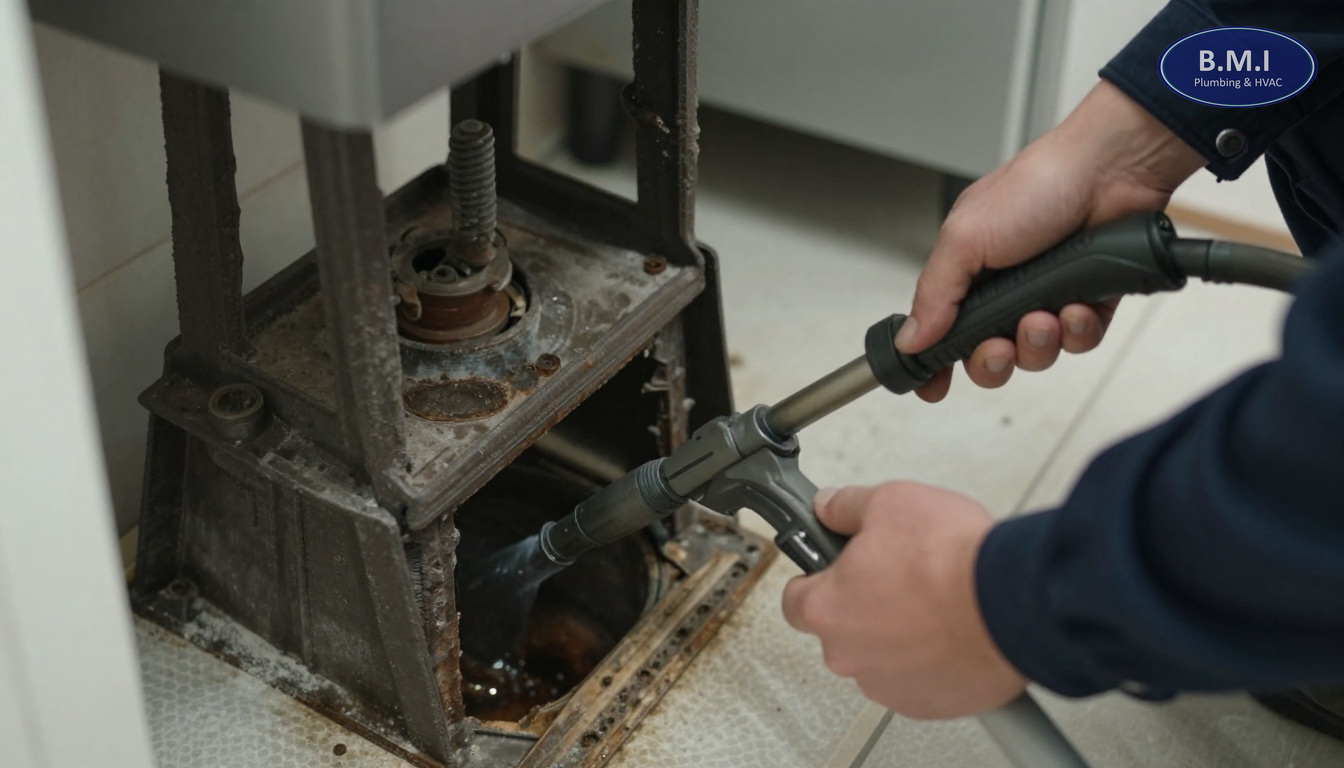
Kitchen stack cleaning by jetting is the proper maintenance approach because it uses water pressure and the correct nozzle pattern to scour the pipe wall, not just pierce the centre of the blockage. On condo kitchen stacks, jetting pressures commonly range from roughly 1,500 to 4,000 psi depending on pipe condition, diameter and access configuration. Higher pressure is not automatically better; on fragile or heavily scaled cast iron, technique matters more than headline pressure.
A good maintenance contractor will also know where to stop. If camera footage shows severe wall loss, delamination or a section that is collapsing internally, aggressive cleaning can expose a pipe that was already near failure. In that situation, the conversation shifts from maintenance to project solutions and selective replacement.
When cleaning is no longer the right answer
If a stack has been jetted annually and still backs up within months, there are usually three possibilities:
- the pipe interior is too rough and scaled to stay clean
- there is a structural defect such as a sag, offset or failed fitting
- the lower horizontal building drain is the real bottleneck, not the vertical stack
That is why post-cleaning footage is valuable. It lets the manager distinguish between a maintenance program that should continue and a capital problem that needs to be budgeted.
What kitchen stack cleaning costs in the Toronto market
The honest answer is that pricing varies widely by access, number of stacks, building height, and whether the work is scheduled or done as an emergency. A 12-storey mid-rise in York is not priced the same way as a 32-storey tower in downtown Toronto with tight service access and after-hours restrictions.
Below are realistic GTA market ranges for budgeting purposes, not quoted prices:
| Scope | Typical market range | Notes |
|---|---|---|
| Emergency snake of one affected kitchen line | $350-$900 per attendance | Usually temporary relief only; after-hours can be higher |
| CCTV camera inspection of one stack | $300-$700 per stack | Depends on access and reporting detail |
| Routine high-pressure jetting of one kitchen stack | $900-$2,000 per stack | Height, cleanout condition and contamination level matter |
| Small mid-rise annual program | $6,000-$15,000 per building | Often 4-10 stacks |
| Larger high-rise annual or biennial program | $12,000-$30,000+ per building | Often 8-16 stacks or more |
| Access panel or cleanout improvement work | $300-$1,500 per location | Frequently needed in older buildings |
A useful budgeting rule for boards is this: if the building is paying for three or more kitchen backup calls a year on the same vertical lines, a preventive program usually costs less than continuing to react. What managers often miss is the indirect cost of reactive work: concierge time, emergency notices, elevator protection, after-hours suite access, remediation vendors, and owner dissatisfaction.
If the stack condition turns out to be beyond maintenance, the cost category changes entirely. Selective replacement, branch replacement or broader building re-piping may need to be considered, especially where old cast iron is failing in multiple areas.
How the work is actually scheduled in an occupied condo
One reason boards defer stack cleaning is the assumption that it will be highly disruptive. In most buildings, scheduled cleaning is far less disruptive than an emergency December backup.
A typical planned program looks like this:
- Notice period: 48 to 72 hours for routine suite access where needed, longer if your corporation’s procedures require it
- Daily production: often 3 to 8 stacks per day depending on height, access and whether camera work is included
- Crew size: commonly 2 to 3 technicians for efficient jetting and cleanup
- Duration: a 20- to 30-storey building may take 1 to 3 days for cleaning, or longer if there are many separate kitchen lines
- Best timing: weekday daytime hours in September through November before holiday demand and winter emergencies increase
Not every stack requires entry to every suite. In many buildings, the main work is done from cleanouts in lower levels, service rooms or riser access points. But managers should be prepared for some suites to need access where branch conditions are questionable or where previous alterations have changed the original layout. This is especially true in older towers where kitchen renovations have hidden or complicated access to branch piping.
A common mistake we see in early-1990s North York high-rises is assuming the original cleanout locations are still usable. Over the years, millwork, storage cages, janitor upgrades or unauthorized alterations can make a theoretically simple stack inaccessible. That is why a site review before quoting matters. BMI typically attends the building before pricing larger maintenance work so access, staging and notice requirements are understood in advance.
Where the building is already reviewing shutoff reliability for winter planning, it can make sense to pair stack work with valve replacement or a broader review of isolation strategy. That is not always necessary, but in older properties it is often efficient to deal with access and service disruptions once rather than repeatedly.
Common element or suite issue: who pays matters
This is the question property managers get first, not last. In most condominium corporations, the vertical kitchen stack serving multiple units is a common element, while the branch piping serving only one suite may or may not be unit responsibility depending on the declaration and standard unit definition. That distinction drives who pays for the plumbing work, who pays for resulting damage, and whether a chargeback is realistic.
Three practical points help:
- Do not assume the first affected suite caused the problem. Lower suites often suffer the overflow even though the restriction is below or downstream of them in the common stack.
- Document the location of the blockage. A written service report and, where possible, camera footage are critical if the corporation later needs to explain responsibility to an owner.
- Consider prior maintenance history. If the corporation has deferred obvious stack maintenance for years, it becomes harder to frame every incident as owner misuse.
In Ontario condos, this also intersects with insurance and governance. A December overflow can trigger deductible questions, owner claims, and board scrutiny of whether reserve planning or operating maintenance was neglected. If kitchen stack cleaning has been repeatedly recommended but never budgeted, the board may have to explain why a predictable maintenance item was allowed to become an emergency expense.
For managers reviewing owner alterations, remember that renovations can complicate responsibility. If a suite owner moved a kitchen, altered branch piping or enclosed access without approval, that may engage section 98 issues under the Condominium Act, 1998 and change both access and cost recovery discussions. That does not change the corporation’s responsibility for the common stack, but it can affect how the repair is executed.
When maintenance becomes a capital project
Not every dirty stack needs replacement. Just as importantly, not every recurring stack should be cleaned forever.
A practical decision framework looks like this:
Continue with cleaning when:
- the pipe is structurally sound on camera
- backups stop for 12 to 24 months after jetting
- the issue is isolated to grease loading, not wall failure
- cleanouts are accessible and serviceable
Consider selective replacement when:
- the same stack blocks repeatedly within less than 12 months
- camera footage shows scaling so severe that full bore cannot be restored
- there are leaks, weeping joints or wall loss in the stack
- lower horizontal sections are back-pitched or offset
Consider broader project planning when:
- multiple stacks across the building are failing
- the building has original 1970s or 1980s cast iron with recurring issues
- access is poor and repairs are becoming invasive suite by suite
- reserve fund study timing supports a coordinated project
At that point, the conversation may extend beyond drains to domestic water risers, isolation valves or expansion components. In older Toronto and Mississauga towers, stack failures and domestic water issues often show up in the same budgeting cycle because the original systems are aging together. Relevant related scopes can include riser replacement, expansion compensator replacement and, in the right building, a more comprehensive project solutions review.
What happens if you defer it until after the holidays
Sometimes the honest answer is that a building can wait a year. But if your kitchen stacks are already showing symptoms in September or October, waiting until January is usually a false economy.
Here is what deferral tends to look like in practice:
- one or two isolated suite complaints in fall
- a temporary snake clearing that restores partial flow
- heavier cooking and dishwasher use in late November and December
- a lower-floor backup on a weekend or holiday period
- more expensive after-hours response and more difficult suite access
- cleanup, drying and insurance administration that cost more than the deferred maintenance
The timing is especially poor because December emergencies collide with contractor availability, resident travel, concierge staffing and holiday access issues. It is much easier to schedule emergency plumbing than to make that emergency cheap.
There is also a governance point here. Fall is budget season. If the board is asking for next year’s numbers, a building with overdue stack maintenance should not be carrying a zero line item and hoping for the best. Even if the decision is to defer, it should be an informed deferral supported by recent inspection evidence, not by lack of information.
Managers who want the board to make a defensible decision should bring three things to the meeting:
- recent service history by stack or vertical line
- at least one inspection report or camera record where recurrence exists
- a preventive cost range versus the actual cost of reactive callouts over the last 12 to 24 months
That is usually enough to move the conversation from anecdote to planning. If your building is also reviewing pressure stability before winter, now is the right time to look at PRV maintenance as well, since seasonal pressure swings and weak pressure reducing valves create a different but equally predictable winter headache.
FAQs
How often should a condominium building schedule kitchen stack cleaning?
In most Toronto condominium towers, kitchen stacks should be high-pressure jetted every 12 to 24 months, not simply when backups start. Buildings with heavy rental turnover, a high percentage of smaller suites, or repeated dishwasher-related backups often need annual cleaning because 3-inch cast iron kitchen stacks can lose meaningful internal diameter to grease and scale much faster than managers expect. A camera inspection after cleaning is useful when a stack loads up again within a year, because that usually points to rough, scaled cast iron rather than a one-time blockage.
What is the clearest sign that a December drain backup is a stack problem and not just one suite?
A strong indicator is a kitchen sink that drains normally on its own but backs up when the suite above runs a dishwasher or empties a full sink. That pattern usually means the branch line in the suite is open, but the common vertical stack is restricted downstream of the tie-in. Another tell is when several vertically aligned suites report gurgling, slow drainage or intermittent odours within the same 24 to 72 hours during holiday cooking periods.
What does kitchen stack cleaning typically cost in Toronto-area condo buildings?
As a broad GTA market range, routine kitchen stack jetting commonly runs about $900 to $2,000 per stack depending on height, access, cleanout condition, and whether after-hours work is required. A mid-sized 20- to 30-storey building with 8 to 16 kitchen stacks may budget roughly $12,000 to $30,000 for a scheduled program, while emergency callouts during a December backup can cost materially more once flood response, suite access delays and after-hours labour are added. If camera inspection is included, allow roughly $300 to $700 per stack depending on the extent of footage and reporting required.
Is snaking enough, or does the stack need high-pressure jetting?
Snaking is useful for punching a temporary opening through a localized blockage, but it does not remove the grease film that coats the full circumference of a kitchen waste stack. In a 3-inch or 4-inch cast iron stack, that remaining film quickly catches food solids again, which is why some buildings see another backup within weeks after a snake-only response. High-pressure jetting is the proper maintenance method because it scours the pipe wall and restores far more of the original internal diameter.
Who usually pays when a kitchen backup affects one suite?
In many condominium corporations, the common stack is a common element and the in-suite branch from the fixture connection inward may be unit responsibility, but the declaration is what governs. If the blockage is in the vertical stack serving multiple suites, the corporation usually addresses the common element work; if grease is isolated in the suite branch because of a local misuse issue, the cost may be chargeable back to the owner. The distinction matters because a December overflow can trigger questions about the corporation’s insurance deductible, owner damage claims and whether prior warnings about access or maintenance were documented.
When should a property manager get pricing to the board for holiday stack cleaning?
In Toronto, North York and Scarborough high-rises, September through early November is the right window to inspect, obtain quotations and schedule work before holiday loading begins. Waiting until late December is a common mistake because access becomes harder, contractors are working on emergencies, and a simple preventive program can turn into an after-hours flood response. If the building has not cleaned kitchen stacks in over two years, it is prudent to get a camera inspection and budget number in front of the board during fall budget season.
A practical next step for boards and managers
If your building has had even one kitchen backup in the last 12 months, pull the service history by stack before finalizing next year’s budget. If the same vertical line appears more than once, or if a suite was cleared and then backed up again within weeks, you likely have enough evidence to justify a preventive cleaning program or at least a targeted inspection.
For a Toronto condo kitchen stack cleaning decision to be defensible, ask for the following before approving work:
- stack count and floors served
- pipe material and estimated age
- cleanout locations and access constraints
- whether the proposal is snaking, jetting or both
- whether camera verification is included
- resident notice requirements and expected duration
- a recommendation on annual versus biennial frequency
If the building has not cleaned kitchen stacks in over two years, have them reviewed before the holiday period rather than after the first December drain backup. If you are also planning other plumbing work, it may make sense to coordinate with backflow prevention testing, in-suite plumbing repairs, or a broader review of repairs and service needs so notices and access are handled efficiently.
For boards that want evidence from comparable work, BMI’s completed project portfolio and building references and additional articles on the BMI blog can help frame the discussion. The goal is not to overspend on maintenance. It is to spend once, on purpose, before a predictable seasonal problem becomes an avoidable emergency.
Contact BMI
If your kitchen stacks have not been jetted in over two years, or if your building is seeing repeat sink backups as holiday cooking ramps up, arrange a site review before finalizing the budget. BMI attends the building before quoting larger maintenance work, and emergency response is available 24 hours a day when a backup cannot wait.
- Contact BMI
- Phone: (416) 845-3756
- Emergency: (416) 845-3756, answered 24 hours a day
- Email: info@brial.ca
More on condominium plumbing
Kitchen Stack Cleaning Cost in Toronto Condos
What does kitchen stack cleaning cost in Toronto? Real condo pricing, scope, timelines, warning signs and budgeting …
Hydro Jetting vs Snaking Condo Waste Stacks in Toronto
Hydro jetting vs snaking for condo waste stacks in Toronto: what each method does, costs, timing, and when a board …
Condo Kitchen Stack Cleaning Frequency in Toronto
How often should a condo kitchen stack be cleaned? Toronto guidance on stack cleaning schedule, costs, warning signs and …
Need a plumber in your building?
BMI services roughly 200 condominium and multi-residential buildings across Toronto and the GTA. Emergencies are answered at any hour.