How Pressure Reducing Valves Work in a Toronto High-Rise
Understand pressure reducing valve operation in a condo high-rise, with Toronto cost ranges, failure signs, inspection steps and replacement planning.
How Pressure Reducing Valves Work in a Toronto High-Rise
Quick summary: In a condominium high-rise, a pressure reducing valve is the control point that takes incoming municipal water pressure and delivers a stable, usable pressure to the building or to a specific pressure zone. When it drifts, sticks or starts hunting, the first complaints usually show up as leaking fixtures, noisy pipes, weak showers on upper floors, or repeated failures of hoses and fill valves long before anyone says “the PRV is bad.”
For Toronto boards and property managers, the practical question is not just how a PRV works. It is how to tell whether the valve is actually the problem, what evidence to ask for, what replacement costs look like in the GTA, and whether this is a maintenance item, a service repair or a reserve-fund capital project.
A common budgeting mistake in fall is to treat building water pressure complaints as isolated suite issues. In older towers in Toronto, North York and Mississauga, October and November are often when operators notice the pattern: more fixture complaints, more hammer, more overnight pressure creep, and more strain on old isolation valves ahead of winter. If your building has not had recent PRV maintenance, this is the right season to inspect it before cold-weather demand swings and holiday occupancy expose a weak station.
The fast diagnosis: what a PRV actually does in a high-rise
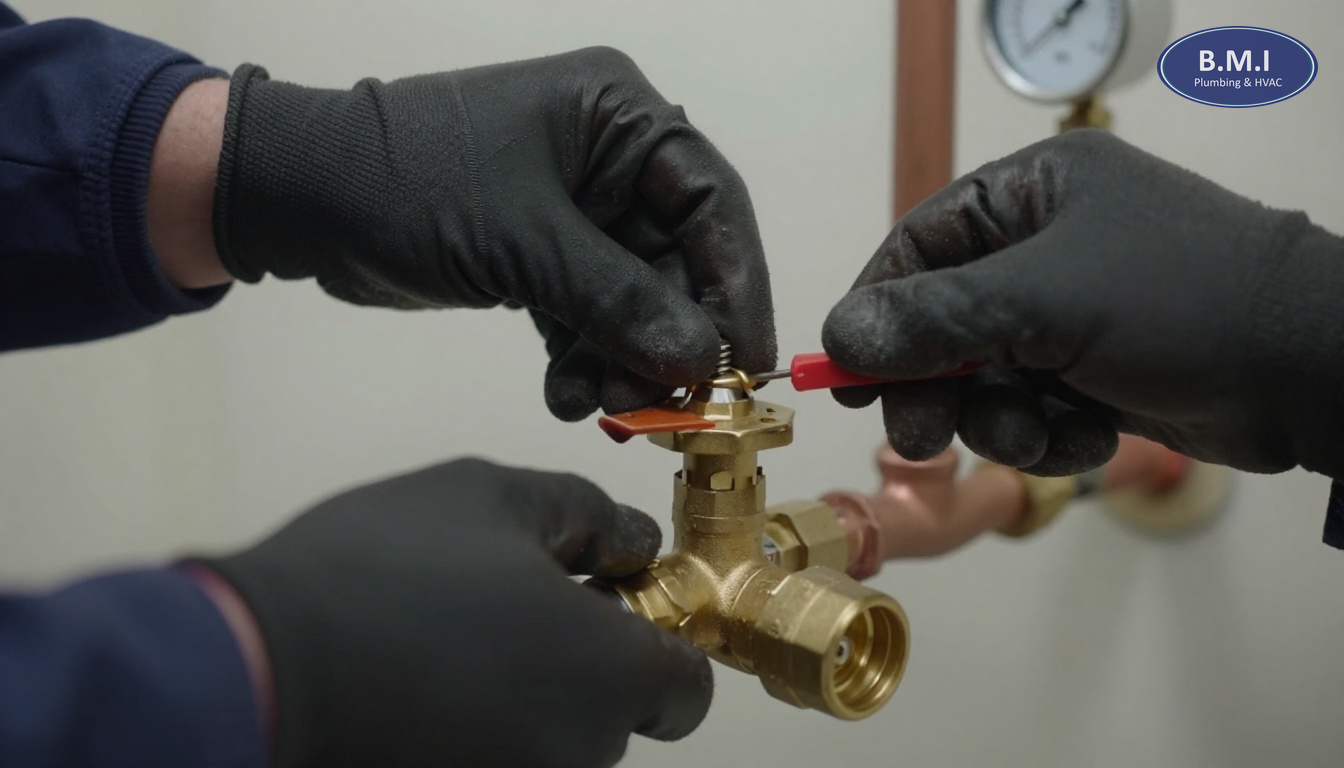
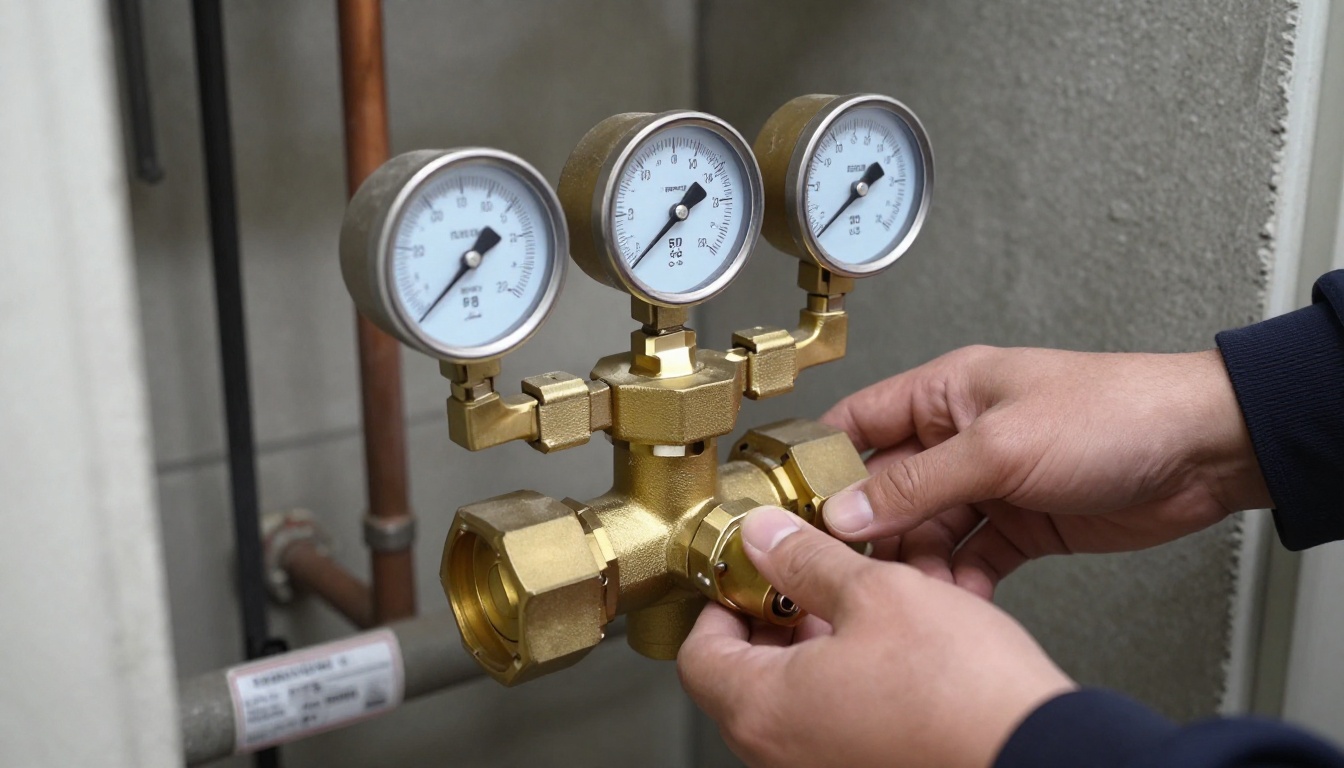
A PRV high-rise setup is not the little brass valve people imagine from a house mechanical room. In a condominium tower, the PRV is usually part of a station on the domestic cold water service or on a pressure zone branch, often with upstream and downstream gauges, shutoff valves, a strainer, and sometimes a bypass line. The valve uses a spring and diaphragm arrangement to reduce higher inlet pressure to a lower controlled outlet pressure. In practical terms, it keeps the city from shoving 100 psi or more into fixtures designed to live more comfortably at 60-75 psi.
In Toronto and nearby municipalities like Vaughan and Markham, incoming city pressure is not constant through the day. Demand changes, elevation changes and municipal distribution conditions all affect what arrives at the building. That is why a PRV is a control device, not just a restriction. A partially closed valve can reduce flow, but only a functioning PRV can regulate downstream pressure while demand rises and falls.
In taller buildings, one PRV is often not enough. A 25-storey tower may have multiple pressure zones because the pressure needed to serve upper floors would over-pressurize lower floors if the system were left unzoned. It is common to see low-zone, mid-zone and high-zone arrangements, sometimes tied into booster pumps and rooftop or intermediate tanks depending on the building design vintage. If a manager hears identical complaints only from floors 2-10 and not 11-25, that pattern matters; it often points to a zone-level control issue rather than a whole-building supply problem.
For boards planning next year’s operating and capital budgets, it helps to understand that PRV work sits between service and capital. Routine maintenance programs can extend life, but neglected stations often turn into emergency shutdowns because the valve is only as usable as the upstream and downstream isolation valves around it.
Why high-rise PRVs fail, and why they fail differently by building age
The failure mode depends heavily on the era of the building and the valve station design. In 1970s and 1980s concrete high-rises in Toronto, Scarborough and Etobicoke, it is common to find older bronze-bodied PRVs on domestic copper mains, often with gate valves that no longer isolate cleanly. In early-1990s towers, the PRV body may still be serviceable, but the gauges are often inaccurate and the bypass line has been ignored for years. In post-2010 towers, the valve itself may be newer, but pressure issues can still come from poor commissioning, undersized strainers or debris scoring the seat during construction-era turnover.
The internal parts that usually wear first are the seat, disc, diaphragm and spring assembly. If debris passes the strainer or if the strainer has not been cleaned, the seat can score and allow downstream pressure creep. That is why a building can test at 65 psi during daytime demand but drift to 85-95 psi overnight when there is almost no flow. Managers often miss this because daytime service calls do not capture the condition. A proper camera inspection is valuable for drains, but pressure systems need logged readings and gauge verification, not guesswork.
Another issue in Toronto water systems is mineral scale and corrosion product from the building’s own piping. Even if municipal water is treated, old galvanized sections, deteriorating steel spool pieces or neglected valves upstream can shed debris into the PRV station. In buildings with mixed-era repairs, we sometimes see a good PRV made unreliable by bad surrounding components. Replacing only the control valve while leaving seized isolation valves and an old strainer in place is one of the more expensive ways to save money.
There is also a mechanical misunderstanding worth correcting. A PRV does not increase pressure to upper floors. If residents on upper levels in a North York or Richmond Hill high-rise report weak water, the PRV may be reducing pressure too much, but just as often the issue is a booster pump problem, a closed valve, a failing recirculation balance on the hot side, or a restricted riser. The valve’s job is controlled reduction. It is not a substitute for proper pump head or zone design.
What PRV problems look like in a building
The resident complaint is rarely “our pressure reducing valve is failing.” What managers hear instead is a pattern of symptoms that seem unrelated until they are grouped by floor, by time of day or by fixture type. If your team is using in-suite plumbing service call logs properly, those patterns are often visible before a major failure.
Signs of excessive downstream pressure
These are the classic over-pressure complaints:
- Repeated failures of toilet fill valves, angle stops or braided faucet connectors on multiple floors
- Banging or chatter when dishwashers, washing machines or quick-closing faucets shut off
- More frequent drips from pressure-balanced shower cartridges
- Sudden leaks after overnight periods or after municipal work in the area
- Relief discharge or nuisance behaviour at other pressure-sensitive components
A useful field clue is this: if several suites in the same vertical zone report fixture leaks within a few weeks, and many of those parts are relatively new, suspect building water pressure before assuming poor fixture quality. In buildings we service along the waterfront, pressure creep at night is a repeat offender because low-demand periods expose weak PRV seats.
Signs of under-pressure or unstable regulation
Low pressure complaints are trickier because they can be local. But a PRV issue becomes more likely when:
- Complaints cluster by zone, not by one suite stack
- Pressure is acceptable at 2 p.m. but poor from 6 a.m. to 9 a.m.
- Cold water is weak across several suites while hot water is normal, or vice versa depending on system layout
- Gauges bounce, hunt or fail to hold a consistent setpoint during moderate demand
A common mistake we see in early-1990s towers in York and East York is replacing in-suite shower cartridges over and over when the real problem is unstable building pressure. Cartridges do fail, but they do not usually fail in batches across one pressure zone unless something upstream is wrong.
The symptom that points away from the PRV
If one kitchen faucet is weak while the bathroom is normal in the same suite, that is usually not the main PRV. If one stack has chronic poor pressure and the adjacent stack does not, look first at local sectional valves, riser condition or branch restrictions. A proper valve audit is often the missing piece because buildings assume a valve is open because the handle turns, when the disc has actually failed or the stem is no longer doing what the operator thinks it is doing.
What a proper PRV inspection should include
A defensible diagnosis needs more than a mechanic glancing at a gauge. If a contractor tells a board “the PRV is shot” without readings, valve conditions or a written scope, get a second opinion.
A proper inspection in a condominium high-rise should include:
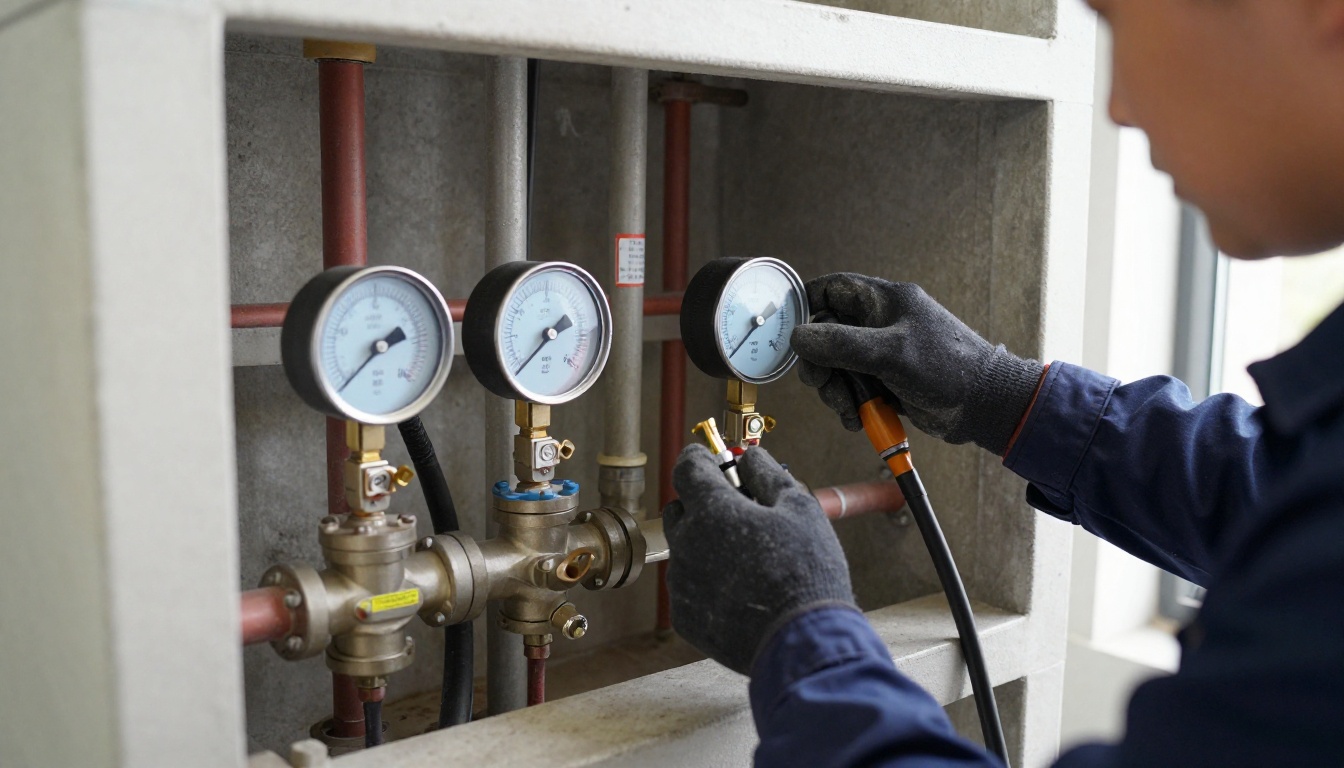
- Upstream and downstream pressure readings at the station
- Dynamic readings under flow, not only static readings at idle
- Gauge verification, because old gauges lie more often than people think
- Condition of strainers, bypasses and isolation valves
- Evidence of pressure creep, ideally with time-based readings
- Zone mapping, so complaints are tied to actual system layout
- A written recommendation for rebuild versus replacement
In a well-run building, this work ties into PRV maintenance and replacement planning, not just reactive service. If the downstream gauge reads 70 psi at noon and 92 psi at 3 a.m., the number that matters is 92. That overnight creep is what shortens the life of fill valves, cartridges and hoses.
For larger or more complicated systems, it is also worth checking whether the station has a bypass PRV and whether that bypass has been isolated, neglected or set incorrectly. We have seen buildings in Toronto and Brampton where the main valve was blamed for months when the real issue was an improperly adjusted bypass line feeding around it.
Inspection should also look at the practical shutdown risk. If the PRV is serviceable but the 4-inch upstream gate valve will not close, the repair is no longer just a PRV repair. It becomes a controlled shutdown project with possible valve replacement and resident notice implications.
Repair, rebuild or replace: a decision framework
The right decision is usually driven by four questions: does it regulate, can it isolate, are parts available, and what happens if it fails on a Friday night in January.
When a rebuild makes sense
A rebuild is often reasonable when:
- The valve body is structurally sound
- The manufacturer and model are identifiable
- Rebuild kits are available within a sensible timeframe
- Isolation valves actually hold
- The station is otherwise in good condition
For some Watts, Wilkins, Zurn or Cash Acme commercial assemblies, rebuilding the trim can buy several more years if the body is not degraded. In budget terms, that can be the right call when the building needs one or two years before a larger riser or domestic water project. If your reserve fund update is next year and the station can be stabilized safely, a rebuild can be the bridge.
When replacement is the better answer
Replacement is usually the better call when:
- The body shows significant corrosion or dezincification
- The valve hunts, creeps and has already been rebuilt once or twice
- Isolation valves do not function
- The station layout is poor for service access
- The building has recurring pressure-related damage claims
On a 300-unit building, repeated fixture failures caused by unstable pressure can quietly cost more than a proper station replacement. The cost is not just plumbing service. It is resident frustration, after-hours access, concierge time, chargeback disputes and sometimes insurance deductibles if a hose lets go and floods multiple suites.
If the PRV issue is part of a larger domestic system problem, it may make sense to look at project solutions alongside piecemeal service. In older towers, PRV work often overlaps with riser isolation, sectional valve renewal or even domestic water riser replacement if the pressure issue is being amplified by deteriorated piping.
Toronto cost ranges: what boards should budget
These are realistic GTA market ranges, not quotations, and they vary with access, valve size, shutdown complexity, asbestos conditions, after-hours work and whether surrounding components also need replacement.
| Scope | Typical Toronto-area range | Notes |
|---|---|---|
| Diagnostic inspection with pressure testing and written recommendations | $600-$1,800 | Higher if multiple zones or after-hours testing is needed |
| Gauge replacement and minor station service | $400-$1,200 | Often done during diagnosis if gauges are unreliable |
| PRV rebuild on a smaller assembly | $1,500-$4,000 | Assumes body is reusable and parts are available |
| Single larger PRV replacement | $3,500-$7,500 | Basic mechanical-room replacement with working isolation |
| Duplex PRV station replacement with strainers, gauges and appurtenances | $8,000-$25,000 | Common for larger condo domestic systems |
| Isolation valve replacement tied to PRV work | $1,500-$6,000 per valve | Depends heavily on size, material and shutdown logistics |
| Multi-zone PRV renewal program in a taller building | $20,000-$75,000+ | Can be higher when tied to broader domestic water upgrades |
One non-obvious cost driver is whether the contractor can trust the existing shutoffs. If not, labour increases because the work may require a larger building shutdown, temporary planning, additional crew, or staged replacement of valves before the PRV can even be touched. This is why valve charting and exercise programs save real money over time.
Another cost driver is timing. Fall is often the right time to inspect and budget because replacement can then be scheduled before winter emergencies or bundled into spring and summer capital work. If the station is left to fail in January, the building usually pays emergency rates and loses the ability to choose the ideal shutdown window.
Shutdowns, timelines and resident logistics
Most PRV work is less about wrench time than about control of the building environment. A straightforward rebuild with good isolation may take half a day of mechanical work, but by the time notices, testing and recommissioning are included, the building should still treat it as a planned shutdown.
Typical timelines are:
- Inspection and diagnosis: 1 site visit, often 1-3 hours depending on number of zones
- Minor service or gauge replacement: same day once access and parts are confirmed
- PRV rebuild: often 4-8 hours on site, assuming isolation works and parts are on hand
- Station replacement: usually 1 day of active work, sometimes longer for larger assemblies or difficult access
- Multi-zone replacement program: several days to several weeks depending on sequencing
Resident notice matters because water shutdowns in condos are operational events, not just plumbing tasks. In Toronto, Mississauga and Vaughan towers, most managers aim for at least 48-72 hours’ notice for planned shutdowns, longer if senior residents, commercial podium tenants or medical needs are involved. If the PRV station serves the whole building, after-hours or mid-day timing should be chosen based on actual occupancy patterns, not habit.
There is also a recommissioning step people underestimate. After a PRV rebuild or replacement, the system should be brought back online gradually, air purged, pressures verified at representative locations, and sensitive fixtures monitored. Slamming a building back to full pressure too quickly is how weak fill valves and old supply hoses announce themselves the same day.
If the work reveals related deficiencies such as failed sectional valves, deteriorated risers or poor expansion control, the board may need to fold those items into broader building re-piping or expansion compensator replacement planning rather than treating the PRV as an isolated part.
What happens if you defer PRV work
Some plumbing issues can honestly wait a year. A PRV problem sometimes can, but only if the evidence shows the valve is still controlling safely and the surrounding station is reliable. What should not be deferred is an unstable valve with documented pressure creep or a station that cannot be isolated.
The consequences of deferral are usually indirect at first:
- More in-suite fixture failures
- More resident complaints that appear unrelated
- More labour spent on local repairs that do not solve the cause
- Greater chance of hose, stop or fill-valve failures during low-demand overnight periods
- Harder insurance conversations after water damage
From a condominium governance standpoint, this matters because boards need a defensible record. If there are repeated pressure-related incidents and no inspection, reserve planning or repair strategy, it becomes harder to explain why the corporation kept paying for symptoms instead of addressing the common-element cause. Under the realities of the Condominium Act, 1998, the declaration and standard unit definition still govern responsibility, but common-element neglect is not made cheaper by calling it an in-suite problem.
Fall is also budget season. If your building has had pressure complaints, now is the time to get numbers in front of the board. A modest inspection this month can prevent a vague emergency request in January. That is especially true in older Toronto and Scarborough towers where original domestic valves are already beyond their intended service life.
Common element or in-suite responsibility
This is the question managers get from owners immediately after a leak. In most condominiums, the main PRV stations, pressure zone valves, booster equipment and domestic risers are common elements. The failed braided hose under a bathroom sink is usually part of the suite, but if five hoses in one zone fail over a short period and the station is creeping to 90 psi overnight, the root cause is in the common system.
That distinction matters for chargebacks and insurance deductibles. If the corporation only repairs suite fixtures without addressing the source, the building can end up paying repeatedly for the same pressure problem. The right process is: document the suite failure, verify pressure conditions, identify whether the issue is local or systemic, then allocate costs according to the declaration and the actual cause.
When pressure complaints are mixed with fixture issues, toilet and faucet repair records can be surprisingly valuable evidence. A cluster of “normal” suite service calls often tells the story before a mechanical-room inspection does.
FAQs
What pressure should a condo high-rise be operating at?
There is no single correct number for every building, but in many Toronto condominium systems we expect domestic pressure after the main PRV station to land roughly in the 55-75 psi range at lower floors, with zone pressures set to suit building height and fixture ratings. The key is stability, not just the number on one gauge: if pressure swings from 50 psi to 95 psi during low-demand overnight periods, the PRV is not controlling properly. Most plumbing fixtures, fill valves and braided connectors live longer when static pressure is kept below about 80 psi.
How long does a pressure reducing valve last in a high-rise?
In GTA multi-residential buildings, a main domestic water PRV often gives 10-20 years of service, but that range depends heavily on water quality, debris loading, cycling frequency and whether strainers and bypass components are maintained. We see shorter life in buildings with poor upstream filtration, neglected valve stations or repeated pressure spikes. A 15-year-old valve that still holds set pressure may remain serviceable, but a 7-year-old valve with unstable downstream readings may already be due for rebuild or replacement.
Can a PRV be rebuilt, or does it need full replacement?
Both are possible, and the right answer depends on body condition, parts availability and how the valve is failing. If the body is sound and the issue is a worn seat, diaphragm or spring assembly, a rebuild can be cost-effective; in Toronto that may run roughly $1,500-$4,000 for smaller station work, excluding shutdown logistics. If the body is heavily dezincified, the trim is obsolete, or isolation valves no longer hold, full replacement of the valve or station is usually the more defensible capital decision.
Who is responsible for a PRV problem in a condominium: the corporation or the unit owner?
In most high-rise condominiums, the building’s main PRV stations and pressure zone equipment are common elements, so diagnosis and repair usually fall to the corporation. The complication is that damage may show up first inside a suite as leaking toilets, cartridges or braided hoses, which leads owners to assume it is an in-suite issue. The declaration and standard unit definition still govern, but if the root cause is uncontrolled building pressure, the corporation needs to address the common-element source before chargebacks are considered.
What does PRV replacement cost in a Toronto condo building?
For a straightforward smaller PRV assembly in a mechanical room, buildings may see replacement budgets starting around $3,500-$7,500, while larger duplex stations with gauges, strainers, bypasses and isolation valve work commonly land in the $8,000-$25,000 range. If the project includes corroded upstream valves, limited access, overnight shutdowns, asbestos precautions or multiple pressure zones, costs rise quickly. On taller buildings with several zones, a full PRV renewal program can become a mid-five-figure capital item rather than a simple service call.
How do you know if low water pressure is actually a PRV issue?
You do not know from a resident complaint alone, which is why pressure readings at different times and locations matter. A true PRV issue often shows as building-wide or zone-wide symptoms, such as repeated low pressure on several floors, unstable gauge readings, or pressure that drops sharply during morning peak demand. If only one suite or one stack is affected, the cause is often a local shutoff, clogged aerator, failing cartridge, partially closed sectional valve or a deteriorated riser rather than the central PRV.
What to do next
If your building has had repeated fixture leaks, erratic pressure complaints or unexplained overnight failures, do not start by replacing random suite parts. Start with evidence: pressure readings, zone mapping, gauge verification and a realistic assessment of whether the station can even be isolated safely.
If the PRV station has not been inspected recently, or if your building is heading into budget season with unresolved building water pressure complaints, arrange a site visit before winter. BMI attends the building before quoting, and where it makes sense, PRV work can be coordinated with a broader repairs and service plan or folded into a scheduled capital program. If the issue turns out not to be the PRV, that is still a useful outcome; it means the board can spend money where the problem actually is.
For urgent leaks, uncontrolled pressure events or shutdown-related failures, 24/7 emergency plumbing response is available. For boards comparing options, the most useful next step is usually an on-site review tied to the building’s age, zone layout and valve condition, not a phone estimate.
If you want context on related condominium plumbing decisions, BMI also publishes more building-focused guidance on the BMI blog and can point managers to relevant project examples through the completed project portfolio.
Contact BMI
- Contact BMI
- Phone: (416) 845-3756
- Emergency: (416) 845-3756, answered 24 hours a day
- Email: info@brial.ca
More on condominium plumbing
Cast Iron Stack Replacement in Toronto Condos at 50 Years
When aging cast iron stacks need cleaning, lining or replacement in Toronto condos, here is how to diagnose, budget and …
Plumbing Vent Condo Problems in Toronto High-Rises
Understand plumbing vent condo and stack venting problems in Toronto high-rises: symptoms, diagnosis, costs, shutdowns …
Stack Camera Inspection in Toronto: What 40-Year-Old Pipes Show
What a stack camera inspection in Toronto actually reveals inside 40-year-old cast iron pipes, what it means, and when …
Need a plumber in your building?
BMI services roughly 200 condominium and multi-residential buildings across Toronto and the GTA. Emergencies are answered at any hour.