
Kitchen Stack Cleaning Cost in Toronto Condos
What does kitchen stack cleaning cost in Toronto? Real condo pricing, scope, timelines, warning signs and budgeting guidance for boards and managers.
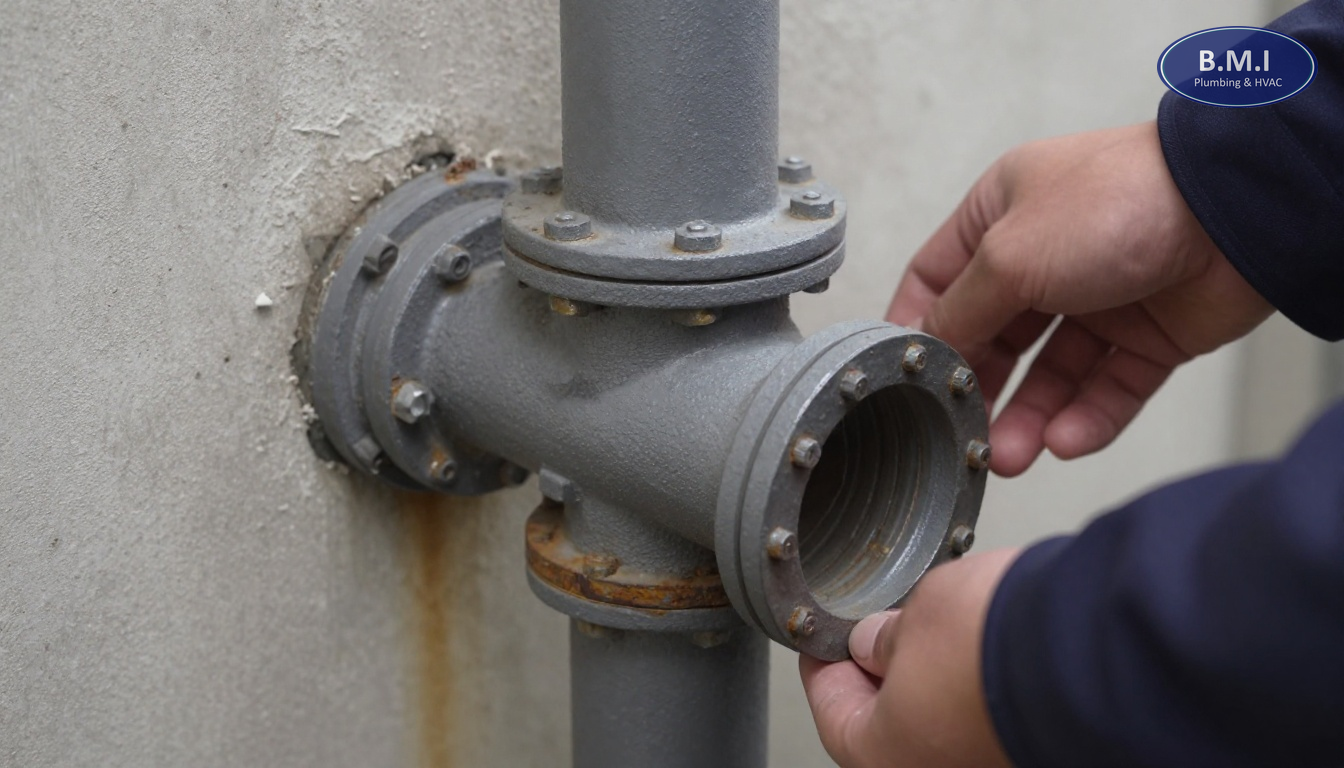
Kitchen Stack Cleaning Cost in Toronto Condos
Quick summary: For most Toronto condominium buildings, kitchen stack cleaning cost is driven less by unit count than by the number of kitchen waste stacks, the condition of the cast iron, access to cleanouts, and how much resident coordination is required. In practical terms, many planned programs fall in the $450 to $900 per stack range for straightforward jetting, but an honest budget should also account for camera work, difficult access, after-hours shutdown windows, and the fact that some stacks are no longer good candidates for repeated cleaning.
Budget season is when this question usually lands on a property manager’s desk. In September and October, boards in Toronto, Mississauga, Vaughan, and North York are trying to decide whether kitchen stack cleaning belongs in next year’s operating budget, reserve planning, or neither. The right answer depends on whether the building has a maintenance problem or a capital problem, and confusing the two is one of the most expensive mistakes we see.
Start with the number that actually matters: cost per stack, not per suite
A common budgeting error is to ask for a per-unit number. Kitchen stack cleaning is not priced like in-suite plumbing service. Contractors usually quote by stack count, because one 250-unit building may have 10 kitchen stacks while another similar-sized tower may have 18, depending on floor plate, plumbing layout, and whether kitchens are back-to-back.
In older Toronto and East York high-rises, the kitchen waste stack is often 3-inch or 4-inch cast iron, with branch connections from each suite’s kitchen sink and dishwasher. In some post-2000 buildings in Mississauga or Markham, there may be no-hub cast iron with cleaner access points and fewer offsets, which tends to clean faster. A building with fewer, straighter stacks can cost materially less than a smaller building with awkward access, buried cleanouts, and years of grease accumulation.
Typical GTA budgeting ranges for a planned program look like this:
| Scope | Typical Toronto-market range | How it is usually priced |
|---|---|---|
| Straightforward jetting of one kitchen stack | $450-$900 | Per stack |
| Stack with heavy grease loading or difficult access | $800-$1,400 | Per stack |
| CCTV verification on selected stacks | $250-$500 | Per stack/camera run |
| Full building program, 8-12 stacks | $4,500-$11,000 | Per building |
| Full building program, 12-20 stacks | $7,000-$18,000 | Per building |
| Emergency after-hours response for a blocked stack | $900-$2,500+ | Per event |
Those are planning ranges, not quoted prices, and they vary with height, access, parking, concierge coordination, resident notices, and whether the contractor is also handling camera inspection and follow-up drain cleaning. But they are realistic enough to help a board understand why a preventive program often costs less than two or three holiday-weekend backups.
One non-obvious cost driver is whether the stack can be cleaned from a proper common-area cleanout. In buildings where millwork, drywall, or past renovations have hidden access points, labour rises quickly. That is one reason a building with otherwise ordinary piping may benefit from a broader maintenance program review instead of pricing stack cleaning in isolation.
Why kitchen stacks load up in Toronto buildings
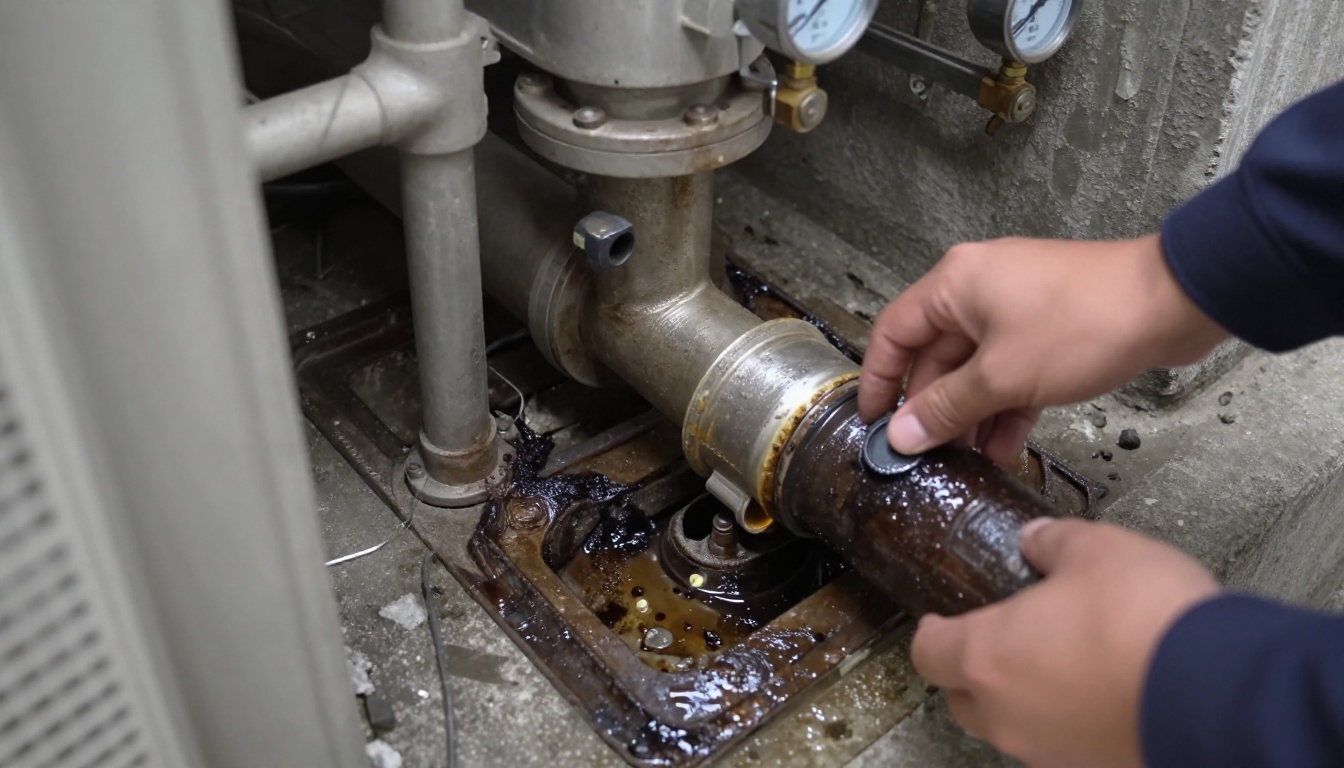
The short version is grease, soap, starch, and time. The more useful answer is that kitchen stacks fail differently from bathroom stacks. Bathroom waste sees more water volume and less grease. Kitchen waste sees hot fats that cool on the pipe wall, dishwasher discharge that emulsifies grease temporarily and then lets it reattach downstream, and food solids that stick to rough cast iron.
In 1970s and 1980s concrete towers across Toronto, Scarborough, and Etobicoke, the original cast iron interior is often no longer smooth. After 35 to 50 years, the pipe wall can develop tuberculation, scaling, and corrosion pockets. A nominal 3-inch stack has an inside diameter of roughly 3 inches when new, but in service it is not unusual to find the effective opening reduced by 25 to 50 percent in the most loaded sections. Once that happens, the problem is not only blockage risk. The line also becomes harder to clean thoroughly because grease packs into irregular surfaces.
A common mistake boards make is assuming that because Toronto water is not especially hard compared with some municipalities, kitchen stacks should not build up. Domestic water chemistry is only part of the story. The real issue is the waste stream and the pipe material. In waterfront towers we service, especially where many residents cook at home and dishwashers discharge heavily in the evening, the lower 5 to 10 floors of a kitchen stack usually show the worst loading because that is where the cumulative grease from all upper suites lands and cools.
This is also why fall is the right time to inspect or clean. By late September, buildings can address the stacks before Thanksgiving, December holidays, and winter contractor availability issues. If your building already has a pattern of November to January kitchen backups, it is worth looking at kitchen stack cleaning before the seasonal loading increases.
What managers and residents actually report when the stack is the problem
The complaint is rarely “our kitchen stack needs jetting.” It is usually one of these:
- A sink that drains normally when used lightly but backs up when the suite above runs a dishwasher
- Repeated kitchen sink overflows on the same vertical line of suites
- Gurgling at one sink when another suite on the line discharges
- Water staining or cabinet damage after a stack backup on a lower floor
- A branch line that was snaked recently but the same suite reports another backup within weeks
- Concierge logs showing the same stack line generating calls around long weekends or holidays
That first symptom is especially important. If a resident says, “My sink is fine until upstairs cooks or runs the dishwasher,” that points away from a simple in-suite trap blockage and toward a vertical stack restriction. It is one of the clearest clues that the corporation may be dealing with a common element maintenance issue, not just a suite service call.
In condominium townhouse complexes, the pattern can be different. There may be fewer suites on one stack, but the branch runs are longer and flatter, so grease can accumulate before it reaches the vertical section. In those sites, a contractor may need to distinguish between branch cleaning and true stack cleaning. That is where a written diagnosis and, when needed, in-suite plumbing review matters.
What a proper inspection should include before you approve a program
A board does not need a glossy report. It does need evidence. Before approving a recurring budget line, insist on a site visit and a short written recommendation that answers four questions:
- How many kitchen stacks are in the building?
- Where are the accessible cleanouts?
- Which stacks show repeat history or visible restriction?
- Is this a maintenance candidate or a replacement candidate?
A proper review may include selected camera inspection runs, especially on the worst-performing stacks. Camera work matters because not every bad kitchen line should be jetted indefinitely. If the cast iron is delaminating, if there are offsets catching debris, or if the lower fittings are severely scaled, repeated cleaning may only buy short intervals between backups.
The contractor should also note whether the stack has usable isolation in related domestic systems, whether resident notices are needed to limit water use during the work window, and whether prior renovations have blocked access. If the building has not recently reviewed its shutoffs, a valve audit can save real money later by avoiding exploratory shutdowns during unrelated plumbing events.
A common mistake we see in early-1990s North York towers is treating every kitchen complaint as a suite problem because the first blockage appears at a single sink. After two or three isolated service calls, the call history itself becomes evidence. Once the same stack line produces repeat calls, a building should stop paying emergency rates one suite at a time and evaluate the entire line.
What is included in a kitchen stack cleaning program
Not every contractor includes the same scope, which is why comparing two prices without comparing the work is misleading. A low number may only cover putting a hose into a cleanout and leaving once the water runs. A useful program usually includes most of the following:
- Site review and stack identification
- Resident notice language or coordination requirements
- Access to common-area cleanouts and protection of adjacent finishes
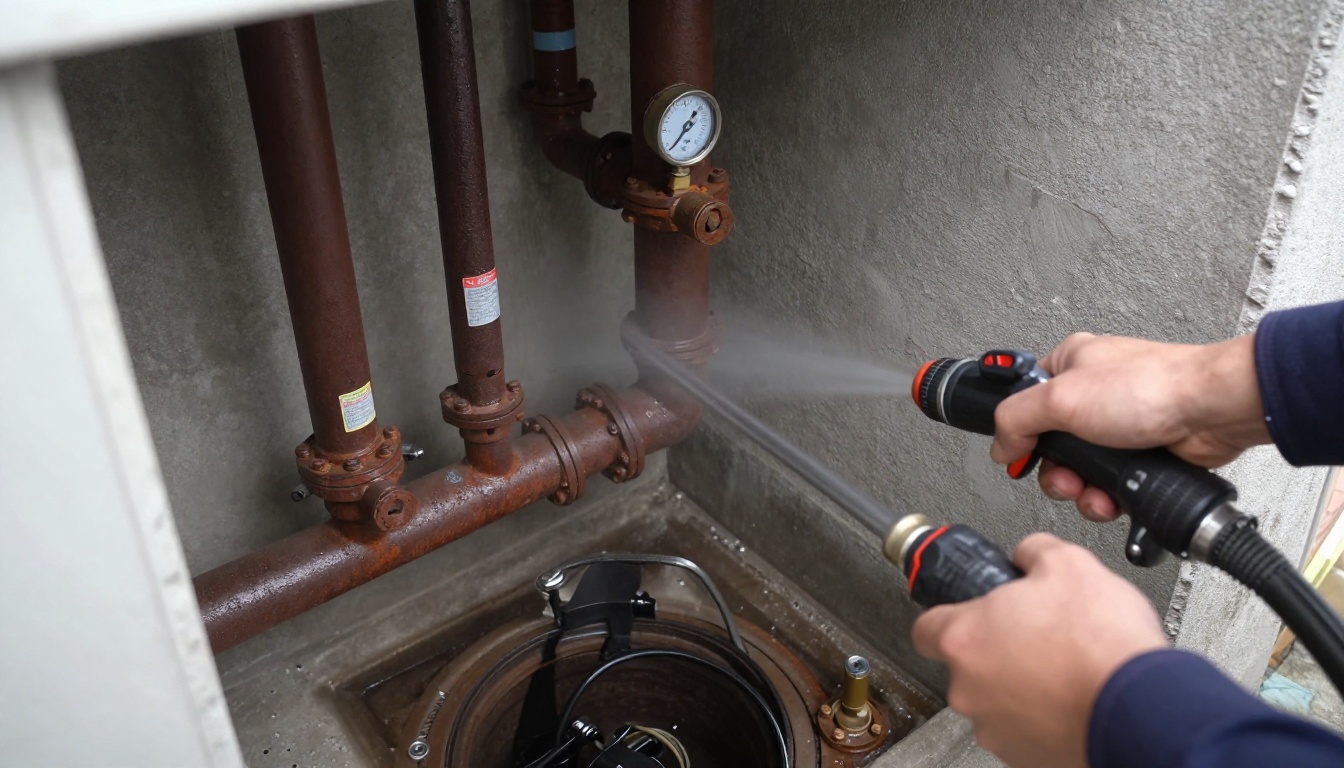
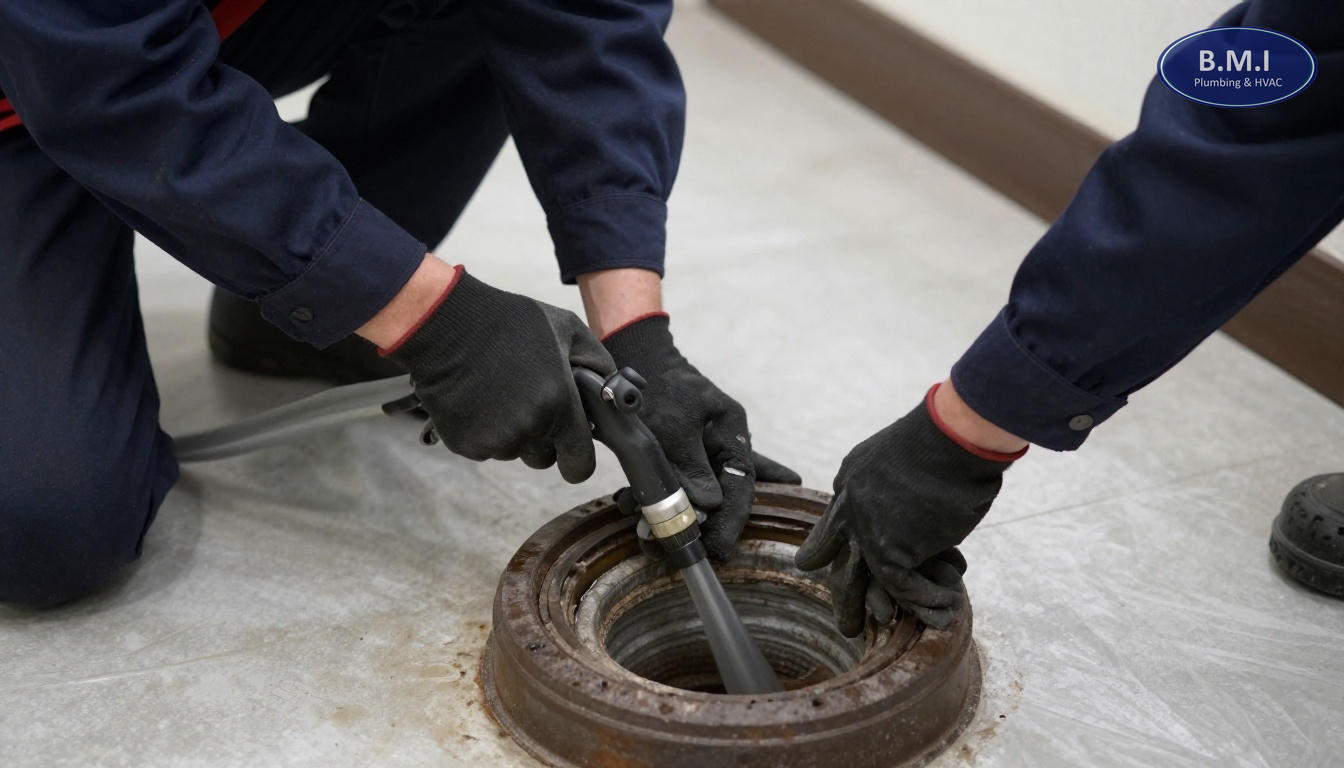
- High-pressure jetting with appropriate nozzles for grease removal
- Verification that flow is restored to the lower drain and offset
- Basic documentation of which stacks were completed and any deficiencies found
- Recommendations for follow-up cleaning frequency or further repairs and service
The technical reason jetting is preferred over snaking is simple: a cable opens a path; water cleans the wall. In kitchen stacks, wall condition matters more than a temporary opening through the center of the blockage. If a 3-inch stack is reduced to a greasy 1.5-inch passage around the perimeter, a snake can restore flow for a short time while leaving most of the loading in place.
On a 300-unit building, we would expect a planned jetting crew to complete roughly 4 to 8 stacks per day if access is good and the cleanouts are intact. If the lower offsets hold debris or the stack has not been cleaned in years, production drops because the crew has to flush, re-run, and confirm the line is actually clear. That is why the cheapest price per stack is not always the lowest annual cost.
Repair, clean, or replace: the decision framework boards actually need
Some stacks need maintenance. Some need capital planning. The challenge is knowing which is which before you keep spending operating dollars on a pipe that is near end of life.
Cleaning makes sense when
- The stack is structurally serviceable on camera
- Backups are grease-related and interval-based, not constant
- The building gets 12 to 24 months of relief after proper jetting
- Cleanouts are accessible and repeatable maintenance is practical
Partial repairs may make sense when
- One lower fitting, offset, or cleanout section is the chronic choke point
- The rest of the stack is serviceable but one section has failed internally
- Access can be achieved without opening multiple suites
Replacement should be discussed when
- The same stack backs up again within months of full cleaning
- Camera footage shows severe scaling, channel corrosion, or offsets holding solids
- Leaks are beginning to accompany blockages
- Access for cleaning is poor enough that each event becomes disruptive and expensive
In those cases, the building may need to move from maintenance budgeting to a capital discussion such as building re-piping or a targeted stack project under broader project solutions. Not every kitchen stack issue is a re-pipe, but boards should know when they are using maintenance dollars to postpone a capital decision.
That distinction is important for reserve fund conversations. A recurring cleaning program belongs in the operating mindset. A structurally failed stack belongs in reserve planning or a special project discussion. If your reserve fund study is being updated this fall, this is the right time to give the consultant actual field evidence rather than anecdotal complaints.
The cost drivers that move a stack cleaning price up or down
When managers ask why one building pays almost double another, it usually comes down to a handful of variables.
1. Number of stacks and layout complexity
A 22-storey slab tower with back-to-back kitchens may have fewer stacks than a point tower with more corners and offsets. Fewer stacks generally means lower total cost even if the building has more units.
2. Pipe condition
Original cast iron with heavy grease and scale takes longer than newer no-hub cast iron. If the line needs multiple passes, flushing, and camera confirmation, the cost rises.
3. Access and protection
If the cleanout is in a mechanical room or service corridor, production is faster. If access is through finished spaces, millwork, or locked service rooms, labour increases. Elevator booking and protection can also matter in occupied towers.
4. Timing
Planned weekday work is cheaper than holiday-weekend emergencies. Fall scheduling is usually easier than late December, when a blocked stack can turn into an emergency plumbing event with premium labour.
5. Reporting and diagnostics
Boards increasingly want documentation. That is sensible. But camera runs, stack mapping, and written deficiency reports add cost upfront while often saving money later.
6. Related maintenance issues
Buildings with unstable domestic pressure sometimes see residents using fixtures in ways that worsen system stress elsewhere. While not directly causing grease, poor pressure control complicates plumbing operations building-wide. If your building has not had a recent PRV maintenance review before winter pressure swings, budget for that separately rather than assuming all plumbing issues are stack-related.
Timelines, notices, and resident logistics
A kitchen stack cleaning program is usually one of the less disruptive maintenance items a board can approve, but it still needs organization. In most occupied Toronto condos, resident notices should ask occupants to avoid kitchen sink and dishwasher discharge during the scheduled work window for their line. The notice does not need to be dramatic; it does need to be specific.
Typical logistics for a mid-sized high-rise:
- 1 to 2 weeks before: site review, stack count confirmation, access planning
- 3 to 7 days before: resident notices and concierge/building operator coordination
- Work days: 4 to 8 stacks per day under normal conditions
- After completion: summary of completed stacks, any problem areas, and recommended next cycle
In older purpose-built rentals and some Scarborough or York towers, stack identification is not always as clean as the drawings suggest. Over decades, renovations, abandoned cleanouts, and patched ceilings can make the field conditions very different from the original plans. That is why a contractor who attends site before quoting usually gives a more defensible number than one pricing from unit count alone.
If the building is considering other plumbing work next year, it can also make sense to coordinate stack cleaning with broader reviews such as valve replacement, riser replacement, or even water-saving measures like an MEV valve where appropriate. Not because they are the same project, but because access, resident communication, and budget approval cycles often overlap.
What happens if a building defers the work
Sometimes deferral is reasonable. Sometimes it is false economy.
If the building has good camera evidence, a clean recent history, and no repeat problem stacks, waiting a year may be defensible. But if the building has recurring kitchen backups on the same lines, deferral usually shifts cost from planned maintenance to unplanned response. The financial difference is not subtle.
A single stack backup can trigger:
- After-hours callout charges
- Multiple suite entries
- Cabinet and flooring damage
- Drying and restoration costs
- Resident claims and management time
- Arguments over common element versus in-suite responsibility
In condominium terms, the plumbing diagnosis affects who pays. The vertical stack is often a common element, while a suite branch serving only one unit may not be. The declaration controls, but the practical point is that a stack problem misdiagnosed as a suite problem can create the wrong chargeback and a board-level dispute. That is another reason to insist on evidence rather than assumptions.
There is also an insurance dimension. A preventable overflow with a documented history of repeat stack issues is harder to explain than an isolated event. Even when the loss is insured, the corporation still absorbs deductible exposure, administrative time, and resident relations damage. For many buildings, that is the real business case for a scheduled kitchen stack cleaning program.
How to budget for next year without overcommitting
For fall budget planning, a practical approach is:
- Count the kitchen stacks, not the units.
- Review the last 24 months of service history by stack line if possible.
- Separate true stack backups from isolated suite branch issues.
- Obtain a site-based budget number with notes on access and condition.
- Decide whether the building needs annual, biennial, or selective cleaning.
For many Toronto buildings, the right first-year move is not “clean everything every year forever.” It is clean the known problem stacks, camera a sample of the rest, and set the next cycle based on evidence. That is more defensible to a board than either over-maintaining the whole building or waiting for Christmas-week backups.
If your building has not had kitchen stacks reviewed in more than two years, and you are building next year’s operating budget now, this is the time to line up a site visit. If the inspection shows the issue is broader than maintenance, then the board can pivot early to projects and reserve planning instead of discovering that in February.
FAQs
What does kitchen stack cleaning cost for a Toronto condominium building?
In the Toronto market, a planned kitchen stack cleaning program is usually priced per stack, not per suite. A common working range is about $450 to $900 per stack for straightforward high-pressure jetting in an occupied high-rise, with camera work, difficult access, or heavy grease loading pushing costs higher. On a 20- to 30-storey building with 8 to 16 kitchen stacks, annual or biennial programs often land somewhere between roughly $6,000 and $18,000, depending on stack count, access, and whether the scope includes reporting, suite coordination, and follow-up service calls.
How often should condo kitchen stacks be cleaned?
Most condominium buildings do not need every kitchen stack cleaned every year, but many do need a program rather than reactive service. In 1970s to early-1990s Toronto, North York, and Scarborough towers with original 3-inch or 4-inch cast iron kitchen waste stacks, a 12- to 24-month cycle is common because interior scaling and grease build-up reduce the effective diameter of the pipe. Newer post-2010 towers may stretch longer if resident use is lighter and camera inspections confirm the pipe walls are still relatively open.
Why is jetting preferred over snaking for kitchen stack cleaning?
A snake usually punches a hole through a blockage, but it does not reliably strip grease film from the full inside circumference of a vertical kitchen stack. High-pressure jetting, typically run with the right nozzle from an accessible cleanout, scours the pipe wall and removes the grease and soap build-up that causes repeat backups. In buildings where a stack backs up again within a few months of snaking, a camera inspection often shows that 60 to 80 percent of the pipe wall was still coated after the line was merely opened, not truly cleaned.
How long does a kitchen stack cleaning program take in an occupied condo?
For a typical occupied high-rise, a crew may complete about 4 to 8 stacks in a day if access is straightforward and the cleanouts are usable. A mid-sized 200- to 300-unit building often takes 2 to 4 working days for the field work, plus resident notice, site review, and reporting. If stacks are heavily loaded, cleanouts are buried behind millwork, or repeated flushing is needed to clear lower offsets, the duration can extend.
Who usually pays when a kitchen stack problem affects one suite?
In many Toronto condominiums, the vertical kitchen waste stack is a common element, while the branch piping serving only one suite may be the owner’s responsibility, but the declaration is what governs. A sink that drains normally on its own yet backs up when the suite above runs a dishwasher often points to the common stack, not the in-suite branch. That distinction matters because it drives whether the corporation budgets the work, whether a chargeback is appropriate, and how the insurance deductible question is handled after a spill.
Can a building defer kitchen stack cleaning for a year to manage the budget?
Sometimes yes, but only if the decision is based on evidence rather than optimism. If the building has recent camera footage, a low history of kitchen backups, and stacks that were thoroughly jetted within the last 12 to 18 months, deferring a year may be reasonable. If there are repeated holiday-season backups, original cast iron stacks with visible scaling, or frequent emergency calls on the same riser line, deferral usually costs more in after-hours service, suite damage, and resident disruption than the planned program would have.
Next steps for boards and property managers
If your building has had two or more kitchen backup calls on the same stack line in the last 12 months, treat that as a building issue until proven otherwise. Before finalizing next year’s budget, have the kitchen stacks reviewed on site, identify how many true kitchen stacks you have, and ask for a recommendation that separates routine cleaning from pipes that may be nearing replacement.
BMI sets up scheduled maintenance rather than selling every call as an emergency. If your kitchen stacks have not been jetted in over two years, or if you are seeing repeat sink backups as holiday cooking season approaches, arrange a site visit and budget review now. If there is already an active overflow or leak, 24/7 emergency plumbing response is available.
For related planning, property managers often also review maintenance programs, backflow prevention testing, and seasonal plumbing items through the BMI blog.
Contact BMI
- Contact BMI
- Phone: (416) 845-3756
- Emergency: (416) 845-3756, answered 24 hours a day
- Email: info@brial.ca
More on condominium plumbing
Hydro Jetting vs Snaking Condo Waste Stacks in Toronto
Hydro jetting vs snaking for condo waste stacks in Toronto: what each method does, costs, timing, and when a board …
Condo Kitchen Stack Cleaning Frequency in Toronto
How often should a condo kitchen stack be cleaned? Toronto guidance on stack cleaning schedule, costs, warning signs and …
Why Kitchen Stacks Block in Toronto Condominiums
A practical guide to kitchen stack cleaning in Toronto condos: why grease buildup happens, what blockage signs mean, and …
Need a plumber in your building?
BMI services roughly 200 condominium and multi-residential buildings across Toronto and the GTA. Emergencies are answered at any hour.