
Kitec and Uponor Pipe Replacement in Aurora Condos
Kitec and Uponor pipe replacement in Aurora condos and rentals. Local guidance on failures, investigation, budgeting and project planning.
Kitec and Uponor Pipe Replacement in Aurora Condos
Quick summary: In Aurora, Kitec and certain Uponor-related plumbing problems show up most often in condominium and multi-residential buildings from the late 1990s through the 2000s, when plastic water distribution systems were widely used in suites. For boards and property managers, the real decision is not whether one leak can be repaired, but whether the leak history, fitting condition and access constraints now justify a planned replacement program instead of repeated emergency work.
Why Kitec and Uponor issues show up in Aurora buildings specifically
Aurora is not a downtown high-rise market with a large stock of 1960s and 1970s towers. Much of the multi-residential inventory that matters for this topic was built later: low-rise and mid-rise condominiums, townhouse-style common element communities, and newer apartment or condominium buildings delivered during the growth that spread around Yonge Street, Bayview and the Wellington corridor. That matters because the plumbing materials installed in those years are different from what you would expect in older Toronto rental stock.
In many Aurora buildings from roughly the early 2000s, domestic hot and cold water distribution inside suites was installed with plastic piping systems rather than all-copper branch lines. Where Kitec was used, or where certain Uponor configurations and fittings have shown a pattern of failure, the building can appear fine for years and then begin producing nuisance leaks that become a budget and insurance problem. The first few incidents often look isolated: a pinhole-style leak at a fitting behind a vanity, a split line near a water heater closet, or a ceiling stain in the suite below. After that, the pattern usually becomes clearer.
Aurora’s building form also affects project planning. A six-storey condominium near Yonge and Wellington does not behave like a 30-storey tower in the core. There may be fewer riser zones, shorter vertical runs and somewhat easier staging, but there are often tighter in-suite mechanical chases, less generous service space above corridors, and less room for material handling. In low-rise stock, piping is frequently routed in bulkheads, behind tubs and through stacked wet walls, which can make localized repairs look cheap at first while driving up restoration costs over time.
Water conditions and pressure management matter as well. Aurora’s municipal supply environment, like the rest of York Region municipalities, can produce different pressure experiences depending on a building’s elevation, booster arrangement and internal pressure-reducing setup. We often tell boards that a pipe material problem and a pressure-management problem can coexist. If a building is seeing leaks on aging plastic distribution piping, it is worth reviewing its pressure reducing valve maintenance and replacement program at the same time, especially heading into colder months when operating conditions can shift.
For boards preparing next year’s capital plan, this is also a reserve fund issue. Under the Condominium Act, reserve fund studies and updates are supposed to reflect the real life cycle of major common elements. If a building in Aurora has a documented pattern of failures from Kitec or Uponor-related components, that trend should be reflected in the timing assumptions for replacement work rather than treated as random service events.
How Kitec plumbing and Uponor pipe problems present in Aurora condos
Property managers rarely receive a ticket that says, “our building has a systemic piping issue.” They get symptoms. In Aurora, the reports are usually much more ordinary:
- water staining in a kitchen bulkhead or bathroom ceiling
- a resident hearing a hiss inside a wall after a hot water draw
- recurring leaks around a lavatory shutoff or toilet supply area
- a leak in one suite causing damage in the suite below
- discoloured drywall around a fan-coil closet or laundry area
- repeated insurance claims tied to domestic water escapes
In buildings with Kitec plumbing, one of the practical warning signs is clustering. You may see two leaks in one stack line this quarter, another in a parallel line next quarter, and then failures start appearing on both hot and cold sides. The fittings are often the first place to focus, but by the time the board is discussing a capital project, the issue is usually broader than a single bad connection.
With Uponor pipe systems, the conversation is often more nuanced. Not every Uponor installation is a replacement candidate, and not every leak means the whole system is compromised. The concern is trend, environment and failure mode. Are failures concentrated at fittings? Are they happening on recirculated hot water branches? Were there prior repairs using mixed materials or inconsistent methods? Those details shape the recommendation.
For occupied Aurora condominiums, resident impact is what drives urgency. One leak in a vacant area is a repair. Three leaks in occupied finished suites, with flooring and cabinetry exposure, starts to become an operational issue for management. If your team is already relying on repeated 24/7 emergency leak response and follow-up in-suite plumbing repairs, it is time to step back and ask whether reactive spending is masking a building-wide problem.
What an Aurora diagnosis should include, and what evidence to insist on
Boards should be careful not to approve a large replacement project based on anecdotes alone. At the same time, they should not let a clear pattern drag on for years because no one has assembled the evidence properly. A useful diagnostic process in Aurora usually includes five things.
First, confirm the material and extent. That means opening representative locations in suites and common areas, not just looking under one sink. The investigation should identify where Kitec or Uponor-related components are present: branch lines, manifold systems, vertical transitions, mechanical room tie-ins, or only isolated renovations.
Second, document failure points. Good reporting includes photos of failed fittings or pipe sections, notes on hot versus cold side, floor level, stack line and whether the leak was active or historical. If available, failed parts should be retained for review.
Third, inspect adjacent systems that affect replacement scope. A building planning pipe replacement should also understand the condition of shutoff valves, access panels, wall assemblies and domestic riser tie-ins. This is where a broader look at valve audit, charting and exercise programs and, in some buildings, sectional and isolation valve replacement becomes worthwhile. There is little value in replacing suite piping if the building cannot isolate work areas reliably.
Fourth, verify pressure conditions and mechanical room controls. We routinely see boards focus on branch piping while ignoring weak pressure control or deferred maintenance on PRVs. If the domestic water system has pressure fluctuations, the replacement plan should consider those conditions as part of the overall risk picture. Related common elements such as domestic water riser replacement may or may not be necessary, but they should at least be evaluated during scoping.
Fifth, get a restoration-based estimate, not a pipe-only estimate. In occupied buildings, the plumbing rough-in can be only part of the cost. Drywall, paint, access panel installation, tile, millwork protection, cleaning and resident coordination all matter. In many Aurora properties, especially lower-rise buildings with finished bulkheads and limited chase space, restoration and access logistics can materially change the budget.
If the building has any premise isolation device for cross-connection control, project planning should also account for required testing and recommissioning after shutdowns or mechanical room modifications. BMI also handles backflow prevention testing and certification, which often needs to be coordinated around larger plumbing work.
A representative Aurora Kitec replacement project
A realistic example would be a seven-storey condominium from the early 2000s near Yonge Street and Wellington, with roughly 90 suites. Management had experienced several domestic water leaks over an 18-month period. Most were in bathrooms and laundry closets, and two had caused damage into the suites below. The original repairs had been localized, but the incident log showed a pattern: hot and cold branch lines of the same material family, with repeated fitting-related failures.
BMI was asked to investigate. The first step was selective opening in representative suites on different floors, plus review of prior leak locations and mechanical room tie-ins. The inspection confirmed plastic in-suite domestic water distribution with brass fittings, consistent with a building-wide replacement discussion rather than isolated service work. At the same time, several suite isolation valves and some sectional valves were found to be unreliable, which would have made piecemeal future repairs more disruptive.
The board did not proceed straight to full building re-piping. Instead, the project was structured in phases. Phase one focused on the highest-risk stack lines and the suites with prior leak history. Access routes, elevator booking, resident notices and shutoff windows were mapped out in advance. Plumbing work was coordinated with protection of finished areas, rough-in replacement of affected domestic water lines, pressure testing, reconnection to fixtures and scheduled restoration.
The initial phase covered 24 suites plus associated common area tie-ins and took about six weeks from mobilization through rough-in and testing, with restoration extending beyond that on a rolling basis. The rough order of cost for that phase landed in the low to mid six figures, with final cost depending on the amount of drywall and tile restoration required. A full building program, if carried through all suites, would have been a substantially larger capital item, but the phased approach let the board address immediate risk while aligning the remainder with budget planning.
That type of project is common in Aurora because the building stock often sits in the middle ground: not old enough for wholesale domestic riser replacement in every case, but old enough that original in-suite plastic distribution is no longer a low-risk asset. For boards comparing options, it is useful to review examples of full building re-piping and broader capital project work to understand how a phased replacement fits into a longer program.
Costs and timelines for Kitec and Uponor pipe replacement in Aurora
Costs vary widely by building layout, access and restoration standard, so any number here should be treated as a market estimate, not a quote. For Aurora condominium and multi-residential properties, the usual cost drivers are:
- number of suites and bathrooms per suite
- whether kitchens and laundry branches are included
- how much of the piping is behind tile versus drywall
- access through stacked wet walls versus scattered routing
- whether valves, panels and common area tie-ins must be upgraded
- occupied versus vacant work areas
- required evening or carefully staged shutdowns
For a small targeted investigation and scope confirmation, boards often spend from a few thousand dollars up to the low five figures, depending on the number of openings and the amount of reporting required.
For partial replacement in a low-rise or mid-rise Aurora building, a phased program for one section or stack line can range from tens of thousands into the low or mid six figures once plumbing, access, protection and restoration are included. For a whole-building in-suite replacement program, total costs can move into the high six figures or more depending on suite count and finishes.
Timelines also need to be realistic. Investigation and budgeting may take a few weeks. Pre-construction planning, resident notices and procurement can take another few weeks to a couple of months. Physical replacement in occupied suites is usually measured in weeks for a limited phase and months for a whole-building rollout. Fall is often when boards in Aurora want numbers in hand so they can make decisions before winter and before next year’s budget is locked.
If the building has related deferred items, combining work can improve value. For example, a project may be paired with sectional and isolation valve replacement, pressure reducing valve maintenance and replacement, or review of other aging systems found during investigation. That does not always reduce first cost, but it often reduces total disruption.
Repair versus replacement in Aurora: a useful decision framework
Boards generally struggle with one question: when does a pattern of leaks justify planned replacement? In Aurora, a sensible framework usually looks at frequency, severity, accessibility and insurability.
Repair-oriented management can still make sense when failures are rare, confined to a small number of suites, and tied to a clearly limited area or prior renovation. It can also make sense when the board needs time to confirm material extent and align funding.
Replacement becomes easier to justify when:
- leaks are recurring across multiple floors or stack lines
- failures involve original material in inaccessible locations
- repeated repairs require emergency access into occupied suites
- insurance deductibles or claim pressure are rising
- valves do not isolate properly, making every incident larger than it should be
- restoration costs are now exceeding the savings from deferral
This is also where reserve planning matters. If a reserve fund study still assumes a much longer service life than the building is actually experiencing, the board may need updated advice. A planned capital program is usually easier to defend to owners than a series of unpredictable emergency assessments.
Where a building still has other original distribution systems in service, the board should also consider whether the current project is a contained material replacement or the start of a longer domestic water renewal plan. Reviewing completed projects and building references and the available maintenance programs can help frame that discussion around building operations, not just one leak event.
What deferring Kitec or Uponor replacement costs Aurora boards
The obvious cost of deferral is emergency repair spending. The less obvious costs are often larger.
Insurance exposure is the first. Repeated domestic water escape claims can affect deductibles, renewal discussions and owner relations. Even where a corporation’s policy responds, the administrative cost of incidents is significant: after-hours access, drying, restoration coordination, resident complaints and chargeback disputes.
Operationally, deferral also consumes staff time. Property management teams end up repeatedly arranging suite entry, documenting damage, booking elevator protection and coordinating contractors on short notice. In lower-rise Aurora buildings without large service areas, one leak can disrupt hallways, parking access and resident routines disproportionately.
There is also the budget distortion problem. Emergency plumbing, drying and patch restoration often come from operating budgets or contingency funds, while planned replacement belongs in capital planning. If the corporation is repeatedly spending on in-suite plumbing repairs, drain cleaning and snaking for unrelated access events, and emergency response instead of addressing the root issue, the financial picture becomes harder for the board to explain.
Finally, deferral can close off easier project windows. Fall is usually a practical season to plan domestic water work in Aurora because boards are in budget season, contractors can review shutoff strategy before winter conditions, and related items such as PRV checks or holiday-season kitchen stack cleaning can be coordinated into the annual maintenance calendar.
FAQs about Kitec replacement and Uponor pipe in Aurora
How do we know whether our Aurora building has Kitec or Uponor piping?
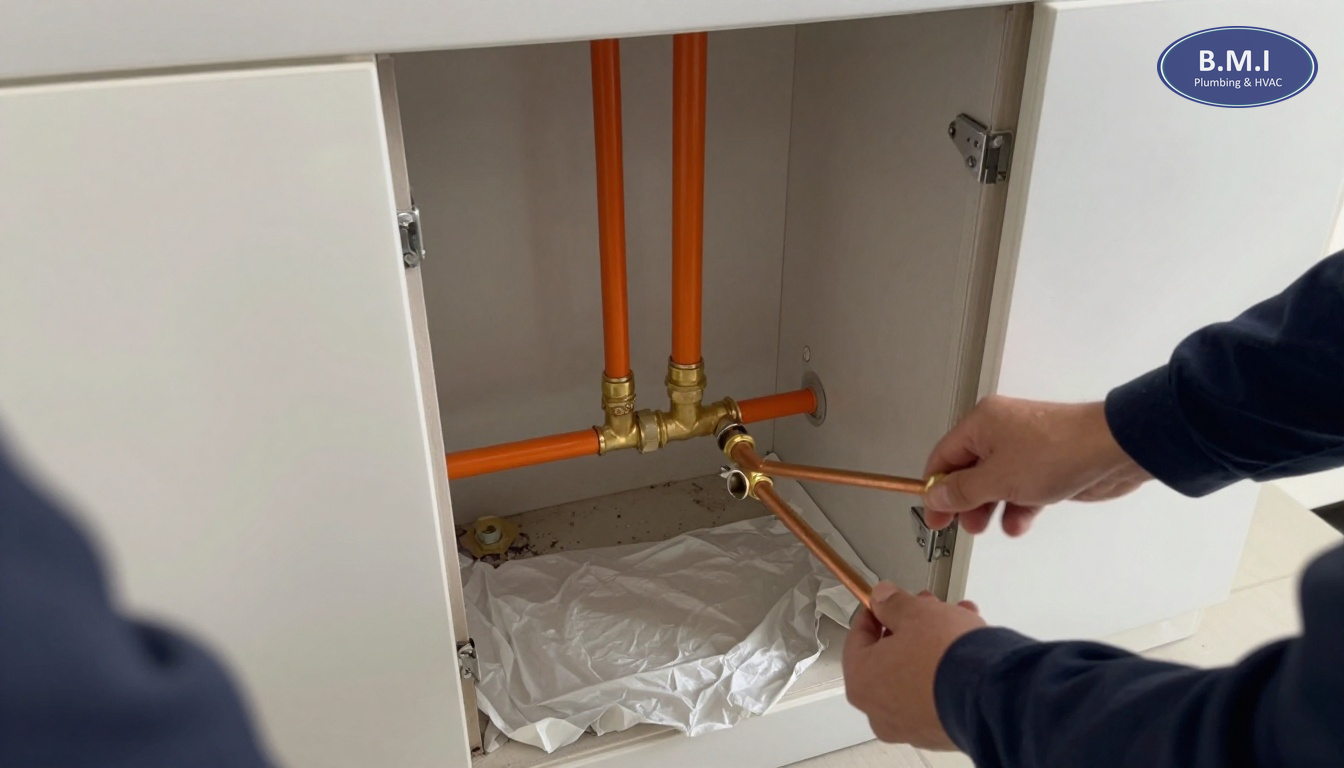
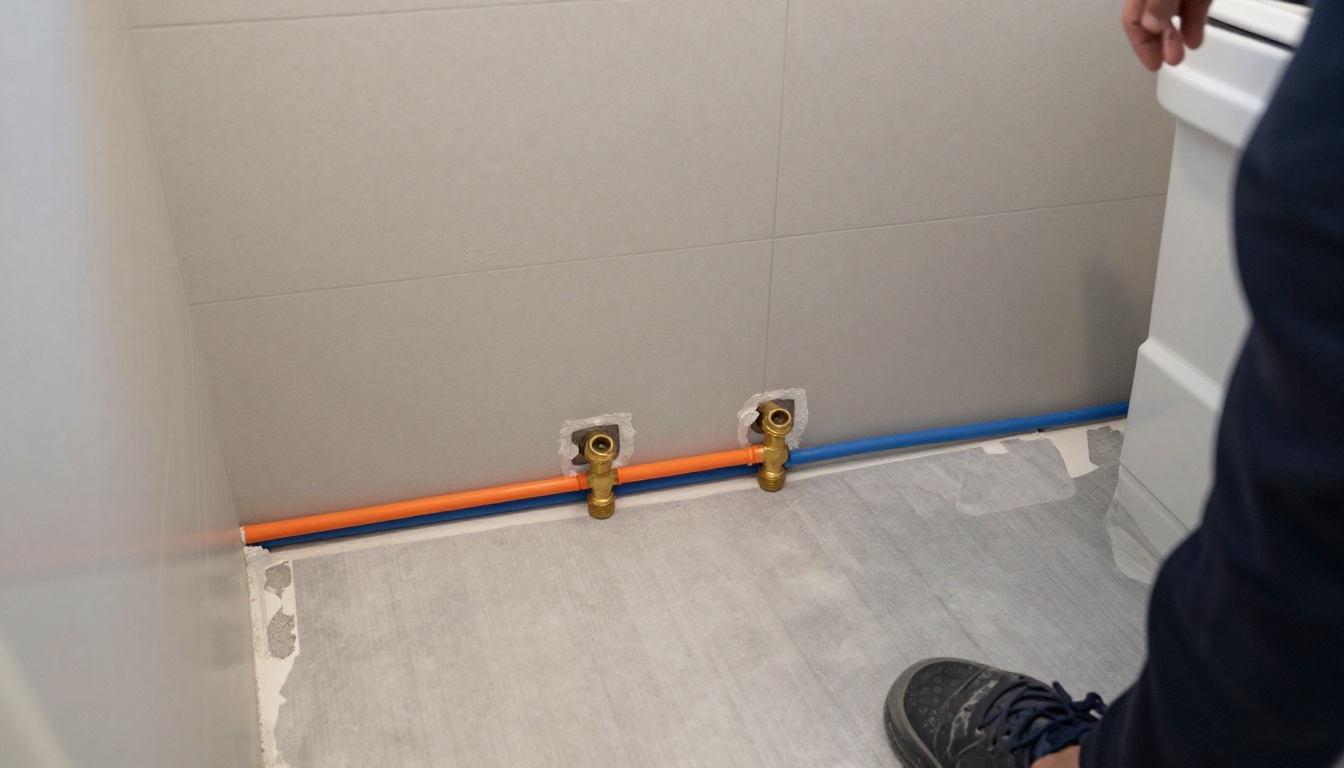
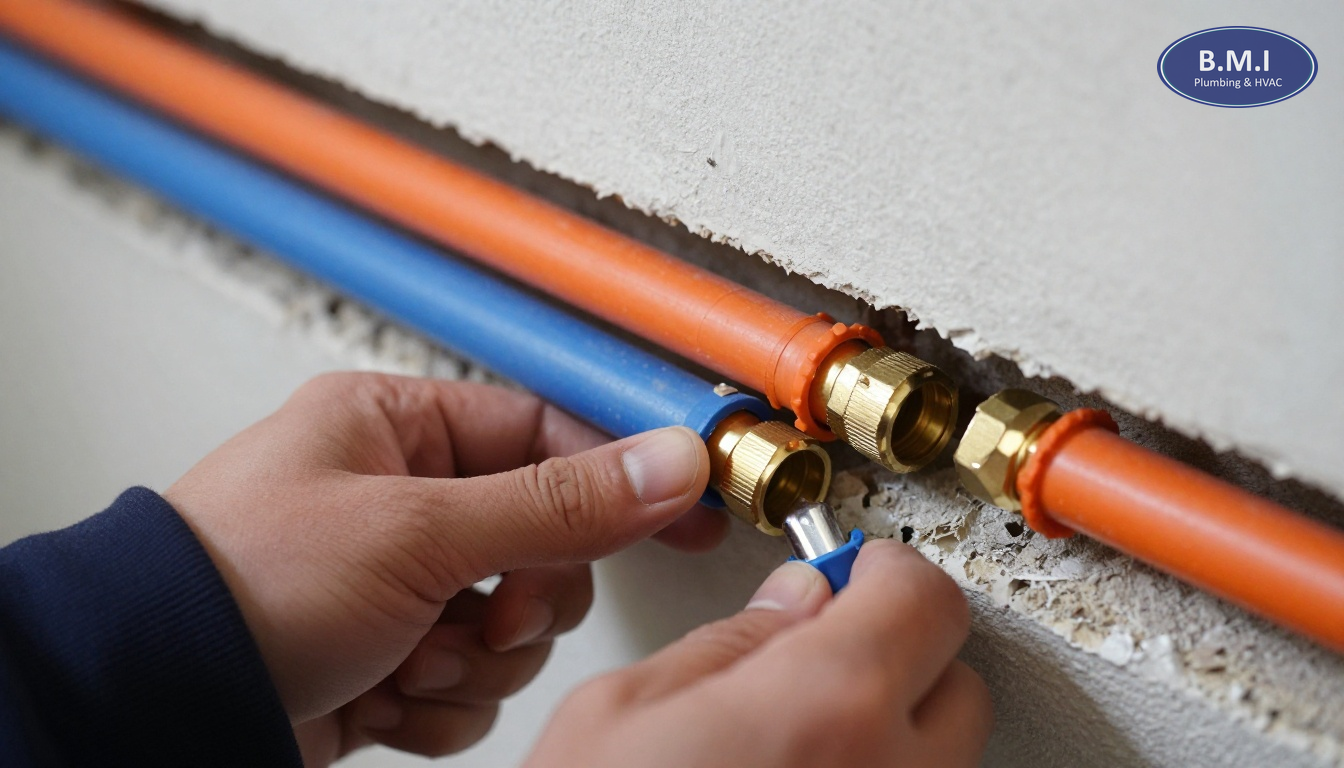
The starting point is the building’s construction window, suite mechanical layout and a physical inspection above ceilings, under vanities, in fan-coil closets and in service rooms. In many Aurora condominiums from the early 2000s, the giveaway is orange or blue plastic water distribution piping with brass fittings, but colour alone is not enough. A proper inspection should document pipe markings, fitting types, locations and any active failures so the board can decide whether it is dealing with a localized repair issue or a building-wide replacement problem.
Is Kitec replacement in Aurora usually a full building project or can it be phased?
It can be either, depending on how the system was installed and where the failures are occurring. If the affected material is limited to in-suite branch lines, many Aurora buildings phase replacement by stack line, floor range or turnover schedule; if common area mains, risers or inaccessible fittings are involved, a coordinated capital project is usually more efficient. The right answer comes from field verification, not assumptions, because access, restoration scope and resident disruption drive the budget as much as the pipe itself.
Are Uponor failures the same as Kitec failures in Aurora condos?
No. Kitec problems are commonly associated with the pipe system and its fittings, while some Uponor issues are more often tied to specific fitting failures, installation methods or stress conditions in hot water recirculating environments. From a property management standpoint in Aurora, the practical point is the same: repeated leaks from one material family should trigger a documented investigation instead of isolated repairs with no trend analysis.
What does a typical Aurora investigation cost before the board approves replacement?
For a mid-rise or high-rise multi-residential building, a targeted plumbing investigation with opening of selected ceilings or bulkheads, suite sampling and a written photo record often falls in the low thousands to low five figures depending on access and the number of suites sampled. If the building also needs broader scoping for domestic water risers, valves or restoration planning, the pre-construction budget can increase. Those are planning costs, but they are usually small compared with the cost of repeated leak claims and emergency access after hours.
Can residents stay in their suites during Kitec or Uponor replacement in Aurora?
Usually yes, but with scheduled water shutoffs and controlled access. In occupied Aurora condominium projects, the work is commonly done in stages with advance notices, protection in finished areas, daily cleanup and restoration after plumbing rough-in. The main variables are how much drywall or tile must be opened, whether bathrooms are back-to-back, and whether the building has enough elevator and corridor access to keep crews moving efficiently.
Why should Aurora boards deal with this in the fall instead of waiting for another leak?
Fall is when many boards are finalizing budgets and reserve planning, and it is also a sensible time to review domestic water conditions before winter pressure swings and holiday occupancy. If your Aurora building already has a pattern of leaks, waiting rarely improves the economics. Planned work lets the board coordinate shutoffs, resident communication, restoration, and related items such as pressure reducing valve maintenance or valve replacement rather than paying premium costs for emergency response.
Next steps for Aurora property managers and boards
If your Aurora building has had even a small cluster of domestic water leaks in original plastic distribution piping, the first step is not to guess. It is to confirm what material is installed, where it is installed, how failures are occurring and what a realistic phased or full replacement would involve.
BMI serves Aurora and the surrounding GTA from its Toronto shop and works primarily in condominium and multi-residential environments. We can help with investigation, shutdown planning, suite access sequencing, related valve and pressure-control issues, and replacement programs that fit an occupied building. If you are budgeting this fall, now is the time to gather scope, evidence and preliminary numbers rather than carrying the problem into winter unchanged.
For planning support or a site review, use the contact and quote request page or explore more on the BMI blog.
Contact BMI
- Contact BMI
- Phone: (416) 845-3756
- Emergency: (416) 845-3756, answered 24 hours a day
- Email: info@brial.ca
More on condominium plumbing
Kitec and Uponor Pipe Replacement in Toronto Condos
Toronto guide to Kitec and Uponor pipe replacement for condos and rentals: signs, inspection, costs, timelines, and …
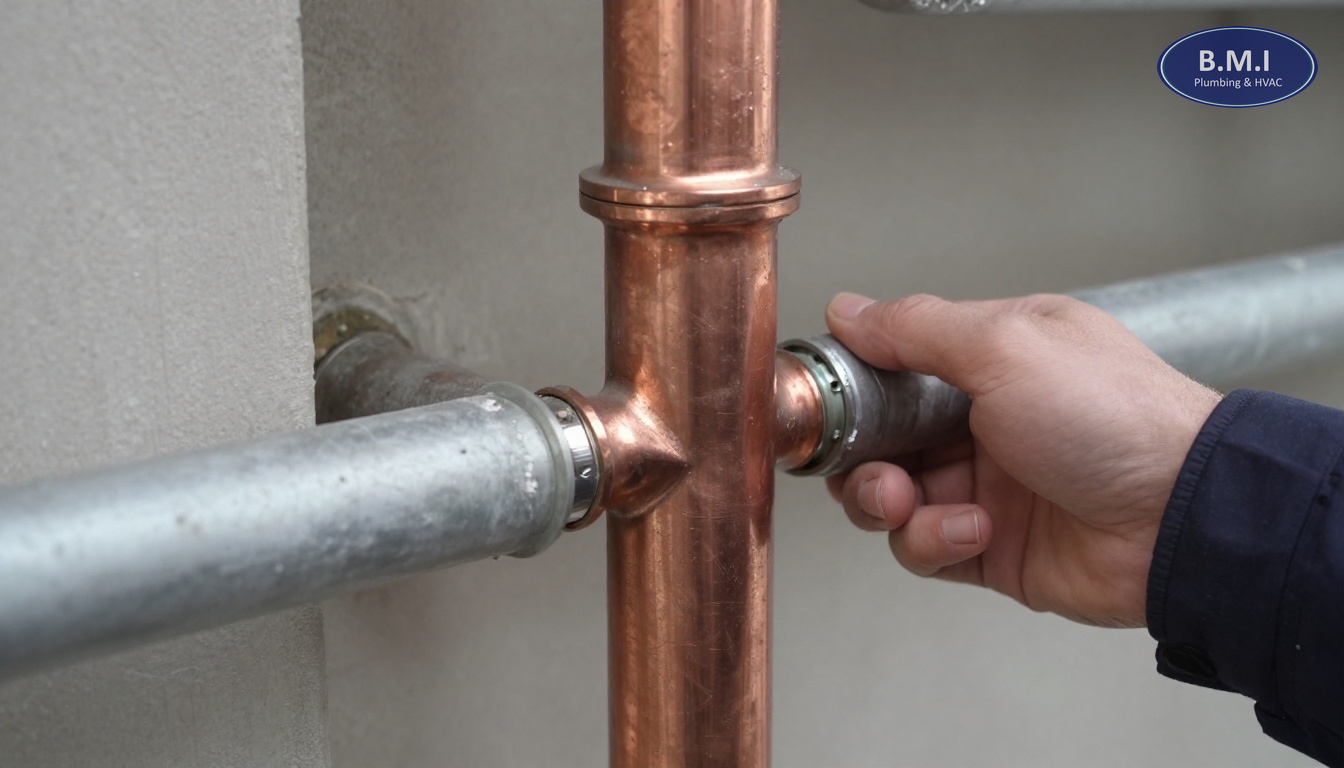
Domestic Water Riser Replacement in Aurora Condos
Domestic water riser replacement in Aurora condos: how to assess aging piping, budget the work, and plan a phased …
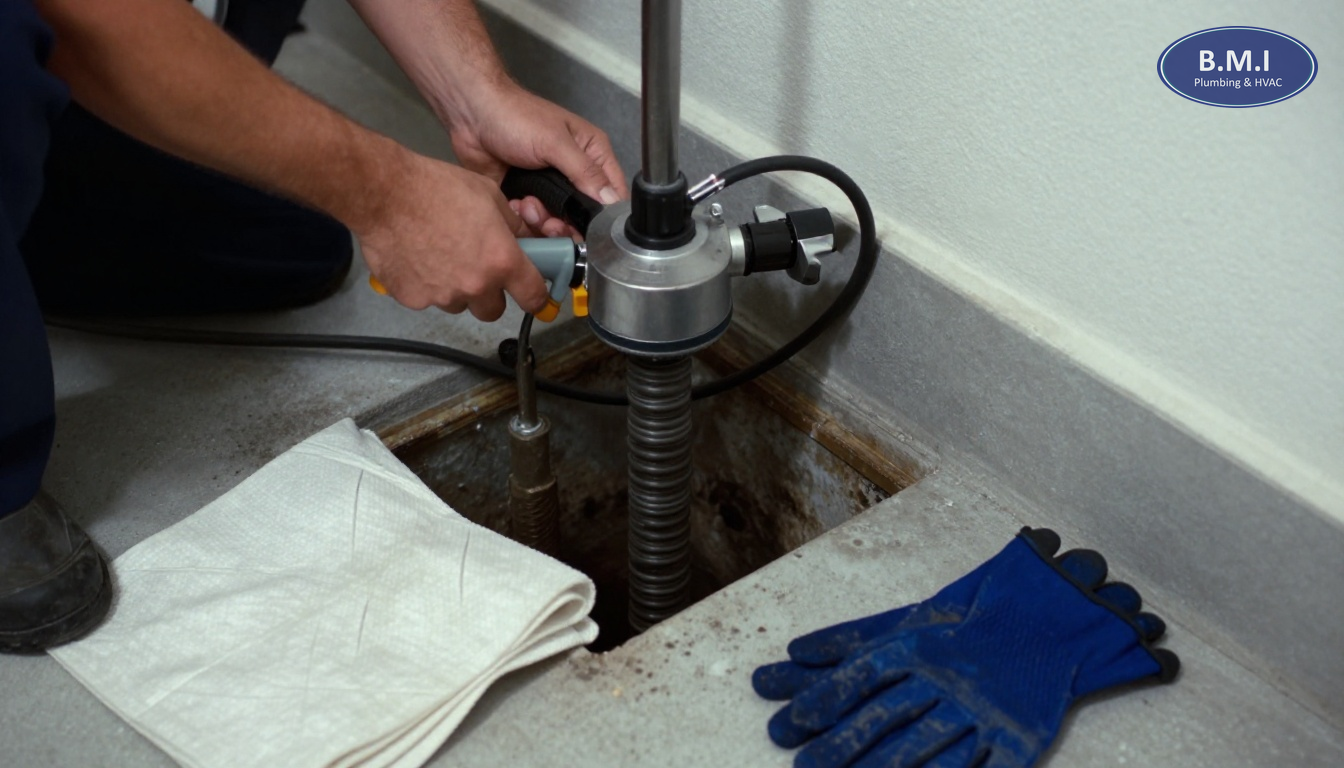
Floor Drains and Trap Primers in Aurora Condos
Floor drain and trap primer service in Aurora condos. Diagnose sewer gas smell, dry traps and failed primers in garages, …
Need a plumber in your building?
BMI services roughly 200 condominium and multi-residential buildings across Toronto and the GTA. Emergencies are answered at any hour.