Laundry Stack Cleaning in Toronto Condos: Costs and Signs
Laundry stack cleaning for Toronto condos: how lint and detergent block condo laundry drains, what inspections show, and what budgeting typically looks like.
Laundry Stack Cleaning in Toronto Condos: Costs and Signs
Quick summary: Laundry stack cleaning is one of the least-budgeted maintenance items in Toronto condominiums, even though lint, detergent sludge and softened grease can narrow a 3-inch waste stack enough to cause repeated overflows and lower-floor flooding. In fall, before holiday occupancy and winter pressure swings complicate emergency response, it is the right time to inspect problem condo laundry drains, decide whether cleaning will buy another cycle, and get defensible numbers in front of the board.
A common budgeting mistake is treating laundry drain calls as isolated in-suite issues. In many high-rises in Toronto, North York and Mississauga, the first complaint comes from one suite, but the pipe condition belongs to the whole vertical line. By the time three owners in the same stack have reported standpipe overflow or slow discharge, the building is usually no longer dealing with a one-off blockage. It is dealing with a maintenance program that should have been scheduled a year or two earlier.
The problem most boards do not see until a lower floor floods
Laundry stacks fail differently from kitchen stacks, which is part of why they are often missed in reserve and operating budgets. A kitchen stack usually gives obvious warning signs: recurring sink backups, dishwasher discharge problems, and grease loading that operators can often predict around holidays. A laundry stack is quieter. The line may pass water adequately at 10 a.m. but surcharge at 7 p.m. when multiple washers discharge nearly at once, sending 15 to 25 gallons per cycle into a vertical line that may also be carrying suds, lint and fine sediment from upper floors.
In buildings we service in Toronto and Scarborough, a classic pattern is a complaint from a suite on a lower third of the building: “the laundry standpipe overflows only sometimes.” That wording matters. Intermittent overflow during peak use often means the branch in that suite is not the whole story. If the pipe drains normally after the event, the blockage may be 10, 20 or 30 feet away in the common stack, where lint mats and detergent residue create a shelf that catches more debris each month.
Another reason boards miss it is that lint is not the only problem. Modern high-efficiency detergents create sticky residue, especially where residents use too much soap or combine pods, softener and scent boosters. In older cast iron, that residue bonds to rough interior scaling. In newer no-hub cast iron or PVC systems, the pipe wall is smoother, but the issue can shift to fittings, offsets and undersized branches where washing machines were added to plumbing that was never designed for today’s discharge rates.
If your building already runs a kitchen stack cleaning program, do not assume the laundry side is covered by the same maintenance logic. Laundry waste has a different loading profile and often needs its own schedule, access plan and evidence trail.
Why laundry stacks clog: the technical version that actually matters
A proper diagnosis starts with pipe material, pipe size and building vintage. In many 1970s and 1980s concrete high-rises in Toronto, East York and Etobicoke, laundry discharge ties into 3-inch or 4-inch cast iron sanitary stacks. After 35 to 50 years, those pipes are rarely smooth inside. Even where the wall thickness is still structurally serviceable, the interior can be narrowed by tuberculation, rust nodules and detergent scale. A 3-inch stack has an internal area of about 7 square inches when clear; lose just 1/2 inch of buildup around the circumference and the effective flow area drops far more than most boards expect.
Early-1990s towers are a mixed bag. Some have no-hub cast iron stacks in better condition than 1970s hub-and-spigot systems, while others have awkward branch tie-ins, long horizontal runs above dropped ceilings, or laundry added as an upgrade in suites that originally had common laundry rooms. A common mistake we see in early-1990s North York high-rises is assuming the newer tower cannot have stack loading because the pipe is “not that old.” Age matters, but design and use matter more. A poorly sloped 2-inch branch serving a standpipe can be enough to trigger recurring overflow even when the main stack itself is only moderately loaded.
Post-2010 glass towers generally have smoother drainage systems, often PVC or no-hub cast iron with better access, but they are not immune. In some newer buildings, the issue is not corrosion but suds pressure and poor venting interaction. High-efficiency washers discharge quickly, and if the branch, standpipe or venting arrangement is marginal, the resident reports “gurgling” or a brief standpipe rise that looks like a blockage but is really a system performance problem. That is why camera footage without context is not enough; flow testing and an understanding of stack layout matter.
Three field realities matter more than most generic articles mention:
- Lint behaves differently once it is wet. It mats against rough cast iron and catches hair, textile fibres and soap residue, creating a felt-like obstruction that a basic hand snake may poke through without actually clearing.
- Detergent residue narrows fittings first. Tees, wyes and offsets often load up before straight vertical sections do, especially where a lower-floor branch receives discharge from many upper suites.
- Laundry stacks can look acceptable on camera after an emergency opening, but still be poor candidates for deferment. If the contractor opened a narrow path through the obstruction rather than cleaning wall-to-wall, the stack may fail again in weeks.
This is why a building with recurring backups should not rely on emergency drain cleaning service alone. Emergency opening and preventive cleaning are not the same scope.
What managers and residents actually report when it is a stack issue
The wording of the complaint tells you a lot. Property managers are often given vague descriptions, but there are patterns that strongly suggest a common vertical line problem rather than a single suite issue.
Signs that point to the common laundry stack
- A washing machine standpipe drains normally on its own but backs up when an upper suite runs a load.
- Complaints come from suites on the same vertical line, often between the 2nd and 8th floors in a mid- or high-rise because those lower floors see the cumulative discharge from above.
- The issue is worse in the evening or on weekends, not first thing in the morning.
- A resident reports suds or grey water rising in the standpipe rather than a simple slow drain.
- The problem returns within days or weeks after a basic snake.
- Building staff notice the cleanout releases pressure or a heavy surge when opened, which suggests partial restriction downstream.
Signs that are more likely in-suite branch problems
- Only one suite is affected and upper/lower neighbours have no symptoms.
- The standpipe overflows every single time that washer drains, regardless of time of day.
- The blockage clears from the suite side and remains trouble-free for months.
- Camera footage shows the restriction within the branch arm serving that suite rather than in the vertical stack.
That distinction matters because it affects common element versus in-suite responsibility. In most condominium corporations, the vertical stack and shared sanitary piping are common elements, while the in-suite branch serving only one fixture may be unit responsibility. The declaration governs, not guesswork. If the corporation is going to charge back an owner, it should have evidence: camera footage, written findings and a clear location of the obstruction. Otherwise the manager ends up defending a weak position to the board and to counsel.
Where suite-level diagnosis is needed, it should be documented as part of a broader in-suite plumbing and common-stack assessment, not handled as isolated anecdotes.
What a proper inspection should include before you approve cleaning
If a contractor recommends cleaning every laundry stack in the building without identifying pipe type, access points or failure history, get a second opinion. The right scope depends on evidence.
At minimum, a defensible inspection should include:
- A stack map or vertical line identification. Which suites tie into which laundry stack.
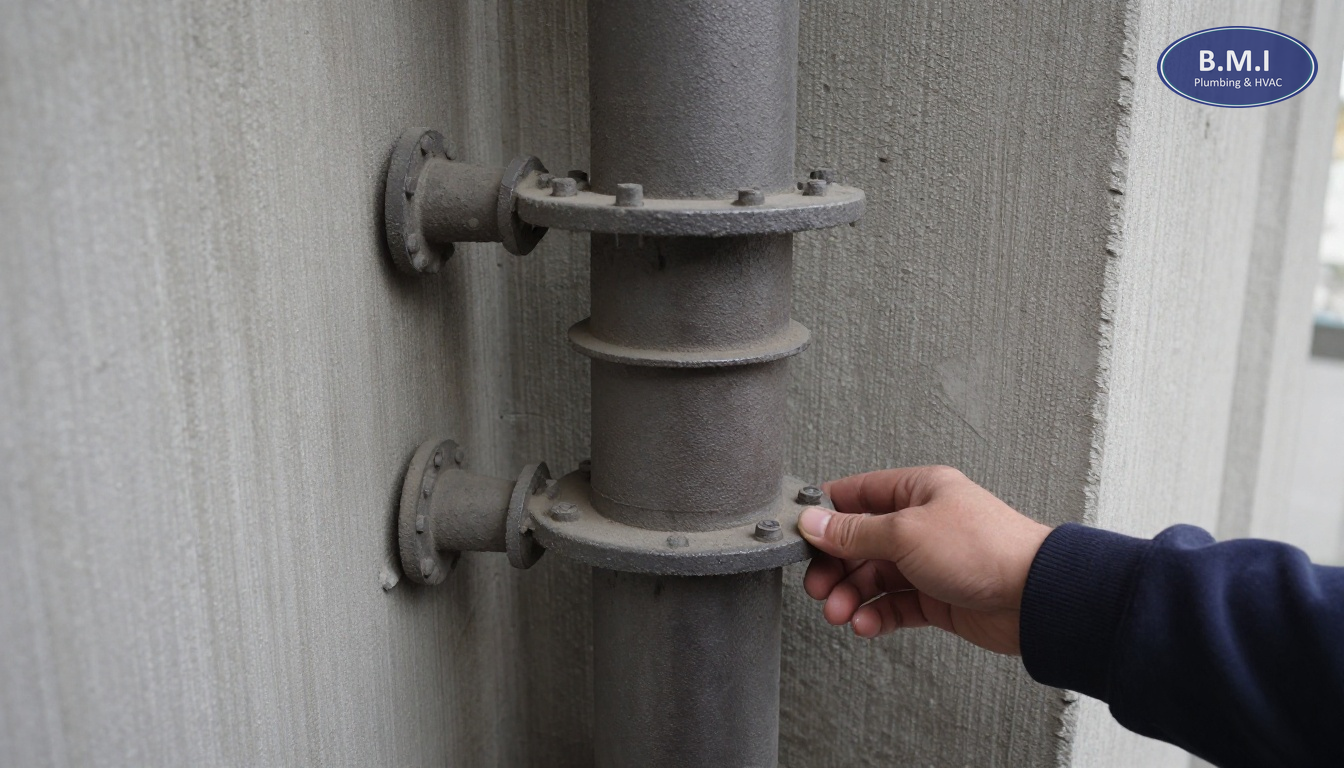
- Cleanout location review. Many buildings have poor or missing access, especially where finishes were added during renovations.
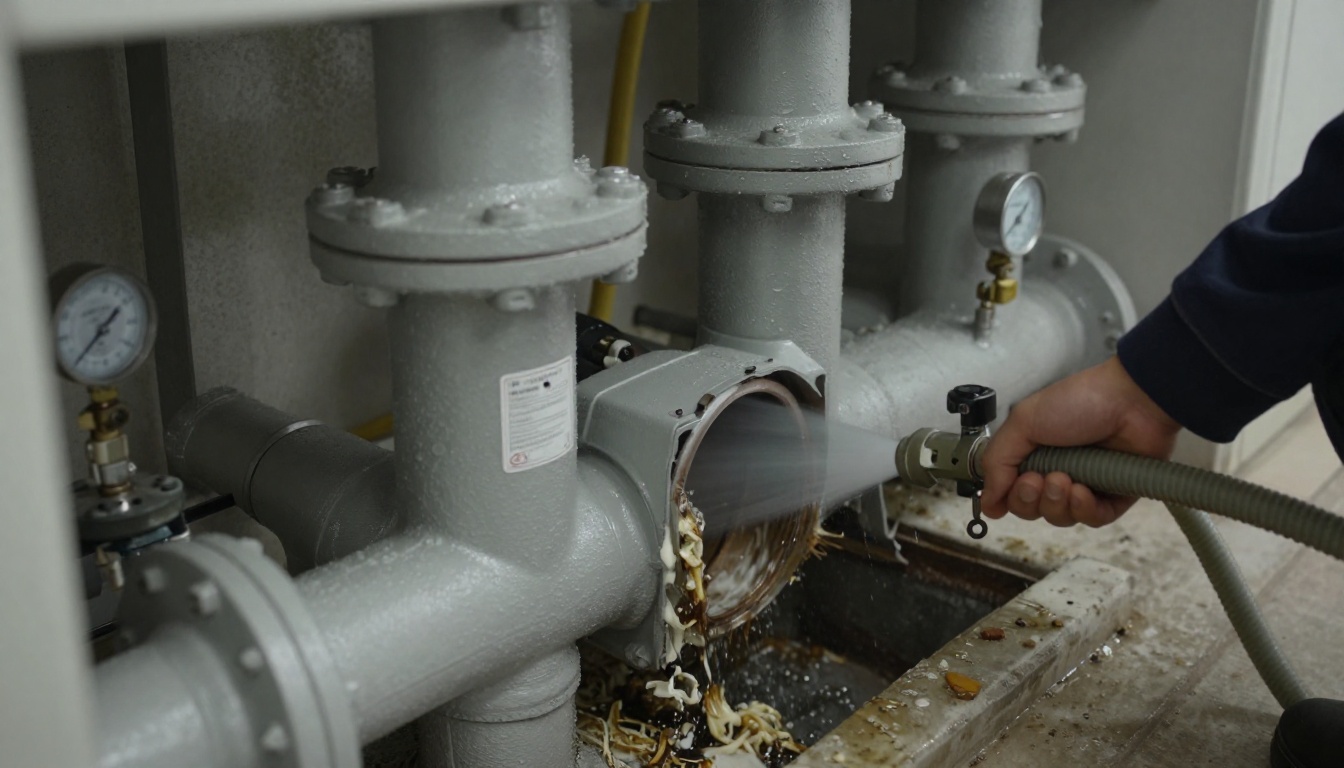
- Camera inspection where practical. A camera pipe inspection should show not just one still image but footage of the pipe condition before and after cleaning.
- Assessment of branch versus stack. Not every overflow is a full-stack issue.
- Written recommendations by stack or zone. Some lines may need immediate cleaning, some can wait, some may be beyond efficient maintenance and better suited to capital planning.
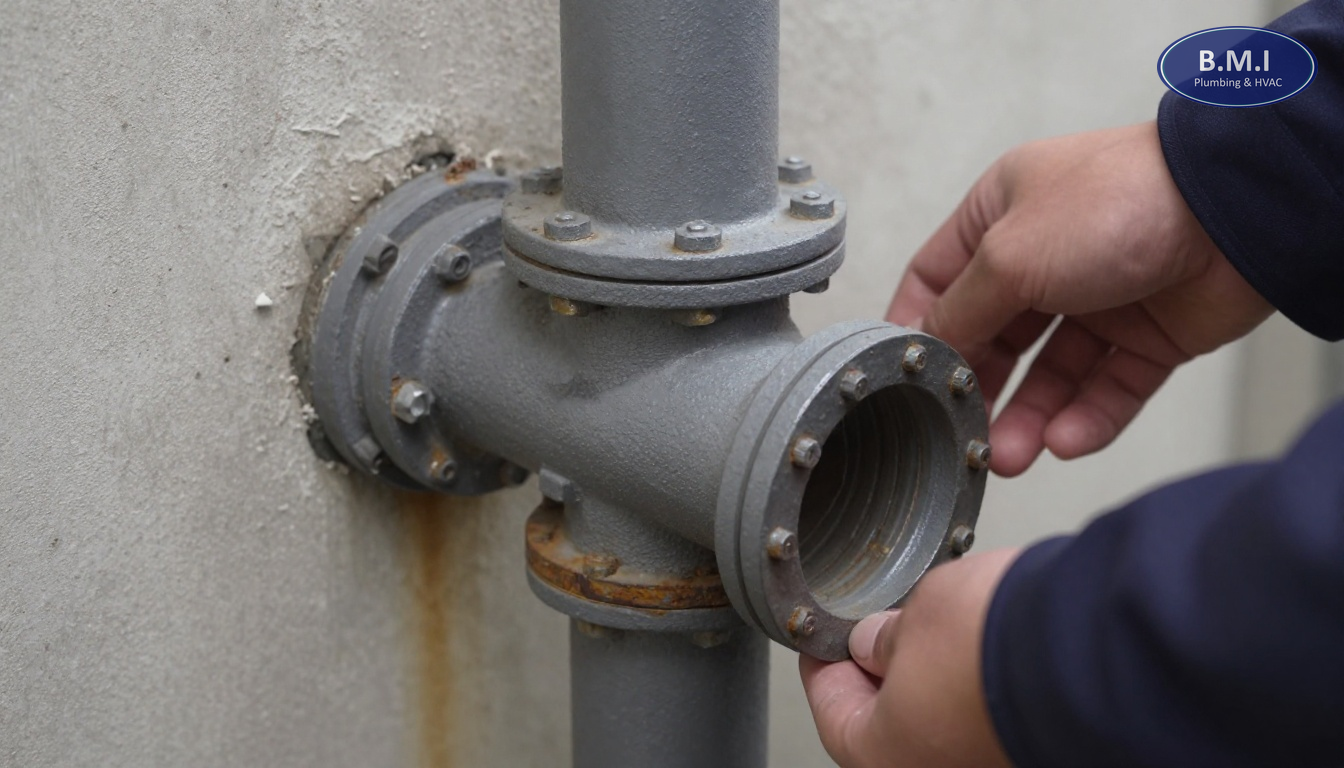
A useful field note is the difference between soft loading and hard restriction. Soft loading is lint, sludge and soap buildup that can usually be removed by jetting. Hard restriction is scale, offset joints, broken cast iron, protruding branch connections or settled piping that will continue to catch debris even after cleaning. Managers should insist that the report distinguish between those two. Cleaning a hard-failure pipe can still be worthwhile as a short-term measure, but it should not be sold as a durable fix.
In older Toronto and York buildings, missing or seized isolation and cleanout components often complicate what should be routine maintenance. If access is poor, it may make sense to pair laundry stack work with a valve audit and charting program or targeted valve replacement, especially if ceilings or service spaces are already being opened.
Cleaning methods: snaking, jetting, sectional work, and when each makes sense
There is no single right method for every condo laundry drain problem. The wrong method usually costs less on day one and more by month three.
Snaking
Snaking is useful for:
- a localized obstruction near a standpipe or branch arm
- emergency opening to stop an active overflow
- confirming whether the line is fully blocked or partially restricted
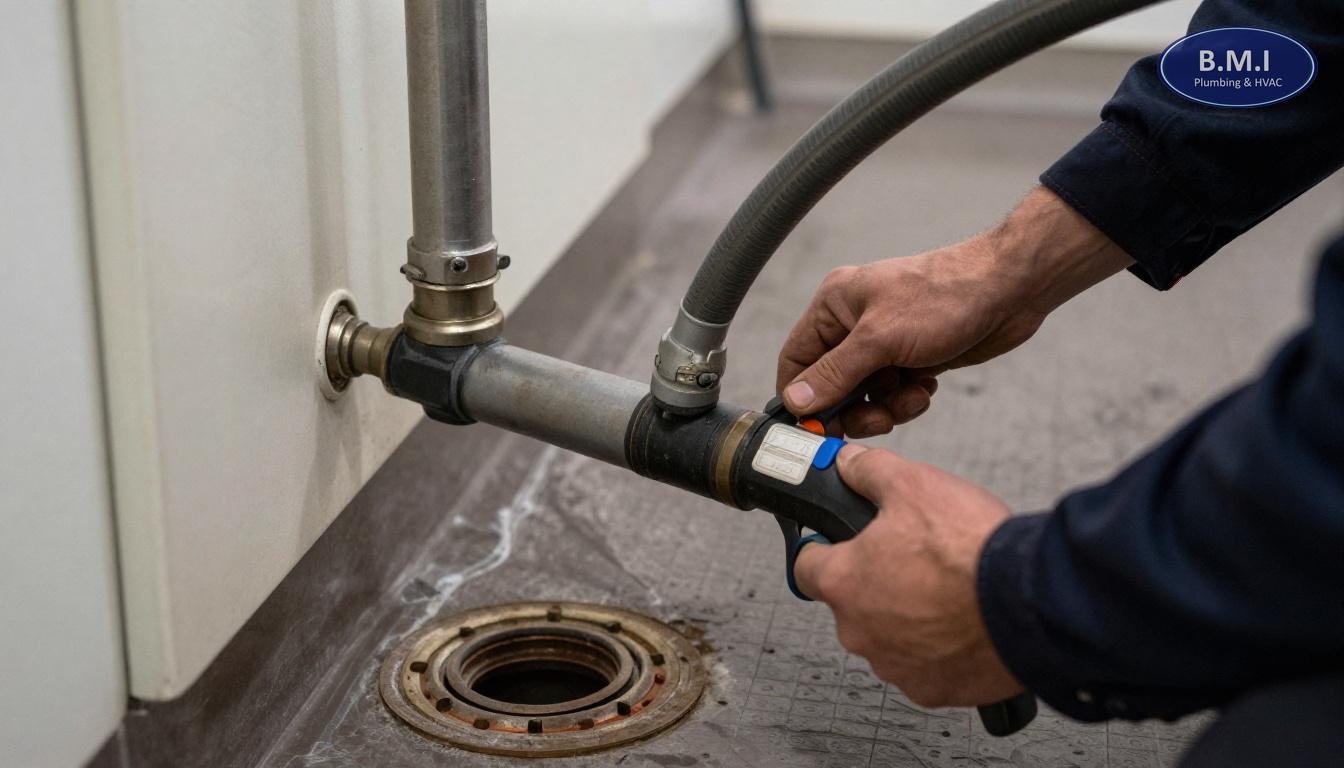
Snaking is weak for detergent-and-lint maintenance because it often bores a hole through the obstruction without removing the residue bonded to the pipe wall. In a 3-inch cast iron stack, that can leave a ring of material that starts catching fibres again the same week.
High-pressure jetting
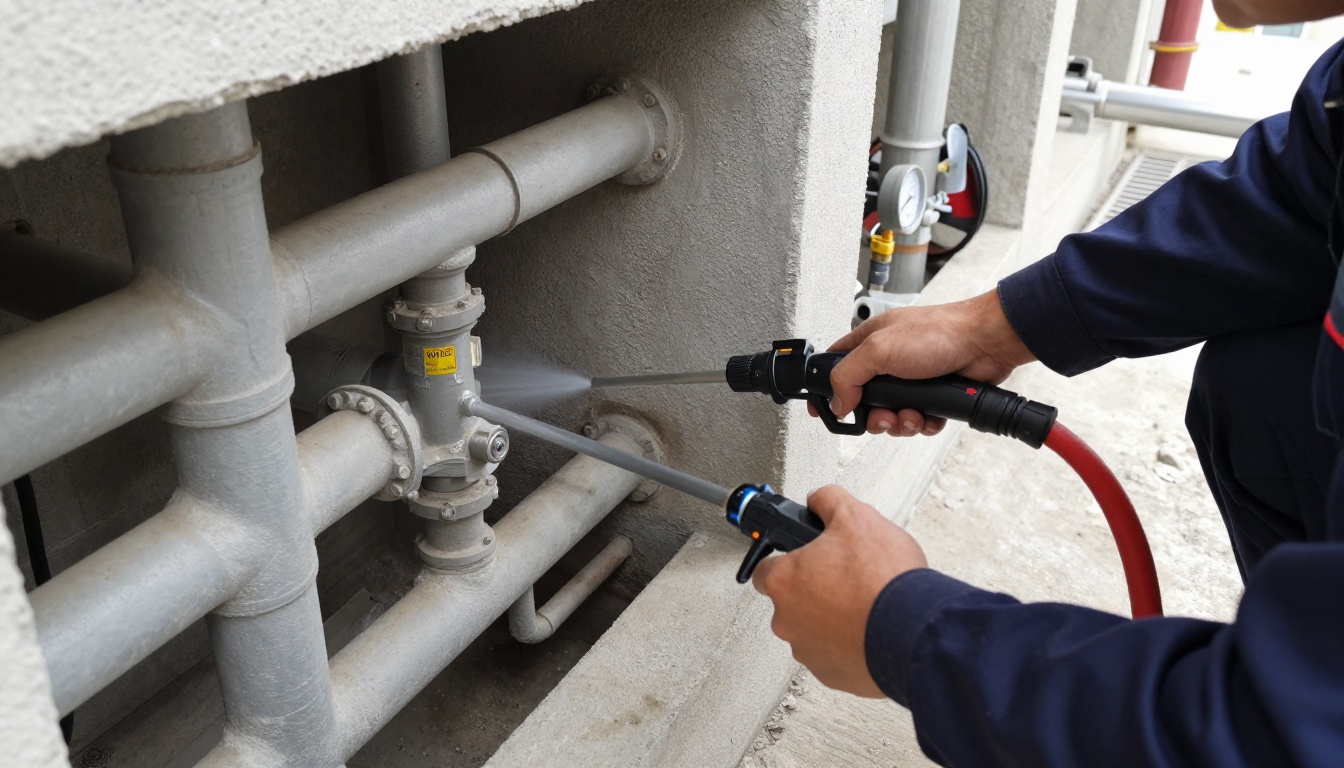
Jetting is usually the best maintenance choice when the stack is structurally intact. A proper laundry or kitchen-style stack cleaning program uses the right nozzle and pressure for the pipe condition, not maximum pressure for its own sake. In older cast iron, excessive pressure on a compromised pipe is not smart. The goal is controlled wall cleaning, often followed by camera verification, not brute force.
A typical crew may clean and verify 1 to 3 stacks per day depending on access, contamination level and whether suites need coordination. Straightforward stacks with good cleanouts move faster. Stacks with multiple offsets, poor access or heavy buildup take longer.
Sectional cleaning and branch attention
One of the most overlooked realities in condo towers is that the stack may be only half the issue. The lower-floor branch receiving discharge from above often needs attention too. If the branch is 2 inches and partially loaded, the resident at that connection point becomes the first visible failure even though the root cause is system-wide loading above. A good scope identifies these choke points.
If the line repeatedly reloads within a short interval, the building may need to move beyond cleaning and into project solutions planning.
Repair versus replacement: when maintenance is still worth doing
Boards often ask the wrong question: “Should we clean it or replace it?” The better question is: what is the remaining useful life of this stack, and what outcome are we buying with each option?
Here is a practical framework.
| Condition | Typical recommendation | Why |
|---|---|---|
| Cast iron stack with soft lint/detergent buildup, no major offsets or breaks on camera | Clean and re-inspect in 12-24 months | Maintenance can restore function at a fraction of replacement cost |
| Recurrent backups within 6-12 months after proper jetting | Investigate branch design, venting, or structural defects | Fast recurrence usually means more than routine loading |
| Heavy scale, broken sections, offsets, recurring leaks at hubs or no-hub couplings | Budget for replacement or sectional repair | Cleaning may buy time but will not change the failure mode |
| Building with multiple aging sanitary issues across stacks | Consider coordinated capital planning | Piecemeal emergency work becomes more expensive over time |
A partial replacement can make sense where the lower floors carry the highest load and the upper stack remains serviceable. Full stack replacement is more disruptive and usually belongs in a larger building re-piping or sanitary renewal discussion. Domestic water work such as riser replacement is a separate system, but in practice many boards coordinate access, notices and finishing repairs when both drainage and supply systems are aging.
One honest answer boards do not hear often enough is this: sometimes cleaning can wait a year. If there have been no repeat events, the camera shows only moderate residue, and the stack has good access for emergency service, a one-year deferral may be reasonable. But if the building has already paid for two after-hours overflow calls on the same line, the case for waiting gets weak quickly.
What laundry stack cleaning costs in Toronto, and what changes the number
The Toronto market prices this work by stack, access difficulty and verification scope. Exact pricing varies by building, but these are realistic budget ranges, not promises.
Typical budgeting ranges
| Scope | Typical Toronto range | Notes |
|---|---|---|
| Single emergency opening of a condo laundry drain | $350-$950 | Usually snaking or localized clearing, often after-hours premium extra |
| Camera inspection of a suspect stack or branch | $450-$1,200 | Depends on access and whether multiple locations are reviewed |
| Preventive cleaning of one laundry stack | $900-$2,500 | Access, contamination and verification affect price |
| Multi-stack preventive program in a mid-rise or high-rise | $4,000-$18,000+ | Number of stacks, notice requirements, and after-hours scheduling matter |
| Cleanout installation or access modifications | $600-$2,500 per location | Often needed where walls or ceilings block proper maintenance |
On a 300-unit building, it is not unusual for only a subset of stacks to carry in-suite laundry discharge, especially in older towers with original common laundry design. That is why a site visit matters. A manager who budgets by unit count alone can be off by a wide margin.
The biggest cost drivers are:
- number of affected stacks, not just number of suites
- whether cleanouts exist and are usable
- daytime versus after-hours work
- whether resident suite access is required
- need for camera verification before and after cleaning
- condition of the pipe interior
- whether emergency response history suggests hidden structural defects
Fall is the right time to get those numbers in front of the board. Once December hits, reactive work becomes more expensive and harder to schedule around holiday occupancy. If the building also needs a winter check of pressure control equipment, pairing stack budgeting with a review of the pressure reducing valve maintenance program can help management present a more coherent plumbing plan for next year.
Scheduling, notices and how the work actually runs in a condominium
For managers, logistics often matter as much as the plumbing itself. Laundry stack cleaning is usually less disruptive than riser replacement, but it still needs planning.
A typical process looks like this:
- Site review and stack identification. Confirm which vertical lines serve laundry discharge and where cleanouts are located.
- Resident notice. For planned maintenance, 48 to 72 hours is common, but many corporations prefer 5 to 7 days for clarity, especially if there are language or concierge coordination needs.
- Access coordination. Some work can be done entirely from service spaces; some buildings need selective suite access to standpipes or branch points.
- Cleaning and verification. One crew may complete 1 to 3 stacks per day depending on complexity.
- Written report. This should identify cleaned stacks, remaining concerns and any capital items discovered.
Unlike domestic water shutdown work, stack cleaning often does not require a full water shutoff, but residents usually need to avoid running laundry during active work windows. That may sound minor until you are managing 200 or 400 occupied suites. Clear communication matters.
In occupied towers in Vaughan and Markham, one practical issue is elevator protection and service corridor staging. Jetting equipment, cameras, wet vacs and containment materials need room. If your building has strict moving-hour rules or narrow service access, that should be addressed before the day of work.
If the stack problem has already caused leakage or active flooding, that moves out of planned maintenance and into 24/7 emergency plumbing response. The best buildings use emergency service to stabilize the event, then convert the lesson into a scheduled maintenance program rather than waiting for the next overflow.
What happens if you defer it
Deferral is not always irresponsible. But deferral without evidence usually is.
The first consequence of delay is not necessarily a catastrophic blockage. More often it is repeat nuisance events that consume staff time, concierge time and management time. A lower-floor resident reports overflow, the line is opened, everyone assumes it is solved, and three weeks later it happens again during a busy evening. By then, the corporation has paid for multiple calls without improving the system.
The second consequence is insurance friction. If a building has repeated losses on the same line and no maintenance record to show it acted reasonably, deductible discussions become harder. The Ontario condominium framework does not decide plumbing responsibility for you; the declaration, rules and evidence do that. But from a governance standpoint, boards are in a stronger position when they can show they inspected, documented and budgeted based on actual system condition.
The third consequence is capital distortion. A stack that could have been maintained for a few thousand dollars may become a sectional replacement project because access failed, corrosion worsened, or repeated surcharging damaged adjacent finishes. That is especially painful during reserve fund planning season, when managers are already balancing multiple priorities. If your reserve fund study is being updated, give the consultant real field data, not assumptions. A stack camera report is more useful than a generic age-based estimate.
For buildings with broader plumbing concerns, it may also be worth reviewing maintenance programs and recent completed project examples to compare what is recurring maintenance versus what belongs in capital planning.
A practical decision framework for boards this fall
If you need to put a recommendation in front of the board before next year’s budget is finalized, keep it simple and evidence-based.
Approve cleaning now if:
- the same laundry stack has had 2 or more issues in the last 12 months
- lower-floor suites report intermittent overflow during peak laundry times
- camera footage shows soft loading or moderate restriction that is still maintainable
- the building is heading into winter with limited tolerance for after-hours flooding events
Investigate first if:
- only one suite has ever reported a problem
- no one has verified whether the obstruction is in-suite or common
- the building drawings are unclear and stack mapping is incomplete
- the previous contractor snaked the line but provided no footage or written findings
Budget for replacement planning if:
- the pipe shows structural failure, offsets or repeated fast recurrence after proper cleaning
- cleanouts are missing and access is consistently destructive or impractical
- the building has wider sanitary piping deterioration beyond the laundry line
This is also a good time to catch adjacent issues that get missed until winter: weak in-suite shutoffs, leaking fixture supplies, and pressure complaints tied to PRV performance. Those are separate problems, but they often surface during the same review. If residents are already reporting fixture leakage or supply-side issues, a coordinated look at toilet and faucet repairs and pressure control can prevent the board from seeing plumbing as a series of unrelated emergencies.
FAQs
How often should a condominium laundry stack be cleaned?
In most Toronto condominium towers, a dedicated laundry waste stack should be cleaned on a 2 to 4 year cycle, but the right interval depends on pipe material, resident behaviour and how many suites discharge into that stack. In buildings with original cast iron from the 1970s or 1980s, or in towers where in-suite laundry was added later and tied into older sanitary piping, BMI often sees useful cleaning intervals closer to 18 to 24 months because detergent sludge and lint adhere to rough interior walls much faster.
What is the difference between a suite laundry blockage and a stack problem?
A single-suite blockage usually shows up as one washing machine standpipe overflowing only when that machine discharges, while fixtures above and below are unaffected. A stack issue is more pattern-based: repeated complaints on the same vertical line, backups that worsen during evening laundry peaks, or a lower-floor standpipe that overflows when an upper suite runs a full drain cycle of 15 to 25 gallons in under two minutes.
Can a laundry stack be snaked, or does it need high-pressure jetting?
Snaking has its place for a localized obstruction, but it rarely removes the waxy detergent film and matted lint that reduce a 3-inch stack to a much smaller effective opening. In most condo laundry stack cleaning programs, high-pressure jetting is the better maintenance method because it restores more of the pipe wall-to-wall diameter and gives a more reliable result when followed by a camera inspection.
What does laundry stack cleaning usually cost in Toronto?
For budgeting purposes in Toronto, managers often see roughly $900 to $2,500 per stack for straightforward cleaning and verification, with higher costs where access is poor, cleanouts are missing, or camera work shows heavy scale or offsets. A broader preventive program across a mid- or high-rise can range from about $4,000 to $18,000 depending on the number of stacks, after-hours requirements, suite access and whether sectional valve or cleanout work is needed at the same time.
Who pays for a condo laundry drain issue: the owner or the corporation?
That depends on the declaration and exactly where the blockage sits, which is why evidence matters. If the obstruction is in a common vertical stack serving multiple units, it is typically a common element issue; if it is in the in-suite branch downstream of the washing machine box or standpipe serving only one unit, the cost may be charged to the owner, especially where misuse or an alteration under a Section 98 agreement is involved.
What happens if a building delays laundry stack cleaning for another year?
Sometimes a year of deferral is reasonable, but not if you already have repeat backups on the same line or camera footage showing the pipe has lost a meaningful portion of its internal diameter. The real cost of delay is not just another service call: it is after-hours flooding, drywall and flooring damage in multiple suites, insurance deductible exposure, resident disruption and the risk that a maintenance job turns into a partial replacement project during budget season.
Next steps for property managers and boards
If your building has had even one recent laundry standpipe overflow, do not budget blind. Ask for the stack history by vertical line, confirm whether the previous call was truly an in-suite issue, and insist on evidence before deciding between another reactive drain call and a preventive program. In many Toronto condos, the cheapest path is not doing nothing and it is not replacing everything. It is identifying which stacks are still good maintenance candidates and which ones are not.
A sensible fall plan is:
- review the last 24 months of laundry drain service calls by stack
- camera-inspect any repeat-problem line before year-end budget approval
- clean maintainable stacks before holiday occupancy increases use
- note any missing cleanouts, access issues or structural defects for 2027 capital planning
BMI attends the building before quoting when the condition of the system will materially affect scope. For urgent overflow or active leakage, repairs and service and emergency response are available 24 hours a day. For buildings that want fewer call-by-call surprises, preventive work is best set up on a schedule rather than rediscovered through resident complaints.
For more building-specific plumbing guidance, see the BMI blog.
Contact BMI
- Contact BMI
- Phone: (416) 845-3756
- Emergency: (416) 845-3756, answered 24 hours a day
- Email: info@brial.ca
More on condominium plumbing
Cast Iron Stack Replacement in Toronto Condos at 50 Years
When aging cast iron stacks need cleaning, lining or replacement in Toronto condos, here is how to diagnose, budget and …
Condo Drain Backup Signs in Toronto: Is It the Stack?
Learn which suite complaints signal a condo drain backup caused by a stack issue, what evidence to gather, and when …
Kitchen Stack Cleaning Cost in Toronto Condos
What does kitchen stack cleaning cost in Toronto? Real condo pricing, scope, timelines, warning signs and budgeting …
Need a plumber in your building?
BMI services roughly 200 condominium and multi-residential buildings across Toronto and the GTA. Emergencies are answered at any hour.