Low Water Pressure Condo Toronto: Suite or Building?
Low water pressure condo complaints in Toronto are not always a suite issue. Learn how to tell suite defects from building pressure problems.
Low Water Pressure Condo Toronto: Suite or Building?
Quick summary: In a condominium, a low water pressure complaint is often reported as a suite problem long before anyone proves whether the restriction is in the fixture, the branch line, the riser, the PRV station, or the municipal supply side. The practical question for a Toronto property manager is not just what is wrong, but whether the corporation should pay for the diagnosis, whether other suites are affected, and whether this is a service call or an early capital-project warning.
A common mistake in Toronto, North York and Mississauga towers is treating every pressure complaint as an isolated resident issue. In practice, the pattern of the complaint tells you a great deal: one shower weak all day is different from an entire line of suites losing pressure from 6:30 to 8:00 a.m., and both are different again from a seasonal autumn complaint that starts after a domestic water shutdown or PRV adjustment.
Start with the pattern, not the fixture
When a resident says, “my water pressure is low,” that description is too broad to authorize the right work. The first useful distinction is whether the complaint is:
- One fixture only: for example, the kitchen faucet is weak but the tub fills normally
- One water type only: hot weak, cold normal, or vice versa
- One suite only: no neighbouring complaints on the same stack or floor line
- One vertical line of suites: often a riser, balancing or sectional valve issue
- One pressure zone: lower, middle or upper floors affected together
- Time-dependent: weak only at peak demand, often mornings or evenings
That pattern determines whether you send a suite plumber, a building service crew, or begin a broader pressure investigation through repairs and service. In buildings we service in Etobicoke and Scarborough, the difference between a one-fixture complaint and a one-riser complaint can be the difference between a few hundred dollars of in-suite work and a five-figure mechanical-room correction.
A non-expert often assumes pressure and flow are the same thing. They are not. Residents report “low pressure” when what they often mean is reduced flow under demand. A faucet can feel acceptable with no competing use, then collapse when another fixture opens because the system has enough static pressure but not enough capacity through a restricted valve, scaled pipe or undersized branch.
What is usually happening in a condo building
In a condominium, the pressure path is longer and more layered than in a house. Water may enter from the city main, pass through a meter and backflow assembly, then through a pressure reducing valve station, booster pumps, zone valves, strainers, balancing valves, domestic hot water equipment, and finally up vertical risers before it reaches a suite branch and fixture cartridge. Every one of those points can create a complaint.
The most common building-side causes we see are:
- A failing PRV or neglected PRV station
- Partially closed or seized isolation valves after prior work
- Internal scaling or corrosion in older galvanized or copper piping
- Debris lodged in strainers, check valves or fixture cartridges after shutdowns
- Booster pump control issues in taller buildings
- Cross-zone or balancing problems on hot water recirculation systems
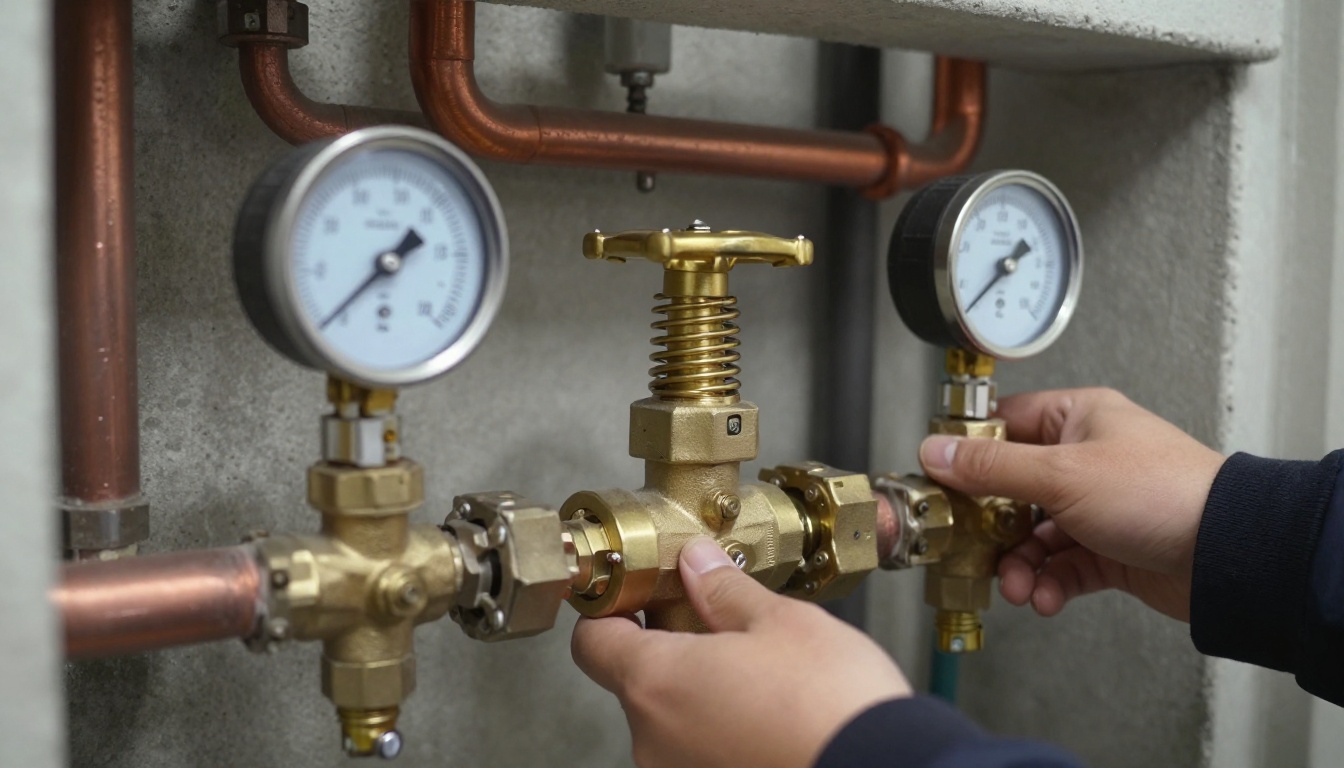
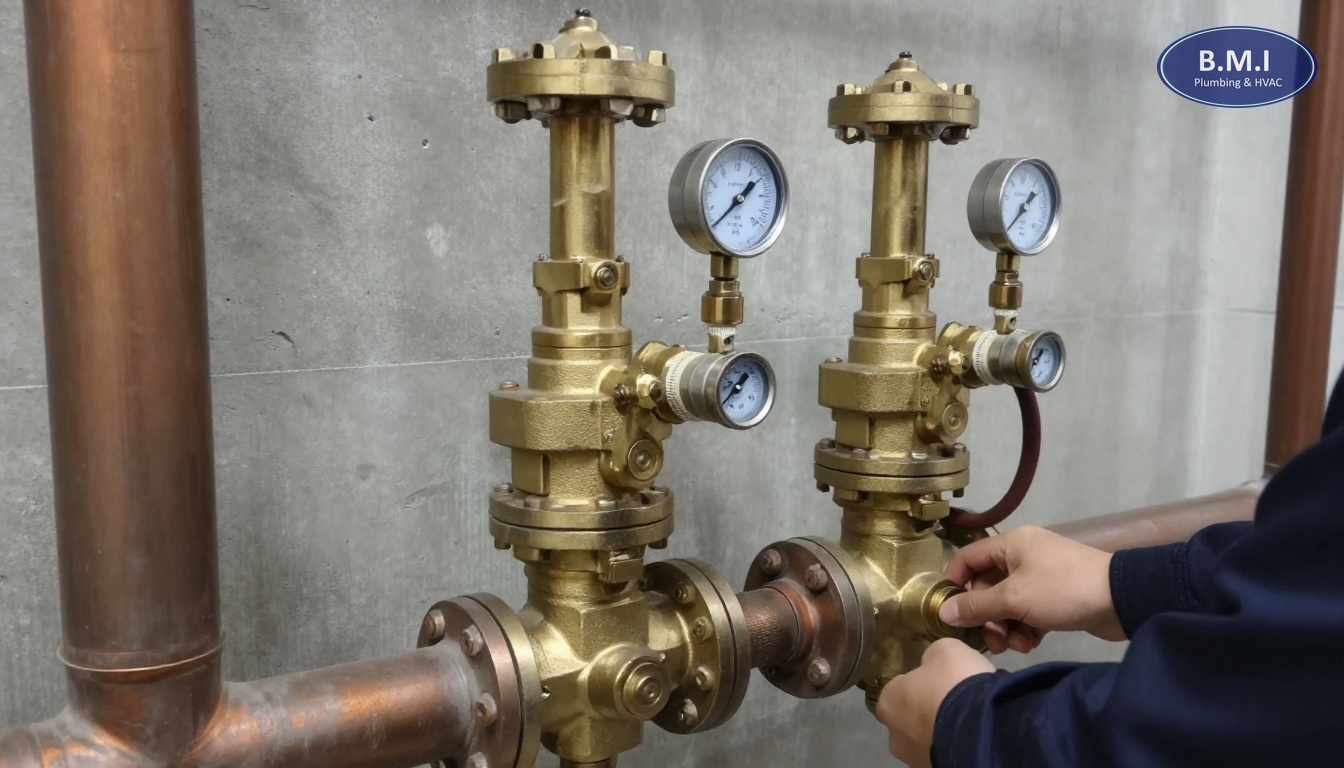
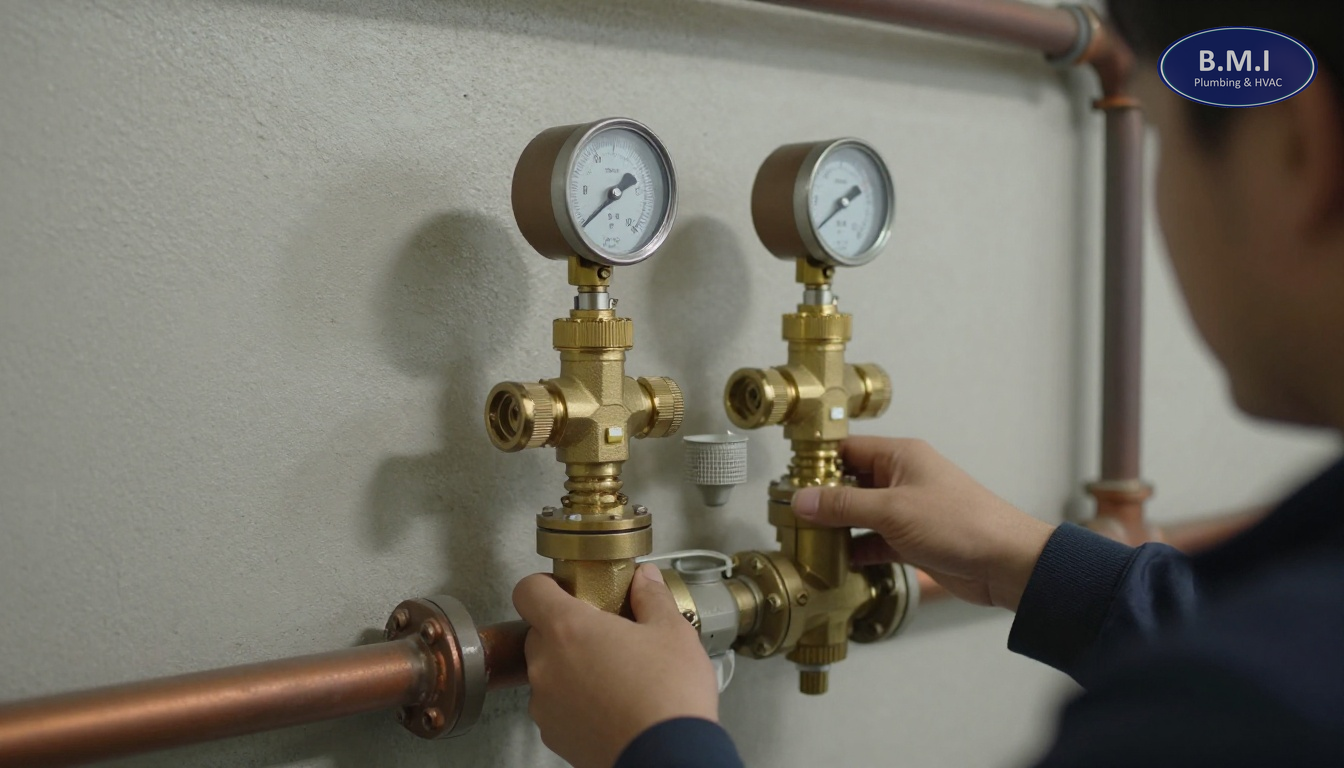
If your building has not had a documented PRV maintenance review in the last few years, that is one of the first places to look. A PRV station that was set correctly at turnover can drift over time, and older valves do not fail in a tidy binary way. Springs weaken, seats foul, pilots stick, and gauges themselves are often inaccurate if they have been vibrating on the wall for a decade.
A common mistake we see in early-1990s North York high-rises is assuming a pressure complaint on upper floors must be a pump problem. Sometimes it is, but just as often the issue is a sectional valve not fully reopened after previous repairs. A butterfly valve left even 20 to 30 degrees off full open can create a measurable pressure drop under demand while still allowing enough flow to confuse the diagnosis.
The building age matters more than most boards realize
The likely cause changes significantly by vintage.
1970s and 1980s concrete high-rises
These buildings in Toronto, York and East York often have a mix of copper domestic water risers, aging brass valves and original PRV assemblies that have seen multiple rebuilds. Some still have sections of galvanized steel in service or old valve stations with poor access. At 40 to 50 years old, internal roughness and mineral scale can reduce effective diameter enough that a nominal 1-inch line no longer performs like one under peak load.
Early-1990s towers
These buildings often have better original zoning, but they are now at the age where valve failures, guide support issues and deferred maintenance start to show up together. Pressure complaints in these towers are frequently blamed on “old plumbing” when the more accurate answer is a combination of aging PRVs, unverified valve positions and localized branch restrictions.
Kitec-era buildings, roughly 1995-2007
If the building has had partial or staged Kitec replacement, pay attention to transition points. Mixed systems with legacy fittings, partial suite replacements, and different fixture trims can create uneven performance. The pressure complaint may not be the pipe material itself, but the debris, stop-valve condition and fitting restrictions left behind from earlier remediation.
Post-2010 glass towers
Newer does not always mean better pressure performance. In many post-2010 towers in Vaughan and Markham, the issue is often not pipe age but water-saving fixture behaviour, balancing, cartridge fouling, and resident expectations. A shower head flowing 1.75 gpm can feel weak compared with an older 2.5 gpm fixture even if pressure readings are normal. That matters because it changes whether the corporation should investigate the system or the suite fixture.
Why fall is when these complaints often multiply
October is budget season, but it is also when deferred pressure issues become more visible. Buildings often perform planned shutdowns, valve work, or seasonal checks before winter. Every shutdown has the potential to dislodge scale and debris, which then travels downstream and lodges in aerators, shower cartridges, balancing valves, check stops and PRV strainers.
This is why a resident may report low pressure “right after plumbing was in the building.” That does not automatically mean the work was poor. It often means the work disturbed material that had been sitting harmlessly in the line for years. After a shutdown in an older Scarborough or Etobicoke tower, it is common to clear several suite-level cartridges even when the underlying building work was necessary and correctly done.
Fall is also the right time to get numbers in front of the board. If a building has recurring pressure complaints and the PRV station is 15 to 25 years old, a planned review through pressure reducing valve maintenance and replacement is more defensible than waiting for winter demand swings and emergency calls.
The symptoms that point to a suite issue
Some complaints are strongly suggestive of an in-suite problem rather than a building-wide defect. The most useful examples are specific.
Signs it is likely local to the suite
- One faucet weak, everything else normal: often a clogged aerator, cartridge screen or fixture stop issue
- Hot side weak only at one shower: debris in the pressure-balance cartridge is common after shutdowns
- Toilet fill slow but nearby sink normal: usually a fill valve or stop issue, not building pressure
- Kitchen faucet weak on both hot and cold, but bathroom fixtures normal: local faucet or branch restriction
- Pressure dropped after owner renovation: suspect stops, braided connectors, filters or section 98 alteration details
This is where in-suite plumbing or toilet and faucet repairs are often the right first step. For corporations, the reason this matters is responsibility. In many declarations, the common element ends at a certain point and the fixture, cartridge, trim or owner-installed filtration equipment is not the corporation’s cost.
A frequent board dispute is over renovations. If an owner altered plumbing under a section 98 agreement or without one, the pressure complaint may arise from non-standard fixture bodies, restrictive integral stops, or aftermarket filters tucked under a sink. That is why management should ask not just “is it weak” but also “was this bathroom or kitchen renovated, and if so, when?”
The symptoms that point to a building problem
Other patterns are much harder to explain as a suite-only defect.
Signs it is likely in the building system
- Several suites on the same riser complain at the same time
- Upper floors weak during morning peak but acceptable mid-day
- Cold pressure normal but hot pressure weak across multiple suites
- The tub spout and lavatory both weaken when a second fixture opens
- Pressure changed after a zone shutdown or valve replacement
- Complaints appear across one stack line after a leak repair
One of the most reliable clues is this: if a kitchen sink drains and functions normally in one suite, but the water flow drops noticeably only when adjacent suites are using water, the issue is usually not the faucet. It is often a shared supply restriction upstream, particularly on older risers or a compromised PRV station.
When this pattern appears, a building should consider a more structured review that can include camera inspection where drain conditions are also in question, plus mechanical-room testing and valve verification. Camera work is not for water pressure itself, but in real buildings complaints are often mixed together by residents, and separating supply issues from drainage issues avoids chasing the wrong problem.
What a proper pressure investigation should include
A surprising number of pressure complaints are “investigated” without a single meaningful reading being recorded. That is not enough if management may need to charge back a suite, defend a decision to the board, or justify reserve-fund planning.
A proper investigation should include:
1. Static and residual pressure readings
Static pressure is taken with no flow. Residual pressure is taken while water is running. Both matter. A reading of 62 psi static may look fine, but if it falls to 25 psi when a tub and lavatory run together, that tells you the issue is capacity through a restriction, not nominal system pressure.
2. Mechanical-room review
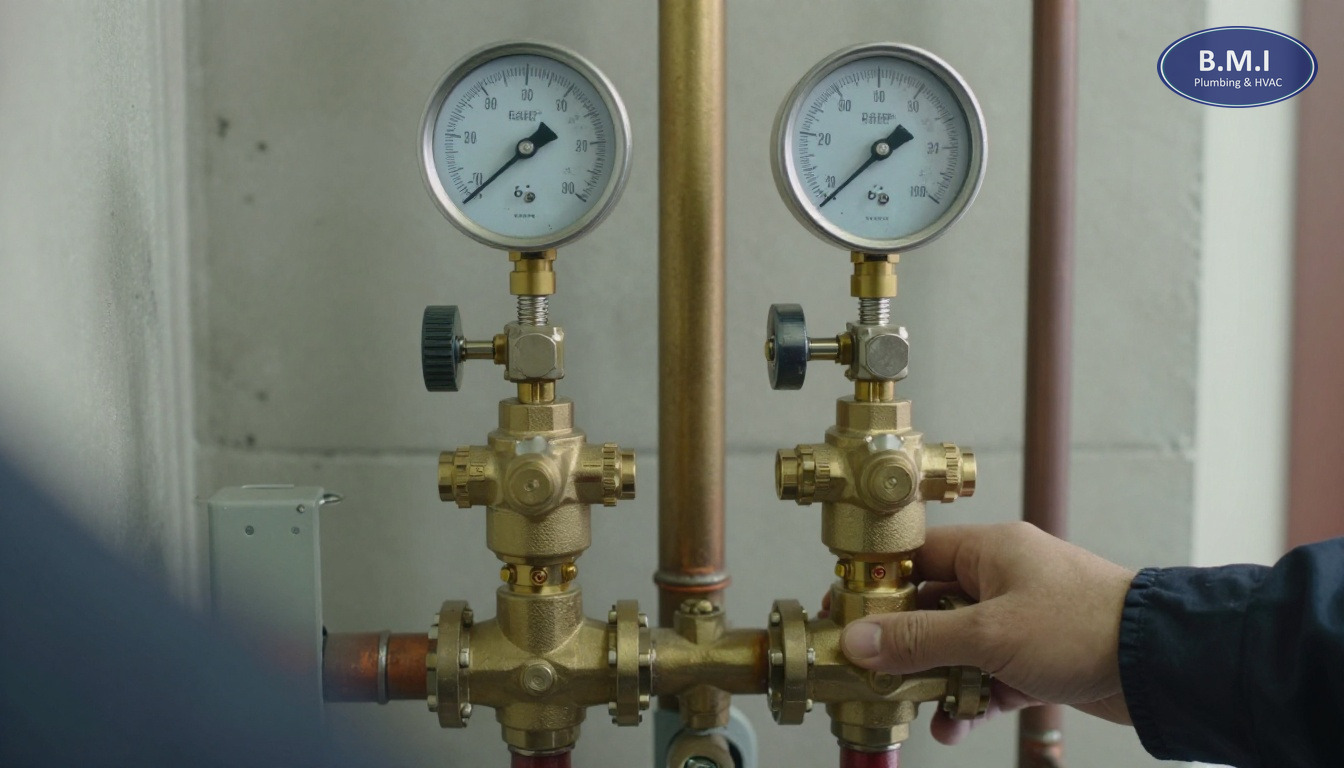
The PRV station should be checked for upstream and downstream pressure, strainer condition, bypass arrangement if present, and valve position. On taller buildings, booster pump sequencing and cut-in/cut-out behaviour should also be reviewed. If there is no recent record, a valve audit often pays for itself because mislabeled valves waste hours during diagnosis and shutdowns.
3. Riser and zone comparison
Testing one affected suite and one unaffected suite on the same floor or adjacent floors is often more useful than testing ten random suites. It helps isolate whether the problem follows a fixture, a branch, a riser, or a pressure zone.
4. Written findings
Ask for actual numbers, not just conclusions. A useful report should say things like: upstream PRV pressure 88 psi, downstream setpoint 58 psi, residual pressure at 18th-floor tub spout under two-fixture demand 27 psi, hot side lower than cold by 15 psi, probable restriction downstream of hot water recirculation branch.
If the complaint is urgent or linked to leakage, emergency plumbing response may be appropriate first, but recurring low-pressure issues should still end with documented findings rather than repeated guesswork.
Repair or replacement: the decision framework
Not every pressure complaint justifies capital work. Some do. The key is to separate correctable controls and valve issues from aging pipe infrastructure.
| Scenario | Usually the right approach | Why |
|---|---|---|
| One suite, one fixture, no pattern elsewhere | Local repair | Cheapest and fastest; often cartridge, stop or debris |
| Several suites, same riser, after shutdown | Flush and targeted repair | Debris migration is common after planned work |
| Whole zone weak at peak demand | PRV or booster investigation | Pressure may be collapsing under load |
| Repeated complaints on same aging riser plus leaks | Plan riser replacement | Service calls treat symptoms, not the pipe |
| Original valves cannot isolate reliably | Valve replacement first | You cannot repair the system efficiently without working shutoffs |
If isolation is poor, the building may need valve replacement before it can sensibly address risers. This is a point many boards miss. A domestic water riser project becomes more disruptive and expensive if the sectional valves are seized, untagged or buried. In real terms, a two-hour localized shutdown can turn into a full-day building event if isolation cannot be trusted.
Where recurring complaints are tied to old domestic risers, compare repair spending against a planned riser replacement. If the issue is broad enough, especially in mixed-age systems with many prior patches, a wider building re-piping review may be warranted.
Toronto-market cost ranges to budget around
These are typical GTA planning ranges, not quoted prices, and they vary by access, building height, valve condition, after-hours restrictions and whether finishes must be opened.
Service and diagnostic work
- Single-suite pressure investigation: about $350 to $900 if it is limited to fixture checks and basic readings
- Broader multi-suite pressure testing with mechanical-room review: about $1,200 to $3,500
- PRV station inspection and minor service: often $900 to $2,500 depending on size and complexity
- PRV replacement in a condominium mechanical room: commonly $3,500 to $12,000+ per valve assembly, with larger or parallel stations costing more
- Valve audit and charting program: often $2,000 to $10,000+ depending on building size and valve count
Capital-level work
- Sectional isolation valve replacement: often $1,200 to $4,000 per valve depending on diameter, location and shutdown complexity
- Domestic water riser replacement: commonly quoted by riser, stack line or suite count; in many Toronto towers this can work out to $3,000 to $8,000+ per suite equivalent across the affected scope
- Full building re-piping: highly variable, but for larger high-rises it is often a serious reserve-fund project rather than an operating-budget repair
In practical board terms, the most expensive option is often not replacement, but years of indecision. A building spending $8,000 to $20,000 annually on recurring pressure complaints, leaks, emergency access and resident relations may be under-reporting the real cost because staff time, after-hours logistics and owner complaints are rarely captured in the plumbing line item.
Access, notices and how long this work takes
Managers often need to explain not only cost but disruption.
Typical timelines
- Single-suite diagnosis: 30 to 90 minutes on site if access is straightforward
- Multi-suite comparison testing: half a day to a full day
- PRV station service or replacement: often one shutdown window, but planning and parts lead time matter
- Valve audit: from one day in a small mid-rise to several days in a large tower
- Riser replacement planning: weeks to months for scoping, tendering and resident logistics
For in-suite access, residents should not be told simply that plumbers are coming for “pressure issues.” Better notice language improves cooperation. State whether access is needed to kitchen sink stops, shower trim, riser closets, vanity cabinets, or laundry valves. In occupied towers in Toronto and Mississauga, lost access is one of the biggest reasons a one-day diagnostic program turns into a two- or three-day exercise.
If shutdowns are required, pair the pressure investigation with other needed work where possible. A building that already needs backflow prevention testing, valve verification or PRV service can reduce resident disruption by stacking tasks into one planned outage window.
Common element or suite responsibility?
This is often the first question management gets, and the answer depends on the declaration, not just the plumbing layout. Still, there are practical rules of thumb.
Usually corporation-side
- PRV stations, booster systems, mechanical-room components
- Domestic water risers and recirculation piping
- Common-element isolation valves and zone valves
- Shared supply piping serving multiple suites
Often suite-side or owner-side
- Faucet cartridges, aerators and trim
- Toilet fill valves and fixture internals
- Owner-installed filters or modified fixture connections
- Renovation-related branch alterations, depending on the declaration and section 98 terms
The important nuance is that the source of the complaint and the payor are not always the same. A corporation may properly authorize the first investigation because the symptom could originate in a common element. Once testing shows the issue is a suite fixture or owner alteration, the cost may be chargeback-eligible depending on the governing documents.
What happens if you defer it
Deferral is not always wrong. If one isolated fixture is weak and the building system tests well, this can wait for normal suite scheduling. But repeated low pressure across suites should not be treated as a comfort issue only.
Here is what tends to happen when buildings defer the wrong type of pressure complaint:
- Residents create workarounds such as replacing fixtures, removing flow controls or installing unapproved devices
- Leak risk increases because old valves get exercised only during emergencies and then fail when needed
- Diagnostic costs multiply as multiple trades visit the same symptom without system data
- Capital planning gets distorted because reserve-fund discussions lack evidence of actual performance decline
In older Toronto and Richmond Hill towers, we often see low-pressure complaints arrive one to three years before a riser or valve program becomes unavoidable. The complaint is not always the emergency. It is often the early warning that the system no longer has enough margin to tolerate normal demand, shutdowns or winter operating swings.
If your reserve fund study is being updated this cycle, documented pressure issues can materially improve the quality of the consultant’s assumptions. A board making a decision with readings, valve condition data and a realistic scope is in a much better position than one relying on anecdotal resident emails.
A practical plan for property managers this fall
If you are trying to decide what to do before next year’s budget is finalized, keep it simple:
- Map the complaint pattern by fixture, suite line, floor range and time of day.
- Check whether the building had recent shutdowns or valve work that could have moved debris.
- Get actual pressure readings at the mechanical room and representative suites.
- Review PRV condition and valve labeling before winter demand swings.
- Separate suite-chargeable issues from common-element work in writing.
- If the same riser keeps generating calls, price the capital option now rather than after another heating season.
For recurring building-wide issues, it is usually more efficient to have the building assessed before quoting. BMI typically attends site, reviews the complaint pattern, and ties the recommendation to actual building conditions rather than guessing from an email summary. If the issue turns out to be localized, that is useful too; not every pressure complaint needs a project.
For readers comparing options, BMI’s project solutions, maintenance programs, and completed projects portfolio show the kinds of condominium plumbing work that often sit behind what residents describe simply as low pressure. Additional building-specific articles are also available on the BMI blog.
FAQs
How do we tell whether a low water pressure complaint is a suite problem or a building problem?
Start by comparing fixtures, floors and times of day. If one lavatory faucet is weak but the tub spout and toilet fill normally, the issue is usually local to that suite fixture or its stop valve. If several suites on the same vertical riser report weak hot or cold water at similar times, the problem is more often a building-side issue such as a failing PRV, a partially closed sectional valve, or internal scaling in the riser.
What pressure should a Toronto condominium normally have?
At the building entry, many Toronto high-rises see municipal supply pressures roughly in the 60 to 90 psi range, though it varies by neighbourhood and elevation. Inside the building, pressure reducing valves often step zones down to something like 50 to 70 psi to protect fixtures and control noise. In upper zones served by booster pumps, what matters is not just static pressure but whether pressure holds while multiple fixtures are flowing.
Can a pressure reducing valve cause resident complaints even if there is still some water flow?
Yes. A PRV can fail gradually, not just fully open or fully closed, and that is why pressure complaints are often misdiagnosed for months. A fouled or worn PRV may still show acceptable static pressure on a gauge, such as 55 psi with no fixtures running, but collapse to 20 to 30 psi under demand, which residents experience as weak showers and slow tub filling.
Is low hot water pressure usually a water heater problem?
Not necessarily. In condominiums, low hot pressure is often caused by a restriction downstream of the hot water plant: a partially closed balancing valve, scaled recirculation components, a failing mixing valve, or localized blockage in the hot riser or branch. If the complaint is only in one suite, common culprits are clogged cartridge screens, angle stops that were never reopened fully after prior work, or debris lodged in a shower valve.
What does a proper pressure investigation include?
A defensible investigation should include static and residual pressure readings, not just a visual check, and those readings should be taken at the mechanical room and at representative suites. On a recurring complaint, ask for documented gauge readings, fixture flow observations, and if needed a review of the PRV station, booster controls, and valve positions. In older 1970s and 1980s towers, a valve chart or valve audit often saves hours because many shutoffs are mislabeled or seized.
When should a board budget for riser replacement instead of repeated service calls?
If the same riser or zone produces recurring low-pressure complaints, leaks, and isolation problems, repeated service stops being economical. In many GTA buildings, once domestic copper or galvanized risers reach roughly 35 to 50 years old and you are spending thousands annually on piecemeal repairs, it is time to compare that cost against a planned riser replacement or broader building re-piping program.
Next steps
If your building is receiving recurring low water pressure condo complaints, do not stop at “suite issue” or “building issue” as a label. Get the pattern, get the readings, and get a written recommendation tied to the actual riser, zone or fixture involved.
If your PRV station has not been reviewed recently, or if pressure complaints tend to spike after shutdowns, this is the right time in the fall to investigate before winter demand and holiday occupancy make access harder. And if the same line of suites keeps calling, ask for a capital comparison now rather than budgeting another year of repeat service.
For a site review, service call or quote request, visit Contact BMI. BMI also provides 24-hour response through emergency plumbing service when a pressure complaint is tied to an active leak, failed valve or urgent building shutdown.
Contact BMI
- Contact BMI
- Phone: (416) 845-3756
- Emergency: (416) 845-3756, answered 24 hours a day
- Email: info@brial.ca
More on condominium plumbing
High Water Pressure Damage in Toronto Condo Buildings
High water pressure damage shortens fixture life, drives leaks and bursts pipes. A Toronto condo guide to diagnosis, …
Water Hammer in Toronto Condos: Causes and Fixes
A practical guide to water hammer in Toronto condos: why banging pipes happen, how to diagnose them, repair options, …
Toronto High-Rise Pressure Zones: Why Floors Vary
Why top floors lose water pressure while lower floors get too much in Toronto condos. A practical guide to water …
Need a plumber in your building?
BMI services roughly 200 condominium and multi-residential buildings across Toronto and the GTA. Emergencies are answered at any hour.