MEV Water-Saving Valve Installation in East York
MEV water-saving valve installation in East York for condos and rentals. Reduce water consumption without fixture replacement or major in-suite disruption.
MEV Water-Saving Valve Installation in East York
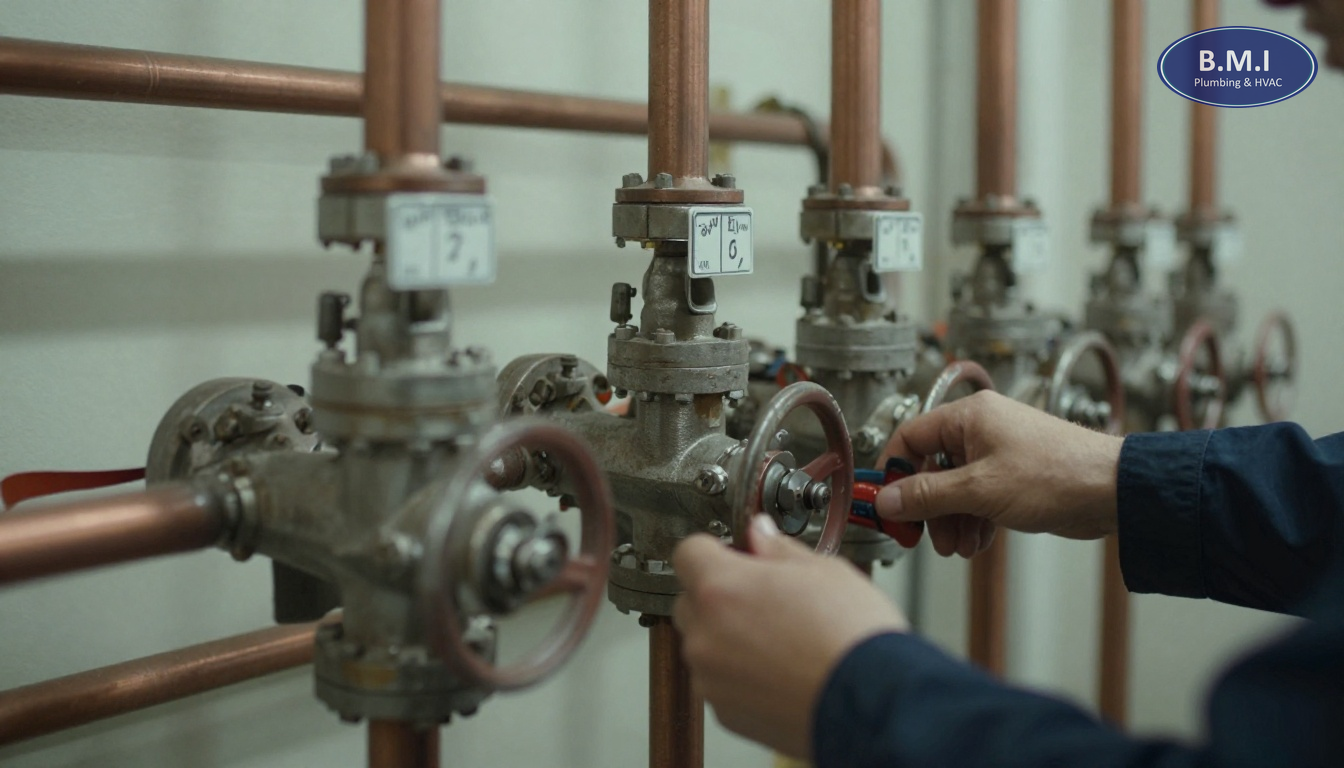
Quick summary: In East York, MEV water-saving valve installation is usually considered by condominium boards and rental housing operators trying to reduce water consumption without launching a full suite-by-suite fixture replacement program. The work is not just about adding a device in the mechanical room; in East York buildings, results depend on the age of the domestic water system, pressure conditions, valve reliability, and how the building was originally piped.
Why MEV valve projects come up in East York buildings specifically
East York has a different building mix than downtown Toronto’s newer core and a different profile from the large condo clusters in places like Vaughan Metropolitan Centre or central Mississauga. A lot of East York multi-residential stock is older: postwar rental apartments, 1960s to 1980s slab and tower buildings, and a smaller number of later condominiums built along major corridors and around transit connections. That matters because the plumbing systems in those buildings were designed in a different era, when water efficiency expectations were not what they are now.
In many East York apartments and condominiums, the domestic water system still reflects original design assumptions: generous flow allowances, older fixture types, copper distribution that has seen decades of service, and mechanical rooms where several generations of repairs have been layered onto the original installation. Buildings near Danforth Avenue or along Don Mills Road often have exactly this mix of conditions. By 2026, many boards are looking at operating costs more closely during fall budget season, and water usage is one of the few recurring line items that can sometimes be reduced without major resident disruption.
An MEV valve is one option in that discussion. Rather than replacing every fixture in every suite, the valve is installed at the building level to control and reduce excess water flow. In practical terms, it is usually considered after the board has already dealt with obvious leaks and is looking for the next level of conservation. It often sits between routine plumbing maintenance and larger capital work such as domestic water riser replacement or broader project solutions for multi-residential buildings.
East York buildings also require a realistic view of municipal supply conditions. Water pressure is not experienced equally on every floor, and in multi-storey buildings the relationship between incoming pressure, booster systems, pressure reducing valves and top-floor performance matters more than a generic water-saving target. If a building is near Pape and O’Connor, for example, upper-floor performance concerns may be very different from a lower-rise property closer to the former East York civic centre area. That is why a local review has to start with the actual building hydraulics, not just a product brochure.
How MEV valve issues present in East York budget and operations meetings
Most East York boards do not start by asking for an MEV valve by name. They start with a familiar set of complaints and budget pressures.
The property manager may report that water bills have remained stubbornly high even after toilet flappers, leaking faucets and common-area fixtures have been addressed. The board may be comparing the building’s consumption trend over several years and asking whether there is a practical conservation measure that does not involve months of in-suite access. In some cases, the mechanical consultant or reserve fund planner has flagged domestic water efficiency as a worthwhile operating review, especially where fixture replacement would be expensive to coordinate.
Residents usually describe the system differently. They may say some suites have “too much flow” at taps or showers, while upper floors are more sensitive during peak use periods. Supers may report that pressure complaints rise after earlier repairs to pressure reducing equipment, or that the building performs differently at night than in the morning. Those are not necessarily arguments against an MEV valve. They are signs that the building needs a proper hydraulic assessment first.
Another common East York scenario is that the building already has deferred domestic water maintenance. Isolation valves may not close fully. Existing PRVs may drift. Booster equipment may be functional but not well documented. In that case, an MEV project can still make sense, but it should be planned alongside pressure reducing valve maintenance, a valve audit and exercise program, or selected sectional and isolation valve replacement so the new installation is not built on unreliable infrastructure.
For boards trying to get numbers together in the fall, that distinction matters. A conservation project is easier to approve when the board understands whether it is a stand-alone measure or part of a broader mechanical room correction.
What MEV valve assessment in East York should include before installation
A proper MEV valve review is not a quick walk-through. Before any East York board commits to installation, the inspection should establish four things clearly: existing pressure conditions, building demand patterns, the condition of related valves and controls, and whether the system can be isolated safely for the work.
The first step is baseline measurement. That means recording static pressure and flowing pressure at the incoming service and, ideally, checking representative fixtures or hose bibbs at different elevations in the building. For taller East York buildings, top-floor and mid-level readings matter because a water-saving measure that works perfectly at the base of the riser can still create resident complaints if upper floors were already marginal.
The second step is mechanical room review. The contractor should identify the incoming domestic service arrangement, any booster pumps, existing PRVs, bypass lines, meters, balancing components and available straight pipe for installation. In older East York stock, the mechanical room is often tight, with limited clearance and decades of added piping. Good photos, sketches and shutoff planning are more important than they are in a newer purpose-built room.
The third step is valve reliability. If the building’s isolation valves cannot be trusted, the shutdown itself becomes the project risk. That is where a pre-project valve audit can save time and prevent a planned job from turning into an emergency drain-down. If the building has any required premise isolation assembly, annual testing and certification should also remain current through the project; BMI handles backflow prevention testing and certification where applicable.
Finally, the board should insist on evidence, not assumptions. That means a written scope, pressure readings, photographs of the installation area, a shutdown plan, and an explanation of expected performance after commissioning. If savings are discussed, they should be framed as estimates based on the building’s known conditions and consumption profile, not as a guaranteed percentage.
A representative East York MEV valve project
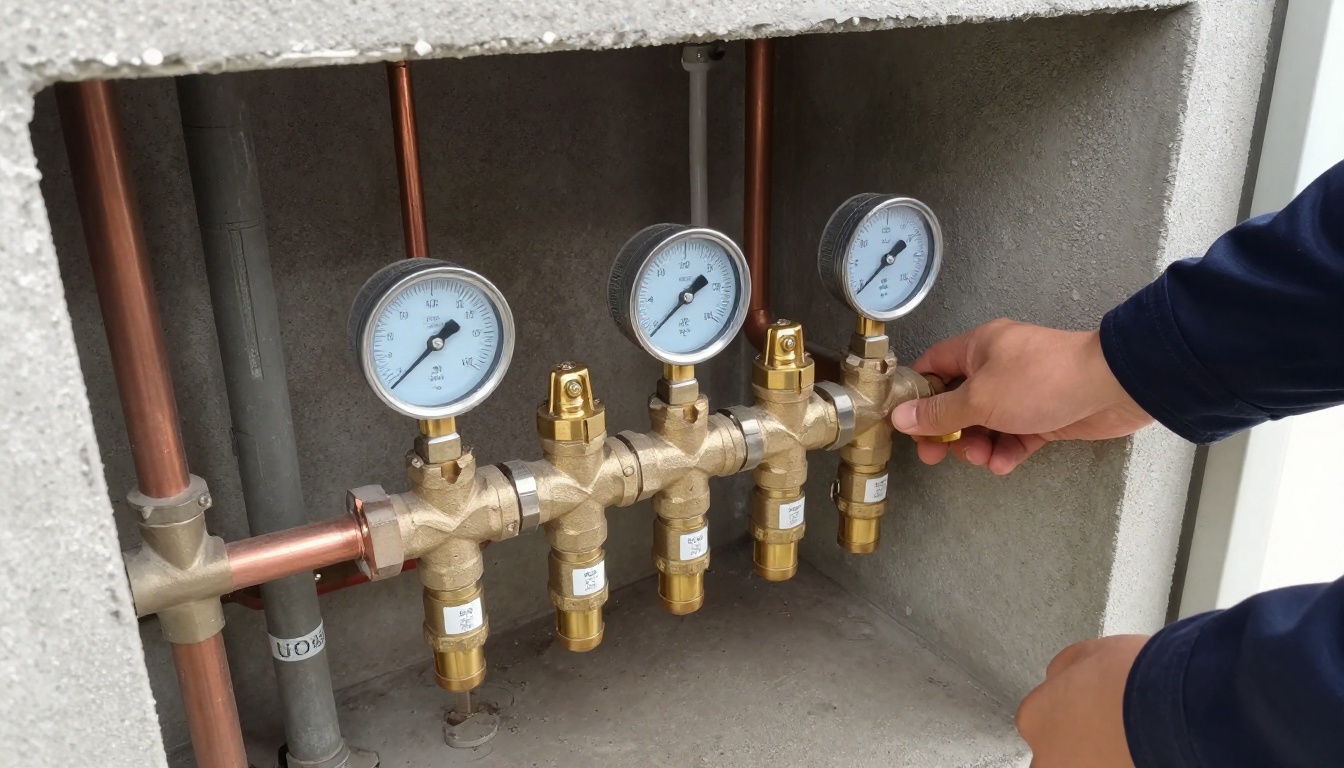
A representative example would be a 14-storey condominium from the late 1980s near the Danforth corridor, with roughly 120 suites and a domestic water system that had seen selective repairs but no major conservation retrofit. The board had already completed common-area fixture updates and several rounds of in-suite leak repairs, but annual water consumption still looked high relative to what the manager expected for the building.
Residents were not reporting widespread plumbing failures. Instead, the pattern was operational: some lower-floor suites described very strong flow at lavatories and kitchen faucets, while upper floors were generally acceptable but less forgiving during morning peak demand. The building also had older pressure reducing equipment in the mechanical room and isolation valves that had not been exercised consistently.
BMI’s review started with pressure readings at the incoming service and selected upper-floor points, followed by a mechanical room survey and shutdown planning. The diagnosis was that the building had room to reduce unnecessary flow, but only if the installation was paired with related valve work. Two aging isolation valves were not dependable enough for a controlled shutdown, and the existing pressure control arrangement needed to be documented and recommissioned as part of the project.
The work included replacing the unreliable isolation valves, installing the MEV water-saving valve in the domestic cold water service arrangement, reconnecting and supporting adjacent piping, and then commissioning the system with pressure checks at multiple elevations. Resident notices were issued in advance and the main shutdown was scheduled for a weekday window to avoid evening demand. Total on-site work was completed over two days, with the primary shutdown contained within one planned day and follow-up balancing the next morning.
Roughly, the project landed in the mid-five-figure range as a market estimate, largely because the building needed more than the valve itself. The result was not dramatic from a resident point of view, which is usually the sign of a successful project. Water delivery remained usable throughout the building, but the board now had a building-level conservation measure supported by actual pressure data and updated mechanical room components.
Costs and timelines for MEV valve installation in East York
For East York condominium and apartment buildings, MEV valve installation costs vary mainly with pipe size, mechanical room accessibility, shutdown complexity, and the condition of existing valves. The valve itself is only part of the total cost. Supporting work often includes temporary drainage, pipe modification, new isolation valves, gauges, supports, insulation reinstatement and commissioning.
As a broad GTA market estimate in 2026:
- A straightforward installation in a smaller multi-residential building with good access and reliable shutoffs may fall around $12,000 to $22,000.
- A more typical East York high-rise or mid-rise project, where some related valve work and more involved commissioning are needed, may fall around $20,000 to $40,000.
- Buildings with poor access, deteriorated valves, limited shutdown control, complex booster integration or significant rework of the domestic service arrangement can exceed $40,000.
These are planning ranges, not quoted prices, and they vary by building.
Timelines are usually shorter than a suite-by-suite retrofit, but they still require planning. A normal sequence is one site review, one priced scope, board approval, procurement, resident notice, then installation and commissioning. In a reasonably organized East York property, that often means two to six weeks from initial review to completed work, depending on approvals and parts availability. Fall is a common time to move these projects because boards are preparing next year’s operating budget and want numbers before winter.
Where existing domestic water equipment is overdue for maintenance, it can be efficient to combine the project with pressure reducing valve maintenance, sectional valve replacement, or a broader review of building maintenance programs instead of treating the valve in isolation.
MEV valve versus other East York water-saving options
An MEV valve is not the answer to every water-consumption problem. East York boards should compare it with three other common approaches: fixture replacement, leak reduction, and larger piping renewal.
If the building still has widespread fixture leakage or poor in-suite plumbing condition, the first dollars are usually better spent on repairs. A leaking toilet can erase the savings from a building-level conservation device quickly. That is why many properties continue to rely on routine toilet and faucet repairs and in-suite plumbing service even when planning bigger efficiency measures.
If the building has old pressure reducing valves that are not maintaining stable downstream pressure, those issues should be corrected first. Installing an MEV valve on a system with uncontrolled pressure can produce inconsistent results and more complaints. Likewise, if the domestic piping is at the point where corrosion, repeated pinhole leaks or failing risers are driving the discussion, then a conservation valve may be secondary to domestic water riser replacement or full building re-piping.
Where an MEV valve tends to make sense is in the middle ground: the East York building is basically serviceable, water consumption is high, resident disruption needs to be limited, and the board wants an implementable project with a clear mechanical scope.
What deferring an East York water conservation project can cost
Deferring an MEV valve project does not create the same immediate emergency as ignoring an active leak, but it still has real costs. The first is simple operating expense. If the board has already addressed obvious leaks and still has avoidable overconsumption, every month of delay is another month of unnecessary water charges.
The second cost is planning inefficiency. Fall is budget season for many East York condominiums, and boards often want plumbing numbers early enough to decide whether work should be funded from the operating budget, reserve funding where appropriate, or a phased capital plan. If the review is delayed until winter, the board may miss a clean approval window and end up carrying high consumption for another full cycle.
The third cost is that small mechanical room issues become larger project issues. A valve that still “mostly works” today may fail during a later emergency shutdown. An undocumented bypass may complicate future service. A building that postpones routine domestic water review also tends to postpone related housekeeping, such as camera pipe inspection of problem drains, kitchen stack cleaning before the holiday cooking season, or winter pressure checks on PRVs.
For boards governed by the Condominium Act, 1998, the broader lesson is familiar: reserve fund and operating decisions work better when the building has current information. Even when an MEV valve is not reserve-funded work, the discipline is similar. Get the site data, understand the system, compare options, then decide deliberately rather than reactively.
FAQs about MEV valve installation in East York
What does an MEV valve do in an East York condominium?
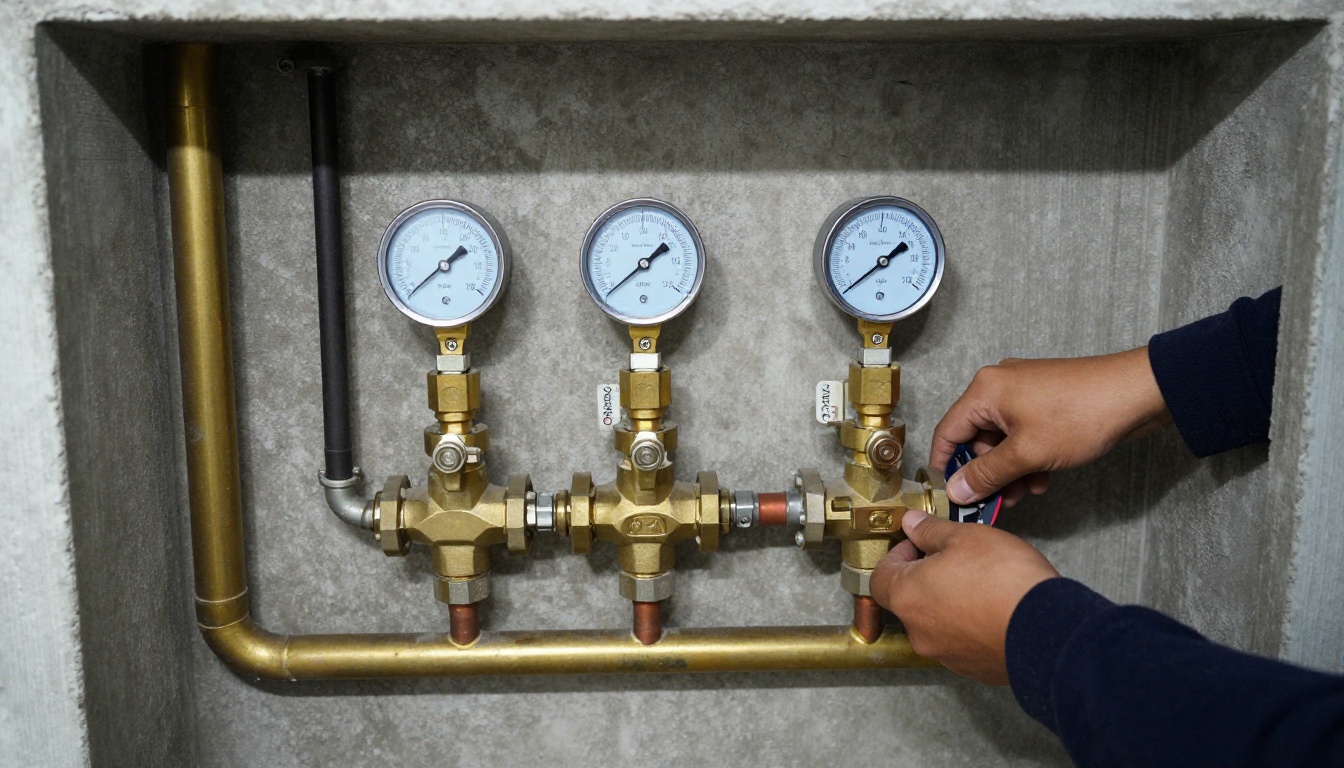
An MEV water-saving valve is installed on the building’s domestic water system to reduce unnecessary flow while maintaining usable pressure at fixtures. In East York high-rises and mid-rise rentals, it is typically considered where water consumption is high but a full fixture replacement program is not practical. The goal is to reduce water use at the building level with less disruption than entering every suite to change taps, showerheads and toilets.
Will residents in East York notice weaker water pressure after an MEV valve installation?
If the building is properly assessed first, residents should not experience unacceptable performance. The key is to understand static and flowing pressure, upper-floor conditions, booster operation and peak-demand periods before setting the valve. In East York buildings with pressure variation by elevation or older pressure reducing equipment, the MEV valve has to be integrated with the existing system rather than treated as a simple add-on.
How long does MEV valve installation take in an East York building?
For many East York condominium or apartment buildings, the physical installation can often be completed within one planned shutdown day, with advance investigation and post-install balancing taking additional time. Mechanical room access, the condition of isolation valves, and whether bypass piping or controls need modification will affect the schedule. A realistic planning window is usually a few weeks from site review to final commissioning, depending on parts availability and board approvals.
Is an MEV valve a substitute for PRV maintenance in East York?
No. An MEV valve does not replace failed or drifting pressure reducing valves, worn isolation valves or broader domestic water maintenance. In East York buildings, it works best when paired with a proper review of existing pressure control equipment, which may include pressure reducing valve maintenance and a valve audit before installation.
What does MEV valve installation cost in East York?
As a market estimate, many East York multi-residential installations fall roughly in the low five figures to mid five figures depending on pipe size, access, controls, shutdown complexity and whether related valve replacement is needed at the same time. Buildings with poor mechanical room access or unreliable isolation can cost more because the valve itself is only part of the work. The right way to budget it is after a site review of the incoming service, booster arrangement and existing domestic water distribution.
Is an MEV valve suitable for every East York building?
No. It is most suitable where the domestic water system is fundamentally serviceable and the building has room to improve water efficiency without creating fixture performance issues. In some East York properties, more pressing priorities are leaking fixtures, uncontrolled pressure, obsolete risers or larger piping renewal work such as domestic water riser replacement or even full building re-piping.
Next steps for East York boards and property managers
If your East York building is reviewing water consumption this fall, start with the building facts rather than the product. Confirm recent water-use trends, list any known pressure complaints, review the condition of PRVs and isolation valves, and decide whether the mechanical room has been documented well enough for a controlled shutdown. If not, that review should come first.
BMI serves East York and the surrounding GTA from its Toronto shop and works primarily in condominium and multi-residential plumbing. If you want to compare an MEV valve against other options, BMI can review the domestic water system, identify related risks, and help you determine whether this is a stand-alone conservation project or part of a broader capital plan. You can also review BMI’s completed plumbing projects, explore MEV water-saving valve information, or contact BMI directly to arrange a site visit.
Contact BMI
- Contact BMI
- Phone: (416) 845-3756
- Emergency: (416) 845-3756, answered 24 hours a day
- Email: info@brial.ca
More on condominium plumbing
Floor Drains and Trap Primers in East York Buildings
Floor drain and trap primer service in East York for condos and rentals. Diagnose sewer gas smells, dry traps and …
MEV Water-Saving Valve Installation in North York
MEV water-saving valve installation in North York condos. Learn where it fits, how savings are verified, and what costs …
MEV Water-Saving Valve Installation in Oshawa Condos
MEV water-saving valve installation in Oshawa condos. Learn where it fits, expected savings, costs, timelines, and how …
Need a plumber in your building?
BMI services roughly 200 condominium and multi-residential buildings across Toronto and the GTA. Emergencies are answered at any hour.