Parallel PRV Stations in Toronto Condos: Why Redundancy Matters
Parallel PRV and PRV redundancy explained for Toronto condos: pressure control, shutdown risk, costs, retrofit options and board-level decision points.
Parallel PRV Stations in Toronto Condos: Why Redundancy Matters
Quick summary: A parallel PRV station is one of those building upgrades that looks optional until the day a single failing valve forces a whole-tower water shutdown. In condominium buildings across Toronto, North York, Mississauga and Vaughan, PRV redundancy is often the difference between a planned maintenance event and an emergency that disrupts hundreds of residents, complicates insurance reporting and leaves management explaining why one small mechanical component controlled the entire building.
A common board misconception is that a pressure reducing valve is just a brass fitting that can be swapped whenever it fails. In a high-rise, it is part of the building’s pressure control strategy, and if there is only one main valve on the domestic service, a rebuild can mean shutting down every suite, every common washroom, and often the make-up path for other water-using systems. Fall is the right time to review this, because boards are building next year’s budget and winter pressure swings tend to expose weak PRV stations.
The real issue is not the valve. It is the single point of failure.
In older Toronto condominium towers, especially 1970s and 1980s concrete high-rises, the incoming domestic cold water often enters the mechanical room at 110 to 140 psi depending on municipal zone and elevation. The building distribution system may only want to see 60 to 75 psi downstream at the low zone, sometimes less if fixture trim, toilet fill valves and braided connectors have already shown sensitivity to high pressure. The pressure reducing valve sits between those two realities.
Where buildings get into trouble is not simply that PRVs wear out. It is that many were installed as single-valve stations with minimal bypass piping, old gate valves that no longer isolate properly, and no reliable way to rebuild or replace the valve without a full shutdown. That is why a proper PRV maintenance review should always include the surrounding station, not just the body of the valve itself.
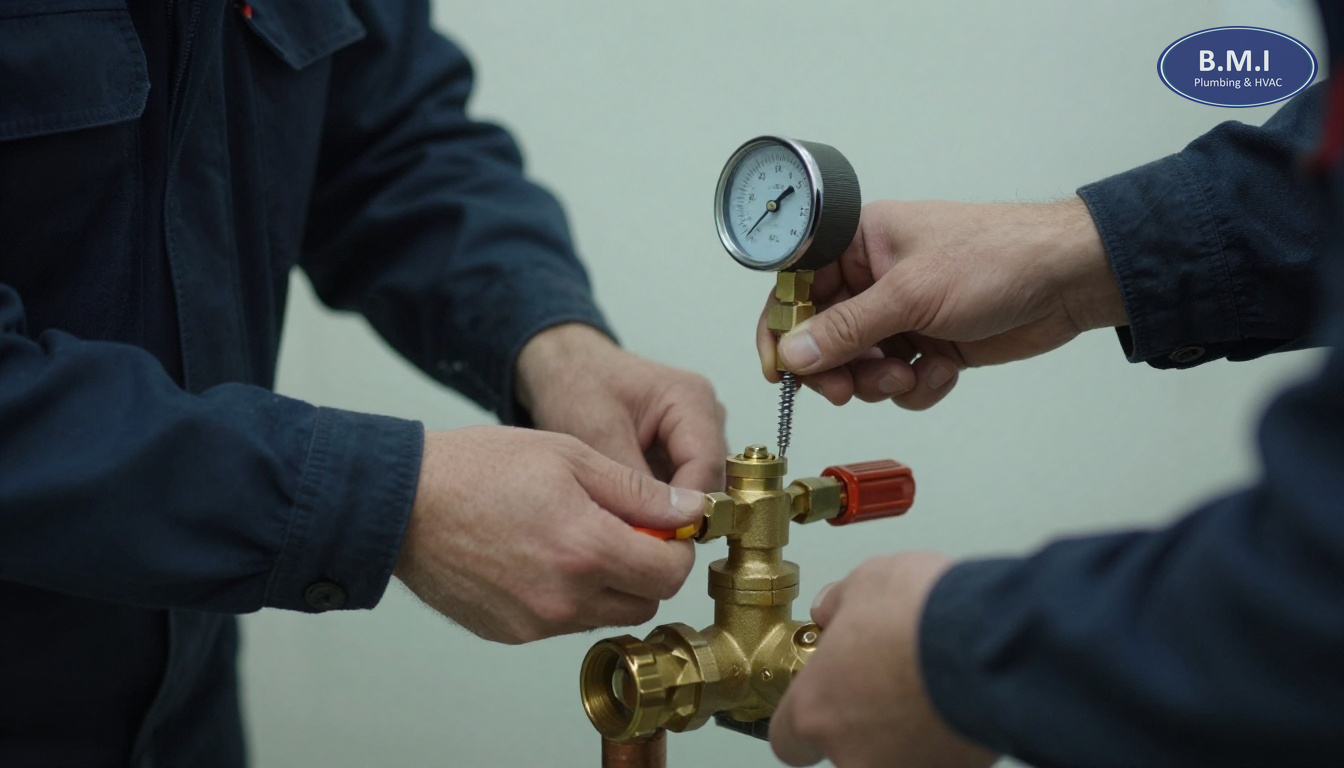
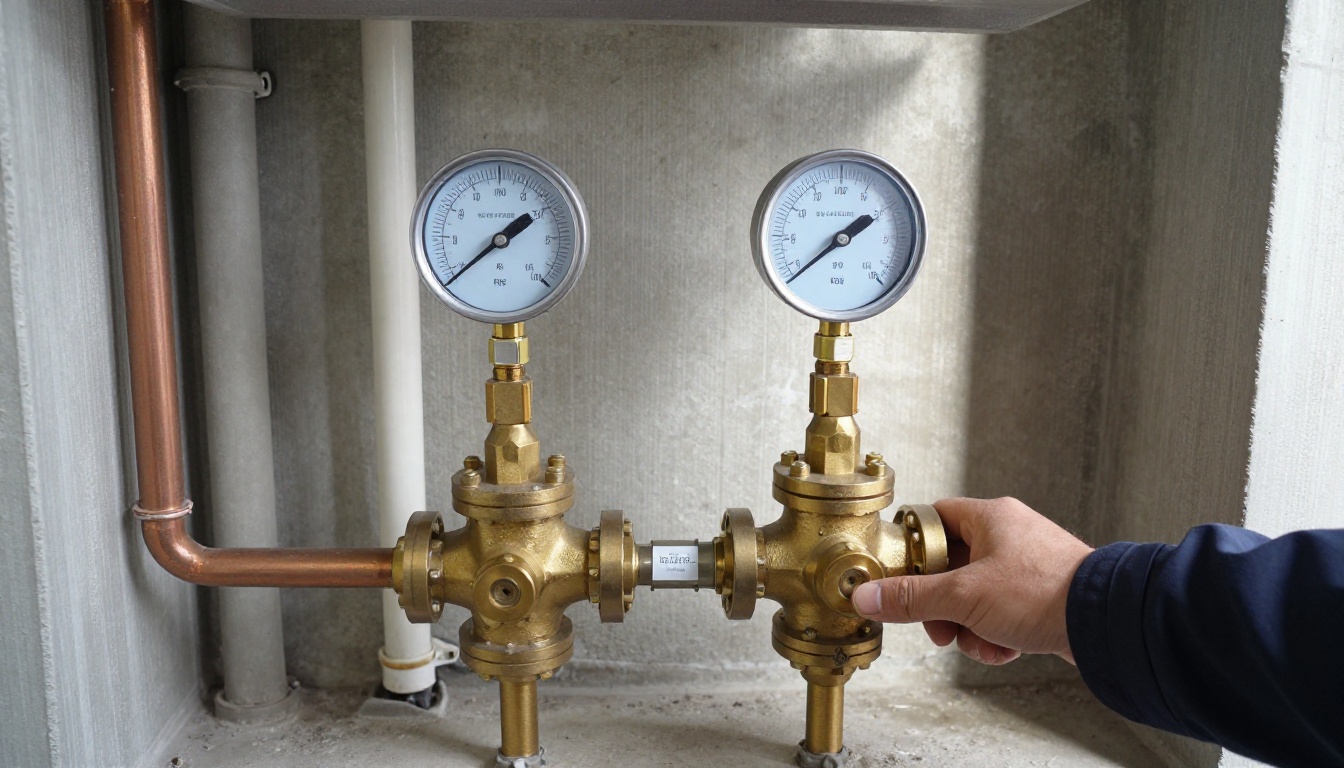
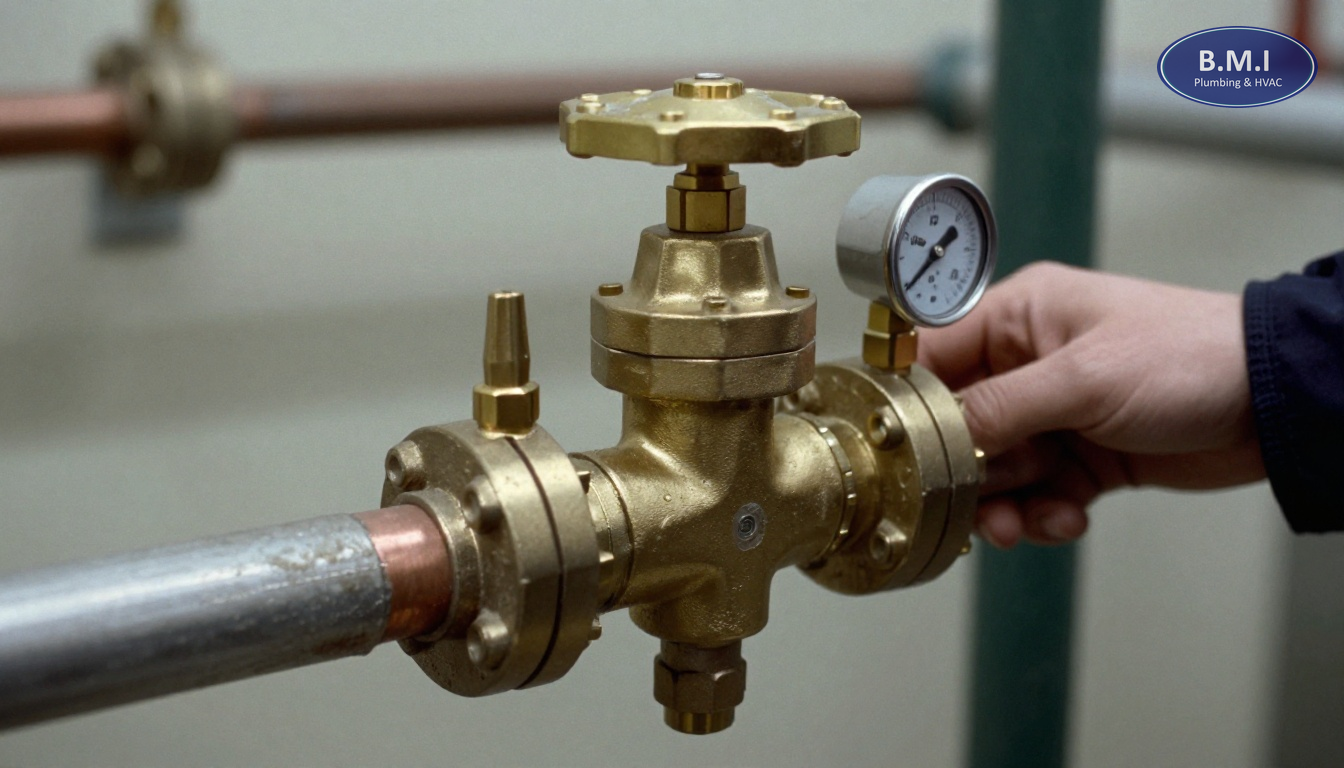
A parallel PRV station puts two valves side by side on a common header, typically with:
- upstream and downstream isolation valves on each branch
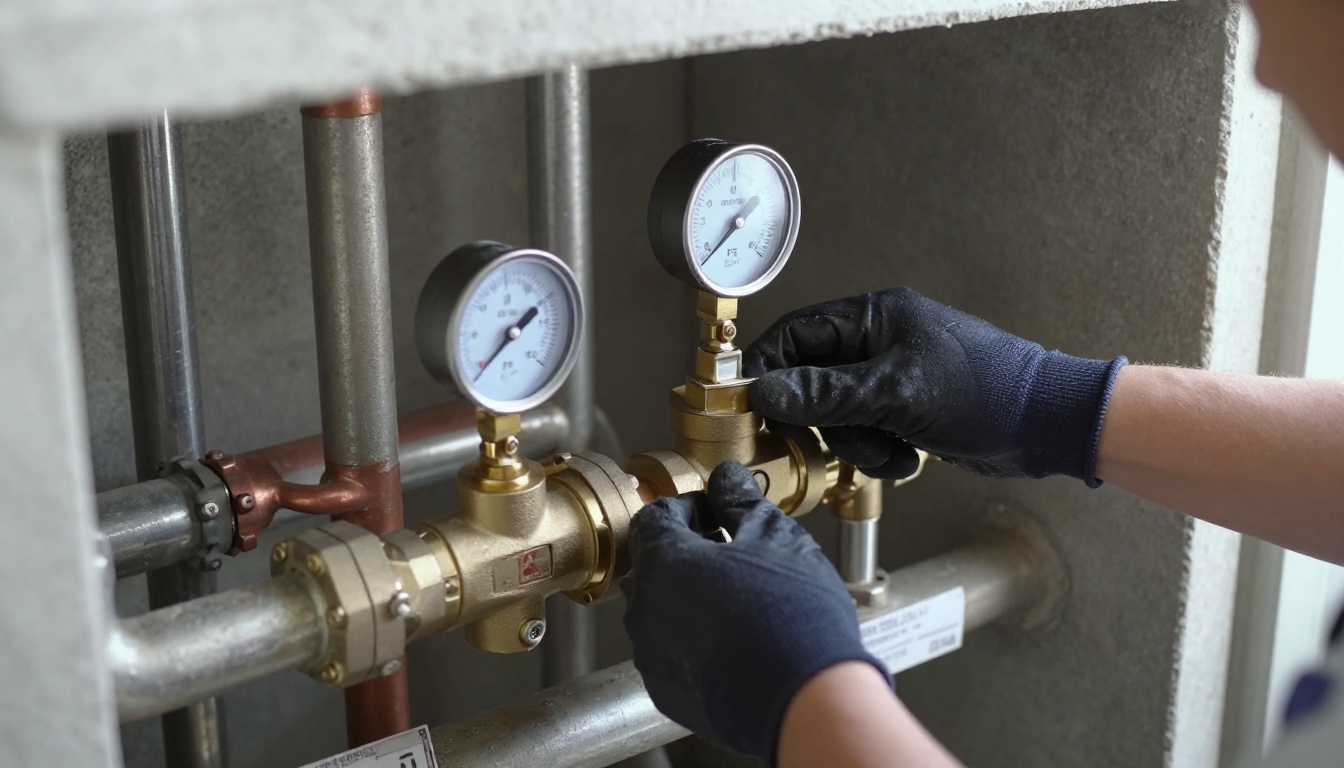
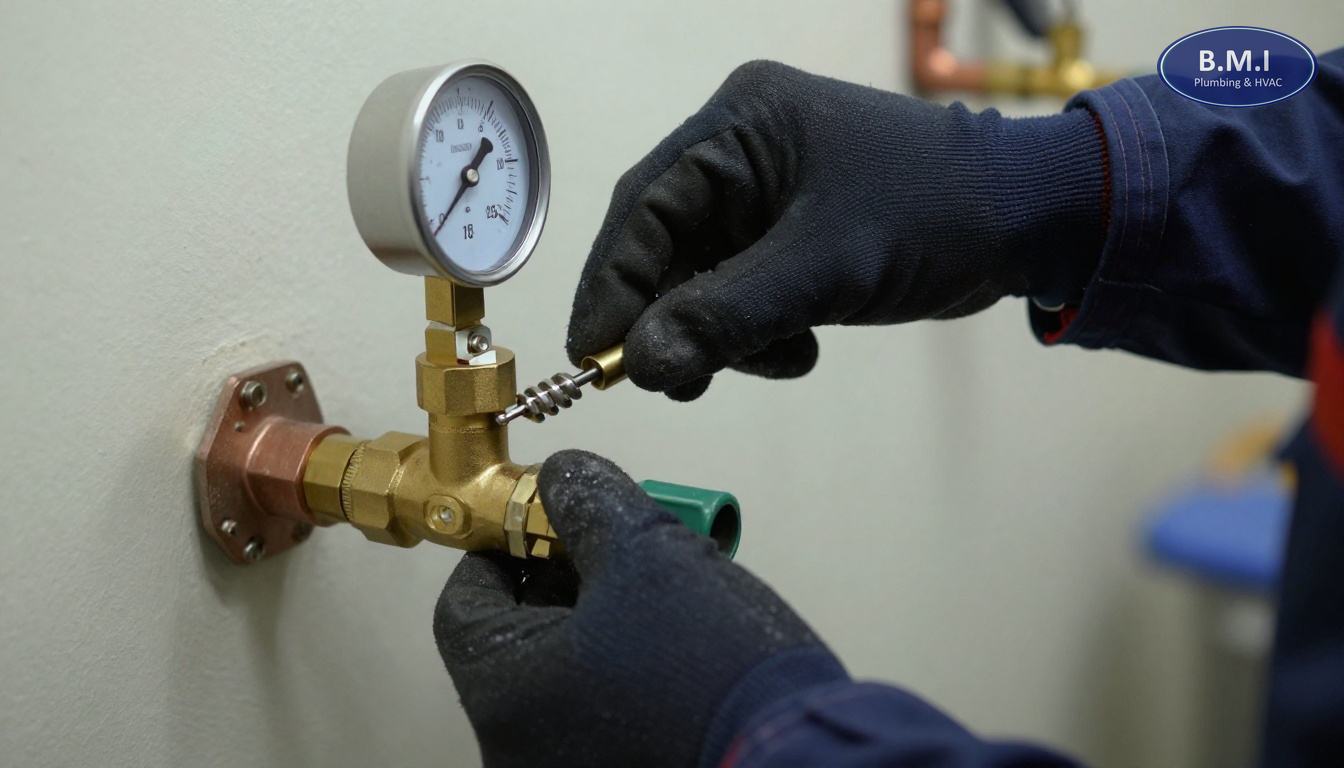
- pressure gauges before and after the station
- strainers ahead of the valves where required
- unions, flanges or grooved connections for serviceability
- balancing or sequencing setup so one valve handles base flow and the second opens as demand rises
In practice, that means one valve can be taken offline while the other continues supplying the building. On a 250-unit tower, that is not a luxury feature. It is operational resilience.
One mistake we see in early-1990s North York and Scarborough towers is a board approving a PRV replacement but not the manifold upgrade around it. The new valve goes in, but the building still has one path, one set of questionable isolation valves, and one future shutdown problem. The hardware is newer, but the risk profile is largely unchanged.
Why single PRVs become unstable in real condo demand patterns
Domestic water demand in a condominium is not steady. It spikes hard between roughly 6:00 to 9:00 a.m. and again around 6:00 to 10:00 p.m. A single oversized PRV selected only for peak flow can perform poorly at low overnight demand, especially in post-2000 towers with efficient fixtures where minimum flow through the valve is often lower than the original design assumed.
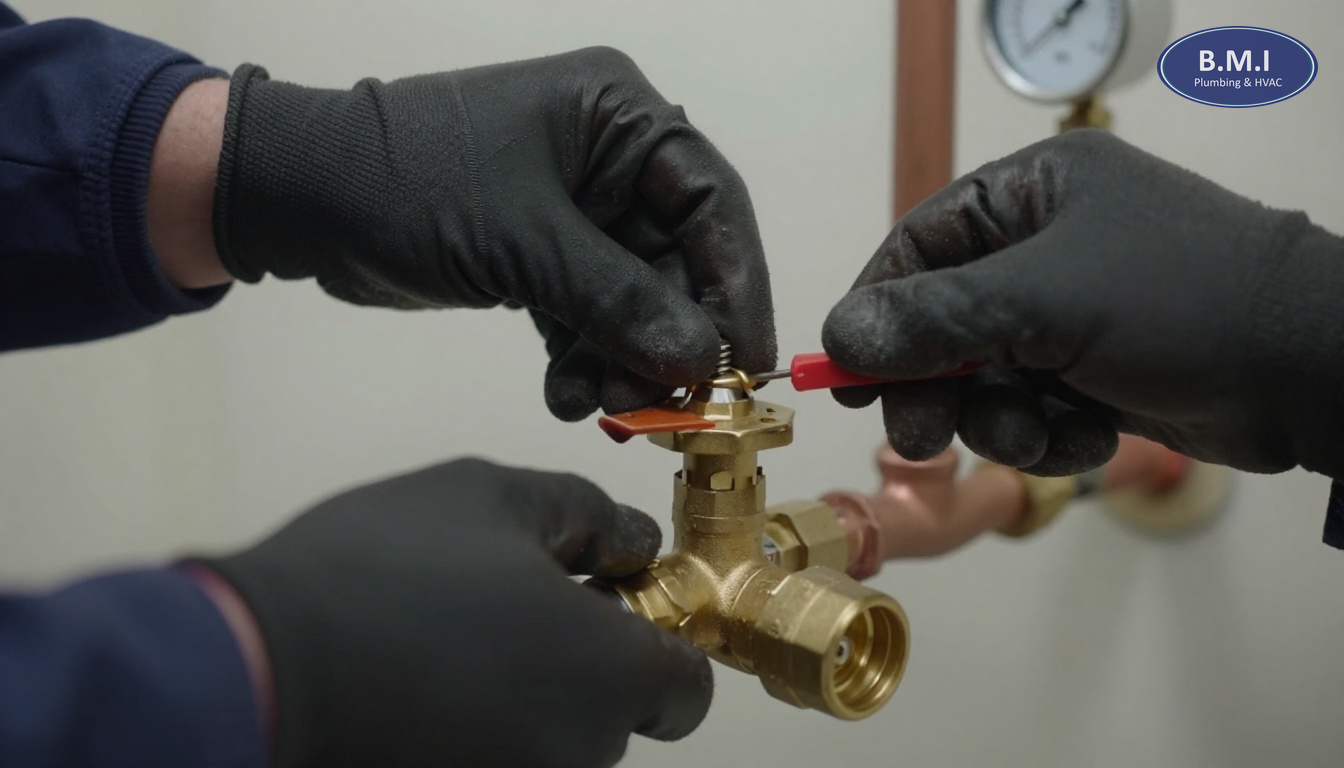
That matters because PRVs do not simply “reduce pressure.” They modulate against a spring setting and diaphragm or internal trim arrangement. When a valve is oversized, worn, or fouled with debris, it may hunt—opening and closing too aggressively—which shows up in the building as:
- lower-floor pressure surges when few fixtures are running
- noisy flush valves or toilet fill valves
- recurring leaks at angle stops, braided connectors or faucet cartridges
- resident complaints that pressure is “too strong at night and weak in the morning”
If that pattern sounds familiar, the next step is not guessing. It is getting pressure readings and, where needed, a full camera inspection or system review of associated piping if there are broader flow issues. Pressure complaints and flow complaints are not always the same problem.
In buildings we service along the Toronto waterfront, another factor is municipal pressure variability. Buildings near major mains can see noticeably different overnight versus daytime inlet pressures. A single aging PRV may hold 65 psi at one time of day and drift into the 80s at another. Parallel stations help because one valve can be set to carry normal load more accurately while the second assists only when demand rises.
There is also a practical maintenance point most non-specialists do not hear: PRVs fail “soft” more often than they fail “hard.” Instead of one dramatic break, the building gets months of creeping pressure instability, nuisance leaks and fixture wear. By the time the valve is obviously bad, owners may already have a stack of in-suite complaints that were treated as isolated issues. A good maintenance program catches that drift before it becomes a building-wide expense.
How PRV problems actually present in a condo building
Property managers are rarely told, “your main PRV is failing.” They hear symptoms.
The most common symptom set in a building with poor PRV control is:
- repeated fixture complaints on lower floors
- occasional hammer or banging after toilets close
- unexplained leaks at washing machine hoses, bidet seats or fixture connectors
- pressure that seems fine during a site visit but not at resident peak times
A second pattern is the opposite: inadequate pressure at busy hours. In that case, the PRV may be undersized, partially fouled, or installed in a station with clogged strainers or failing isolation valves that were never fully reopened after previous work. That is why in-suite plumbing complaints should sometimes trigger a building-system review rather than another suite-level service call.
In a 300-unit building, if six or eight lower-floor suites report recurring faucet cartridge failures over 12 months, that is not random bad luck. Cartridge life shortens fast when downstream pressure is persistently high. We have seen buildings spend $4,000 to $8,000 per year on repeated suite-level service calls before anyone addresses the main pressure station causing the wear.
A common mistake in Etobicoke and Markham towers is assuming every leak after hours is a workmanship issue from a prior suite renovation. Sometimes it is. But when multiple suites on the same low zone show failed toilet fill valves, ice maker lines or braided connectors, excessive pressure should be on the shortlist immediately. If a resident alteration is involved, management may also need to review whether a section 98 agreement applies, but the corporation still needs to know whether common-element pressure is contributing.
What a proper PRV assessment should include
A credible recommendation on PRV redundancy should be based on evidence, not just “the valve looks old.” If a contractor cannot explain the existing station hydraulically, ask more questions.
At minimum, an assessment should include:
- static inlet pressure and static outlet pressure readings
- pressure readings during at least one higher-demand period if complaints are time-specific
- valve make, model, size and approximate age
- pipe size and material on the incoming service and downstream header
- condition of upstream/downstream isolation valves
- presence and condition of strainers, bypasses and gauges
- whether the building has one pressure zone or multiple PRV stations for different zones
- whether there is enough room to retrofit a duplex or parallel arrangement
In Toronto, many main PRVs are Watts, Wilkins/Zurn, Cash Acme or Apollo assemblies on 2 inch to 4 inch copper or steel lines. The brand matters less than serviceability and parts support. Some older bodies are still usable if rebuilt; others are poor candidates because trim kits are difficult to source or the surrounding station is the bigger problem.
A proper report should also address valves around the station. If the upstream and downstream shutoffs do not hold, the building may need a related valve replacement or even a full valve audit before any redundancy project is worthwhile. There is no point adding a standby PRV if neither branch can actually be isolated later.
Managers should insist on a written recommendation that answers three questions clearly:
- Can the existing valve be rebuilt safely?
- If rebuilt, does the building still remain exposed to a single point of failure?
- What is the cost difference between restoring function and adding redundancy now?
That last question matters because mobilizing twice is expensive. If a building already needs a shutdown, access plan, resident notice and mechanical room work, the incremental cost to add a second branch is often more reasonable than boards expect.
Repair, rebuild or install a parallel station: a decision framework
Boards usually do not need a lecture on valve theory. They need a defensible decision. The most useful way to frame it is by operational risk, not by whether the current valve still technically works.
Option 1: Rebuild the existing single PRV
This can make sense when:
- the valve body is in good condition
- parts are readily available
- the surrounding isolation valves hold properly
- the building can tolerate a planned shutdown
- reserve timing means a larger station upgrade should wait 12 to 24 months
A rebuild is often the least expensive immediate option, but it does not solve the redundancy issue. If the board chooses this route, the recommendation should explicitly say that the building remains dependent on one active PRV.
Option 2: Replace the single PRV like-for-like
This is appropriate when the body is obsolete or damaged, but the board is not yet ready for a manifold upgrade. It is still a single-point-of-failure setup, but sometimes it is a reasonable short-term decision if a broader mechanical room renewal is already planned. In that case, the honest answer may be: replace now, budget the parallel station next year.
Option 3: Retrofit a parallel PRV station
This is usually the best long-term option when:
- the building has over roughly 100 suites
- a full-building shutdown is disruptive or difficult to schedule
- the building has a history of pressure complaints or fixture failures
- the PRV station is older than 15 to 20 years
- the reserve fund can support a moderate capital item
On a 20- to 30-storey condominium, the value is not only backup. It is maintainability. One branch can be serviced while the other remains live, which is especially important in winter when domestic water shutdowns can complicate heating-related operations and resident occupancy.
Option 4: Broader pressure-station modernization
Sometimes the right answer is bigger than PRVs. If the building also has poor sectional isolation, bad gauges, corroded steel headers or expansion issues, the scope may need to include expansion compensators, new branch valves, supports and a more complete domestic water room upgrade. If multiple risers are already under review, tie the decision back to a larger riser replacement or building re-piping strategy.
Typical Toronto-area cost ranges
These are budgetary market ranges, not fixed prices, and they vary with pipe size, room access, after-hours work, asbestos procedures, and whether steel piping or concrete work is involved.
| Scope | Typical GTA range | Notes |
|---|---|---|
| Inspect, test and report on existing PRV station | $750-$2,500 | Depends on complexity, gauges, multiple zones and reporting detail |
| Rebuild existing commercial PRV | $1,500-$4,000 per valve | Only where parts are available and body is serviceable |
| Replace single main PRV like-for-like | $4,000-$12,000 | Wide spread based on 2" to 4" size and shutdown logistics |
| Retrofit basic 2" parallel PRV station | $12,000-$20,000 | Small to mid-size building with workable access |
| Retrofit 2-1/2" to 4" parallel station in high-rise | $20,000-$45,000 | Typical condo mechanical room project |
| Add associated isolation valves/gauges/strainers | $3,000-$12,000 | Often bundled into station retrofit |
| After-hours building-wide shutdown logistics | $1,500-$6,000 | Notices, overtime, supervision and restart time |
A useful board-level comparison is this: one emergency domestic water shutdown in a 200-plus-unit building can easily consume dozens of management hours, operator overtime, concierge coordination, elevator protection, resident communications and follow-up suite visits. The direct plumbing cost is only part of the financial picture.
Where a building also lacks dependable sectional valves, combine the review with a valve audit. In some buildings the real hidden cost is not the PRV itself but the fact that no one can isolate anything confidently when work begins.
Scheduling, shutdowns and what residents need to know
Fall is often the best season to plan this work. Boards are setting next year’s numbers, and contractors can still inspect and price the project before winter emergency volume rises. It also gives management time to align the work with other capital items from project solutions rather than treating pressure control as a one-off repair.
A typical sequence for a parallel PRV retrofit looks like this:
- Site review and measurements: 1 to 2 hours on site, plus follow-up pricing.
- Design/coordination: 1 to 3 weeks depending on approvals and valve lead times.
- Resident notice: usually at least 48 to 72 hours for a planned shutdown, though many managers prefer 5 to 7 days.
- Installation: often 1 day for a simple setup, 2 to 5 working days for a full retrofit with supports, controls and difficult access.
- Shutdown window: commonly 4 to 8 hours if tie-ins are straightforward; longer if upstream valves do not hold.
- Commissioning: pressure setpoints, branch testing and observation under live building demand.
On a 25-storey building, the actual pipe work may only be part of the challenge. Resident communication matters because the shutdown affects:
- all suite domestic water
- cleaners and common amenity washrooms
- superintendent and contractor washup access
- possibly irrigation or garage hose bibbs if still live in fall
- any dependent systems tied into the domestic service
If the building has not reviewed its backflow assembly recently, this is also a sensible time to confirm annual testing under Toronto Municipal Code Chapter 851 through a qualified backflow prevention provider. It is not the same device as a PRV, but both are often in the same service area and boards save money by coordinating access.
What happens if the board defers it
Not every building needs to do this immediately. Some do.
If the current single PRV is stable, rebuildable, and the isolation valves are reliable, a board may reasonably decide to defer a parallel retrofit one budget cycle while documenting the risk. That is a defensible decision.
Deferral becomes harder to justify when:
- the PRV is already drifting or hunting
- replacement parts are uncertain
- the building has had repeated pressure-related suite failures
- there is no dependable way to isolate the station
- the reserve fund study is already flagging domestic water infrastructure
What boards sometimes miss is the insurance angle. Excessive pressure contributes to small but frequent losses: supply hose failures, fixture connector leaks, toilet overflows after fill-valve failure. A single event may fall below the corporation deductible, but repeated incidents still affect claims history, owner relations and chargeback disputes. If the declaration places certain components within owner responsibility, management still needs evidence that the common-element system is not the underlying cause.
For reserve planning, PRV redundancy usually sits in the grey area between repair and capital improvement. It may not have been listed explicitly in an older reserve fund study, but if the domestic water station is at or beyond expected service life, updating the study to reflect a pressure-station renewal is prudent. In our experience, boards regret unplanned shutdowns far more than they regret having budgeted a moderate mechanical room upgrade a year earlier.
If your building is already planning riser work, valve replacements or a larger building re-piping program, that is the right moment to ask whether the PRV station should be modernized at the same time. Bundling scopes often reduces shutdown count and resident disruption.
Common element or in-suite responsibility?
This comes up every time pressure causes damage.
In most condominium corporations, the main PRV station and domestic water distribution serving the building are common elements. Suite fixtures, hoses, faucet cartridges and owner-installed appliances are often unit responsibility, subject to the declaration and rules. The complication is causation: if common-element overpressure contributes to repeated in-suite failures, the corporation may still need to correct the root problem even if a specific failed connector belonged to the owner.
That is why documentation matters. When pressure complaints arise, do not rely on verbal impressions from one service call. Ask for readings, valve condition notes and a written recommendation. For recurring suite issues, a coordinated review of toilet and faucet repairs patterns can reveal whether the building has a system-wide pressure problem rather than a string of unrelated fixture failures.
FAQs
What is a parallel PRV station in a condominium building?
A parallel PRV station uses two or more pressure reducing valves installed side by side on the same domestic water service, usually with isolation valves and bypass piping so one valve can carry the load while the other is serviced. In a Toronto high-rise, this is commonly done on 2 inch, 2-1/2 inch, 3 inch or 4 inch incoming lines where a single PRV would otherwise make the whole building dependent on one component. The practical benefit is not just backup during failure; it also allows staged flow control so pressure remains more stable during morning and evening peak demand.
How do we know if our building needs PRV redundancy?
If the building has a single main PRV with no practical way to isolate and rebuild it without a full domestic water shutdown, redundancy should be evaluated. We usually recommend a review when static municipal pressure is above about 100 psi, when the building is over 8 to 10 storeys, when there are frequent pressure complaints on upper or lower floors, or when the existing valve is over 15 years old and parts availability is uncertain. Buildings in Toronto, Mississauga and Vaughan with one aging PRV often discover the risk only after a failure forces an unplanned shutdown.
Can an existing single-PRV setup be retrofitted into a parallel PRV station?
Usually yes, but the difficulty depends on mechanical room space, pipe size, valve condition and whether the incoming service has enough straight pipe to build a proper manifold. On a typical condo with a 2 inch or 3 inch domestic cold water entry, a retrofit often involves new isolation valves, a duplex PRV arrangement, gauges before and after each valve, and sometimes a temporary bypass for commissioning. In Toronto-market conditions, a straightforward retrofit may take 2 to 5 working days, while a tighter or older mechanical room can stretch longer if steel piping, asbestos procedures or concrete work are involved.
What does a parallel PRV project typically cost in the GTA?
As a broad budget number, a basic small-building retrofit on a 2 inch line may start around $12,000 to $20,000, while a more typical high-rise condominium installation on 2-1/2 inch to 4 inch piping often lands in the $20,000 to $45,000 range. Costs rise when the project includes new sectional valves, strainers, gauges, supports, electrical monitoring, overnight shutdowns or corroded upstream piping that should be replaced at the same time. Those are market ranges, not fixed prices, and the spread is wide because one cramped 1980s North York mechanical room can take twice the labour of a newer post-2010 Toronto tower.
Is a single larger PRV better than two smaller PRVs in parallel?
Not usually in a condominium context where service continuity matters. A single large PRV can work hydraulically, but it leaves no redundancy and often performs poorly at very low flows because the valve is oversized for off-peak conditions, which can cause hunting and pressure swings. Two correctly sized valves in parallel let one valve handle low demand more accurately and both open during peak periods, which is one reason we see better pressure stability in buildings with properly commissioned duplex stations.
How often should parallel PRV stations be tested or maintained?
At minimum, pressure should be checked and recorded seasonally, and fall is a sensible time because municipal pressures and winter demand patterns often expose weak valves. In most condo buildings, a full inspection should include inlet and outlet pressure readings, gauge verification, strainer review, leak checks and exercising isolation valves at least annually; older or high-demand buildings may justify more frequent review under a formal PRV maintenance program. A redundant station is only truly redundant if the standby valve has been exercised and proven to carry the building load.
What to do this fall if your building still has one main PRV
If your building has a single main pressure reducing valve, this is the practical sequence to follow before winter:
- confirm the valve make, size, age and current set pressure
- verify whether the station can actually be isolated and serviced
- ask for inlet and outlet pressure readings, not just a visual opinion
- review whether lower-floor fixture failures suggest chronic overpressure
- get a budget number for both a rebuild and a parallel retrofit
- decide whether next year’s reserve or operating plan should include the upgrade
If the building has had repeated pressure complaints, unexplained fixture failures, or an aging single-valve station with poor isolation, do not wait for a winter emergency to find out how vulnerable the system is. A site visit now is cheaper than an unplanned shutdown later, and if the diagnosis shows the valve is stable and the upgrade can wait a year, that is still useful information.
BMI attends the building before quoting, and where the issue is broader than one valve, the recommendation can be coordinated with repairs and service, projects or a scheduled preventive program rather than handled piecemeal. For buildings facing an active leak or pressure-related failure, 24/7 emergency plumbing response is available.
For more condominium-focused plumbing guidance, see the rest of the BMI blog.
Contact BMI
- Contact BMI
- Phone: (416) 845-3756
- Emergency: (416) 845-3756, answered 24 hours a day
- Email: info@brial.ca
More on condominium plumbing
Toronto High-Rise Pressure Zones: Why Floors Vary
Why top floors lose water pressure while lower floors get too much in Toronto condos. A practical guide to water …
PRV Failure Symptoms in Toronto Condo Buildings
Learn the real PRV failure symptoms behind condo water pressure problems, with Toronto cost ranges, testing steps and …
How Pressure Reducing Valves Work in a Toronto High-Rise
Understand pressure reducing valve operation in a condo high-rise, with Toronto cost ranges, failure signs, inspection …
Need a plumber in your building?
BMI services roughly 200 condominium and multi-residential buildings across Toronto and the GTA. Emergencies are answered at any hour.