Pressure Reducing Valve Service and Replacement in East York
Pressure reducing valve service and PRV replacement in East York for condos and rentals. Building water pressure diagnostics, costs and timelines.
Pressure Reducing Valve Service and Replacement in East York
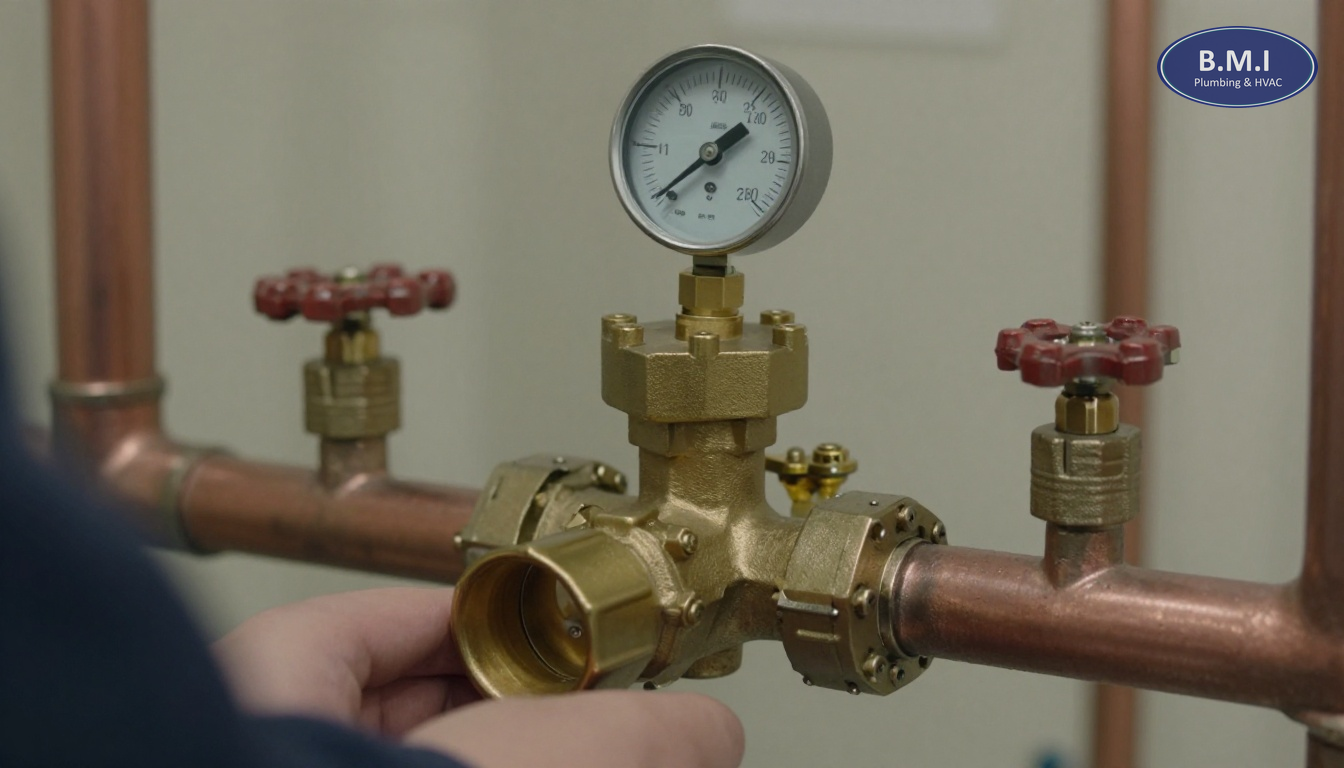
Quick summary: In East York, pressure reducing valve problems are common in older apartment towers, post-war rental stock, and condominium buildings that have had years of piecemeal plumbing repairs without a full pressure review. If your building is seeing repeated fixture failures, noisy piping, erratic pressure on lower floors, or seasonal pressure swings heading into winter, a proper PRV inspection is usually cheaper than continuing to absorb leak calls and suite repairs.
Why pressure reducing valve issues show up in East York buildings specifically
East York is not a generic condo market, and that matters for PRV work. Much of the area’s multi-residential stock predates the newest high-rise construction cycle seen elsewhere in the GTA. Around Danforth Avenue, Donlands, and the corridors feeding toward O’Connor, you see a lot of older apartment buildings, 1960s to 1980s towers, and smaller low- and mid-rise properties that were built with simple domestic water systems by today’s standards. Many of those buildings still have original or long-deferred pressure reducing stations on the incoming water service.
That building vintage drives the plumbing problems. In older East York buildings, the domestic water entrance often includes aging brass PRVs, old gauges that no longer read accurately, limited bypass arrangements, and sectional valves that do not fully isolate. In some buildings, the PRV has been adjusted repeatedly over the years to deal with complaints, but never properly serviced, rebuilt, or replaced. The result is a system that may deliver acceptable pressure one week and then drift high or low depending on demand.
East York is served within Toronto’s municipal water system, so the incoming pressure at a building is not something the property manager controls. What the building can control is how that pressure is reduced and stabilized internally. In practice, static street pressure can be higher than what fixtures, fill valves, solenoids, and older branch piping should see continuously. Where a building sits relative to local topography and the municipal distribution network can also affect how aggressively the incoming pressure needs to be managed. That is why a pressure setpoint that works in one East York property is not automatically right for another.
Another local factor is the age of fixture stock. In older East York rentals and condominiums, many suites have gone through partial upgrades over time: one bathroom renovated in 2012, another still original, kitchen faucet changed after a leak, laundry connections replaced only when they failed. Mixed generations of fixtures make pressure problems more visible. Newer cartridges and braided supplies can fail differently than older brass internals, but both suffer when the building pressure is too high or unstable.
For boards planning fall budgets, this is also the season when it makes sense to review pressure reducing valve maintenance and replacement. Winter pressure swings, holiday occupancy, and year-end leak claims are not the best time to discover that the main PRV station has been limping along for years.
How building water pressure problems present in East York
Property managers rarely get a call saying, “our PRV is failing.” They get symptoms.
In East York, the common reports are lower-floor residents saying the water pressure is too strong, toilet fill valves running constantly, faucets becoming harder to shut off cleanly, and recurring leaks at angle stops, braided supplies, or flush valves. In older rental buildings, superintendents may report banging in the piping after fixture use, or pressure that feels acceptable during the day but rises noticeably late at night.
In taller buildings or buildings with booster equipment, the complaints can be mixed. Lower floors may report aggressive pressure while upper floors report weak shower flow at peak demand. That often leads staff to keep tweaking booster settings or local valves, which can mask the real issue for a while but usually makes the system less stable overall.
Another East York-specific pattern is repeated small leaks in older suites after municipal work or after a shutdown and restart. If the PRV station is sticking, passing, or no longer controlling smoothly, those pressure changes can expose weak points fast. By the time management notices a pattern in work orders, the building may already have spent more on repeated suite calls than it would have cost to diagnose the pressure station properly.
Managers should also pay attention to indirect signs: expansion tank relief discharge, more frequent replacement of fill valves, pinhole-type leaks showing up after no recent branch work, and resident complaints that seem random by floor or time of day. Those are often clues that the system pressure is not being controlled consistently.
Where there are also recurring drain and grease complaints, it can be worth reviewing broader preventive work at the same time, including all maintenance programs and, where relevant for mixed-use or amenity-heavy buildings, kitchen stack cleaning.
Diagnosing PRV problems in East York buildings and what evidence to insist on
A proper PRV diagnosis is not just turning an adjustment screw and seeing if complaints stop. For a condominium or apartment building in East York, the inspection should begin at the domestic water entry and expand outward from there.
The plumber should document:
- incoming static pressure
- downstream pressure after the PRV under no-flow and flow conditions
- pressure behaviour during fixture demand
- condition of the valve body, pilot components if present, strainers, gauges and bypasses
- whether upstream and downstream isolation valves hold properly
- whether there is evidence of pressure creep after flow stops
Pressure creep is a major issue in older valves. The system may look fine while water is flowing, but once demand stops, the downstream pressure slowly rises because the PRV is not seating properly. That is when lower-floor fixtures get stressed and nuisance leaks begin.
In East York’s older building stock, access is often part of the job. Mechanical rooms may be tight, piping may have been added in stages, and original valve stations may not have enough straight pipe, supports, or service clearances by current best practice. A credible recommendation should account for those physical realities, not just quote a valve size from a nameplate.
If the building has a booster system, the diagnosis should consider the PRV and booster controls together. Too often, one contractor adjusts the booster to solve an upper-floor complaint while the underlying reducing valve problem at the entrance remains unresolved. That can leave the whole building chasing symptoms.
Property managers should ask for clear evidence: gauge readings, photos, identification of the existing valve model if legible, note of whether rebuild parts are still available, and a written explanation of whether the issue is calibration, fouling, worn internals, or full station obsolescence. If the recommendation includes replacement, management should also understand whether new isolation is needed and whether nearby valves should be addressed at the same time through a valve audit, charting and exercise program or sectional and isolation valve replacement.
Where pressure complaints have been accompanied by unexplained leaks or concern about hidden failures, a broader inspection may also include camera pipe inspection in selected areas, though that is usually secondary to direct PRV testing.
A representative East York PRV service call
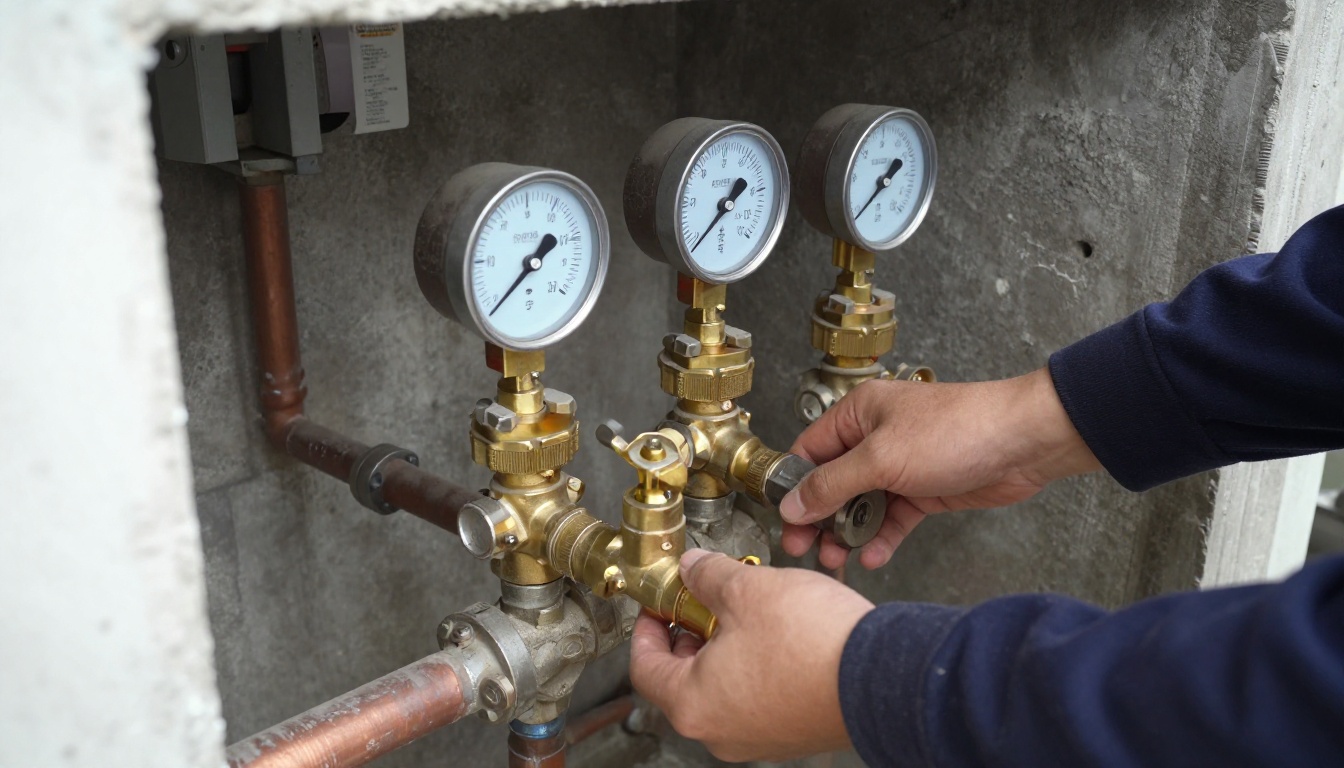
A representative project was a 14-storey apartment building from the late 1970s in East York, not far from the Danforth corridor. Management had been dealing with a steady stream of lower-floor complaints: toilet fill valves failing every few months, repeated faucet drips after cartridge replacements, and two small floods from braided supply line failures over one year. The building also reported that upper-floor shower pressure seemed inconsistent during morning peak use.
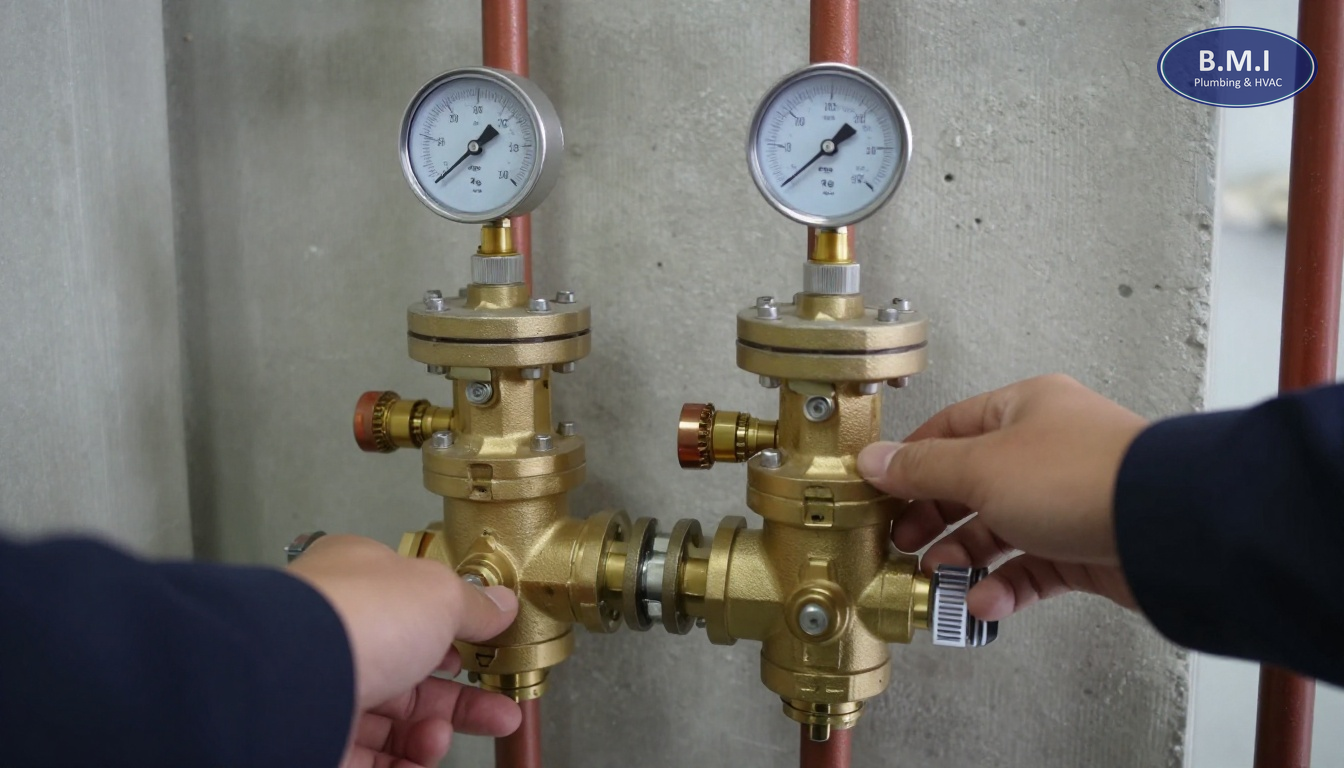
Initial inspection found an original main PRV station on the domestic cold water entry. The downstream gauge was inaccurate, one isolation valve did not fully close, and the reducing valve was showing pressure creep after demand stopped. Static downstream pressure rose well above the intended setpoint within minutes. The building had compensated over the years by making informal adjustments, but the valve internals were worn and rebuild parts were not a practical long-term solution.
The scope included a planned shutdown, replacement of the main PRV, new gauges, new isolation hardware immediately around the station, and recommissioning with pressure readings taken on lower, mid, and upper floors. Because the old station arrangement offered poor serviceability, the replacement was laid out to allow future maintenance without as much disruption. The work was completed over one working day with advance resident notice, followed by a short return visit for final verification after occupancy patterns normalized.
The rough market cost for that type of East York project in 2026 would typically land around $6,000 to $14,000 depending on valve size, access, shutdown complexity, and whether additional isolation or support work is required. In this case, the building’s complaint volume dropped immediately, and the manager also used the findings to support a broader mechanical planning discussion around domestic water riser replacement in future reserve cycles.
Costs and timelines for PRV replacement in East York
For East York multi-residential buildings, PRV costs vary mostly by valve size, station configuration, access, and whether the existing isolation valves are still functional.
As a practical 2026 GTA estimate:
- Inspection and diagnostic service: often a few hundred to low thousands, depending on how much testing and documentation is required
- Minor service or rebuild where parts are available: often roughly $1,500 to $4,000
- Straightforward main PRV replacement: often roughly $4,000 to $9,000
- More involved replacement with new isolation valves, gauges, supports, bypass work, or difficult access: often roughly $8,000 to $18,000+
Those are not quoted prices. They are planning ranges only, and East York buildings can fall outside them depending on the system.
Timeline is usually shorter than managers expect once the scope is defined. A basic diagnostic visit may be completed in one attendance. A planned replacement in a building with workable isolation can often be done in one day, though resident notice, material lead time, and post-work balancing may stretch the calendar to one to three weeks from approval. If adjacent valves fail during shutdown planning, the work can expand quickly.
That is one reason fall is a good time to deal with PRVs. Boards are preparing operating and capital budgets, and there is still time to schedule orderly work before winter service pressures, holiday occupancy, and year-end contractor congestion. In buildings where pressure instability has already caused emergency incidents, it is worth pairing the assessment with a review of 24/7 emergency leak response history so recurring losses are visible to the board.
Repair versus replacement in East York: a practical framework
Not every East York building needs immediate PRV replacement. Some valves can be serviced successfully if the body is in good condition, the station is accessible, and parts are available. But the decision should be based on more than whether the valve can be made to work today.
Repair is usually reasonable when:
- the valve body is sound
- the pressure problem is clearly tied to worn internal components or fouling
- rebuild kits are available
- nearby isolation works properly
- the station layout allows future maintenance without major shutdown risk
Replacement is usually the better call when:
- the body is corroded or obsolete
- pressure creep returns after prior adjustments
- gauges and ancillaries are unreliable
- there is no practical isolation for future service
- the building has a repeated history of fixture failures, leaks, or resident complaints tied to pressure
For many East York boards, the real choice is not repair versus replacement in the abstract. It is planned work versus repeated disruption. If management already expects more domestic water upgrades over the next reserve cycle, the PRV decision should be coordinated with broader project solutions such as risers, isolation valves, or even full building re-piping where the piping asset is at end of life.
What deferring PRV work costs an East York board or manager
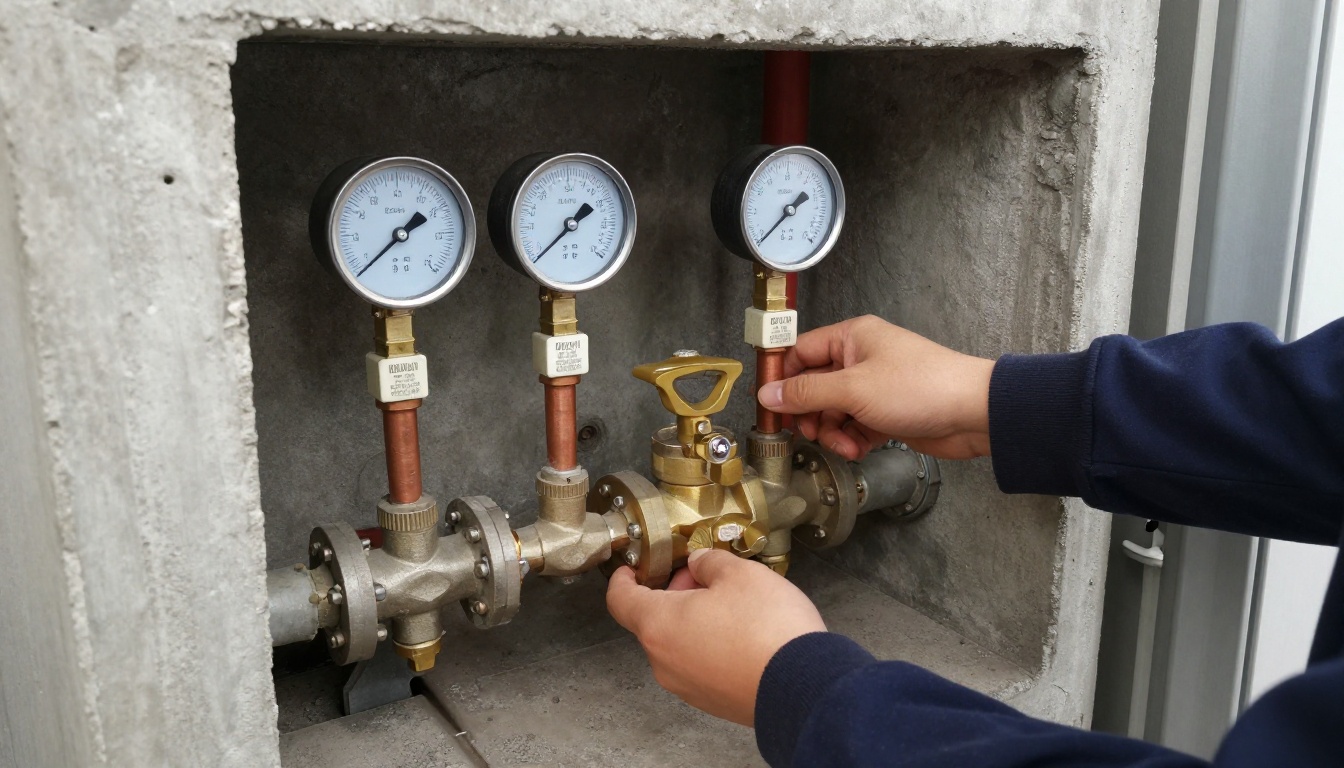
Deferring PRV service is usually framed as saving capital. In practice, it often shifts cost into operating budgets, insurance exposure, and resident dissatisfaction.
High or unstable pressure shortens the life of toilet fill valves, faucet cartridges, solenoids, washing machine connections, flexible supplies, and older stop valves. That means more suite entries, more resident coordination, and more small leak events. One preventable flood can cost far more than a planned PRV replacement, especially once restoration, deductibles, and management time are included.
There is also the reserve planning issue. Under Ontario’s reserve fund study framework and its update cycle, boards need realistic timing for major components. A pressure station that is visibly aged, poorly isolated, and already causing repeated maintenance calls should not be treated as a surprise failure. It belongs in the building’s capital conversation.
For condominiums, pressure-related leaks can also become governance problems when owners ask whether damage arose from common element plumbing, suite alterations, or maintenance neglect. In some cases, section 98 alteration history complicates responsibility if owners have installed fixtures or appliances that are more sensitive to pressure conditions. The cleaner the building’s maintenance record and pressure documentation, the easier those discussions are.
If the building also has annual testable backflow devices at the service entrance, PRV work is a good time to review backflow prevention testing and certification and the overall condition of the domestic entry assembly. East York properties within Toronto still need to manage cross-connection control obligations where applicable, and it makes little sense to ignore one aging component while servicing the next one downstream.
FAQs about pressure reducing valve service in East York
How do we know an East York building needs pressure reducing valve service and not just a fixture repair?
The pattern matters. If complaints come from multiple floors or residents report toilets running, banging pipes, leaking relief valves, or very strong pressure at off-peak times, the issue is usually broader than a single faucet cartridge. A proper diagnosis compares static and flowing pressure at the incoming main, after the PRV station, and on representative upper and lower floors.
How often should PRVs be checked in an East York condominium or rental building?
For most multi-residential buildings, PRVs should be inspected as part of a planned annual mechanical review, with more frequent attention if the building has a history of pressure swings, older valves, or recurring fixture failures. Fall is a practical time in East York because boards are setting budgets and buildings want stable pressure before winter demand changes. Buildings with booster systems also need the controls and setpoints reviewed together, not in isolation.
What does PRV replacement typically cost in East York?
For a straightforward main PRV replacement in a small to mid-sized East York building, a realistic market estimate is often in the low thousands to low five figures depending on valve size, isolation, bypass arrangement, access and whether work must be staged after hours. If the station needs new gauges, strainers, supports, unions, or upstream and downstream sectional valves, the number moves up. A proper budget should also include shutdown coordination, recommissioning and post-work pressure verification.
Can a PRV be rebuilt, or does it always need full replacement?
Not every valve needs to be replaced. If the body is sound and parts are still available, rebuilding the internals can be a reasonable maintenance step, especially where access is good and the pressure station layout is otherwise serviceable. Full replacement is usually the better choice when the valve body is corroded, the station lacks proper isolation, parts are obsolete, or the building has repeated pressure complaints after prior adjustments.
Why do lower floors in East York buildings often complain first about high pressure?
Lower floors are closest to the incoming service and see the greatest effect when the building’s pressure reducing valve is drifting or bypassing. In East York’s mix of low-rise rentals and mid-century apartment towers, that often shows up as noisy flush valves, leaking toilet fill valves, washing machine hose stress, or repeated faucet cartridge failures on the lower levels. Upper floors may report poor flow at the same time if the system is out of balance or the booster controls are being adjusted to compensate for a bad PRV.
Should East York boards tie PRV work into broader maintenance planning?
Yes. PRV service is more effective when it is tied to a wider building review that includes isolation valves, domestic water risers, expansion control and fixture failure history. For East York boards working through reserve fund planning and annual operating budgets, combining a PRV assessment with a valve review or broader maintenance program usually produces better numbers and fewer emergency calls.
Next steps for an East York property manager or board
If your East York building has recurring fixture failures, unexplained lower-floor leaks, or resident complaints about strong or inconsistent water pressure, the next step is not another round of ad hoc fixture repairs. It is a documented pressure review at the building entry and across representative floors, followed by a recommendation that separates short-term service from long-term capital needs.
BMI serves East York and the surrounding GTA from its Toronto shop. For boards and managers, that usually means starting with a targeted PRV assessment, then deciding whether the building needs routine pressure reducing valve maintenance and replacement, related in-suite plumbing repairs, or a broader mechanical scope informed by actual field evidence. You can also review completed projects and building references or browse the BMI blog for related condominium plumbing topics.
Contact BMI
- Contact BMI
- Phone: (416) 845-3756
- Emergency: (416) 845-3756, answered 24 hours a day
- Email: info@brial.ca
More on condominium plumbing
Pressure Reducing Valve Service and Replacement Mississauga
Pressure reducing valve service and PRV replacement in Mississauga condos: signs, inspection steps, costs, timelines and …
Backflow Prevention Testing and Certification in East York
Backflow prevention testing and certification in East York for condos and multi-residential buildings, with local …
Backflow Prevention Testing and Certification Etobicoke
Backflow prevention testing and certification in Etobicoke for condos and rentals. RPZ testing, cross connection …
Need a plumber in your building?
BMI services roughly 200 condominium and multi-residential buildings across Toronto and the GTA. Emergencies are answered at any hour.