Pressure Reducing Valve Service and Replacement Mississauga
Pressure reducing valve service and PRV replacement in Mississauga condos: signs, inspection steps, costs, timelines and budgeting advice.
Pressure Reducing Valve Service and Replacement Mississauga
Quick summary: In Mississauga condominium buildings, pressure reducing valve problems often show up first as repeated in-suite plumbing complaints, not as an obvious mechanical room failure. Older towers around Square One, Hurontario and Burnhamthorpe, and along the Lakeshore corridor now have PRVs that are reaching the end of their useful life, and fall is the right time to inspect, service or budget for replacement before winter pressure swings and holiday occupancy put more stress on the system.
Why pressure reducing valve issues show up in Mississauga buildings specifically
Mississauga has a broad mix of multi-residential stock, and the age of the building tells you a lot about the PRV problem you are likely to find. In the older apartment and condominium buildings from the 1970s and 1980s, especially along established corridors such as Hurontario and in older clusters near Cooksville, the domestic plumbing systems were commonly built around copper mains, mechanical room PRV stations and fixture groups that have now seen decades of service. In those buildings, the valve body may still be serviceable, but diaphragms, seats, pilots, gauges and isolation valves are often well beyond the point where simple adjustment solves anything.
Move to the 1990s and early 2000s high-rise inventory around Square One and you see another pattern. Those towers often have more complex domestic water distribution, booster arrangements and PRV assemblies that were adequate when new but are now dealing with wear, mineral buildup, pressure creep and inconsistent setpoints. The result is a building that never feels quite stable: lower floors get excessive pressure, upper floors complain about intermittent weakness, and the maintenance staff are stuck responding to symptoms suite by suite.
Mississauga’s municipal reality also matters. Water is supplied through the regional system, and actual pressure at the building entry can vary by location, elevation and the building’s relationship to the local distribution network. A tower near the lake does not necessarily behave like a building farther north or at a different elevation. That is why a generic target pressure is not enough. The valve has to be assessed in the context of the building’s incoming pressure, booster equipment if present, and how pressure behaves under real demand.
Fall is when these problems become budget issues. Boards are preparing next year’s numbers, and PRV work competes with everything else in the reserve and operating plan. If your building is already spending too much on recurring toilet and faucet repairs, unexplained fixture failures or after-hours leak calls, it is worth looking upstream at the pressure control equipment rather than treating every suite complaint as an isolated event. For buildings that want a structured approach, BMI’s pressure reducing valve maintenance and replacement program is built around testing, documentation and planned intervention rather than repeated guesswork.
How PRV problems present in Mississauga condos
Property managers in Mississauga rarely get a resident email that says, “our pressure reducing valve is failing.” What they get is a pattern of small but expensive complaints.
The first pattern is repeated fixture trouble on lower or mid-level floors. Toilet fill valves start failing more often. Faucet cartridges wear out earlier than expected. Dishwasher and washing machine hoses see more stress. In some buildings, residents describe water that comes out too hard at off-peak times, then seems normal later in the day. That is often a sign of pressure creep or poor control, not necessarily a supply interruption.
The second pattern is noise. Staff may hear banging after quick-closing fixtures operate, especially if the building already has aging arrestors or unsupported branch lines. Excessive pressure does not create every hammer issue, but it makes the system less forgiving. In older Mississauga towers with long horizontal runs above parking levels or in congested service corridors, the effects are often amplified.
The third pattern is that the building engineer keeps adjusting the PRV, but the complaints return. A pressure reducing valve that needs repeated manual tweaking is telling you something. Either the internals are worn, the strainer is fouled, the bypass arrangement is not functioning properly, the gauges are inaccurate, or the building’s pressure control strategy no longer fits the way the system actually operates.
On the service side, BMI often sees related neglect in the same mechanical room. The PRV may be old, the gauges unreadable, and the isolation valves beside it no longer reliable enough to support clean maintenance. That is when a narrow service call turns into a broader discussion about valve audit, charting and exercise programs, because if you cannot confidently isolate the assembly, even straightforward PRV service becomes riskier and more disruptive.
Diagnosing building water pressure problems in Mississauga
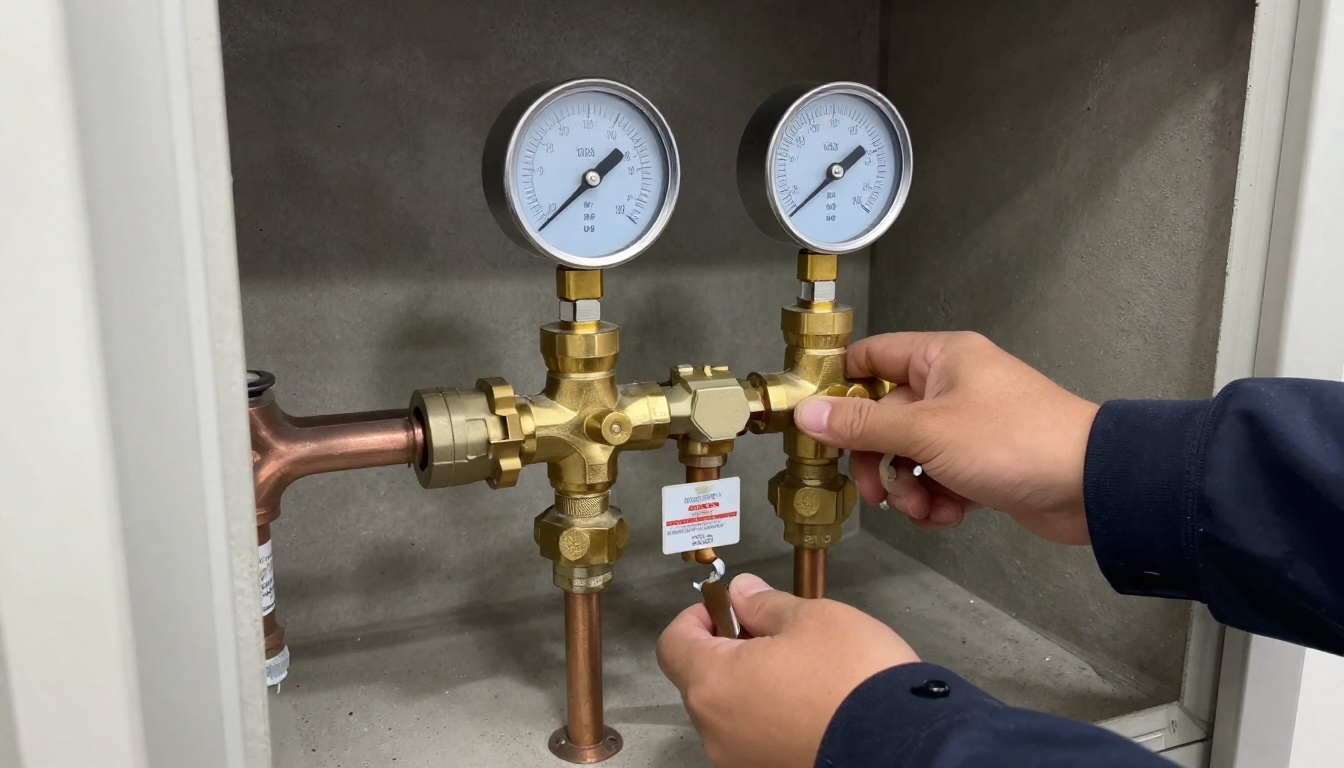
A proper PRV diagnosis starts with evidence, not assumptions. For a Mississauga condominium, the manager or board should expect more than a note saying the valve was “adjusted.” The contractor should document upstream pressure, downstream pressure, static conditions and pressure under flow. If the building has a parallel PRV arrangement or bypass, each path needs to be assessed separately.
The first step is confirming what the incoming city pressure is doing at that building. That matters because some complaints blamed on the PRV are actually related to booster controls, failed check valves, poor gauge accuracy or pressure loss through fouled strainers. In taller buildings, you also need to know how the PRV interacts with the domestic booster system and any zone separation within the tower.
The second step is testing for creep and stability. A common failure mode is a valve that appears fine under one condition but slowly allows downstream pressure to rise when demand drops. That is when lower-floor fixtures and appliance connectors take unnecessary stress overnight or during low-use periods. Another common issue is hunting, where the valve cannot hold a stable downstream pressure and oscillates instead.
The third step is confirming access and isolation. In many Mississauga buildings from the 1980s and 1990s, the PRV station is tucked into a mechanical room with limited clearance, aging insulation and only partial bypass options. A realistic inspection should identify whether the existing shutoffs are dependable or whether sectional and isolation valve replacement should be done at the same time. If the pressure issue is part of a larger domestic water asset problem, that may also lead to a discussion about domestic water riser replacement or broader all capital project work.
Boards should also ask for photos, gauge readings and a recommendation that distinguishes serviceable equipment from end-of-life equipment. If the valve body is obsolete, parts are hard to source, or previous rebuilds have not held, the correct recommendation may be replacement rather than another maintenance cycle. And because Mississauga buildings often face loading, parking and elevator coordination constraints, the work plan should note access assumptions up front, not after the shutdown has been scheduled.
For buildings where the symptoms are mixed and not obviously pressure-related, a broader plumbing review may include camera pipe inspection or review of other maintenance issues. Pressure and flow complaints are sometimes compounded by scale, partially closed valves or neglected branch conditions elsewhere in the system.
A representative Mississauga PRV service call
A representative example would be a 26-storey condominium from the late 1990s near Hurontario and Burnhamthorpe. The property manager’s initial complaint was not one dramatic leak but a steady stream of smaller issues over six months: repeated toilet fill valve failures on lower floors, several faucet cartridge replacements, occasional complaints that shower pressure felt “aggressive,” and one overnight leak from a braided connector in a second-floor suite.
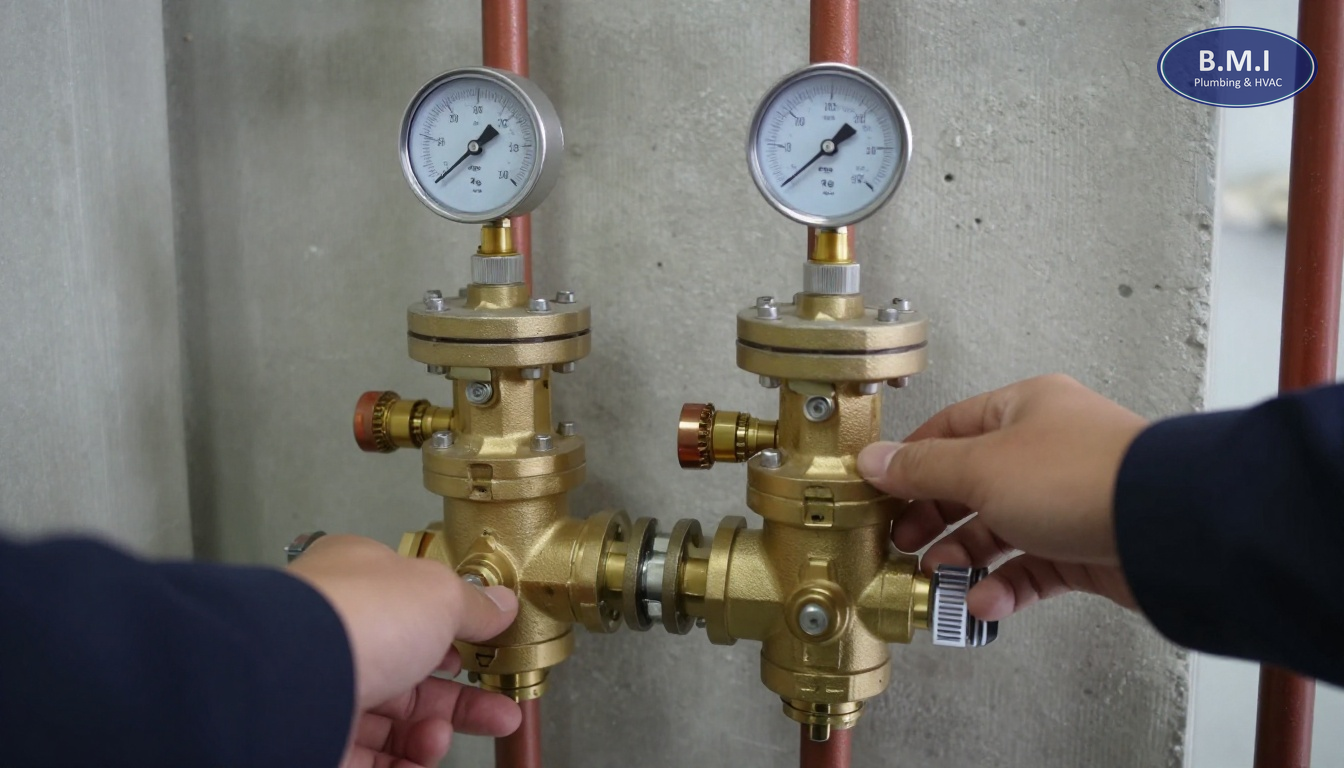
BMI attended the building to review the domestic water pressure control setup. The mechanical room had a main PRV assembly on the domestic cold water service with aging gauges and isolation valves that had not been exercised in years. Static incoming pressure was materially higher than the building should have been distributing to lower floors, and the downstream pressure was not holding steady. During low-demand testing, the valve showed clear pressure creep. The manager also reported that maintenance had tried adjusting the valve more than once, with only short-lived improvement.
The scope was expanded from service to planned replacement. BMI replaced the main PRV assembly, installed new gauges, serviced the adjacent strainers, and replaced two isolation valves that could not be relied on for future maintenance. The work required a scheduled domestic water shutdown, resident notices, elevator coordination for materials and a weekend window because weekday access around the loading area was tight.
The on-site work was completed over one long day, with advance procurement and prefabrication helping keep the outage controlled. After startup, the downstream pressure was set and verified under both static and flowing conditions, and the building was monitored for stability. The rough 2026 market cost for that kind of Mississauga project would typically fall around $8,000 to $15,000 depending on valve size, access, number of associated valves and whether insulation abatement or additional piping modifications were required.
That kind of project sits in the middle ground between routine maintenance and larger capital work. It is not a full building re-piping job, but it has a building-wide effect on fixture life, leak risk and resident complaints.
Costs and timelines for PRV service and replacement in Mississauga
For budgeting purposes, Mississauga property managers should think in tiers.
A diagnostic inspection and service visit for an accessible PRV station, including pressure readings, basic adjustments and a condition review, may land roughly in the high hundreds to low thousands depending on complexity, after-hours requirements and whether multiple valves or zones are involved. If the work is part of a structured all maintenance programs approach, the value is usually in the trend data and planning, not just the visit itself.
A straightforward PRV rebuild or replacement in a mechanical room with good isolation and access often falls in the approximate $4,500 to $12,000 range in the GTA market in 2026. That range assumes a typical condo domestic water PRV station and no major surprises. If the assembly is larger, has parallel valves, needs associated isolation upgrades, or requires extra shutdown logistics, a more realistic range may be $10,000 to $25,000 or more.
Timelines are usually shorter than boards expect once a decision is made. Site review, parts verification and proposal development can often happen within days to a couple of weeks depending on urgency. Once approved, procurement for a standard assembly may be relatively quick, but specialty sizes or obsolete replacements can extend lead times. On-site replacement is often one day of active work, with another visit for review or balancing if needed.
The hidden timeline issue in Mississauga is building coordination. Resident notice periods, service elevator booking, mechanical room access, loading restrictions and after-hours noise expectations often take longer to line up than the plumbing itself. In older towers, narrow mechanical spaces and aged adjacent valves also make contingency planning important.
Repair versus replacement in Mississauga budget season
Fall is when this decision should be made, because by winter the cost of waiting becomes clearer. If your Mississauga building has an older PRV assembly that has already been adjusted multiple times, and you are also seeing a pattern of fixture failures or pressure complaints, that is usually not the moment to fund another minimal service call and hope for the best.
Repair or rebuild makes sense when the valve body is in good condition, parts are available, the internals are the main issue and the building has dependable isolation around the assembly. This is often true where the valve is not especially old, there is no history of repeated instability and the diagnosis clearly points to serviceable wear components.
Replacement makes more sense when the valve is obsolete, parts are scarce, previous service has not lasted, the body or trim is heavily deteriorated, or the building needs a more reliable pressure control setup than the original design now provides. It also makes sense when replacement can be bundled with related work such as pressure reducing valve maintenance and replacement, sectional and isolation valve replacement, or broader domestic water planning shown on BMI’s completed projects and building references.
For boards, the practical question is not just today’s invoice. It is whether the next 12 months will be filled with repeated suite visits, insurance noise and resident dissatisfaction because the underlying pressure problem was left in place.
What deferring PRV work costs a Mississauga condo
Deferred PRV work almost never stays confined to the mechanical room. Excessive or unstable building water pressure increases wear across the system, especially at toilets, faucets, appliance connections and stop valves in suites. That means more service calls, more resident inconvenience and more opportunities for water damage that starts small but turns into an insurance event.
For condominium corporations, there is also the reserve and operating budget angle. Reserve fund studies are updated on a regular cycle under Ontario requirements, but not every pressure control component gets the attention it deserves until failures become visible. If a board keeps absorbing recurring repair costs in operations instead of addressing the pressure control asset properly, the building can end up spending more while still carrying the risk.
There is also the documentation issue after a loss. If there is a pattern of pressure-related fixture failures and no evidence that the corporation investigated the building pressure control equipment, that can become part of uncomfortable conversations with insurers, adjusters and owners. It does not mean every leak is caused by the PRV, but a known unstable pressure condition is not something boards want to ignore.
In some buildings, PRV neglect is a marker for broader mechanical room neglect. Gauges do not work, isolation valves are frozen, and annual testing of required devices has become inconsistent. Where applicable, premise isolation and cross-connection devices should also be kept current through backflow prevention testing and certification, because pressure control and backflow control are separate functions but they live in the same operational reality.
FAQs about pressure reducing valve service in Mississauga
How often should a Mississauga condominium have its pressure reducing valves inspected?
For most Mississauga high-rise and mid-rise buildings, a practical interval is annual inspection with pressure readings logged at different demand periods, and a more detailed service cycle every 1-3 years depending on age and water conditions. Buildings with frequent toilet fill valve failures, hammer complaints or pressure swings should be checked sooner. If the PRV is original to a 1990s or early 2000s building, budgeting for replacement rather than repeated adjustment is often the better plan.
What are the usual signs that a building pressure reducing valve is failing in Mississauga?
Managers usually hear about recurring fixture leaks, noisy pipes, toilet and faucet repairs that keep coming back, and pressure that feels strong at one time of day and weak at another. In the mechanical room, a failing PRV may show unstable downstream pressure, creep when there is no flow, or difficulty holding a setpoint. In Mississauga towers, these issues often become more obvious in colder weather when demand patterns change and boards are finalizing next year’s budget.
Is PRV replacement in Mississauga usually an emergency or a planned project?
It can be either, but planned replacement is far less disruptive. If a valve starts passing excessive pressure or cannot maintain stable downstream pressure, you can quickly end up with multiple in-suite service calls and a risk of leaks, especially on lower floors. A scheduled project lets the board coordinate shutdown notices, parts procurement and any related work such as isolation valve replacement or a broader pressure reducing valve maintenance program.
What does PRV service include besides adjusting the valve?
Proper service should include upstream and downstream pressure readings, verification of static and flowing pressure, inspection of strainers and gauges, confirmation that the bypass or parallel arrangement is working as intended, and evidence of whether the valve is creeping or hunting. Where conditions warrant, the contractor should recommend related work such as pressure reducing valve maintenance and replacement, gauge replacement, or isolation improvements through sectional and isolation valve replacement. A simple turn of the adjustment screw without testing does not tell a property manager much.
How much does pressure reducing valve replacement cost in a Mississauga condo building?
For a single building PRV assembly in a mechanical room, a rough GTA market range in 2026 is often about $4,500 to $12,000 for straightforward work, and higher where there are multiple valves, poor access, corroded flanges, asbestos constraints, or shutdown complexity. Larger parallel assemblies, bypass arrangements and coordination with new isolation valves can move a project into the mid five figures. The right way to budget in Mississauga is from a site review with photos, pipe sizes, pressure data and a shutdown plan.
Does Mississauga require licensed plumbers and are permits ever needed for PRV work?
Yes. Plumbing work in Ontario must be performed by a licensed plumber, and the scope of work determines whether permits or additional coordination are required. In Mississauga high-rises, even where a permit is not the main issue, the practical constraints are often access to the mechanical room, shutdown notice periods, elevator booking, after-hours requirements and making sure the building can be safely returned to service with documented pressure readings.
Next steps for Mississauga property managers and boards
If your Mississauga building has recurring fixture failures, unexplained pressure complaints or a PRV assembly that has not been properly reviewed in years, start with a documented inspection. Ask for actual pressure readings, photos, an assessment of the isolation valves around the assembly, and a recommendation that clearly separates serviceable equipment from replacement candidates.
Fall is the right time to do this. It gives the board a chance to build next year’s budget around evidence instead of reacting to winter problems one suite at a time. BMI serves Mississauga and the surrounding GTA from its Toronto shop, handling both planned maintenance and urgent plumbing response for multi-residential buildings. If the pressure issue is part of a wider pattern in your building, BMI can also review related services through all repairs and service, 24/7 emergency leak response, or the broader resources on the BMI blog.
Contact BMI
- Contact BMI
- Phone: (416) 845-3756
- Emergency: (416) 845-3756, answered 24 hours a day
- Email: info@brial.ca
More on condominium plumbing
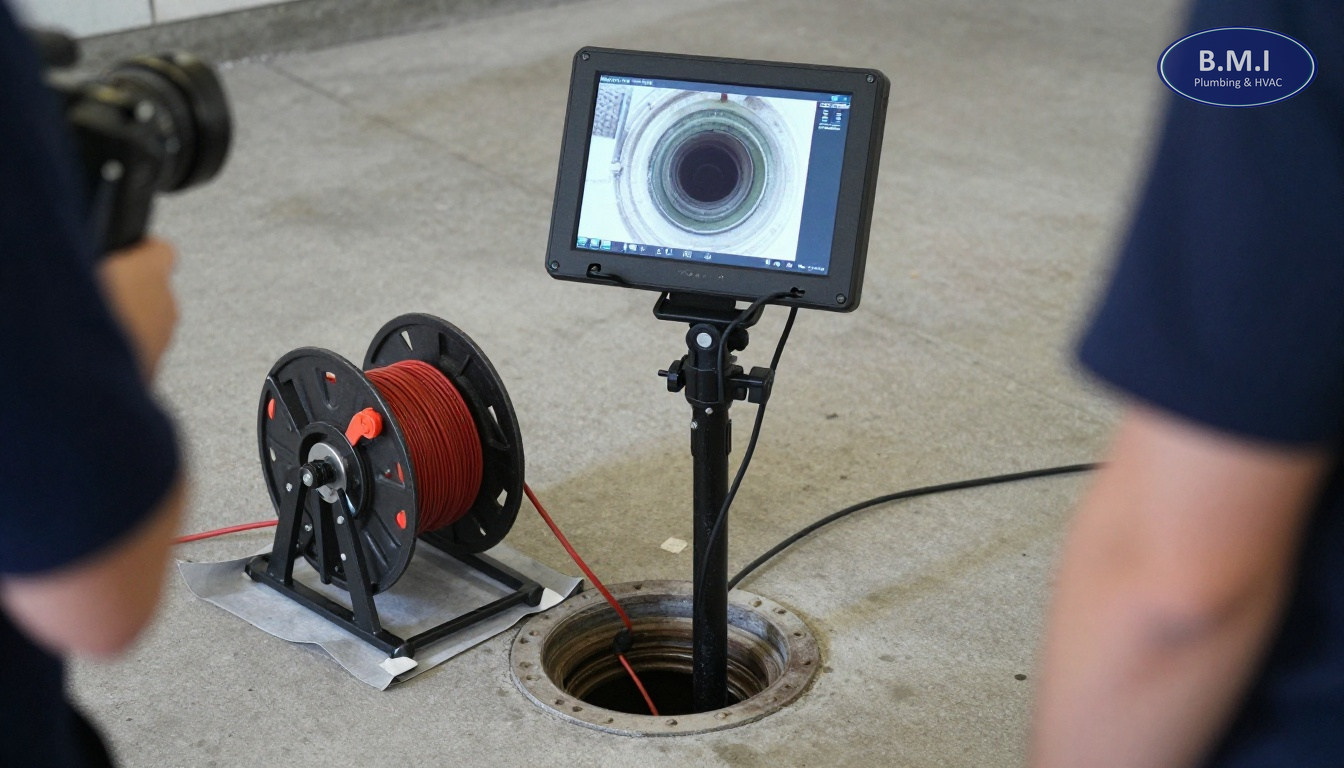
Camera Pipe Inspection in Mississauga Condominiums
Camera pipe inspection in Mississauga for condos and rentals. Learn when CCTV drain surveys are needed, what they show, …
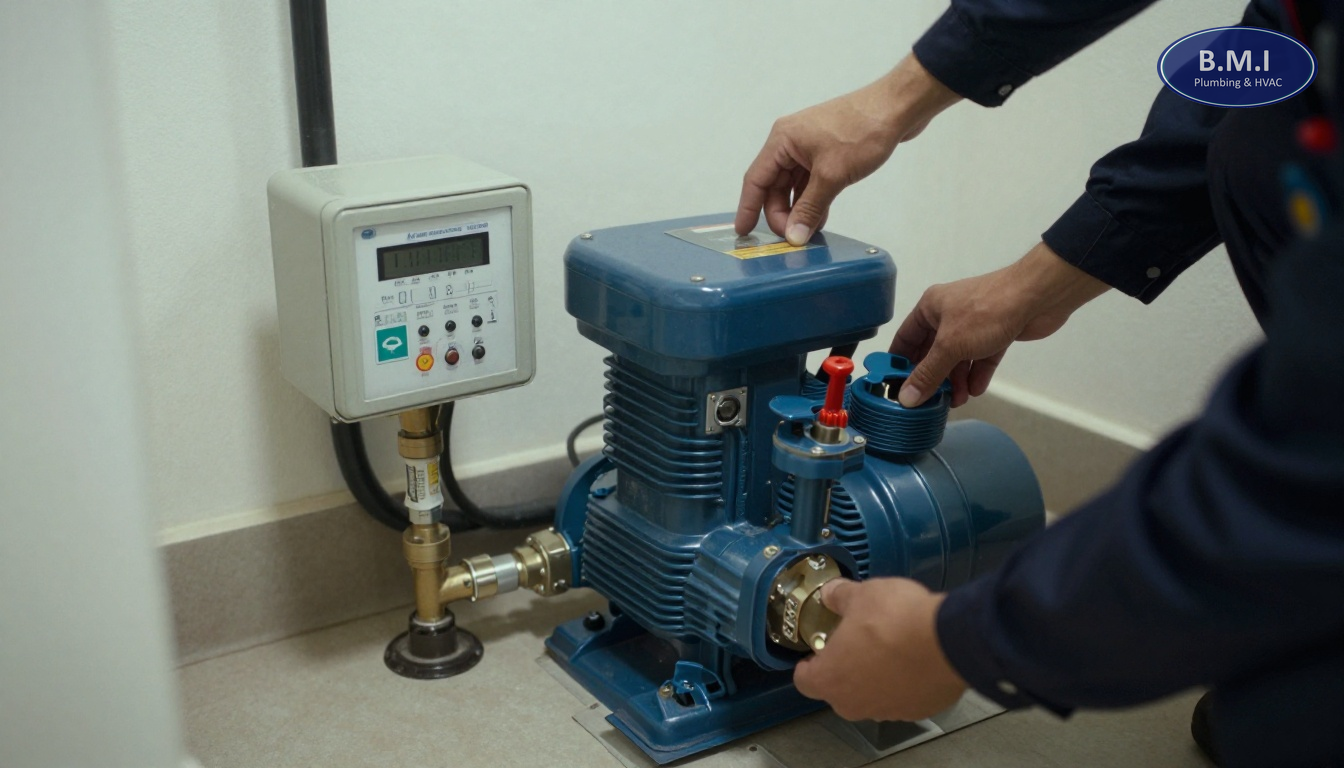
Blocked Mechanical Room Floor Drains in Toronto Condos
A practical guide to floor drain blockage and mechanical room drain issues in Toronto condos: causes, costs, liability, …
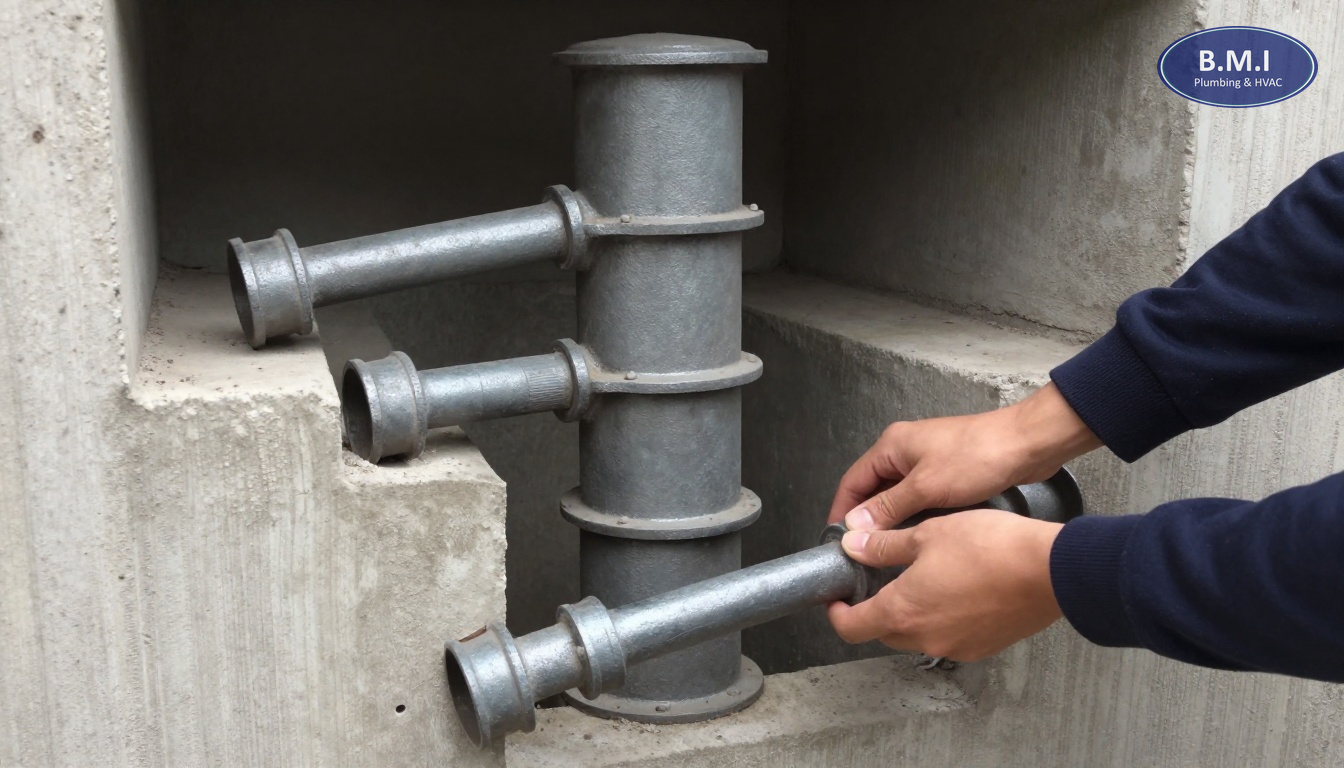
Grease Interceptor Condo Guide for Toronto Buildings
A practical Toronto guide to grease interceptor condo issues, commercial tenant plumbing risk, costs, maintenance, and …
Need a plumber in your building?
BMI services roughly 200 condominium and multi-residential buildings across Toronto and the GTA. Emergencies are answered at any hour.