Pressure Reducing Valve Service and Replacement Oakville
Pressure reducing valve service and PRV replacement in Oakville condos. Building water pressure issues, costs, timelines and maintenance planning.
Pressure Reducing Valve Service and Replacement Oakville
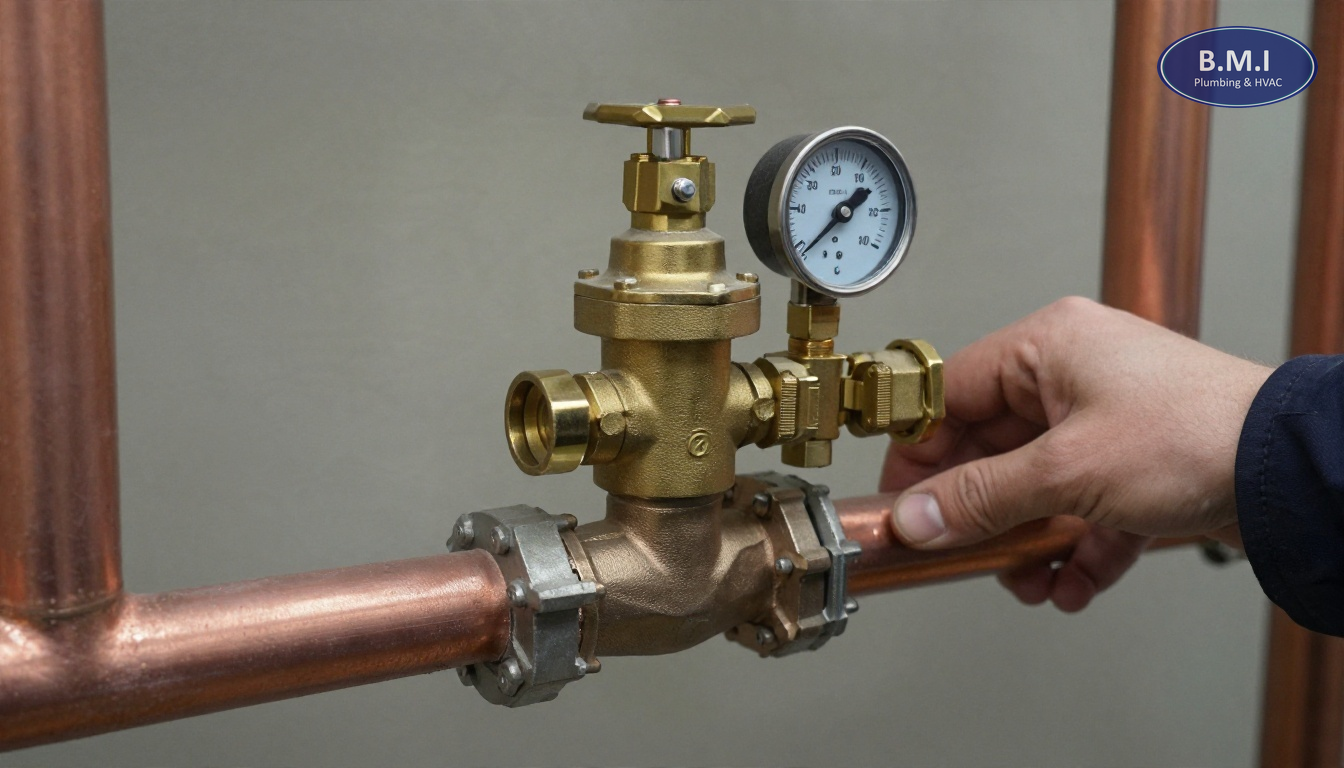
Quick summary: In Oakville condominium and multi-residential buildings, pressure reducing valve problems rarely stay confined to the mechanical room. When a PRV starts creeping, hunting or failing to hold downstream set pressure, the result shows up as fixture failures, water hammer, resident complaints and sometimes leaks on lower floors. For property managers and boards in Oakville, fall is a sensible time to inspect, service or replace PRVs before winter pressure swings and year-end budget decisions.
Why pressure reducing valve issues show up in Oakville buildings specifically
Oakville has a mix of building stock that matters to PRV planning. Along the lakeshore and in older apartment pockets, there are rental and condominium buildings from the 1970s and 1980s with original or long-deferred domestic water components. In areas that saw heavier condominium growth in the 1990s and 2000s, including corridors around Trafalgar Road and Dundas Street and buildings closer to Kerr Village or Bronte, it is common to find first- or second-generation pressure reducing assemblies that have had piecemeal repairs but not a full maintenance strategy.
That matters because the domestic water systems in those buildings were designed around the equipment and materials of their time. Older Oakville towers often have copper mains with brass PRVs, threaded or flanged arrangements, aging pressure gauges, and limited straight-pipe room in mechanical spaces. Some newer mid-rise buildings have more compact valve stations, but compact does not always mean easier to maintain. Access can be tighter, shutdown planning can be more complicated, and the expectation from residents is lower disruption.
Oakville is served by Halton Region for water and wastewater services, and that municipal context matters because incoming pressure at the property line is not the same thing as stable building pressure at fixtures. Elevation changes within Oakville, distance within the distribution system, and the building’s own vertical zoning all affect what the PRV is being asked to do. A valve that was set years ago when occupancy patterns were different may no longer be operating in its best range. Seasonal demand changes can also expose valves that are already worn, which is one reason fall inspections are worthwhile.
For boards reviewing reserve fund priorities, PRVs sit in the awkward category between maintenance and capital planning. They are not as visible as riser replacement, but when neglected they contribute to repeated in-suite service calls, nuisance leaks and insurance exposure. That is why many managers pair PRV review with a broader look at pressure reducing valve maintenance and replacement, sectional and isolation valve replacement, or even longer-range domestic water riser replacement planning.
How PRV problems present in Oakville condominium plumbing
Managers rarely get a complaint that says, “the PRV is failing.” What they hear in Oakville is more practical and more scattered:
- lower-floor residents saying the water is suddenly very forceful
- repeated toilet fill valve and faucet cartridge failures in the same stack line or pressure zone
- banging in ceilings or risers when dishwashers, washing machines or quick-closing fixtures shut off
- leaks appearing after overnight periods when pressure creep has nowhere to go
- upper-floor complaints about weak flow while lower floors see excessive pressure
- mechanical room staff noting gauges that do not agree or pressure that will not stay at setpoint
In older Oakville buildings, one of the most common patterns is pressure creep after periods of low usage. The PRV appears acceptable during daytime demand, but once flow drops off overnight, the downstream pressure rises above the intended setpoint. That can be enough to stress toilet supply tubes, angle stops, mixing cartridges and braided connectors. If a board is seeing a cluster of small but expensive in-suite plumbing incidents, it is reasonable to ask whether unstable building pressure is the common cause rather than treating each suite as an isolated event. BMI often sees that connection when responding to in-suite plumbing repairs or toilet and faucet repair calls.
Oakville logistics also affect how these problems are experienced. In some older buildings, service corridors are narrow and mechanical rooms have been modified over time, making even routine PRV servicing slower than it looks on paper. In newer condominiums, access protocols, elevator bookings and resident notice requirements can become the real scheduling constraint. For boards, the lesson is simple: the plumbing issue may be a valve, but the project is still a building operation.
What diagnosis in Oakville should involve, and what evidence to insist on
A proper PRV assessment is not a glance at one gauge and a quick adjustment. For an Oakville condo building, diagnosis should start with the basics:
- Static and flowing pressure readings upstream and downstream of the valve.
- Gauge verification so decisions are not being made from inaccurate instruments.
- Condition of strainers, bypasses and shutoffs around the valve station.
- Observation for pressure creep after flow stops.
- Review of fixture failure patterns by floor or pressure zone.
- Assessment of available isolation in case service turns into replacement.
A good contractor should be able to explain whether the problem is the valve internals, the valve sizing, debris fouling, bad gauges, failing isolation valves, or a system issue elsewhere. On many service calls, the PRV is not the only problem. A neglected bypass assembly, seized shutoff, or a missing or failed expansion control component can make a serviceable PRV look worse than it is.
If the diagnosis leads to replacement, ask for documentation on valve size, pressure range, available access, shutdown duration and any code-related considerations. Where there is a backflow prevention assembly on the incoming service, PRV work should be coordinated with that equipment and the building’s testing obligations. In Oakville, that often means pairing the visit with backflow prevention testing and certification and a review of the building’s broader condominium plumbing maintenance program.
For older buildings, insist on clarity about the surrounding piping. It is not enough to price “replace PRV” if the adjacent shutoffs do not hold or the spool pieces are too corroded to reuse. That is where a valve audit, charting and exercise program can save money. Knowing which valves actually isolate and which do not changes the risk profile of the work.
A representative Oakville PRV service call
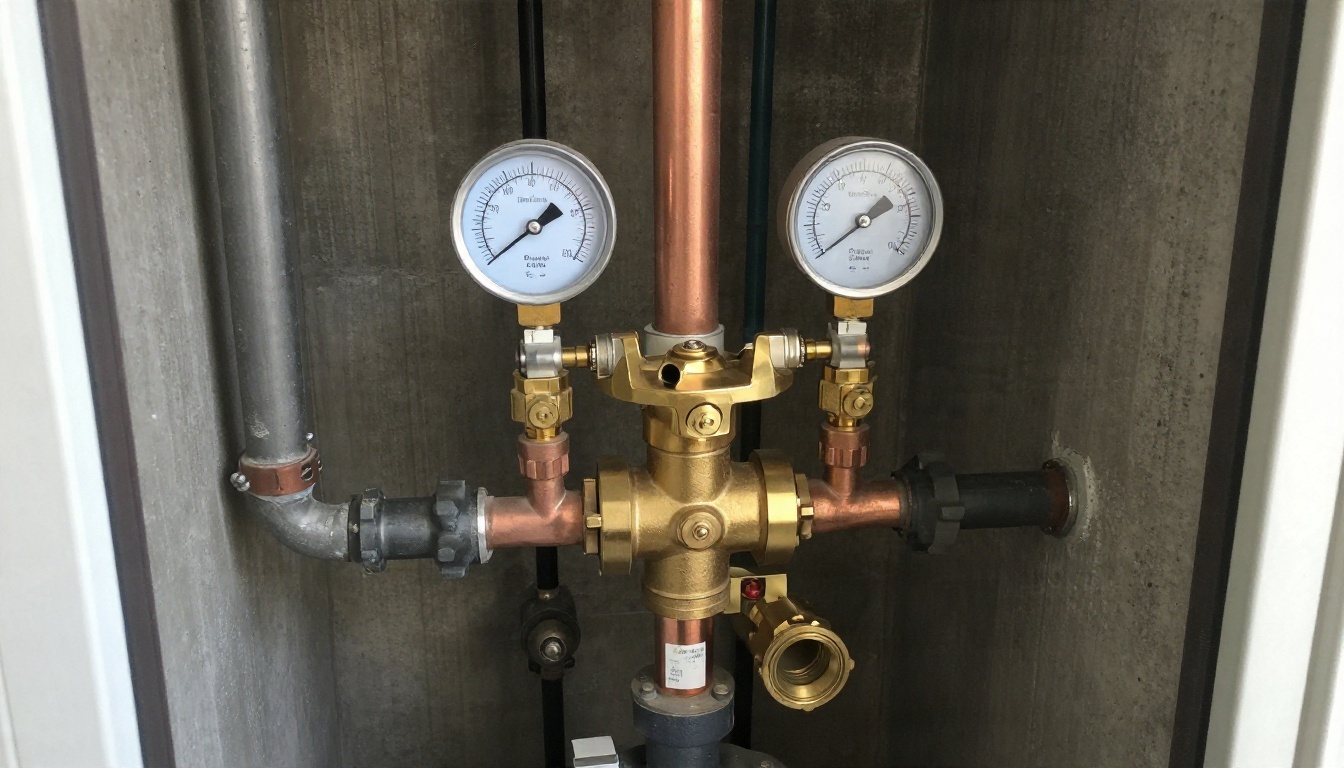
A representative example would be a 17-storey condominium from the early 2000s near Trafalgar Road and Dundas Street. The property manager’s initial complaint was not about the mechanical room. It was a pattern of lower-floor resident issues: toilet fill valves failing, several faucet cartridge replacements within a few months, and occasional banging when fixtures shut off at night.
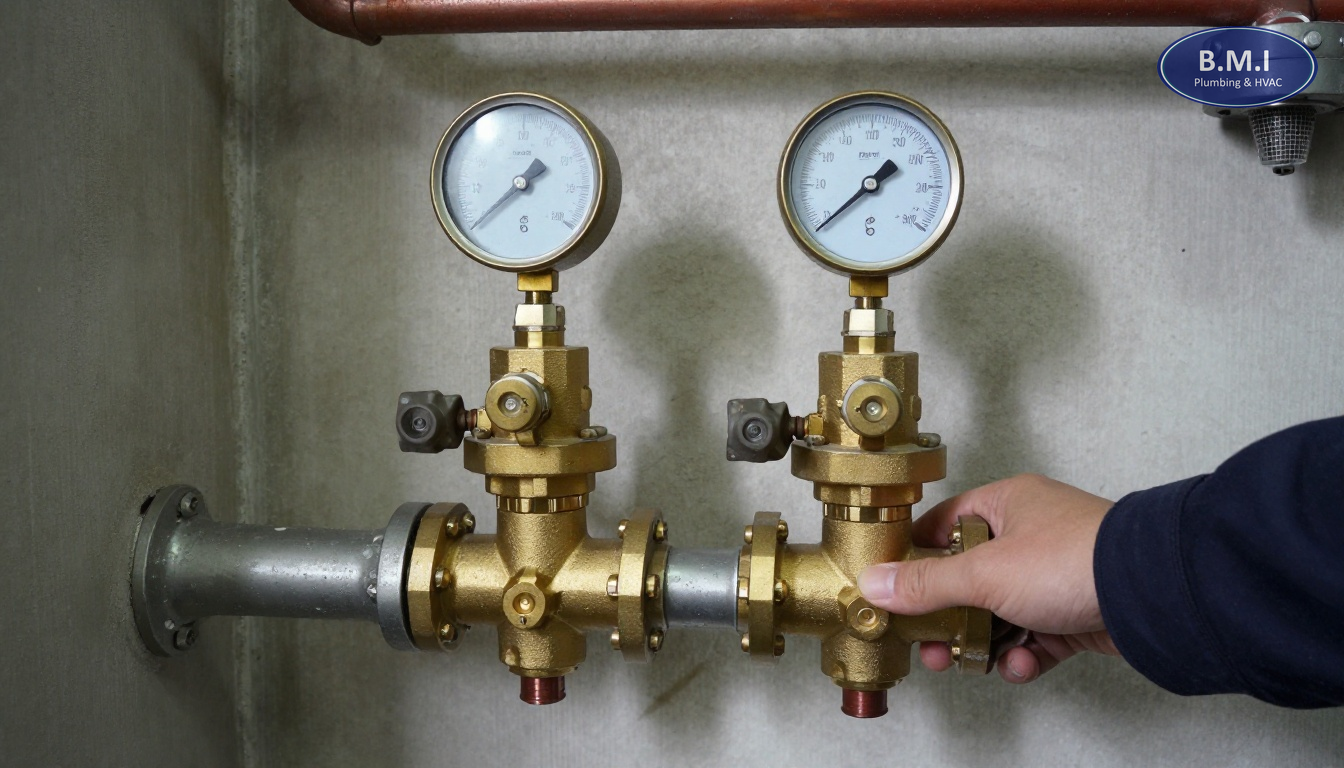
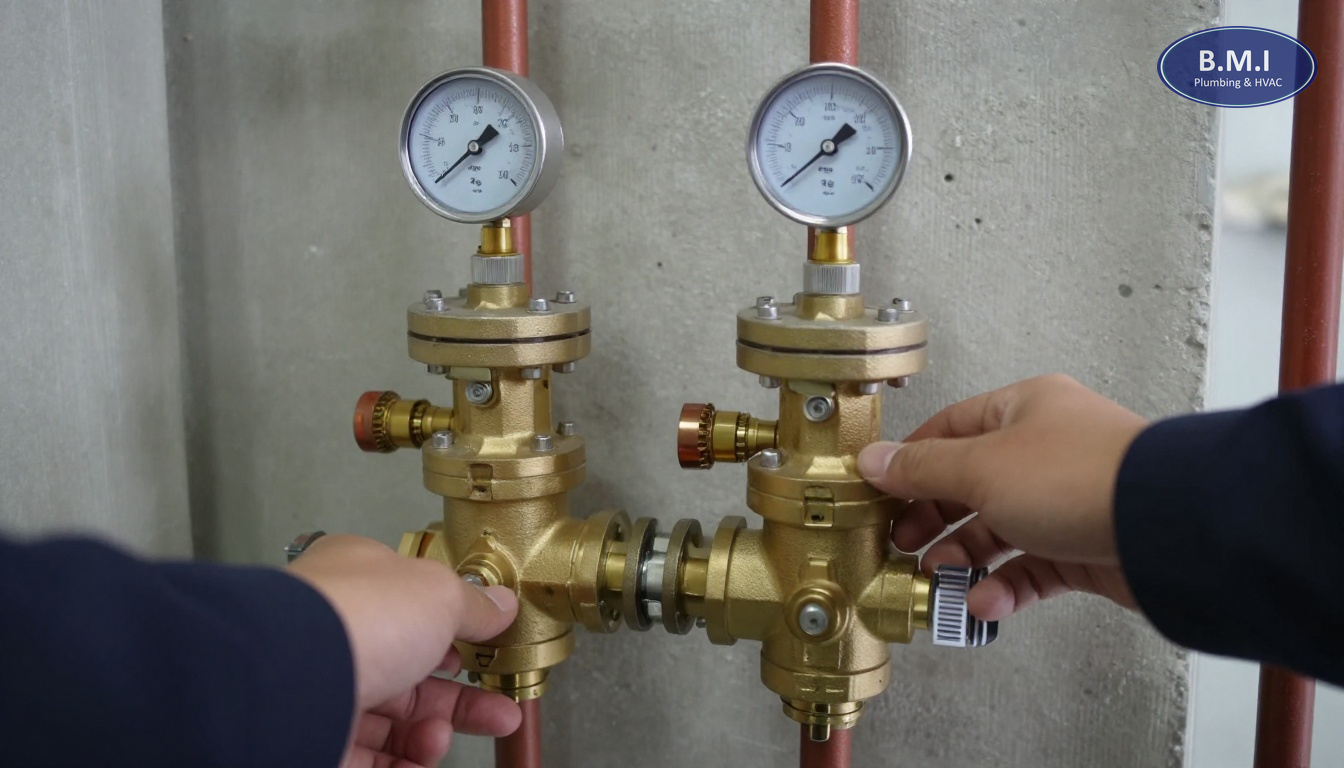
BMI attended to investigate the building water pressure issue. The incoming domestic service had a main PRV assembly that appeared original to the building, along with aging gauges and isolation valves that had not been exercised consistently. Daytime readings looked close to acceptable, but after demand dropped, downstream pressure crept well above the intended setpoint. The strainer also showed debris loading, and one gauge was reading inaccurately.
The first step was a controlled service visit: gauge verification, strainer cleaning, adjustment testing and observation. That improved operation briefly, but the valve would not hold stable pressure under varying demand. Because the building had a history of repeated fixture damage and the valve body was approaching the point where repeated rebuilds were poor value, the recommendation was full PRV replacement with associated gauge replacement and selective surrounding valve work.
The building shutdown was planned in advance with resident notice, elevator protection and a scheduled daytime window. The work included isolating the domestic water main, removing the existing PRV assembly, installing a new properly sized valve, replacing gauges, rebuilding one accessible shutoff and replacing another that would not reliably isolate. Final commissioning included downstream setpoint adjustment and confirmation of stable pressure after no-flow periods.
The active replacement work took one day, with pre-inspection, parts coordination and resident communication handled beforehand. The rough project cost was in the range of $6,500 to $12,000 for the PRV-focused work, with the final number depending on valve size, access, gauge replacement and the condition of adjacent shutoffs. Had the surrounding isolation failed completely, the scope could have moved higher because the building would have needed more extensive valve replacement at the same time.
That is typical of Oakville PRV work: the valve itself is only part of the budget story. The surrounding system condition determines whether the job stays maintenance-sized or becomes a small capital project. For that reason, BMI often ties this kind of work into valve replacement planning or a broader review of project solutions for domestic water systems.
Oakville costs and timelines for PRV service and replacement
For budgeting purposes, the following ranges are reasonable Toronto-market estimates for Oakville condominium and multi-residential buildings. They are not fixed prices and vary by valve size, access, shutdown complexity, age of surrounding piping and whether after-hours work is required.
Diagnostic service and testing:
- $750 to $2,000 for a targeted assessment with pressure readings, gauge review, operational checks and recommendations.
PRV service or rebuild where the valve body is reusable:
- $1,500 to $4,500 depending on size, parts availability, strainer work and shutdown requirements.
Straightforward PRV replacement on a small to mid-size domestic main with workable isolation:
- $4,500 to $9,000.
More complex replacement with associated shutoff valve work, bypass modifications, difficult access or larger assemblies:
- $9,000 to $20,000+.
Related costs that often appear at the same time:
- gauge replacement
- flange or spool piece fabrication
- shutoff valve replacement
- insulation removal and reinstatement
- after-hours shutdown premiums
- resident notice coordination and protection measures
Timelines are usually short for the actual plumbing once planning is done. A simple service call may be completed in a few hours. A standard replacement is often one day on site. The real timeline is in the front-end work: site review, parts sourcing, shutdown planning, access approvals and ensuring the building has a workable isolation strategy. In fall, when many Oakville boards are trying to finalize next year’s numbers, it is smart to start early rather than trying to fit urgent PRV work into the holiday period.
For buildings already seeing repeated drain and pressure complaints together, it can also make sense to look at other deferred maintenance in the same planning cycle, such as drain cleaning and snaking services or pre-holiday kitchen stack cleaning for grease-prone buildings.
Repair versus replacement in Oakville: a practical decision framework
The right answer depends on age, parts availability, failure mode and building risk.
Repair or rebuild usually makes sense when:
- the valve body is in good condition
- the manufacturer still supports the model
- the issue is isolated to trim, diaphragm, seat or strainer fouling
- downstream pressure can be stabilized after service
- the building has reliable isolation and the valve station is otherwise sound
Replacement is usually the better decision when:
- the PRV is obsolete or parts are difficult to source
- the valve has a history of drifting or repeated service calls
- the body is scaled, worn or compromised
- the station layout is poor and needs correction
- the building has experienced leaks, chargebacks or repeated fixture failures linked to pressure instability
For Oakville boards, the financial question is not just “what is cheaper this month?” It is whether another short-term repair simply postpones a more disruptive event into winter or into a busier occupancy period. Under the Condominium Act, reserve fund planning is meant to address predictable common-element work over time. A PRV may not always be a reserve-fund item in isolation, but repeated valve failures are exactly the kind of recurring building issue that should inform reserve planning and annual operating budgets.
Where the domestic system is aging more broadly, a PRV problem can also be a warning sign that the building should look beyond the single valve. In some Oakville buildings, the better long-range answer is staged building re-piping, riser replacement, or at minimum a documented maintenance roadmap.
What deferring PRV work costs an Oakville board
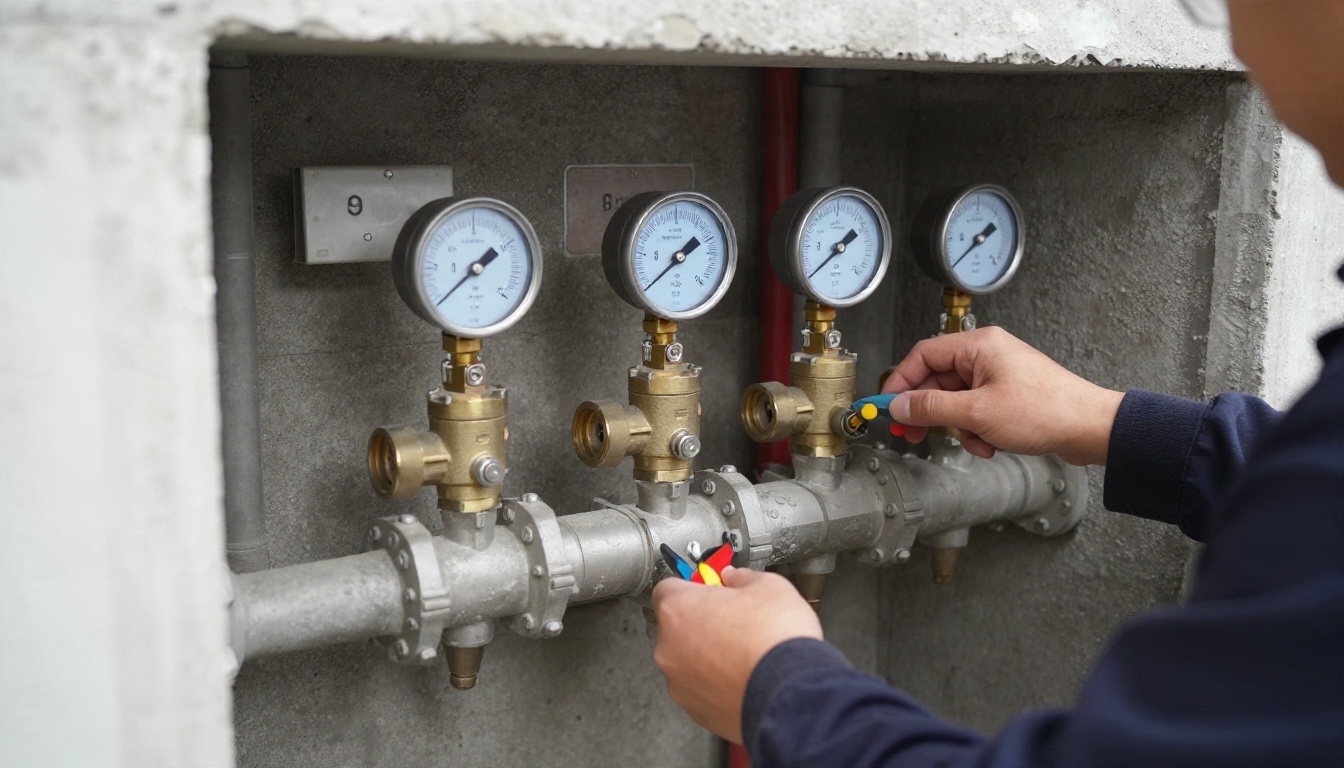
Deferred PRV maintenance usually does not fail quietly. The direct costs are familiar: emergency callouts, fixture replacements, resident complaints, cleanup and occasional leak restoration. The indirect costs are often larger.
First, there is insurance exposure. If a building develops a pattern of preventable leaks or pressure-related fixture failures, insurers and adjusters may ask hard questions about maintenance records. A documented program of inspection and service is not a guarantee against claims, but it is far better than having no paper trail.
Second, there is operational cost. Every suite-level repair that traces back to unstable building pressure consumes management time, concierge time, contractor dispatches and resident goodwill. In a busy Oakville condo, that administrative drag matters.
Third, there is budget distortion. Reactive plumbing is almost always more expensive than planned work. Emergency isolation, after-hours attendance and temporary water shutdowns cost more than a scheduled daytime replacement. If the valve fails during a cold-weather period, the urgency rises because domestic water shutdowns are harder on residents and harder to coordinate.
Finally, there is capital planning confusion. When boards defer moderate maintenance items year after year, they tend to reappear as sudden “unexpected” projects. In reality, many PRV replacements are foreseeable. A board that obtains condition data in the fall can decide whether to service now, replace in the next budget cycle, or combine the work with other plumbing priorities such as emergency plumbing risk reduction and completed domestic water project benchmarking.
FAQs about pressure reducing valve service in Oakville
How often should an Oakville condominium service its pressure reducing valves?
For most Oakville high-rise and mid-rise buildings, PRVs should be inspected and tested annually, with more frequent attention if the building has noticeable pressure fluctuation, hammering or a history of fixture failures. Fall is a practical time to do it because boards are setting budgets and winter demand swings can expose weak valves. Buildings that have not had documented maintenance in several years should start with a full condition review rather than waiting for a failure.
What are the signs that a PRV in an Oakville building is failing?
Property managers usually hear about noisy piping, banging when fixtures close, unusually strong water flow on lower floors, toilet fill valves failing too often, and leaks showing up after overnight pressure creep. In the mechanical room, technicians may see unstable downstream pressure readings, worn gauges, bypass issues or strainers loaded with debris. A failing PRV does not always fail fully closed or fully open; drifting setpoints are common.
Is PRV replacement in Oakville usually a same-day job?
A straightforward single-valve replacement can often be completed in one day if isolation is available, access is clear and the replacement assembly is properly sized and in stock. In older Oakville buildings, the bigger variable is not the valve itself but whether the surrounding shutoffs hold, whether there is enough straight pipe for a clean install, and whether corroded flanges or threaded connections need repair. Multi-valve stations, bypass arrangements and overnight shutdown planning can extend the work.
Can poor building water pressure in Oakville be caused by something other than the PRV?
Yes. Low or unstable pressure can also come from clogged strainers, undersized or failing booster equipment, partially closed valves, corroded domestic water piping, failed check valves or fixture-level problems inside suites. That is why managers should ask for gauge readings, valve condition notes and, where needed, supporting inspection from a broader building system review such as a domestic water assessment or a valve audit and exercise program.
Should an Oakville condo repair or replace an older pressure reducing valve?
If the body is in sound condition, parts are available and the issue is limited to trim, diaphragm or seat wear, a rebuild can make sense as a maintenance step. If the valve is obsolete, badly scaled, repeatedly drifting out of setpoint, or installed with poor access and no reliable isolation, replacement is often the better lifecycle decision. In budget terms, repeated callouts and resident disruption can erase the apparent savings of another short-term repair.
Does PRV work in Oakville need to be coordinated with other maintenance?
Usually yes. PRV service is a good time to review isolation valves, gauges, strainers, expansion issues and any backflow assembly serving the building. Many Oakville boards combine PRV work with a pressure reducing valve maintenance program, backflow prevention testing and certification, or a broader review of maintenance programs for condominium plumbing so shutdowns are used efficiently.
Next steps for Oakville property managers and boards
If your Oakville building has recurring fixture failures, unexplained hammering, lower-floor pressure complaints or an aging PRV with no recent service record, the next step is not guesswork. It is a documented assessment of actual building pressure conditions, valve operation and shutdown readiness.
In practical terms, that means gathering service history, noting where complaints are concentrated, confirming whether the building’s isolation valves are dependable and booking a review before winter demand patterns and holiday scheduling make everything harder. If a board is in budget season, this is exactly the right time to turn a recurring nuisance into a scoped maintenance item with real numbers behind it.
BMI serves Oakville and the surrounding GTA from its Toronto shop. For boards and managers who want a clear recommendation rather than a generic sales pitch, the starting point is a site review tied to the building’s age, water system layout and maintenance history. You can also review BMI’s broader repairs and service capabilities or recent plumbing insights on the BMI blog.
Contact BMI
- Contact BMI
- Phone: (416) 845-3756
- Emergency: (416) 845-3756, answered 24 hours a day
- Email: info@brial.ca
More on condominium plumbing
Pressure Reducing Valve Service and Replacement Toronto
Pressure reducing valve service and PRV replacement in Toronto condos. Learn how building water pressure issues are …
Pressure Reducing Valve Service and Replacement Mississauga
Pressure reducing valve service and PRV replacement in Mississauga condos: signs, inspection steps, costs, timelines and …
Domestic Water Riser Replacement in Oakville Condos
Domestic water riser replacement in Oakville condos: signs, inspection, costs, timelines and how boards plan a condo …
Need a plumber in your building?
BMI services roughly 200 condominium and multi-residential buildings across Toronto and the GTA. Emergencies are answered at any hour.