PRV Inspection Schedule for Multi-Zone Buildings in Toronto
Plan a defensible PRV inspection schedule for multi-zone pressure in Toronto condos, with costs, timelines, warning signs and replacement guidance.
PRV Inspection Schedule for Multi-Zone Buildings in Toronto
Quick summary: In a multi-zone pressure building, a pressure reducing valve is not a set-and-forget component. If your Toronto condominium has more than one domestic water pressure zone, the right PRV inspection schedule is usually annual at minimum and often semi-annual for taller buildings, because one drifting valve can create repeated fixture failures, owner complaints and avoidable flood claims across an entire band of floors.
A common mistake is treating PRVs as emergency equipment instead of budgeted maintenance items. By the time residents are reporting hammering, wild pressure swings or repeated toilet fill valve failures, the building has often already spent more on scattered in-suite service calls than a planned PRV maintenance program would have cost.
Start with the misconception: one pressure problem does not mean one bad suite
In multi-residential buildings, managers are often told “suite 1204 has high pressure” or “owners on the 20th floor say the shower pressure is weak.” In a detached house that might be a local issue. In a 20- to 45-storey condominium in Toronto, Mississauga or Vaughan, patterned complaints usually point to zone control, not a single fixture.
A domestic water system in a high-rise is commonly split into two, three or more zones because no single pressure is suitable from the lowest floor to the highest. If the lower floors were fed with the same pressure needed to reach the top floors, the bottom of the building could see pressures well above 100 psi, which is hard on fill valves, cartridges, braided hoses and appliance solenoids. That is why towers rely on booster pumps, break tanks in some designs, and pressure reducing valves at zone transitions to keep delivered pressure in a controlled range. A building with poor pressure control should not jump straight to in-suite repairs before checking the valve audit and PRV history.
In buildings we service along the Toronto waterfront, one clue is timing. If complaints rise late at night or very early in the morning, when flow is low and static pressure tends to climb, the issue is often a PRV no longer holding its setpoint. If pressure complaints appear only during the 6:30 to 8:30 a.m. window, that points more toward undersized control, fouled strainers, failing booster pump sequencing or a PRV that is hunting under demand rather than simply over-pressurising.
What a multi-zone PRV system is actually doing
A pressure reducing valve is a mechanical control valve, typically brass or bronze in condo domestic water systems, installed on a horizontal line in a mechanical room or zone station. In larger towers the assemblies are often 1 1/2", 2", 2 1/2", 3" or 4" depending on fixture load and pipe sizing. Common commercial makes seen in GTA buildings include Watts, Wilkins and Zurn. These are not the small residential valves people imagine under a sink. They are building components controlling pressure to dozens or hundreds of fixtures.
Most towers built in Toronto, North York and Scarborough from the late 1980s onward use one of these arrangements:
- Low / mid / high zone distribution with separate PRVs feeding lower zones from boosted pressure.
- Booster pump discharge plus PRV trimming, where pumps maintain a high header pressure and PRVs reduce pressure to lower floor bands.
- Hybrid systems with recirculation loops, balancing valves and sectional isolation valves that complicate diagnosis when one zone drifts.
The technical point many boards miss is that PRV performance is not just about the setpoint screw. A valve can show the right pressure on a cold, no-flow test and still fail under demand because of a worn diaphragm, fouled seat, damaged disc, spring fatigue or upstream debris. That is why a proper camera inspection is useful for drains, but for pressure work the equivalent evidence is documented static and residual readings, station photos, gauge verification and a written operating assessment.
Another non-obvious issue is interaction with thermal expansion. If a building has check valves, backflow prevention or a closed domestic system and expansion control is weak, the PRV may get blamed for pressure spikes that are partly thermal. In that case the investigation should include incoming assemblies and backflow prevention equipment, not only the reducing valve itself.
Why PRVs drift in GTA condominium buildings
Toronto water is generally not the worst water a valve will ever see, but it is not laboratory-clean either. In real condominium service, PRVs fail less from dramatic single events than from years of small stresses.
Debris and scale are more common than boards expect
After a municipal shutoff, watermain disturbance, or internal pipe work such as valve replacement or riser repairs, scale and debris can travel downstream and lodge on a PRV seat. A tiny piece of debris can prevent tight control and let downstream pressure creep upward. We have seen buildings assume the city changed pressure when the real cause was debris introduced after unrelated maintenance.
Valve age matters, but building age matters more
Early-1990s towers in North York and Mississauga often have original domestic mechanical components now well past the point where “still operating” means “still reliable.” A 30-year-old PRV body may technically function, but if the station has no recent pressure records, no exercised isolation valves and no known rebuild history, the risk is not theoretical. By contrast, a post-2010 glass tower can have a much younger valve that still performs poorly because the station was never commissioned properly or because high turnover in building staff means nobody noticed gradual drift.
Multi-zone systems hide problems until owners start paying for them
A single weak or creeping PRV does not always create an obvious mechanical-room event. Instead, the symptoms show up as repeated in-suite service: leaking toilet fill valves, faucet cartridges wearing early, dishwasher or washing machine hose issues, noisy pressure-balanced shower valves, and unexplained hammer. Those costs are often treated as isolated suite plumbing. In reality, a zone running 15 to 20 psi above design can quietly multiply those failures.
How pressure problems actually present in a building
Property managers rarely receive a complaint that says, “our 2-inch Wilkins PRV is hunting under variable load.” They get operational symptoms. The useful skill is recognising the pattern.
Signs that usually point to a zone-level PRV issue
- Complaints cluster by floor band, not by one stack. For example, floors 2 to 10 report hard-closing toilets and loud faucets while upper floors are fine.
- Night-time pressure feels stronger than daytime pressure. Residents describe taps that “blast” at 5 a.m. but feel ordinary during breakfast demand.
- Repeated fixture part failures occur in the same zone within months, especially fill valves, cartridges and braided connectors.
- Hammer starts after valve closures in laundry rooms, dishwashers or quick-closing fixtures, especially after another contractor completed unrelated shutdown work.
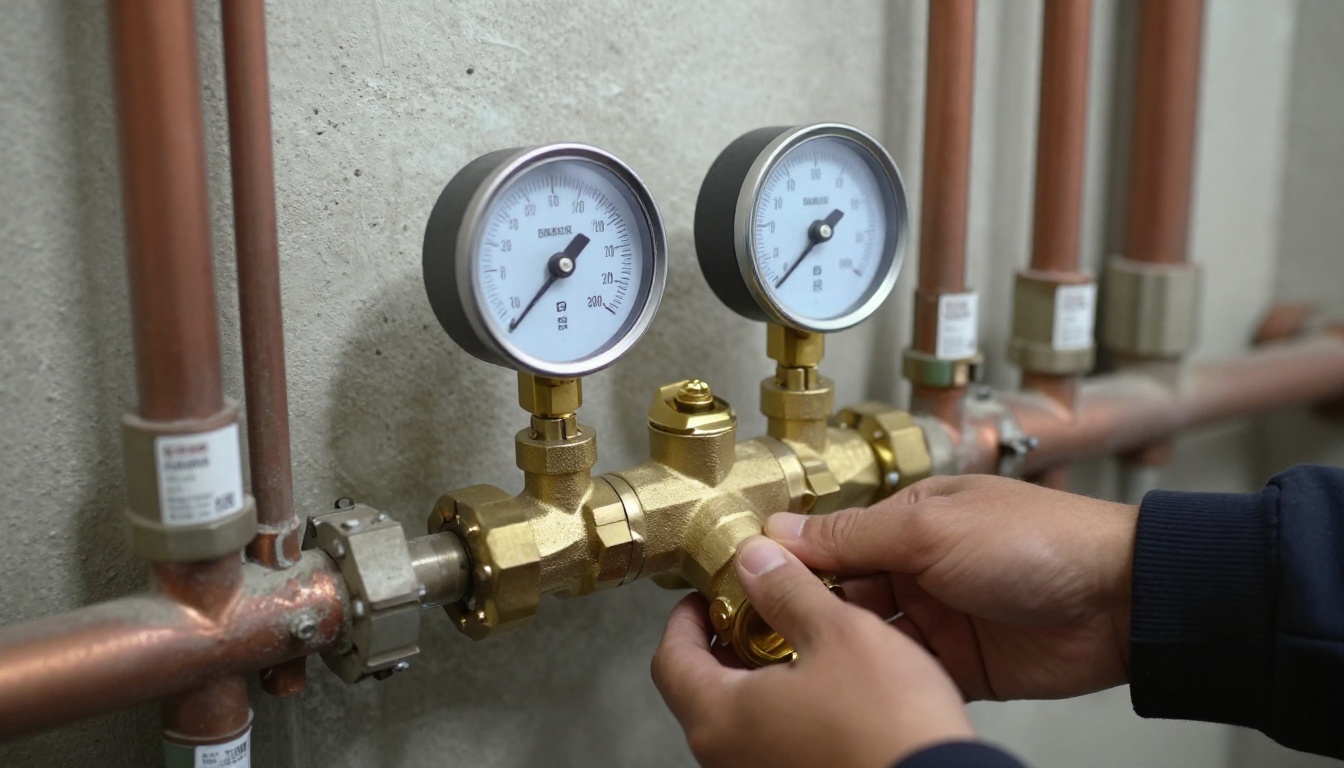
- Pressure readings differ sharply between static and flowing conditions. A superintendent may see 75 psi with no flow, but a representative suite drops below 40 psi when multiple fixtures open.
Signs that may not be the PRV
- One suite alone has poor pressure while adjacent suites do not. That often points to in-suite stops, clogged aerators, local cartridge issues or branch piping.
- Hot water pressure is weak but cold is acceptable. That may indicate recirculation, mixing or hot-side balancing issues rather than the cold-water PRV station.
- Pressure is acceptable but drainage is poor. That is a different problem and belongs under drain cleaning or stack investigation, not pressure control.
A common mistake we see in early-1990s high-rises is replacing the same toilet internals three times on a problem floor without ever taking zone pressure readings. That is not maintenance; it is symptom management.
What a defensible PRV inspection schedule looks like
For boards and managers, the question is not whether PRVs should be inspected. The question is how often, and based on what risk factors.
A practical baseline schedule
For most condominium and purpose-built rental buildings in Toronto:
- Annual PRV inspection is the minimum sensible standard.
- Semi-annual inspection is appropriate for taller buildings, usually 20 storeys and up, or any building with three or more domestic pressure zones.
- Additional event-based inspections should follow major shutdowns, booster pump work, municipal service interruptions, or repeated pressure complaints.
Fall is the best time to do one of those inspections because it aligns with budget season and with pre-winter system checks. If a station is marginal in October, you still have time to budget a rebuild or replacement before winter occupancy and holiday staffing constraints make emergency work harder. This is the same logic behind scheduled maintenance programs: planned work is cheaper than weekend floods.
How to decide if your building needs annual or semi-annual checks
Use this framework:
| Building condition | Suggested schedule | Why |
|---|---|---|
| Under 15 storeys, 1-2 zones, no complaint history | Annual | Lower complexity, fewer control points |
| 20-35 storeys, 2-3 zones | Semi-annual | More pressure transitions, greater complaint exposure |
| 35+ storeys or complex booster/PRV arrangement | Semi-annual plus event-based | Small drift affects many suites quickly |
| Repeated fixture failures or pressure complaints | Immediate inspection, then reset schedule | Existing evidence of control instability |
| Original stations over 15 years with limited records | Annual minimum, likely semi-annual | Age plus unknown history increases risk |
One original insight from field experience: on a 300-unit building with three pressure zones, a single unstable lower-zone PRV can generate 10 to 20 apparently unrelated in-suite service calls in a year. The board sees a scattered repair line item; the root cause is one station in the mechanical room.
What a proper PRV inspection should include
A real PRV inspection is not a glance at a gauge. Managers should insist on evidence.
Minimum scope for a useful inspection
A competent inspection in a multi-zone building should include:
- Visual review of each PRV station, including body condition, leaks, corrosion and support
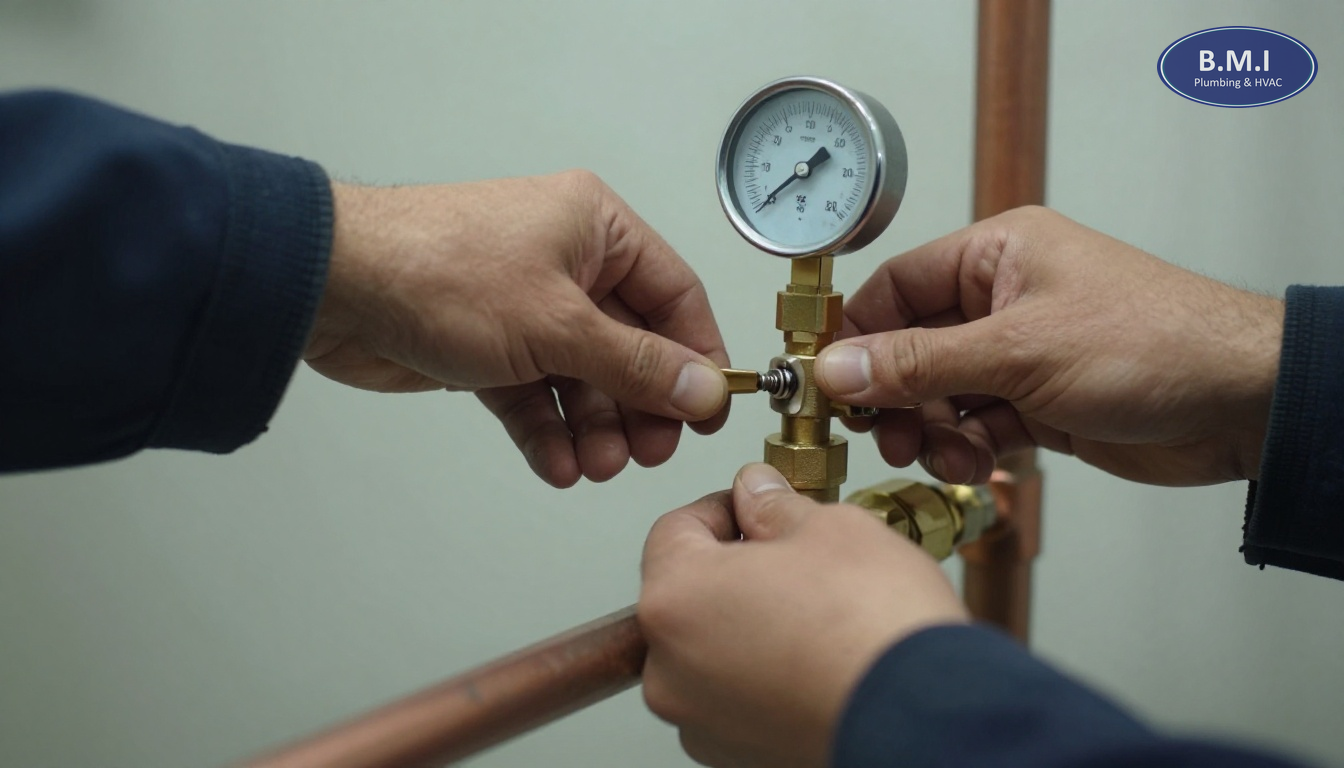
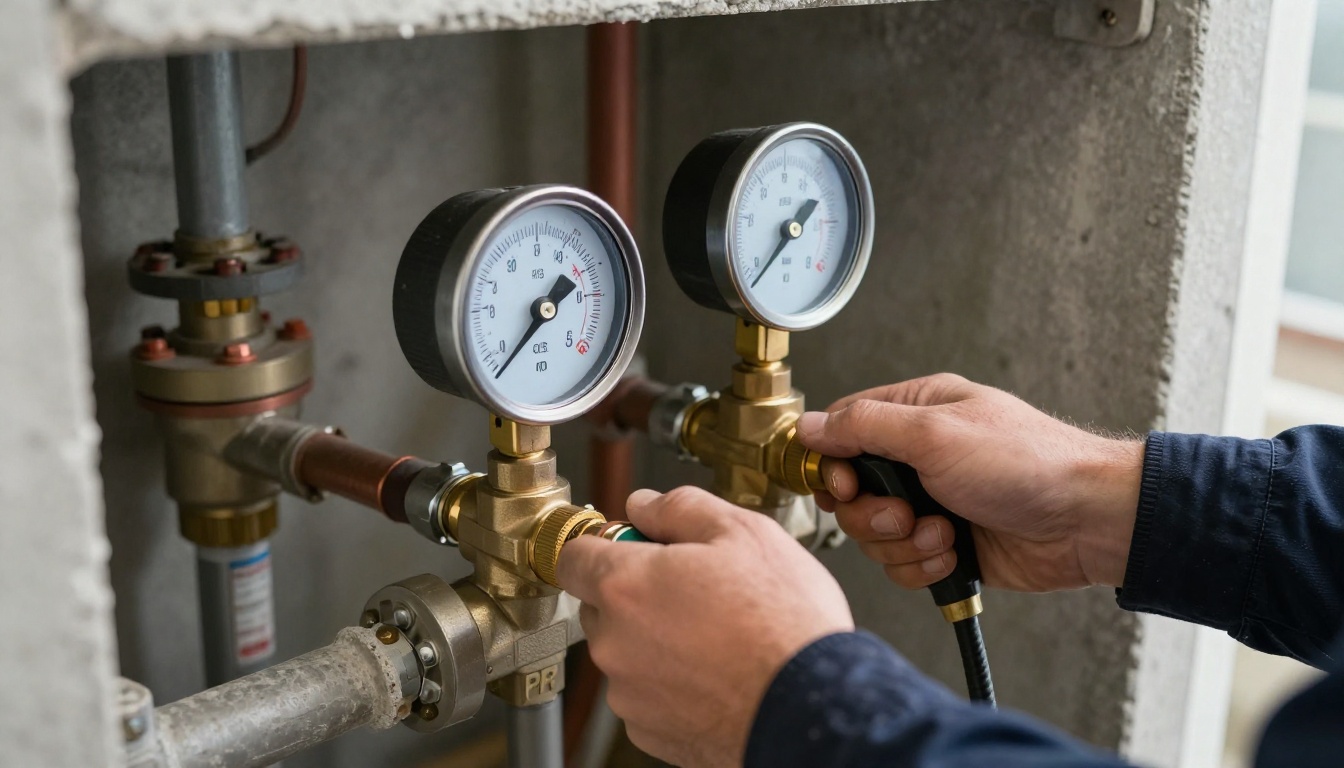
- Verification of upstream and downstream pressure gauges or use of calibrated test gauges
- Static and residual pressure readings for each zone
- Observation for hunting, chatter or unstable downstream pressure under flow
- Check of related isolation valves and bypass arrangements where present
- Review of strainers if the station includes them
- Written notes on setpoint, condition, and whether rebuild or replacement is advisable
If the building has not had a valve program in years, pairing the inspection with a valve audit is often money well spent. There is little value diagnosing a PRV station if nobody knows whether the upstream and downstream isolation valves will actually hold for a rebuild.
What evidence to ask for
Ask for:
- Pressure readings by zone, not just one mechanical room number.
- Photos of each station showing valve condition and gauge readings.
- A written recommendation that distinguishes monitor / rebuild / replace.
- Notes on shutdown implications if service is required.
If a contractor says a PRV must be replaced immediately, it is reasonable to ask whether a rebuild kit is available, whether the body is compromised, and whether the recommendation is based on measured instability or simply age. There are cases where replacement is correct, but boards should be given technical reasons, not just urgency.
Repair, rebuild or replace: how to decide
The right answer depends on station condition, shutdown risk and the building’s tolerance for repeat work.
When a rebuild makes sense
A rebuild is often reasonable when:
- The PRV body is sound and not heavily dezincified
- Parts are available from the manufacturer
- The issue is diaphragm, spring or seat wear rather than body failure
- Isolation valves can be trusted, or temporary shutdown logistics are straightforward
In Toronto-market terms, a rebuild can be a good value when the valve is a known commercial assembly and the station is otherwise serviceable. But rebuilding a PRV behind unreliable gate valves is where projects go sideways. If the isolation valves fail to hold, a “simple rebuild” becomes a larger shutdown with emergency valve work.
When replacement is usually the better call
Replacement is usually more defensible when:
- The valve body shows corrosion, cracking or dezincification
- The station has had repeated rebuilds with short-lived results
- The model is obsolete or parts lead times are unacceptable
- The building is already planning broader domestic work such as riser replacement or building re-piping
- You need to add gauges, bypasses or better service isolation as part of a station upgrade
In older Etobicoke and Scarborough towers, we often find the real issue is not only the PRV but the entire station arrangement: old gate valves that do not close, missing gauge ports, poor access, and no recent service history. In those cases, replacing the station as a package is often cheaper over five years than repeated partial repairs.
Toronto cost ranges: what to budget
These are planning ranges only for GTA condominium budgeting. Actual costs vary with valve size, access, after-hours work, bypass requirements, and whether shutdowns affect one zone or the whole building.
Typical budgeting ranges
| Item | Typical GTA planning range | Notes |
|---|---|---|
| Annual PRV inspection visit | $900-$2,500 | Depends on number of zones/stations and reporting scope |
| Semi-annual inspection program | $1,800-$4,500 per year | Often appropriate for 20+ storey multi-zone towers |
| Gauge additions or replacements | $150-$500 each | Useful where station readings are unreliable or missing |
| Commercial PRV rebuild | $1,200-$3,500 per valve | Size, parts availability and shutdown complexity matter |
| Full PRV replacement | $3,500-$9,000+ per valve | 1 1/2" to 4" valves, not including major piping rework |
| Station upgrade with valves/gauges/piping modifications | $6,000-$15,000+ | Common in older buildings with poor serviceability |
Two practical notes for boards:
- A 2" valve in an accessible mechanical room is a different job from a 4" assembly in a cramped station with unreliable isolation.
- After-hours shutdown work can materially change pricing, but in occupied towers it is often still the right decision because daytime disruption creates more operational cost than it saves.
If your building is already seeing repeated pressure-related service calls, compare those annual repair totals to a formal PRV maintenance plan. The numbers are often closer than boards expect.
Timelines, access and resident communication
PRV work is usually less disruptive than riser replacement, but managers still need a plan.
Inspection timelines
For a typical 150- to 350-unit condominium with two or three zones:
- A routine inspection often takes 2 to 4 hours on site.
- A more detailed assessment with suite spot-checks and documentation may take half a day to a full day.
- Written reporting is typically same day to several business days depending on scope.
Rebuild or replacement timelines
- A straightforward rebuild may take 2 to 6 hours once isolated.
- A replacement commonly takes 4 to 8 hours for a single station, longer if piping modifications are required.
- If valves do not isolate properly, the schedule can expand quickly and may require additional emergency plumbing support or unplanned valve work.
Notice and shutdown logistics
Managers should ask these questions before approving work:
- Does the station serve one zone or the full domestic system?
- Can the work be isolated without affecting hot water recirculation or booster operation?
- Are suite notices required, and for which floor bands?
- Do we need elevator protection or after-hours staffing?
For planned PRV service, 48 to 72 hours’ resident notice is common if a zone shutdown is expected, though some buildings prefer more. In a high-rise, communication should identify which floors are affected, whether both hot and cold are impacted, and the expected shutdown window. A vague notice saying “water may be off” creates unnecessary complaint traffic.
What happens if you defer PRV inspections
Deferral rarely saves as much as boards think. It usually shifts costs into more expensive categories.
The direct costs of doing nothing
If a PRV creeps high, the building may see:
- More in-suite fixture failures and service calls
- More owner claims that “common element pressure damaged my fixture”
- Increased flood risk from hoses, cartridges and weak stops
- More resident dissatisfaction in one pressure band of the building
If a PRV starves a zone under demand, you may also get repeated low-pressure complaints that trigger unnecessary suite investigations. On a busy management portfolio, that labour cost is real even if it does not show up as a plumbing invoice.
Insurance and governance implications
Under the Condominium Act, 1998, boards are expected to act reasonably in managing common elements. A PRV station serving a domestic water zone is typically a common element responsibility, though the declaration should always be checked. If there is a known history of pressure complaints or repeated related failures and the corporation does nothing, that becomes harder to defend after a loss.
From a reserve and operating standpoint, PRV inspections usually belong in the maintenance conversation, while station replacements may belong in capital planning depending on scope and age. Fall is exactly when managers should turn anecdotal pressure complaints into written evidence the board can use for the next budget cycle. If broader domestic issues are emerging, it may be worth reviewing project solutions rather than treating each valve as a one-off event.
A practical schedule property managers can take to the board
If you need a simple recommendation that is hard to argue with, use this:
For a typical 2- or 3-zone Toronto condominium
- Inspect all PRV stations every fall before winter pressure swings and before next year’s budget is locked.
- Add a spring inspection if the building is over 20 storeys, has recurring complaints, or has had any PRV rebuild/replacement in the last 24 months.
- Record static and residual pressures by zone and keep them in the building log.
- Pair PRV review with valve condition review so the building knows whether future service can be isolated cleanly.
- Budget proactively for one rebuild or replacement if any station is original and over 15 years old with poor records.
That approach is practical for Toronto, North York, Mississauga and Vaughan towers because it aligns with how boards actually approve work: one fall inspection can justify either “monitor for another year” or “budget $X next year.” It gives management a paper trail and avoids the weak position of reacting only after multiple owners complain.
For buildings that have never formalised this, a contractor should attend site before quoting. PRV stations vary too much by layout, pipe size and serviceability for responsible pricing to be done from a phone description alone. Reviewing completed project work and maintenance history can also help boards understand whether they are dealing with an isolated valve or a domestic system entering a larger renewal cycle.
FAQs
How often should a condo corporation inspect PRVs in a multi-zone building?
For most Toronto high-rises, the practical baseline is a documented PRV inspection at least once per year, with pressure readings taken under both low-demand and peak-demand conditions. Buildings over 20 storeys, buildings with recurring complaints, or towers with more than one pressure zone often benefit from semi-annual checks in spring and fall because seasonal municipal pressure changes and winter demand patterns can expose marginal valves. If a PRV station has already shown drift, hunting or debris fouling, waiting a full year is usually too long.
What pressure should we expect in each zone?
There is no single correct number for every building, but most multi-residential systems are managed so delivered suite pressure stays broadly in the range of about 50 to 80 psi at fixtures, depending on design and elevation. In a multi-zone tower, the lower zone may be reduced from a much higher incoming or pumped pressure, while upper zones may rely on booster pumps plus separate PRVs or balancing devices. What matters is not just the setpoint on paper, but the actual static and residual pressure at representative floors, because a zone reading 72 psi at no flow and collapsing to 38 psi during morning demand points to a control problem.
What are the signs that a PRV problem is affecting the whole building rather than one suite?
A building-level PRV issue usually shows up as patterned complaints: for example, several stacks on the same vertical zone reporting banging pipes, running toilets, or pressure that spikes at night and drops during the morning rush. Another strong indicator is fixture failure clustering, such as repeated fill valve, mixing cartridge or braided supply hose replacements on the same band of floors within 6 to 12 months. If the complaints line up by zone rather than by one suite line, the corporation should look at the PRV station before assuming isolated in-suite defects.
Is it better to rebuild a PRV or replace it?
If the body is in good condition, the valve is a known commercial model from manufacturers such as Watts, Wilkins or Zurn, and parts remain available, a rebuild can be sensible. In Toronto towers, rebuilds are often considered when the valve is roughly under 10 to 15 years old and the issue is diaphragm wear, spring fatigue or debris on the seat rather than body corrosion. Replacement becomes the better decision when isolation valves do not hold, the body is dezincified or heavily scaled, parts lead times are poor, or the labour and shutdown cost of repeated rebuilds starts to approach the cost of a new assembly.
What does a PRV inspection program usually cost?
For a typical condominium with one to three domestic water pressure zones, an annual inspection program with gauge verification, setpoint checks, operating observations and written reporting often lands in the low thousands rather than the tens of thousands. As a broad GTA planning range, many buildings should expect roughly $900 to $2,500 for a routine inspection visit depending on the number of stations, access, after-hours requirements and whether test gauges or minor adjustments are included. Repairs, rebuilds and replacements are separate: a commercial PRV rebuild may be in the low four figures, while a full station replacement can move into several thousand dollars per valve once shutdown logistics and bypass arrangements are included.
Why does fall matter for PRV inspections?
Fall is when many boards in Toronto, North York and Vaughan are finalising next year’s operating and reserve budgets, so this is the right time to turn a vague concern into a number the board can approve. It is also when buildings should verify pressure control before winter, when thermal movement, higher indoor occupancy and seasonal municipal pressure variation can make a marginal valve noticeably worse. A PRV that is merely inconsistent in October can become a holiday-weekend emergency in January if it starts over-pressurising a zone.
Next steps
If your building has multi-zone pressure and does not have written PRV readings from the last 12 months, start there. If the corporation is seeing repeated fixture failures, clustered complaints by floor band, or unexplained night-time pressure spikes, have the PRV stations inspected before next year’s budget is approved.
BMI attends the building before quoting, because valve size, access, isolation condition and zone layout matter. For planned inspections, rebuilds or replacements, or for urgent pressure-related issues, review BMI’s PRV maintenance service, broader repairs and service, and in-suite plumbing support where resident complaints need to be separated from common-element causes. If the issue points to a wider domestic system problem, project solutions for capital plumbing work can help frame the next step.
You can also review more condominium-focused guidance on the BMI blog. If your board needs a defensible maintenance recommendation, the right move is not guessing at pressure from resident anecdotes. It is a documented inspection schedule tied to the actual zones in your building.
Contact BMI
- Contact BMI
- Phone: (416) 845-3756
- Emergency: (416) 845-3756, answered 24 hours a day
- Email: info@brial.ca
More on condominium plumbing
PRV Failure Symptoms in Toronto Condo Buildings
Learn the real PRV failure symptoms behind condo water pressure problems, with Toronto cost ranges, testing steps and …
Toronto Condo Stack Cleaning Rotation: Multi-Year Plan
How to build a stack cleaning rotation and multi-year maintenance plan for large Toronto condo buildings, with costs, …
Holiday Kitchen Stack Cleaning in Toronto Condos
Holiday grease buildup causes December drain backup issues in Toronto condos. Learn warning signs, costs, timing and …
Need a plumber in your building?
BMI services roughly 200 condominium and multi-residential buildings across Toronto and the GTA. Emergencies are answered at any hour.