PRV Replacement Cost in Toronto Condos: Downtime Guide
Understand PRV replacement cost, downtime and scheduling for Toronto condos, with real GTA price ranges, shutdown logistics and decision points.
PRV Replacement Cost in Toronto Condos: Downtime Guide
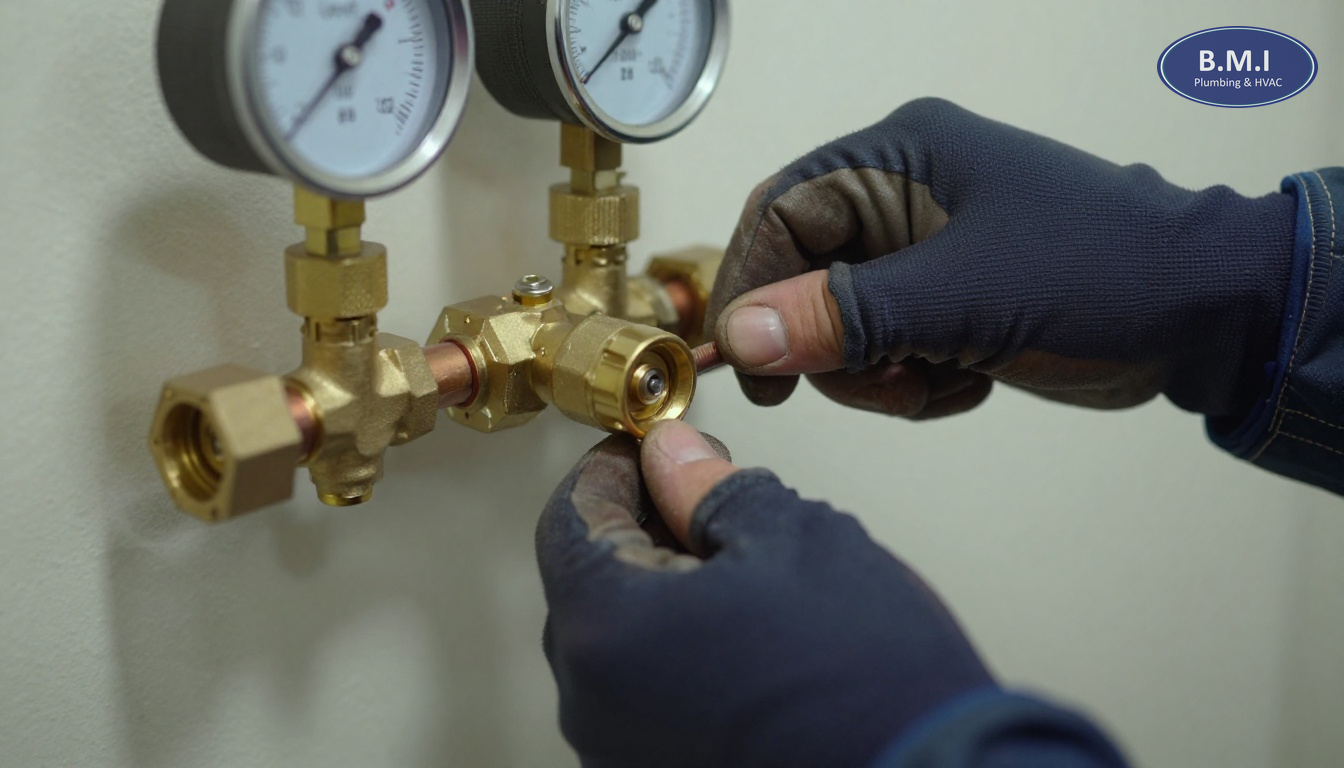
Quick summary: PRV replacement cost in a Toronto condominium is usually driven less by the valve itself than by shutdown complexity, valve size, and whether the building’s existing isolation valves still work. In most high-rises, a planned pressure reducing valve replacement can be completed in one day, but the buildings that run into trouble are the ones that discover too late that a 30-year-old gate valve will not close or reopen.
A common mistake in fall budget season is treating a PRV like a small mechanical-room part. In condominium buildings, the PRV is the device standing between municipal street pressure and hundreds of toilets, faucets, braided supplies, mixing valves and appliance hoses. If it starts to creep from a controlled 65 psi to 95 psi overnight, the building may not notice at the mechanical room first; it notices through nuisance leaks, hammer, and a sudden increase in in-suite plumbing calls.
Start with the money: what a PRV replacement really costs
For boards and property managers, the first question is usually cost, and the honest answer is that PRV replacement cost in Toronto is not one number. A 1 1/2-inch PRV on a small mid-rise in East York is a different job from a 4-inch assembly serving a 30-storey tower in North York with no reliable bypass and original isolation valves.
Typical GTA market ranges, as planning numbers rather than quoted prices, look like this:
| Scope | Typical size | Budget range | Notes |
|---|---|---|---|
| PRV service / rebuild only | 1 1/4" to 2" | $1,500-$3,500 | Only viable if body is sound and parts are available |
| Straight PRV replacement | 1 1/2" to 2" | $4,500-$9,000 | Assumes workable isolation, limited piping changes |
| Full PRV station refresh | 2" to 3" | $9,000-$20,000 | PRV, gauges, unions/flanges, strainers, shutoffs, bypass review |
| Large service PRV station replacement | 3" to 4" | $15,000-$35,000+ | Common in taller towers and older mechanical rooms |
| Emergency replacement after failure | Any | 20%-50% above planned work | After-hours labour, rushed material sourcing, resident disruption |
The number many boards miss is the hidden cost of surrounding components. If the PRV is being replaced but the upstream butterfly valve leaks by, or the downstream gate valve seizes half closed, the contractor may have to expand the shutdown scope immediately. That is why a building that thought it had a $6,000 valve job can turn into a $14,000 station repair. A proper PRV maintenance assessment before tendering reduces that risk.
In Toronto, Mississauga and Vaughan, we often see PRV stations installed with minimal clearance to walls, low overhead piping, or no spool piece for easy removal. Two valves of the same diameter can have very different replacement costs simply because one can be unbolted cleanly and the other requires field cutting, temporary support and re-piping.
What the PRV is actually doing in your building
A pressure reducing valve lowers incoming municipal water pressure to a controlled downstream pressure suitable for the building’s domestic water system. In a condominium, that target is commonly in the 55 to 75 psi range at the PRV station, depending on building height, booster configuration, upper-floor service requirements and fixture performance. Street pressure in Toronto can be significantly higher than that, and in some areas it can fluctuate enough through the day that a weak PRV shows up first as pressure instability rather than total failure.
A PRV is not just a comfort device. It protects toilets, flush valves, faucet cartridges, braided connectors, mixing valves and appliance solenoids from sustained overpressure. In post-2010 glass towers in downtown Toronto, the fixtures may look modern, but many are actually less tolerant of pressure creep than the older, heavier brass fixtures found in some 1980s towers in Scarborough or Etobicoke.
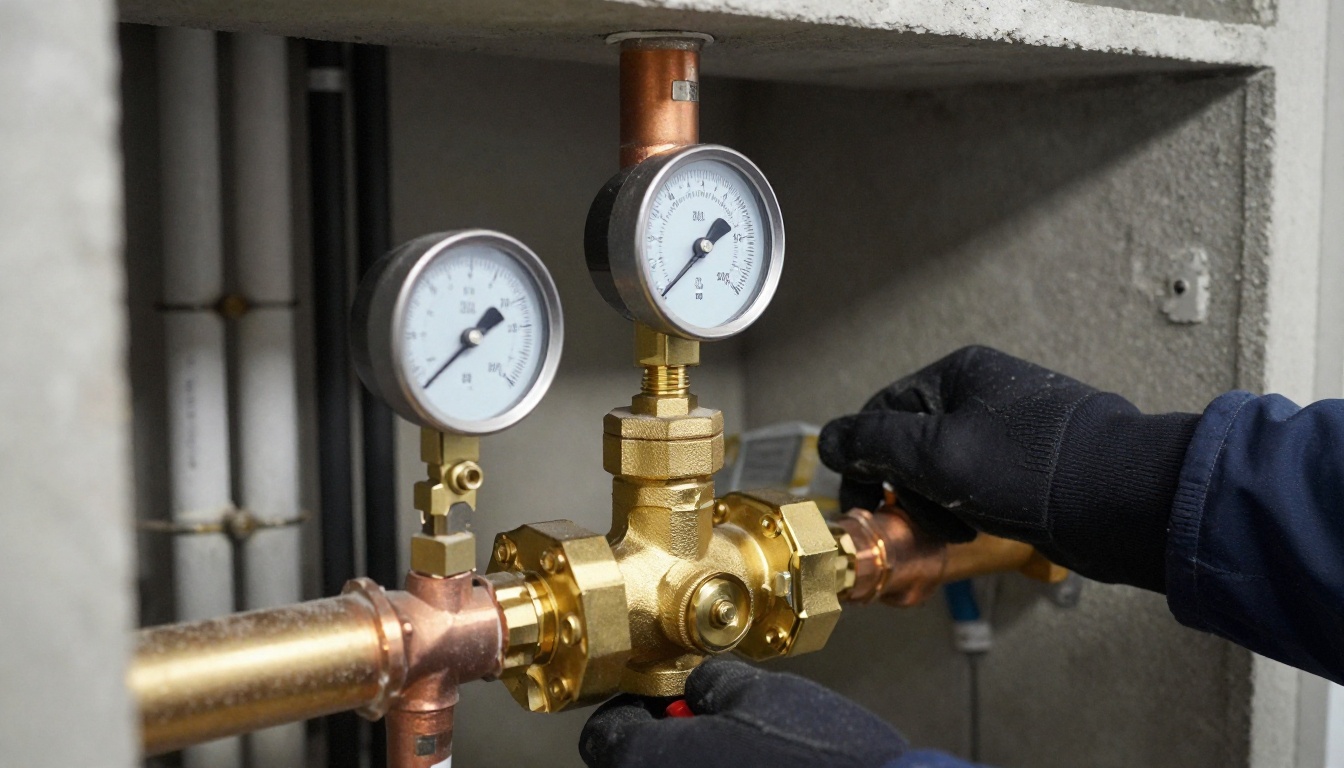
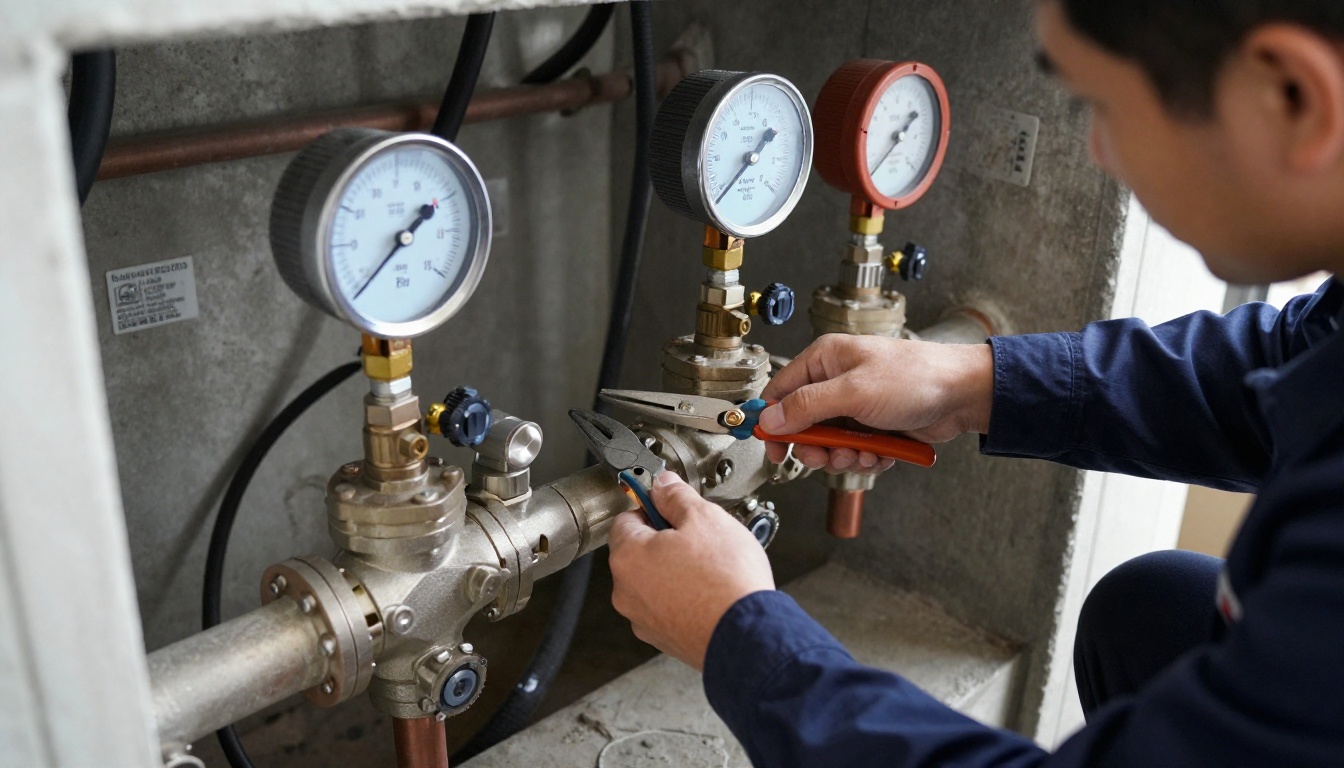
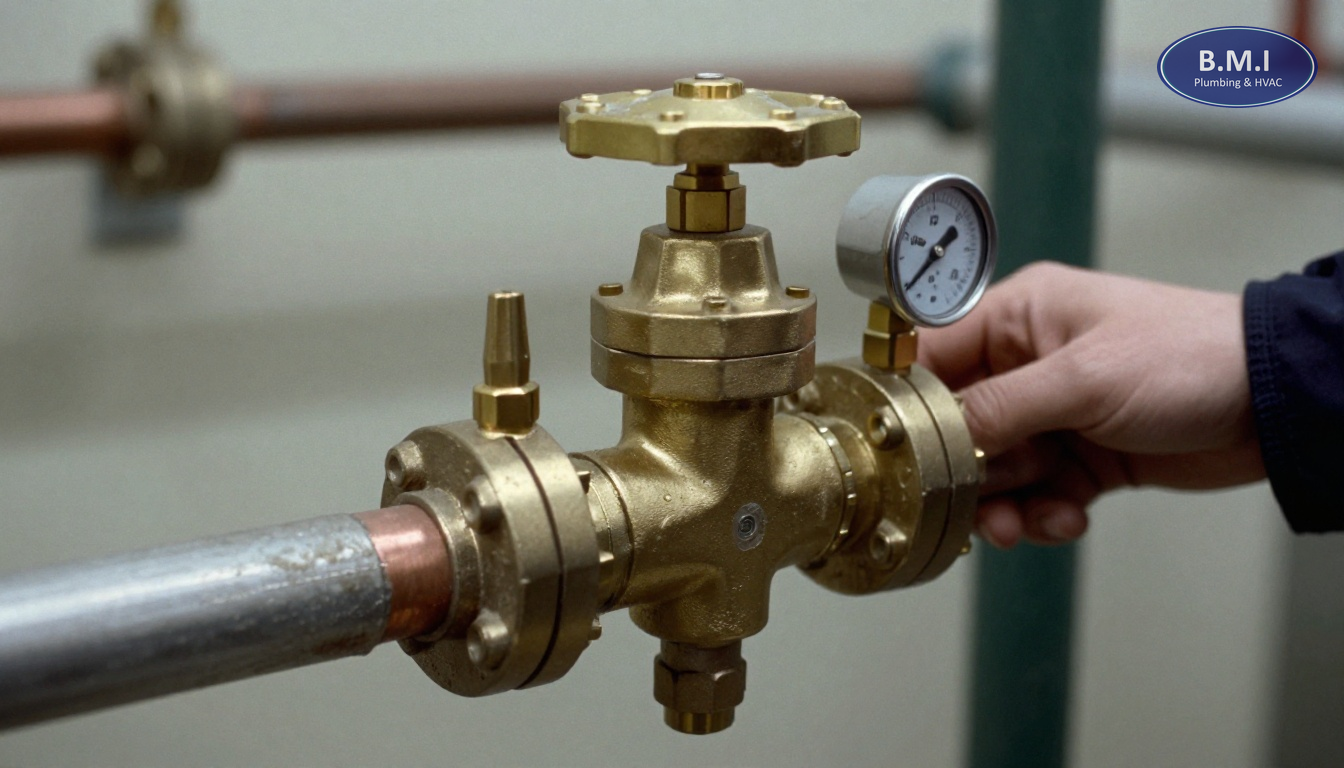
Most multi-residential PRVs are brass or bronze bodies, often from manufacturers such as Watts, Wilkins/Zurn or Cash Acme, installed on horizontal domestic water mains with pressure gauges upstream and downstream. On larger buildings, the station may also include:
- upstream and downstream isolation valves
- a strainer ahead of the PRV
- a bypass line
- test cocks or gauge ports
- check valves depending on layout
- unions, flanges or grooved connections for removal
If your building has not had a recent valve audit, do not assume the line can be isolated just because the as-built shows two shutoffs. In early-1990s towers in North York, one of the most common surprises is a main isolation valve that technically turns but does not actually hold. That matters because the PRV itself may be perfectly replaceable, but not safely replaceable under live pressure.
How PRVs fail in GTA condo buildings
The usual failure modes are more specific than “bad pressure.” In buildings we service along the Toronto waterfront and in older inland towers, the patterns are fairly consistent:
1. Pressure creep
This is the classic one. The PRV reduces pressure during active flow, but once the building is quiet overnight, downstream pressure slowly rises. A building set to 65 psi at noon may be sitting at 85 to 100 psi at 3 a.m. That is when weak toilet fill valves, tempering valves and braided supplies start failing.
2. Hunting or unstable regulation
The valve oscillates instead of holding a steady setpoint. Residents may describe this as showers that surge, faucets that spit, or hammer when solenoid valves close. In taller buildings, that instability can interact badly with booster sets and recirculation systems.
3. Internal wear or fouling
Sediment, scale and worn diaphragms or seats reduce control accuracy. Toronto water is not unusually aggressive by North American standards, but older copper and steel systems shed debris, and neglected strainers upstream of a PRV are a common reason a newer valve starts acting old.
4. External leakage
A leaking bonnet, gasket or body joint is not just a housekeeping issue. In mechanical rooms, slow leaks are often ignored until corrosion reaches nearby supports, insulation or electrical components. A small PRV leak can also be the only visible sign that the station has been over-stressed by pressure or temperature cycling.
5. Wrong sizing
Oversized PRVs are more common than many managers realize. A valve selected for peak demand but operating most of its life at low flow may regulate poorly. On a 300-unit building, the correct solution is not always “bigger valve”; sometimes it is staged pressure control or a station designed around actual demand.
If the building has repeated fixture failures, do not stop at replacing hoses and toilet parts. A review of in-suite plumbing issues against building pressure history often shows the common cause.
The symptoms managers actually hear about
Residents almost never report a PRV problem as “the pressure reducing valve is failing.” They report symptoms that appear unrelated until someone connects them.
Typical complaints include:
- toilets that start running repeatedly after recent repairs
- faucet cartridges failing sooner than expected
- banging when dishwashers or laundry valves close
- pressure that is strong in the morning and harsh at night
- recurring leaks at angle stops, braided supplies or fixture hoses
- upper-floor pressure complaints after a “repair” that lowered the setpoint too far
One useful field clue: if multiple suites in different vertical stacks report fixture leaks within the same few weeks, suspect building pressure before blaming workmanship in each suite. A truly suite-specific issue usually clusters around one renovation, one fixture type or one owner. A pressure issue appears across the building in a pattern that cuts through stacks and line types.
Another clue is timing. In fall and early winter, municipal demand patterns shift and some buildings see wider overnight pressure swings. That is why autumn is a sensible time to schedule PRV maintenance instead of waiting until a cold-weather emergency.
What a proper diagnosis should include before you approve replacement
A board should not approve a PRV replacement based on a guess, and it should not reject one because “we still have water.” The right approach is evidence.
A defensible assessment usually includes:
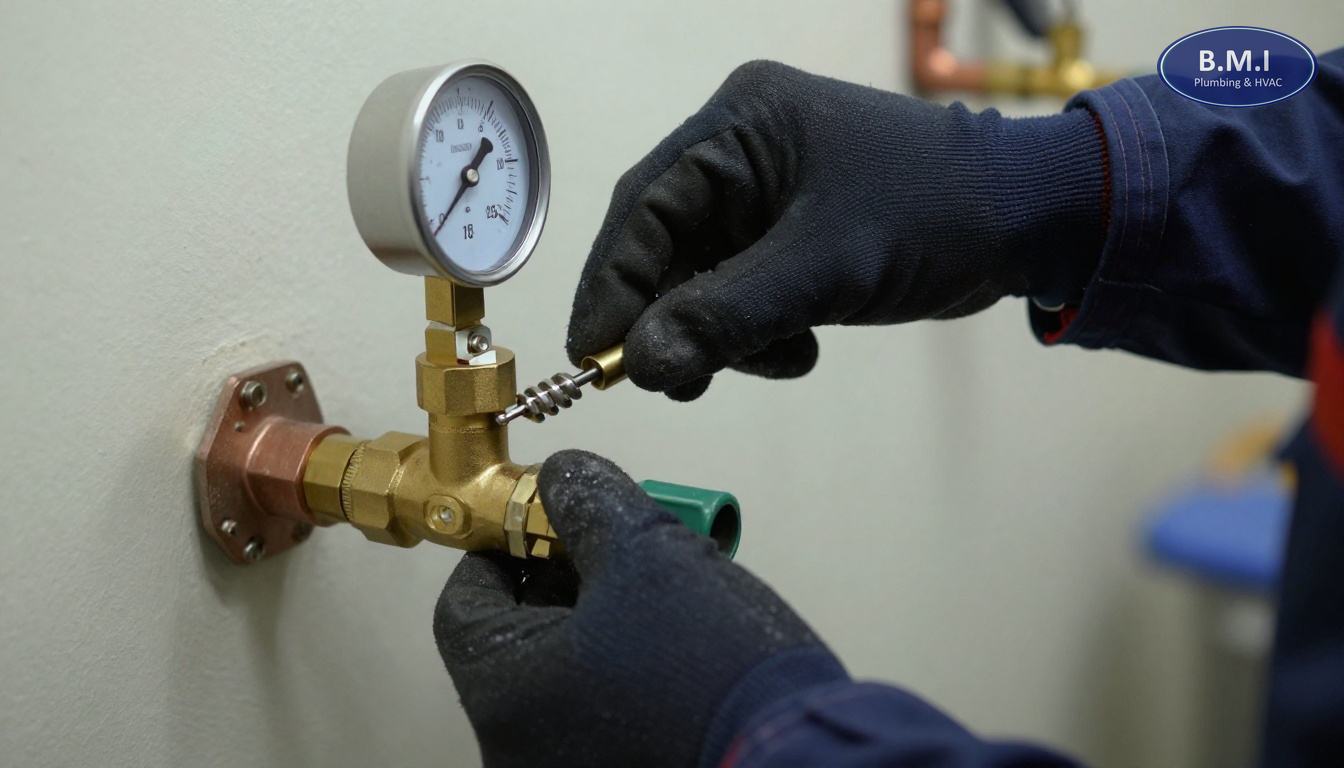
- Inlet and outlet pressure readings under static and flowing conditions
- A pressure log taken at different times of day, ideally including overnight
- Condition of upstream and downstream isolation valves
- Inspection of strainers, bypasses and gauges
- Photos of the station and surrounding piping
- A written recommendation stating whether service, rebuild or replacement is appropriate
On older systems, gauge reliability is its own issue. We have seen buildings making decisions off a 20-year-old gauge that was off by 10 to 15 psi. Replacing or verifying gauges is cheap compared with replacing a PRV on bad data.
If the building has a history of water hammer, unexplained leaks or repeated service calls, pair the PRV review with a broader look at domestic system condition, including valve replacement planning and whether the risers themselves are due for more substantial work.
Service, rebuild or full replacement: how to decide
This is where many buildings either overspend or defer too long. Not every PRV needs full replacement, but not every PRV should be rebuilt either.
When service or rebuild makes sense
A rebuild is often reasonable when:
- the valve body is sound with no cracking or significant external corrosion
- replacement trim kits and diaphragms are still available
- the valve is generally under 12 to 15 years old
- the station has good isolation and the issue is clearly internal wear or fouling
- the building has stable pressure history and no evidence of body damage
For these jobs, the economics can be good. Spending $2,000 to $3,000 to restore a relatively modern 2-inch valve is sensible if the rest of the station is healthy.
When replacement is the better call
Replacement is usually the better decision when:
- the valve is 15 to 25+ years old
- parts are obsolete or lead times are poor
- the body or bonnet is leaking externally
- outlet pressure creeps despite prior servicing
- the station layout is poor and should be corrected while shut down
- the building is already replacing nearby isolation valves or domestic riser components
This is also where reserve planning matters. If the PRV station is original to a late-1980s or early-1990s building in Toronto, Markham or Richmond Hill, it is often worth looking beyond the valve itself. A station replacement can be bundled with a valve audit or broader maintenance program so the corporation is not paying for repeated shutdowns.
When to get a second opinion
If a contractor recommends immediate replacement but cannot provide pressure readings, valve condition notes or a clear reason why rebuilding is not viable, get a second opinion. The reverse is also true: if a building has repeated creep and fixture failures but keeps paying for minor adjustments, that is false economy.
Downtime, shutdowns and the scheduling reality in occupied buildings
For most condominium corporations, the operational question matters as much as the technical one: how long will the water be off, and how disruptive will this be?
A typical planned PRV replacement in a condo building follows this sequence:
- pre-visit to confirm valve size, connection type, access and isolation points
- procurement of the correct PRV and station materials
- resident notice, usually 72 hours minimum, often with a 24-hour reminder
- scheduled shutdown, commonly mid-morning to mid-afternoon on a weekday
- draining, removal, installation, pressure setting and leak checks
- controlled restoration of service and follow-up pressure verification
For a straightforward 2-inch station with reliable shutoffs, the water interruption is often 4 to 8 hours. For a 3-inch or 4-inch station, or a room with poor drainage and marginal valves, a full-day shutdown is more realistic. In some occupied towers, after-hours work is chosen to reduce resident impact, but that usually increases cost.
A common mistake we see in older Toronto and Etobicoke towers is allowing only the valve swap time in the notice. The real schedule must include draining the line, managing trapped pressure, refilling slowly to avoid hammer, and checking upper-floor performance after restoration. Rushing the refill is how buildings end up with air complaints and secondary leaks.
If the building has no dependable isolation, the contractor may recommend replacing sectional shutoffs first. That is exactly why a valve replacement program often saves money over time: isolation is what makes every future repair shorter and safer.
What affects cost more than most boards expect
The PRV itself is only part of the budget. The larger cost drivers are usually building-specific.
Valve size and connection type
A flanged 4-inch assembly is a very different scope from a threaded 1 1/2-inch valve. Material cost rises quickly with diameter, and so does handling time.
Isolation quality
If upstream and downstream valves hold properly, the work stays narrow. If they do not, the contractor may need to isolate a much larger section or add temporary workarounds.
Access and drainage
Mechanical rooms in older purpose-built rentals and condo towers are not always laid out for easy service. Tight clearances, poor floor drainage, or overhead obstructions add labour and risk.
Bypass requirements
Some stations have bypass lines that are undocumented, incorrectly valved or not suitable for temporary service. Others have no bypass at all. This affects how long the building can be without water and whether temporary arrangements are possible.
Building occupancy and notice requirements
A 60-unit mid-rise is easier to coordinate than a 400-unit downtown tower with concierge, medical residents, shift workers and strict notice protocols. Property management time is a real cost even if it does not appear on the plumbing line item.
Related work discovered on site
It is common to find failed gauges, seized isolation valves, poor supports, or outdated pressure settings. On some jobs, the smartest move is to replace a strainer, gauges and adjacent shutoffs during the same shutdown rather than paying for another outage six months later.
For larger domestic water concerns, buildings should also understand where PRV work intersects with riser replacement planning or even building re-piping if the pressure issue is part of a wider system decline.
What to budget for next year if you are in fall planning now
October is exactly when many Toronto condo boards are trying to decide whether a PRV issue belongs in this year’s operating budget, next year’s operating budget, or the reserve fund. The answer depends on scope.
As a rule of thumb:
- Minor service or rebuild usually fits operating budgets.
- Single station replacement may be operating or reserve funded depending on your corporation’s accounting treatment and advisor guidance.
- Broader station modernization, associated valve replacement, or domestic system upgrades are more often discussed with reserve planning professionals.
A practical budgeting framework:
| Building condition | Recommended budget action |
|---|---|
| PRV stable, no creep, gauges suspect | Budget for testing, gauges and inspection this fall |
| PRV aging, one service call in past year | Carry a preventive replacement allowance next year |
| PRV creeping, repeated fixture failures, original shutoffs | Budget replacement plus contingency for valves |
| PRV issue tied to broader domestic piping problems | Review under reserve study / capital plan |
Ontario condominium boards should also remember the governance side. If the work is common element plumbing, management should be able to explain not just the price but the consequence of deferral: increased service calls, higher leak exposure, owner complaints, and potentially deductible-level losses if overpressure contributes to a flood event. This is where a written report and a documented maintenance history are more persuasive than a verbal recommendation.
What happens if you defer PRV replacement too long
Some plumbing work can wait a year. Some cannot. PRVs sit in the middle: not every aging valve is an emergency, but once pressure control becomes unreliable, the cost of waiting tends to show up elsewhere.
Typical consequences of deferral include:
- more frequent in-suite leaks at weak points such as toilet supplies and angle stops
- repeated fixture repairs with no root-cause correction
- water hammer and stress on mixing valves and recirculation systems
- resident complaints about erratic pressure after every partial adjustment
- emergency shutdowns at worse times, often in winter
In buildings we service in Toronto, North York and Mississauga, the most expensive PRV jobs are usually not technically difficult. They are expensive because they happen after a flood, after hours, with residents already upset and management needing immediate restoration. A planned emergency plumbing response is valuable when needed, but it is almost always costlier than a controlled replacement.
There is also an insurance conversation here. Insurers and adjusters increasingly ask whether a building had known prior issues, whether maintenance records exist, and whether repeated minor leaks were being tracked. A corporation does not need to replace every old valve on suspicion, but it should be able to show that pressure-related risks were assessed and managed reasonably.
Scheduling advice for Toronto condos before winter
Fall is the best window for PRV work for a practical reason: once winter hits, plumbing priorities shift. Frozen pipe calls, garage line issues, heat trace concerns and holiday-period service demands all compete for attention. A PRV replacement that could have been handled calmly in October becomes much harder to schedule in late December.
For property managers preparing 2027 budgets, the sensible sequence is:
- Inspect and test now if the building has pressure complaints or an aging PRV.
- Confirm isolation valve condition before approving replacement.
- Bundle related work if gauges, shutoffs or strainers are also due.
- Schedule before peak winter emergency season where possible.
- Document target outlet pressure after completion for future comparison.
On larger sites, especially in North York, Vaughan and downtown Toronto, management should also coordinate with operations staff on:
- resident notices and reminder notices
- concierge scripting for expected complaints
- elevator protection if materials are large
- mechanical room access and housekeeping
- after-hours monitoring after pressure restoration
If the building has not reviewed pressure control in years, this is also a good time to look at water consumption strategy more broadly. In some cases, pressure management, fixture condition and devices such as MEV water-saving valves all belong in the same conversation.
FAQs
How much does PRV replacement cost in a Toronto condo building?
For a typical condominium PRV station in Toronto, a straightforward single-valve replacement often lands around $4,500 to $9,000, while a more complete station rebuild with isolation valves, bypass work, gauges and strainers commonly runs $9,000 to $20,000 or more. Larger assemblies on 3-inch to 4-inch domestic services, or rooms with poor access, can exceed that range. The biggest cost drivers are valve size, whether the building can be isolated cleanly, after-hours work, and whether surrounding valves are still usable.
How long does a PRV replacement shut down the water?
In a well-prepared building with working sectional isolation valves, the actual domestic water shutdown is often 4 to 8 hours for a standard PRV replacement. If the contractor also has to replace failed upstream and downstream valves, drain a larger section of piping, or work around seized gear, the shutdown can stretch to a full day. In older 1970s and 1980s Toronto high-rises, the uncertainty is usually not the PRV itself but whether the building can actually be isolated as drawn.
When should a building replace a PRV instead of just servicing it?
If outlet pressure is unstable, if pressure creeps overnight, if the valve body is leaking, or if internal parts are no longer available, replacement is usually the better decision. Many PRVs can be rebuilt once or twice, but once a valve is 15 to 25 years old, especially on hard-worked domestic services with Toronto pressure swings, repeated service calls often cost more than a planned replacement. A written pressure log with inlet and outlet readings is the evidence to ask for before approving either option.
Do residents need to leave their suites during a PRV replacement?
Usually no, because PRV replacement is normally done in the mechanical room and affects the building through a planned water shutdown rather than suite-by-suite entry. Residents do need advance notice because toilets, faucets, showers, dishwashers and laundry cannot be used during the shutdown window, and air can sputter through fixtures when service returns. In larger towers in North York or Mississauga, management often staggers notices at 72 hours and 24 hours to reduce complaints and protect the concierge desk from avoidable calls.
Who pays for PRV replacement in a condominium: the corporation or the owner?
In most Ontario condominiums, the main pressure reducing valve station on the domestic water service is a common element and is paid by the corporation, not by an individual unit owner. That said, managers should still confirm the declaration and standard unit definition, because responsibility language is not identical across all corporations. The practical point is that a failed PRV affects the whole building’s pressure, so this is usually treated as a building system expense and often planned through the operating budget or reserve fund depending on scope.
Can PRV replacement wait until next year if the building still has water?
Sometimes yes, but only if pressure readings are stable and the issue is minor, such as a small bypass seep or a gauge that has failed rather than the PRV itself. If the building is seeing outlet pressures drifting above target, frequent relief events, fixture failures, or repeated complaints on upper floors, deferral through a winter season is risky because municipal pressure can swing and weak toilets, fill valves and braided supplies become the next failure point. Fall is usually the right time to test, document and budget before cold-weather emergency work costs more.
Next steps for boards and property managers
If your building has had more than a few unexplained fixture leaks, pressure complaints or after-hours plumbing calls in the past 12 months, do not debate PRV replacement in the abstract. Get the station inspected, get actual inlet and outlet readings, and confirm whether the building’s isolation valves still function. That gives the board something defendable: evidence, not anecdotes.
If the PRV has not been assessed in years, book a site visit before finalizing next year’s budget. BMI attends the building before quoting, and where a replacement is warranted, the scope can be tied to a planned shutdown rather than an emergency. For related work, it also helps to review completed project examples, broader project solutions, and BMI’s full repairs and service capabilities.
For buildings that are not yet at replacement stage, a scheduled maintenance program is often the better answer than waiting for the next complaint. And if pressure issues are already affecting suites, a combination of toilet and faucet repairs and root-cause pressure control review usually resolves the problem faster than treating each unit as a separate event.
For more GTA condominium plumbing guidance, visit the BMI blog. If you need a building-specific recommendation on pressure reducing valve replacement, request a site review before winter scheduling tightens.
Contact BMI
- Contact BMI
- Phone: (416) 845-3756
- Emergency: (416) 845-3756, answered 24 hours a day
- Email: info@brial.ca
More on condominium plumbing
Laundry Stack Cleaning in Toronto Condos: Costs and Signs
Laundry stack cleaning for Toronto condos: how lint and detergent block condo laundry drains, what inspections show, and …
Toronto High-Rise Pressure Zones: Why Floors Vary
Why top floors lose water pressure while lower floors get too much in Toronto condos. A practical guide to water …
PRV Failure Symptoms in Toronto Condo Buildings
Learn the real PRV failure symptoms behind condo water pressure problems, with Toronto cost ranges, testing steps and …
Need a plumber in your building?
BMI services roughly 200 condominium and multi-residential buildings across Toronto and the GTA. Emergencies are answered at any hour.