
Sectional and Isolation Valve Replacement Toronto
Sectional and isolation valve replacement in Toronto condos: how to diagnose failing shutoffs, budget work, and reduce emergency shutdowns.
Sectional and Isolation Valve Replacement Toronto
Quick summary: In Toronto condominiums, failed sectional and isolation valves are rarely noticed until there is a leak, a stack repair, or a riser shutdown that cannot be controlled where the drawings say it should be. Replacing those valves is not glamorous work, but it is one of the most important ways a board or property manager can reduce emergency water damage, shorten shutdowns, and make future plumbing projects possible.
Why sectional valve problems show up in Toronto buildings specifically
Toronto has a very mixed multi-residential building stock, and that matters a great deal for valve replacement. The city has older apartment towers and condominium high-rises from the 1960s through 1980s across North York, Scarborough and Etobicoke, a heavy wave of downtown and waterfront condominium construction from the late 1990s onward, and a large inventory of mid-rise and infill buildings in former industrial and avenue corridors. Each era used different valve types, different piping layouts, and different standards of mechanical-room zoning.
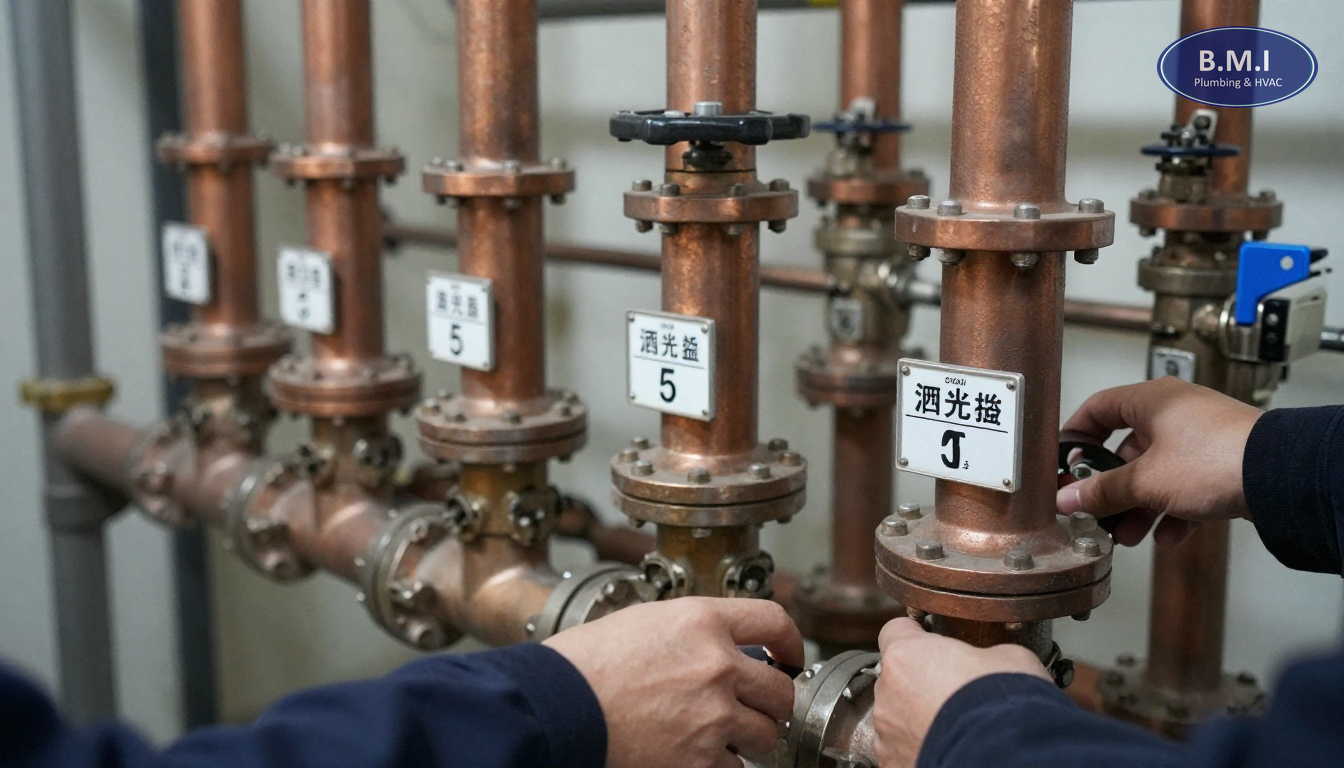
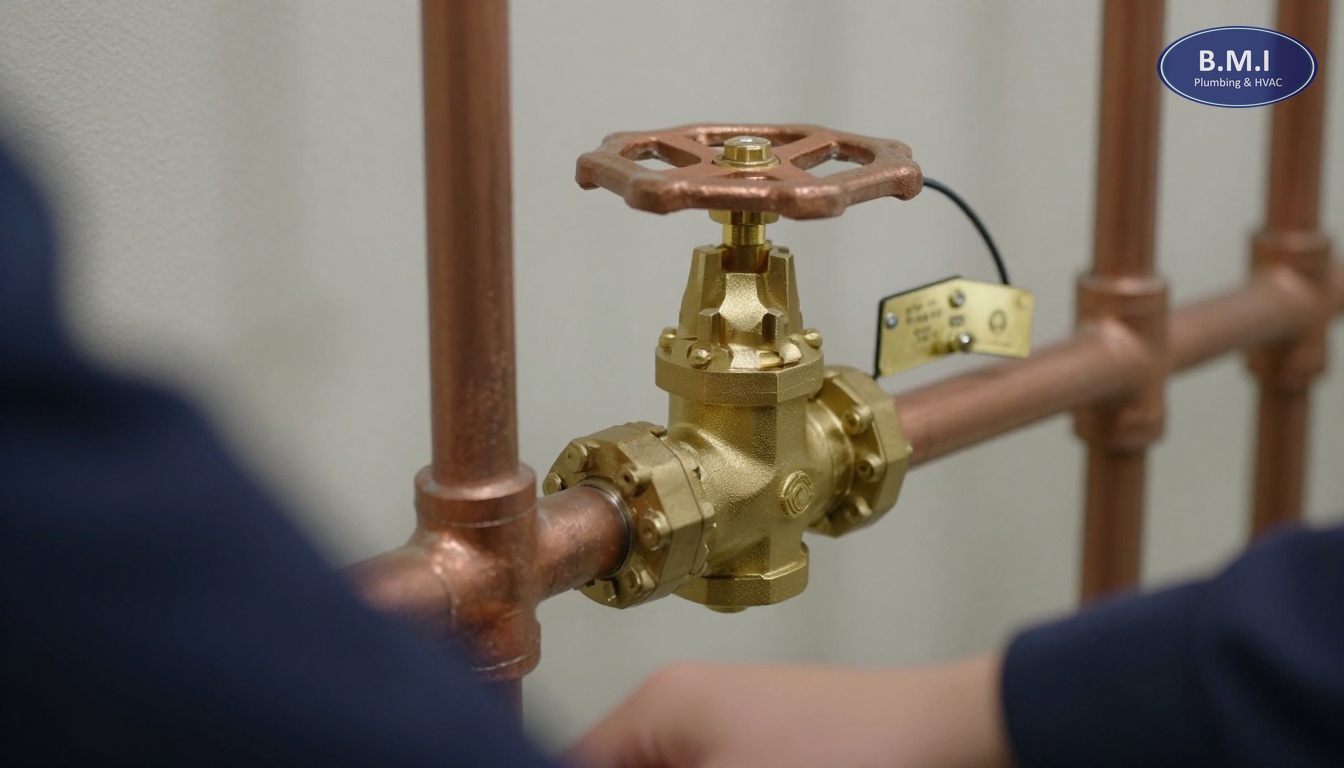
In many 1970s and 1980s Toronto towers, domestic water distribution was built around copper mains with bronze or brass gate valves. Those valves often remain in service long after the packing has deteriorated, the stems have corroded, or the internals have frozen in place. On paper, the building may have isolation at each riser branch or floor group. In practice, the valve may not turn, may not shut off fully, or may drip at the stem as soon as it is touched. That becomes a serious problem when an in-suite leak, a riser pinhole, or a fixture branch failure needs immediate control.
In downtown Toronto towers from the condo boom years around CityPlace, Liberty Village and the waterfront, the issue is often less about 50-year-old bodies and more about density and access. Mechanical rooms are tighter, shafts are crowded, and many valves were installed behind finished ceilings, in narrow service corridors, or above garage piping runs. When a contractor has to isolate one branch for a repair, the question is not just whether the valve works. It is whether the valve is accessible, labelled, charted and trustworthy under shutdown conditions.
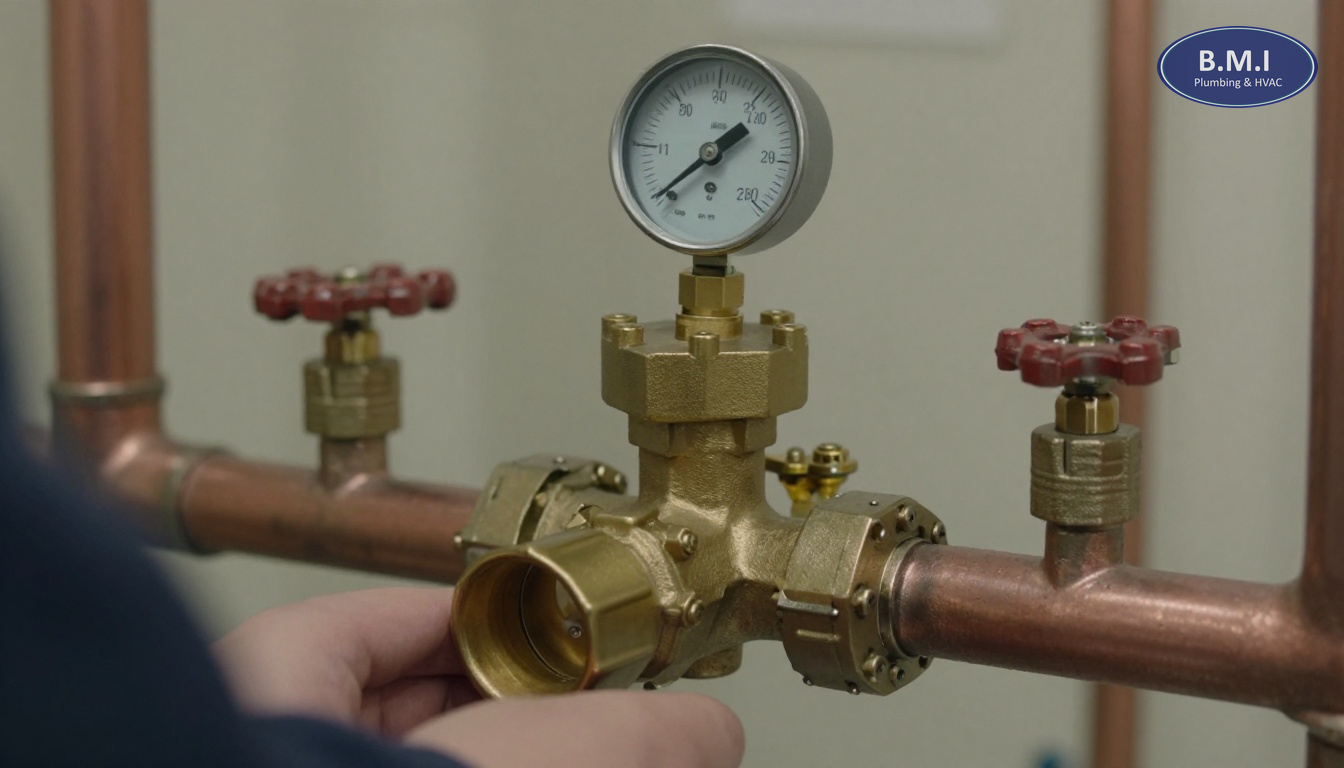
Toronto’s municipal water conditions also play a role. Buildings across the city see different pressure behaviour depending on elevation, building height, booster arrangement and how the domestic system was designed. Where pressure reducing stations and booster systems are involved, a failed pressure reducing valve maintenance program and a failed shutoff strategy often go together. A building that cannot reliably isolate downstream zones is harder to maintain safely before winter pressure swings and holiday occupancy loads.
For boards preparing reserve fund updates or fall budget numbers, sectional valve renewal often belongs in the same conversation as valve audit, charting and exercise programs, domestic water riser replacement, and broader capital plumbing project work. The valve itself may be a modest component, but it controls whether the rest of the system can be maintained without major disruption.
How valve replacement issues present in Toronto condominiums
Property managers in Toronto usually do not call and say, “we need sectional and isolation valve replacement.” They call because a different job has exposed the problem.
Common reports include:
- a leak in one stack that should have affected a limited area, but the whole domestic water system had to be shut down
- a valve that has not been exercised in years and now cannot be closed for a suite repair
- a mechanical-room valve that appears shut but still passes enough water to keep a line live
- a stem packing leak that starts when building staff or a contractor tries to operate the valve
- repeated notices to residents because one failed shutoff means multiple suites or an entire riser bank must lose water for routine work
- a project such as backflow assembly service, PRV work, riser replacement or fixture branch work that cannot proceed until isolation is made reliable
In older Toronto stock near St. Clair, Thorncliffe, Flemingdon, Rexdale, or parts of Scarborough, there is often another layer to the problem: the valve map is wrong or incomplete. Drawings may have been marked up over decades, renovations may have changed branch routing, and replacement work may have been done without proper charting. That is why a valve project should rarely begin with blind cutting. It should begin with verification.
A good companion step is a building-wide maintenance program review so the board can decide whether the valves being replaced should be combined with other overdue work. If kitchen stacks are due before the holiday cooking season, for example, planned shutoffs and access can sometimes be coordinated with kitchen stack cleaning and drain maintenance to reduce disruption.
What diagnosis and inspection should include in Toronto
A proper valve replacement assessment in Toronto is part field investigation, part operational testing, and part project planning. Boards should insist on evidence, not assumptions.
The inspection should normally include:
- Physical inventory of existing valves. This means location, size, type, orientation, accessibility and visible condition. Gate valves, butterfly valves and ball valves behave differently in service life and replacement strategy.
- Exercise testing where safe. A valve that turns a quarter turn is not necessarily serviceable. The contractor should determine whether it can be operated without causing a stem leak or body failure.
- Isolation verification. The key question is not whether the handle moves. It is whether the valve actually isolates the intended branch, riser, amenity area or mechanical zone.
- Assessment of surrounding piping. In many Toronto buildings, the valve is not the only weak point. Adjacent copper may be thinned, supports may be poor, and old unions or flanges may not survive disturbance.
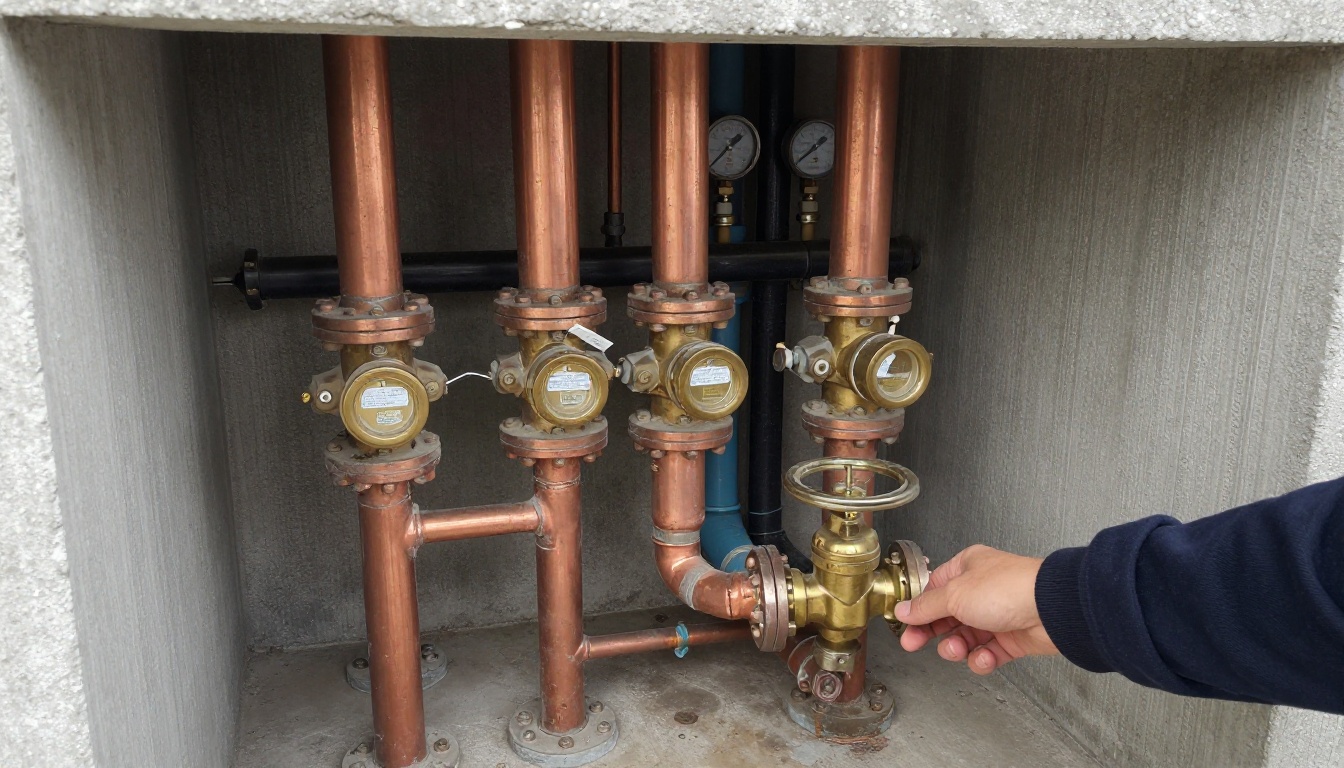
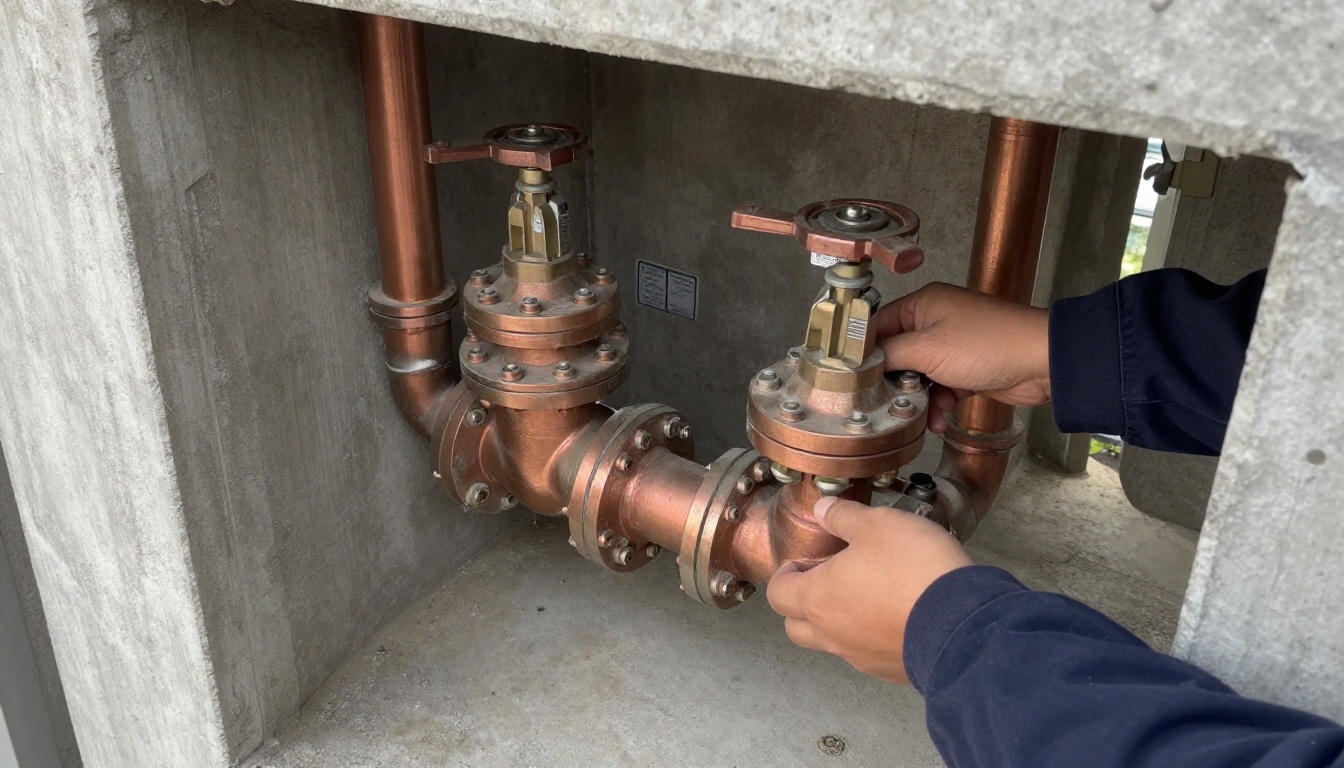
- Access and restoration review. If the valve is above a corridor ceiling, inside a block wall recess, or over parking garage piping, the project scope must include access, firestopping, insulation and restoration.
- Shutdown sequencing. In an occupied building, the plumbing plan and the communication plan are equally important.
For concealed branches or disputed routing, camera pipe inspection can help in drainage systems, while domestic distribution usually relies more on tracing, as-built review, and live field testing. In many Toronto high-rises, the final deliverable should include an updated valve chart, not just replaced hardware. If the building still does not know what each shutoff controls, some of the value of the project is lost.
This is also where related systems should be reviewed. If premise isolation devices or booster room piping will be affected, backflow prevention testing and certification may need to be coordinated. If a domestic shutdown is already planned, it is often efficient to assess pressure control, aging strainers and vulnerable branch valves at the same time.
A representative Toronto valve replacement project
A representative example would be a 27-storey condominium from the late 1980s in North York, west of Yonge Street and south of Sheppard. The building had recurring domestic water shutdown problems. A single suite branch leak on an upper floor had recently forced staff to shut water to roughly half the tower because the riser isolation valves in the mechanical room would not fully close.
The building had original bronze gate valves on domestic cold and hot water branches, with several additional riser shutoffs above a service corridor ceiling near the pump room. The manager’s main complaint was not just the leak history. It was that every routine repair had become larger than necessary because nobody trusted the existing shutoffs.
BMI’s assessment found three overlapping issues. First, several original valves were seized or had severely limited travel. Second, at least two valves that were labelled as serving one riser bank actually affected a different branch due to historical alterations. Third, the piping adjacent to a few of the worst valves showed enough corrosion and previous repair work that replacement would need to extend beyond the valve body itself.
The work was phased over two planned shutdown days and two follow-up days for ceiling access, insulation and charting. The domestic water system was isolated in stages, the failed gate valves were removed, and new full-port quarter-turn isolation valves were installed where space and piping geometry allowed. Two branch sections were reworked to improve future access. Each new valve was tagged, and the building received an updated shutoff chart with photographs.
Total active plumbing work took about four working days, with resident notices issued in advance and shutdown windows scheduled during lower-demand periods. The rough project cost was in the range of $32,000 to $48,000, largely depending on after-hours coordination, access restoration and the amount of adjacent pipe replacement required. For that building, the practical result was that later suite repairs and fixture branch work could be isolated by zone rather than by half-building shutdown.
That kind of project is also a reminder that valve work often unlocks other deferred maintenance. Once reliable shutoffs existed, the board could plan sectional and isolation valve replacement as part of a longer-term domestic system strategy instead of treating each leak as a one-off emergency.
Costs and timelines for sectional valve replacement in Toronto
In Toronto, costs vary more by access and shutdown complexity than by the valve itself. A 2-inch or 3-inch valve is not just a material item. It is a shutdown, a labour plan, a communication exercise, and often a restoration job.
Typical market ranges in 2026 for multi-residential Toronto buildings are roughly:
- Single accessible valve in a mechanical room: about $2,500 to $6,500 if the surrounding piping is sound and the shutdown is straightforward
- Small planned package of 3 to 8 valves: about $8,000 to $20,000
- Phased riser-zone or floor-group project in a mid- or high-rise: about $25,000 to $90,000
- Extensive renewal with poor access, multiple pipe modifications, asbestos coordination or major restoration: $100,000+
These are estimates only, not quoted prices, and they vary with valve size, domestic hot versus cold service, mechanical-room congestion, night work, resident notice requirements, and whether ceilings, walls, insulation or firestopping must be restored.
Timeline-wise, a small Toronto valve package may be completed in one to three site days. A larger occupied-tower project is more commonly staged over one to four weeks once investigation, notices, procurement and access are included. Fall is often the best planning window because boards are building next year’s budget, trying to reduce winter emergency exposure, and lining up work before holiday occupancy makes shutdowns harder.
Where the building has a history of emergency leaks, it is worth comparing planned capital work against repeated emergency response. A combination of 24/7 emergency leak response, tenant disruption, restoration and insurance deductibles can exceed the cost of scheduled valve renewal surprisingly quickly.
Repair versus replacement in Toronto, and when scheduled beats reactive
Some valves can be repacked or adjusted. Many cannot, or should not be trusted afterward. In Toronto’s aging high-rise stock, the key question is not whether a small repair is physically possible. It is whether the valve will perform when the building really needs it.
Replacement is usually the better decision when:
- the valve does not fully isolate
- the body or bonnet shows corrosion or leakage
- the stem leaks when operated
- the valve is part of a critical zone serving many suites
- the building is planning riser, PRV, booster, backflow or branch work that depends on reliable shutdowns
- the valve is old enough that a repair would still leave an obsolete or unpredictable assembly in service
Scheduled work is usually cheaper than reactive work in Toronto because it allows resident notice, daytime access, orderly shutdown sequencing, and the ability to combine tasks. For example, if a building is already planning domestic water riser replacement, expansion compensator replacement, or a broader full building re-piping, valve renewal should be reviewed at the same time. New piping tied into unreliable shutoffs is not a complete strategy.
For condominiums governed by the Condominium Act, reserve fund planning matters here as well. Valve projects are often too large to be treated casually as operating repairs, but too practical to defer just because they are hidden. Boards should ask whether the reserve fund study and its update cycle properly reflect the building’s actual plumbing risk, not just generic component ages.
What deferring shutoff valve replacement costs a Toronto building
The direct cost of deferral is usually visible only after something goes wrong. The larger cost is operational.
A Toronto building with unreliable sectional valves pays for that problem in several ways:
- Longer and wider shutdowns. A leak that should affect one riser becomes a half-day outage for dozens or hundreds of suites.
- Higher emergency labour costs. Night and weekend isolation work is expensive, especially when multiple areas must be investigated just to find a functioning shutoff.
- Water damage exposure. If staff cannot isolate quickly, water travels. In vertical communities, that means multiple floors, corridor finishes, elevator lobby risk and resident chargeback disputes.
- Project inefficiency. Other plumbing work gets more expensive because every task requires larger notices and more complicated shutdown planning.
- Insurance and claims pressure. Even when a claim is covered, repeated losses affect deductibles, renewals and board tolerance for further deferral.
There is also a governance cost. During budget season in Toronto, boards need credible numbers, not vague warnings. A documented valve condition assessment helps management explain why this work belongs in the capital plan. It also supports decisions about whether to phase the work by mechanical room, riser bank, amenity branch or domestic hot/cold zone.
If the building has chronic small fixture leaks or branch shutdown problems, it may also be worth aligning valve renewal with in-suite plumbing repairs, toilet and faucet repairs, or other recurring service patterns. The goal is not to spend more. It is to stop paying repeatedly for the same lack of isolation.
FAQs about sectional and isolation valve replacement in Toronto
How do we know a Toronto condo needs sectional valve replacement instead of another repair?
The clearest sign is operational failure: a valve that will not fully close, leaks from the stem or body when exercised, or isolates less of the building than the drawings suggest. In many Toronto buildings, especially 1970s to early-2000s stock, valves have sat untouched for years and seize in place. A proper assessment should include a physical exercise test, confirmation of what area the valve actually controls, and photo documentation of the valve condition and surrounding piping.
Can valve replacement in Toronto be done without shutting down the whole building?
Often yes, but it depends on how many working upstream valves still exist and whether temporary isolation is possible. In a well-zoned Toronto condominium, a contractor can sometimes isolate one riser, floor group, amenity area or mechanical branch at a time. In older towers with poor valve coverage or multiple seized shutoffs, a broader domestic water shutdown is sometimes unavoidable and should be planned carefully with resident notice and after-hours sequencing.
What does sectional and isolation valve replacement usually cost in Toronto?
For Toronto multi-residential buildings, a small planned valve project may start around $8,000 to $20,000 where access is straightforward and only a limited number of valves are involved. More typical phased projects in larger towers often land in the $25,000 to $90,000 range, while extensive mechanical-room and riser-zone valve renewal can run well into six figures. Cost depends on valve size, material, access, asbestos considerations, shutdown complexity, restoration and whether corroded adjacent piping also needs replacement.
Should a Toronto condo board replace valves proactively or wait until one fails?
For most Toronto boards, proactive replacement is the less expensive strategy when valves are known to be seized or leaking. Waiting usually turns a manageable planned shutdown into an emergency with overtime labour, resident disruption, possible water damage and broader areas out of service. It also leaves the building unable to isolate leaks quickly, which can increase insurance losses and complicate other capital work.
How long does a valve replacement project take in a Toronto high-rise?
A single mechanical-room valve can sometimes be replaced in one shift, but a building-wide Toronto project is usually phased over several days or weeks. The timeline depends on resident notice periods, access windows, whether ceilings or block walls must be opened, and how many shutdown zones are being created or restored. Fall is often a practical time to do the work because boards are setting budgets and trying to reduce winter emergency risk.
Do Toronto condominium valve projects need licensed plumbers and code compliance?
Yes. In Ontario, plumbing work of this kind should be performed by licensed plumbers, and the work must meet the Ontario Building Code and the realities of the existing building system. In a Toronto condominium, boards should also keep records for reserve fund planning, coordinate resident communication and confirm whether any related work, such as backflow assemblies or domestic pressure control, should be addressed at the same time.
Next steps for Toronto property managers and condo boards
If your Toronto building has ever had a repair that should have been local but became building-wide, there is a good chance the real problem is valve reliability. The practical next step is to document what exists, verify what still works, and identify which failed sectional and isolation valves are preventing safe maintenance.
For some buildings, that means a focused valve condition review and a phased replacement plan. For others, it means combining shutoff valve renewal with broader domestic system work, especially if risers, pressure control, or mechanical-room components are already under review. BMI serves Toronto and the surrounding GTA from its Toronto shop and can help building teams assess whether a reactive pattern should become a planned project. You can also review completed projects and building references or explore additional guidance on the BMI plumbing blog.
Contact BMI
- Contact BMI
- Phone: (416) 845-3756
- Emergency: (416) 845-3756, answered 24 hours a day
- Email: info@brial.ca
More on condominium plumbing
Sectional and Isolation Valve Replacement in Oakville
Sectional and isolation valve replacement in Oakville condos: costs, timelines, diagnosis and planning for safer …
Sectional and Isolation Valve Replacement in Oshawa
Sectional and isolation valve replacement in Oshawa condo buildings. Costs, timelines, diagnosis and planning for boards …
Pressure Reducing Valve Service and Replacement in East York
Pressure reducing valve service and PRV replacement in East York for condos and rentals. Building water pressure …
Need a plumber in your building?
BMI services roughly 200 condominium and multi-residential buildings across Toronto and the GTA. Emergencies are answered at any hour.