Sectional Valve Replacement in Toronto Without Full Shutdown
A practical guide to sectional valve replacement in Toronto condos: methods, costs, shutdown logistics, risks, and when isolation valve replacement can wait.
Sectional Valve Replacement in Toronto Without Full Shutdown
Quick summary: In many condominium buildings, sectional valve replacement can be done without shutting down the entire property, but only if the existing system is properly mapped, tested and sequenced first. For Toronto boards and property managers, the real issue is not whether water can stay on somewhere in the building; it is whether the affected zone can be isolated safely enough to avoid turning a planned project into an after-hours flood.
A common mistake in older high-rises is to assume a valve is “fine” because nobody has touched it in years. In practice, the first time a failed valve matters is usually during a leak, a riser repair or a PRV issue, which is the most expensive possible moment to learn it does not close.
The misconception that causes the problem
Many boards hear isolation valve replacement and immediately picture a full-day domestic water shutdown affecting every suite. That does happen in some buildings, but it is not the default. In a well-planned project, the objective is usually to keep most of the building live while replacing failed valves one zone at a time using existing sectionalization, temporary isolation methods, or a staged sequence tied to a broader valve audit.
In buildings we service in Toronto, North York and Mississauga, the bigger issue is often not the replacement itself but the fact that nobody has a reliable current valve map. Original as-builts may show a 4-inch domestic cold riser valve in a mechanical room, but over 30 or 40 years there may have been tenant improvements, ceiling closures, abandoned branches, and undocumented tie-ins. That is why a contractor who quotes valve replacement without physically tracing the line is giving you a number, not a plan.
The other misconception is that all valves fail the same way. They do not. A 3-inch gate valve on a domestic cold branch may turn freely and still pass enough water to keep 20 suites live above the work area. A butterfly valve may seize in position after years of mineral buildup. A ball valve usually gives clearer open/closed confirmation, which is one reason many buildings upgrading old sections now pair valve replacement with a broader reliability plan rather than replacing one failed piece at a time.
What is actually happening when a sectional valve “fails”
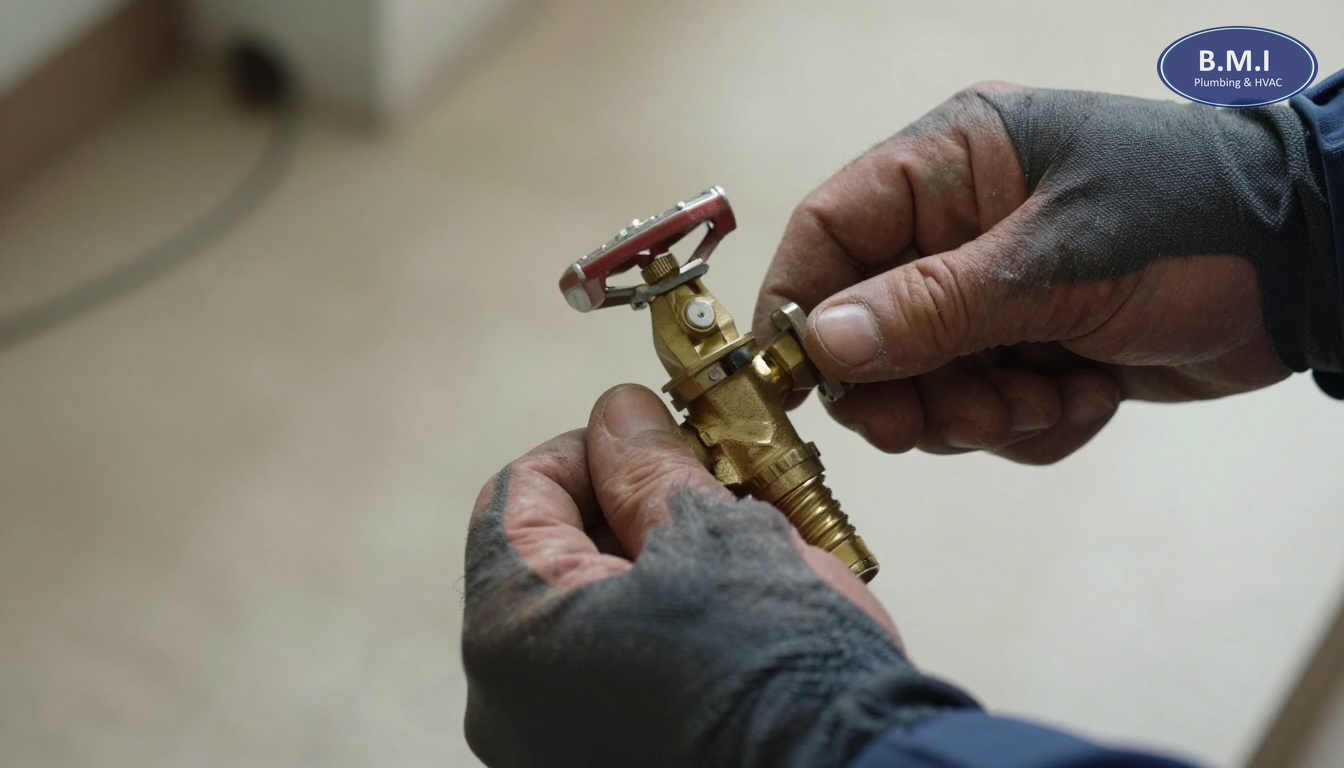
A sectional valve is there to isolate a portion of the system: a riser, hot water loop, recirculation line, PRV station, mechanical room branch, or a zone serving a bank of suites. In condominium plumbing, these are typically found in sizes from 3/4 inch to 6 inch, with 2 inch, 2-1/2 inch, 3 inch and 4 inch being common on domestic water systems.
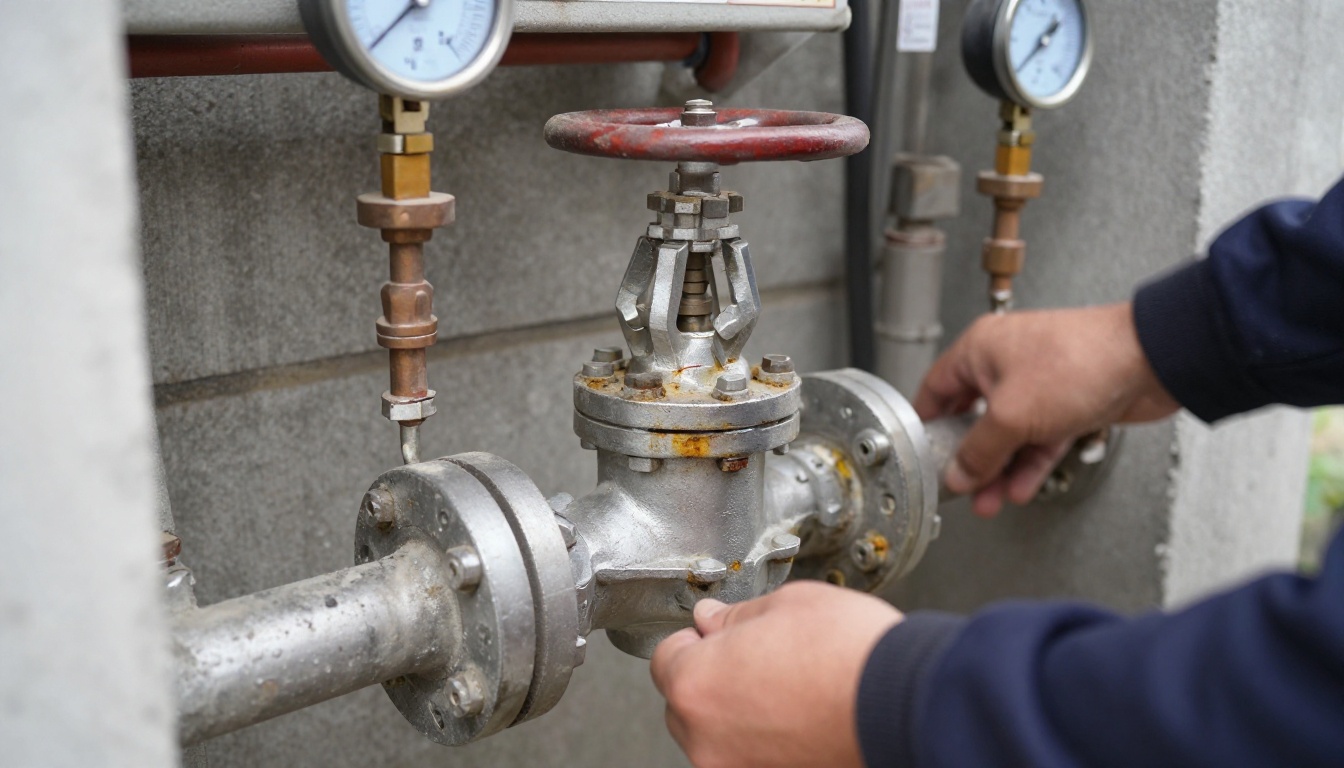
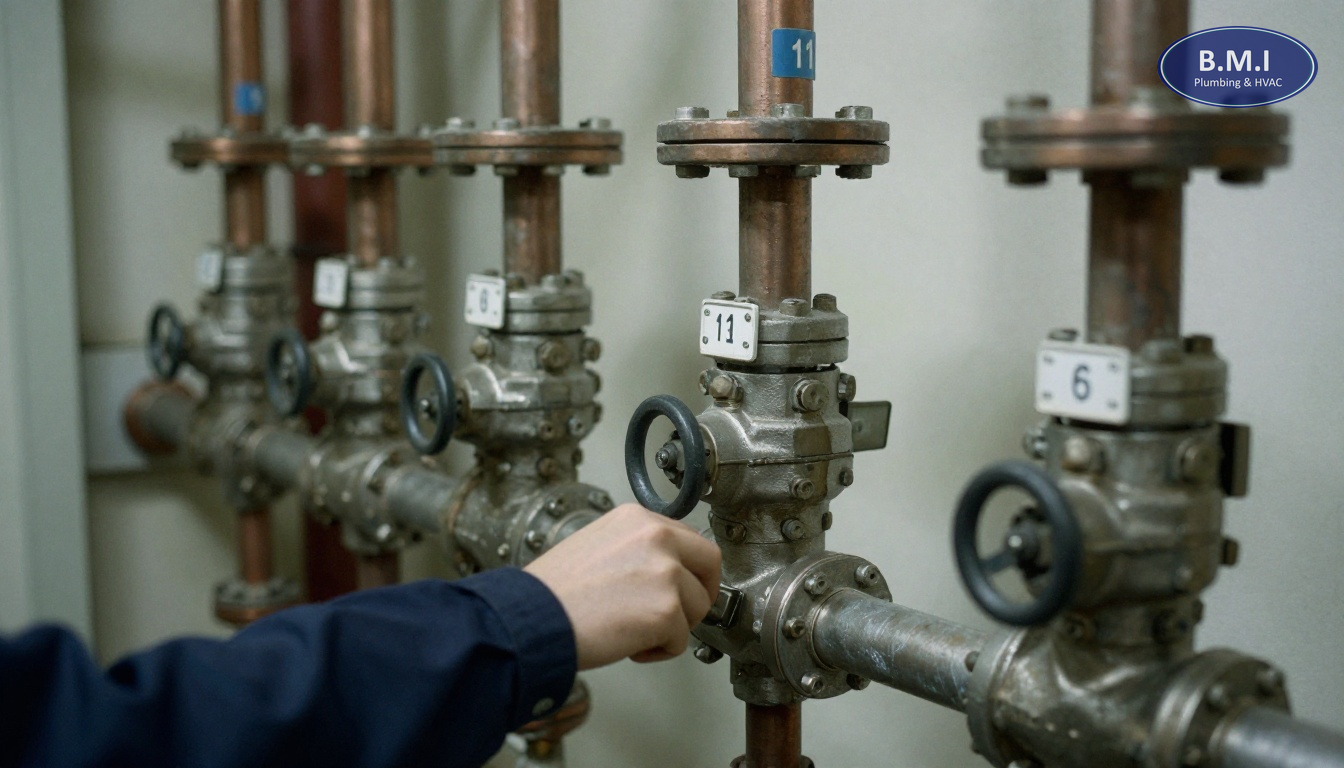
In 1970s and 1980s concrete towers in Toronto and Etobicoke, many original valves are threaded or flanged gate valves on copper, steel or mixed-material systems. Gate valves fail in several predictable ways:
- the stem turns but the gate no longer travels fully
- the gate disc separates internally from the stem
- mineral scale prevents full closure
- the packing leaks when the valve is exercised after years of inactivity
- the body or flange bolts are too corroded to trust during re-operation
This matters because a valve does not need to be visibly leaking to be unusable. In fact, one of the most common field findings is a valve that looks intact but cannot achieve true isolation under normal building pressure. In Toronto high-rises, domestic pressure at the lower floors can easily be 90 to 140 psi before reduction, which means even a slight pass-by across a “closed” valve can keep a line charged enough to prevent safe cutting.
Where PRV stations are involved, the problem compounds. If the building has multiple pressure zones and the upstream pressure reducing valves are drifting or oversized, pressure spikes can make old isolation valves harder to operate and more likely to leak once disturbed. That is one reason valve projects often overlap logically with PRV maintenance, especially in fall before winter demand and pressure fluctuation issues start showing up.
How this presents in a condominium building
Property managers rarely get a report that says, “your sectional isolation strategy is compromised.” What they get is something messier.
Typical symptoms include:
- a leak repair that should affect 6 suites ends up requiring water off to 60
- a contractor cannot stop flow to a riser even though the drawing shows two isolation points
- hot water recirculation cannot be balanced because return valves are seized
- a PRV, backflow device or booster pump component cannot be serviced in normal hours because the nearest working valve is too far upstream
- repeated emergency calls from the same zone because the line cannot be isolated cleanly for a permanent repair
A common mistake we see in early-1990s North York towers is relying on in-suite shutoffs to manage what is actually a riser problem. If a lavatory branch valve in a suite closes but the riser isolation valve does not, the corporation still cannot safely complete repairs on the common piping. Residents understandably think the issue is local because the leak is local; operationally, it is often a common element valve failure.
There is also a budgeting symptom. If every plumbing repair in one part of the building requires after-hours scheduling, extra labour for draining and refilling, and broad resident notices, the building is already paying the penalty for bad isolation. At that point, a planned project solutions approach is usually cheaper than continuing to absorb emergency inefficiency.
How replacement can be done without a full building shutdown
This is the section boards usually care about most. There are several ways to replace failed sectional valves while keeping most of the building in service, but the right method depends on pipe material, size, access, pressure and whether reliable secondary isolation exists.
1. Use existing upstream and downstream sectionalization
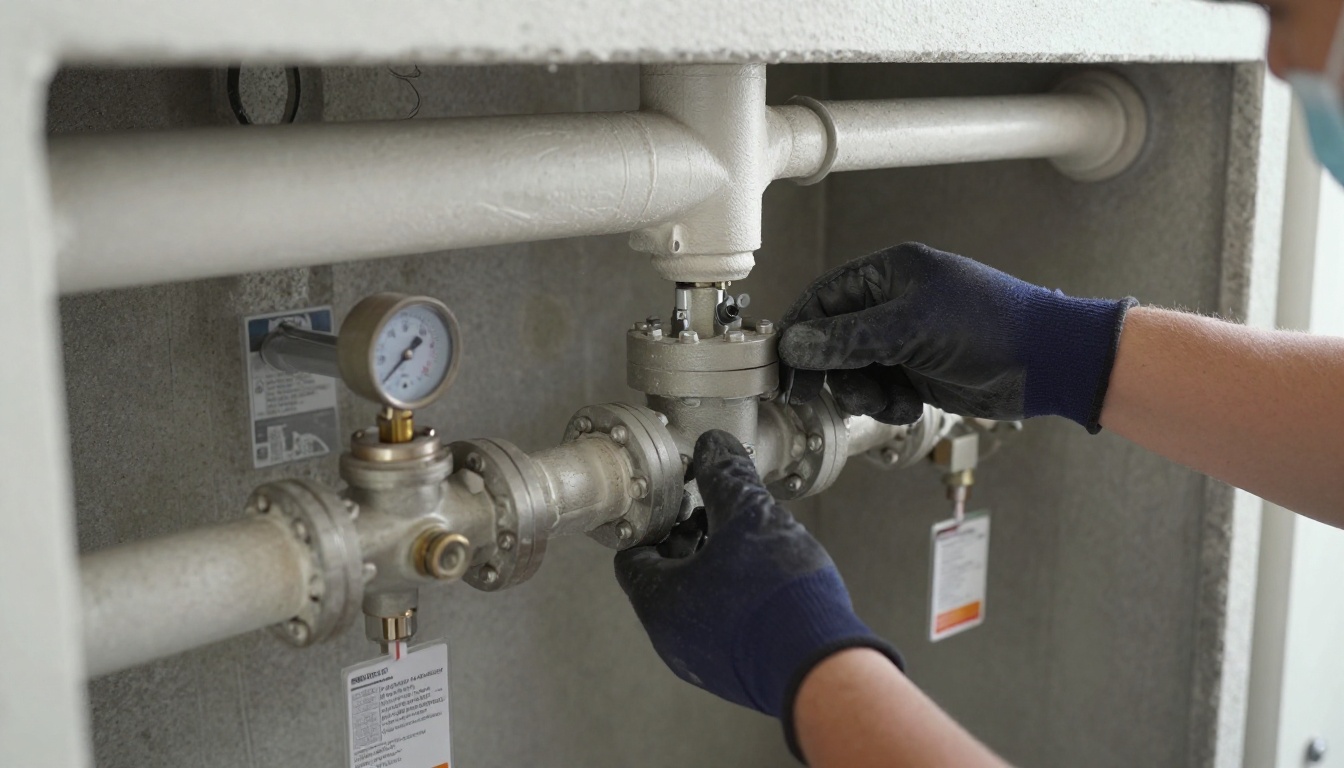
This is the cleanest method. If a building has functioning upstream and downstream valves, a contractor can isolate a branch or riser, drain only that section, replace the failed valve, pressure test, disinfect if required, and restore service. In a well-laid-out domestic water system, this may affect:
- one riser stack
- one pressure zone
- one hot water recirculation loop
- one mechanical room branch
For a 25-storey building, a single riser shutdown may affect 10 to 25 suites, not 250. That is what people usually mean by replacing a valve “without shutting down the building.”
2. Temporary line freezing on smaller copper lines
On some smaller copper lines, typically 3/4 inch to 2 inch and occasionally a bit larger depending on conditions, controlled pipe freezing can create a temporary ice plug to allow replacement without broad upstream shutdown. This is not a universal solution and should not be treated as one. It is generally unsuitable where flow cannot be fully stopped, where pipe condition is poor, or where line contents and ambient conditions make plug stability questionable.
Used properly, it can save a building from a broad domestic shutdown for a localized branch valve. Used carelessly, it can create false confidence. That is why this method belongs in experienced hands and is usually paired with contingency planning, not sold as a magic trick.
3. Staged overnight work with limited zone shutdowns
In occupied condominium towers, especially in Toronto and Vaughan, some replacements are best done overnight or during low-demand windows. The reason is not only resident convenience. Lower simultaneous water use reduces the chance of residual flow complicating isolation and makes refill, flushing and air purging more manageable.
A typical sequence for a 3-inch domestic hot water branch valve might look like this:
- 48 to 72 hours resident notice to affected suites
- confirm valve operation and pressure readings in advance
- isolate one zone after 10 p.m.
- drain and verify zero flow
- cut out and replace valve
- refill slowly, vent air, check fixtures in top affected suites
- restore by early morning
This is why a proper in-suite plumbing coordination plan matters even for common element work. Air and debris after refill often show up first in suite fixtures, shower cartridges and flush valves, so the contractor and management team need a clear post-startup protocol.
4. Temporary bypass piping or more complex isolation methods
In larger mechanical rooms, especially where a failed valve sits on a critical branch feeding booster pumps, hot water generation or a key zone, temporary bypass piping may be justified. This adds cost, but it can avoid a building-wide outage. In practical terms, this is more common on 4-inch to 6-inch lines where the cost of a broad shutdown is operationally high.
If the building also has compromised domestic risers or aging thermal movement components, it may make sense to review riser replacement or expansion compensator replacement at the same time rather than disturbing the same area twice in two budget cycles.
What a proper pre-project inspection should include
If you are authorizing sectional valve replacement, insist on evidence, not assumptions. The minimum useful pre-project package should include:
- valve location schedule with sizes and service descriptions
- photos of each valve and surrounding access constraints
- confirmation of pipe material and connection type: threaded, soldered, flanged, grooved
- pressure readings where relevant
- identification of upstream and downstream isolation points
- note of any asbestos-containing insulation, confined access or ceiling demolition required
- written shutdown sequence and contingency plan
A serious contractor will also tell you what they do not know yet. For example, if a 4-inch flanged valve has not been disturbed in 35 years, nobody can promise every flange bolt will come apart cleanly. That uncertainty should be disclosed up front because it affects schedule and contingency.
This is also where a building benefits from combining valve work with related preventive items. If a mechanical room has undocumented shutoffs, drifting pressures and no recent maintenance history, it is often sensible to package a maintenance program review with the capital work. In older buildings, the savings come less from unit price and more from not mobilizing three separate times for problems that touch the same piping.
For drainage-related access constraints, especially where domestic work is happening above sanitary lines in tight service spaces, a quick camera inspection or related service review can also avoid surprises. That is not always required, but on older mixed-use or heavily renovated buildings it can prevent ugly change-order conversations.
Repair versus replacement: when each makes sense
Boards often ask whether an old valve can simply be repaired. Sometimes yes, often no.
Repair may be reasonable when:
- the issue is limited to packing leakage at the stem
- the valve still isolates fully under test
- the valve is accessible and not on a critical line
- replacement would trigger disproportionate demolition or abatement this year
Replacement is usually the better decision when:
- the valve does not isolate fully
- the handwheel or operator is broken or seized
- the valve body shows corrosion or prior patching
- the line serves a critical riser, PRV station, hot water return or emergency isolation point
- the building has repeated service calls because isolation is unreliable
There is also a strategic point many boards miss: replacing one failed valve with the same obsolete configuration can preserve the immediate problem while preserving the next problem too. In many cases, upgrading from an old gate valve arrangement to a more serviceable modern configuration with better access, tags and adjacent unions or flanges reduces future shutdown cost materially.
If the building has widespread original valves of the same age, it is worth asking whether a one-off replacement is just delaying a larger building re-piping or valve renewal discussion. The honest answer is sometimes yes. The right move may still be to replace only the critical valves this year and budget the remainder next year.
Toronto cost ranges: what to budget
These are market ranges, not fixed prices, and they vary with access, pipe size, material, schedule and abatement requirements. Still, boards need real numbers to work with.
| Scope | Typical Toronto market range | Notes |
|---|---|---|
| 3/4" to 1-1/2" branch isolation valve replacement | $900-$2,200 per valve | Best-case access, localized work, may be same-day |
| 2" to 3" domestic water sectional valve replacement | $2,500-$5,500 per valve | Common in riser branches and mechanical room zones |
| 4" to 6" flanged valve replacement | $6,000-$15,000+ per valve | Cost jumps with rigging, bypass, overnight work or corroded flanges |
| Multi-valve mechanical room project | $18,000-$75,000+ | Depends on number of valves, sizes, and sequencing |
| Corridor or riser cabinet access restoration | $300-$1,500 per opening | Drywall, access doors, painting extra if required |
| Asbestos abatement around valve location | $1,500-$8,000+ | Highly variable by scope and containment needs |
On a 300-unit building, a planned program replacing 8 to 15 critical valves may fall anywhere from $35,000 to $120,000 depending on how many are 4-inch-plus, whether work can be grouped, and whether abatement or after-hours scheduling is involved. The spread is wide because the labour is not just plumbing labour; it is logistics, access, draining, refill, testing and resident coordination.
A useful budgeting rule is this: if a building has had even two or three repairs in a year delayed or complicated by failed isolation, the hidden operating cost is already significant. Emergency labour premiums, resident complaints, elevator padding, security coordination and repeat site visits add up quickly.
For related system reliability work, managers should also review whether MEV water-saving valve opportunities, PRV updates or broader repairs and service issues are worth combining into one tender cycle.
Timeline, access and resident logistics
The physical replacement may be only a few hours. The project timeline is longer because condominium work is controlled by notice, access, approvals and contingency planning.
A realistic schedule for a modest valve project looks like this:
Small project: 1 to 3 valves
- site review and scoping: 1 visit
- quote and board approval: 1 to 4 weeks
- material lead time: 1 to 3 weeks for common valves, longer for unusual sizes or grooved configurations
- notices and coordination: 3 to 7 days
- work duration: 1 day to 2 nights
Medium project: 6 to 12 valves across multiple zones
- field review and valve charting: 1 to 2 weeks
- engineering or consultant review if required: 1 to 4 weeks
- board approval and scheduling: 2 to 6 weeks
- material procurement: 2 to 5 weeks
- work duration: 3 to 10 working days, often phased
In occupied high-rises in Toronto, Scarborough and Markham, notice periods usually work best when residents are told exactly which fixtures are affected, during what hours, and what post-restoration symptoms are normal. For example, brief discoloration, trapped air and temporary sputtering at upper floors are common after refill. What residents do not tolerate well is vague notices saying water will be off “at some point during the day.”
A common mistake is underestimating refill time. On taller buildings, restoring service is not just opening a valve. It may involve staged refill, air purging at upper suites, recirculation checks, pressure confirmation, and fixture verification. A valve replacement that takes 90 minutes to install can still occupy a crew for half a shift because startup is where problems show themselves.
What happens if you defer it
Some valve issues can wait. Many should not.
If a non-critical branch valve in a readily accessible area still isolates properly and shows no leakage, it may be reasonable to defer replacement into the next budget year. That is the honest answer. But if the valve serves a domestic riser, PRV station, hot water return, or any location that would matter during a leak, deferral carries a real cost.
The main risks are:
- wider shutdowns during future repairs
- inability to isolate a leak quickly, increasing flood damage
- higher emergency labour cost and after-hours premiums
- more owner disputes over common element responsibility and chargebacks
- reserve fund planning that understates near-term mechanical risk
From an Ontario condominium governance standpoint, this is not just a plumbing issue. Boards are expected to manage common elements prudently. If a known failed isolation point contributes to larger damage because it was not addressed after being documented, that becomes harder to defend in front of owners and insurers.
Fall is the right season to deal with this because it lines up with budget preparation and pre-winter risk reduction. The same review that identifies failed valves often also identifies overdue backflow prevention testing, weak PRV performance or vulnerable riser sections. If you are already planning 2027 capital or operating work, this is the time to get a contractor on site and turn assumptions into a list.
And if a valve fails during an active leak, the building may end up needing emergency plumbing response under the worst possible conditions: after hours, partial flooding, limited resident access and no time for comparison pricing.
A practical decision framework for boards and managers
If you need to explain a recommendation to a board, this is the framework that usually holds up.
- Confirm criticality. Does the valve serve a riser, pressure zone, PRV station, hot water return or another critical common element line?
- Confirm function. Has the valve been exercised and proven to isolate, or are people assuming it works?
- Confirm consequence. If it fails during a leak, how many suites or floors are affected?
- Confirm access and method. Can replacement be staged without a full building shutdown?
- Confirm timing. Is this best handled now in fall budget season, during a planned summer project window, or only if another project opens the area?
- Confirm whether grouping saves money. Are there nearby valves, PRVs or riser components that should be done together?
If the answer to the first three questions is yes, yes and many, the building usually has enough information to act. If the answer to the fourth is unclear, get a second site review before tendering. That is cheaper than discovering mid-project that the only real isolation point is upstream of the whole tower.
For examples of larger common element work tied to valve reliability, managers often find it helpful to review completed project portfolio examples and compare their building’s age and layout to similar GTA stock.
FAQs
Can sectional valves really be replaced without shutting down the whole condominium building?
Often, yes, but not always. In many Toronto high-rises, a contractor can isolate a single riser, branch or zone using upstream valves, line stops, temporary freeze methods on smaller copper lines, or carefully sequenced night work, so only part of the building loses water. The key point is that ’no full building shutdown’ does not mean ’no shutdown at all’—it usually means a controlled shutdown affecting one stack, one tier of suites, or one mechanical zone for 4 to 12 hours.
How do we know whether a valve should be replaced or can be left in place for another year?
A valve that turns but does not fully isolate is already a problem, especially if it serves a riser, PRV station or hot water recirculation loop. In practice, if a valve leaks at the packing nut, cannot be exercised, has a broken handwheel, or allows pressure to pass across a closed gate, it should be documented in a written valve audit and budgeted for replacement. If the valve is not on a critical line and there is redundant isolation nearby, it may be reasonable to defer 6 to 12 months, but only after confirming that with a proper valve audit.
What does sectional valve replacement typically cost in Toronto?
In the Toronto market, a straightforward 2-inch or 3-inch domestic water isolation valve replacement with good access might land around $2,500 to $5,500 per valve, while 4-inch to 6-inch valves in crowded mechanical rooms commonly run $6,000 to $15,000 or more. Costs rise when asbestos abatement, overnight work, temporary bypass piping, corroded flanges, or multiple return visits are required. On a 20- to 30-storey condominium, a planned multi-valve project is usually more economical per valve than one-off emergency replacements.
What type of valves are usually found in older GTA condominium buildings?
In 1970s and 1980s Toronto, Scarborough and Etobicoke towers, it is common to find older gate valves on domestic cold, hot and recirculation lines, often in 2-inch to 6-inch sizes. By the early 1990s, many buildings still used gate valves, although butterfly valves and better quarter-turn options became more common in larger systems. A common failure mode is that the handwheel turns but the gate has separated internally, so the valve appears operable until you actually try to isolate a line.
Why is fall a good time to deal with isolation valve replacement?
Fall is when boards are building next year’s budget and when managers are trying to reduce winter risk before holiday staffing gaps and freeze events. It is also the practical window to coordinate PRV maintenance, valve replacement, and riser planning before winter pressure swings and emergency call volume increase. If you wait until January to discover a riser valve will not close during a leak, your options are usually fewer and more expensive.
Who usually pays for sectional valve replacement in a condominium: the corporation or the unit owner?
In most condominiums, sectional and riser isolation valves serving common piping are common element components, so the corporation pays, usually through operations or reserve funding depending on scale. The exact answer depends on the declaration and where the valve sits relative to the unit boundary; an in-suite shutoff serving only one fixture branch may be treated differently from a riser isolation valve in a corridor cabinet. Managers should not guess on this point because the answer affects chargebacks, owner communication and insurance handling.
Next steps if your building has not tested its valves recently
If your building has original valves and no current valve chart, start there. Do not wait for a riser leak, PRV failure or emergency repair to discover which shutoffs actually work. In many GTA condominium buildings, the most cost-effective first step is not immediate replacement of everything; it is a site review that identifies the critical valves, the failed valves, and the valves that can wait one more budget cycle.
If you are preparing the 2027 budget now, ask for a building-specific list with priorities by risk level. If your domestic water system also has pressure complaints, recurring shutdown problems, or old riser components, it makes sense to have those reviewed at the same time so one project does not undo another six months later.
BMI attends the building before quoting this kind of work because access, actual valve condition and shutdown strategy determine the job far more than a schedule of pipe sizes on paper. If your team is trying to decide whether this is a maintenance item, a reserve fund item or an emergency waiting to happen, that site visit is usually what clarifies the answer.
Contact BMI
For sectional valve replacement or isolation valve replacement planning in Toronto, North York, Mississauga, Scarborough and across the GTA, BMI can attend the building, review the existing isolation layout, and provide a practical scope tied to your shutdown constraints and budget cycle.
- Contact BMI
- Phone: (416) 845-3756
- Emergency: (416) 845-3756, answered 24 hours a day
- Email: info@brial.ca
For related work, see valve replacement, valve audit services, PRV maintenance, riser replacement, and more articles on the BMI blog.
More on condominium plumbing
Gate Valve vs Ball Valve in Toronto Condos
A practical guide to gate valve vs ball valve and condo valve types in Toronto buildings, with costs, shutdown planning …
How Pressure Reducing Valves Work in a Toronto High-Rise
Understand pressure reducing valve operation in a condo high-rise, with Toronto cost ranges, failure signs, inspection …
Cast Iron Stack Replacement in Toronto Condos at 50 Years
When aging cast iron stacks need cleaning, lining or replacement in Toronto condos, here is how to diagnose, budget and …
Need a plumber in your building?
BMI services roughly 200 condominium and multi-residential buildings across Toronto and the GTA. Emergencies are answered at any hour.