Stack Camera Inspection in Toronto: What 40-Year-Old Pipes Show
What a stack camera inspection in Toronto actually reveals inside 40-year-old cast iron pipes, what it means, and when cleaning or replacement makes sense.
Stack Camera Inspection in Toronto: What 40-Year-Old Pipes Show
Quick summary: In a 40-year-old condominium stack, camera footage rarely shows a simple yes-or-no answer. It usually shows a combination of cast iron pipe scale, grease loading, channeling, bottom corrosion, joint offsets and branch-line buildup, and the difference between those conditions determines whether the right answer is cleaning, localized repair, or a capital replacement plan.
A common board mistake in Toronto is to treat any ugly-looking footage as proof the entire stack has failed. In practice, some 1980s cast iron stacks with heavy scale still have years of service left if they are put on a disciplined kitchen stack cleaning program, while other stacks that look only moderately dirty on screen are already thinning at the invert and close to recurring failure.
The misconception: old camera footage is not the same as a diagnosis
Property managers often receive a short video clip, usually 20 to 90 seconds long, showing a dark, rough interior and a bit of standing water. Then the questions start: Is this normal for a 40-year-old stack, is it dangerous, and does the board now need a six-figure project.
The honest answer is that camera footage without context is easy to misread. A 3-inch kitchen waste stack from a 1984 tower in North York can look terrible because grease has reduced the opening to a 1-inch side channel, yet after proper jetting the remaining cast iron may still be serviceable. By contrast, a 4-inch sanitary stack in an older Etobicoke high-rise may look passable on a quick pass, but the camera will show rust blisters, flaking at the bottom of pipe and exposed aggregate-like corrosion at the hub joints, which tells an experienced plumber the pipe wall is being lost where solids and moisture sit longest.
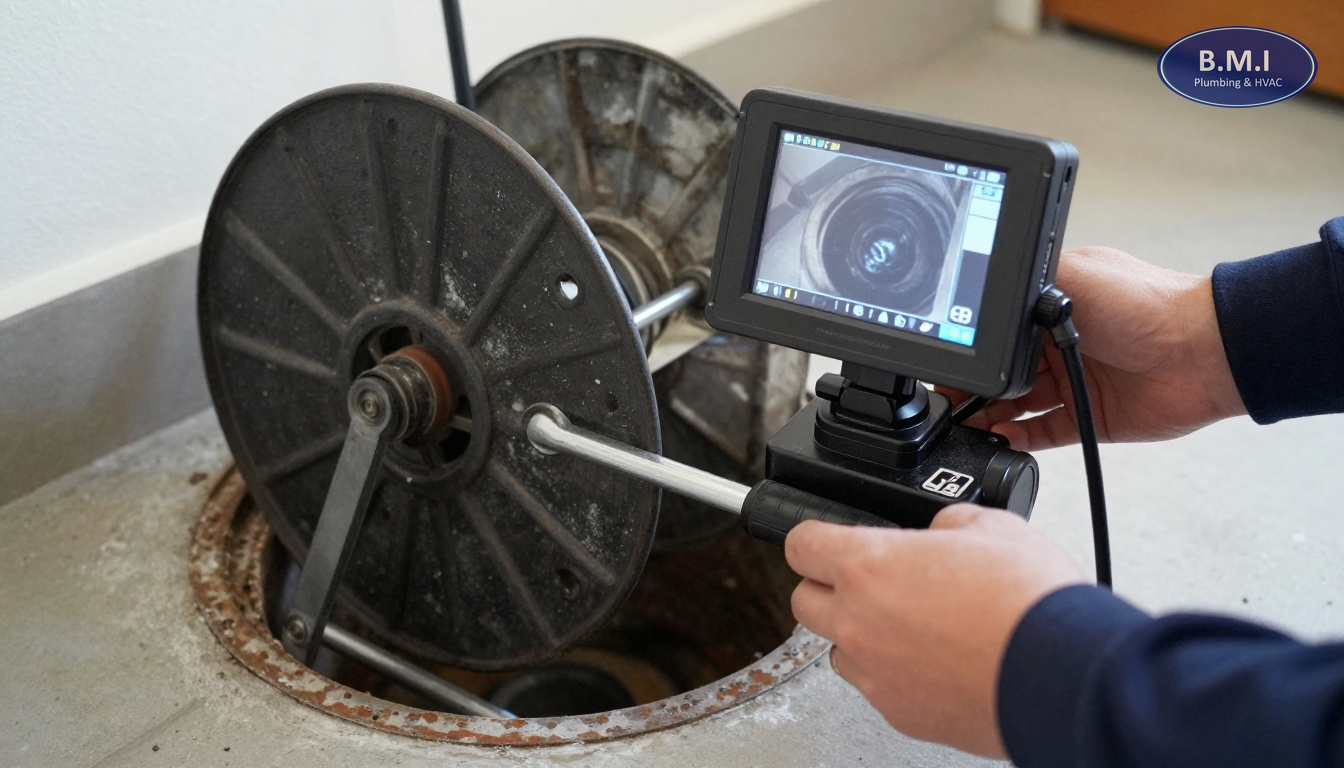
That is why a proper stack camera inspection is not just running a camera until it stops. The useful part is the interpretation: where the restriction is, whether the pipe has lost shape, whether the issue is local or repeated through the vertical run, and whether the symptoms align with the footage.
In fall, this matters more than many boards realize. Buildings across Toronto, Mississauga and Vaughan often enter the holiday cooking season with kitchen stacks already partially loaded from summer occupancy and years of grease accumulation. If the board is doing budget work in October or November, a camera inspection now is far more useful than waiting for December backups and then paying emergency rates through 24/7 emergency plumbing.
What a 40-year-old cast iron stack usually looks like inside
A 40-year-old stack in the GTA generally means installation in the mid-1980s, give or take. In concrete high-rises from that period, the common materials are no-hub cast iron for sanitary and waste stacks, often 3 inches for kitchen and laundry waste and 4 inches for larger sanitary runs, with branch connections from suites entering at each floor. Those stacks have often seen decades of detergents, food solids, hot water, cooling cycles, and in some buildings, poor venting or long horizontal offsets that slow flow.
What the camera commonly reveals is not one defect but layers of age:
- Scale buildup attached to the wall, narrowing the original bore.
- Grease accumulation in kitchen lines, often bonded over scale.
- Channeling, where water has cut a small flow path through a larger restriction.
- Bottom corrosion, especially at the invert where moisture sits.
- Hub or joint offsets, where slight movement catches paper, lint or food solids.
- Branch entry turbulence marks, where repeated discharge has worn or loaded one side.
A non-expert often expects the inside of pipe to remain relatively smooth. It does not. In a 4-inch cast iron stack, the inside diameter can be materially reduced over time, and the reduction is not always uniform. One side may still show a 2.5-inch to 3-inch channel while the opposite wall is built up with 1 inch or more of rough scale and grease. That matters because a pipe can appear to be “still draining” while already operating with far less capacity than it was designed for.
Another point that rarely gets explained properly: the camera cannot feel wall thickness. It can show surface texture, pitting, delamination and shape loss, but it does not directly measure whether the remaining cast iron is 1/8 inch thick or close to perforation. That is why repeated leaks, rust staining at slab penetrations, or active seepage into a riser shaft can matter as much as the footage itself.
If the building has repeated stack complaints, pairing the footage with a drain cleaning history is far more informative than looking at video alone. A stack that plugs every six months despite jetting is telling you something different from a stack that ran for four years between service calls.
What “cast iron pipe scale” actually means in the field
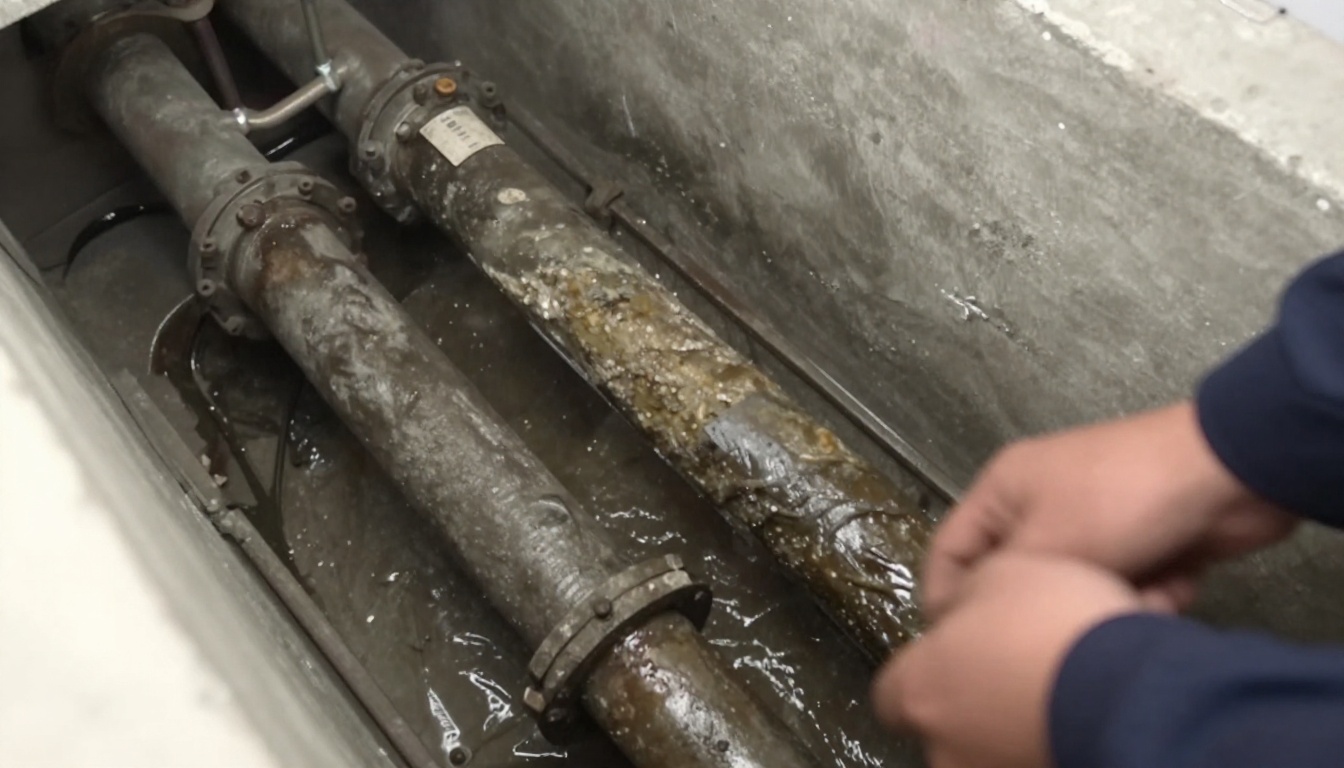
The phrase cast iron pipe scale is used loosely, and that causes confusion at board tables. In field terms, scale is the hard, adhered buildup on the interior wall of the pipe. In Toronto water conditions, that buildup is usually a mix of corrosion products, mineral deposition and whatever the stack has been carrying. In a kitchen stack, that means grease and food fines. In a laundry line, it may be lint and detergent residue. In a sanitary stack, paper and organic waste can catch on rough areas and make the restriction look worse than the pipe condition alone would suggest.
A useful distinction is this:
- Soft obstruction: grease, sludge, wipes, food solids, paper mats. Often removable.
- Hard scale: mineralized, bonded buildup attached to the wall. Partially removable depending on severity.
- Pipe loss: where the original cast iron itself has deteriorated or flaked away. Not fixable by cleaning.
This is why snaking is often the wrong benchmark. A snake can punch a hole through a blockage and restore temporary flow, but it does not re-establish the full bore of a 3-inch or 4-inch stack. In older towers in Scarborough and East York, it is common to see a line that “was cleared twice this year” but still has a long section where only a narrow side channel remains. That building needs either high-pressure kitchen stack cleaning or a decision that the pipe is too far gone for cleaning to be worth repeating.
One practical insight from 1970s and 1980s buildings: the lowest 10 to 15 feet of a vertical kitchen stack often look worse than the upper floors. That is where temperature changes, grease cooling, and accumulated solids combine before the stack transitions to the horizontal building drain. If your camera inspection only samples an upper cleanout, you may miss the part of the system that is actually driving the backups.
How these problems present in a condominium building
Managers rarely get a maintenance request that says, “Please inspect probable scale at the invert of stack K-3.” They get resident complaints, and the wording of those complaints matters.
Symptoms that point to a stack problem, not just a suite problem
- A kitchen sink drains normally most of the day but backs up when an upper suite runs a dishwasher.
- Two or three suites in the same vertical line report slow drainage within a few weeks of each other.
- The issue returns shortly after a local branch snake.
- Gurgling is reported at one fixture when another fixture on the same branch discharges.
- A lower-floor suite, often floors 2 through 6, sees intermittent backup with no obvious in-suite blockage.
- Building staff notice repeated service calls to the same stack designation on the plumbing drawings.
That pattern is especially common in 1980s concrete towers in Toronto and North York, where stacked kitchens create a predictable vertical service route. A single owner may believe the problem is isolated because their sink eventually empties, but if it backs up only when upstream suites discharge, the corporation is usually looking at common-element piping.
Symptoms that suggest the pipe may be beyond routine cleaning
- The stack was jetted within the last 12 to 24 months and is already restricting again.
- Camera footage after cleaning still shows heavy roughness, missing wall sections or standing water in a vertical run.
- There are active leaks at hubs, slab penetrations or behind riser access panels.
- The building sees recurring odour complaints tied to the same shaft or stack zone.
- Lower fittings or cleanouts show black, flaky corrosion and repeated seepage.
When that happens, managers should not rely on verbal descriptions alone. Ask for video, still images, cleanout locations, and a written summary. A defensible board recommendation is much easier when the evidence is documented and tied to exact floors and pipe segments.
For related suite-level symptoms, in-suite plumbing service can help separate a local branch issue from a common-element stack issue before the corporation pays for the wrong scope.
What a proper stack camera inspection should include
A good inspection is not just a camera pushed into the nearest opening. The process should be deliberate enough that the board can use the result for maintenance planning, chargeback decisions and reserve fund discussions.
1. Confirm the complaint pattern first
Before any camera goes in, someone should identify:
- stack designation if known
- affected suite numbers and floors
- whether backups occur during self-use or upstream discharge
- previous drain calls in the same line
- whether the stack was last cleaned, snaked or repaired
This matters because in a 25-storey building, there may be multiple kitchen stacks serving similar layouts. Cameraing the wrong one wastes money and produces false reassurance.
2. Choose the right access point
Most useful access is from a cleanout at the base of stack, lower-level service room, parking level, or a branch cleanout in a lower suite. In some buildings, access also comes from a removed fixture or an opened branch line. The best footage usually comes from the lowest available point looking upward or from a branch looking toward the stack transition.
A mistake we see in early-1990s towers in Vaughan and Markham is relying on a single suite access point several floors up. That often shows local branch buildup but not the heavily loaded lower stack section where the real restriction sits.
3. Clean first when the objective is condition assessment
If the purpose is to decide whether the stack is worth keeping, clean first, inspect second. Otherwise, grease can be mistaken for structural deterioration. This is where a combined drain cleaning and camera inspection scope is worth the extra cost.
4. Record pressure points and transitions
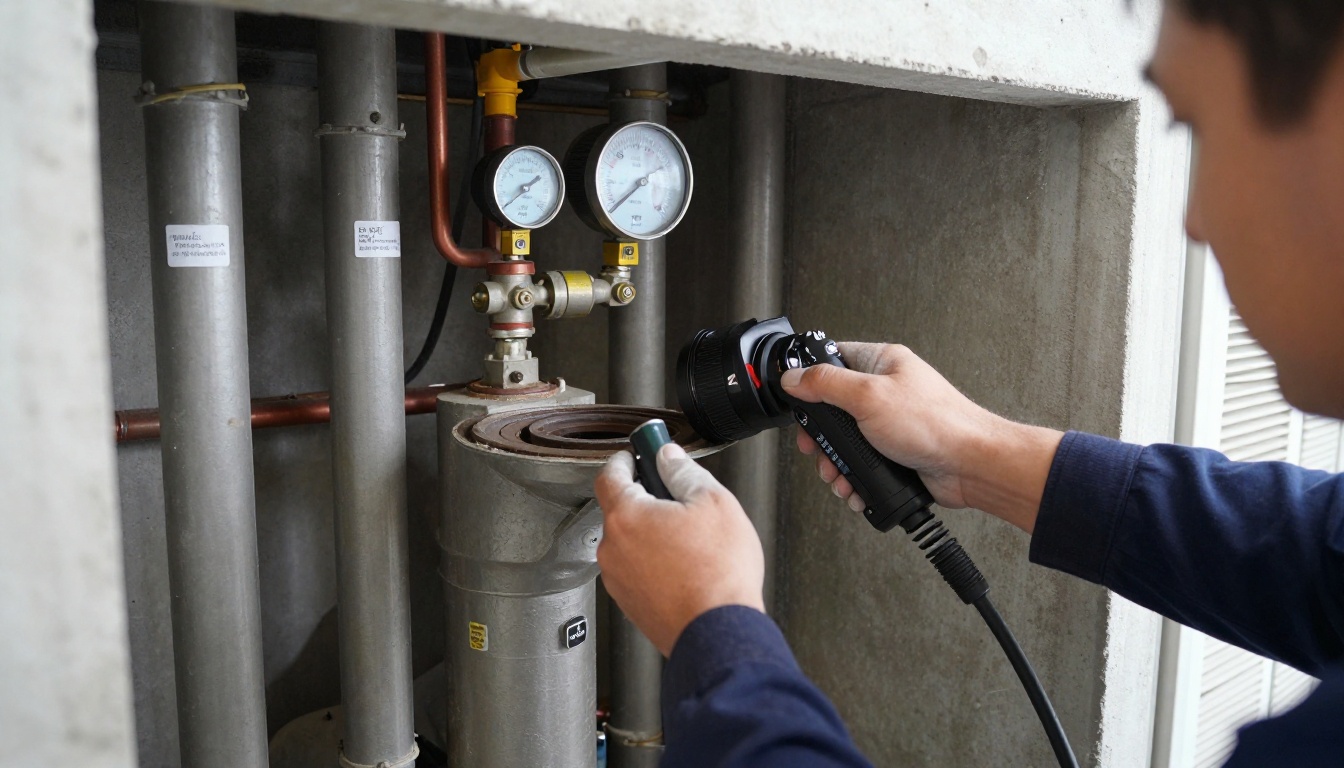
For domestic water risers, pressure matters. For waste stacks, the equivalent is where flow changes behavior: branch entries, offsets, long-radius fittings, base-of-stack turns, and any section with standing water. If the camera repeatedly hangs up at the same floor transition, that may indicate a shifted fitting, protruding branch cut-in, or severe scale lip.
5. Deliver a written report, not just footage
The report should identify:
- pipe type and nominal diameter, such as 3-inch or 4-inch cast iron
- inspected length and direction of travel
- observed buildup versus observed pipe deterioration
- estimated percentage of bore restriction where visible
- whether standing water suggests poor grade in horizontal sections
- recommendation: clean, re-inspect, localized repair, monitor, or budget replacement
This is the level of documentation boards need if they are going to compare a maintenance program against future building re-piping or targeted project work.
Repair, clean or replace: a decision framework that holds up at the board table
The right answer is rarely “replace everything now.” It is usually one of three paths.
Option 1: Clean and put the stack on a schedule
This is often appropriate when:
- the pipe is restricted mainly by grease and scale, not structural loss
- the stack has not been thoroughly jetted in more than 2 years
- the camera shows a restorable channel after cleaning
- there are no active leaks from the stack body or joints
- complaints are concentrated in kitchen use patterns, especially before holidays
In a 200- to 300-unit Toronto building, a scheduled maintenance program for problem kitchen stacks is usually far cheaper than repeated emergency calls. A common fall strategy is to clean historically troublesome stacks in October or November before holiday grease loads rise.
Option 2: Localized repair or section replacement
This makes sense when:
- the camera identifies one failed offset, one leaking hub, or one localized collapsed section
- access can be gained through a riser closet, service corridor or limited ceiling opening
- the rest of the stack remains serviceable
This is the middle ground many boards overlook. A single bad section near the base of stack does not always justify a full replacement, especially if the reserve fund timing is 12 to 24 months away.
Option 3: Budget for stack or broader replacement
This is the likely answer when:
- the stack re-restricts quickly after cleaning
- the lower section shows severe scaling plus wall loss
- multiple floors in the same line have recurring backups or leaks
- other stacks of the same vintage are showing similar symptoms
- the building already has access plans for other vertical work, such as riser replacement or valve replacement
Boards often ask whether they should replace one stack or many. The practical answer depends on whether the issue is isolated by use pattern or systemic by age and material. If one kitchen stack serves heavier-use suites and the others camera clean after jetting, selective replacement may be defensible. If five representative stacks from the same 1982 building all show 50 percent bore loss and recurring lower-level buildup, the reserve fund planner should be told that this is not a one-stack anomaly.
Toronto-area cost ranges managers can actually budget with
These are rough 2026 GTA market ranges, not quotations, and they vary with access, after-hours work, number of suites affected and report requirements.
| Scope | Typical GTA range | What drives the cost |
|---|---|---|
| Targeted stack camera inspection only | $650-$1,800 | Access point, length, whether the line is already open, reporting detail |
| Jet and camera one problem kitchen stack | $1,500-$3,500 | 3-inch vs 4-inch stack, degree of grease loading, suite coordination |
| Multi-stack inspection program | $2,500-$9,000+ | Number of stacks, footage review, written summary for board budgeting |
| Localized cast iron section repair | $3,500-$12,000 | Ceiling or wall opening, after-hours shutdowns, asbestos protocol if present |
| Base-of-stack replacement section | $8,000-$25,000 | Pipe diameter, slab work, access in parking or service room |
| Full stack replacement, occupied tower | $20,000-$60,000+ per stack | Height, access method, firestopping, restoration, resident coordination |
A point that surprises many boards: reporting and logistics can cost more than the camera time. In occupied condominiums, arranging suite access, elevator protection, notices, after-hours windows and documentation for the manager can take longer than the actual inspection.
If the camera work leads to broader planning, it is sensible to look at adjacent components too. For example, if the building is already opening riser areas, it may be worth reviewing valve audit records, domestic risers, or even aging pressure reducing valve maintenance needs so the board does not pay twice for access disruption.
Timelines, access and notice in occupied buildings
For a straightforward problem stack, field time is often short. Resident coordination is not.
Typical timing
- Single targeted inspection: 1 to 3 hours on site if access is ready.
- Jet and camera one stack: often half a day to a full day.
- Program of several stacks: 1 to 3 days depending on access and cleaning needs.
- Written report turnaround: commonly 1 to 5 business days, depending on scope.
In a 300-unit building, the slow part is often confirming which suites are in the affected vertical line and getting entry at the right time. If lower-suite access is needed and the resident is away, a same-day diagnosis can become a next-week exercise.
Access realities managers should plan for
- Lower-floor suites may need entry if no basement or service-room cleanout exists.
- Protective measures may be needed in finished suites and corridors.
- If the line is actively backing up, fixture use restrictions may need to be communicated during the inspection window.
- Some work should be done after peak occupancy hours to reduce discharge from upper suites.
This is also budget season, so managers should think one step ahead. If footage suggests replacement within the next 12 to 24 months, start discussing access strategy now: riser closets, drywall restoration responsibility, owner notices, and whether any section 98 alterations in affected suites complicate access or reinstatement.
For broader capital planning, project solutions and the projects portfolio are useful reference points when comparing one-off repairs against a more organized replacement program.
What happens if you defer it
Deferral is not always wrong. Some stacks can wait a year. Some should not.
If the camera shows heavy scale but no active leaks, no repeated lower-suite backups, and a clear improvement after jetting, it may be reasonable to clean now and revisit in the next budget cycle. That is a defensible recommendation.
Deferral becomes harder to justify when any of the following are present:
- recurring backups in the same vertical line despite recent cleaning
- active leakage into common areas or adjacent suites
- evidence of bottom corrosion near the base of stack
- repeated emergency response history
- reserve fund study assumptions that no longer match field reality
The financial risk is not just the plumbing repair. In Ontario condominiums, once wastewater escapes into suites, the next conversation is often about the corporation’s deductible, owner chargebacks, standard unit definitions and whether the source pipe is common element. A modest camera inspection can prevent a much more expensive argument later.
There is also a winter angle. In fall, many boards focus correctly on PRV maintenance, shutoffs and winterization, but neglected kitchen stacks tend to fail during the holiday period when cooking load rises and staffing is thinner. A building that knows it has 40-year-old cast iron and recurring kitchen complaints should not wait for late December to decide whether evidence is needed.
Common element or in-suite responsibility
This is one of the most important practical questions for managers and residents.
In most condominium corporations, the vertical stack and common branch piping are common elements, while the fixture itself and sometimes the short branch serving only one suite may be unit responsibility. But the answer depends on the declaration, description and any amendments. Some corporations also have section 98 alterations that changed original suite plumbing layouts.
The camera inspection helps because it identifies where the problem actually is. If the restriction is in the vertical cast iron stack serving multiple suites, that is usually a common-element issue. If the blockage is isolated to a short branch serving only one kitchen sink and not affecting upstream or downstream discharge, the corporation may have grounds to treat it differently.
When there is doubt, get the footage, the written report, and management’s records aligned before discussing chargebacks. It is easier to defend a decision with evidence than with assumptions.
FAQs
Can a camera inspection tell whether a cast iron stack needs replacement?
Usually yes, if the inspection is done after proper cleaning or with enough visibility to distinguish grease from pipe loss. A useful report should comment on wall condition, joint offsets, channel opening, bottom corrosion and whether the remaining bore is closer to the original 3 or 4 inches or has been reduced by 30 to 70 percent. Camera footage alone is not a structural engineering report, but in practice it is often enough to decide between another cleaning cycle, a localized repair, or budgeting for stack replacement.
What does cast iron pipe scale look like on camera?
Scale appears as rough, irregular mineral and corrosion buildup attached to the pipe wall, usually dark brown, orange-brown or black, with a narrowed water channel running through the middle or along one side. In kitchen stacks, it is often mixed with grease so the camera shows a lumpy, tunnel-like opening rather than a round 3-inch or 4-inch bore. A common surprise for boards is that a stack can still pass water while already having lost half its effective diameter.
Should the stack be cleaned before a camera inspection?
In most condominium buildings, yes. If a 40-year-old kitchen stack in Toronto has not been serviced in two or three years, a pre-cleaning with high-pressure jetting gives a far more honest picture than pushing a camera through grease and calling it deterioration. The exception is when the goal is to document an active blockage or verify whether a collapsed section or foreign object is preventing flow.
How much does a stack camera inspection cost in Toronto?
For a condominium or rental building, a targeted stack camera inspection commonly runs from about $650 to $1,800 for a straightforward area, while a broader program covering multiple stacks, cleaning, access coordination and reporting can range from roughly $2,500 to $9,000 or more. Cost depends on the number of cleanouts, whether suites must be accessed, whether the line needs jetting first, and how much written documentation the manager needs for the board or reserve fund planner. Emergency after-hours work is usually priced higher because staffing and resident coordination are more difficult.
If one suite backs up, does that mean the problem is in that suite?
Not necessarily. A sink that drains on its own but backs up when the suite above runs a dishwasher is a classic stack symptom, not just a local branch blockage. In older high-rises in Scarborough, Etobicoke and North York, the repeated pattern is that residents report intermittent kitchen backups in the same vertical line for months before anyone authorizes a camera inspection.
How often should older cast iron stacks be camera-inspected?
There is no single rule, but 1970s and 1980s buildings with recurring kitchen or laundry complaints often benefit from camera inspection every 2 to 5 years, especially after cleaning programs begin. A building with no history of backups may only need targeted inspections when symptoms appear, while a building planning reserve fund updates should inspect representative stacks before deciding whether cleaning can extend service life. The point is not to create footage for its own sake, but to tie evidence to budgeting and maintenance decisions.
What to do next if your building has 40-year-old stacks
If your building in Toronto has cast iron kitchen or sanitary stacks from the 1970s or 1980s and you are seeing repeat complaints, do not budget blindly. Start with evidence from the actual line that is causing trouble.
A practical fall sequence is:
- Review the last 24 months of drain calls by stack or suite line.
- Identify repeat verticals, especially lower-floor kitchen complaints.
- Jet and camera the worst stack first.
- Require written findings with footage and stills.
- Decide whether the result supports scheduled cleaning, a localized repair, or next-year capital budgeting.
If the stack has not been cleaned in over two years, have it inspected before the holiday season rather than after the next backup. BMI attends the building before quoting larger scopes, and emergency response is available through repairs and service and 24/7 emergency plumbing when an active blockage cannot wait. For planned work or a second opinion on whether footage really points to replacement, request a site visit through Contact BMI or review more condominium-specific articles on the BMI blog.
Contact BMI
- Contact BMI
- Phone: (416) 845-3756
- Emergency: (416) 845-3756, answered 24 hours a day
- Email: info@brial.ca
More on condominium plumbing
Condo Drain Backup Signs in Toronto: Is It the Stack?
Learn which suite complaints signal a condo drain backup caused by a stack issue, what evidence to gather, and when …
Why Chemical Drain Cleaners Worsen Condo Plumbing in Toronto
Chemical drain cleaner condo issues often turn a simple blockage into pipe damage, stack problems and chargebacks. …
Sanitary vs Storm Stack Failures in Toronto Condos
How to tell whether a sanitary stack or storm drain condo issue failed, what evidence to demand, Toronto cost ranges, …
Need a plumber in your building?
BMI services roughly 200 condominium and multi-residential buildings across Toronto and the GTA. Emergencies are answered at any hour.