Sump Pumps and Sewage Ejector Pits in Toronto Condos
Toronto condo guidance on sump pumps and sewage ejector pits: failure signs, inspection scope, costs, timelines and repair decisions.
Sump Pumps and Sewage Ejector Pits in Toronto Condos
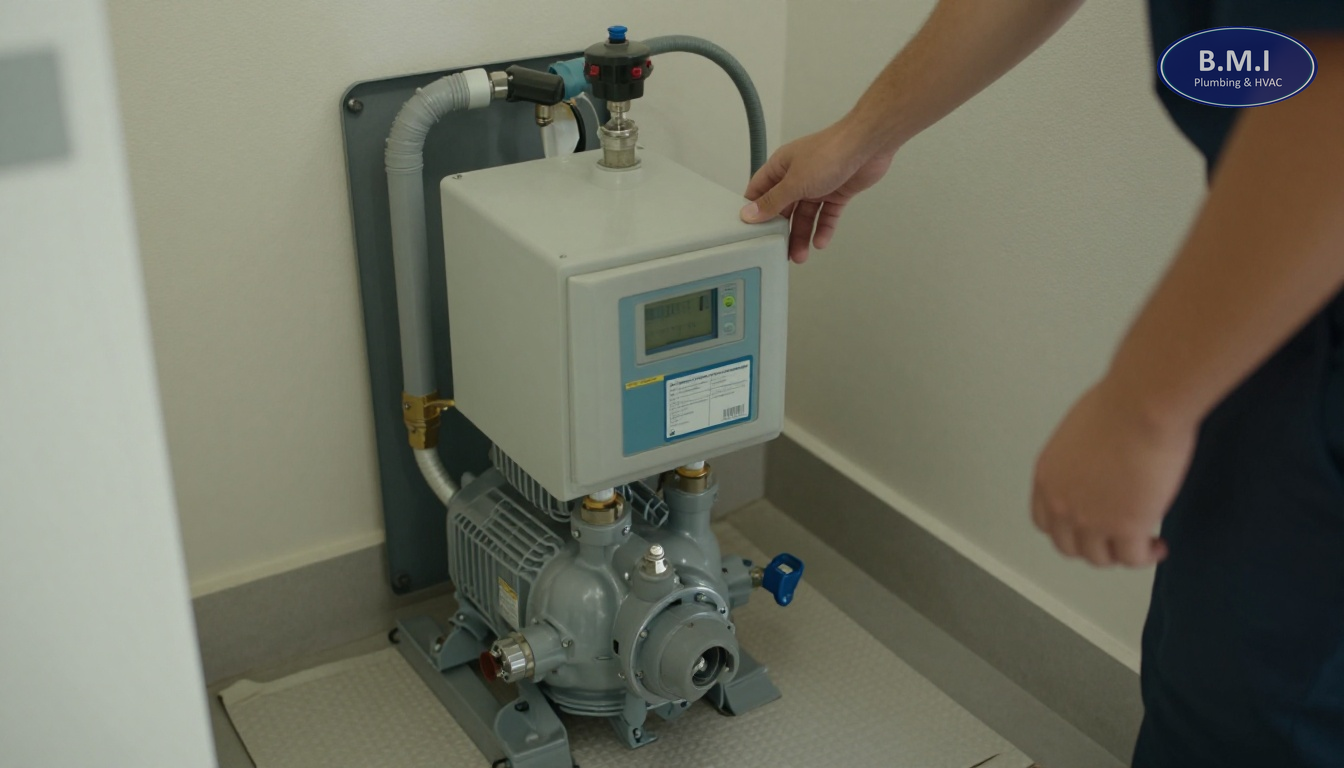
Quick summary: In Toronto condominium and multi-residential buildings, sump pumps and sewage ejector pits are easy to ignore until a garage lane, loading area or basement service room floods. The right approach is not just replacing a failed pump when an alarm goes off, but understanding what kind of pit the building has, what it is actually handling, and whether the controls, check valves and discharge piping still match the building’s age and use.
Why sump pump and sewage ejector problems show up in Toronto buildings specifically
Toronto has a wide range of multi-residential building stock, and the type of pit problem you see depends heavily on when the building was constructed and what sits below grade. In older apartment towers and condominiums across Etobicoke, North York and Scarborough, it is common to find original or near-original basement drainage arrangements that have been patched over time. Those buildings often have older cast iron drainage, basic duplex pump controls, and pits that were sized for a different pattern of occupancy than they see today.
In downtown Toronto and along corridors such as Yonge, Bay, and the waterfront, many towers have deep garage structures, extensive below-grade service rooms and loading areas. That means more dependence on sump systems to move groundwater or seepage and more dependence on sewage ejectors where washrooms, janitor rooms or service sinks sit below the gravity drain level. In those buildings, access is often the real challenge: limited loading windows, elevator bookings, protected finishes and mechanical rooms tucked behind active service corridors.
Toronto Water also matters to the discussion, even though these are not domestic water pumps. The city has older and newer sewer infrastructure side by side, and wet-weather events can change how hard drainage systems are working. In low-lying areas or older neighbourhoods with mixed generations of sewer and drain infrastructure, a building’s ejector system may be exposed to periods of higher downstream resistance. That does not mean every alarm is a municipal problem, but it does mean diagnosis has to consider the city-side context as well as the pit itself.
Another local factor is seasonality. In fall, Toronto boards are trying to lock budgets for the next fiscal year while preparing for winter. This is exactly when it makes sense to inspect pits, verify alarms, and confirm that isolation valves still operate. A failed garage sump pump in January is more disruptive and expensive than a planned service call in October. This is also why pit work is often reviewed alongside pressure reducing valve maintenance and replacement and other mechanical room checks before winter pressure swings and colder-weather access issues set in.
How sump pump and sewage ejector issues present in Toronto condos
Property managers rarely call and say, “our ejector package is at end of life.” What they report is usually a symptom.
In Toronto condo buildings, the first sign may be a high-level alarm panel sounding in a superintendent office, a foul odour near the parking garage service room, or water appearing around a pit lid after heavy rain. In a sewage ejector application, residents or staff may report a basement washroom backing up, a janitor sink draining slowly, or repeated overflows after a busy weekend. In a sump application, the complaint is often seepage spreading across the garage slab, water tracking to an elevator lobby threshold, or a pump that seems to run constantly.
The distinction between “runs constantly” and “does not run at all” matters. A continuously running sump pump may be seeing a stuck float, a failed check valve allowing water to fall back into the pit, or simply too much inflow for the pump’s capacity. A silent pump with a rising pit level points more directly to a power, control, float or motor issue. On sewage ejectors, ragging, grease and solids accumulation are common culprits, especially where fixtures that were never intended to receive food waste or wipes end up doing exactly that.
Toronto building staff also report nuisance conditions that are easy to dismiss but should not be. Corrosion on guide rails, sweating or leakage at the discharge elbow, a check valve that slams loudly, or a control panel that has been bypassed and left in hand mode are all signs that the system is being kept alive reactively. If a building is already dealing with recurring stack or drain issues, pit performance should be reviewed alongside drain cleaning and snaking and, in kitchen-heavy buildings, scheduled kitchen stack cleaning where grease migration is contributing to downstream trouble.
What diagnosis in a Toronto condo should involve, and what evidence to insist on
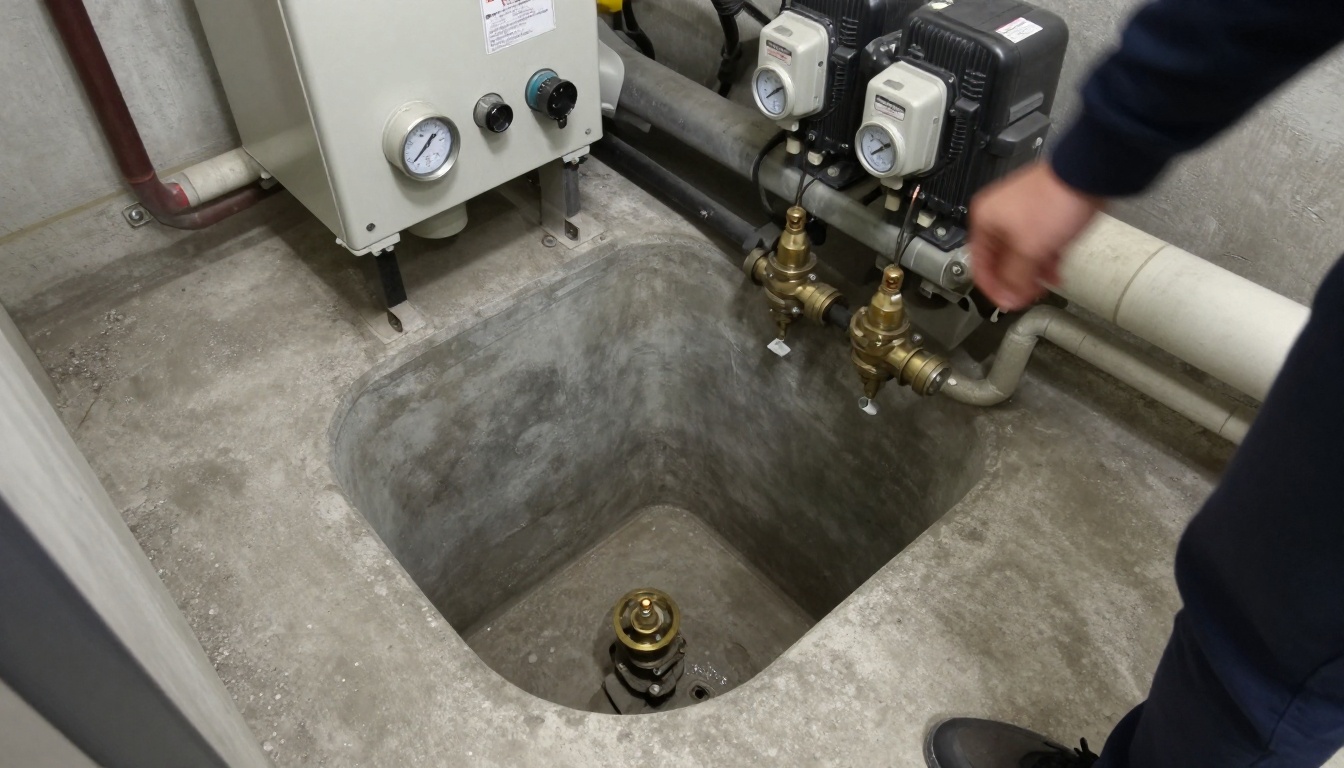
A proper diagnosis goes beyond lifting a lid and saying the pit looks dirty. For a Toronto condominium, management should expect a documented inspection of the pump arrangement, controls, discharge piping and surrounding drainage conditions.
First, the contractor should identify whether the system is a clear-water sump or a sanitary sewage ejector. That sounds basic, but misidentification leads to bad decisions. The pump type, seal arrangement, venting, pit cover, control sequence and discharge design are different. An ejector pit serving sanitary fixtures should be assessed for solids handling capability, vent condition and signs of surcharge or backup. A sump pit should be assessed for inflow rate, sediment loading, float operation and whether seepage patterns suggest a broader drainage issue.
Second, the actual pump operation should be tested. That means observing start and stop levels, checking amperage draw, verifying duplex alternation where there are two pumps, and confirming that the high-level alarm functions. If there are guide rail pumps, they should be checked for secure seating. The check valves and isolation valves on the discharge side should be reviewed closely. In many Toronto buildings, these valves are old enough that a simple pump replacement becomes a larger job because the valves no longer isolate properly. That is where a broader valve audit, charting and exercise program can save money later.
Third, the discharge path and connected drainage should be inspected. If the pit is seeing repeated alarms, it is often worth pairing pump testing with camera pipe inspection to confirm there is no partial blockage, sag, scale buildup or downstream restriction. In older Toronto stock with cast iron building drains, this can be the difference between replacing a pump unnecessarily and finding the real bottleneck.
For management and boards, the evidence to insist on is straightforward: site photos, a clear statement of which components were tested, measured observations where possible, and a recommendation that separates urgent work from advisable work. “Pump failed” is not enough. You want to know whether the motor failed, whether the float failed, whether the pit is overloaded, and whether the control arrangement is suitable for the building as it operates now.
Where pit work is tied to sanitary discharge or premise isolation concerns in a mechanical room, it can also make sense to review related backflow prevention testing and certification at the same time, especially in buildings already managing annual cross-connection compliance obligations.
A representative Toronto service call: sewage ejector pit near Yonge and Eglinton
A representative example would be a 22-storey condominium from the late 1990s near Yonge and Eglinton with two levels of underground parking and a basement-level janitor room and washroom group. Management reported an intermittent high-level alarm on the sewage ejector pit serving those basement fixtures. The alarm would clear, then return a few days later. Staff had also noticed odour and occasional dampness around the pit cover.
On inspection, the pit was a duplex ejector arrangement with aging floats, one pump showing weak performance, and discharge piping with an older check valve that was not holding consistently. The pit contents showed evidence of wipes and stringy debris, and the alarm panel had been silenced repeatedly without the root cause being addressed. A quick functional test showed one pump starting late and drawing higher amperage than expected. The second pump ran, but the duplex alternation was unreliable.
The immediate work involved isolating the area, pumping down the pit, cleaning debris, replacing both float controls, replacing the faulty check valve, and removing one pump for bench assessment. Because the pump itself was near end of life and the building could not risk another overflow, management approved replacement of both pumps with a matched duplex set rather than a single partial fix. The controls were re-commissioned, the alarm was verified, and the discharge arrangement was tested under load.
The job took roughly two working days on site, with some coordination around loading access and service elevator use. The rough cost for that scope, as a planning-level Toronto estimate, would typically fall somewhere around $9,000 to $18,000 depending on pump type, access, electrical coordination and the condition of the existing valves and piping. If the isolation valves had also failed or the pit cover and venting had needed modification, the cost would have increased further. In a case like this, management would also be wise to review nearby sanitary lines and consider related in-suite plumbing repairs if resident misuse of basement fixtures is part of the pattern.
Costs and timelines for Toronto condo sump pump and ejector pit work
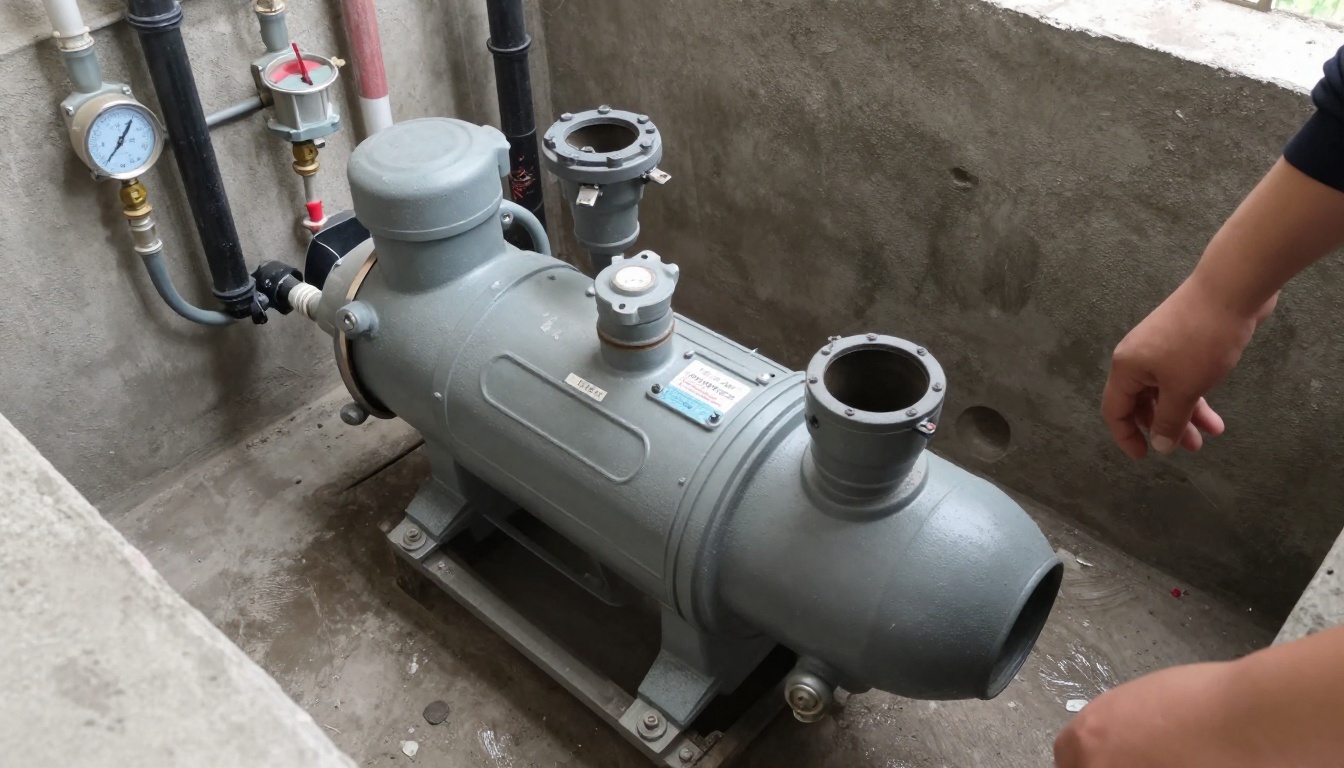
Costs in Toronto vary sharply based on access, whether the pit is sanitary or clear-water, and whether the work stops at the pump or expands to controls and piping. The figures below are broad market planning ranges, not quotations.
A straightforward sump pump replacement in a reasonably accessible condominium mechanical space may land in the range of about $2,500 to $6,000. That assumes the pit is serviceable, the discharge piping can be reused, and the electrical/control scope is limited. If the pit is heavily silted, the check valve is seized, or access requires after-hours coordination, the number rises.
For a sewage ejector, costs are often higher because the pumps are solids handling, cleaning is more involved, and the consequences of a bad installation are greater. Replacing a single ejector pump in an existing duplex arrangement may be roughly $4,000 to $8,000 as a planning figure. Replacing both pumps, floats, check valves and recommissioning controls can push the scope into the $9,000 to $18,000 range or more.
If the pit package itself is deficient, a larger replacement involving new rails, controls, cover modifications, discharge piping changes, concrete work or significant electrical scope can move well beyond that. In some Toronto buildings, the plumbing portion is only part of the cost; access protection, cleanup protocols, security coordination and shutdown planning are meaningful line items.
Timelines are similarly variable. A basic pump swap can often be completed in a day if parts are available and the valves isolate properly. A more complete ejector package replacement may take two to five working days, especially if there is custom coordination around building operations. If related isolation valves are unreliable, management may need to pair the work with sectional and isolation valve replacement to avoid repeating the same access and shutdown pain later.
For boards working through fall budget season, the practical move is to get current inspection data now and build the right line item into next year’s plan rather than relying on a generic allowance. This is the same logic behind reviewing all maintenance programs before winter rather than waiting for an emergency.
Repair versus replacement in Toronto: a practical decision framework
Not every alarm justifies a capital project, but not every service call should end with another patch either. In Toronto condo buildings, the decision usually comes down to five things: age, reliability, maintainability, consequence of failure, and whether the current setup still suits the building.
Repair is reasonable when the system is fundamentally sound and the failure is isolated. A failed float, worn check valve, alarm issue or a single pump failure in an otherwise modern, properly sized duplex setup is often a service problem, not a redesign problem. If the pit is clean, the controls are current and there is no history of repeated overflow, repair can be the prudent choice.
Replacement becomes the better answer when there is a pattern: repeated callouts, obsolete controls, chronic odour, badly corroded discharge piping, guide rail issues, or evidence that the pit cycles too often because it is undersized for present use. In older Toronto stock, it is common to find a building that has spent years replacing one component at a time while the basic package has aged out. That is when a coordinated scope under all repairs and service or, where broader piping deterioration is present, a larger review of all capital project work makes more sense.
Boards should also think about redundancy. A single pump serving a sensitive below-grade area may technically function, but if failure would flood an electrical room approach, resident storage area or elevator-adjacent corridor, the operating risk may justify an upgraded duplex arrangement. That is not about overbuilding; it is about matching the equipment to the consequence of failure.
What deferring sump pump or sewage ejector work costs a Toronto condo
The direct repair invoice is usually the smallest number in the story. What hurts Toronto condominiums is the secondary cost of overflow and downtime.
If a sewage ejector backs up, cleanup is not ordinary housekeeping. There may be emergency sanitation, odour treatment, disposal of contaminated materials, security and concierge time, and resident complaints to manage. If overflow reaches finished walls, storage lockers, electrical areas or elevator-adjacent spaces, the cost multiplies quickly. Even a clear-water sump failure can create slip hazards, slab staining, corrosion of nearby equipment and repeated garage disruptions.
Insurance is another factor. Carriers and adjusters look hard at whether a corporation responded reasonably to known recurring conditions. If the building has a documented history of alarms, overflows or ignored recommendations, that can complicate claims discussions. It also affects reserve planning. While a pump replacement itself may be operational or capital depending on the scope, repeated emergency spending with no asset strategy is usually the most expensive path.
There is also the internal chargeback and governance issue. When a basement fixture backup affects a unit, management needs to be clear whether the source was common element infrastructure, misuse, or a combination of both. That is easier to sort out when the corporation has current inspection records, service reports and a defensible maintenance history. For some buildings, it also makes sense to review completed examples of similar work through completed projects and building references to compare approaches used in comparable GTA stock.
FAQs about sump pumps and sewage ejector pits in Toronto condos
Who is responsible for a sump pump or sewage ejector pit in a Toronto condominium?
In most Toronto condominiums, sump pumps and sewage ejector pits serving common areas, parking garages, loading docks or base building drains are a corporation responsibility. If a pit serves only a commercial unit or a defined exclusive-use area, the declaration and standard unit definition need to be checked carefully. Before approving any alteration to controls, discharge piping or alarms, boards should also confirm whether section 98 considerations under the Condominium Act apply.
How often should a Toronto condo inspect and service sump pumps and ejector pits?
For most Toronto multi-residential buildings, quarterly visual inspections and functional testing are a practical baseline, with a more thorough annual service that includes float testing, amperage checks, cleaning and alarm verification. Buildings with older pits, frequent grease or silt loading, or below-grade amenity and garage areas may need more frequent attention. Fall is a sensible time to do it because boards are budgeting for the next year and winter failures are harder to manage.
What is the difference between a sump pump and a sewage ejector in Toronto buildings?
A sump pump handles relatively clean groundwater or storm-related seepage collected around the foundation or in drainage pits. A sewage ejector handles sanitary waste from fixtures located below the elevation where gravity drainage can work, such as basement washrooms, janitor sinks or some loading dock rooms. In Toronto condominium basements, the distinction matters because the pump type, pit construction, venting and discharge arrangement are different, and using the wrong replacement can create code and reliability problems.
Can recurring pit alarms in a Toronto condo be caused by municipal sewer conditions?
Sometimes, but not always. Toronto sewer surcharging, high wet-weather inflow, downstream restrictions or a partially blocked building drain can all make an ejector system work harder, especially in older areas with mixed-age infrastructure. Just as often, the cause is local to the building: fouled floats, worn impellers, a failed check valve, grease accumulation, or a control issue, which is why camera pipe inspection and pump testing are often paired.
What does it usually cost to replace a sump pump or sewage ejector setup in Toronto?
In the Toronto market, a straightforward sump pump replacement in an accessible condo mechanical space may land around $2,500 to $6,000 as a broad planning estimate, while a duplex ejector package with controls, guide rails, check valves and pit cleaning can be materially higher. Where electrical scope, confined access, corroded isolation valves, concrete work or after-hours shutdowns are involved, costs rise quickly. Boards should treat any online figure as a budget placeholder until the pit, controls and discharge arrangement are inspected in person.
Should Toronto condo boards repair a failing pump or replace the whole pit package?
If the issue is limited to a float, check valve, alarm component or a single pump in an otherwise sound and properly sized system, repair can be reasonable. If the pit is undersized, the rails and piping are badly corroded, controls are obsolete, or the building has had repeated overflows, a package replacement is usually the better long-term decision. Toronto boards should compare not just the immediate repair invoice, but cleanup risk, resident disruption, insurance exposure and whether the equipment still fits the building’s actual load.
Next steps for Toronto property managers and condo boards
If your Toronto building has a sump pump or sewage ejector that has not been properly inspected in the last year, fall is a good time to get current information in hand. Before winter, confirm what each pit serves, whether alarms function, whether the discharge valves isolate properly, and whether there is a record of recent testing or cleaning.
For boards, the goal is simple: separate urgent risk from budget planning. A documented inspection lets you decide whether the building needs a service repair, a monitored maintenance routine, or a larger scoped replacement. BMI serves Toronto and the surrounding GTA from its Toronto shop, with repair and project experience across roughly 200 condominium and multi-residential buildings over the past 20 years. To arrange an inspection or discuss a recurring pit issue, use Contact BMI or review more condominium plumbing topics on the BMI blog.
Contact BMI
- Contact BMI
- Phone: (416) 845-3756
- Emergency: (416) 845-3756, answered 24 hours a day
- Email: info@brial.ca
More on condominium plumbing
In-Suite Plumbing Repairs in Whitby Condominiums
Practical guidance on in-suite plumbing repairs in Whitby condominiums, including diagnosis, costs, timelines, and …
PRV Failure Symptoms in Toronto Condo Buildings
Learn the real PRV failure symptoms behind condo water pressure problems, with Toronto cost ranges, testing steps and …
How Pressure Reducing Valves Work in a Toronto High-Rise
Understand pressure reducing valve operation in a condo high-rise, with Toronto cost ranges, failure signs, inspection …
Need a plumber in your building?
BMI services roughly 200 condominium and multi-residential buildings across Toronto and the GTA. Emergencies are answered at any hour.