
Toronto Condo Stack Cleaning Resident Notice Guide
How to schedule condo stack cleaning with clear resident notice, suite access planning, costs, timelines and shutdown logistics in Toronto buildings.
Toronto Condo Stack Cleaning Resident Notice Guide
Quick summary: In a 300-suite condominium, stack cleaning resident notice is not an administrative detail. It is the difference between a controlled maintenance program and three days of missed entries, repeat backups and angry owners. The buildings that handle this well treat condo suite access like a project in its own right: staged notices, realistic daily suite counts, clear water-use instructions, and a contractor who can explain which suites actually matter to each stack.
A common mistake in Toronto towers is assuming the plumbing work is the hard part and the communications are easy. In practice, once a building gets above about 200 suites, access logistics, tenant coordination and resident expectations can consume more time than the jetting itself.
The real problem is not cleaning the stack. It is controlling the day around it.
In buildings we service in Toronto, Mississauga and Vaughan, the phrase “stack cleaning” gets used as if it were one standard task. It is not. A 3-inch cast iron kitchen waste stack serving 28 floors with heavy grease loading behaves very differently from a 4-inch laundry or sanitary stack with fewer solids, and the resident impact is different as well. The friction point for management is usually not whether the line can be cleaned; it is how to do it without creating a building-wide revolt over notices, access windows and temporary use restrictions.
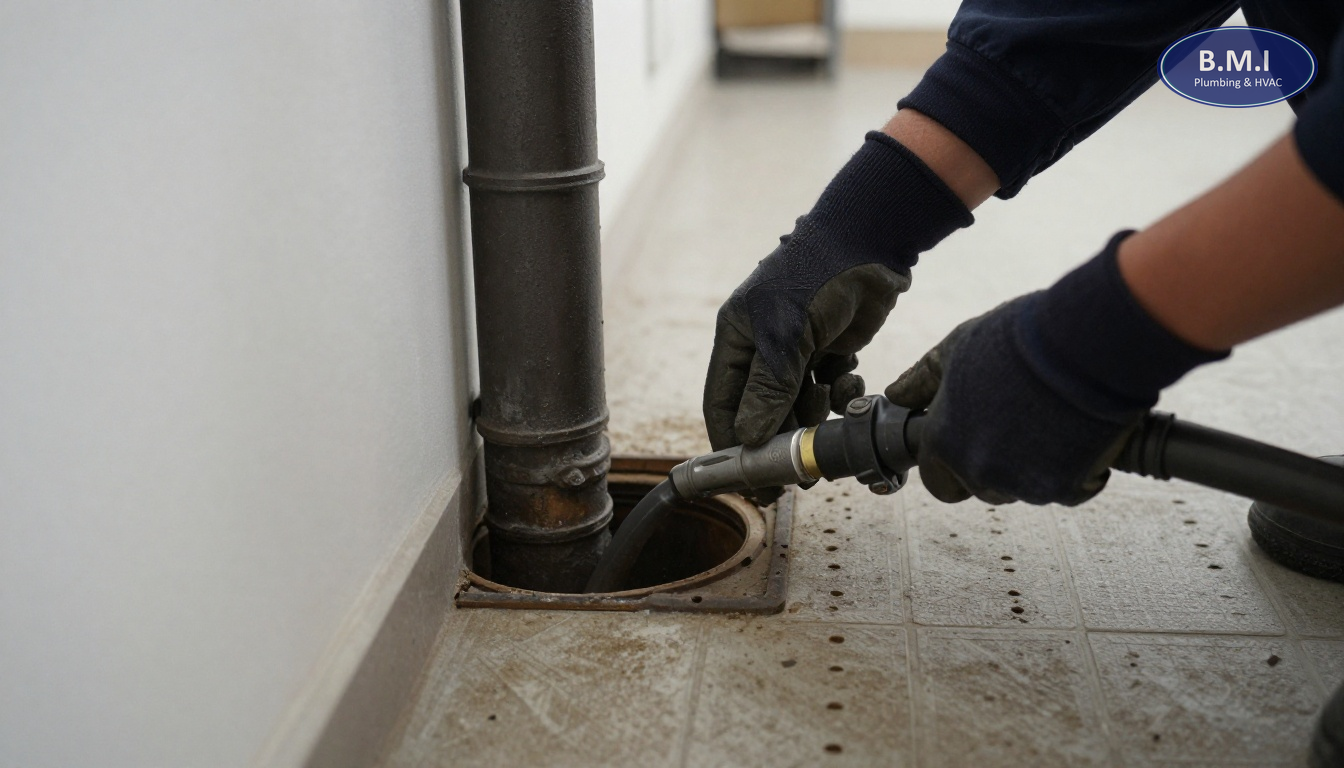
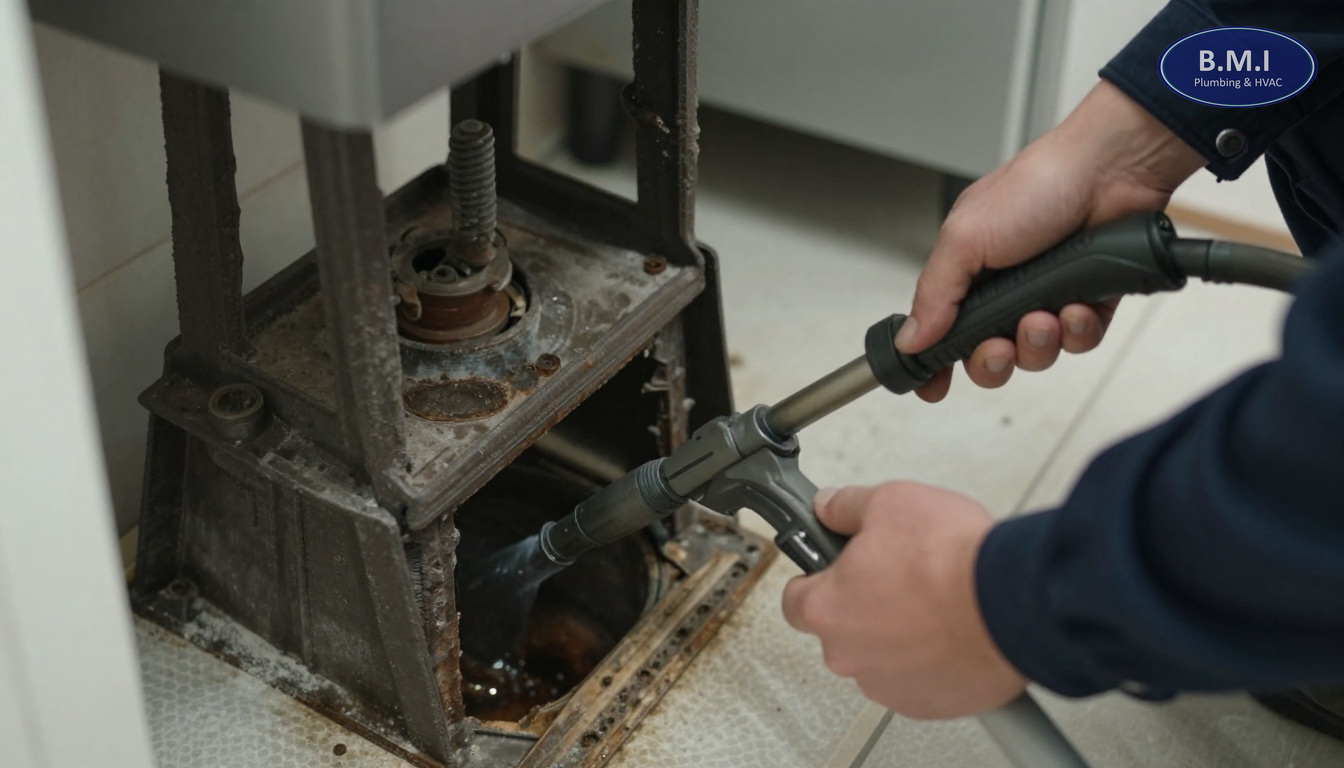
For most condominium kitchen stacks, the actual cleaning method is high-pressure jetting, not just snaking. Snaking will often punch a hole through a soft blockage, but it usually leaves grease on the pipe wall. Jetting strips more of that wall loading away, which matters in 1970s and 1980s concrete high-rises where 3-inch cast iron stacks may already have lost internal diameter to scale and corrosion. If the original inside diameter is 3.0 inches and scale plus grease narrows the effective opening by even 1/2 inch around the wall, the flow area drops far more than most boards realize.
Where buildings get into trouble is scheduling a cleaning day as though every suite has equal importance. They do not. On a vertical stack, the lower floors and the suites with the heaviest kitchen use often tell you the most. If a sink drains normally on its own but backs up when a dishwasher or sink above discharges, that points to a common stack restriction, not an isolated in-suite trap issue. That is why a proper kitchen stack cleaning program should be built around the stack layout, not just a bulk notice to all owners.
Another overlooked point: fall is the right time to do this. By October and November, boards are building next year’s operating budgets, holiday cooking loads are coming, and emergency drain calls become more disruptive because contractor calendars tighten heading into winter. If your building has not had its kitchen stacks cleaned in over two years, this is usually the moment to inspect and schedule rather than waiting until the first December backup.
What residents actually need to be told, and when
The best resident notices are specific enough to change behaviour. The worst are generic memos that say “plumbing maintenance will occur” and leave residents guessing whether they can use a sink, dishwasher or washing machine. In a 300-suite building, vague wording creates hundreds of individual clarification calls to the concierge and management office.
A workable notice sequence for condo suite access usually looks like this:
- Initial notice 7 to 14 days ahead
- Identify the exact stacks or tiers affected.
- State whether entry is required or whether access is only needed if a problem is found.
- Give a realistic time window, not “all day” unless it truly is all day.
- Explain any temporary restrictions on sink, dishwasher or laundry use.
- Reminder notice 48 hours ahead
- Reconfirm access instructions for owners, tenants and dog walkers.
- Confirm whether management keys will be used if permitted under building policy.
- Remind residents to clear under-sink storage if branch access may be needed.
- Same-day morning notice
- Confirm the crew is on site.
- State the start time and expected completion time for each stack.
- Repeat the no-discharge period in plain language.
In larger Toronto and North York towers, the no-discharge instruction is the line most often misunderstood. Residents hear “water shutdown” and think domestic water supply is off. For stack cleaning, domestic supply is often still available, but residents may need to avoid draining kitchen fixtures for a defined period while jetting is underway. That distinction matters because if people continue running dishwashers into an active stack, the crew can end up with discharge at an open cleanout or false evidence that the line is still blocked.
A second detail many managers miss is tenant notice under lease arrangements. In investor-heavy post-2010 towers in downtown Toronto, Markham and Richmond Hill, the owner receiving the corporation’s notice is often not the occupant. If the manager does not push for owner forwarding and emergency contact verification, access failure rates rise sharply. On tenanted floors, a 10-day first notice usually performs better than a 5-day one.
If your building already has recurring drain issues, pair the notice with a short explanation of why the work is being done. Residents are more cooperative when they understand that preventative drain cleaning is being done to avoid backups into lower suites, not because management is creating inconvenience for its own sake.
Which suites matter, and why a 300-suite building is rarely a 300-suite job
One of the least understood parts of stack cleaning is that a 300-suite building does not mean 300 suites need equal time on site. Most high-rise condominium plumbing is organized in vertical tiers. One kitchen stack may serve 20 to 35 suites, depending on floor count and layout. A 300-suite tower may have 8 to 14 kitchen stacks, and the work is usually planned stack by stack, not suite by suite.
That matters for scheduling because management can group notices more intelligently. If Stack K-3 serves units 03 from floors 5 through 29, those are the residents who need the most precise instructions. Suites on other tiers may only need an advisory notice if there is no domestic water shutdown.
In older Etobicoke and Scarborough buildings, access points are often less convenient than in newer towers. Cleanouts may be in janitor closets, service rooms, or behind millwork added during renovations. In some early-1990s towers, we also see kitchen branches that were altered during suite upgrades without proper cleanout consideration. A stack may be serviceable from the base, but one floor’s branch can remain partially loaded because the tie-in has poor pitch or a long horizontal run. This is where an in-suite plumbing assessment in selected problem units saves a lot of argument later.
As a rule of thumb on a 300-suite building:
- Main stack cleaning only: access may be needed to a limited number of representative suites or none at all if cleanouts are ideal.
- Stack cleaning plus branch verification: expect access to several suites per stack, usually lower, middle and upper floors.
- Active problem stack with recurring backups: expect broader suite involvement and possibly same-day follow-up if a branch remains slow.
The reason lower floors matter disproportionately is hydraulic reality. Grease, food solids and detergent residue tend to accumulate more aggressively at lower offsets and base-of-stack transitions where velocity changes. A stack can appear acceptable at mid-height and still be heavily restricted near the bottom elbow or horizontal run. If the contractor is not opening the right cleanouts or documenting where the worst loading is found, management is not getting a complete diagnosis.
What good stack cleaning looks like technically
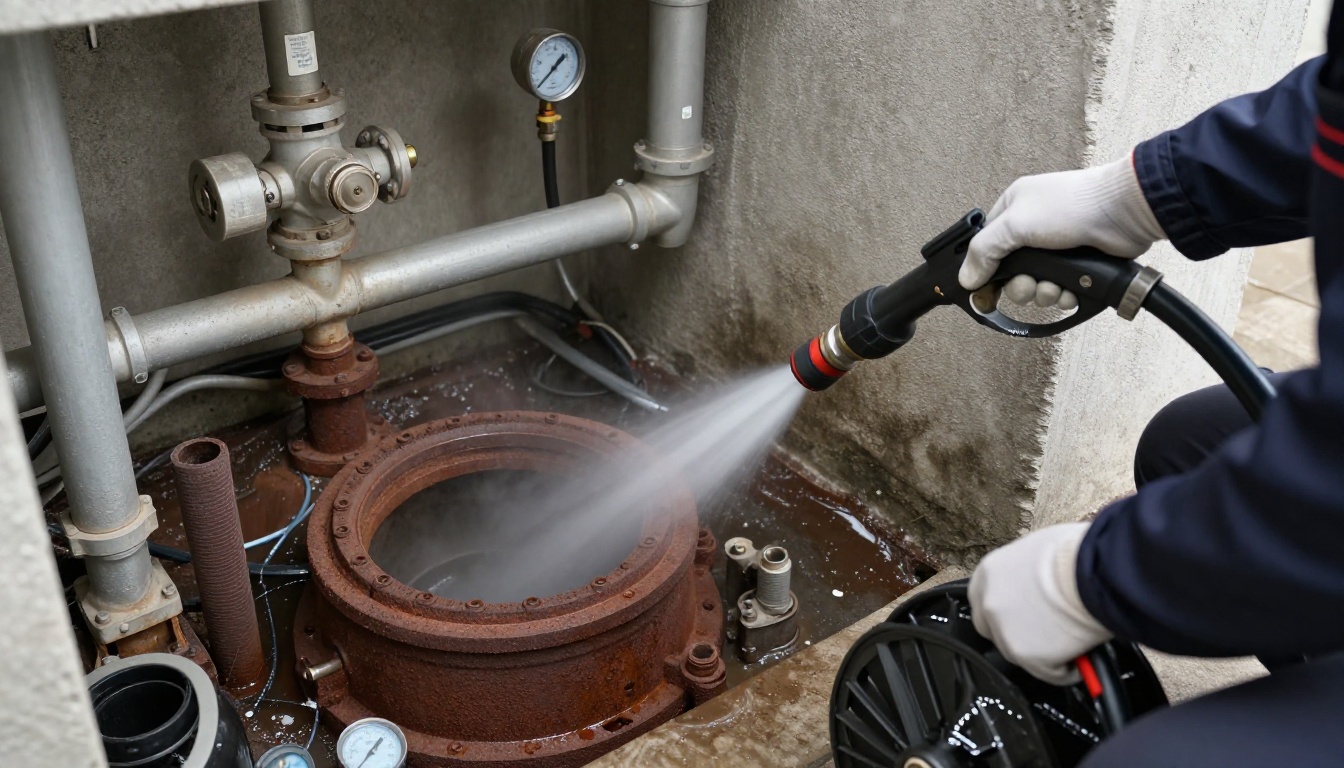
Boards are often told a line was “cleared” without being told how thoroughly. There is a meaningful difference between reopening a line and restoring usable capacity. In condominium buildings, especially 1970s and 1980s cast iron systems, that difference drives whether you get six months of relief or two years.
A competent kitchen stack cleaning scope usually includes:
- locating and confirming all accessible cleanouts
- protecting adjacent finishes and corridors
- high-pressure jetting sized to the pipe condition and diameter, commonly 3-inch and 4-inch cast iron stacks
- management of dislodged grease and debris at the base
- flow testing from representative suites
- written reporting on heavy scale, offsets, cracked fittings or poor access conditions
Where appropriate, a camera inspection should follow, especially if the building has had repeat backups within 12 to 18 months of prior cleaning. Camera work matters because old cast iron can develop a channel through the grease and scale that still drains enough to fool a simple water test. Once that channel closes during holiday loading, the building gets a sudden emergency rather than a gradual warning.
A point worth pressing with any contractor: ask whether they are proposing jetting or snaking, and why. Snaking has its place for isolated obstructions or branch work, but for grease-lined kitchen stacks it is often a temporary measure. Jetting is messier to set up and needs better control, but it generally does a more complete job on wall buildup. That is one reason many buildings move recurring kitchen tiers onto a scheduled maintenance program rather than waiting for emergency calls.
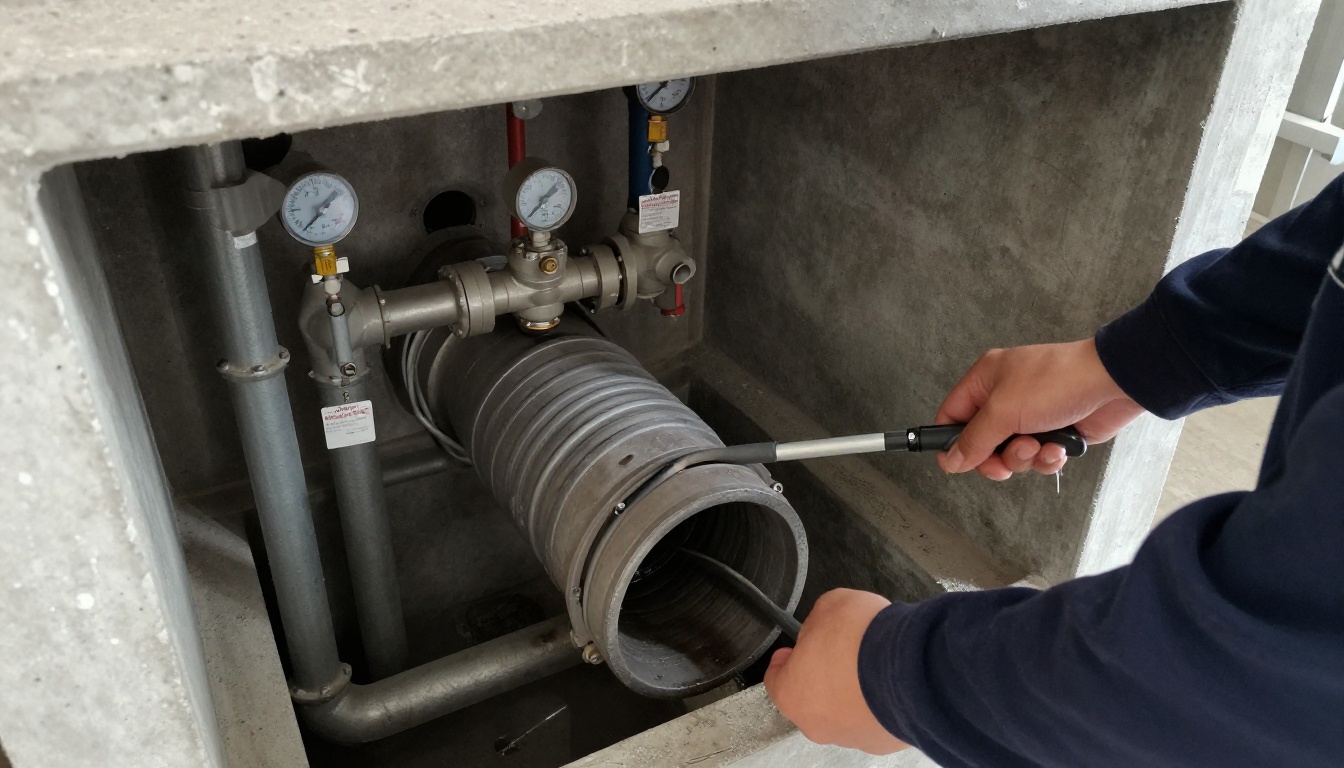
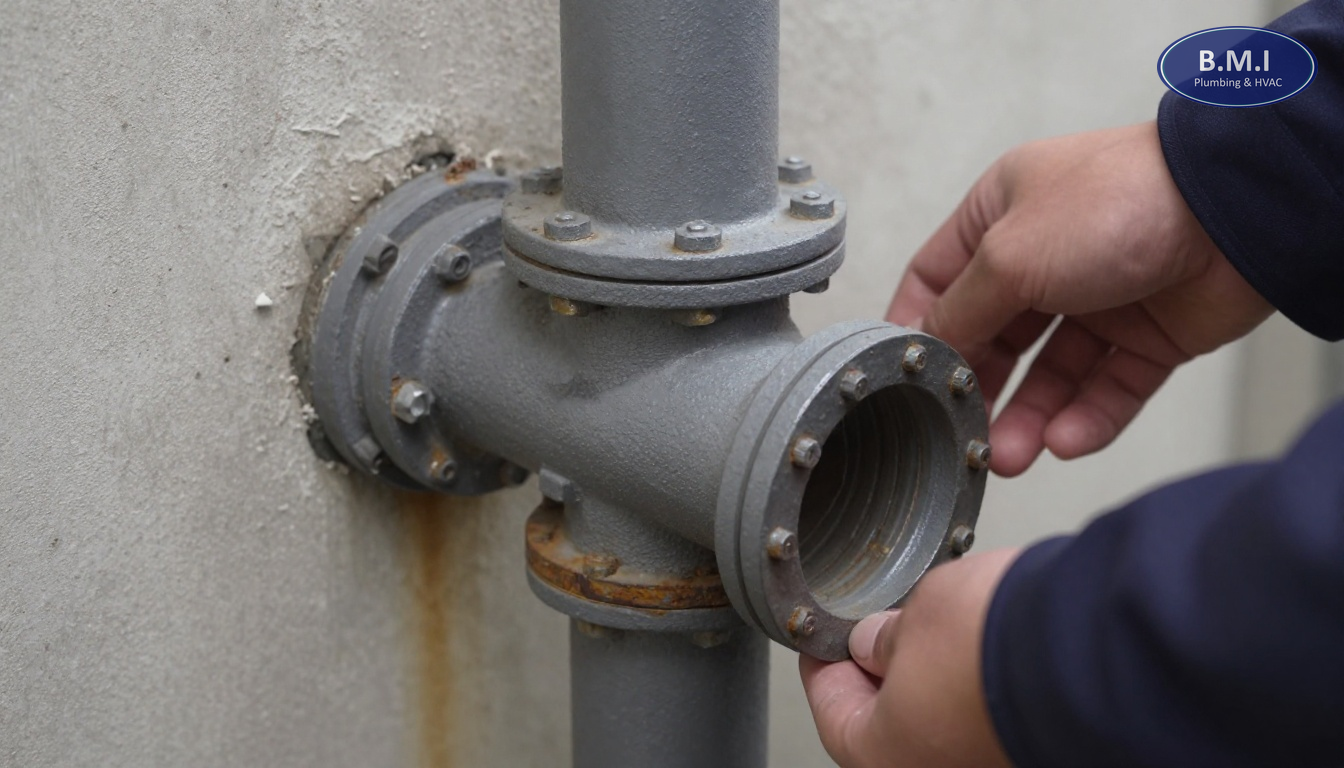
There is also a valve and isolation angle that management should not ignore. If stack work may require related domestic water isolation in service rooms or riser closets, outdated or seized valves can turn a simple maintenance day into a building-wide disruption. Before larger programs, a valve audit and charting review is often worth doing, particularly in older North York or York towers where original gate valves may no longer hold.
The schedule that works in real buildings
The most defensible schedule is the one that matches how many suites a crew can realistically support in a day. Overpromising is what causes resident frustration. For a 300-suite building with 10 kitchen stacks, a realistic production plan might be 2 to 4 stacks per day if access is straightforward and the pipe condition is average. If the building has recurring lower-stack backups, poor cleanout access or significant grease loading, one or two difficult stacks can consume most of a day.
A practical planning framework looks like this:
| Building size / condition | Typical stack count | Typical duration | Resident impact |
|---|---|---|---|
| 150-200 suites, moderate condition | 6-8 stacks | 2-4 days | Limited suite access, short no-discharge windows |
| 250-350 suites, average condition | 8-14 stacks | 3-7 days | Structured notices by tier, some in-suite verification |
| 300+ suites, recurring issues | 10-16 stacks | 5-8 days | More targeted access, likely camera follow-up |
For resident relations, shorter stack-specific windows work better than a broad all-day warning to the whole building. If Stack 07 is being cleaned between 9:00 a.m. and 11:30 a.m., say that. If the lower tie-in may require another hour of testing, say that too. Residents are far more tolerant of disruption when the window is believable.
Concierge and management teams should also prepare for the predictable issues:
- elevator booking and cab protection for hose reels and vacuums
- access to service rooms and janitor closets
- suite key control and audit trail
- pet and alarm instructions for tenanted suites
- after-hours approval if noisy branch work is possible
- immediate communication if one stack runs long and the next shifts
In some buildings, especially downtown towers with high daytime absentee ownership, management will get better results by scheduling selected stacks on staggered days rather than trying to hit the whole building in one push. That may look less efficient on paper, but it often reduces missed entries and complaints enough to be worth it.
If the work uncovers failed valves, collapsed branches or pipe conditions that move beyond cleaning, the next step may shift toward valve replacement, localized piping work, or in more serious cases broader project solutions. The point is not to overscope the first visit. It is to structure the maintenance so the board gets evidence before approving larger capital work.
Costs in the Toronto market, and how to budget them properly
This is where many boards want a simple per-suite number. That is understandable, but stack cleaning is usually priced more accurately per stack, per day, or per scope, because the labour is driven by access, setup and pipe condition more than by unit count alone.
Realistic Toronto-area budget ranges in 2026 for condominium stack cleaning are often in these bands:
| Scope | Typical market range | Notes |
|---|---|---|
| Single problem stack cleaning | $900-$2,000 | Depends on stack height, access and severity |
| Planned kitchen stack cleaning program, per stack | $1,000-$2,500 | Common for 3" or 4" cast iron stacks |
| Camera inspection add-on, per stack or area | $350-$900 | More if extensive recording/reporting is required |
| 300-suite building program | $12,000-$35,000 | Wide range based on number of stacks and suite verification |
| Emergency after-hours blockage response | $600-$1,800+ | Not including restoration or flood costs |
These are market estimates, not quoted prices, and they vary materially by building. A tower in downtown Toronto with difficult loading access and strict elevator controls can cost more than a similar-sized building in Mississauga or Vaughan simply because crew movement and access management take longer.
The financial comparison boards should actually make is not cleaning cost versus doing nothing. It is cleaning cost versus:
- repeated emergency calls
- lower-suite flood damage
- insurance deductible exposure
- management time spent on complaints and chargeback disputes
- accelerated need for partial replacement because grease was allowed to harden year after year
A common budgeting mistake is treating each backup as a one-off repair under repairs and service instead of recognizing a pattern. If three or four emergency drain calls hit the same kitchen tier inside 12 months, the building is usually spending maintenance money inefficiently.
When cleaning is enough, and when it is not
Not every bad stack needs replacement, and not every stack that drains today is healthy enough to leave alone. Boards need a framework, not a sales pitch.
Cleaning is usually the right near-term decision when:
- backups are intermittent rather than constant
- prior cleaning bought 12 to 24 months of relief
- camera footage shows grease and scale but no major collapse
- branch geometry is serviceable
- the reserve fund does not yet support broad replacement
Cleaning is often only a short-term measure when:
- the stack reloads within months
- camera footage shows heavy internal scaling, channel rot or failed fittings
- lower offsets are repeatedly obstructed despite full jetting
- branch tie-ins are poorly altered from past renovations
- access conditions make ongoing maintenance unreasonably expensive
In some older Toronto and East York buildings, the real issue is not the vertical stack but the horizontal run at the base or below slab transition. That is why the evidence matters. If the contractor cannot show where the restriction is recurring, management should ask for a second opinion before approving major replacement.
When systems have moved beyond maintenance, the conversation may shift to localized replacement, riser replacement in domestic systems, or even broader building re-piping where multiple piping assets are aging together. That is a different budget category and should be tied back to reserve fund planning, not slipped into an operating line item by surprise.
Common element or in-suite responsibility: the question that drives every complaint
This is the question property managers hear first after any backup. The answer is legal before it is emotional: check the declaration, standard unit definition and any applicable rules or section 98 alteration records. But from a plumbing standpoint, the location of the restriction is what matters.
As a working rule in many condominiums:
- In-suite trap or branch blockage confined to one unit: often owner responsibility, subject to the declaration.
- Vertical stack blockage affecting multiple floors or caused by common piping condition: usually common element responsibility.
- Altered owner-installed branch work under a section 98 agreement: responsibility may shift depending on the alteration terms.
The practical difficulty is that one suite often reports the symptom first. Lower suites are the canary in the coal mine. A resident in unit 503 may think they have a local kitchen issue, but if their sink backs up when unit 603 drains, that is usually not a private problem. Management should be careful about chargebacks until the contractor has confirmed whether the blockage sits in the suite branch or common stack.
This is also where documentation protects the corporation. A written report with flow test results, photos and, where needed, camera inspection evidence is far easier to defend to owners and boards than a verbal statement that “the plumber said it was your fault.”
What happens if you defer it until after the holidays
In fall budget season, boards sometimes ask whether stack cleaning can wait until Q1. Sometimes it can. If the building was cleaned within the last 12 to 18 months, there have been no repeat backups, and there is no evidence of heavy loading, waiting may be reasonable.
But where a building has already seen warning signs, deferral usually gets more expensive, not less. The holiday period matters because kitchen discharge changes. More cooking fats, starches and dishwasher use increase the chance that a partially restricted stack closes fully. In a 25-storey tower, one blocked kitchen stack can affect dozens of suites vertically and create an after-hours emergency that costs more than planned maintenance.
There is also an insurance angle. Water damage deductibles in condominium corporations are not minor anymore, and the cost of mitigation, drying and resident handling can quickly dwarf the maintenance line item that was deferred. Boards do not need to approve every recommendation immediately, but they should insist on enough evidence to defend either decision.
Fall is also when many buildings are reviewing other plumbing priorities, such as PRV maintenance before winter pressure swings and annual backflow prevention testing documentation before year end under Toronto Municipal Code Chapter 851. Good managers bundle these discussions together because access, contractor mobilization and board attention are already in play.
A practical notice and access checklist for management
Before issuing notices, confirm these points internally:
- Which exact stacks or tiers are being cleaned?
- Is there any domestic water shutdown, or only a no-discharge period?
- Which suites require entry, and why?
- Who holds keys for tenanted or absentee-owned suites?
- What is the missed-entry protocol?
- Will there be same-day text, email or concierge updates?
- Is camera verification included if a stack is found in poor condition?
And in the resident notice itself, include:
- date and start time
- affected suite lines or unit numbers
- whether kitchen sink, dishwasher or laundry use is restricted
- access preparation instructions
- management contact and after-hours contact
- statement that the work is preventative and intended to reduce backups
For buildings that have not done this well before, it is worth asking the contractor to attend site before quoting. BMI typically attends the building to review access, cleanout locations, suite layout and logistics before proposing a program, because the notice plan should be based on the actual plumbing configuration, not a template.
FAQs
How much notice should residents get before stack cleaning?
For a planned condominium stack cleaning program, 7 to 14 days is the practical minimum for the first notice, followed by a 48-hour reminder and a same-day reminder in the morning. In a 250- to 350-suite Toronto high-rise, access failure rates typically drop from roughly 15 to 20 percent down to under 5 percent when buildings use three touches instead of one. If pets, medical needs or tenanted suites are involved, more notice is usually worth the extra administration.
Do you need to enter every suite to clean a kitchen stack?
Not always, but in many buildings you need suite access to run water, confirm drainage, inspect branch conditions and deal with localized grease loading at the tie-in. A stack can often be jetted from a cleanout in a janitor room, service corridor or lower-level access point, but that does not tell you whether a specific 1 1/2-inch kitchen branch is already restricted. On a 300-suite building, the difference between cleaning the main vertical stack only and verifying representative suites can be the difference between fewer call-backs and a week of resident complaints.
How long does a 300-suite stack cleaning project usually take?
For a typical 25- to 35-storey condominium with 8 to 14 kitchen stacks, allow about 3 to 7 working days depending on access, number of cleanouts, grease loading and whether camera inspection is included. A crew may finish 2 to 4 stacks in a day if access is good and the piping is 3- or 4-inch cast iron with workable cleanouts. Buildings with repeated backups, long horizontal runs or poor valve isolation usually take longer because setup and recovery time increases materially.
What should management insist on from the contractor after the cleaning?
At minimum, ask for a written report identifying which stacks were cleaned, what method was used, where access was taken, whether heavy grease or scale was found, and which suites or branches need follow-up. If there is any doubt about pipe condition, request a camera inspection with recorded footage rather than a verbal opinion. In older Toronto and North York towers, that distinction matters because a stack can be clear enough to drain today but still be badly tuberculated or channelled at the bottom offsets.
Who pays when a single suite reports a kitchen backup?
That depends on the declaration and where the blockage is located. If the obstruction is in the common vertical stack or a common horizontal branch, the corporation usually bears the cost; if it is confined to the in-suite branch because of owner use, that may be chargeable back. The practical problem is that the symptom often appears in one kitchen first, so management should avoid assuming responsibility until the line is properly tested and, where necessary, cleaned or scoped.
Is stack cleaning a maintenance item or a capital project?
Routine kitchen stack cleaning is generally an operating maintenance item, not a reserve-funded capital replacement, because it is periodic service intended to preserve function. In many GTA buildings, annual or 18- to 24-month cleaning is cheaper than repeated emergency calls, flood deductibles and resident compensation issues. If cleaning repeatedly fails because the pipe wall is collapsing or heavily scaled, the discussion shifts toward building re-piping or localized replacement.
Next steps for boards and property managers
If your building has recurring kitchen backups, or if your stacks have not been cleaned in more than two years, do not start with a generic all-building notice. Start with the plumbing map: how many stacks you have, which suites they serve, where the cleanouts are, and whether representative suite access is needed.
For fall planning, the most practical move is to get the building reviewed now, before holiday grease loading and before next year’s operating budget is locked. If the system only needs scheduled maintenance, that is useful to know. If camera evidence shows the problem is bigger than cleaning, that is even more useful because the board can deal with it deliberately instead of during a December flood.
BMI handles kitchen stack cleaning, emergency plumbing response, camera inspections and broader condominium project solutions across Toronto and the GTA. If your concern is really access planning rather than the cleaning itself, say that when you call. In larger buildings, the notice strategy is part of the scope, not an afterthought.
For more condominium plumbing guidance, see the BMI blog.
Contact BMI
- Contact BMI
- Phone: (416) 845-3756
- Emergency: (416) 845-3756, answered 24 hours a day
- Email: info@brial.ca
More on condominium plumbing
Condo Garbage Disposal Rules in Toronto Buildings
Why condo garbage disposal bans are common in Toronto: stack loading, plumbing risk, costs, rule enforcement and what …
Kitchen Stack Cleaning Cost in Toronto Condos
What does kitchen stack cleaning cost in Toronto? Real condo pricing, scope, timelines, warning signs and budgeting …
Hydro Jetting vs Snaking Condo Waste Stacks in Toronto
Hydro jetting vs snaking for condo waste stacks in Toronto: what each method does, costs, timing, and when a board …
Need a plumber in your building?
BMI services roughly 200 condominium and multi-residential buildings across Toronto and the GTA. Emergencies are answered at any hour.