Toronto High-Rise Pressure Zones: Why Floors Vary
Why top floors lose water pressure while lower floors get too much in Toronto condos. A practical guide to water pressure by floor and pressure zones.
Toronto High-Rise Pressure Zones: Why Floors Vary
Quick summary: In a high-rise, water pressure by floor is not supposed to be uniform. Toronto condominium towers are divided into pressure zones, and when those zones drift out of balance, the result is predictable: upper floors complain about weak showers and slow tub fills while lower floors burn through toilet fill valves, faucet cartridges and braided hoses. The fix is rarely guesswork. It is a pressure survey, control verification and a decision about whether the problem is the booster system, the PRV station, the risers, or simply years of ad hoc adjustments.
One of the more expensive mistakes boards make is treating pressure complaints as resident preference rather than building data. In budget season, especially in fall when managers are trying to get numbers in front of the board before winter, that usually leads to the wrong capital item being funded. A building does not need a new booster pump because the 31st floor says the shower is weak. It needs evidence.
The first thing to understand: a 30-storey building cannot run on one pressure setting
A common misconception in Toronto condos is that the building should have “good pressure” everywhere if the plumbing system is healthy. It cannot. Water gains or loses roughly 0.433 psi per vertical foot, which means a 10-foot floor-to-floor height changes pressure by about 4.3 psi per floor. Over 20 storeys, that is not a small difference; it is close to 86 psi.
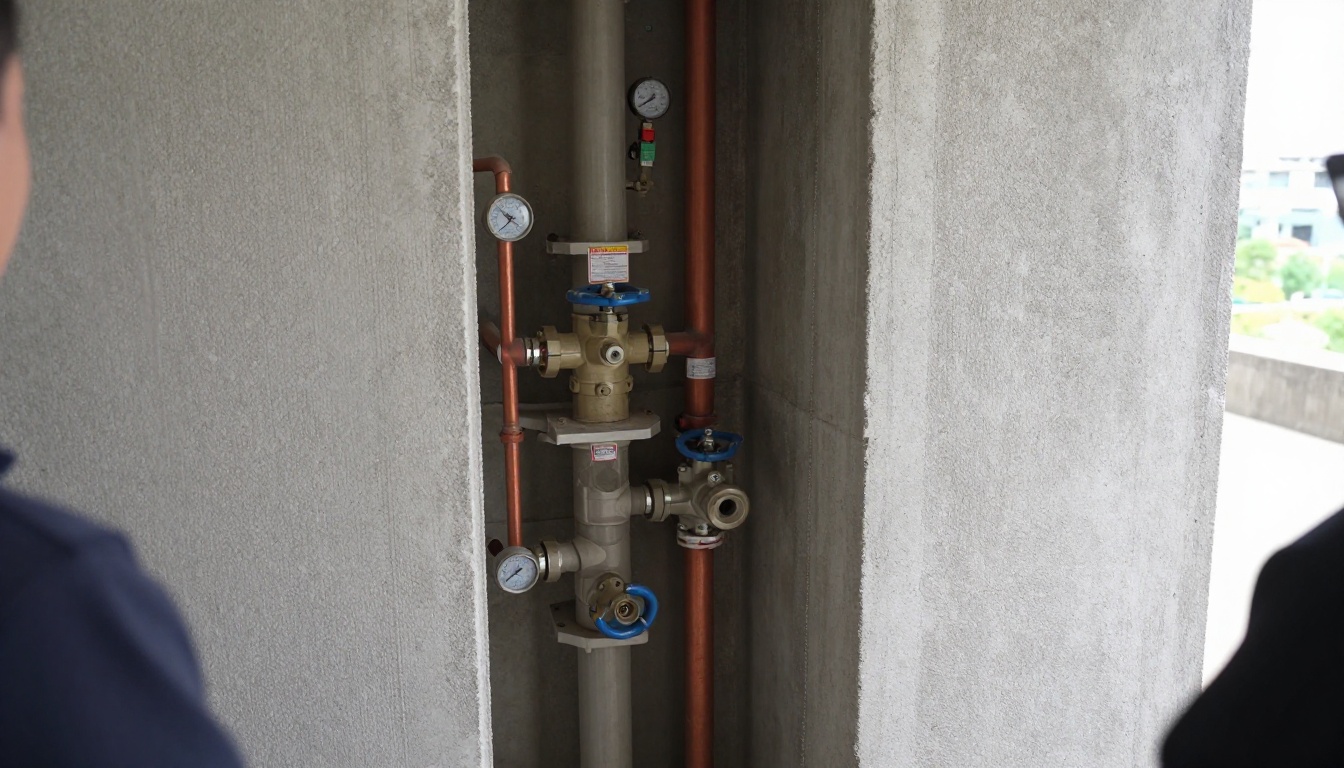
That is why pressure zones in high-rise buildings exist. A 25-storey tower in North York or Etobicoke may be split into two or three domestic water zones, each with its own pressure reducing station, booster controls, or both. The lower zone might serve floors 1-10, the mid-zone 11-20, and the upper zone 21-25 plus penthouse mechanical spaces. The exact split depends on floor-to-floor height, fixture requirements, pump design and whether the original engineer allowed for future fixture loads.
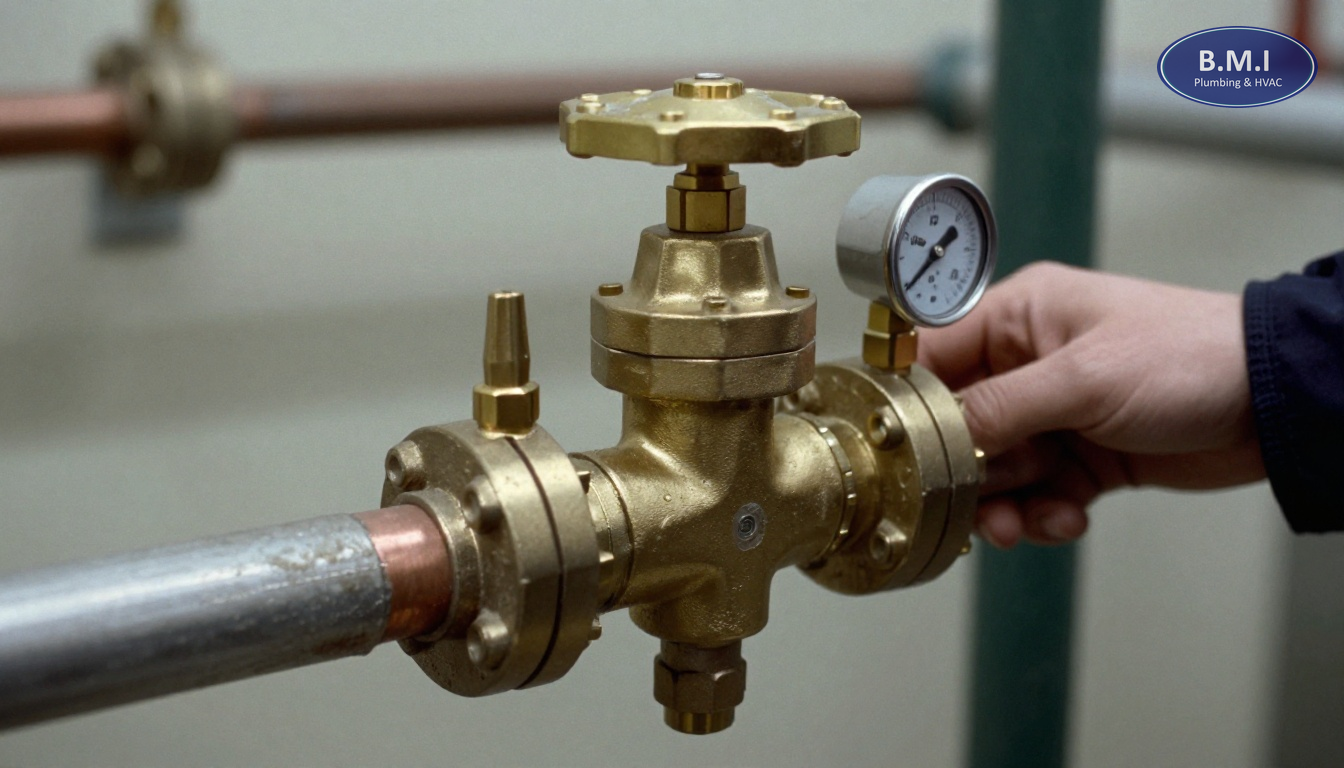
In practice, once a building gets above about 12 to 15 storeys, trying to serve all suites from one pressure regime creates a bad choice: either the top floors get barely usable pressure, or the bottom floors get punished with excessive pressure. That is why pressure reducing valve maintenance and booster control checks matter so much in older towers. The system is designed around zones, not around one number on a gauge.
Another detail managers are often not told: static pressure and usable pressure are not the same. A suite can show 55 psi static at a lavatory but still perform poorly if it drops to 22-28 psi under flow because a zone valve is partly shut, a strainer is fouled, or the PRV is hunting during peak demand. Residents describe that as “pressure comes and goes,” but the real issue is pressure stability.
What is actually happening when the top floors are weak and the bottom floors are strong
In most GTA high-rises, there are four recurring causes behind this complaint pattern. The building may have one of them or several at the same time.
1. The pressure zones are out of calibration
The lower floors may be receiving more pressure than intended because a PRV station was adjusted upward years ago to satisfy complaints elsewhere. That is common in 1970s and 1980s concrete high-rises in Toronto and Scarborough where original valve stations have been serviced repeatedly but not fully re-commissioned. A lower-zone PRV setpoint that should be around 60-65 psi may be drifting into the 80-90 psi range.
If the upper zone is still weak after that adjustment, it tells you the building was never short of pressure at the bottom; it was short of proper control at the top. In that case, replacing fixtures in suites will not solve anything. The starting point is the station itself, often with a review of pilot controls, bypass arrangements, gauges and isolation valves. Where stations are old or unstable, valve replacement sometimes becomes the more defensible decision than repeated rebuilds.
2. The booster pump system is meeting setpoint poorly, not failing completely
A true pump failure is usually obvious. What is more common is a booster set that technically runs but does not hold pressure well during morning or evening demand. Variable frequency drive systems can lose accuracy when sensors drift, pressure transducers age, control logic is altered, or check valves begin to leak by. On post-2010 glass towers in downtown Toronto and Vaughan, that can produce resident complaints only at peak demand windows, which makes the issue look intermittent.
A useful field clue: if top-floor residents say the shower is acceptable at 2 p.m. but poor between 6:30 and 8:30 a.m., think capacity or control stability before you think blockage. If they say the pressure is always poor, including late at night, think valve position, PRV setting, strainer fouling or suite-level restriction.
3. The risers or sectional valves are restricting flow
In early-1990s towers in North York and Mississauga, a common mistake is assuming domestic copper risers are fine because they are not leaking. They may still be restricting flow if a sectional valve was never fully reopened after prior work, if an older gate valve has lost its disc, or if internal scale and debris have narrowed the effective opening at branch connections. A 3-inch riser with one bad valve can starve an entire vertical line while the rest of the building appears normal.
This is where a valve audit earns its keep. In many buildings, the valve chart on file does not match what is physically installed. We regularly see mislabeled or seized sectional valves, and once you cannot isolate predictably, every diagnosis becomes slower and more expensive.
4. The hot water side is being confused with the cold water side
Residents often report “low pressure” when the real complaint is low hot water flow. Domestic hot water recirculation problems, balancing issues, crossover through failed mixing valves, or a partially restricted hot water PRV can make only one side feel weak. In winter, when inlet water is colder and demand rises, that becomes more visible. A board can easily approve the wrong work if nobody separates hot-side readings from cold-side readings.
If the issue is only hot water on upper floors, it may involve recirc lines, balancing valves or temperature control devices rather than the main domestic cold booster arrangement. That is one reason a proper investigation should include fixture testing in complaint suites, not just mechanical room readings.
How the problem presents in real condominium buildings
Managers rarely receive a ticket that says “zone differential across domestic risers indicates PRV instability.” They get resident language. The pattern in those complaints tells you a lot.
These are the reports that usually point to a common-element pressure zone issue rather than an isolated in-suite problem:
- Suites on the same upper floors report weak shower pressure at similar times of day.
- Cold water is acceptable, but hot water flow is poor above a certain floor.
- A kitchen tap feels normal, but a tub filler or rain shower loses performance because higher-flow fixtures expose pressure drop faster.
- Lower floors have a different symptom: running toilets, leaking cartridges, noisy solenoids, failed braided connectors, or repeated in-suite shutoff seepage.
- Pressure complaints started after a shutdown, pump service, PRV rebuild, or another contractor changed settings without a building-wide survey.
One specific sign non-plumbers often miss: if a suite sink drains normally but the pressure drops sharply when a second fixture is opened, that suggests a flow restriction or control issue upstream, not a resident perception problem. Another: if the suite above and below report similar symptoms, that points to the riser or zone. If one suite alone is affected, it is often local and belongs under in-suite plumbing rather than a common-element project.
In condominium townhouse complexes around Markham and Richmond Hill, the same logic applies even though the buildings are shorter. Those properties often have broad municipal pressure variation or ageing PRV assemblies at the building entry. The symptom is less “top floors versus bottom floors” and more “end units versus near-entry units,” but the diagnosis still starts with pressure zoning and control, not fixture replacement.
For managers, the most important administrative point is responsibility. The answer is usually found in the declaration and standard unit definition, but as a practical rule:
- Common element issues usually include booster systems, central PRV stations, main risers, recirculation lines, and sectional isolation valves.
- In-suite issues usually include fixture cartridges, braided supplies, angle stops, suite shutoffs, and local restrictions after the branch enters the unit.
That distinction matters because it drives chargebacks, insurance positions and whether a board can fund the work through operating budget, reserve fund, or owner responsibility. If the corporation diagnoses poorly, it often pays twice.
What a proper diagnosis looks like, and what evidence to insist on
If a contractor recommends replacing a pump, PRV station or riser without pressure readings from multiple levels, get more information before approving anything. A defensible diagnosis in a high-rise should include data, not opinion.
A proper pressure investigation usually includes:
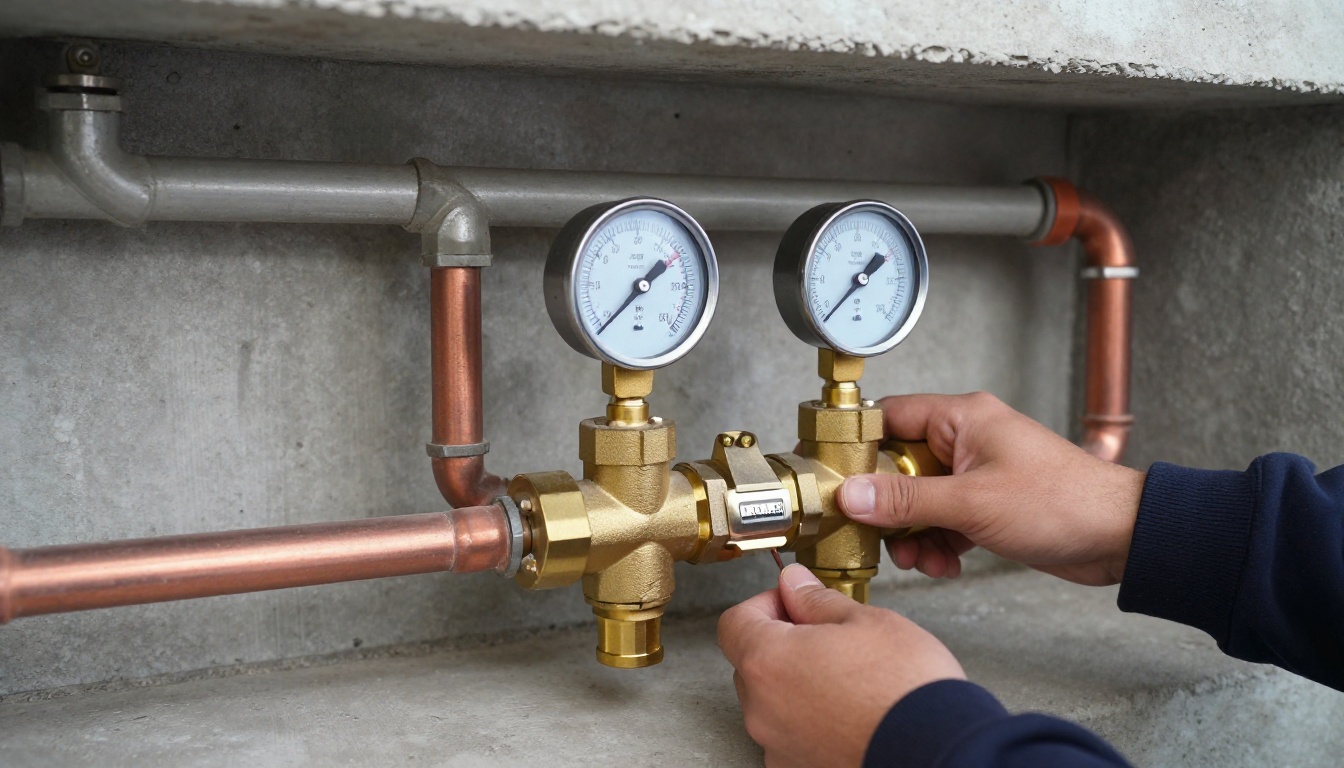
- Mechanical room readings at the incoming service, post-PRV discharge, booster suction and booster discharge.
- Static and flowing pressure tests in representative suites on low, mid and high floors.
- Review of zone splits, valve positions, bypasses and gauge condition.
- Verification of whether the complaint is on cold, hot or both.
- A written summary with probable cause, not just “monitor and advise.”
The minimum evidence a manager should ask for is a written report with actual numbers. “Pressure seems low upstairs” is not enough to take to a board. “Lower zone measured 92 psi static at floor 3 and upper zone dropped from 58 psi static to 24 psi flowing at floor 29 during morning demand” is evidence.
Where flow restrictions or hidden defects are suspected, a camera inspection may be useful on related drains, but for domestic pressure issues the more relevant tools are calibrated gauges, transducers, pump control review and selective valve verification. If isolation is unreliable, valve audit and charting should be considered part of the project, not an optional add-on.
In buildings we service along the waterfront, another factor sometimes appears in fall: incoming municipal pressure can vary enough with demand patterns that a system already close to its limits becomes unstable. That does not mean the City is the problem. It means the building has insufficient control margin. Good systems absorb those swings.
If leaks or active failures are already occurring at lower floors because of high pressure, that moves the work out of the “investigate next quarter” category and into repairs and service or even emergency plumbing if flooding risk is present.
Repair, rebalancing or replacement: how to decide
Not every pressure problem needs capital replacement. Some genuinely need adjustment and maintenance. Others are at the point where continuing to rebuild old components is false economy.
When maintenance and rebalancing are usually enough
A repair-first approach is reasonable when:
- The building has documented pressure zones and the problem is recent.
- PRV stations are serviceable and parts are still available.
- Booster pumps meet design flow but controls need recalibration.
- Isolation valves work and the risers are otherwise sound.
- The issue is clearly on one side, such as hot water recirculation imbalance.
In those cases, PRV maintenance, control tuning, gauge replacement, valve verification and selective in-suite testing can often restore performance without a major capital project. For buildings that have not been reviewed in several years, a scheduled maintenance program usually costs far less than repeated reactive calls.
When replacement is the more honest recommendation
Replacement becomes more likely when:
- PRV stations are original and unstable after rebuilds.
- Sectional valves are seized, untagged or unreliable.
- Domestic risers show repeated restrictions, leaks or inaccessible failed branches.
- The building has a known problematic material or era, including Kitec-era installations from roughly 1995-2007.
- Pressure complaints are building-wide and have persisted through multiple service attempts.
For domestic supply systems, that may mean riser replacement or, in more advanced cases, building re-piping. In some towers, pressure instability is aggravated by thermal movement and poor support conditions on vertical piping, which is why expansion compensators and guides should be reviewed at the same time. Replacing only the obvious failed valve while ignoring the movement issue can be penny-wise and pound-foolish.
For buildings with legacy Kitec or PEX-AL-PEX branches, pressure complaints often overlap with material risk. If the corporation is already opening suites repeatedly for branch repairs, Kitec replacement may be easier to defend than another cycle of piecemeal access.
A practical decision framework for boards
Ask three questions:
- Is the system failing control, or failing physically? Control issues can often be repaired. Physical deterioration usually escalates.
- Do we have enough isolation to work safely and predictably? If not, valve work may need to come first.
- Are we spending operating dollars on a reserve-fund problem? Repeated emergency calls are often a sign the wrong budget bucket is carrying the cost.
Toronto market cost ranges and what drives them
These are broad 2026 GTA market ranges, not quotations, but they are realistic enough to help with planning and reserve discussions.
| Item | Typical GTA range | Notes |
|---|---|---|
| Pressure investigation with readings and written findings | $900-$2,500 | Simple diagnostic, limited suites, one zone or one complaint pattern |
| Building-wide pressure survey with multiple zones and data logging | $2,500-$7,500 | Useful before major pump/PRV/riser decisions |
| PRV rebuild/service for a commercial-size station | $1,500-$4,000 per valve/station component | Depends on size, bypass arrangement, isolation and parts availability |
| PRV replacement | $3,500-$12,000+ per valve/station | Larger assemblies, bypasses and shutdown complexity increase cost |
| Valve audit and charting | $2,000-$10,000 | Driven by building size and number of valves |
| Sectional isolation valve replacement | $1,200-$4,500 per valve | Access, size and shutdown logistics matter |
| Booster control/sensor troubleshooting | $1,500-$6,000 | Excludes major pump replacement |
| Domestic riser replacement | $8,000-$30,000+ per riser line | Wide range based on height, access and finishes |
| Full building re-pipe | Often six to low seven figures | Usually planned over phases in occupied towers |
A few cost realities boards should know:
- Access drives price almost as much as pipe size. A 2-inch valve in an open room is simple; the same valve above a finished ceiling in an occupied corridor is not.
- In occupied condos, resident coordination, elevator protection, suite notices and after-hours shutdowns can add 15-30% to project cost compared with vacant buildings.
- If a building has poor isolation, even a “small” PRV or riser repair can become expensive because additional valves must be replaced first. That is why valve replacement projects often precede larger domestic water work.
On a 300-unit building, the difference between annual reactive pressure-related service calls and a planned corrective program can easily be tens of thousands of dollars over a few years, even before one insurance claim enters the picture.
Timelines, shutdowns and why fall is the right time to get numbers
October is one of the best months to address this issue because it sits between summer project congestion and winter failure season. In Toronto, Brampton and Oakville, once December arrives, contractors are pulled into freeze-ups, garage ceiling leaks and year-end emergency work. Pressure investigations that could have been planned become reactive.
Typical timelines look like this:
- Initial site review and pressure testing: 1 day for a focused complaint pattern, sometimes 2 days for multi-zone buildings.
- Written findings and budget options: often within several business days if access was complete.
- PRV maintenance or replacement: commonly 1 day of work per station, but shutdown planning can take 1-2 weeks.
- Valve audit: from 1 day in a small mid-rise to several days in a large tower.
- Riser replacement: often scheduled over weeks to months, with a 25-storey occupied building commonly staged in vertical lines rather than all at once.
For resident communication, realistic notice matters. In a condominium, management usually wants at least:
- 48 to 72 hours for suite access notices where entry is needed
- 3 to 7 days for planned water shutdown notices, depending on the building and governing documents
- Longer lead times if owners must move contents, book elevator protection, or accommodate vulnerable residents
A practical lesson from high-rise work: shutdown windows on paper are often too optimistic. A contractor may think a PRV swap is a four-hour job, but if the upstream butterfly valve does not hold, the shutdown can widen into multiple zones. That is another reason valve audits should not be deferred indefinitely.
If the board is doing budget planning now, ask for three numbers rather than one:
- The cost to investigate and stabilize this winter.
- The cost to repair and rebalance within 12 months.
- The cost to replace if the findings show end-of-life components.
That lets management present options instead of a single all-or-nothing recommendation.
What happens if you defer it
Deferral is not always wrong. If the issue is minor, seasonal and supported by stable readings, it may be reasonable to monitor for a year. But that is very different from deferring an unmeasured problem.
The upper-floor risk of deferral is mostly serviceability: owner complaints, poor fixture performance, and pressure instability that gets worse during winter demand. The lower-floor risk is more expensive: fixture failures, hose failures, leaks at stop valves, repeated toilet repairs and flood losses. Water pressure that sits too high quietly shortens the life of everything downstream.
This is where boards sometimes underestimate insurance exposure. A building that knows lower suites are seeing excessive pressure and does nothing may have a harder time explaining repeated water damage losses. Even if the declaration pushes some responsibility into the suite, the corporation still has to answer for the common-element system that delivered the pressure.
Reserve fund implications matter too. If the issue points to central PRV stations, ageing risers or isolation infrastructure, those are not random operating events. They are building system assets. If your reserve fund study is due for a Class 1, 2 or 3 update, this is exactly the kind of evidence that should be fed into it. A pressure problem with documented readings is much easier to justify in reserve planning than a stack of anecdotal resident complaints.
Where the problem overlaps with water consumption, some boards also look at MEV valve solutions or other water-saving measures, but those should not be treated as a substitute for proper pressure control. Conservation devices work best on a stable system, not as a bandage for bad zoning.
If you want a sense of how these projects are phased in occupied buildings, reviewing completed project examples can help frame the logistics before tendering.
FAQs
Is low pressure on the top floors always a booster pump problem?
No. In Toronto high-rises, top-floor pressure complaints are often blamed on booster pumps, but a large share turn out to be control issues elsewhere: a drifting pressure reducing valve, a failing pressure sensor, a partly closed sectional valve, a fouled strainer, or a recirculation imbalance on the hot side. In a 25- to 35-storey building, even a 5 to 10 psi control error can be the difference between an acceptable shower on the 28th floor and repeated owner complaints.
What pressure should suites actually see at the fixture?
As a practical target, most condo suites function well when static pressure at the suite is roughly 50 to 70 psi, with flowing pressure staying comfortably above about 35 psi during normal demand. Much above 80 psi at lower floors starts to become hard on fill valves, cartridges, braided supplies and ice-maker lines, while top floors that drop into the 20s under flow will feel weak even if static readings look acceptable.
Why do lower floors often have high pressure when upper floors are complaining about low pressure?
Because high-rise buildings do not operate as one simple pressure system. They are divided into pressure zones, and if a PRV station serving the lower zone is overfeeding, or if a booster set is being adjusted to satisfy upper floors without rebalancing the rest of the system, the bottom floors can end up at 85 to 100 psi while upper floors still struggle at peak times. That combination is common in older Toronto and Mississauga towers where controls have been adjusted over the years without a full pressure survey.
How do we confirm whether the issue is in-suite or a common element problem?
Pattern matters more than one complaint. If multiple suites on the same vertical line or upper pressure zone report weak pressure at similar times, that points to a common-element issue such as a riser, valve, PRV station or booster control problem; if one suite alone is affected, the cause is often local to that suite, such as a blocked stop, cartridge or braided connector. The defensible approach is to take gauge readings at the mechanical room, mid-zone and complaint suites, then compare static and flowing pressure in a written report.
What does a proper pressure investigation cost in Toronto?
For a condo or rental building in Toronto, North York or Vaughan, a focused diagnostic visit with gauge testing, valve checks and a written findings summary commonly lands in the low four figures, while a more detailed building-wide pressure survey across several zones can run from roughly $2,500 to $7,500 depending on access, number of suites sampled and whether data logging is used. That is usually money well spent before authorizing a five- or six-figure pump, PRV or riser project.
Can this wait until next year if residents are only complaining occasionally?
Sometimes yes, but not if the lower floors are already showing the other side of the problem: frequent toilet fill valve failures, leaking faucet cartridges, washing machine hose issues, or repeated pinhole and braided-supply leaks. Fall is the right time to investigate because winter pressure swings and holiday occupancy tend to expose marginal systems; a nuisance complaint in October can become an insurance claim in January if 90-plus psi is being delivered to the lower zone.
Next steps for boards and property managers
If your building is hearing both versions of the same complaint — no pressure upstairs, too much pressure downstairs — do not approve major work based on resident descriptions alone. Start with a pressure survey and zone review. If the building has not had its PRV stations checked in several years, or if valve records are unreliable, those are the first two places to spend money.
A practical fall action plan looks like this:
- Gather complaint locations by floor, stack line and time of day.
- Confirm whether the issue is hot, cold or both.
- Arrange a site visit for pressure readings at the mechanical room and representative suites.
- Ask for written options: maintenance, repair, and replacement.
- Use those numbers in next year’s operating and reserve discussions before winter exposes the weak points.
If you are not sure whether this is a common-element issue or a suite issue, or if your building has already had multiple adjustments with no lasting result, have the system reviewed before budget season closes. Brial Mechanical’s project and service team attends buildings before quoting, and scheduled maintenance work is usually easier and less expensive to coordinate than repeated reactive calls. For pressure-related failures that are already causing active leaks, 24/7 emergency plumbing response is available.
For related reading on recurring building plumbing issues, see the BMI blog.
Contact BMI
- Contact BMI
- Phone: (416) 845-3756
- Emergency: (416) 845-3756, answered 24 hours a day
- Email: info@brial.ca
More on condominium plumbing
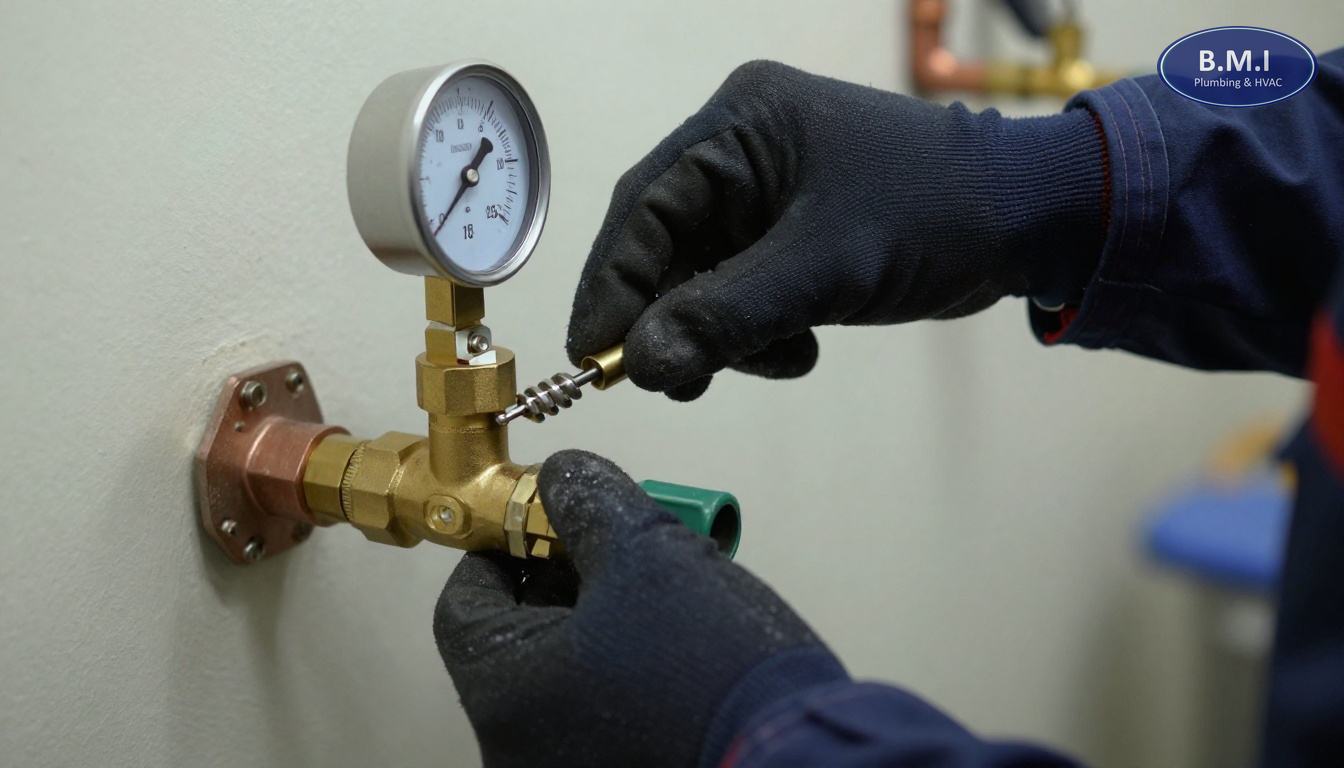
PRV Failure Symptoms in Toronto Condo Buildings
Learn the real PRV failure symptoms behind condo water pressure problems, with Toronto cost ranges, testing steps and …
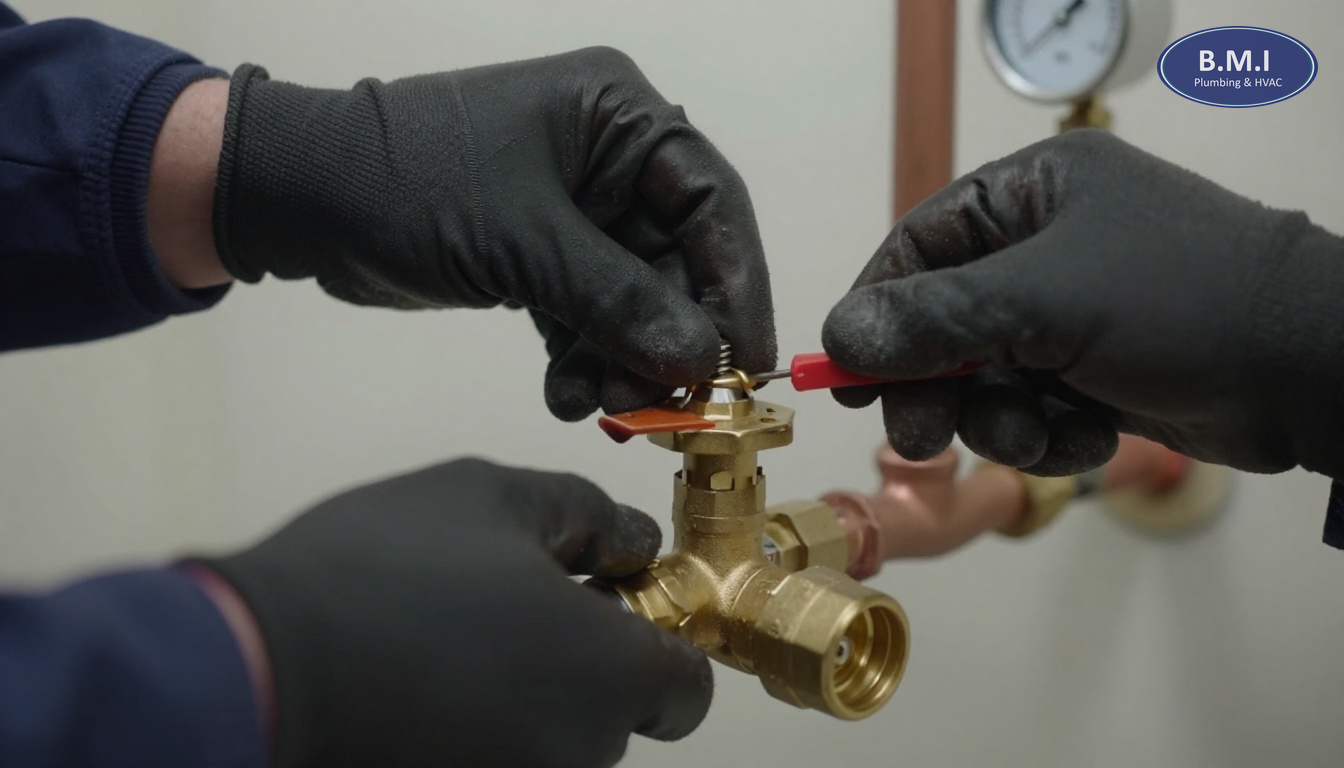
How Pressure Reducing Valves Work in a Toronto High-Rise
Understand pressure reducing valve operation in a condo high-rise, with Toronto cost ranges, failure signs, inspection …
Plumbing Vent Condo Problems in Toronto High-Rises
Understand plumbing vent condo and stack venting problems in Toronto high-rises: symptoms, diagnosis, costs, shutdowns …
Need a plumber in your building?
BMI services roughly 200 condominium and multi-residential buildings across Toronto and the GTA. Emergencies are answered at any hour.