Valve Exercise Programs in Toronto Condos: Why They Matter
A practical guide to valve exercise programs and valve maintenance for Toronto condos, with costs, timelines, shutdown planning and risk reduction.
Valve Exercise Programs in Toronto Condos: Why They Matter
Quick summary: A valve exercise program is one of the least glamorous maintenance items in a condominium, but it often determines whether a leak is a one-suite inconvenience or a 20-suite insurance event. In Toronto high-rises, the real value is not “turning valves for the sake of it”; it is proving which valves actually isolate, documenting what does not, and giving management a defensible plan before winter pressure swings and year-end budget season.
A common board assumption is that a valve either works or it does not, and that you only find out when you need it. In practice, that is not acceptable in a multi-residential building. In a 25-storey tower, one seized 3-inch riser valve can turn a routine in-suite repair into an all-day shutdown, elevator bookings, resident complaints, overtime labour and, if the valve will not close at all, an emergency cut-in of a new isolation point. That is why valve maintenance belongs in the same category as PRV maintenance, kitchen stack cleaning and other scheduled maintenance programs: you do it before the building forces the issue.
The misconception that costs buildings money
The mistake is thinking valves are static components. They are not. A valve that sits half a decade or longer without movement is exposed to scale, corrosion, stem packing deterioration and, in older buildings, simple neglect. Toronto water is not unusually aggressive compared with some municipalities, but in older copper and steel systems across Etobicoke, North York and Mississauga, the combination of mineral deposition and age is enough to lock up gate valves that were rarely operated after turnover.
In buildings from the 1970s and 1980s, we often find original gate valves on domestic water risers that still look intact from six feet away but no longer isolate properly. The gate may lift off the seat only partially, or the stem may spin without moving the gate at all. On paper the valve exists. In real operation, it is decorative. That is why a current valve audit matters more than an old mechanical drawing rolled up in the superintendent’s office.
A second misconception is that a failed valve is only a maintenance nuisance. It is usually a logistics problem first. If a suite shutoff fails and the branch valve also fails, management may need to notify a vertical stack of residents, coordinate access, protect elevators, and schedule a domestic water shutdown that affects people working from home. In fall, when boards are preparing next year’s operating and reserve budgets, that is the moment many managers realize they do not actually know which valves can isolate which zones.
What a valve exercise program actually includes
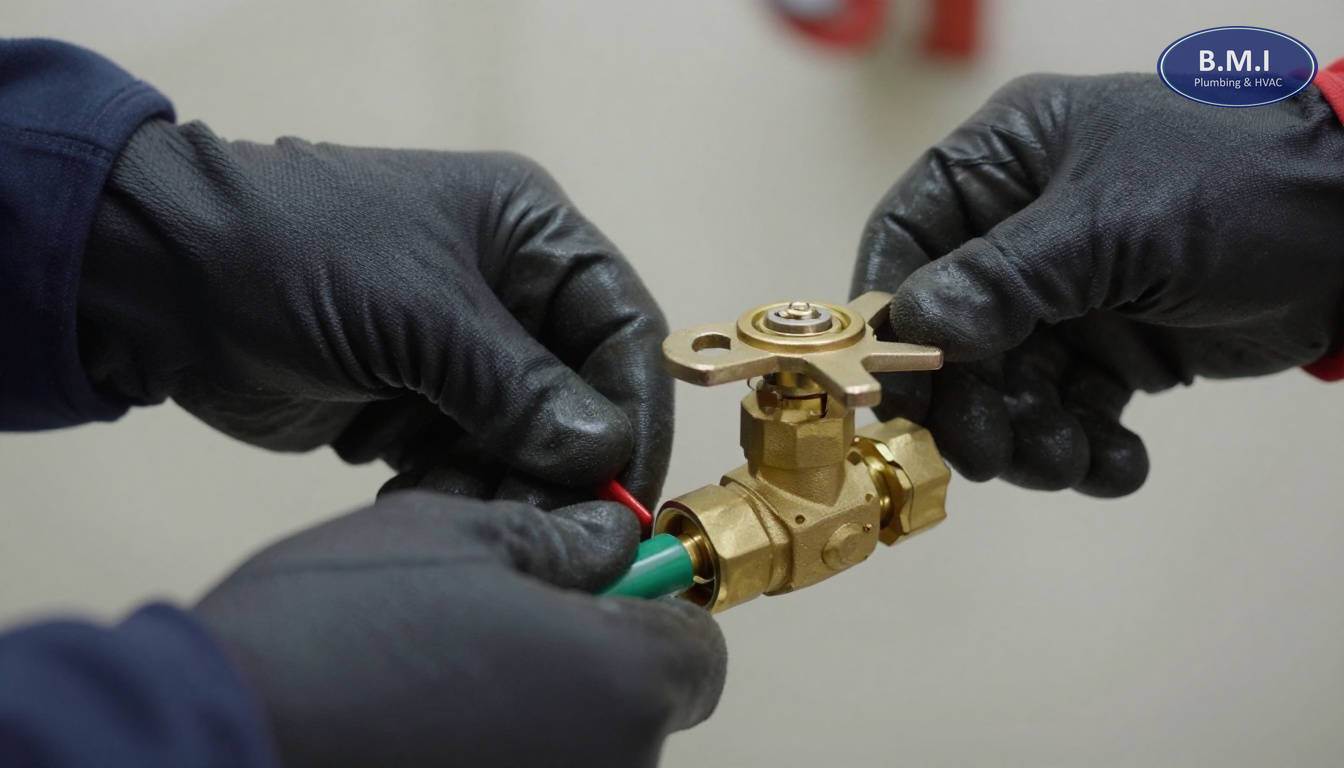
A proper valve exercise program is not a porter turning handles at random. It should be a documented process carried out by a licensed plumbing contractor that identifies critical valves, tests operability, notes leakage or seizure, and updates the building’s isolation map. The useful deliverable is not the motion of the valve. It is the record of what happened.
Typical scope in a condominium includes:
- Main domestic water shutoffs in the mechanical room
- Domestic cold water, hot water and recirculation sectional valves
- Riser isolation valves, often 3/4 inch to 2 inch depending on branch size and building layout
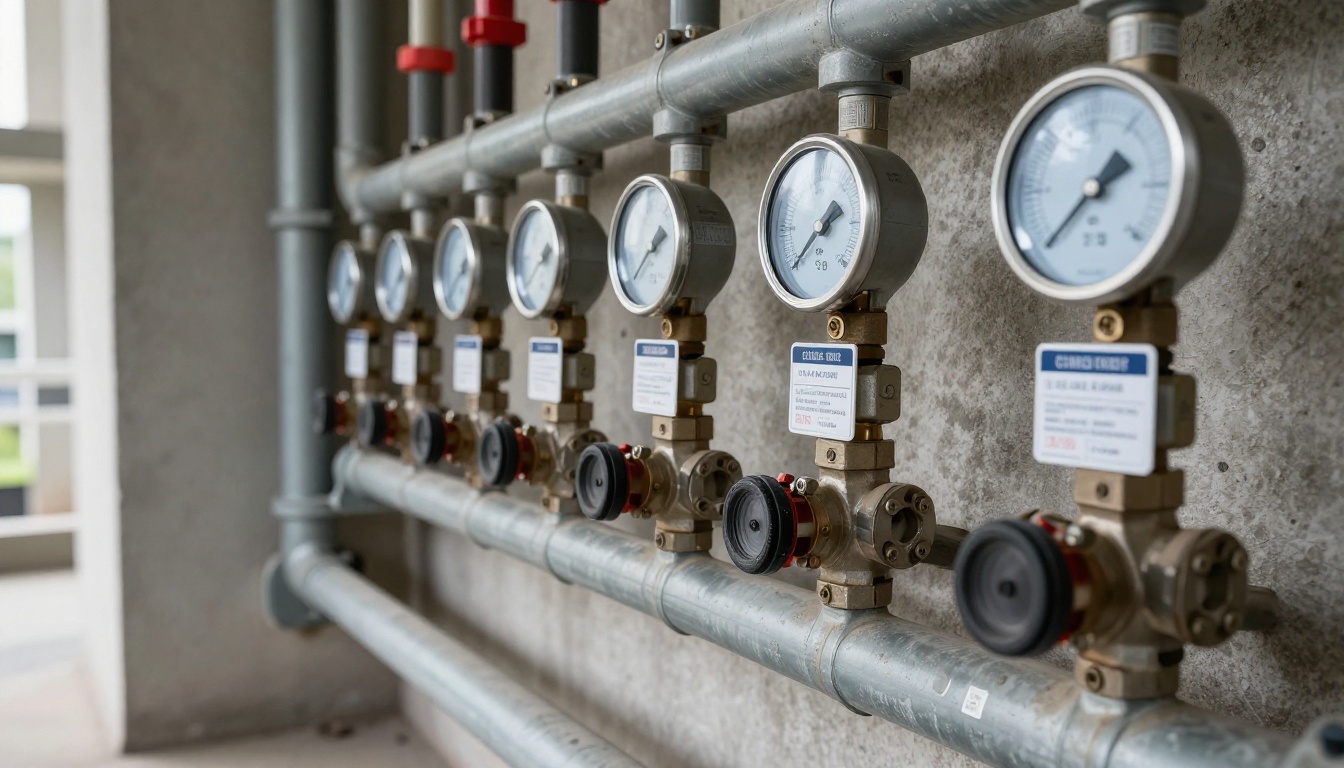
- PRV station isolation and bypass valves tied to PRV maintenance
- Booster pump suction and discharge valves
- Key service room and amenity area isolation valves
- Select drain, sump, backflow and make-up water valves where they affect emergency response
- Verification and tagging through a valve audit
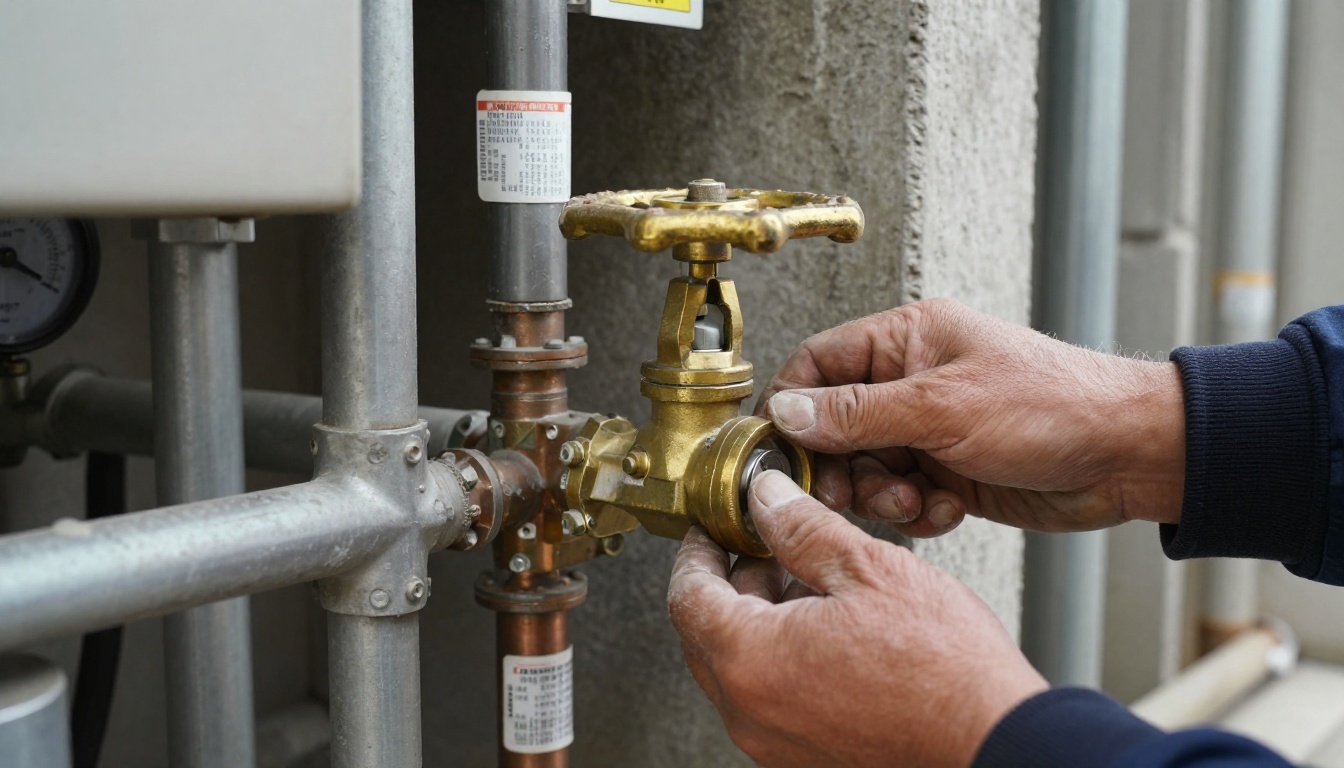
The test itself usually means operating the valve through a controlled portion or full cycle, confirming whether it moves freely, whether the stem or gearbox behaves normally, whether packing leaks develop, and whether the valve reasonably reseats. On larger butterfly valves, especially 4-inch to 8-inch valves in mechanical rooms or parking garage mains, the issue is often not seizure but incomplete closure, damaged gear operators or missing access.
In early-1990s towers in Scarborough and Vaughan, a common problem is that original valve identification was never updated after partial retrofits. You may have a domestic hot water return valve hidden above a ceiling bulkhead or behind storage installed later by residents. A good exercise program often uncovers access problems that have nothing to do with plumbing workmanship and everything to do with years of undocumented change.
Why valves fail in GTA condominium buildings
Valve failure patterns are strongly tied to building age, material and service type.
1970s and 1980s concrete high-rises
These buildings often have a mix of threaded brass or bronze gate valves, steel mains, copper branches and older mechanical room assemblies. Many still have original or near-original isolation valves. The most common issues are:
- Stem seizure from corrosion or lack of use
- Packing leaks once the stem is moved
- Gate separation, where the handle turns but the internal gate no longer travels correctly
- Incomplete shutoff because the seat is fouled or worn
In this age group, a valve may be 35 to 50 years old. Even if the pipe around it is still serviceable, the valve itself has exceeded the period where anyone should assume reliable operation.
Early-1990s towers
This period often has better domestic copper distribution but still many original gate valves, plus some early butterfly installations on larger lines. The common mistake we see in North York high-rises is assuming that because the risers are not yet due for full riser replacement, the valves are fine. In reality, valves and risers age differently. A 1-1/2 inch riser isolation valve may fail long before the copper riser itself needs replacement.
Kitec-era and mixed-material buildings, roughly 1995-2007
Buildings in Toronto, Markham and Mississauga from this period may have a combination of copper mains, brass valves and Kitec or PEX-AL-PEX in suites or branches. Valve exercising matters here because once Kitec replacement work starts, isolation reliability becomes critical. If branch valves do not hold, a simple suite opening can become a stack shutdown.
Post-2010 glass towers
Newer is not the same as maintenance-free. Many newer buildings have more compact service spaces, more concealed valves and more dependence on accurate as-builts that are not always accurate. Ball valves are generally more reliable than old gate valves, but poor access, missing labels and turnover-era shortcuts still create shutdown problems. We also see newer valves damaged by being forced with cheater bars when they were installed too tightly against adjacent fittings.
How valve problems actually show up in the field
Property managers rarely call and say, “I think we need a valve exercise program.” They call because something routine became complicated.
The most common scenarios are:
- An in-suite toilet or faucet repair turns into a larger shutdown because the local shutoff will not close. This often starts with a service call for a running toilet or leaking angle stop, then escalates when upstream isolation is unreliable. That is where in-suite plumbing work intersects with common element planning.
- A leak on a domestic water riser cannot be isolated cleanly, so multiple floors lose water while crews trace the correct valve.
- A PRV service visit reveals the station isolation valves are seized, which means the pressure reducing valve cannot be safely serviced without a broader shutdown. That is one reason PRV maintenance and valve exercising should be planned together.
- During an emergency, staff discover the valve chart is wrong. The tagged “hot water return” valve actually controls a different branch, or a valve believed abandoned is still live.
- A contractor recommends replacing a large run of pipe when the real immediate problem is that no workable isolation exists for targeted repairs.
One specific sign that managers often miss: if repeated small jobs in different suites on the same line keep requiring wider shutdowns, the issue is usually not bad luck. It usually means the branch or riser isolation strategy has degraded. On a 300-unit building, that can add tens of thousands of dollars in avoidable labour and notice administration over a few years.
What a proper inspection should produce
If management is paying for valve maintenance, insist on evidence that can be used later. A useful program should produce more than a work order saying “valves checked.”
At minimum, ask for:
- A valve inventory or updated chart by location and service
- Identification of valve type: gate, ball, butterfly, check isolation, PRV bypass, etc.
- Operability status: operational, stiff, seized, leaking, failed to reseat, inaccessible
- Notes on whether the valve fully isolates or only partially throttles
- Priority ranking for replacement
- Photos where access or identification is an issue
- Recommendations tied to valve replacement where needed
For larger sites, the best reports break valves into categories such as critical immediate, replace within 12 months, and monitor on next cycle. That distinction matters for boards. A building may not need to replace 40 valves this year. It may need to replace 6 critical ones now, budget 10 more next year, and continue exercising the rest.
Another point that is often overlooked: a valve chart should align with emergency response. If a pipe bursts after hours and building staff call for emergency plumbing, the on-call plumber should not be decoding handwritten tags from 2004 while water is entering five suites. The chart should tell staff which valves isolate the north hot water riser, the 12th-floor laundry branch, or the make-up line to a booster set.
Repair, replace, or keep exercising: a decision framework
Not every bad valve means a capital project. But not every stiff valve should be left alone either.
When exercising is enough
A valve can usually stay in the maintenance program when:
- It operates through its intended range without excessive force
- It reseats properly with no ongoing leakage
- Packing seepage is minor and correctable
- Access is safe and practical
- The valve is not on a critical line where partial function is unacceptable
This is common with newer brass ball valves and some butterfly valves that were installed correctly and used periodically.
When replacement is the better answer
Replacement is usually justified when:
- The valve is seized or stem travel is unreliable
- It will not hold isolation on a critical riser or branch
- It leaks from the body, bonnet or stem after operation
- The valve is obsolete, damaged or inaccessible
- The line is being opened anyway for adjacent work, such as riser replacement or expansion compensator replacement
In older Toronto and Etobicoke towers, one of the best-value upgrades is replacing key original gate valves with full-port ball valves on smaller branch sizes and quality butterfly valves with gear operators on larger mains where appropriate. The improvement is not theoretical. It reduces future shutdown duration because the valve actually closes and reopens predictably.
When to step back and get a second opinion
If a contractor recommends wholesale valve replacement without a chart, no operational testing and no explanation of which valves are critical, get a second opinion. Some buildings do need broad replacement programs. Many do not. In a 20-storey building, replacing every visible valve can become a six-figure scope very quickly. A staged plan based on verified condition is usually more defensible.
Toronto-market cost ranges and what drives them
The numbers below are budgetary estimates for the GTA, not quoted prices. Actual costs vary with access, asbestos protocols, ceiling restoration, after-hours work, valve size, pipe material and whether temporary shutdowns can be done in normal working hours.
| Scope | Typical GTA budget range | Notes |
|---|---|---|
| Basic valve exercise visit for a small mid-rise | $1,500-$4,000 | Usually 20-60 valves, limited chart updates |
| Larger high-rise exercise and documentation program | $4,000-$12,000 | Often 80-250+ valves, multiple service areas |
| Detailed valve audit with charting and tagging | $3,000-$15,000 | Depends heavily on building complexity and record quality |
| Replace 3/4 inch to 1 inch branch ball valve | $450-$1,100 each | Access and shutdown scope matter more than valve cost |
| Replace 1-1/2 inch to 2 inch isolation valve | $1,200-$2,500 each | Common on riser branches and service rooms |
| Replace 3 inch to 4 inch sectional valve | $2,500-$6,000 each | Mechanical room work, often daytime with planned shutdown |
| Replace 6 inch main or specialty isolation valve | $6,000-$15,000+ | Can require rigging, grooving, bypass planning or extended shutdown |
The non-obvious cost driver is usually not the valve itself. A good 2-inch brass or bronze valve is a small part of the invoice. The expensive part is isolating the line, draining it, opening ceilings or walls, restoring service, and coordinating access notices. In occupied towers in Toronto or Richmond Hill, after-hours shutdowns can add 20% to 40% compared with a straightforward daytime mechanical room replacement.
There is also a financial argument boards respond to. If one failed sectional valve turns three routine suite repairs per year into broad shutdown events, the building may spend more on reactive labour, notices and resident disruption over 24 months than it would on replacing the valve proactively.
Scheduling, notices and fall timing
Fall is the right time to address valves for two reasons. First, boards are building next year’s budget. Second, winter is when weak isolation points become expensive. Pressure swings, holiday occupancy and emergency response delays around year-end all make bad valves more painful.
A realistic schedule looks like this:
- Small mid-rise: half day to one day for exercise and basic chart verification
- Large high-rise: one to three days depending on valve count and access
- Follow-up replacements: from a few hours for isolated branch valves to several staged shutdowns for larger mains
For resident communication, most buildings should give:
- 48 to 72 hours for minor planned shutdowns where the affected area is narrow
- 5 to 7 days when multiple floors or stacks are affected
- Longer notice where suite access is required or elderly/vulnerable residents need accommodation
A common mistake is trying to combine too many unknowns into one shutdown. If the building has not had a current valve audit, do not schedule six suite repairs and a PRV service on the assumption that every isolation point will cooperate. It is better to verify first, then batch work intelligently.
In buildings we service along the waterfront, another fall issue is mechanical room humidity and corrosion around lower-level mains. Valves near incoming service rooms and garage-adjacent spaces often age worse than upper riser valves because of environmental conditions, not because they are used more.
Common element versus in-suite responsibility
This is where managers get cornered in meetings, so it is worth being precise. The answer depends on the declaration, but the practical rule in most condominiums is that riser valves, branch isolation valves, mechanical room valves and other system control valves are common element infrastructure, even if they exist to facilitate work that eventually happens inside a suite.
The resident sees a leaking faucet and assumes it is their problem. That may be true for the fixture itself, and toilet and faucet repairs may be owner-chargeable. But if the suite shutoff fails and the floor branch valve serving several units also fails, the corporation is now dealing with common element isolation. That is not just a billing distinction. It affects notice obligations, contractor access and insurance reporting.
Section 98 alterations complicate this further. In some Toronto and Markham condos, owners renovated kitchens or bathrooms and concealed valves behind millwork, tubs or custom ceilings. Even if the altered area is owner responsibility, the corporation still bears risk if emergency isolation is obstructed. That is one reason boards should care about valve charting and access standards, not just plumbing condition.
What happens if you defer it
Deferral rarely creates a dramatic visible problem immediately. It creates a hidden reliability problem that surfaces at the worst time.
The usual consequences are:
- Broader water shutdowns than necessary
- Longer repair durations because crews spend time searching for usable isolation
- Higher emergency labour costs
- More invasive access into suites and ceilings
- Greater chance of insurance claims if water cannot be stopped quickly
- Weaker reserve fund planning because the building does not know which valves are near end of life
From an insurance perspective, the key issue is mitigation. If a leak runs longer because the building could not isolate promptly, that is difficult to explain after the fact. No insurer expects every component to be new, but they do expect reasonable maintenance of common systems. A documented maintenance program is much easier to defend than a reactive history of “we assumed the valve would work.”
Reserve fund studies also benefit from real valve data. A consultant can assign more credible timing to sectional valve replacement if management can show which valves were exercised, which failed and which were replaced. That is better information than guessing based on age alone.
A practical plan for boards and property managers
If your building has never had a structured valve program, do not overcomplicate the first step.
- Start with a critical valve audit: mains, PRV station valves, riser and branch isolation, booster pump valves, and any valves needed for recurrent service calls.
- Exercise and document those valves first.
- Replace the failures that create the biggest operational risk.
- Update the chart and store it where building staff and emergency responders can use it.
- Fold the building into a recurring valve audit and broader maintenance program cycle.
On a 300-unit building, the first round often identifies a manageable number of true priorities. It is rarely every valve in the building. More often it is a cluster of 5 to 15 critical failures that have been silently complicating repairs for years.
If your building is also considering valve replacement, riser replacement or larger project solutions, coordinate the scopes. Opening the same ceiling twice in two different years is avoidable. So is planning a riser project without first knowing whether the sectional valves below and above it are usable.
FAQs
How often should condominium valves be exercised?
For most Toronto condominium buildings, sectional and isolation valves should be exercised on a scheduled cycle of roughly 12 to 24 months, not left untouched for a decade. Older gate valves from 1970s to early-1990s buildings often benefit from annual exercising because mineral buildup, stem corrosion and packing failure become more likely with age. The right frequency depends on valve type, location, service criticality and whether the building has a current valve chart.
Does exercising a valve increase the chance that it will fail?
Yes, sometimes it does, and that is precisely why a controlled maintenance program is better than discovering the problem during a flood at 2 a.m. A valve that snaps a stem, leaks at the packing nut or will not reseat after movement was already near failure; the program simply exposes that weakness under planned conditions with tools, labour and replacement parts available. In practice, finding a bad valve during daytime maintenance is far cheaper than finding it during an emergency shutdown affecting 40 or 140 suites.
What valves are usually included in a valve exercise program?
A proper condominium program usually includes domestic cold water and hot water sectional valves, recirculation line valves, riser isolation valves, suite branch valves where applicable, PRV bypass and isolation valves, mechanical room main shutoffs, and often key drain, booster pump and backflow preventer isolation valves. In some buildings, storm, sanitary or garage service valves are also charted if they affect emergency response. The point is not to turn every handle in the building blindly, but to identify the valves that matter when water has to be stopped quickly.
What does a valve exercise program cost in the Toronto market?
As a broad GTA estimate, smaller mid-rise buildings may spend about $1,500 to $4,000 for a basic documented exercise visit, while larger high-rises with 80 to 250-plus valves commonly fall in the $4,000 to $12,000 range depending on access, after-hours work and whether charting is included. If multiple valves fail and need replacement, costs rise quickly: a straightforward 2-inch ball valve replacement might land around $1,200 to $2,500, while larger 4-inch to 6-inch sectional valves in mechanical rooms can be several thousand dollars each. Buildings should budget separately for maintenance versus corrective replacement.
Can a building rely on old valve tags and mechanical drawings instead of a current valve audit?
Not safely. In many Toronto, North York and Scarborough towers, original tags no longer match field conditions because risers were altered, suites were renovated under section 98 agreements, or previous repairs changed valve locations without updating records. A current valve audit with field verification is far more reliable than a 20-year-old drawing when a leak is running through occupied suites.
Who pays when a failed isolation valve affects work inside a suite?
Usually the answer depends on the declaration and where the valve sits in the system, but common element isolation valves serving risers, branches or mechanical equipment are typically a corporation responsibility. Suite fixtures and some in-suite shutoffs may fall to the owner, especially if they were altered during renovations. This distinction matters because an owner may think a faucet replacement is simple, but if the suite shutoff does not hold and the floor branch valve also fails, the corporation can suddenly be involved in common element work and broader shutdown logistics.
Next steps
If your building has not exercised and charted its critical valves in the last two years, this is the right season to do it. Before winter pressure swings, holiday staffing gaps and next year’s budget approvals, have the valves that matter verified under controlled conditions.
BMI attends the building before quoting larger maintenance scopes because valve work is highly building-specific. A 12-storey 1980s mid-rise in East York does not need the same program as a 40-storey downtown Toronto tower or a townhouse complex in Vaughan with multiple service rooms and buried assumptions about shutoffs. If you want a defensible plan, start with the valves that control risk, not with a generic checklist.
For related reading, see BMI’s blog, review our maintenance programs, or request a site visit if your team is trying to decide between ongoing valve maintenance and targeted valve replacement.
Contact BMI
- Contact BMI
- Phone: (416) 845-3756
- Emergency: (416) 845-3756, answered 24 hours a day
- Email: info@brial.ca
More on condominium plumbing
Booster Pump Condo Guide for Toronto Buildings
A practical Toronto guide to booster pump condo service, failure signs, replacement costs, shutdowns, and what boards …
Grease Interceptor Condo Guide for Toronto Buildings
A practical Toronto guide to grease interceptor condo issues, commercial tenant plumbing risk, costs, maintenance, and …
Thermal Expansion Tank for Toronto Condo Buildings
A practical guide to thermal expansion tanks in Toronto condo buildings: symptoms, code context, costs, sizing, failure …
Need a plumber in your building?
BMI services roughly 200 condominium and multi-residential buildings across Toronto and the GTA. Emergencies are answered at any hour.