Water Hammer in Toronto Condos: Causes and Fixes
A practical guide to water hammer in Toronto condos: why banging pipes happen, how to diagnose them, repair options, costs and shutdown logistics.
Water Hammer in Toronto Condos: Causes and Fixes
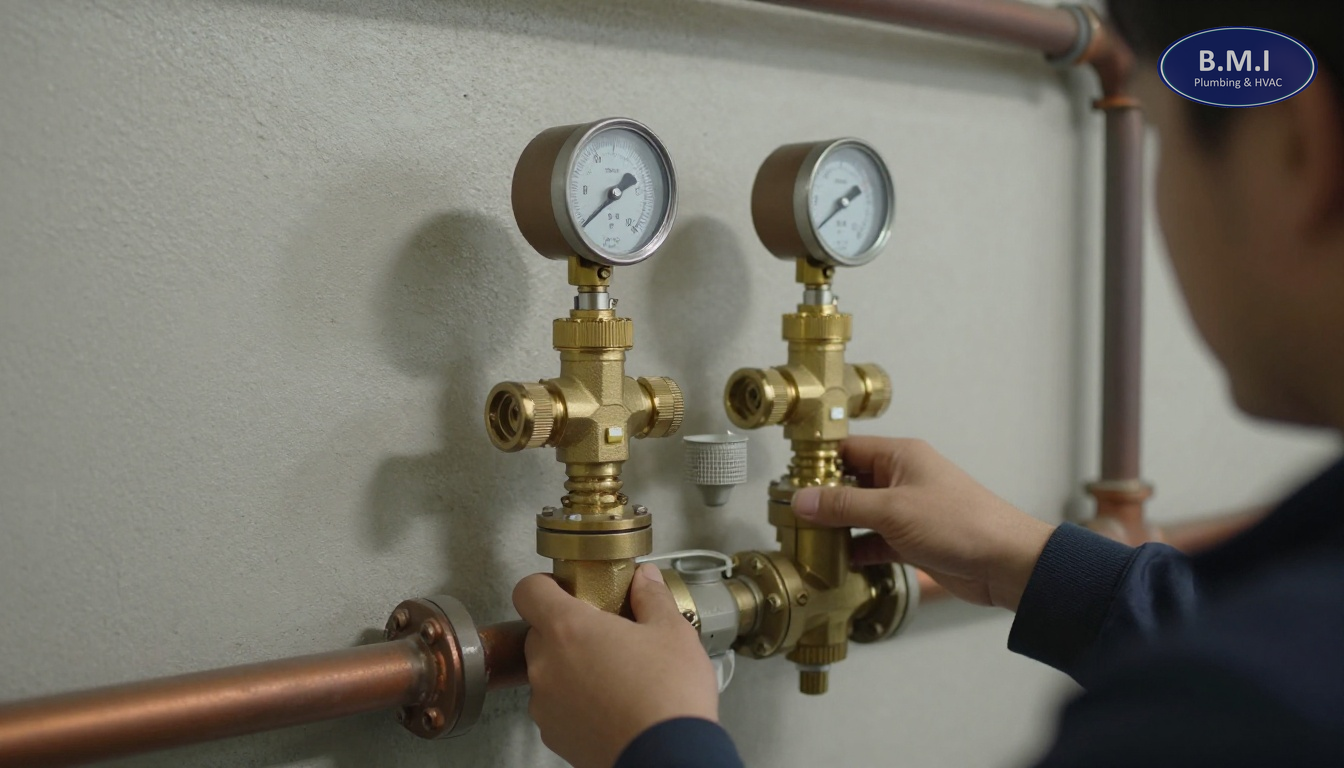
Quick summary: In a condominium, water hammer is usually not just “old pipes making noise.” It is a pressure-and-movement problem caused by fast-closing valves, failing PRVs, loose supports, thermal movement, or a bad combination of all four. In Toronto high-rises, the fix is often less about one noisy suite and more about understanding whether the source is in-suite, riser-level, or building-wide before the board spends money in the wrong place.
A common mistake in Toronto, North York and Mississauga towers is treating every banging sound as the same problem. It is not. A sharp metallic crack at 6:30 a.m. when residents shower is a different failure mode from a dull thud after a dishwasher cycle in one stack, and both are different again from expansion noise on a domestic hot water riser. The reason that distinction matters is simple: one may be a $400 suite service call, another may point to a pressure reducing valve issue in the mechanical room, and another may belong in next year’s reserve fund planning rather than in today’s emergency budget.
The fast diagnosis: what kind of banging pipe problem do you actually have?
The phrase banging pipes gets used loosely by residents, but the first job is to classify the sound. In buildings we service across Toronto and Scarborough, three complaints account for most calls:
A single sharp bang when a fixture shuts off
- Often tied to true water hammer.
- Common culprits: dishwasher solenoid valves, ice makers, laundry boxes, flush valves, quick-closing single-handle faucets.
- More common where static pressure is elevated, usually above about 80 psi.
A series of knocks or chatter while water is running
- Often points to a loose washer, failing cartridge, unstable PRV, or a partially closed valve vibrating under flow.
- We see this in older brass stops and in deteriorated balancing valves more than people expect.
A dull thud or ticking when hot water is used, especially mornings
- Frequently not hammer at all, but pipe expansion and contraction.
- This is common on vertical hot water risers where guides or compensators are worn, missing, or seized.
- If this is the issue, expansion compensator replacement or support correction may be more relevant than arrestors.
That distinction is why a general repairs and service call should start with a pattern review, not just opening walls. If the complaint comes from one suite only, the odds favour a local fixture branch. If three vertically stacked suites report the same bang after dishwasher discharge or fill, suspect the branch arrangement or stack zone. If the whole building starts complaining after a domestic water shutdown or PRV replacement, look at the mechanical room first.
A non-expert detail worth knowing: water hammer is usually worse after other work has been done. New cartridges, new toilets, new laundry valves and even recently exercised isolation valves can change closing speed and flow characteristics enough to expose a support or pressure problem that had been hiding for years.
Why water hammer happens in condo buildings, not just in theory
At a technical level, water hammer is a pressure wave. Water moving through a pipe has momentum. When a valve closes quickly, that moving column of water has to stop, and the energy turns into a shock wave that travels through the piping system. In a condominium, that wave can travel much farther than residents realize because the piping network is vertical, pressurized and shared.
In early-1990s towers in North York and Vaughan, we often see Type M copper branch piping and copper risers that are still serviceable but less forgiving when supports loosen over time. In 1970s and 1980s concrete high-rises in Toronto and Etobicoke, the issue may be a mix of older copper, galvanized sections, undersized arrestors added years later, and PRV stations that have drifted out of calibration. In post-2010 glass towers, the pipe material may be newer, but the number of quick-closing fixtures is much higher, especially with compact dishwashers, electronic faucets and pressure-balancing or thermostatic shower valves.
A few real-world causes matter more than generic explanations:
1. Excessive pressure amplifies every closure
Most residents never know their suite pressure. In a properly controlled zone, we often expect something in the 55-75 psi range under static conditions, though some buildings are set a bit higher depending on height and demand. Once you start seeing 85-100 psi at suites, fast-closing valves become much louder and more destructive. High pressure also shortens the life of toilet fill valves, braided connectors and cartridges, which is why recurring fixture failures often travel with hammer complaints.
If the building has not had regular PRV maintenance, the pressure issue may not be obvious because the complaint reaches management as “noise,” not “pressure.” A bell-shaped 2", 2-1/2" or 3" PRV from Watts, Wilkins or Cash Acme can drift, foul, or hunt under demand long before it fails completely.
2. Loose or missing supports turn pressure waves into noise
A water hammer event is one thing; hearing it is another. Pipes make noise when they move and strike framing, slab penetrations, riser clamps, or each other. On a 25-storey building, even a small amount of movement at one floor penetration can echo several floors away. We see this in riser closets where supports have corroded, insulation has compressed, or prior access work was closed up without proper re-securing.
This is where a valve audit and charting program can unexpectedly help. Buildings that have poor valve records often also have poor records of where riser access, bulkhead openings and prior repairs occurred. The same buildings tend to have more hidden support issues because nobody has a reliable map of past interventions.
3. Thermal expansion gets mistaken for hammer
Domestic hot water risers expand every day. Copper expands roughly 1 inch per 100 feet for about every 100°F temperature rise, which means a tall riser can move enough to tick, pop or knock if guides and anchors are not doing their job. In older Toronto and Markham high-rises, residents often report “hammer” only during the morning hot water peak. That usually points away from arrestors and toward riser restraint, guide spacing or compensator condition.
4. Fixture technology changed faster than many buildings did
A 1985 tower may now contain 300 different combinations of owner-renovated fixtures. Some owner-installed appliances have very fast-closing solenoids. Some suites have had original rough-ins altered under Section 98 agreements, some without proper review. That matters because a building can inherit noise from private alterations, but the pressure wave still travels through common piping. This is why in-suite plumbing investigations need to be tied back to the declaration and alteration records, not just the complaint ticket.
How water hammer presents in a building, and the clues that narrow it down
The most useful information is not “the pipes bang.” It is when, where, and after what fixture action. Property managers who gather the right details usually cut the diagnosis time in half.
Here are patterns that actually mean something:
Kitchen sink drains normally, but a bang happens when the dishwasher finishes filling
- Likely a quick-closing solenoid issue, often local to the suite branch or nearby stack line pressure.
- Not a drain problem, so sending a drain cleaning crew first usually wastes a visit.
A resident hears one loud thud only when the toilet fill stops
- Often tied to high pressure, a failing fill valve, or a branch without adequate arrestor protection.
- If several suites report it at once, check zone pressure before replacing multiple toilets.
Noise occurs only when hot water is first used in the morning
- More suggestive of expansion movement than true hammer.
- Ask whether the sound repeats as a tick-tick-tick rather than a single crack.
Noise became worse after a shutdown
- Air pockets are often blamed, but in multi-residential buildings that is not usually the full story.
- More often, a PRV, check valve, balancing valve or fixture cartridge was already marginal and the shutdown changed the operating conditions enough to expose it.
Multiple vertically aligned suites hear it, but only on one side of the building
- That points toward a riser, pressure zone, or support issue, not a random owner fixture.
In waterfront Toronto towers and some Mississauga high-rises, pressure complaints can also be seasonal. Fall is when boards should pay attention because domestic systems start seeing different demand patterns, heating season changes mechanical room conditions, and buildings heading into winter do not want to discover a weak valve or support after hours in January. This is why autumn is a sensible time to combine hammer complaints with broader maintenance programs planning.
What a proper condo diagnosis should include
The right diagnosis is evidence-based. If a contractor cannot explain whether the issue is pressure, movement, fixture closure, or thermal expansion, the board should ask for more than a verbal opinion.
A defensible investigation typically includes:
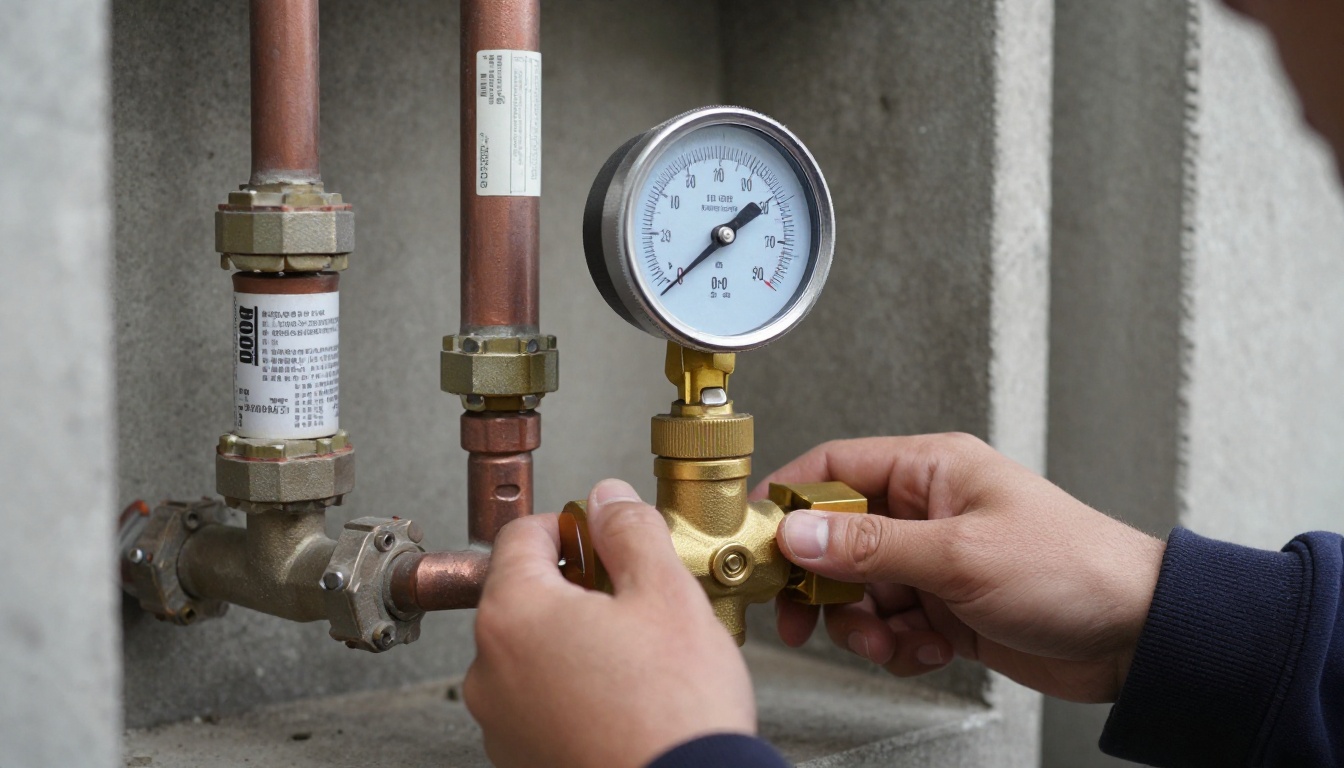
Pressure readings at more than one location
At minimum, take static and flowing pressure readings:
- At the mechanical room downstream of the PRV
- At one or more affected suites
- On both hot and cold where relevant
A suite reading of 92 psi with a closing dishwasher valve tells a different story from a suite reading of 58 psi with a hot-water-only knock. Pressure should be logged during the complaint window where possible, not just midday when the building is quiet.
Identification of the triggering fixture
A good technician should reproduce the sound. That may mean cycling a dishwasher, operating a laundry valve, flushing a toilet repeatedly, or opening and closing a shower valve in sequence. In many condos, the resident’s description of “it happens randomly” becomes “it happens 8 seconds after the washing machine fill stops” once someone actually tests it.
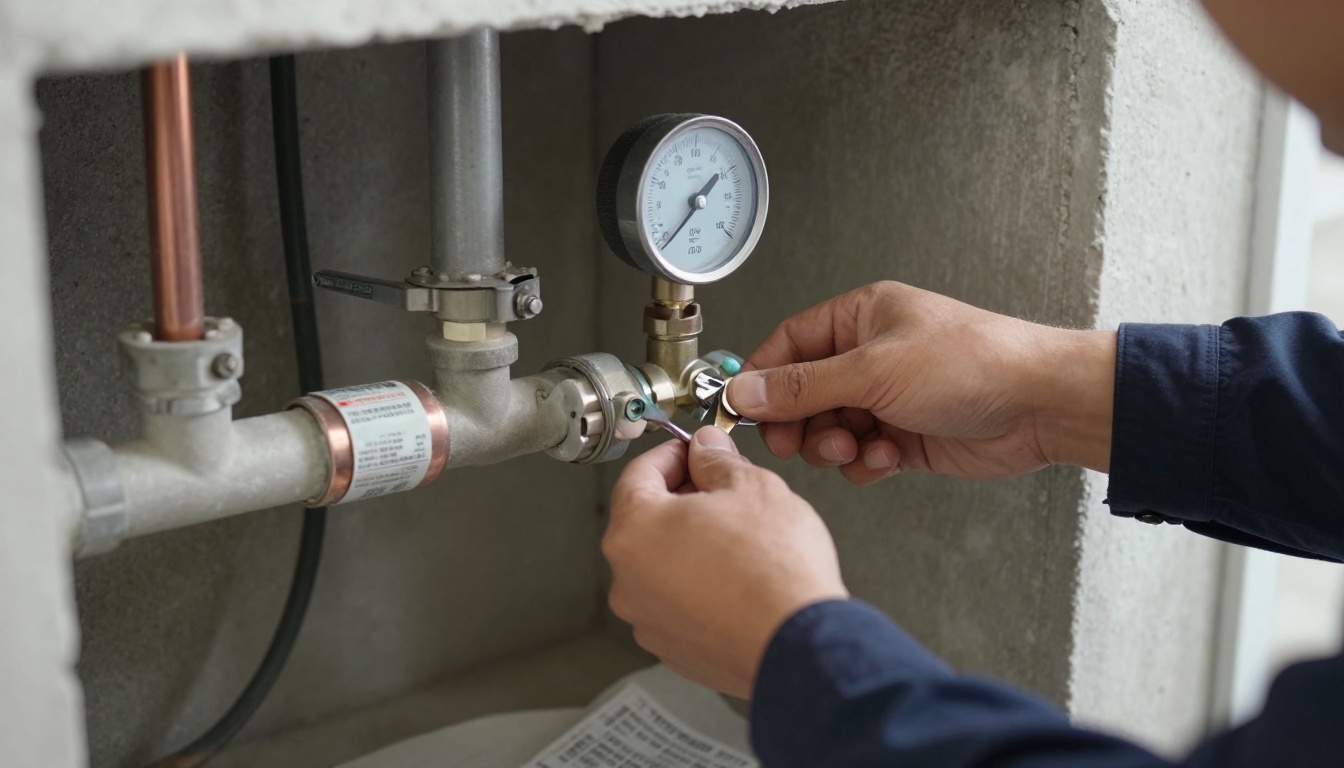
Inspection of supports, valves and riser conditions
This may involve opening a small access panel, checking riser closets, or reviewing mechanical room equipment. If domestic risers have old isolation valves, seized guides or suspect compensators, that should be noted. If the building has not had recent valve replacement work, the inspection should also note whether sectional valves can even isolate the affected area without a wider shutdown.
Written findings, not just a work order note
Ask for a short written report stating:
- probable cause
- affected area or pressure zone
- recommended repair versus monitoring
- whether the issue appears common-element or in-suite
- what evidence supports that conclusion
If the source is not obvious, a targeted camera inspection or exploratory access may be justified, especially where the pipe may be striking structure inside a bulkhead. Camera work is less common for supply-side hammer than for drains, but it is still useful where access openings or concealed runs need visual confirmation.
An Ontario-specific point boards often miss: once repeated noise complaints tie back to a building system defect, ignoring them can become harder to defend if a later leak follows. The issue is not that noise itself breaches the Condominium Act, 1998. The issue is that documented warning signs make inaction look less reasonable when insurance and chargeback questions arise.
Repair versus replacement: what actually fixes the problem
There is no single “water hammer repair.” The fix depends on the failure mode.
| Cause | Typical fix | When it works | When it does not |
|---|---|---|---|
| High building pressure | PRV adjustment, rebuild or replacement | Multiple suites affected, readings above target, noise after fast valve closure | If supports are loose or thermal movement is the main issue |
| Fast-closing fixture branch | Add or replace hammer arrestor, replace faulty stop or valve | One suite or one appliance is clearly triggering it | If the whole pressure zone is too high |
| Loose pipe support | Open access, secure piping, add isolation or cushioning at contact points | Noise is localized and reproducible at one wall or bulkhead | If underlying pressure remains excessive |
| Thermal expansion on hot water riser | Correct guides, anchors or expansion compensators | Morning hot-water-only noises, riser movement evidence | If the noise occurs only on cold water fixtures |
| Aging domestic system | Partial riser work or broader riser replacement | Repeated leaks, poor valves, corrosion and support issues coincide | If the issue is only one owner appliance |
A specific caution for boards: do not start by installing arrestors everywhere. In several GTA towers, we have seen buildings spend on suite-by-suite arrestors only to discover the real issue was a drifting PRV station feeding 90 psi to upper floors in one zone. Arrestors can mask symptoms for a while, but they do not remove the source energy.
On the other hand, not every hammer complaint justifies a capital project. If one stack in a 300-unit building has repeated issues tied to aging owner-renovated branches, the correct response may be targeted suite work and a clearer alteration enforcement process, not a full building re-piping discussion.
What water hammer work costs in Toronto condo buildings
These are Toronto-market estimates, not quotations, and they vary with access, after-hours requirements, reinstatement and building complexity.
Suite-level and localized work
- Replace faulty stop, cartridge or fill valve contributing to hammer: $250-$700 per fixture area
- Install or replace a hammer arrestor at an accessible appliance branch: $350-$900
- Open a small wall or ceiling area, secure piping, and coordinate basic reinstatement: $1,200-$3,500 per occurrence
- Investigate one suite with pressure readings and fixture testing: $250-$650 depending on time and reporting
Building-level work
- PRV inspection, testing and adjustment: $450-$1,500 depending on number of valves and gauges involved
- Rebuild or replace a larger building PRV assembly: roughly $2,500-$9,000 per valve for common 2" to 3" sizes, with higher costs where shutdown windows are tight or bypass arrangements are needed
- Targeted sectional valve replacement to permit future isolation: often $1,500-$4,500 per valve depending on size, location and whether the line is copper, steel or grooved
- Riser support correction or access work across multiple floors: highly variable, often $5,000-$25,000+ depending on how many openings are needed
When the noise is part of a bigger system problem
If hammer complaints appear alongside pinhole leaks, seized valves, pressure instability and old domestic piping, the board should at least price the broader options. A staged project solutions review may show that repeated repairs are consuming money without reducing risk.
An insight managers can use at budget time: if the building is already carrying domestic water valve deficiencies, a hammer investigation often becomes the event that exposes them. It is more cost-effective to combine PRV, isolation valve and support corrections during one planned shutdown than to keep paying after-hours premiums for separate complaints.
Timelines, shutdowns and resident logistics
This is where condominium plumbing differs from house plumbing. The physical repair may be simple; the access and communication are not.
Typical timelines
- Single-suite investigation: often 1-2 hours on site if access is ready
- Localized suite repair: half day to full day depending on whether walls stay closed
- PRV or mechanical room valve work: usually one planned shutdown window, often 4-8 hours including refill and checks
- Multi-floor support investigation: several days once suite access coordination is included
Notice and access realities
For common-element investigation in occupied condos, managers should expect:
- 24-hour written entry notice where required for suite access, unless emergency conditions apply
- elevator booking and protection if materials or opening debris are involved
- after-hours scheduling where shutdowns affect many residents
- clear notices stating whether hot water, cold water, or both will be interrupted
A frequent mistake is announcing only “brief water interruption.” Residents interpret that as 30 minutes. In practice, a riser or zone shutdown can take longer because draining, repair, refill, air purging and fixture checks are all part of the job. If the building lacks good sectional isolation, a one-stack issue may affect far more suites than expected. That is why a current valve audit has real operational value.
Fall is the right season to get these numbers in front of the board. Waiting until winter means tighter contractor availability, more resident sensitivity to shutdowns, and a higher chance that a nuisance issue becomes a leak during holiday occupancy.
What happens if you defer it
Deferral is not always wrong. If the diagnosis shows a minor, isolated appliance-branch issue in one suite and no wider pressure problem, it may be reasonable to schedule it with routine access. But broad deferral without diagnosis is a different decision.
What tends to happen when true hammer is ignored:
- Supports loosen further, making the noise louder and the pipe movement worse.
- Fixture components fail more often, especially toilet fill valves, cartridges and braided connectors.
- Weak joints show themselves first during peak demand or after shutdowns, which is why nuisance complaints often precede holiday or winter leaks.
- Insurance conversations get harder if prior complaints documented warning signs tied to common systems.
For boards, the reserve fund angle matters. A one-off hammer repair is operating expense territory. But if the investigation reveals aging PRVs, poor sectional isolation, riser movement, or domestic piping near end of life, that information should feed into reserve fund study updates and capital planning. In practical terms, this is exactly the kind of issue that justifies getting a site review before finalizing next year’s budget.
If the building is also dealing with pressure instability, leak history or known problem materials such as Kitec in altered suites, the conversation may widen. In those cases, Kitec replacement or domestic system planning can be part of the same long-term risk discussion.
A decision framework for property managers and boards
If you need a practical way to decide what to do next, use this:
Treat it as a service issue first if:
- the noise is limited to one suite or one appliance
- pressure is otherwise stable
- no leaks or visible movement are present
- the complaint is new and clearly reproducible
That is typically a service call or in-suite plumbing investigation, not a capital project.
Escalate to a building systems review if:
- multiple stacked suites report the same noise
- static pressure is above target or fluctuates noticeably
- the issue worsened after a shutdown or PRV work
- hot water risers are involved and movement is visible
- the building has recurring domestic leaks or poor valve isolation
That is where PRV maintenance, valve replacement planning, or broader project solutions review becomes appropriate.
Treat it as urgent if:
- noise is accompanied by leaks, fixture vibration, or visible pipe movement
- a riser closet shows failing supports or contact damage
- residents report sudden pressure spikes or fixture failures across multiple floors
- the building cannot isolate the area reliably
At that point, a same-day emergency plumbing response may be the prudent move, even if the underlying permanent repair is planned later.
FAQs
Is water hammer in a condo an emergency?
Usually not on day one, but it should not be ignored. A single sharp bang when a solenoid valve closes may be more nuisance than crisis, but repeated hammer at 80-100 psi can loosen supports, damage PRVs, shorten the life of washing machine hoses and expose weak solder joints or threaded fittings. If the noise is new, louder than usual, or accompanied by leaks, pressure fluctuations or fixture vibration, it warrants prompt investigation.
Who pays for water hammer repairs in a condominium?
In most Toronto condominiums, the answer depends on where the cause sits, not where the sound is heard. If the issue is a failing building PRV station, loose riser supports or missing arrestors on common-element piping, it is generally a corporation cost; if it is tied to an owner-installed dishwasher, laundry valve or altered fixture under a Section 98 agreement, the owner may be responsible. The declaration, standard unit definition and any alteration records matter more than assumptions.
Can high water pressure cause banging pipes?
Yes, and in high-rise buildings it is one of the first things to check. We regularly find suites seeing 85-95 psi static where the target would be closer to 55-75 psi depending on zone and fixture mix, and that extra pressure makes every quick-closing valve hit harder. A pressure reducing valve maintenance program is often cheaper than chasing repeated suite complaints one by one.
Do water hammer arrestors solve every banging pipe problem?
No. Arrestors help when the problem is a fast-closing fixture branch, such as a dishwasher, ice maker, solenoid fill valve or laundry connection, but they do not correct loose pipe supports, failed riser guides, excessive building pressure or thermal movement being mistaken for hammer. Installing arrestors without pressure readings and a physical inspection is a common way to spend money twice.
How is water hammer diagnosed in a condominium building?
A proper diagnosis starts with pressure readings, timing and location, not guesswork. The contractor should identify whether the noise occurs on opening or closing, hot or cold, one suite or multiple stacked suites, then inspect PRVs, sectional valves, supports and likely fast-closing fixtures; in some cases a camera inspection or opening small access points is needed to rule out pipe contact inside walls. A written report should tie the noise to a specific failure mode, not just note that ‘pipes are banging.’
What does it cost to fix water hammer in a Toronto condo?
Minor suite-level corrections such as replacing a failed stop, adding an arrestor or securing exposed branch piping often fall in the few-hundred-dollar range per visit, while targeted in-wall access and reinstatement can push a single suite into the $1,200-$3,500 range. Building-level work is a different scale: PRV rebuilds or replacement can run roughly $2,500-$9,000 per valve depending on size and shutdown complexity, and riser support or valve work may require broader capital planning. The honest cost depends on whether the cause is local, zonal or building-wide.
Next steps if your building has banging pipes
If your building in Toronto, North York, Mississauga or Vaughan has water hammer condo complaints and no one has taken actual pressure readings, start there. If the problem is repeating in stacked suites, ask for a diagnosis that addresses pressure, supports, valves and thermal movement, not just fixture replacement.
For boards heading into budget season, the practical move is to separate nuisance noise from system risk. A one-suite issue can be handled as service work. A pressure-zone or riser issue belongs in a broader building discussion before winter, especially if your domestic water valves, PRVs or riser supports have not been reviewed recently.
BMI attends the building before quoting, and maintenance work is typically set up on a schedule rather than sold complaint by complaint. If you have recurring banging pipes, recent shutdown-related noise, or pressure concerns that residents keep describing differently, arrange a site review now rather than waiting for January.
For more building-focused plumbing guidance, see the BMI blog or request a review through the BMI contact page.
Contact BMI
- Contact BMI
- Phone: (416) 845-3756
- Emergency: (416) 845-3756, answered 24 hours a day
- Email: info@brial.ca
More on condominium plumbing
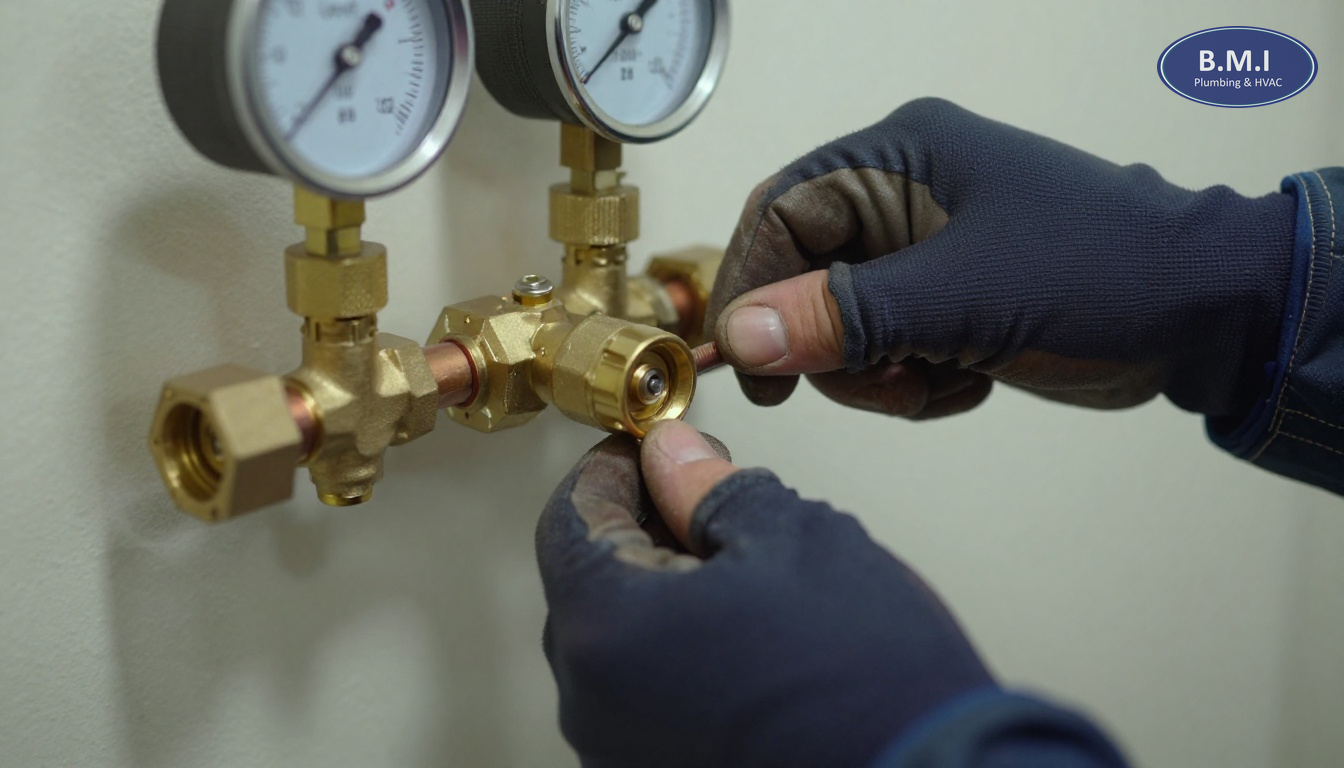
PRV Replacement Cost in Toronto Condos: Downtime Guide
Understand PRV replacement cost, downtime and scheduling for Toronto condos, with real GTA price ranges, shutdown …
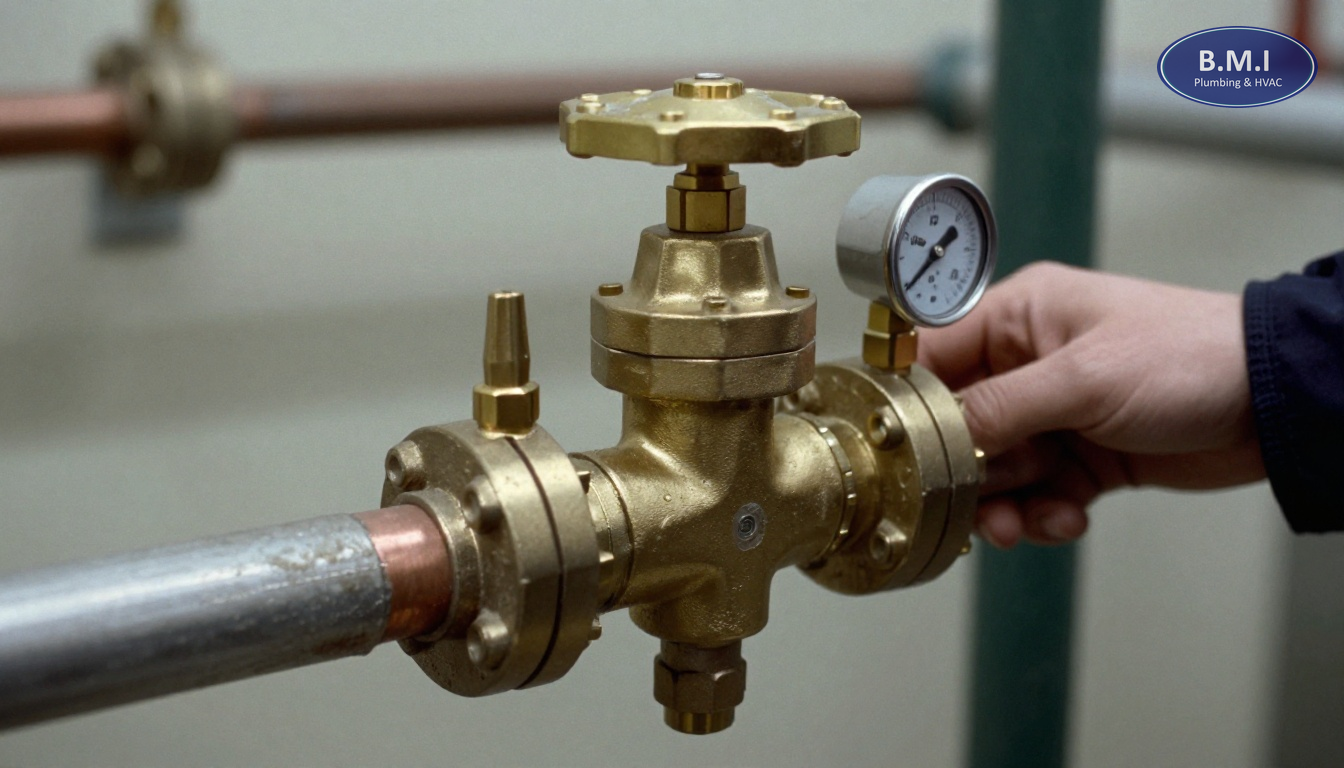
Toronto High-Rise Pressure Zones: Why Floors Vary
Why top floors lose water pressure while lower floors get too much in Toronto condos. A practical guide to water …
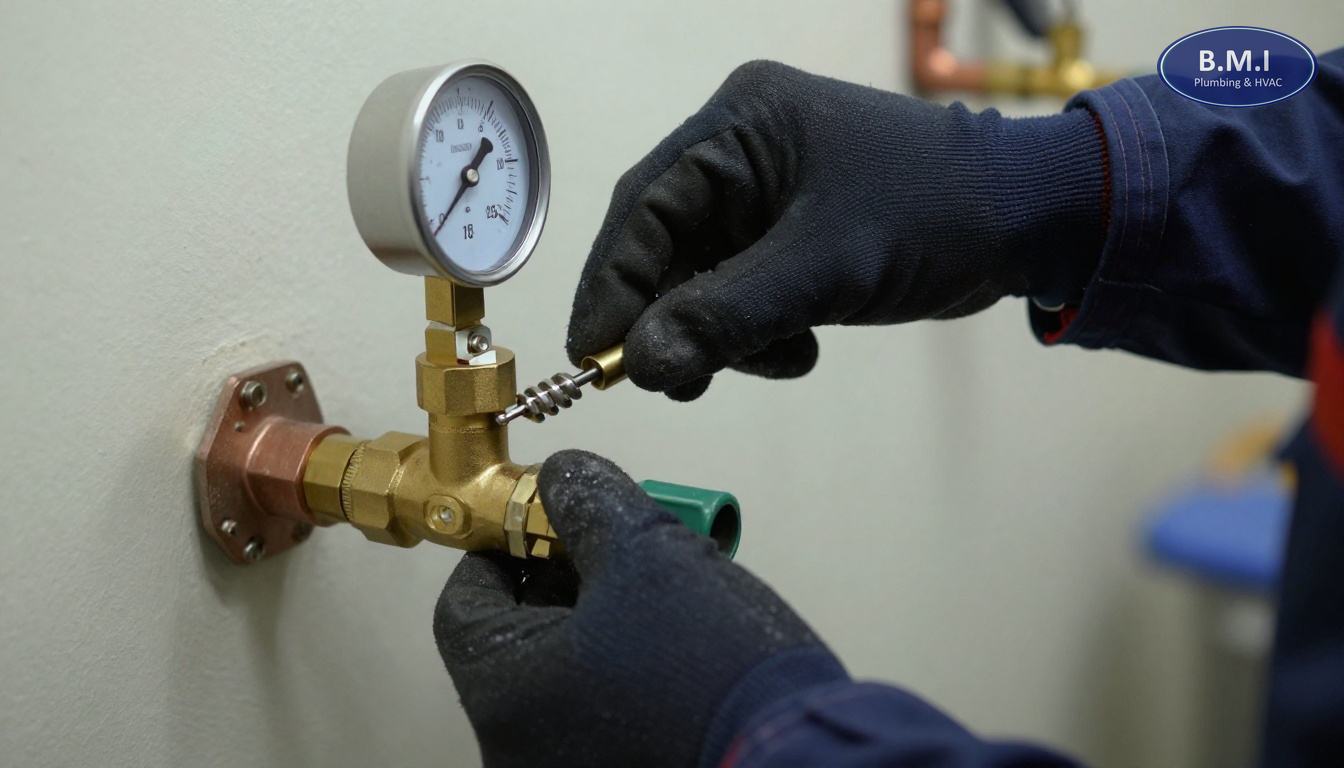
PRV Failure Symptoms in Toronto Condo Buildings
Learn the real PRV failure symptoms behind condo water pressure problems, with Toronto cost ranges, testing steps and …
Need a plumber in your building?
BMI services roughly 200 condominium and multi-residential buildings across Toronto and the GTA. Emergencies are answered at any hour.