Water Submetering and Consumption Problems in Markham
A practical guide to water submetering and high water consumption problems in Markham condos, with inspection steps, costs and repair planning.
Water Submetering and Consumption Problems in Markham
Quick summary: In Markham condominiums, water submetering complaints are often treated as billing problems first, when they are usually plumbing problems first. The pattern we see most often is straightforward: a resident reports a high water bill, the submeter is blamed, and the actual cause turns out to be a running toilet, pressure issue, leaking fixture, or a building-wide maintenance gap that is showing up at the suite level.
For Markham property managers and condo boards, the practical question is not whether water submetering works. It is how to investigate abnormal consumption properly, document the cause, and decide whether the solution belongs in routine repairs, a seasonal maintenance program, or a larger capital plan.
Why water submetering problems show up in Markham buildings specifically
Markham has a mix of condominium stock that matters here. Around Highway 7, Warden, and the Unionville area, there are newer towers and mid-rise buildings where submetering was more commonly integrated from the start. In older multi-residential buildings and some earlier condo phases, the plumbing may predate current conservation expectations, even if submeters were added later or the suites now receive individual consumption billing through a third party.
That matters because the plumbing behind the bill changes by building vintage. In older Markham buildings, fixture age is a major factor: original toilets, worn fill valves, aging angle stops, and cartridges that no longer close tightly create slow, continuous consumption. In newer glass-and-concrete buildings, the issue is often different. The meter may be modern, but the suites can still develop high usage from pressure fluctuations, defective flush valves, leaking relief through fixtures, or installation details that were acceptable when the building was turned over but become maintenance liabilities ten or fifteen years later.
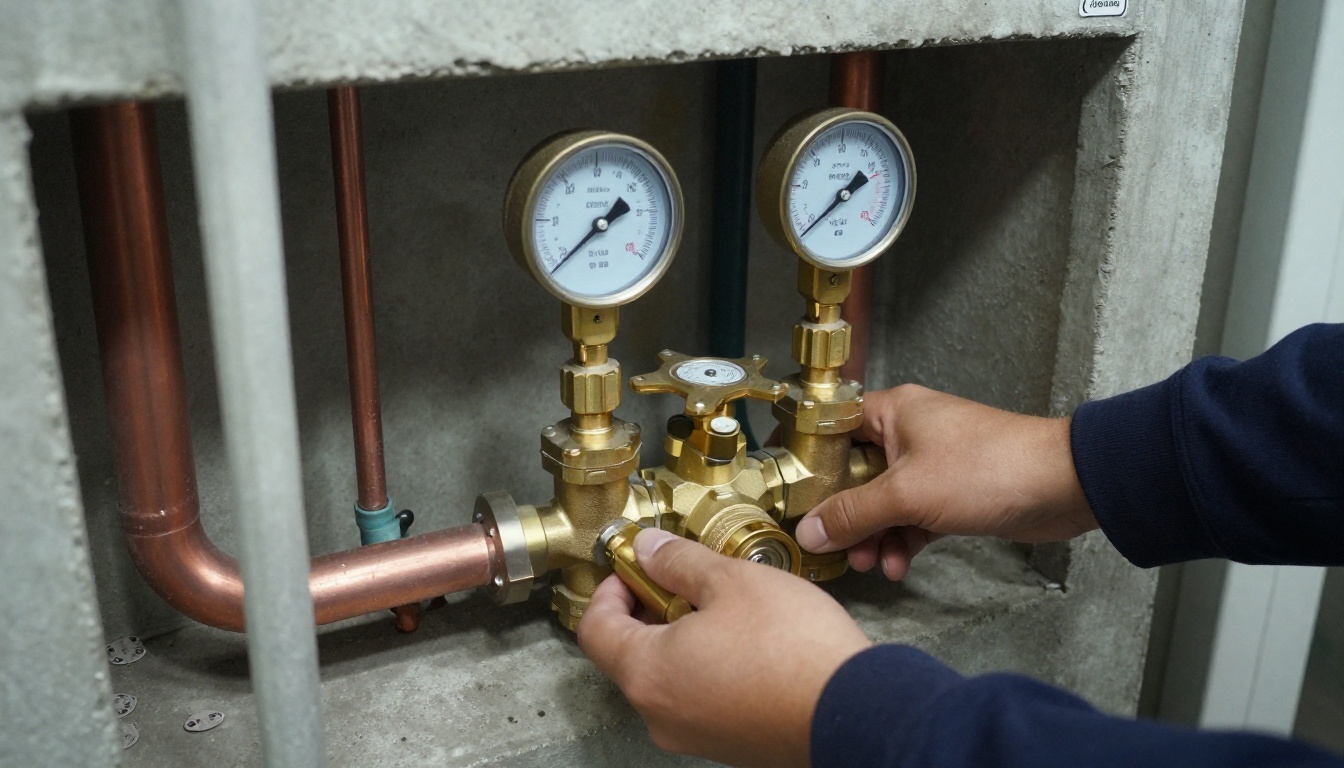
Markham is served through the regional water system, and in high-rise plumbing that means managers need to think beyond the bill. Pressure conditions vary by building design, elevation, booster configuration, and how the domestic system is controlled internally. A suite on a lower pressure zone can behave very differently from a suite on an upper pressure zone. If pressure reducing equipment is not maintained, excess pressure can accelerate fixture wear and exaggerate water consumption. That is one reason submetering complaints often overlap with pressure reducing valve maintenance and replacement rather than being isolated billing issues.
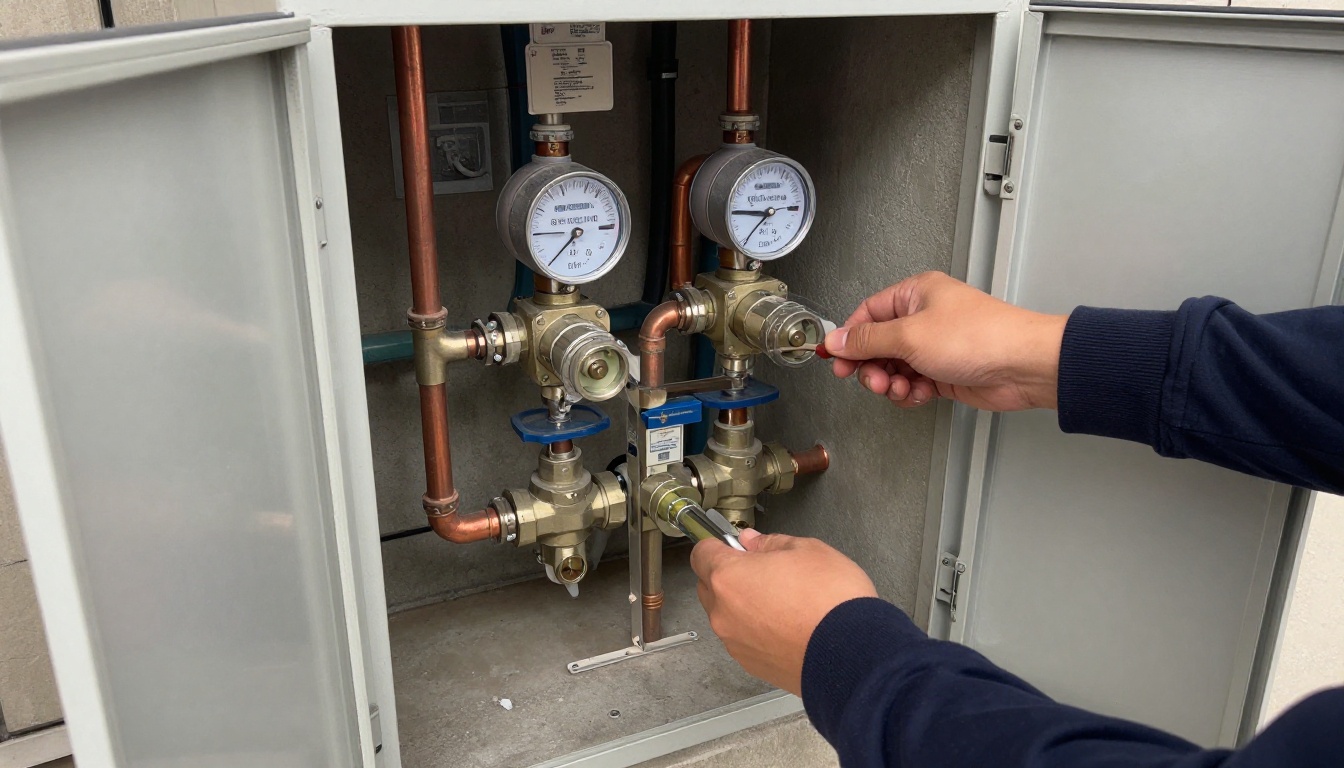
There is also a practical local point about logistics. Markham’s condo towers and mid-rises often have controlled loading, limited visitor parking for trades, and stricter access coordination than a rental walk-up. A proper consumption investigation may require entry to several suites, mechanical room review, and coordination with concierge or management. In older buildings, shutoffs may be unreliable; in newer ones, meters may be tucked into tight service cabinets with limited working room. None of that is unusual, but it affects cost and timeline.
For boards in fall budget season, this is also the right time to separate one-off high bill complaints from building-wide water management. If the same issues recur, the answer may be a maintenance plan rather than repeated reactive service calls. BMI’s maintenance programs are built around that reality in GTA multi-residential buildings.
How water consumption problems present in Markham condos
The first report is rarely technical. In Markham, managers usually hear one of a few versions:
- “The resident says the water bill doubled and they were away for part of the month.”
- “A tenant is disputing submeter charges after move-in.”
- “Several suites in the same line are showing unusually high consumption.”
- “The meter provider says the reading is valid, but the owner says there is no leak.”
- “We keep replacing toilet parts in this stack and the complaints continue.”
From a plumbing standpoint, those reports point to a short list of common causes. Running toilets are still the leader by a wide margin. Not dramatic overflows, just quiet continuous refill or seepage past a flapper or canister seal. In a submetered Markham suite, that can create a bill spike large enough to trigger a dispute even when no one hears obvious running water.
Next are faucet and shower valve issues. A dripping lavatory faucet is visible, but a leaking shower cartridge is often missed, especially where the leak path is into the tub spout or shower head and the resident has tuned it out. Laundry and dishwasher supplies can also seep continuously at a low rate. Add high pressure and these defects get worse.
There is also the building-side picture. If a manager sees complaints clustering by floor range or by a particular riser group, that is a sign to stop treating them as isolated suite issues. The building may have a pressure control problem, failing isolation valves, or aging fixture assemblies installed in the same construction phase. In some towers, consumption complaints rise before the mechanical issue becomes obvious elsewhere.
A consumption complaint can also arrive together with drainage symptoms. A resident notices a high bill and also reports slow kitchen drainage or backup concerns. Those are separate systems, but in practice they often show up together in heavily used suites because deferred maintenance tends to travel in clusters. It is worth reviewing whether the building is also due for kitchen stack cleaning or broader suite maintenance, especially before the holiday cooking season.
Diagnosing water submetering problems in Markham: what to inspect and what evidence to insist on
A proper investigation should produce evidence, not assumptions. For Markham property managers, the sequence matters.
Start with the consumption pattern. Is the increase sudden or gradual? Is there overnight flow when the suite is unoccupied? Did the abnormal usage begin after tenant turnover, fixture replacement, or work in the mechanical room? Compare the billing period with prior periods and, if available, interval data from the submetering platform.
Then inspect the suite plumbing. A licensed plumber should test toilets, fill valves, flush seals, faucets, shower valves, appliance supplies, stop valves, and visible fixture connections. Dye testing toilets is basic but still useful. So is watching the meter during a controlled no-use period. If the meter continues to register flow with fixtures isolated as much as practical, you have evidence of active consumption somewhere.
The next step is to separate meter accuracy from plumbing leakage. Too many buildings skip this. If the resident says the bill is impossible, that does not prove the meter is wrong. The meter may be accurately recording a small but continuous leak. On the other hand, if there is a communication or account mapping issue, replacing toilet parts will not solve it. Managers should ask for a documented test approach, not a verbal opinion.
Where the issue appears broader than one suite, review the building’s pressure conditions and zone control. Check whether recent complaints line up with PRV instability, booster adjustments, or maintenance lapses. A building with poor pressure control tends to consume more water and wear out fixture internals faster. That is why a submetering investigation should sometimes expand into valve audit, charting and exercise programs and PRV review.
If there is any suspicion of concealed leakage, targeted inspection may be needed. That can include meter observation under isolation, thermal review in some situations, or a camera pipe inspection where drainage symptoms overlap and the source is not obvious. Camera work will not diagnose every water consumption issue, but it is useful when managers are trying to rule out related defects without opening walls unnecessarily.
Finally, insist on written findings. For boards and managers, the output should be clear: what was tested, what was observed, whether the meter appears to be functioning normally, whether a plumbing defect was confirmed, and what the next recommended action is. If responsibility may be disputed between owner, corporation, or billing provider, documentation matters.
A representative Markham service call
A realistic example would be a 17-storey condominium from the late 2000s near Highway 7 and Warden. The property manager received three owner complaints in one quarter about unusually high submetered water charges. Two were in the same vertical stack; one was several floors away but in the same pressure zone.
The initial assumption was a metering issue because one owner said the suite had been vacant for part of the billing period. On inspection, the first suite had a toilet with a worn flush seal and intermittent refill that was quiet enough to go unnoticed. The second had a leaking shower cartridge and a laundry shutoff seeping into the standpipe area. The third suite showed no obvious active leak at first pass, but the meter continued to register slight flow during a controlled no-use period. Further fixture isolation narrowed it to a toilet fill valve and an aging stop that did not fully close.
At the same time, the building’s domestic pressure readings were reviewed because the complaints clustered in one zone. The mechanical room inspection suggested pressure control was drifting higher than ideal at certain times. The immediate plumbing repairs were completed in the affected suites, and management was advised to schedule a broader review of pressure reducing valve maintenance and replacement and to confirm the condition of zone isolation valves through a valve audit, charting and exercise program.
The suite work took two service days with resident coordination. Roughly speaking, a Markham building in this situation might spend about $1,200 to $3,500 on the initial investigation and standard fixture repairs across a few suites, with additional cost if shutoffs fail, access is difficult, or PRV work is added. The larger value was not the repair ticket itself. It was avoiding months of repeated billing disputes and confirming that the submeter data was largely reflecting real plumbing consumption.
Costs and timelines for Markham buildings
Costs for water submetering-related plumbing problems in Markham vary widely because the “metering issue” is often not a meter issue at all. These are reasonable GTA market estimates, not quoted prices.
For a single-suite investigation involving fixture checks, toilet testing, meter observation, and a basic report, many buildings fall in the range of about $350 to $900. If repairs are simple, such as replacing a fill valve, flapper, cartridge, or supply, total cost may remain under $1,000.
For multi-suite complaint clusters, costs usually rise into the $1,200 to $4,000 range depending on the number of entries, fixture conditions, resident coordination, and whether failed shutoffs complicate the work. If angle stops seize, access panels are limited, or after-hours work is required, the number moves up.
If the building-side issue involves pressure management, expect a broader range. Investigation and servicing of domestic pressure control can start in the low thousands and increase meaningfully if replacement parts, full PRV replacement, or isolation valve work is needed. In buildings where shutoffs cannot be trusted, a simple maintenance task can turn into a planned project, which is where sectional and isolation valve replacement may become part of the discussion.
Timelines are usually shorter than boards expect for diagnosis and longer than residents expect for coordination. A single-suite investigation can often be handled within days of approval. A multi-suite review may take one to three weeks once access notices, scheduling, and any required parts are factored in. If the findings point to broader domestic system work, that may need to be folded into board approvals and reserve planning.
For boards assembling next year’s numbers in the fall, it is sensible to budget submetering issues in two buckets: reactive suite-level consumption investigations, and proactive domestic water system maintenance. Those are related but not identical line items.
Repair versus replacement in Markham: when to keep fixing and when to plan a program
One of the biggest mistakes in Markham condo operations is treating every high-consumption complaint as a standalone repair. That works if the issue is one defective toilet in one suite. It does not work if the same valves, cartridges, or pressure conditions are failing across a building generation.
Repair is usually the right first step when:
- complaints are isolated,
- fixture age is mixed,
- shutoffs are functional,
- the meter data points to a clear suite-level issue,
- and the domestic pressure environment is stable.
Replacement or program work becomes more sensible when:
- the same complaints recur in the same stack or pressure zone,
- shutoffs routinely fail during minor repairs,
- the building has known pressure instability,
- suite fixtures are at similar age and failure stage,
- or managers are spending too much in repeated dispatches.
At that stage, boards should think in terms of systems. A maintenance program might include pressure review, fixture failure tracking, valve exercising, and targeted suite repairs before they become billing disputes. If the domestic piping itself is aging or the building has broader reliability issues, the discussion may extend to domestic water riser replacement or even building re-piping in older stock, though that is obviously a different scale of decision.
Under the Condominium Act, reserve fund planning should reflect recurring common-element plumbing obligations, and recurring water-consumption problems are often an early signal that the reserve study assumptions should be tested against field reality. This is not always a reserve item on day one, but it can become one if the root cause sits in common plumbing infrastructure.
What deferring water consumption problems costs
Deferral has a way of making a small water complaint expensive.
The first cost is administrative. Managers spend time handling billing disputes, coordinating re-reads, arranging access, and responding to owners who assume the meter is wrong. If the actual cause is a known plumbing defect that sits too long, that friction repeats every billing cycle.
The second cost is operational. A running toilet or pressure-driven fixture leak wastes water continuously. One fixture is manageable; many fixtures across a Markham building create avoidable operating cost and resident dissatisfaction.
The third cost is risk. Minor fixture leaks can become actual damage claims. Shutoffs that have not been exercised may fail when needed. If concealed leakage is missed, the issue can move from a consumption complaint to an insurance event. That is where 24-hour response matters, and BMI handles emergency leak response when a routine problem stops being routine.
The fourth cost is strategic. Repeatedly paying for isolated suite calls without addressing pressure management, valve condition, or aging fixture populations can distort both the operating budget and long-term planning. Boards often think they are saving capital by postponing system work, but in practice they may just be shifting cost into reactive labour, resident disruption, and avoidable water use.
In fall, before winter pressure swings and holiday occupancy patterns, it is a good time to review whether your building’s submetering complaints are random or part of a pattern. Where there is a pattern, a board should want evidence and a plan.
FAQs
What usually causes a sudden high water bill in a Markham condominium suite?
In Markham condos, the most common causes are running toilets, leaking fill valves, dripping faucets, failed mixing cartridges, and small continuous leaks at shutoffs or braided supplies. In newer buildings with submeters, a toilet that runs quietly can add a surprising amount of consumption without causing visible damage. The right response is to compare meter data to prior periods, inspect the suite fixtures, and confirm whether the issue is fixture-related or a meter-reading anomaly.
Are water submeters themselves often the problem in Markham buildings?
Sometimes, but less often than managers assume. The more common issue is not the meter body itself but a communication fault, data gap, incorrect account association after turnover, or a plumbing fixture leak that the submeter is correctly recording. Where a meter is suspected, insist on a documented test process and a comparison of pulse or digital output against a controlled draw before replacing anything.
How do you investigate water consumption problems in a Markham high-rise without opening walls?
A good first pass starts with the submeter trend, overnight flow behaviour, toilet dye testing, fixture checks, shutoff isolation, and a review of common-element pressure conditions. In many Markham towers, a licensed plumber can identify the source from fixture testing, meter observation and mechanical room review without destructive work. If the evidence points to concealed piping or a drain issue, camera inspection or targeted access may follow.
Can pressure problems in Markham increase water consumption?
Yes. If incoming pressure is too high, or if pressure reducing valves are not maintained properly, toilets can overfill, fill valves wear faster, and fixture leakage tends to worsen. That is why submetering complaints should be reviewed alongside a building’s pressure management, including pressure reducing valve maintenance and replacement, not just at the suite level.
Who is responsible for a water submetering issue in a Markham condo: the owner, the corporation or the billing company?
That depends on the declaration, rules, and the physical location of the equipment. In many condominiums, the meter may be common element or part of a shared system, while toilets, faucets and in-suite shutoffs may fall under unit responsibility or a shared maintenance framework. Managers should review the governing documents and then separate the issue into billing, metering hardware, and plumbing defect so the right party addresses the right cost.
What should a Markham condo board budget for submetering-related plumbing work?
For routine investigation, many buildings should expect a service call and fixture testing cost in the low hundreds to low thousands, depending on access and the number of suites involved. If the issue turns into a broader program of toilet rebuilds, shutoff replacement, PRV work or riser-related repairs, the budget can move materially higher. During fall budget season in Markham, it is sensible to separate immediate diagnostic costs from a planned maintenance allowance for recurring consumption issues.
Next steps for Markham property managers and boards
If your Markham building is dealing with repeated high water bill complaints, start by refusing the false choice between “the meter is wrong” and “the resident must be mistaken.” In most cases, the answer is a documented plumbing investigation that ties consumption data to actual fixture and system conditions.
For a single complaint, that may mean a targeted suite inspection and repair. For recurring complaints across a line, floor range, or pressure zone, it may mean broader review of domestic pressure control, valve condition, and the age profile of in-suite fixtures. If your board is building next year’s operating and reserve assumptions now, this is exactly the season to turn anecdotal complaints into a maintenance plan.
BMI serves Markham and the surrounding GTA from its Toronto shop. We work in condominium and multi-residential buildings where access, resident coordination, shutdown risk, and documentation all matter. If you need help with an active issue, broader repairs and service, or a planned maintenance approach, the first step is to review the symptoms building-wide rather than suite by suite.
You can also review BMI’s completed projects and building references or browse the BMI blog for related condominium plumbing topics.
Contact BMI
- Contact BMI
- Phone: (416) 845-3756
- Emergency: (416) 845-3756, answered 24 hours a day
- Email: info@brial.ca
More on condominium plumbing
Water Submetering and Consumption Problems in Oakville
Water submetering and high water bill issues in Oakville condos: how to diagnose abnormal water consumption and plan …
Water Submetering and Consumption Problems in Toronto
How Toronto condo boards and managers should investigate water submetering, high water bills, leaks and abnormal …
Camera Pipe Inspection in Newmarket Condominiums
Camera pipe inspection in Newmarket for condos and multi-residential buildings. Diagnose drains, stacks and underground …
Need a plumber in your building?
BMI services roughly 200 condominium and multi-residential buildings across Toronto and the GTA. Emergencies are answered at any hour.