Why Chemical Drain Cleaners Worsen Condo Plumbing in Toronto
Chemical drain cleaner condo issues often turn a simple blockage into pipe damage, stack problems and chargebacks. Toronto condo guidance for boards and managers.
Why Chemical Drain Cleaners Worsen Condo Plumbing in Toronto
Quick summary: In a condominium, a bottle of drain cleaner rarely fixes the real problem and often makes the next service call more expensive, more dangerous, and harder to diagnose. In Toronto high-rises, the issue is frequently a shared stack, grease-scaled cast iron, or a partially blocked branch line that needs mechanical cleaning, not chemicals sitting in the pipe.
A second point boards and managers should not miss: chemical drain cleaner use can turn a routine blockage into pipe damage, contaminated working conditions, resident disputes, and potential chargeback questions. In fall, when buildings are budgeting and preparing for winter pressure swings and holiday grease loading, this is exactly the time to set a clear policy.
The misconception that causes the problem
The most common bad assumption is simple: if a resident says the kitchen sink is slow, people assume the blockage is sitting right under that sink. In condominium towers across Toronto, Mississauga and North York, that is often wrong. A sink that drains slowly on its own but backs up when the suite above runs a dishwasher is giving you a diagnostic clue: the restriction is usually downstream in the branch or stack, not in the trap.
That matters because chemical products are sold as if every clog is local and soft. In real buildings, many recurring stoppages are caused by grease scaling in 3-inch cast iron kitchen stacks, lint matting in laundry branches, or flattened buildup at changes of direction. Those are mechanical problems. A chemical can soften a small channel through the centre, which is why the resident thinks it worked for three days, but it leaves the pipe wall loaded. If the building keeps treating stack symptoms suite by suite, it pays for the same blockage repeatedly instead of addressing the line properly with drain cleaning or a scheduled kitchen stack cleaning program.
In buildings we service along the waterfront and in Etobicoke, another wrinkle shows up: post-2010 towers often have long horizontal in-suite kitchen runs before they hit the stack. Those runs can hold grease if slope was marginal from day one. Chemical cleaner does nothing to correct poor pitch, bellied sections, or a fitting that catches solids. A camera inspection is often the only way to separate a resident-use issue from a design or installation issue.
What chemical drain cleaners actually do inside condo piping
Most over-the-counter drain cleaners are either caustic (commonly sodium hydroxide), oxidizing (often bleach-based), or acidic. Their labels make them sound universal. They are not. In a condominium environment, they usually do one of four unhelpful things:
- They sit on top of standing water and never reach the blockage in useful concentration.
- They create heat as they react, which is hard on old tubular fittings, chrome traps, gaskets, and thin-wall corroded sections.
- They partially open a pinhole path through grease or soap, causing a false sense of success.
- They remain in the line until a plumber opens it, exposing workers to splash burns and fumes.
A common mistake we see in early-1990s North York high-rises is repeated chemical use on laundry standpipes and kitchen sinks where the real problem is a stack that has narrowed from 3 inches effective diameter to something closer to 1 1/4 to 1 1/2 inches at the invert because of grease, scale and rust tuberculation. Once a vertical stack has lost that much area, chemistry is not a maintenance plan. It needs mechanical descaling or, if the wall is too far gone, a capital review under project solutions.
On the supply side, residents also confuse drain cleaner damage with water pressure issues. A gurgling or sluggish fixture may get blamed on the drain and treated with chemicals when the actual complaint is inconsistent flow caused by a failing PRV station or pressure fluctuations. Fall is the right season to check whether the building’s pressure control is stable before winter demand changes, especially in taller towers. If there are pressure complaints at multiple fixtures or floors, look at pressure reducing valve maintenance, not a bottle under a sink.
Why older condo buildings are more vulnerable to drain cleaner damage
Building age changes the risk profile substantially.
1970s and 1980s concrete high-rises
These buildings in Toronto, Scarborough and York commonly have cast iron sanitary and kitchen waste stacks, often 3-inch or 4-inch, with decades of internal roughness. Once the bottom half of a cast iron stack has scaled and pitted, the pipe is no longer smooth enough for chemicals to wash through cleanly. Product pools in low spots, attacks rusted sections, and then gets released when someone snakes the line. The line may still clear, but the contractor is now working around caustic liquid in a confined service space.
Early-1990s towers
Many of these buildings have a mix of no-hub cast iron drainage and copper domestic water, with more sectional valves than older stock but not always enough useful cleanout access. A recurring issue in Vaughan and Thornhill towers from this period is that the stack can be serviceable, but the branch cleanout locations are poor, meaning a simple blockage becomes a longer labour call. Chemical use before attendance often turns a 45-minute cabling job into a two- to three-hour call because traps, cabinets and protective measures have to be handled more carefully.
Kitec-era and 1995-2007 buildings
Kitec itself is a domestic water issue rather than a drain issue, but these buildings often have boards already sensitive to plumbing risk. That is the right instinct. If a building is budgeting for Kitec replacement or broader building re-piping, it should also adopt a no-chemical policy on drains. Once a corporation is spending capital on piping, it makes little sense to allow residents to keep introducing aggressive chemicals into adjacent systems.
Post-2010 glass towers
Newer towers are not immune. The pipes are newer, but the problems are often layout-related and behavioural: long horizontal kitchen runs, high turnover, more food waste, and residents assuming every issue can be solved with a retail product. In these buildings, the damage is less often corrosion and more often delayed diagnosis. By the time the board hears about “random sink backups,” several suites on the same line may already be affected.
How this presents in a building, and what the symptoms actually mean
Managers are usually not called with the phrase “chemical drain cleaner condo problem.” They hear symptoms. The pattern matters.
Symptoms that point to an in-suite branch issue
- One fixture only is affected.
- The sink drains slowly all the time, regardless of what neighbouring suites are doing.
- There is no backup in the adjacent fixture or lower compartment.
- The problem clears with proper mechanical cleaning and does not return for months.
That is usually a suite-level branch or trap-arm problem, and in-suite plumbing service is the right first response.
Symptoms that point to a stack or common element issue
- The sink drains normally until an upper suite runs a dishwasher or empties a sink.
- Water rises in one bowl when the adjacent bowl drains.
- Multiple vertically aligned suites report similar kitchen backups within days or weeks.
- The issue improves after a service call but reappears quickly.
- The resident reports hearing air displacement or “glugging” after upper-floor use.
That pattern usually means the corporation should stop treating it as isolated suite work and consider kitchen stack cleaning or a camera inspection. On a 300-unit building, if three or four units on one vertical line have kitchen drain complaints inside a quarter, we would expect the stack to be investigated, not just the lowest reporting suite.
Symptoms that suggest chemicals have already complicated the call
- Strong bleach or caustic odour at the fixture.
- Heat in standing water or trap components.
- Discoloured chrome trap parts, softened gaskets, or residue around the strainer.
- The resident says they used “two bottles” or mixed products over several days.
At that point, the service call becomes a safety-managed job. That is one reason boards are better off setting policy in advance and directing residents to report a blockage through management rather than self-treating.
What a proper diagnosis should involve
A manager should insist on evidence, not just a cleared drain and an invoice. That is especially true where there may be a common-element responsibility question.
A defensible diagnosis usually includes:
- Fixture and location identification: kitchen sink, laundry standpipe, lavatory, floor drain.
- Method used: hand auger, power snake, sectional cable, hydro-jetting, trap removal.
- Line reached and distance: for example, 18 feet to branch connection or 42 feet to stack base.
- Findings: grease, lint, scale, foreign object, standing caustic liquid, offset joint, broken fitting.
- Recommendation: one-time clearance, camera survey, scheduled maintenance, or capital review.
If the line is recurrent, ask for a written recommendation tied to the building system, not just the suite complaint. A good report often reveals whether the building also has valve or access issues that will matter later. For example, if a contractor notes that an in-suite shutoff is seized or a floor isolation valve is unreliable, that should trigger a review of valve audits and charting or valve replacement, because future plumbing work will otherwise cost more and disrupt more residents.
Camera work is particularly useful when the board is deciding between maintenance and capital. If a stack still loads up less than a year after cleaning, a camera pipe inspection can show whether the pipe wall is structurally worth cleaning again or whether the corporation is approaching replacement territory.
Repair, cleaning, or replacement: a practical decision framework
Not every blocked drain is a capital project. Just as importantly, not every recurring blockage should stay in the service-call bucket.
When one-time mechanical cleaning is enough
This is appropriate when:
- the issue is isolated to one suite,
- the branch clears fully,
- there is no evidence of stack loading,
- there is no repeat event within a reasonable period.
In these cases, a standard drain cleaning service call is usually the most economical response.
When scheduled stack cleaning makes sense
This is appropriate when:
- vertically aligned suites have repeat kitchen backups,
- the building has older cast iron kitchen stacks,
- holiday and winter usage predictably increases grease loading,
- the corporation is spending too much on repeated after-hours calls.
Fall is the right planning window. In many GTA buildings, annual or 18-month maintenance programs cost less than the combined total of reactive visits, resident disruption, and emergency response. A stack that takes 60 to 90 minutes to jet properly can save half a dozen suite calls over the following year.
When replacement should be discussed
This is appropriate when:
- the stack re-blocks quickly after thorough cleaning,
- camera footage shows severe wall loss, scaling or channeling,
- cleanouts are failing or inaccessible,
- leak history suggests the drainage system is ageing out.
That does not always mean immediate full replacement. Sometimes the right answer is “budget next year, monitor this winter, and get a second opinion.” But if the evidence shows the line is near end of life, the board should look at riser replacement, building re-piping, or other project solutions rather than paying to clear the same failing line indefinitely.
Toronto-market cost ranges managers can actually use
These are typical GTA planning ranges only, not quotations. Access, after-hours timing, parking, protection, pipe condition, and number of affected suites all change the number.
| Scope | Typical GTA range | Notes |
|---|---|---|
| In-suite drain cleaning service call | $350-$850 | Usually daytime, one fixture, standard access, no major disassembly |
| After-hours emergency blockage call | $550-$1,250 | Nights, weekends, flood response, multiple trips or extended labour increase cost |
| Camera inspection of a problem line | $450-$1,500 | Depends on access, line length, and whether recording/reporting is required |
| Kitchen stack jetting per stack | $1,200-$3,500 | Typical 3-inch or 4-inch stack, depends on height, access, and buildup severity |
| Multi-stack preventive cleaning program | $8,000-$35,000+ | Depends on number of stacks, storeys, suite count, and reporting detail |
| Localized drain piping repair in-suite | $900-$3,500 | Wall/ceiling opening, cabinetry impact, and restoration excluded in many cases |
| Stack section replacement/local repair | $3,000-$12,000 | Depends on floor access, asbestos protocols if applicable, and finishes |
The hidden cost of chemical use is not the bottle. It is the labour multiplier. A straightforward blockage call can become more expensive when technicians must neutralize residue, remove damaged trap components, protect finishes from splash risk, and work more slowly because the resident has mixed products. On some calls the extra time is 30 to 90 minutes; on a difficult cabinet or stacked-suite problem, it can be more.
For boards preparing next year’s operating budget, this is where policy matters. If your building had six to ten kitchen drain calls on the same line this year, ask what the annual spend would have been if those calls were consolidated into scheduled kitchen stack cleaning. In many mid-size Toronto buildings, that comparison is enough to justify a preventive line item.
Timelines, access and resident communication in a condo setting
One reason residents reach for chemicals is delay. If management takes three days to route a simple blockage call, people self-treat. The operational fix is not just technical; it is procedural.
Typical service timelines
- Routine in-suite blockage: often same day to 2 business days.
- After-hours active backup or overflow risk: immediate dispatch through 24/7 emergency plumbing response.
- Camera follow-up: commonly scheduled within a few days if the initial clearing suggests a recurring condition.
- Stack cleaning program: usually planned over days or weeks depending on number of stacks and notice requirements.
A crew cleaning kitchen stacks in an occupied high-rise might complete 2 to 6 stacks in a day, depending on access, height, and whether each stack requires suite entry at multiple levels or can be worked efficiently from cleanouts and selected access points. On a 20- to 30-storey building, a full program may run from several days to a few weeks when resident coordination is included.
Access realities boards should plan for
- 24-hour written notice for suite entry is common practice, but building procedures may require more.
- Elevator booking and protection often add cost and time on larger projects.
- Noise by-laws and resident quiet hours affect when cabling or jetting can happen.
- If the blockage is on a kitchen stack serving many suites, communication should warn residents not to discharge sinks or dishwashers during the work window.
This is also why a fall communication to residents is useful: tell them before holiday cooking season that chemical drain cleaners are prohibited or strongly discouraged, explain that stack-related backups are common element issues in many buildings, and direct them to management promptly. It reduces both damage and argument.
What happens if the board ignores it
Deferral is not always wrong. If a single isolated branch line was cleared and there is no recurrence, there may be nothing more to do this year. But repeated chemical-related drain calls should not be ignored for three reasons.
1. The building pays more over time
Reactive drain calls are one of the easiest ways to hide a maintenance problem inside the operating budget. Five separate $600-$900 calls do not look like a capital issue until someone totals them. By then, the building may have spent enough to fund a proper diagnostic and preventive program.
2. Responsibility disputes get harder
If the corporation has no policy and no documentation, every recurrence becomes an argument about whether the owner caused it, whether the stack is common element, and whether the corporation should absorb the cost. Under the Condominium Act, 1998, boards and managers still need to act reasonably and consistently, and the declaration will govern much of the ownership boundary. A written plumbing policy supported by reports is far easier to defend than case-by-case improvisation.
3. Insurance and damage exposure increase
A kitchen sink backup that overflows into cabinets and flooring is annoying. A stack-related backup affecting multiple suites is an insurance event waiting to happen. Once water escapes, the deductible question appears immediately, and if prior reports already warned of recurring stack loading, the board has a harder time explaining why nothing was done. If the event happens after hours or over a weekend, the building will be relying on emergency plumbing response under less controlled conditions than a planned maintenance visit.
For reserve fund planning, repeated evidence of deteriorated stacks or failing access points should be fed back into the next update cycle. It may not change the study immediately, but it should inform whether the corporation budgets for investigative openings, localized replacement, or broader future work.
A sensible condo policy on chemical drain cleaners
A practical policy does not need to be complicated. In most buildings, it should include:
- Residents must report slow drains and backups to management promptly.
- Chemical drain cleaners are not to be used on recurring or shared-line issues.
- The corporation reserves the right to charge back extra costs where unauthorized chemical use complicates service or causes damage, subject to the declaration and legal review.
- Recurring kitchen stack complaints trigger investigation at the stack level, not just suite by suite.
- Problem lines are tracked annually for budgeting.
That last point is often missed. If the same vertical stack appears in work orders every fall and winter, the building already has the data it needs.
FAQs
Who pays if a resident uses chemical drain cleaner and it damages the plumbing?
In a condominium, the answer usually depends on the declaration and whether the damaged component is part of the common elements or an owner-responsible in-suite branch. If a product used inside a suite contributes to damage, contamination of a stack, or extra labour on a common element blockage, managers often review whether a chargeback is appropriate. The practical point is that documentation matters: photos, technician notes, pH exposure, and a written report from a licensed plumber are what make the decision defensible.
Can chemical drain cleaners damage cast iron or copper pipes in older Toronto condos?
Yes. In 1970s and 1980s Toronto, North York and Scarborough high-rises, kitchen and laundry drainage is often older cast iron, and domestic branches in some buildings are copper. Chemical products do not usually “eat through” a healthy pipe in one use, but repeated exposure can accelerate failure at already-thinned cast iron bottoms, soldered joints, tubular brass traps, chrome-plated trap arms and old mechanical cleanout fittings. The bigger issue is that these products sit in the blockage, generate heat, and attack the weakest part of a system that may already be 35 to 50 years old.
Why does a drain seem better after chemical cleaner, then back up again a week later?
Because many condo drain problems are not in the sink trap at all. A kitchen sink that improves briefly after chemicals but backs up again when the suite above runs water usually points to grease scaling in a 3-inch vertical stack, not an in-suite blockage. The cleaner may open a narrow channel through soft grease or soap, but it does not remove the hardened buildup on the pipe wall the way proper mechanical cleaning or high-pressure jetting does.
What should a property manager ask for when a contractor attends a suspected chemical drain cleaner problem?
Ask for four things: the exact fixture affected, whether the blockage is in-suite or stack-related, what method was used to clear it, and whether there was evidence of chemical exposure before work began. On recurring issues, ask for camera footage or stills from a camera inspection, not just a verbal opinion. If the line is common element, a written recommendation should also state whether the building should move from one-off calls to scheduled drain cleaning or a stack maintenance program.
Are chemical drain cleaners ever appropriate in a condominium building?
As a building policy, they are usually more trouble than they are worth. They create safety issues for the next person opening a trap or cabling a line, they rarely solve stack-scale grease or lint buildup, and they complicate responsibility when damage occurs. In a multi-residential setting, controlled mechanical cleaning is the safer and more predictable approach.
How often should condo kitchen stacks be cleaned to avoid residents reaching for chemicals?
In many Toronto and Mississauga high-rises, kitchen stacks benefit from scheduled cleaning every 12 to 24 months, depending on occupancy, resident cooking habits, and how quickly grease reloads after service. Buildings with heavy family occupancy, short-term turnover, or known 1970s cast iron roughness often need annual work, while some newer buildings can stretch longer. Fall is the right time to assess it, because stack loading predictably increases before and during the holiday cooking season.
Next steps for property managers and boards
If your building has had repeated kitchen or laundry drain complaints, do not let the discussion stay at the level of “residents should be more careful.” Review the work orders by vertical line, identify whether the same stack is appearing repeatedly, and ask for evidence-based recommendations. If the stack has not been cleaned in over two years, or if suites are reporting backups tied to upper-floor use, schedule a camera inspection or have the line assessed for kitchen stack cleaning before you finalize next year’s budget.
If your board is already looking at broader plumbing risk this fall, pair this review with a look at PRV maintenance, valve audits, and any planned repairs and service work. In multi-residential buildings, plumbing problems rarely stay isolated for long. The buildings that spend the least over time are usually the ones that diagnose at the system level and maintain on a schedule.
For managers who need a second opinion, BMI attends the building before quoting where the scope requires it, and emergency response is available 24 hours a day. More building-specific guidance is also available in the BMI blog.
Contact BMI
- Contact BMI
- Phone: (416) 845-3756
- Emergency: (416) 845-3756, answered 24 hours a day
- Email: info@brial.ca
More on condominium plumbing
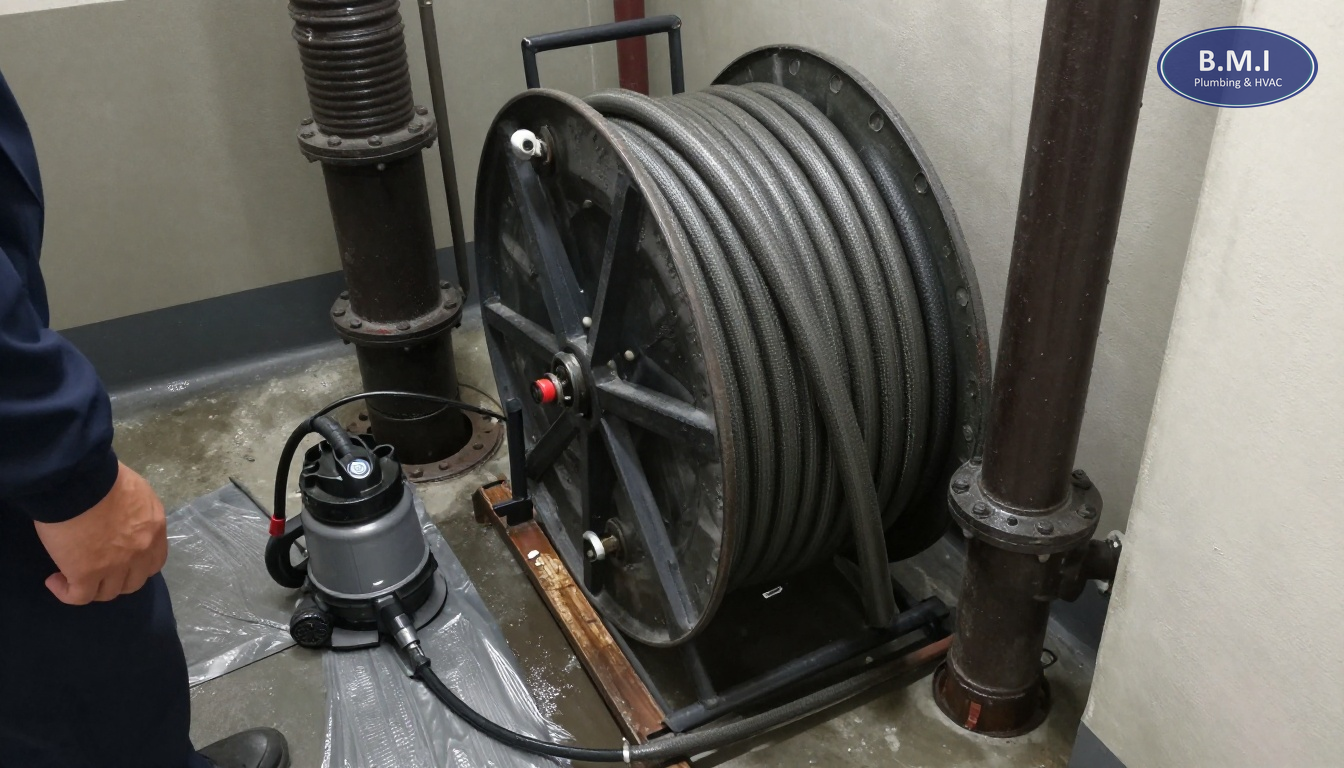
Condo Drain Backup Between Suites in Toronto
Why one condo suite floods when the suite above runs a dishwasher: how stack blockage happens, who pays, and Toronto …
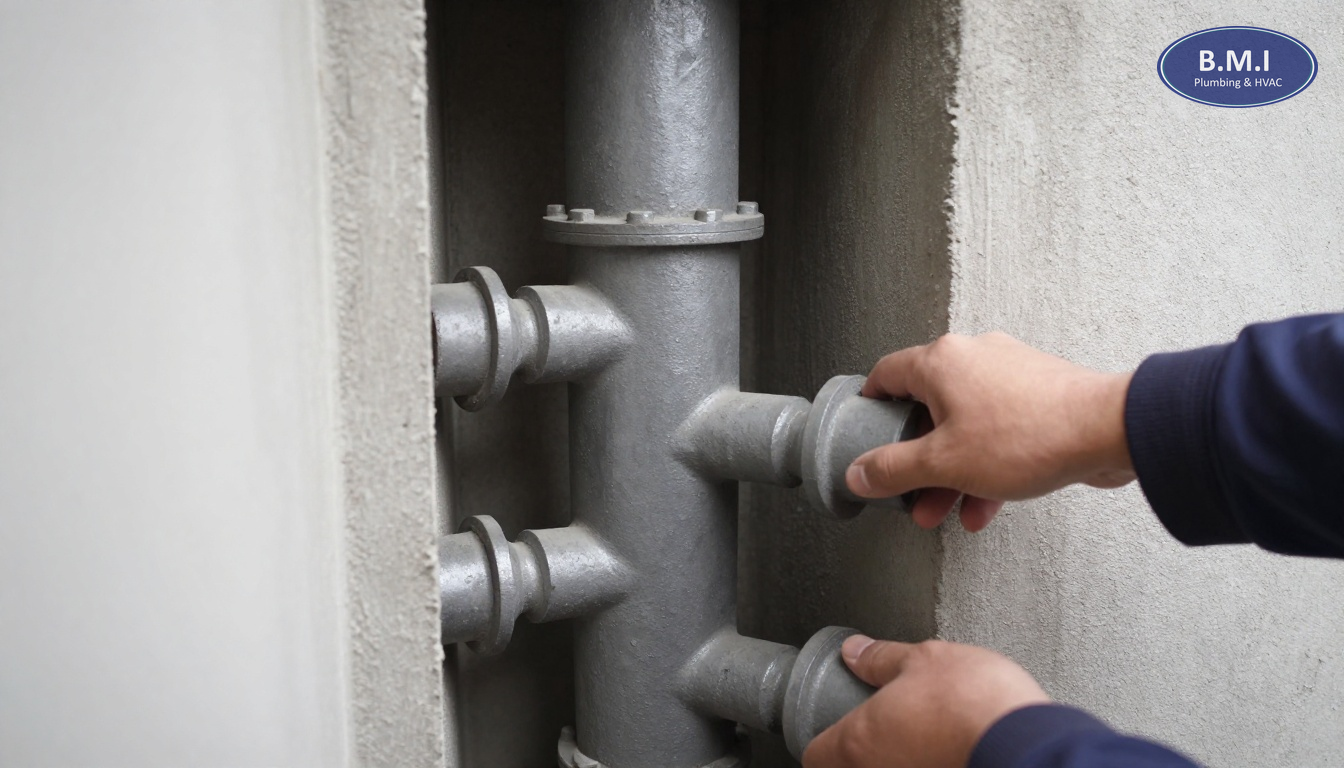
Holiday Kitchen Stack Cleaning in Toronto Condos
Holiday grease buildup causes December drain backup issues in Toronto condos. Learn warning signs, costs, timing and …
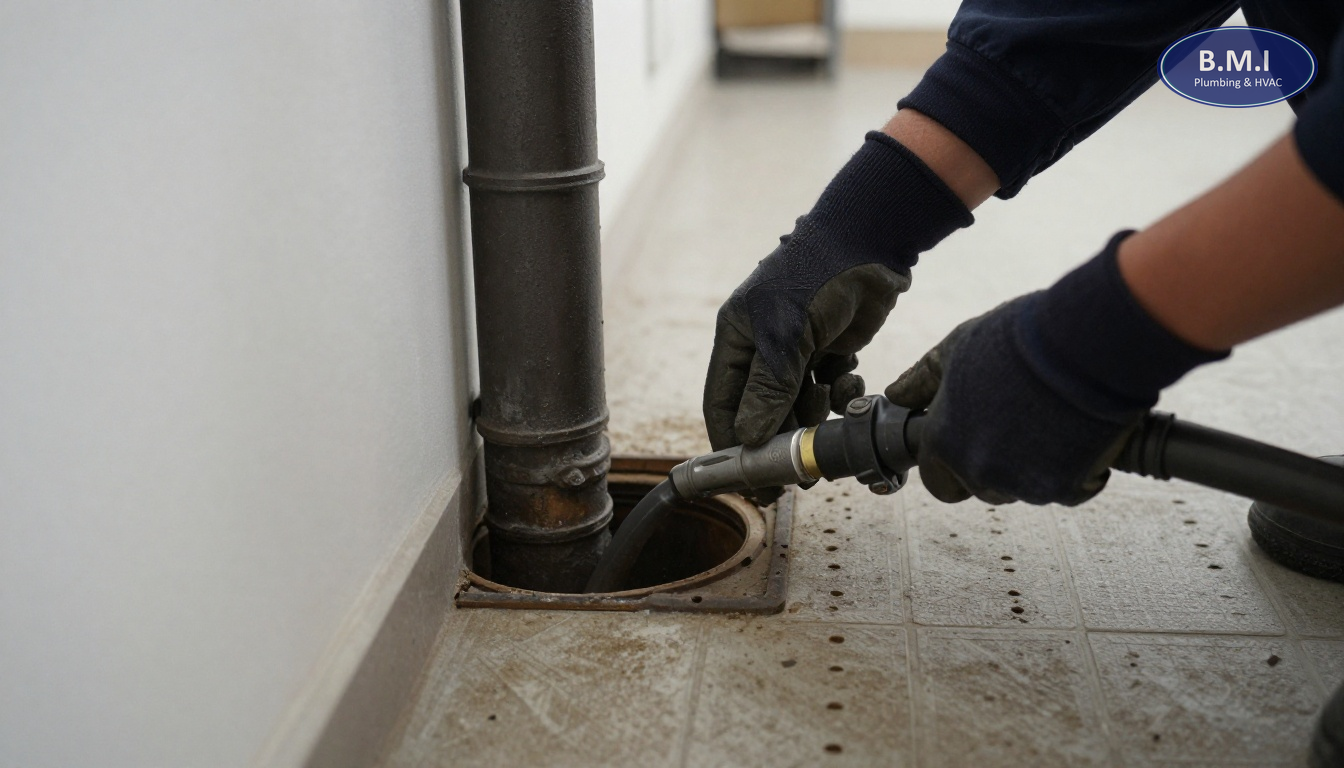
Toronto Condo Stack Cleaning Resident Notice Guide
How to schedule condo stack cleaning with clear resident notice, suite access planning, costs, timelines and shutdown …
Need a plumber in your building?
BMI services roughly 200 condominium and multi-residential buildings across Toronto and the GTA. Emergencies are answered at any hour.