Why Kitchen Stacks Block in Toronto Condominiums
A practical guide to kitchen stack cleaning in Toronto condos: why grease buildup happens, what blockage signs mean, and what cleaning costs.
Why Kitchen Stacks Block in Toronto Condominiums
Quick summary: Kitchen stack cleaning in Toronto is not cosmetic maintenance. In condominium buildings, most recurring kitchen sink backups come from grease, soap and food solids narrowing the inside of shared vertical waste stacks, especially older 3-inch cast iron piping. If your building waits until residents are flooding cabinets, the work costs more, the evidence is harder to preserve, and the board ends up making a reactive decision during the worst possible season.
A common mistake in Toronto, North York and Mississauga towers is treating every kitchen backup as an isolated in-suite clog. In practice, if multiple vertically aligned suites are involved, or one suite backs up when another suite above uses water, you are usually dealing with a common stack condition, not a tenant housekeeping issue. That distinction drives cost allocation, resident communication and whether the right solution is drain cleaning, camera inspection or a scheduled kitchen stack cleaning program.
The expensive misconception: “the sink is blocked, so snake the sink”
The phrase property managers hear is usually simple: “Unit 1204 kitchen sink is backing up.” The mistake is assuming the problem is within Unit 1204. In a high-rise, the kitchen line from the sink may only run a short distance before it ties into a vertical stack serving 8, 15 or 25 floors. A local snake may restore flow for a day by punching a narrow channel through grease, but the stack wall can still be carrying a 1/2-inch to 1-inch thick coating of congealed grease and detergent scale.
In buildings we service in Toronto and Scarborough, the most telling symptom is this: the resident says the sink drains acceptably when they use it lightly, but it backs up when the suite above runs a dishwasher or empties a full sink. That is not a trap blockage. It is a stack that has lost carrying capacity. If the pipe is nominally 3 inches, and grease has reduced the effective opening to even 1 1/2 to 2 inches in spots, a normal discharge from an upper floor can surcharge the branch below.
This is also why emergency calls tend to cluster in the fall and around the winter holidays. Buildings that were marginal in August often fail in October through January because kitchens see heavier grease loading, more dishwashing, more visitors and longer occupancy periods. Before boards finalize next year’s operating budget, it is worth reviewing whether the building should be on a planned maintenance program rather than paying premium rates for repeated after-hours incidents.
What is actually blocking the stack
A kitchen stack is not usually blocked by one dramatic object. It closes gradually. The buildup is typically a layered combination of:
- Fats, oils and grease that cool and adhere to pipe walls
- Detergent residue that turns sticky grease into a harder soap-like scale
- Food fines from garburators where permitted, or from poor sink straining
- Corrosion tuberculation in older cast iron that gives grease something rough to cling to
- Improperly pitched branch connections that slow discharge before it enters the stack
The technical point many non-plumbers miss is that kitchen waste behaves differently from bathroom waste. Bathroom lines see more dilute flow. Kitchen lines carry warmer, grease-laden water that cools as it travels, especially in concrete shafts and perimeter chases. In older Toronto and Etobicoke high-rises, original cast iron stacks are often rough enough inside that grease does not need much encouragement to stick. Once the first film develops, every subsequent discharge adds another layer.
A 3-inch cast iron kitchen stack in a 1980s tower may have started with an inside diameter a little over 3 inches. After decades of scale, corrosion and grease, the usable opening can be far smaller. By contrast, newer no-hub cast iron or certain plastic branch materials in post-2010 buildings may stay smoother longer, but they are not immune. High occupancy and resident cooking habits can overwhelm even newer piping if the building has no cleaning history.
There is also a layout issue. In many condominium designs, kitchens are stacked tightly to simplify plumbing, which means one vertical stack carries a concentrated grease load. Laundry or bathroom stacks usually do not see the same kind of buildup. That is why a building can have chronic kitchen backups while bathroom drainage seems fine.
Why Toronto condos are especially prone to grease buildup
Toronto water conditions are not extreme by North American standards, but the city’s treated water still contributes mineral residue over time, and older domestic systems often operate with pressure and temperature patterns that affect how waste moves. In towers with inconsistent hot water recirculation or long branch runs, residents may use more hot water at the sink to compensate for slow delivery, then send grease-heavy discharge into a relatively cool stack. That temperature drop is enough to accelerate adhesion.
Building age matters even more than citywide water chemistry. A rough rule from field experience:
- 1970s and 1980s concrete high-rises: original cast iron kitchen stacks are often the highest-risk category for chronic grease restriction.
- Early-1990s towers in North York, Vaughan and Mississauga: many still have serviceable stacks, but repeated spot cleaning may hide a system-wide maintenance need.
- 1995-2007 buildings are often discussed for Kitec replacement, but their kitchen drainage issues are usually separate from the domestic water piping conversation.
- Post-2010 glass towers may have fewer corrosion issues, yet higher turnover, investor ownership and heavier dishwasher use can still create blockage patterns surprisingly quickly.
Another local reality is access. In some Toronto and Markham towers, base cleanouts for kitchen stacks were built into cramped janitor rooms, behind millwork, or above finished ceilings in service areas that were never designed with modern maintenance in mind. That matters because a stack that is hard to access gets postponed. A postponed stack eventually becomes an emergency.
If your building has not reviewed stack access points, a valve audit mindset is useful even though this is drainage work: know where the cleanouts, sectional shutoffs and service points actually are before you need them.
How a stack blockage presents in a condominium building
Property managers are often given incomplete information by residents, so pattern recognition matters. The following complaints point toward a condo drain stack blockage rather than a one-suite issue:
- Kitchen sink backs up only during peak use periods, such as dinner time, not all day.
- The resident hears gurgling after the upstairs suite runs water.
- Dishwasher discharge causes sink backup even though the sink was empty beforehand.
- Multiple units in the same vertical line complain within days or weeks.
- Ground or lower floors see the worst backup, because surcharge shows there first.
- Previous snaking solved it briefly, then the problem returned within a few months.
One specific sign boards should note: if the lower suite reports dark grey or greasy water rising in the sink when no one in that suite is using the fixture, the source is almost certainly upstream in the shared line. That is useful when residents argue over whether the corporation or the owner is responsible. In many declarations, the stack is common element, while the trap and short fixture connection inside the suite may be owner responsibility. The declaration and rules govern the final answer, but the plumbing evidence usually makes the location clear.
For this reason, a building should not rely on verbal descriptions alone. A proper service call should produce notes identifying which units are vertically aligned, whether the branch or stack was accessed, and what material was recovered. If the contractor cannot tell you where the blockage was, you do not yet have enough evidence to charge back an owner or to budget intelligently.
What proper diagnosis looks like before you approve more cleaning
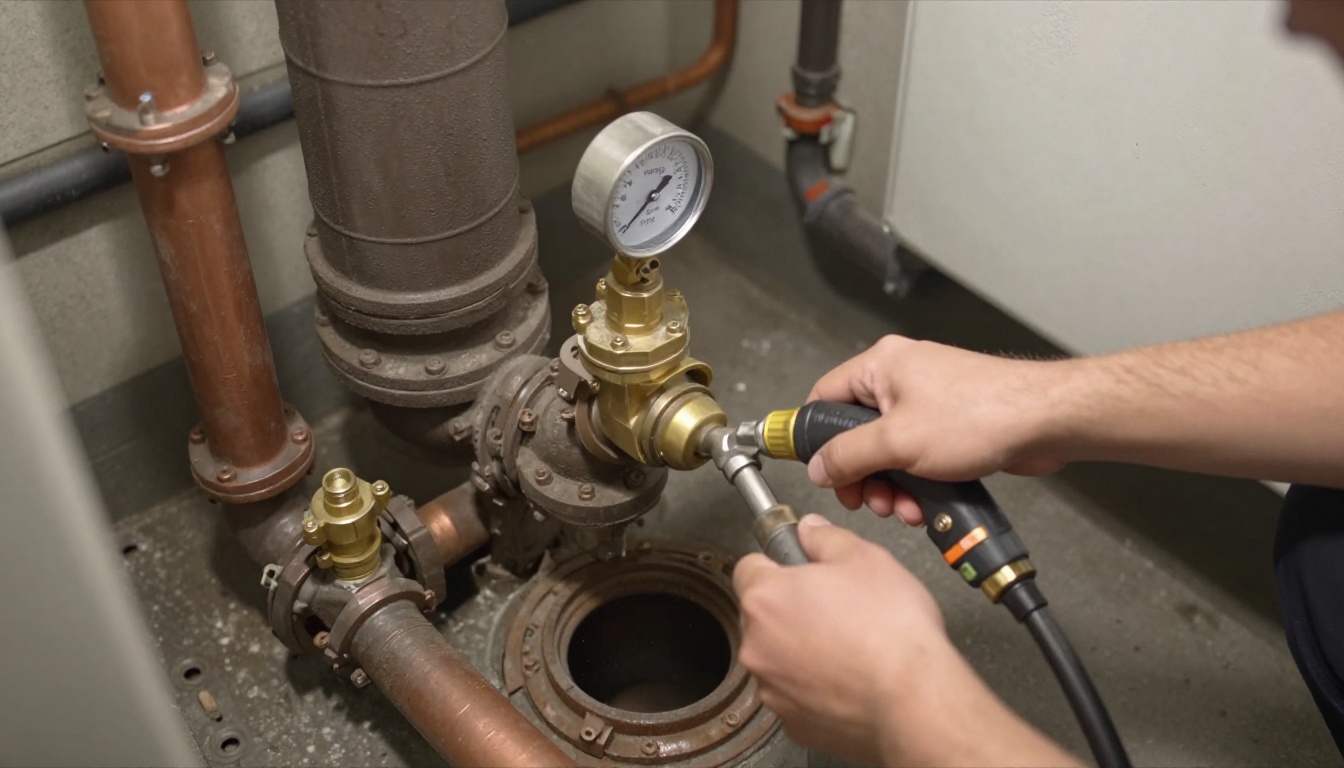
Not every building needs a full-stack camera survey immediately, but every building with repeat kitchen issues should insist on better evidence than “drain cleared.” The minimum useful diagnostic package usually includes:
- Identification of the stack number or vertical line affected
- The floors or suites reporting symptoms
- The access point used, such as base cleanout or in-suite branch
- Whether the line was snaked or high-pressure jetted
- Whether grease, scale, debris or a foreign object was encountered
- A recommendation for either maintenance, further camera inspection or capital review
A camera is especially valuable after jetting, not just before. Before cleaning, the lens may be blinded by standing waste and grease. After cleaning, you can see whether the pipe wall is still structurally sound or whether corrosion has left deep scaling, channeling or offsets at fittings. In older cast iron, this distinction matters because it tells you whether future cleaning is still cost-effective or whether you are spending operating dollars on a pipe that is approaching replacement territory.
In a 20- to 30-storey building, a useful sample is not necessarily every stack. Start with the repeat offenders and one or two comparison stacks. If three similar kitchen stacks show heavy wall buildup and reduced bore, you can budget the rest with more confidence. This is the same logic used in larger project solutions planning: sample intelligently, then make a building-wide decision.
Where stacks are repeatedly problematic, it is also worth checking adjacent infrastructure. A failed or inaccessible sectional shutoff does not cause a drain blockage, but it makes related repairs and in-suite access far harder to manage. That is why stack programs often pair well with valve replacement planning in older buildings.
Jetting versus snaking: the decision most buildings get wrong
Here is the plain version: snaking restores flow; jetting restores diameter. They are not the same service.
| Method | Best use | Main limitation | Typical condo application |
|---|---|---|---|
| Snaking | Immediate relief of a localized obstruction | Often bores a hole through grease without removing wall buildup | Emergency service to get one line flowing again |
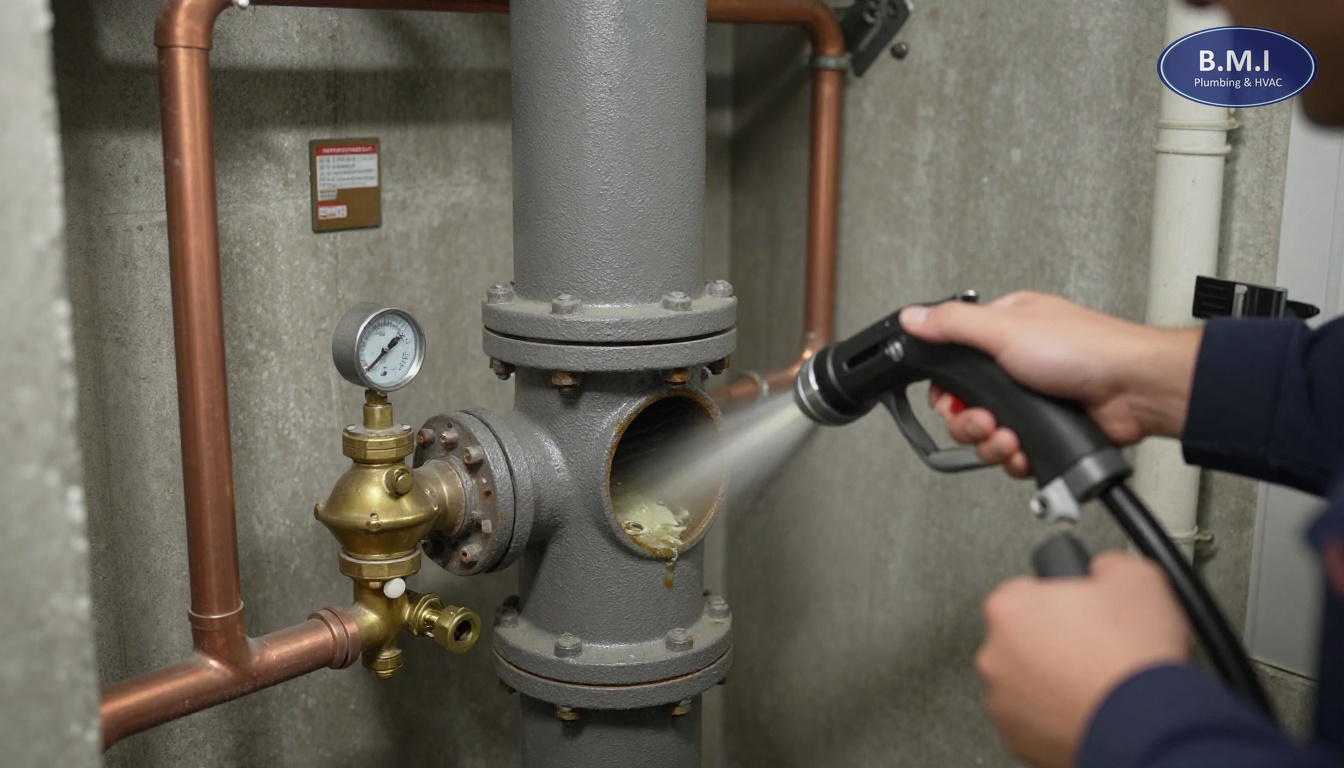
| High-pressure jetting | Removing grease and sludge from stack walls | Needs proper access and should be done by a crew used to multi-residential drainage work | Planned kitchen stack cleaning program |
| Camera inspection | Confirming condition after cleaning or locating defects | Diagnostic, not a cleaning method | Repeat-problem stacks and budgeting decisions |
A useful real-world test is recurrence interval. If a stack needs snaking every few months, the building is likely paying repeatedly for partial relief. A scheduled jetting cycle may cost more on the day, but less over 12 to 24 months because it reduces emergency calls, suite damages and management time.
That said, not every stack should be jetted aggressively forever. If camera footage shows advanced scaling, broken sections, offsets or severe loss of wall thickness, you may be near the point where cleaning is maintenance on borrowed time. At that stage, the conversation shifts toward localized repair or broader building re-piping planning, depending on what else in the system is aging.
What kitchen stack cleaning costs in Toronto
The numbers below are Toronto-market estimates, not quotes, and they vary by height, access, number of stacks, after-hours requirements and whether camera work is included.
Typical cost ranges
| Scope | Estimated range | Notes |
|---|---|---|
| Emergency snake of one affected kitchen line | $350-$900 | Usually one incident, limited diagnosis, may not remove grease coating |
| Planned jetting of one kitchen stack | $600-$1,500 | Depends on cleanout condition, stack height and debris load |
| Camera inspection of one stack after cleaning | $350-$900 | More if multiple access points or edited reporting is required |
| Small condo annual program | $3,000-$8,000 | For a building with a limited number of kitchen stacks |
| Mid-size tower stack cleaning program | $8,000-$25,000+ | Depends heavily on number of vertical lines and access logistics |
On a 300-unit building, a full kitchen stack program may be priced by stack count rather than by unit count, because 300 units could be arranged on 8 stacks or 20 stacks depending on design. That is a detail reserve fund planners and boards often miss. Two buildings with the same unit count can have very different maintenance costs because the plumbing layout is different.
The other hidden cost is access administration. If the work requires entering suites to verify branch conditions, protect finishes or test drainage, management time becomes part of the real project cost. That is one reason planned work is cheaper than reactive work: notices go out once, elevator protection is booked once, and the crew moves systematically.
If you are also reviewing domestic pressure issues for the same budget year, it can make sense to align this with a PRV maintenance review. They are separate systems, but boards appreciate seeing the full plumbing maintenance picture before finalizing next year’s operating numbers.
Timing, access and why fall is the right season to deal with it
September through November is the practical window for many condominium stack programs. The reason is not just weather. It is that buildings are trying to get ahead of holiday grease loading, finalize budgets, and avoid winter after-hours service when contractor availability is tighter and residents are home more often.
A straightforward stack cleaning program can move quickly if the building is organized:
- One stack may be jetted in 1 to 3 hours depending on height and access.
- A crew may cover several stacks in a day in a well-prepared building with accessible cleanouts.
- If cleanouts are buried, capped over, corroded shut, or located in active service rooms, production slows sharply.
- Resident notice is still wise even if suite entry is not planned, because temporary drainage disruptions or noise can occur.
For managed condominiums in Toronto, East York and Richmond Hill, the operational details matter as much as the plumbing work itself:
- Confirm whether any suites with prior claims should be monitored during cleaning.
- Protect elevators if equipment and hoses move through common areas.
- Coordinate with concierge so residents are not running multiple dishwashers during active cleaning windows.
- Make sure the building operator knows where all related service rooms and cleanouts are.
A common mistake is leaving notices too late. For non-emergency suite access, managers generally want clear written notice that aligns with condominium procedures and avoids disputes later. Even when direct entry is unnecessary, early notice reduces resident complaints and gives owners a chance to report recurring symptoms before the crew arrives.
When cleaning is enough, and when you should think about replacement
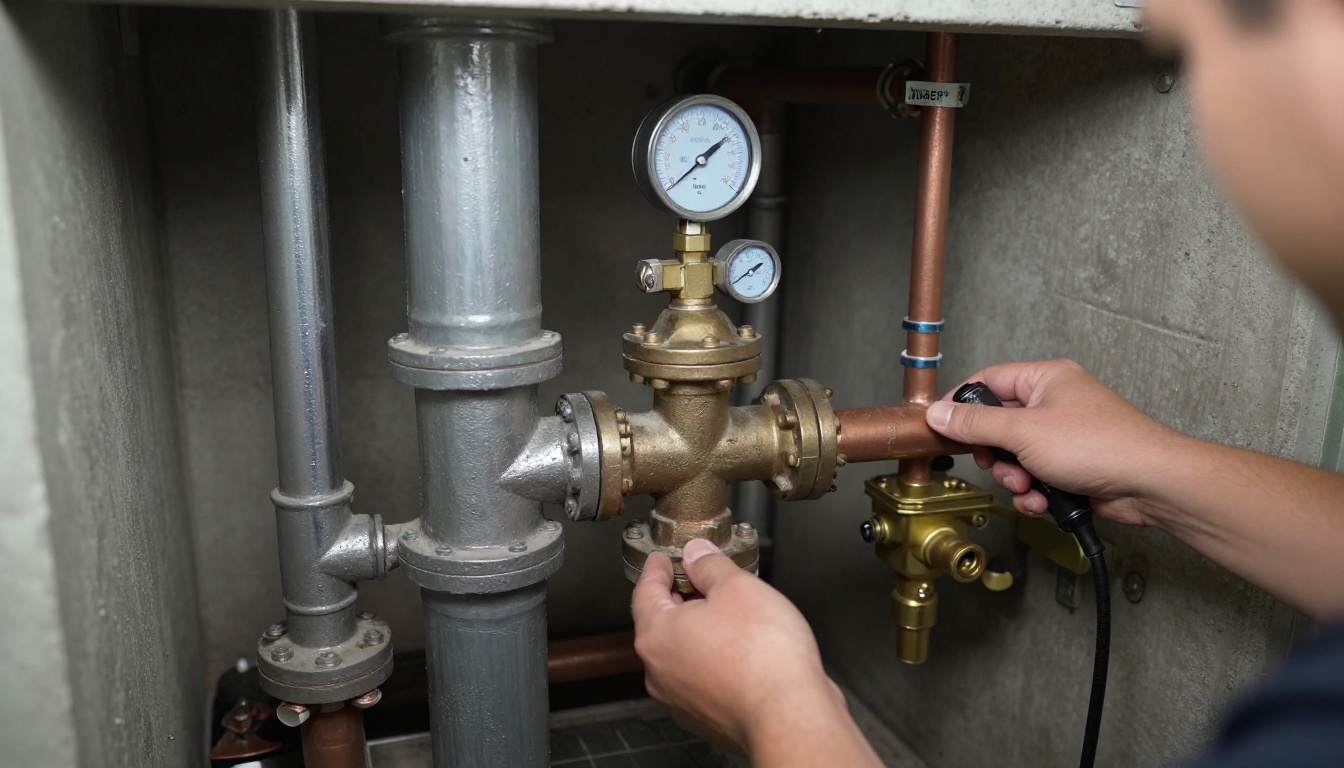
Most kitchen stack problems do not start with replacement. Many can be managed for years with disciplined maintenance. But there is a point where recurring operating spend stops making sense.
Cleaning is usually still the right path when:
- The stack is structurally intact on camera
- The buildup is mostly grease and soft scale
- Backups are infrequent once the stack is properly jetted
- Access is good enough to repeat maintenance predictably
A capital conversation starts when:
- The stack has severe corrosion and heavy internal scaling after cleaning
- There are offsets, failed joints or recurring leaks in addition to blockages
- Cleanouts are inaccessible or unreliable, making maintenance inefficient
- Emergency incidents are creating repeated insurance exposure
In some buildings, the stack issue is part of a bigger aging-plumbing picture that includes domestic risers, failed isolation valves or movement at vertical piping. That is when managers should broaden the discussion to riser replacement, expansion compensator replacement or broader project solutions. A board does not need to replace everything at once, but it should understand whether the stack problem is isolated or part of a system nearing the same age-related threshold.
The honest answer in some buildings is also: this can wait a year. If the stack was recently jetted, camera footage is decent, and incidents have been isolated, deferment may be reasonable while you fund a more urgent item. The key is that deferment should be evidence-based, not based on wishful thinking during budget season.
What happens if you defer it too long
Deferred stack cleaning rarely fails gracefully. It usually shows up as one of three problems:
- Suite backup and cabinet damage in a lower floor kitchen
- After-hours emergency call with limited diagnostic time
- Responsibility dispute between owner and corporation after water escapes
From a property management standpoint, the insurance piece matters. If a corporation has a history of repeat backups on the same line and no documented maintenance response, it becomes harder to explain the event as sudden and unforeseeable. The declaration, insurer position and facts of loss will control the outcome, but poor records never help the corporation.
There is also a reserve fund implication. Routine stack cleaning belongs in operating maintenance, not reserve funding. But if cleaning records show that multiple original stacks are no longer maintainable, that evidence should feed into the next reserve fund study update. Under Ontario condominium practice, boards need defensible data when moving an item from routine maintenance thinking into future capital planning.
Finally, deferral tends to increase owner conflict. Without documented findings, every blockage becomes an argument about grease, tenant behaviour, common element boundaries and chargebacks. Good maintenance records reduce those arguments because the building can point to a pattern, a scope and a plan.
A practical decision framework for boards this fall
If your board is discussing next year’s plumbing budget, the simplest defensible framework is this:
- List all kitchen backup calls from the last 24 months by stack or vertical line.
- Identify repeat stacks and whether prior work was snaking or jetting.
- Get camera evidence on the repeat offenders through camera inspection.
- Price a scheduled cleaning cycle instead of comparing only emergency invoices.
- Bundle related maintenance planning where sensible, such as backflow prevention, PRV maintenance and other repairs and service items that affect the same annual budget discussion.
If the building has not had kitchen stack cleaning in over two years, and especially if it is an older Toronto high-rise with original cast iron, that is usually enough reason to inspect and budget now rather than wait for December.
FAQs
How often should a condominium schedule kitchen stack cleaning?
For most Toronto condominium towers, a planned kitchen stack cleaning cycle of every 12 to 24 months is reasonable, but the right interval depends on building age, resident profile and pipe condition. A 1970s or 1980s concrete high-rise with original 3-inch cast iron kitchen stacks often needs annual jetting, while a newer post-2010 tower with smoother piping may stretch to 18 or 24 months. If the same stack backs up twice within a year, the answer is usually not more emergency snaking but a camera review and a shorter maintenance cycle.
What is the difference between a suite drain problem and a stack problem?
A suite drain problem is local to one unit, such as a blocked trap arm, clogged basket strainer line or an owner alteration that reduced slope. A stack problem shows up in a pattern: one sink may drain normally on its own but back up when an upper suite runs a dishwasher, or several vertically aligned units report gurgling and intermittent kitchen sink backups. In a condominium, that distinction matters because the stack is usually common element infrastructure even though the first complaint comes from inside one suite.
Is snaking enough, or do kitchen stacks need high-pressure jetting?
Snaking is useful for restoring temporary flow through a soft blockage, but it often punches a hole through grease rather than removing the grease coating from the pipe wall. High-pressure jetting, usually through a cleanout at the base of the stack, scours the full inside diameter of a 3-inch or 4-inch cast iron stack and is the more effective maintenance method. If the pipe is badly scaled or reduced by corrosion, a camera inspection after cleaning is the only reliable way to tell whether jetting is still worth doing.
What does kitchen stack cleaning cost in Toronto?
In the Toronto market, planned cleaning of a kitchen waste stack commonly lands in the range of about $600 to $1,500 per stack, depending on height, access, cleanout condition and whether camera work is included. A full program for a mid-size condominium can range from several thousand dollars to tens of thousands if there are many stacks, difficult access points or after-hours requirements. Emergency response is usually more expensive than scheduled maintenance because it involves resident disruption, flood risk and less efficient crew deployment.
Can a building defer kitchen stack cleaning if there have been no recent backups?
Sometimes yes, but only if there is evidence behind that decision, not just a quiet few months. If a building has recent cleaning records, no repeat trouble stacks, and camera footage showing acceptable internal pipe condition, deferring a year may be defensible during budget season. If records are poor, the building is entering holiday cooking season, and the stacks are original cast iron from the 1980s or earlier, deferral usually increases the odds of an after-hours backup when owners are home and insurance exposure is higher.
Who pays when a kitchen stack blockage causes a backup in a suite?
That depends on the condominium declaration and where the blockage is located, but in many GTA condominiums the vertical stack is common element and the corporation bears responsibility for the pipe itself. Chargebacks can still arise if the corporation has evidence that an owner caused or worsened the blockage, for example by disposing of construction debris, wipes or large volumes of grease. Property managers should avoid assumptions and get written findings, photos and, where possible, camera footage before deciding responsibility.
Next steps for Toronto property managers and condo boards
If your building has had repeat kitchen sink backups, do not budget based only on the last emergency invoice. Look at the pattern by stack, confirm whether prior work actually removed grease buildup, and insist on evidence that distinguishes a suite issue from a common element stack problem. If the kitchen stacks have not been jetted in over two years, have them reviewed before the holiday season and before next year’s operating budget is locked.
BMI attends buildings before quoting larger maintenance scopes, and scheduled programs are set up to reduce repeat emergency calls rather than sell one service call at a time. If you are comparing options, ask for a scope that includes the number of stacks, access assumptions, whether camera work is included, and what recurrence interval would trigger a different recommendation. For recent backups or active overflows, emergency plumbing response is available 24 hours a day, and for suite-level symptoms that still need to be traced back to the stack, in-suite plumbing service can be coordinated with building management.
For examples of related condominium work and building types, it is also worth reviewing BMI’s project portfolio and additional articles on the BMI blog.
Contact BMI
- Contact BMI
- Phone: (416) 845-3756
- Emergency: (416) 845-3756, answered 24 hours a day
- Email: info@brial.ca
Need a plumber in your building?
BMI services roughly 200 condominium and multi-residential buildings across Toronto and the GTA. Emergencies are answered at any hour.