
• 24/7 emergency response
  • Toronto & the GTA
Project solution

Expansion Compensator Replacement

Compensators are what let a riser grow and shrink without tearing its own joints apart. We replace failed units building-wide, and correct the anchors and guides so the new ones last.

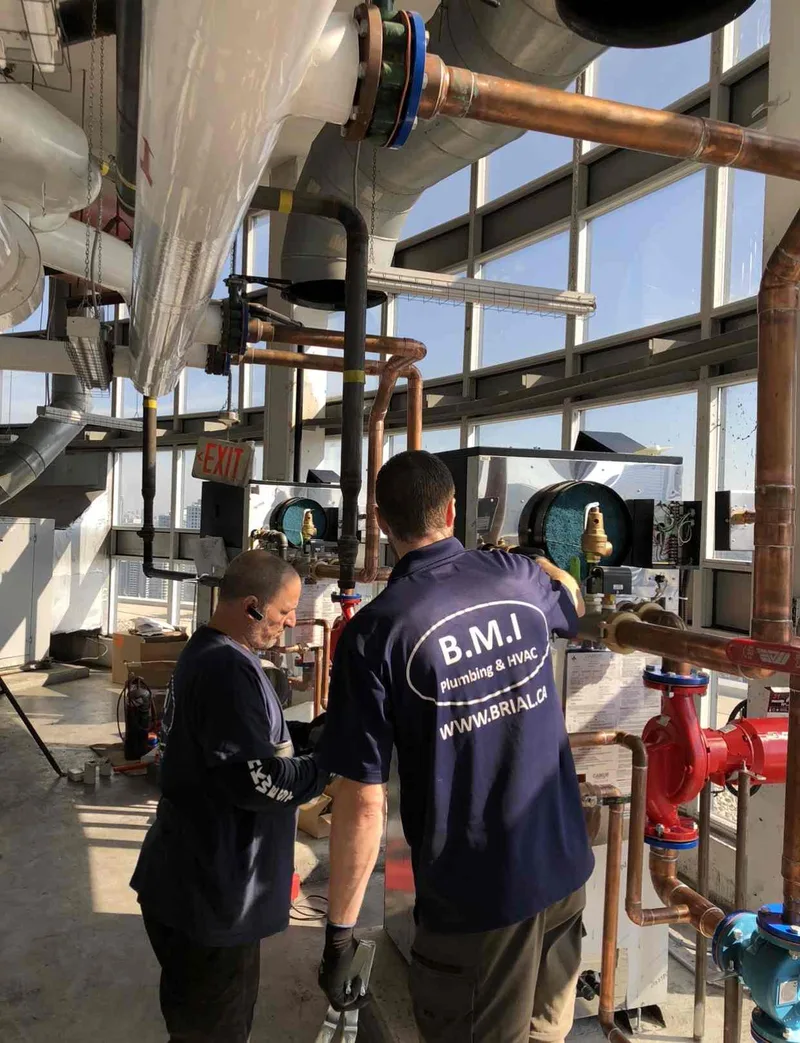
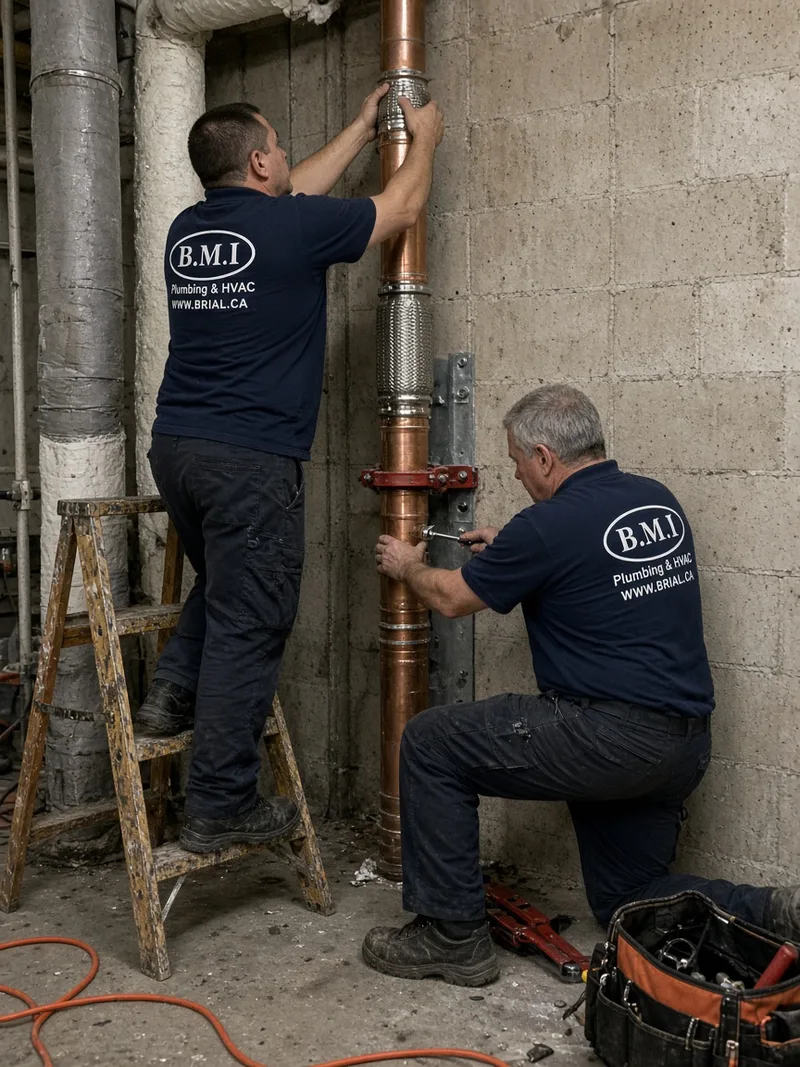
BMI plumbers installing a new expansion compensator on a copper riser in a Toronto condominium mechanical penthouse
What it does
Absorbs riser thermal movement
How it fails
Leaks, noise, distorted pipe
Where it lives
Shafts and mechanical rooms
Done
On its own or with a riser project
Why it matters

The pipe is going to move. The only question is what absorbs it.

Thermal movement in a high-rise riser is not a rounding error. Copper expands roughly 1.7 mm per metre over a 100 degree change, so a riser running the full height of a tower moves in inches, and it does so every day the heating plant cycles. A correctly designed system directs that movement: a compensator to absorb it, anchors to force it there, guides to prevent the pipe deflecting laterally on the way.

When the compensator seizes, the movement does not stop. It is absorbed by whatever is next in line, which is the pipe's own fittings, the branch connections, the hangers, and ultimately the structure they are fixed to. It presents as fractured fittings, joints that weep, are repaired and weep again, bowed pipe, sheared hangers, and the impact noise in the shaft that upper-floor residents report.

Why they are missed

Compensators sit inside shafts and above ceilings. They present no gauge to read and no element to change, and a seized unit behaves exactly like a length of pipe until something downstream of it fails. The most expensive version of that oversight is a building that replaces its risers without addressing them: new copper connected to the condition that damaged the previous set.

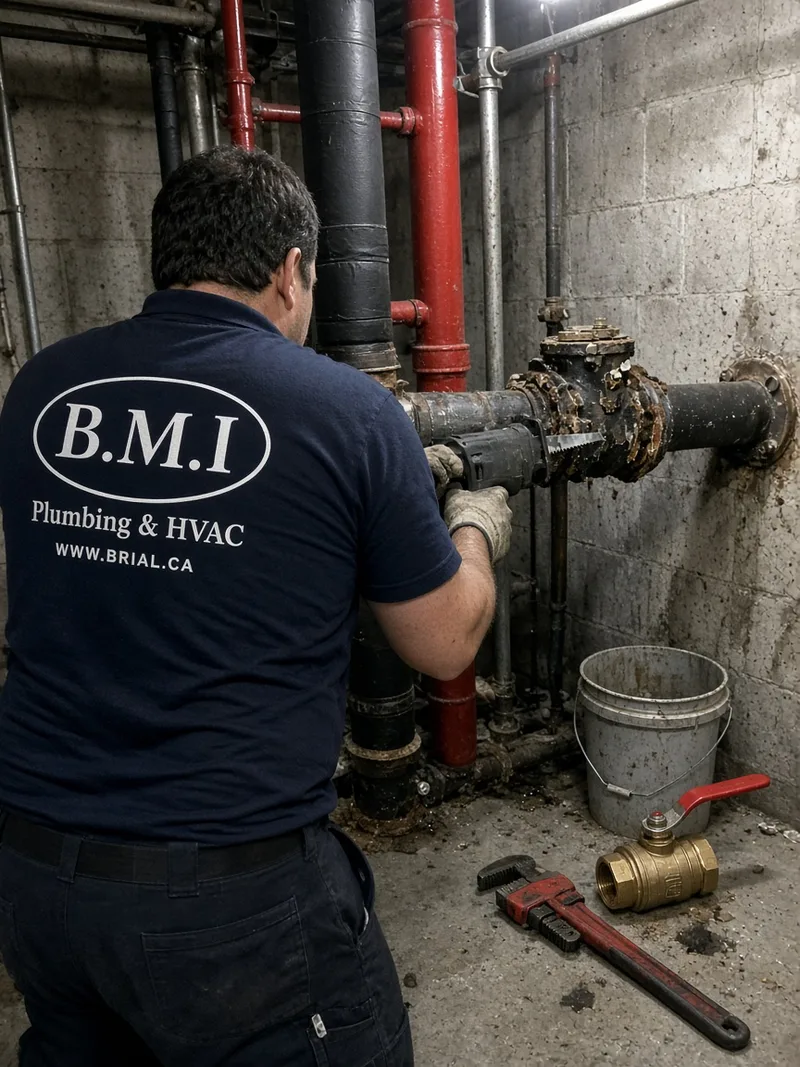
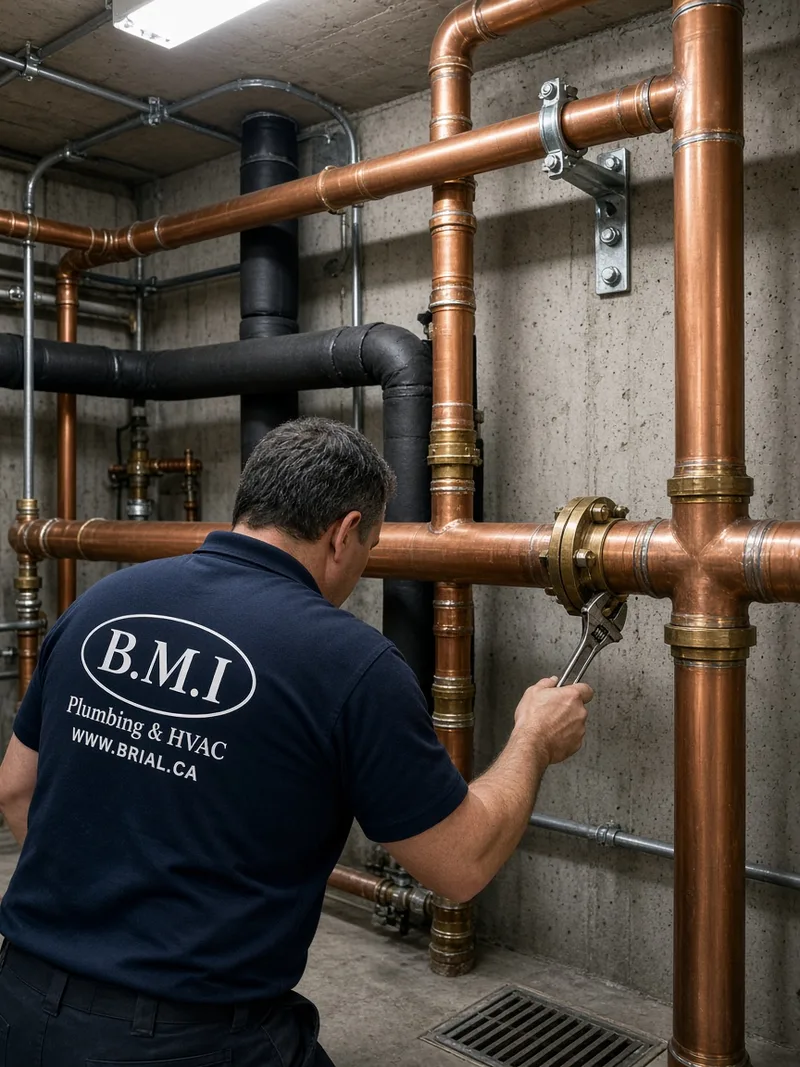
BMI plumber working on large copper riser mains, fittings and an anchor bracket in a Toronto condominium mechanical room
Mains and risers in a mechanical room. Every change of direction and every fitting is carrying whatever movement the compensators above are not.
When it is time

Signs a compensator has already failed

Any one of these warrants opening an access panel. Two of them together indicate a seized unit.

Banging in the riser shaft

A riser that cannot move smoothly moves in jerks. Residents describe it as knocking or creaking inside the wall when the heat comes on.

Weeping joints near a unit

A joint repaired twice in the same location is not a defective solder joint. It is under load.

Visibly bowed or distorted pipe

Pipe that has deflected laterally between supports had nowhere else to send the movement.

Sheared or pulled hangers

Anchors loose in the concrete, or hangers bent out of shape, mean loads are landing on supports that were never sized for them.

Repeat failures on one riser

Where one riser produces repeat leaks and its neighbours do not, the difference is usually in how it is restrained.

A riser project on the horizon

With the shaft already open, this is the least disruptive point at which to address it. Deferring means paying for access twice.

How it works

Designed properly, and the way we usually find it

How an expansion compensator, anchors and guides work together, and what happens when the anchoring is wrong Two riser elevations side by side. On the left, as designed: an anchor at the top of the run, a guide, an expansion compensator in the middle, a second guide and an anchor at the bottom. The anchors direct the pipe's thermal movement into the compensator and the guides stop the pipe deflecting sideways, so the movement is absorbed by the unit. On the right, as commonly found: the top anchor is missing, so the movement travels straight past the compensator and is absorbed by the branch fitting at the bottom of the run, which takes the load and eventually cracks. A note beneath records that ninety metres of copper riser through a sixty degree swing moves roughly ninety millimetres. As designed Anchor Guide Compensator takes the movement Guide Anchor As we usually find it No anchor here Movement passes straight through The branch fitting takes the load, and cracks 90 m of copper riser through a 60 °C swing moves roughly 90 mm. Something absorbs that, by design or by damage.
The unit is one part of a system. A compensator absorbs movement only where the pipe is anchored so the expansion is directed into it and guided so the riser cannot deflect laterally instead. That is why we survey and quote the anchoring alongside the units: a new compensator fitted into a defective installation returns a few years and then the same leak.
Our method

How we replace a building's compensators

Eight stages. Three of them address the anchors and guides rather than the compensator, because that is where replacements fail early.

  1. Survey the risers and the shafts

    We open the access points and look at every compensator in the building, not just the one that leaked. They were installed at the same time by the same people, so they tend to be in the same condition.

  2. Check the anchoring, not only the unit

    A compensator only works if the pipe is anchored so movement is pushed into it and guided so it cannot buckle sideways. Most failures we attend are anchoring failures presenting as compensator failures.

  3. Confirm the movement the riser actually sees

    Pipe material, riser height and the real operating temperature range decide the movement the unit has to absorb. That is what sizes the replacement, rather than matching the unit previously installed.

  4. Plan the shutdown riser by riser

    We isolate and drain one riser at a time so the building keeps running, and we schedule around heating and cooling seasons so nobody is without a working system on the coldest or hottest week.

  5. Remove the failed units

    The old compensators come out with the surrounding pipe cut back to sound material. Where the pipe has been distorted by the movement it was never meant to carry, that section is replaced too.

  6. Install the new compensators

    New units go in at the correct pre-set, square to the pipe and properly supported. Installed out of square or pre-loaded, a compensator will fail early regardless of the quality of the unit.

  7. Correct the anchors and guides

    Anchors are fixed back to the structure and guides are set at the right spacing above and below each unit, so the riser can only move in the direction the compensator is there to absorb.

  8. Refill, test and report

    Risers are refilled, vented, brought up to pressure and watched under real operating temperatures. A photographic report is issued covering every unit replaced and every anchor corrected.

Completed projects

Expansion compensator work we have completed

Building-wide compensator replacement as its own project, and as part of the riser programmes where the shaft was already open.

80 Harrison Garden Blvd, Toronto - condominium tower where BMI replaced the building's heating and cooling risers Heating & Cooling Riser Replacement

80 Harrison Garden Blvd

Toronto, Ontario

Replacement of the heating and cooling risers for the entire building, including supply and installation of all new copper pipe, expansion joints, anchors and fire stopping.

15 Windermere Ave, Toronto - condominium tower where BMI replaced the heating and cooling risers Heating & Cooling Riser Replacement

15 Windermere Ave

Toronto, Ontario

Full-building heating and cooling riser replacement with all new copper pipe, expansion joints, anchors and fire stopping, completed in an occupied tower.

78 Harrison Garden Blvd, Toronto - condominium where BMI replaced building expansion compensators Expansion Compensator Replacement

78 Harrison Garden Blvd

Toronto, Ontario

Removal and disposal of the existing expansion compensators throughout the building, with supply and installation of new units.

5025 Four Springs Ave, North York - condominium tower where BMI replaced the expansion compensators throughout the building Expansion Compensator Replacement

5025 Four Springs Ave

North York, Ontario · Full building

Full-building expansion compensator replacement, with the anchors and guides at each riser corrected back to structure and every riser refilled, vented and pressure tested.

5033 Four Springs Ave, North York - condominium tower where BMI replaced the building's expansion compensators Expansion Compensator Replacement

5033 Four Springs Ave

North York, Ontario · Full building

Companion tower to 5025 Four Springs: expansion compensators replaced throughout the building on the same programme, with guide spacing reset above and below every unit.

Deliverables

The movement handled, and the correction on record

This work disappears behind an access panel the moment it is finished, so the report is the asset. A board should be able to show an engineer exactly what was replaced, what was corrected, and the condition of the riser before anyone touched it.

  • New compensators rated for the movement your risers actually see
  • Anchors refixed to structure, guides set at the correct spacing
  • Distorted or work-hardened pipe sections replaced rather than reused
  • Risers refilled, vented and pressure tested riser by riser
  • Access panels left serviceable, so the next inspection is not a demolition
  • A photographic report of every unit and every correction
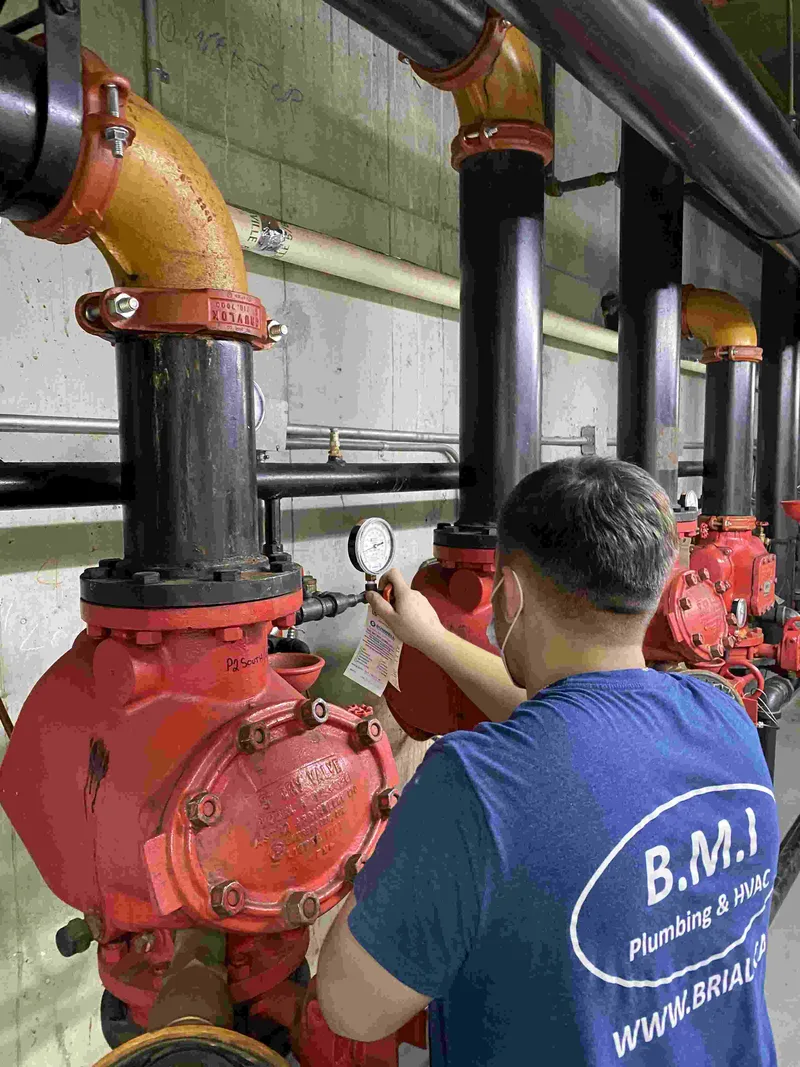
Condominium mechanical room piping with insulated risers, anchors and supports serviced by BMI
Where most of this work sits: the mechanical penthouse and the service rooms at each end of the risers, where the anchors are fixed to structure.
Specifications

Compensator replacement at a glance

Scope and logistics for expansion compensator replacement in an occupied Toronto condominium.
ServiceExpansion compensator and expansion joint replacement
SystemsHeating, cooling and domestic water risers
Also coveredPipe anchors, guides, hangers and distorted pipe sections
Typical locationsMechanical penthouses, riser shafts, service rooms, garage ceilings
ShutdownOne riser at a time, drained and refilled the same day where possible
Resident impactOften none; otherwise loss of heating, cooling or water on one riser for the day
SchedulingPlanned around heating and cooling seasons
TestingRefilled, vented, pressure tested and observed under operating temperature
ReportingPhotographic record of every unit replaced and every anchor corrected
FundingCapital work, commonly bundled into a riser programme
Service areaToronto, North York, Etobicoke, Scarborough, Mississauga and the wider GTA
Emergency response24/7, (416) 845-3756
Why BMI

The anchors and guides, not only the unit

A compensator is only as good as the restraint around it, and the most common reason a replacement fails early is that the anchoring was never corrected. BMI surveys the full run, replaces distorted pipe rather than reusing it, and refixes anchors to structure with guides at the correct spacing. Because we deliver riser replacement as well, compensators are specified as part of the riser system rather than treated as an isolated component.

20 Years in business Condominium plumbing across Toronto and the GTA
24/7 Emergency response Every day of the year, including holidays
200+ Active buildings serviced Maintenance contracts and capital work under way right now
GTA Service area Toronto, North York, Etobicoke, Scarborough, Mississauga and beyond
Questions

Expansion compensator questions

An expansion compensator is a purpose-made flexible section built into a riser so the pipe can grow and shrink with temperature without loading its own joints. Copper grows about 1.7 mm per metre for every 100 degrees Celsius of temperature change, so a ninety metre riser through a sixty degree swing moves on the order of ninety millimetres between cold and hot. Replacement means removing the failed units, fitting new ones rated for that movement, and correcting the anchors and guides so the new ones are not asked to fail the same way.

If it starts when the heating plant fires and stops once the building is warm, it is almost certainly the riser moving. A pipe that grows in length has to go somewhere, and if the compensator meant to absorb that movement has seized, the riser moves in jerks against its supports instead of sliding smoothly. That is the knocking and creaking residents describe as coming from inside the wall. It is worth reporting: the same loads that make the noise are the ones that crack fittings.

It is not dangerous to you, and it is not something to ignore either. What it tells you is that thermal movement is being taken by components that were not designed to absorb it, which is how you end up with repeat joint leaks on one riser while its neighbours behave perfectly. Report it to management with a note of when it happens, because when it happens is the most useful diagnostic information there is. A pattern tied to the heating cycle points straight at the compensators.

Buildings do move with temperature, and some creaking is normal. The version worth reporting is creaking that tracks the heating system rather than the weather: a groan every time the plant cycles, always in the same place, often near a riser shaft or a soffit. That is the sound of pipe sliding or binding against a support, and it is the same underlying cause as the banging on a louder installation.

Usually not. Expansion compensators live in mechanical penthouses, riser shafts, service rooms and garage ceilings, so most of this work happens in spaces residents never enter. The exception is a unit with an access panel in front of a compensator, and in that case you get written notice of the date and window in advance and floor protection while we are there.

One riser at a time, for part of a working day, and only the suites on that riser. Everyone else keeps full service. We schedule around the heating and cooling seasons on purpose, so the heating risers are not the ones being drained during a cold snap. In many buildings the work is entirely in the penthouse and residents notice nothing but the notice in the elevator.

Both do the same job: they give a pipe somewhere to put the length it gains and loses with temperature. In practice, compensator usually describes a compact braided or bellows unit fitted into a straight run, expansion joint is the broader term for any purpose-made flexible section, and an expansion loop is the alternative solution, where the pipe itself is routed in a loop so it can flex. High-rise risers normally use compensators because there is no room in a shaft for loops.

They rarely fail quietly. The building hears banging, creaking or knocking in the riser shafts as the pipe moves in jerks instead of smoothly. A weeping or leaking joint close to a compensator, visibly bowed pipe, or hangers and anchors that have sheared or pulled away from the structure all point the same way. The confirming evidence is repeat joint failures on the same riser: the pipe is being loaded by movement that nothing is absorbing.

There is no calendar interval that means much, because the number that matters is cycles rather than years. A heating riser that swings through a wide temperature range several times a day works its compensators far harder than a domestic water riser that sits at a steady temperature. What we can say is that original units in a building from the 1970s or 1980s are well past what anybody designed them for, and we usually find them seized rather than flexing.

Yes, and it is often the right call. If the pipe itself still has good wall thickness and there is no leak history, replacing the compensators, anchors and guides addresses the actual defect at a fraction of the cost of a riser project. We survey the pipe and state which case applies. Where the riser is also at the end of its service life, replacing compensators alone commits the building to paying for the same access twice, and we will say so before the work is authorised.

Because most compensator failures we are called to are not product failures. A compensator absorbs movement only when the pipe is anchored so the expansion is directed into the unit, and guided so the riser cannot deflect sideways instead. If the anchor was never fixed properly to the structure, or the guides are missing, the new compensator is being asked to do a job the installation prevents it from doing, and it will fail the same way the last one did.

No. We isolate and drain one riser at a time, so the rest of the building keeps running. The affected suites lose heating, cooling or water on that riser for the working day rather than for the project. Where the work is in a mechanical penthouse or a service room and the riser can be isolated at the top, residents often notice nothing at all beyond the notice on the elevator.

If a riser project is coming, yes, and it is one of the clearest savings available to a board. The shaft is already open, the riser is already drained, and the crew is already there. Doing compensators separately later means paying twice for access, notices and shutdowns. It is also the only way to be sure the new riser is not inheriting the anchoring problem that broke the old one.

More than most people expect. Copper grows roughly 1.7 mm for every metre of pipe for every 100 °C of temperature change. A ninety metre riser in a thirty-storey tower going through a sixty degree swing on a heating loop moves on the order of ninety millimetres from cold to hot. That has to go somewhere. If the compensators are seized, it goes into the joints, the fittings and the building structure instead.

Hearing the risers move?

Banging in the shafts and repeat joint leaks on the same riser are worth an hour of somebody's time. We will open the access points, look at every unit, and put what we find in writing.

Burst pipe or active leak right now? We answer 24 hours a day, every day of the year — (416) 845-3756
Call now Book Now