
Valve Audits, Charting & Exercise Programs
When a pipe fails after hours, somebody has to know which valve stops it. We locate, tag and chart every valve in your building, then exercise them annually so they still turn.
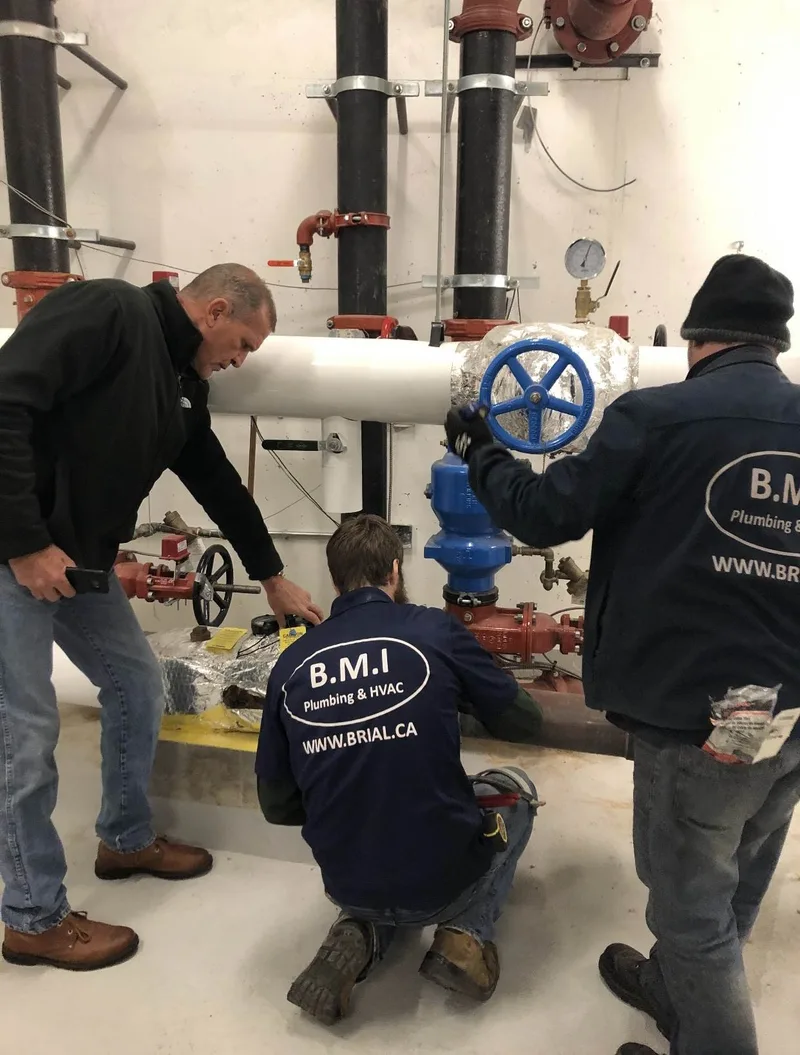
The cost of not knowing which valve isolates what
Consider the sequence on an after-hours call. Water is entering a suite on the eighteenth floor. The site holds a drawing set from 1987, two renovation programmes have intervened, and the valve the drawings identify does not isolate that line. The building main is closed, because it is the only isolation anyone can rely on.
Every resident is now without supply, and the water standing in the risers continues to drain into the suite regardless. By the time the correct valve is located the damage has extended through three floors. None of that was a plumbing failure. It was an information failure, and it is the first thing an adjuster asks about.
Valves that never operate do not operate
A gate valve left untouched for twenty years accumulates deposits on the stem and gate while the packing hardens around it. When it is finally required the handwheel will not turn, or the stem shears. Operating every valve through its full travel once a year is the least expensive plumbing maintenance a building can carry.
Charting recovers its cost on the next project
Every subsequent project is priced against uncertainty. A contractor who cannot establish what a valve isolates has to shut down more of the building for longer, and prices that risk accordingly. A building holding a current valve chart obtains tighter pricing and shorter shutdowns on riser work, in-suite programmes and everything else.

Signs your building needs a valve audit
Almost every building we chart has at least three of these. Most boards only discover them during an emergency.
Nobody could find the shut-off
If the last leak involved trial and error, or closing the building main because it was the only certain isolation, that is the case for an audit in full.
Tags missing or unreadable
Faded paper labels, marker on the insulation, or numbers that refer to a list nobody has seen in a decade.
Drawings that no longer match
Renovations, retrofits and previous contractors have all changed the building. The original drawing set describes a building that no longer exists.
A valve that would not turn
One seized valve is a warning about the rest, because every valve in the building has had the same twenty years without operation.
Shutdowns that affect too many suites
If a repair on one line takes water from forty units, the building is isolating at the wrong level because it cannot isolate at the right one.
No chart and no exercise record
After a significant loss, an insurer will ask how long isolation took and what maintenance existed. Both answers are decided in advance.
From tagged valve to usable chart
How we audit, chart and exercise
The audit is a one-time exercise. The annual contract is what keeps the record accurate as the building changes.
-
Start from whatever drawings exist
We review the riser drawings, any old valve list and the service history, then treat all of it as a hypothesis. In a building that has had thirty years of renovations, the drawings are a starting point and not an answer.
-
Walk the building and find every valve
Mechanical rooms, penthouses, riser closets, garages, corridors and inside suites. The valves that matter in an emergency are often the ones buried behind an access panel nobody has opened since the building was built.
-
Tag each valve with a permanent number
Every valve gets a numbered metal tag, fixed so it survives. Numbers follow a scheme that reads logically in the field, because a tag that reads correctly only in the spreadsheet is of no use during an incident.
-
Record what each valve actually isolates
Not what the drawing says it isolates. We record size, type, service, location and, where it can be confirmed safely, exactly which suites and fixtures go dead when it closes.
-
Exercise every valve through full travel
Each valve is operated closed and back open through its full travel, carefully, so it does not seize in place. This is the step that finds the valves which look fine and are not.
-
Repack, repair or flag for replacement
Stiff stems get repacked, weeping glands get attention, and anything that is seized or fails on operation goes on a list with its tag number rather than being quietly left.
-
Produce the chart and mark the drawings
A valve schedule and a marked set of riser drawings are issued, corresponding to the building as it stands today, in a form site staff can use under pressure and a contractor can quote from.
-
Re-exercise annually and update the record
Under contract we come back on schedule, operate everything again, and reissue the chart with conditions updated, so the record remains accurate as the building changes.
A document site staff can use under pressure
A valve schedule legible only to the person who wrote it has failed. The deliverable is specified to be read by a superintendent during an incident and quoted from by a contractor in daylight.
- Permanent numbered tags fitted to every valve identified
- A valve schedule recording tag, location, size, type and the area isolated
- Marked riser drawings that correspond to the building as it stands today
- A recorded condition for each valve, including those we consider at risk
- A failure list by tag number, priced for capital planning
- Annual re-exercise and a reissued schedule under contract
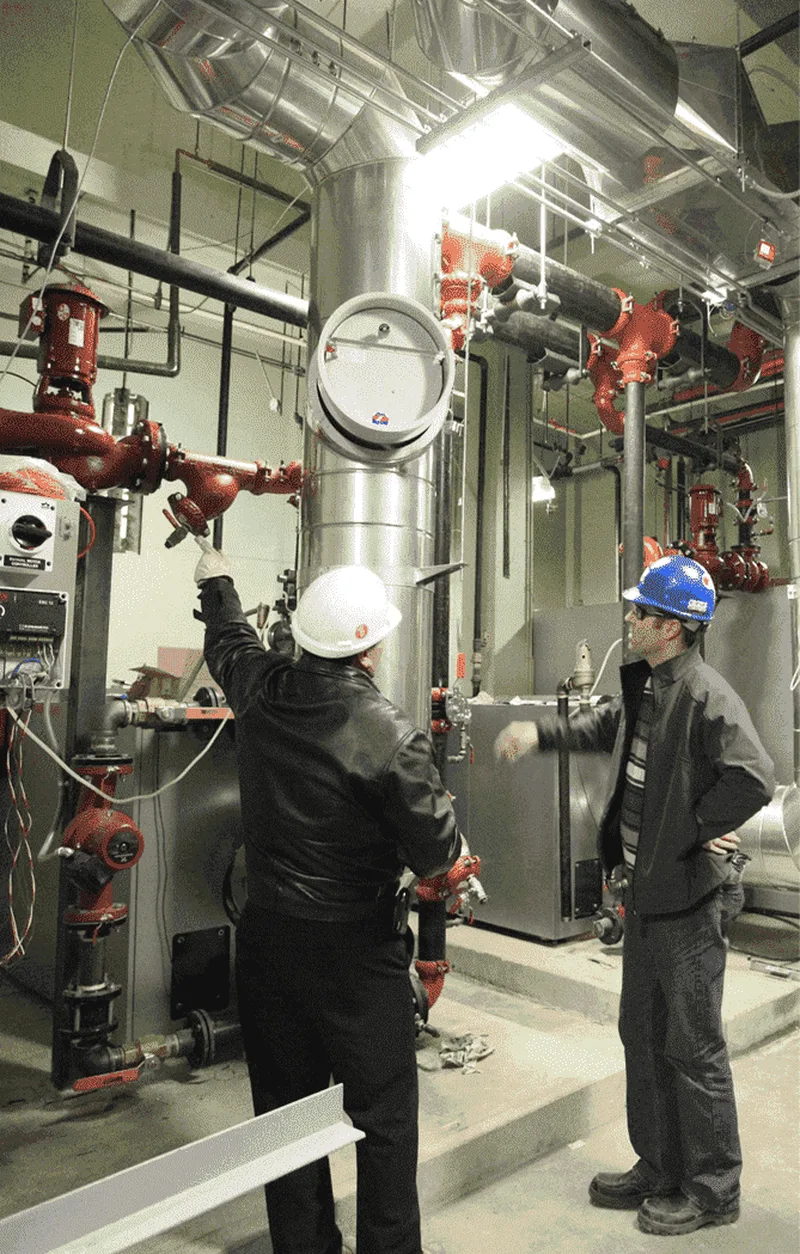
Valve audits and exercise programs at a glance
| Service | Valve location, tagging, charting and annual exercise |
|---|---|
| Building types | Condominium and rental high-rises, mid-rise, stacked townhouses, multi-tower sites |
| Audit duration | Typically a few days on site for one high-rise |
| Exercise frequency | Annually; critical valves confirmed more often |
| Access required | Mechanical rooms, riser closets, garages and some suites |
| Building water shut off | No; valves are operated in a controlled sequence |
| Resident impact | Notice for suites with riser access; short visits |
| Tagging | Permanent numbered metal tags on a logical field scheme |
| Deliverable | Valve schedule, marked riser drawings and condition report |
| Follow-on work | Replacement of seized and leaking valves, with the chart updated |
| Service area | Toronto, North York, Etobicoke, Scarborough, Mississauga and the wider GTA |
| Emergency response | 24/7, and faster in a building we have already charted, (416) 845-3756 |
We take the after-hours call in these buildings
BMI answers emergencies in the buildings it charts, which is precisely why the accuracy of the schedule matters to us. A building we have surveyed is a building we can isolate in minutes. We also hold the valve replacement capability to correct the failures an audit identifies, so the exercise ends in working isolation rather than a list of defects handed to somebody else.
Valve audit and charting questions
A valve audit is a building-wide survey that locates every isolation valve, tags it with a permanent number, and records what each one shuts off in a valve chart and a marked set of riser drawings. A valve exercise program then operates those valves through their full travel on a schedule, normally once a year, so they do not seize in place. Together they decide whether an emergency shutdown takes fifteen minutes and one stack, or two hours and the whole building.
In most Toronto condominiums it is not inside your unit at all. Suite isolation is usually on the branch where it leaves the riser, which means behind an access panel in a hallway, a closet or a bathroom soffit, and in some buildings there is no suite-level valve and the smallest isolation is the whole stack. Ask property management where yours is and whether there is an access panel, and find out before you need it. A valve chart is precisely the document that answers this question in fifteen seconds.
Stop, and do not force it. A valve that has not moved in fifteen years has corroded around the stem, and the two things that happen when you lean on it are a sheared stem and a cracked body, either of which turns a stuck valve into an active leak on a live line. Report it and have it replaced on a planned day. If you are dealing with an active leak right now, call us and call the concierge so the stack can be isolated upstream.
If you have a working suite shut-off, yes, and it is one of the cheapest pieces of insurance available to a condo owner. Most catastrophic in-suite floods start at a flexible supply line, a toilet fill valve or a washing machine hose, and every one of those is harmless if there is no pressure behind it. The caveat is the previous question: try the valve while you are home and have time to deal with it, not on the morning of a flight.
Only if a valve on the list is inside your unit or behind an access panel in it, in which case you will get written notice of the date and window. Most of the programme happens in mechanical rooms, service closets and hallways. Where we do need to come in, we are typically in and out in minutes per valve, with floor protection down while we are there.
For most of the programme it is not. Exercising a valve means opening and closing it, which on a properly installed system is done without interrupting service. Water only goes off when a valve is discovered to be seized or leaking and has to be isolated or replaced, and that is the entire point of doing the exercise on a scheduled Tuesday rather than finding out during a flood. When a shutdown is needed you get notice, and it is kept to the smallest part of the building that works.
They are the valve chart made physical. Each tag carries a permanent number that matches a line in the chart and a marked point on the riser drawings, so somebody who has never been in the building can stand in front of a valve and know exactly what it isolates. Please leave them alone: an untagged valve in a building of five hundred identical pipes is functionally lost, and re-surveying it costs far more than the tag did.
That is decided by your declaration and the two insurers rather than by us, and the answer turns on whether the failed component was a common element or part of your unit. Practically, the things that protect an owner are a working suite shut-off, supply lines and a water heater that are not past their life, and reporting a weeping valve when you first notice it instead of after it lets go. Documented maintenance is the difference between a claim and an argument.
Valve charting means physically locating every valve in the building, tagging it with a permanent number, and producing a chart and marked drawing set showing what each valve isolates. It matters most during an emergency. When a pipe lets go at two in the morning, the difference between a fifteen minute shutdown affecting one stack and a two hour shutdown affecting the whole building is whether the person on site knows which valve to close. Charting is also the groundwork for a valve exercise programme, because you cannot maintain valves you have never identified.
We attend on an agreed schedule, normally annually, and operate every isolation valve in the building through its full travel so it does not seize in place. We record the condition of each valve against the building's valve chart, repack or repair what is stiff or leaking, and give you a written report listing which valves have failed and need replacement. Valves that are never exercised tend to seize, and a seized valve turns a small leak into a building-wide shutdown.
For a typical Toronto high-rise, expect a few days on site rather than a few hours. The mechanical rooms go quickly. The time goes into the awkward valves: riser closets behind access panels, valves above ceilings, and confirming what actually goes dead when a valve closes rather than copying what an old drawing claims. Buildings with several towers or a large townhouse component take proportionally longer. We schedule it so the building stays fully occupied and operating throughout.
For some valves, yes. In most condominiums the suite isolation valves and a number of riser access panels are inside units, and a chart that stops at the suite door is exactly the chart that fails you in an emergency. Where suite access is needed, residents get written notice with a date and time window, we work to that window, and floor protection goes down in every unit we enter. Where a suite cannot be accessed, we note the gap rather than guessing at what is behind the wall.
It is one of the reasons to do this on a planned visit rather than during a flood. We exercise carefully and in a controlled way, so if a valve is going to fail, it fails while a plumber is standing in front of it with the means to isolate upstream, instead of failing at the worst possible moment. Anything that fails is documented against its tag number and quoted for replacement. Finding three dead valves on a scheduled Tuesday is a good outcome, not a bad one.
Because nothing moves them. A gate valve left untouched for twenty years builds up mineral deposits on the stem and gate, and the packing hardens around the stem. Then when somebody finally needs it, the handwheel either will not move or the stem shears off. Forcing a seized valve is how a small leak becomes a large one. Operating a valve once a year keeps the stem free and the packing serviceable, and it is by far the cheapest plumbing maintenance a building can buy.
It changes the first decision. Without a chart, on-site staff facing water coming through a ceiling either work through valves by trial and error or close the building main, which takes water from every resident and does not stop what is already draining out of the risers. With a chart, they close the smallest valve that isolates the failure, water stays on everywhere else, and our crew arrives to a contained problem. Insurers ask how long isolation took, and that answer is decided before the leak happens.
We are not aware of any rule that names a valve chart as a specific requirement. What does apply is the corporation's duty to maintain and repair the common elements, and in practice that duty is very hard to discharge for a plumbing system nobody has mapped. Insurers, reserve fund studies and engineers increasingly expect to see valve identification and an exercise record, and boards that have been through a major loss rarely need convincing twice.
Annually is the standard we recommend and the interval most of our contracts run on. It is frequent enough to keep stems free and packing serviceable, and it fits a building's normal maintenance calendar. Critical valves, such as the building mains, zone isolation and anything protecting a booster or heating system, are worth confirming more often. Valves that have already been identified as stiff go on a watch list and get checked at every visit rather than once a year.
Related programs and services
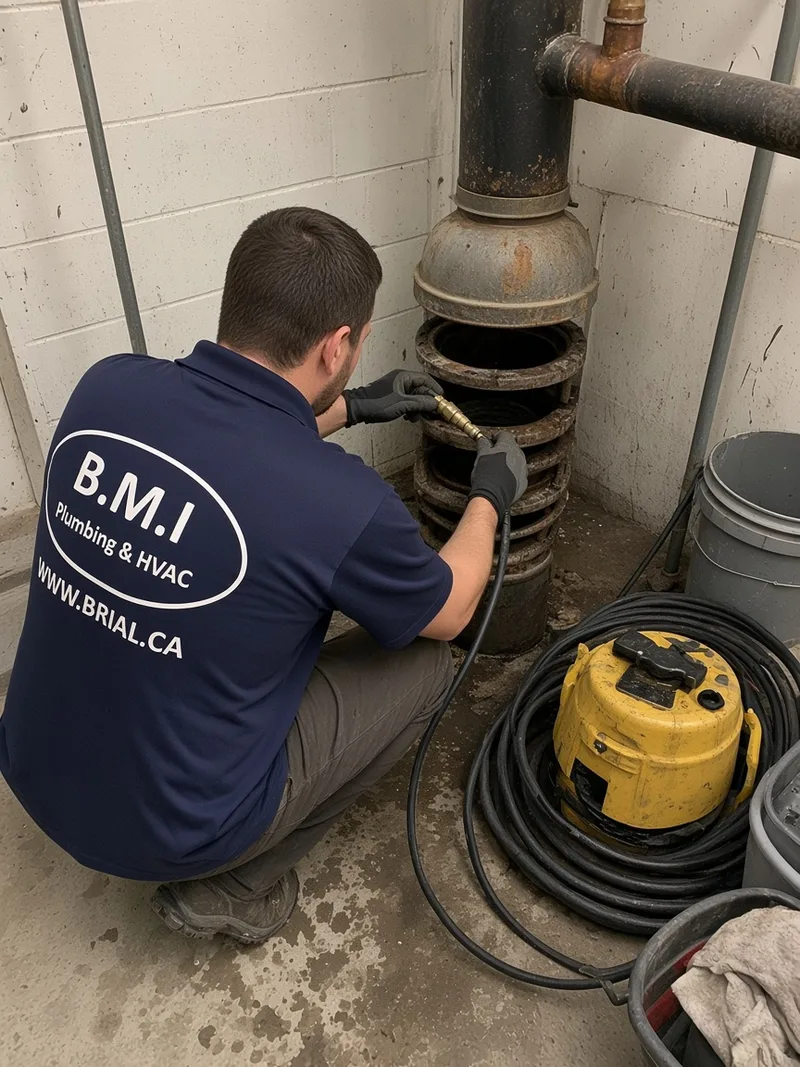
Kitchen Stack Cleaning
Scheduled jetting of kitchen waste stacks, camera-verified, with a written report on every stack.
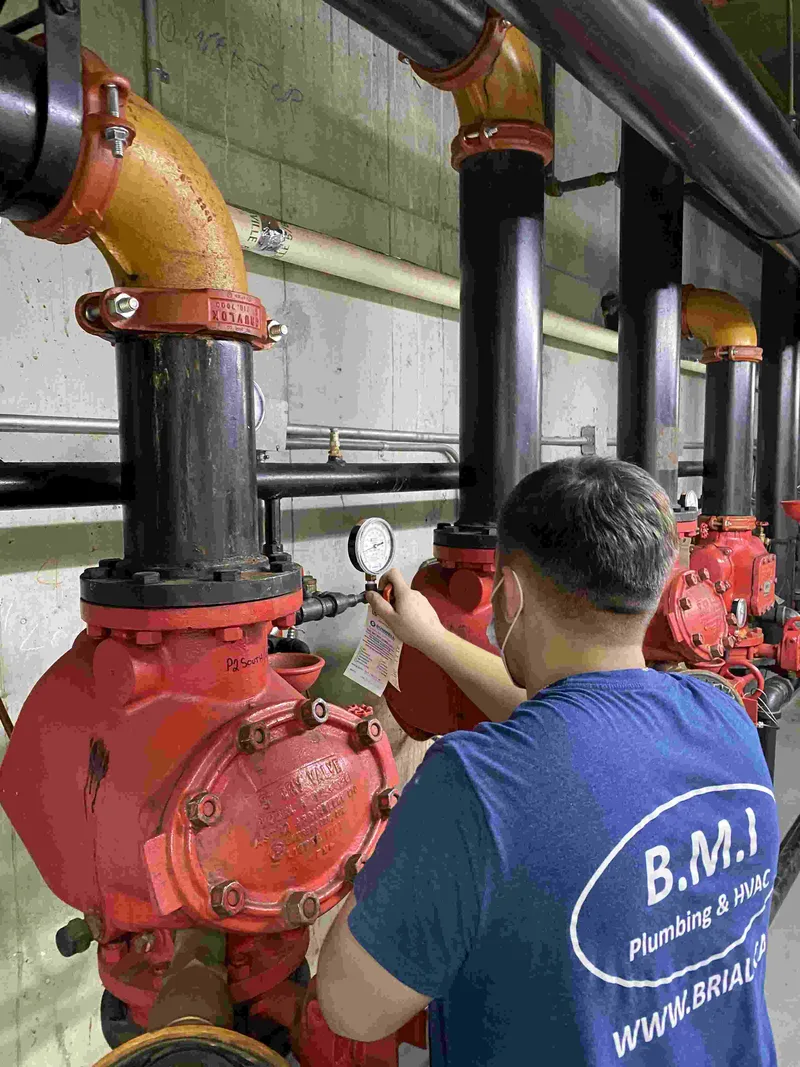
PRV Maintenance & Replacement
Pressure reducing valve service, rebuilds and replacement, set properly for every zone in the building.
24/7 Emergency Leak Response
Isolate first to stop the damage spreading, then make the permanent repair. Answered any hour.
Find out what your building can actually isolate
Send us whatever drawings you have. We will walk the building, tell you how much of the plumbing system is currently identifiable, and scope the audit from there.