Condominium Plumbing in Scarborough
Scarborough holds one of the largest bodies of ageing high-rise stock anywhere in Canada. Almost everything we are called into here is capital work that has been deferred one budget year too many.
A generation of towers that all came due at once
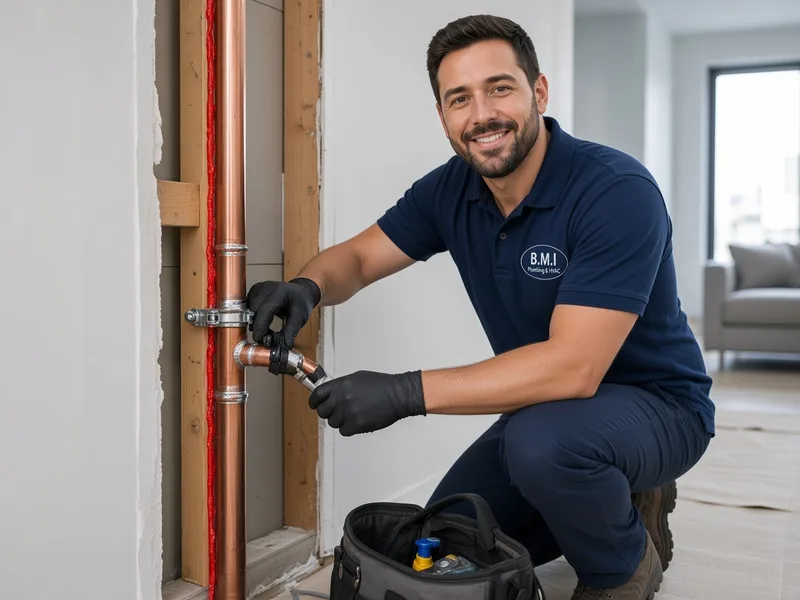
Scarborough was built out in a concentrated burst. From the 1960s through the 1980s, slab and point towers went up along Kingston Road, around Kennedy and Eglinton, through Agincourt and later around the Town Centre, and most of them were built to the same mechanical playbook: copper domestic risers, steel heating and cooling risers, gate valves throughout, and cast iron waste stacks.
The consequence is that Scarborough's buildings do not age one at a time. They arrive at end of life as a cohort, and they arrive there now. That is why the work here skews so heavily toward riser replacement, valve replacement and, where continued repair has stopped making sense, full re-piping, rather than toward the maintenance contracts that dominate newer stock.
The newer cluster
Around Scarborough Town Centre and along the Highway 401 corridor there is a more recent layer of building, and those towers behave like any other modern high-rise: pressure zones to manage, PRV stations to keep in adjustment, and kitchen stacks that need a cleaning cycle long before anyone expects.
Rental and co-operative buildings
A larger share of Scarborough's high-rise stock is rental or co-operative than in most of the city. Mechanically nothing changes. What changes is the reporting: the people approving the work usually need to demonstrate progress to somebody else, so suite-by-suite completion records matter more here than they do on a condominium job.
The order we would tackle an older Scarborough building in
Most boards here are working against a reserve fund rather than a blank cheque, so sequence matters as much as scope.
1. Valve audit
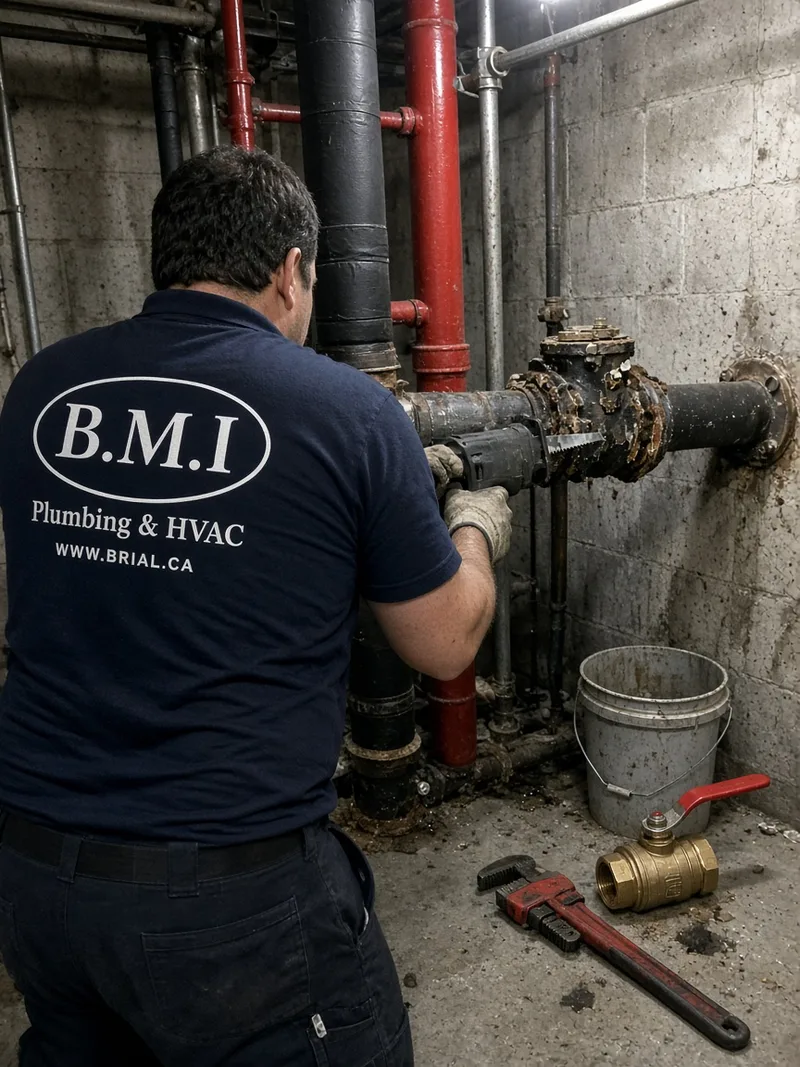
Cheapest work we do, and it caps the cost of every emergency after it. Locate, tag and chart everything, then exercise annually. Valve audits.
2. Camera inspection
A written condition report on stacks and drains, so the reserve fund study is built on evidence rather than on building age. Camera inspection.
3. Stack cleaning
Buys time on waste stacks that are restricted but not gone, and identifies the ones that are. Kitchen stack cleaning.
4. Risers, by priority
Phased stack by stack across budget years, worst first, with the building occupied throughout. Riser replacement.
5. Compensators
Done with the riser where both are of an age, because the shutdown and the opened shaft are already paid for. Expansion compensators.
Meanwhile
Emergencies answered at any hour by someone who can dispatch, on the same buildings. 24/7 response.
The same work, in the same generation of building
We publish our completed capital work building by building with the scope on each one, and we are not going to invent Scarborough addresses to fill this page. What is worth saying is that the buildings we have finished are the same vintage and the same construction as the ones we are describing here.
299 Mill Road was riser replacement across 436 units including asbestos abatement and air-quality testing throughout, delivered two months ahead of an eight-month schedule. Asbestos is a live issue in buildings of this era, and it is one of the main reasons Scarborough boards defer work they should not. 335 and 345 Driftwood Avenue were entire-building domestic hot water and riser replacements in older towers of exactly this type.
Scarborough is inside the City of Toronto and inside our normal working area for both capital projects and maintenance contracts.
Condominium plumbing in Scarborough
| Area covered | All of Scarborough, including Agincourt, Malvern, Guildwood, West Hill, Cliffside and the Town Centre |
|---|---|
| Municipality | City of Toronto, amalgamated 1998 |
| Water utility | Toronto Water |
| Dominant vintage | 1960s to 1980s slab and point towers |
| Typical scope | Riser replacement, valve audit and replacement, stack cleaning, re-piping |
| Building types | Condominium, rental and co-operative high-rise |
| Asbestos | Common in this vintage; abatement and air-quality testing handled within the programme |
| Residents | Stay in their homes throughout |
| Compliance | Backflow prevention testing to City of Toronto requirements |
| Emergency response | 24/7, (416) 845-3756 |
Scarborough condominium questions
Yes. Scarborough was amalgamated into the City of Toronto on 1 January 1998, so Toronto Water is the utility, building permits come from the City of Toronto, and the City's backflow prevention requirements apply exactly as they do downtown. For a board, that means the compliance paperwork is identical to a Bay Street corporation's, even though the buildings could hardly be more different.
Because of when the buildings went up. A very large share of Scarborough's high-rise stock dates from the 1960s through the 1980s, which puts original domestic water risers, heating and cooling risers, isolation valves and waste stacks somewhere between forty and sixty years old. That is past the point where individual repairs are economic. Once leaks start repeating on the same stack, money spent patching is money spent twice, and the conversation moves to replacement whether or not the reserve fund is ready for it.
It is common, and it is the single clearest signal that a stack has reached end of life. One pinhole is a repair. Three on the same stack inside a year is the pipe telling you its wall thickness is gone, and the rest of that stack was installed on the same day by the same crew from the same batch. At that point a camera inspection and a sample of removed pipe will tell you more than another repair will, and it gives the board something defensible to put in a reserve fund study.
A valve audit, before anything else. It is the cheapest work we do and it changes the cost of every emergency that follows. In a building of this vintage the isolation valves have typically not been turned since commissioning, so when a pipe fails at two in the morning nobody can shut anything smaller than the whole riser, and a one-suite repair becomes a building-wide shutdown with a corridor full of residents. Locating, tagging and charting every valve, then exercising them annually, is what keeps the next failure small.
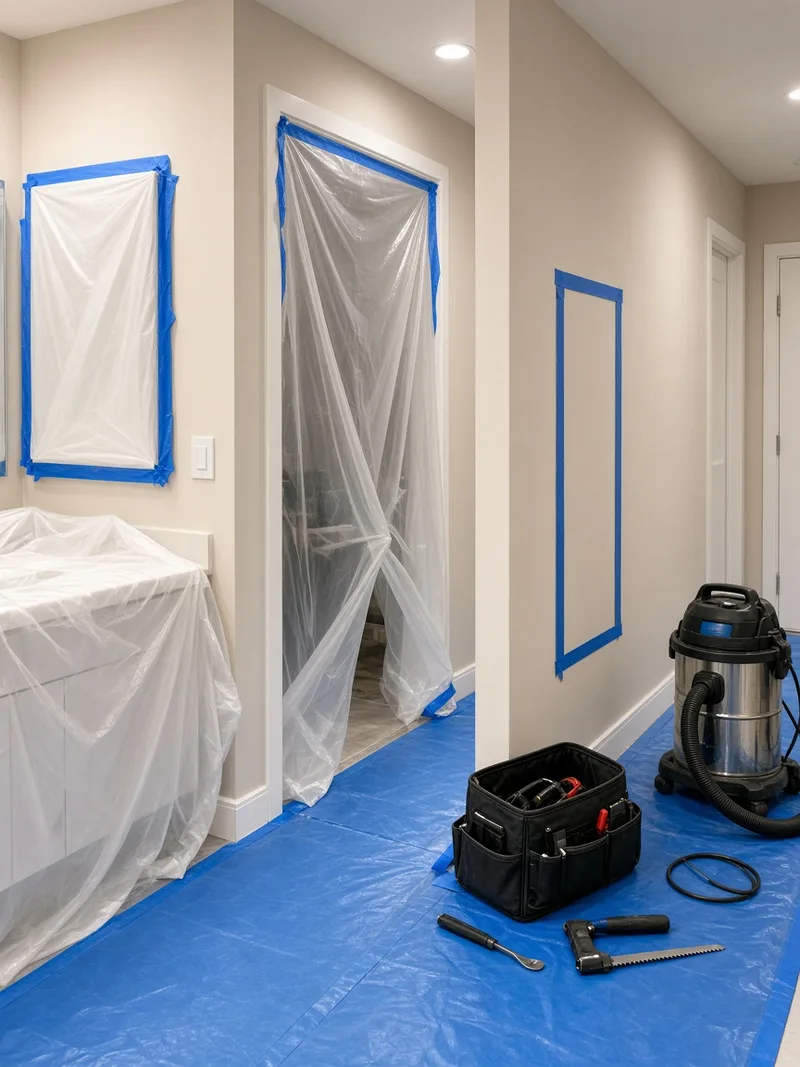
Yes, and in this stock it almost always has to be, because these are not buildings anyone can empty. Work is phased stack by stack, so water is off on a handful of suites on their scheduled day and the rest of the building is unaffected. Residents stay in their homes throughout. Each suite gets written notice with a date and window, the new pipe is pressure tested before anything is closed, and our own crew boards, tapes, sands and paints the wall in the same week.
Yes, and a meaningful share of Scarborough's high-rise stock is rental or co-op rather than condominium. The mechanical work is identical. What changes is who approves it and how the programme is funded, so the reporting tends to matter more: we issue suite-by-suite completion records so whoever is accountable can show exactly where the programme stands at any point.
The line is answered at any hour by a person who can dispatch a crew rather than take a message, which is what actually determines how long water runs. We are based at 356 Marlee Avenue in Toronto. Where we hold a maintenance contract we also hold the building's valve chart, and in buildings of this age that is frequently the difference between isolating one suite and shutting down a riser.
Other areas we work in
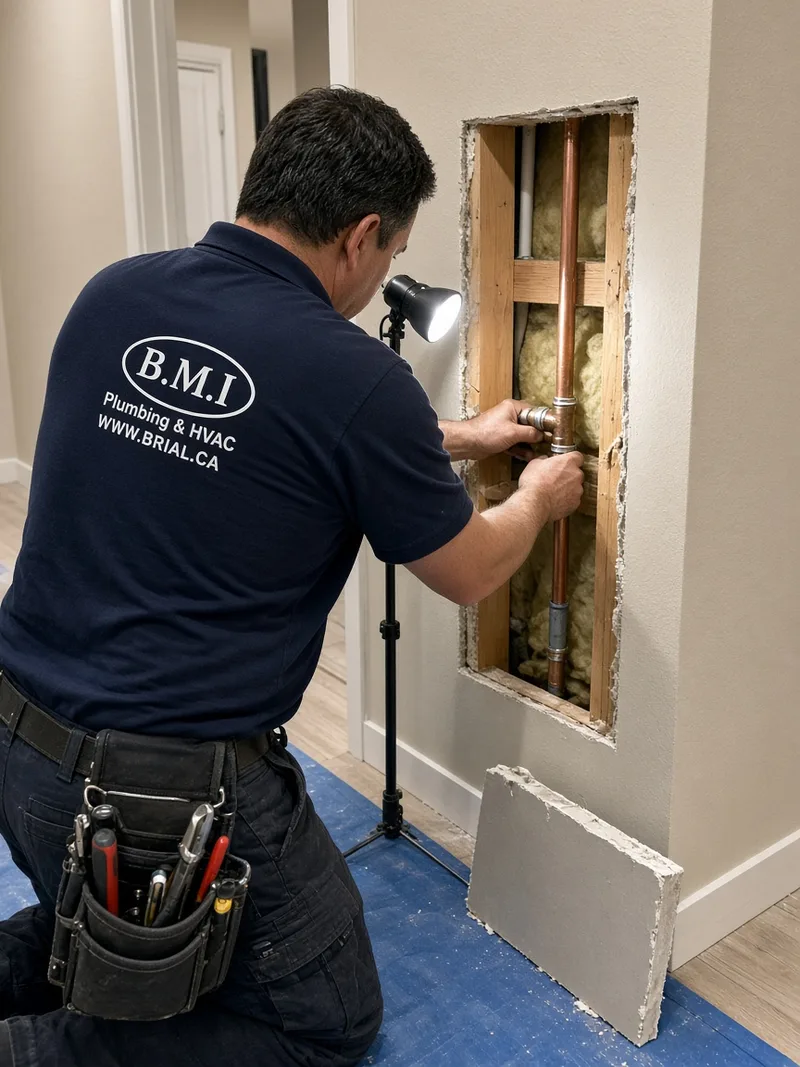
Etobicoke
Riser and fan coil replacement in the Mill Road and Markland Wood stock, plus the newer Humber Bay Shores towers.
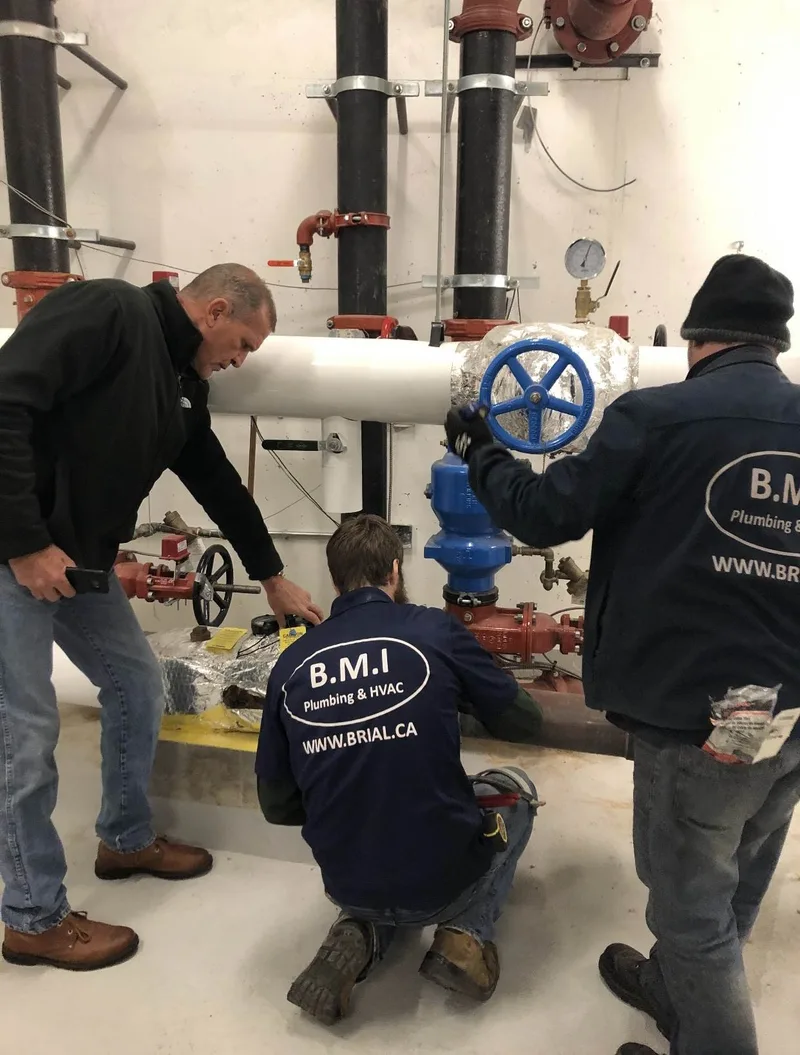
Vaughan
The newest condominium stock in the GTA, where the problems are pressure zones and commissioning rather than age.

Markham
Three decades of condominium building in one city, on York Region water, with very different needs by vintage.
Have a plumbing problem in a Scarborough building?
Send us the scope and we will come and look at the building before we quote it. Emergencies are answered at any hour.