Condominium Plumbing in Markham
Markham built condominiums in three distinct waves, and a building from each needs something completely different. The first question here is never what is wrong, it is what year the tower went up.

Three waves of building, three different problems
Markham did not grow steadily. It built condominiums in bursts, and the gap between those bursts is wide enough that a board's first useful question is not what is failing but when the tower was finished.
The 1980s and early 1990s, mostly Thornhill and Milliken
The oldest stock sits on the Thornhill side and around Milliken, and it is now old enough that original domestic risers, heating and cooling risers and isolation valves are at or near the end of their service life. The pattern is the familiar one: repairs that stop being isolated and start repeating on the same stack, and gate valves that hold pressure perfectly until the night somebody needs one to shut. This is riser replacement and valve replacement territory.
The 2000s wave, which is the Kitec window
Buildings finished between the late 1990s and 2007 fall inside the period when Kitec and other PEX-AL-PEX systems were sold in Canada. Pipe age is not the concern in these towers; the in-suite material is. Kitec fails from the inside, where nothing can be seen, so the only way to know what a building has is to open a small number of representative points. Identification and removal should always precede a building-wide price.
Downtown Markham and the Highway 7 towers
The newest cluster behaves like any modern high-rise. Nobody is replacing pipe. What these buildings need is pressure reducing valve stations that match how the occupied building actually behaves rather than the commissioning assumption, a valve chart that has been verified, and a kitchen stack cleaning cycle started before the first lower-floor backup rather than after it.
What to look at, by the year your building finished
Spending a 1985 building's budget on a 2019 building's problems is how reserve funds get wasted.
Before 1995
Risers, valves and stacks at end of life. Start with a valve audit, then phase riser replacement across budget years. Riser replacement.
1995 to 2007
The Kitec window. Identify what is actually in the suites before anyone quotes a programme. Kitec replacement.
2008 onward
Pressure zones, booster pumps and PRV stations set against real occupancy, not the design assumption. PRV service.
Every vintage
A verified valve chart. New valves seize as readily as old ones when nobody turns them. Valve audits.
Every vintage
A kitchen stack cleaning cycle. Grease accumulates on its own schedule, not the building's. Stack cleaning.
Every vintage
Backflow testing filed to York Region and the City, not to Toronto. Backflow testing.
No Markham addresses on our list, and we will not invent any
We publish completed capital work building by building with the scope on each one. There are no Markham buildings on it yet. A page that claims otherwise is worth nothing to a board that checks.
The nearest completed work is in North York, which runs into Markham along Steeles: five towers including a complete low-zone and high-zone riser replacement at 131 Beecroft Road, entire-building domestic hot water and riser replacement at 335 and 345 Driftwood Avenue, and expansion compensator replacement across both Four Springs Avenue buildings. Those are the same disciplines Markham's older stock needs, in buildings of the same generation.
Markham is inside our normal working area for both capital projects and maintenance contracts.
Condominium plumbing in Markham
| Area covered | All of Markham, including Downtown Markham, Unionville, Thornhill, Milliken, Cornell and Markham Village |
|---|---|
| Water and wastewater | York Region |
| Building permits | City of Markham |
| Pre-1995 stock | Riser replacement, valve replacement, stack work |
| 1995 to 2007 stock | Kitec and PEX-AL-PEX identification and removal |
| Post-2008 stock | PRV stations, pressure zones, valve charting, stack cycles |
| Backflow testing | Filed locally and through York Region, not to the City of Toronto |
| Residents | Stay in their homes throughout |
| Nearest completed work | 131 Beecroft Rd and 335 / 345 Driftwood Ave, North York |
| Emergency response | 24/7, (416) 845-3756 |
Markham condominium questions
York Region supplies water and handles wastewater across Markham, while the City of Markham issues building permits. York's is a pumped and stored network serving a large area at varying elevation rather than a lake-side system, so the supply pressure a building sees and the zone it sits in come from York Region's figures. That is the starting point for any pressure investigation in a Markham tower, and it is not the same starting point as a Toronto building.
Because Markham built in waves rather than continuously, and each wave needs different work. Buildings from the 1980s and early 1990s, mostly on the Thornhill and Milliken sides, are into riser and valve replacement territory. The 2000s wave is the Kitec window, so in-suite pipe identification matters there. Downtown Markham and the newer Highway 7 towers are recent enough that the work is pressure stations, valve charting and getting a kitchen stack cycle started before the first backup.
It can, and the 2000s wave is exactly the window. Kitec was sold in Canada from roughly 1995 to 2007, so buildings finished in that period are the ones worth checking, and many have it in some suites and copper in others depending on when units were renovated. The way to know is to look rather than guess: under kitchen and bathroom sinks, at suite shut-offs and at water heater connections, for flexible plastic pipe with brass fittings. Identification should always be done before anybody prices a building-wide programme.
Yes, and that is how it is normally done. The work is phased stack by stack, so water is off on a small group of suites on their scheduled day while the rest of the building carries on. Residents stay in their homes for the whole programme. Each suite receives written notice with a date and window, new pipe is pressure tested before anything closes, and our own finishing crew boards, tapes, sands and paints the wall rather than leaving it for a separate trade.
It is administered locally and through York Region rather than by the City of Toronto, so a management company running buildings in both places cannot assume one filing covers the other. The devices and the test procedure are identical; the schedule, the forms and the receiving authority differ. We test, repair or rebuild what fails, retest, and file to the authority the building actually falls under so the corporation ends up holding a clean certificate.
Almost always the pressure reducing valve station serving that zone. Tall buildings are split into pressure zones so the lower floors do not see the pressure needed to reach the top, and when a station drifts out of adjustment everyone in that zone feels it at once. The complaints rarely sound like a pressure problem: they arrive as banging pipes, supply hoses failing more often than they should, or weak flow on upper floors. The station is inspectable, and it is much cheaper to set right than to keep replacing what it damages.
Not yet, and we will say so rather than list invented addresses. Our completed capital work is concentrated inside the City of Toronto and we publish it building by building with the scope on each one. The closest to Markham is our North York work, five towers including a complete riser replacement at 131 Beecroft Road. Markham is inside our normal working area for capital projects and maintenance contracts, and on a riser programme the crew is on your site for weeks at a time.
Other areas we work in
Richmond Hill
A tight corridor of mid and high-rise buildings along Yonge, served by York Region water pressure zones.
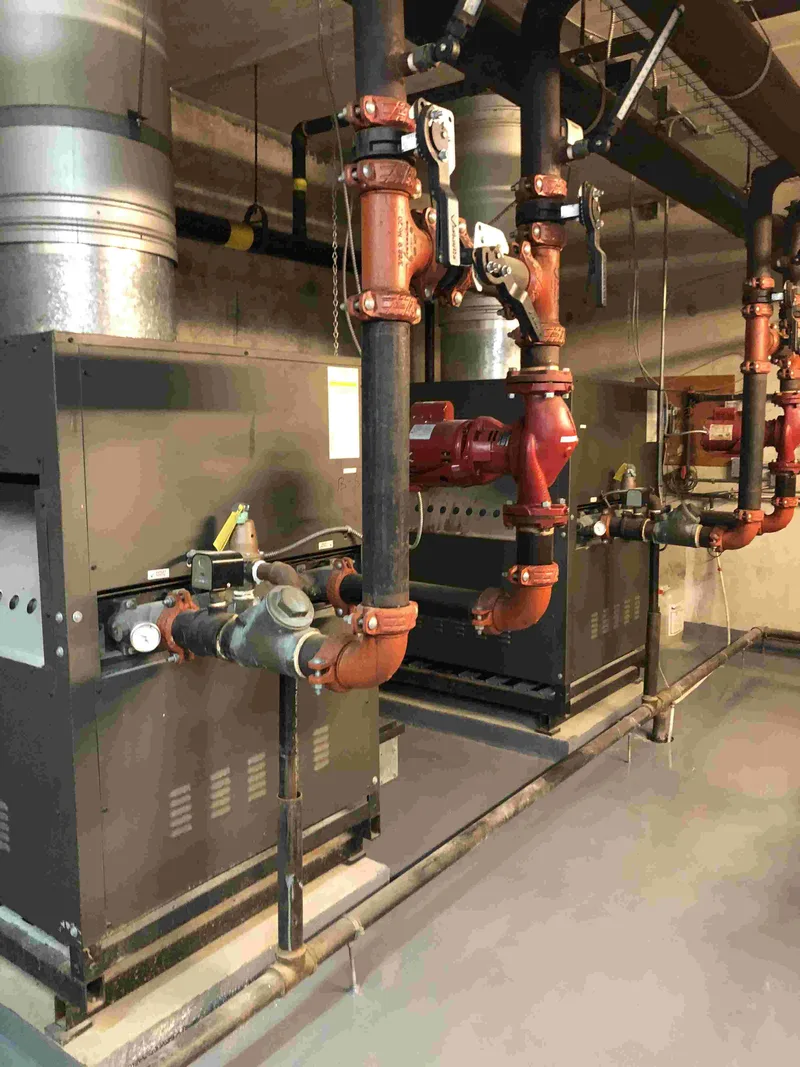
Toronto
Nine completed towers through the downtown core and midtown, from Yonge and Jarvis across to Richmond and Carlton.
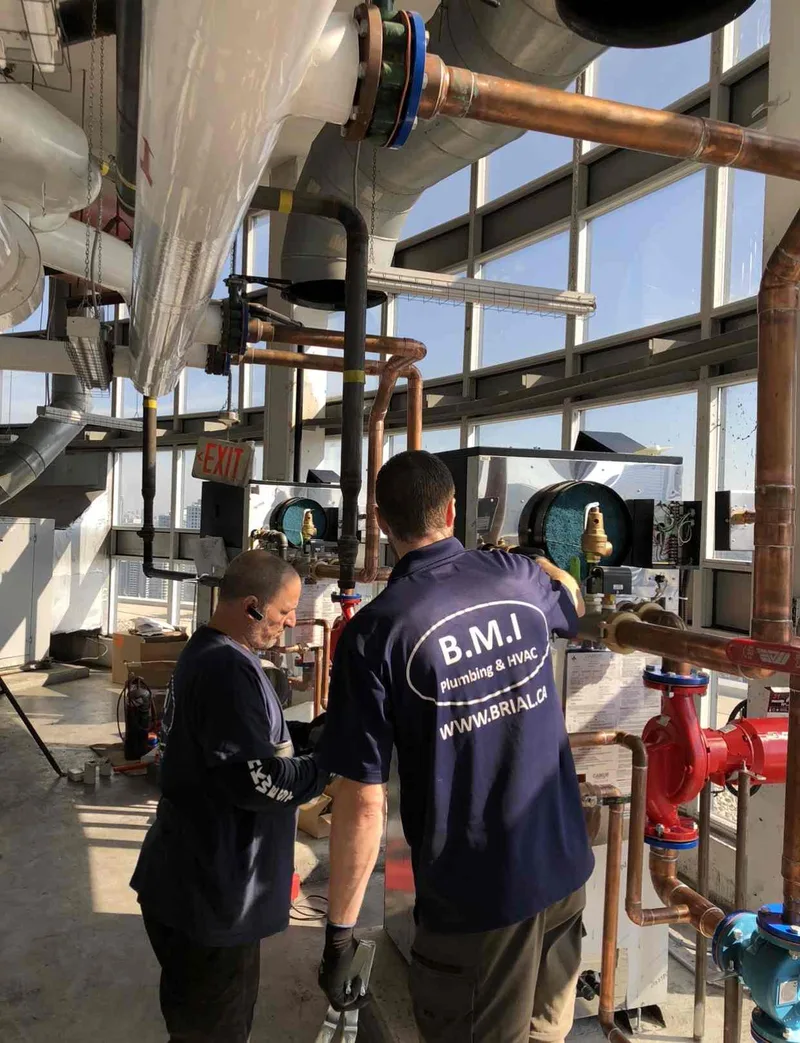
North York
Five completed towers, from Beecroft near Yonge and Sheppard out to Driftwood and the Four Springs buildings.
Have a plumbing problem in a Markham building?
Send us the scope and we will come and look at the building before we quote it. Emergencies are answered at any hour.