Toilet & Faucet Repairs in Toronto Condominiums
Running toilets, dripping taps, seized shut-offs and failing supply lines. Short scopes, booked properly, with the failed component replaced rather than adjusted.
The lowest-value components carry the highest claim exposure
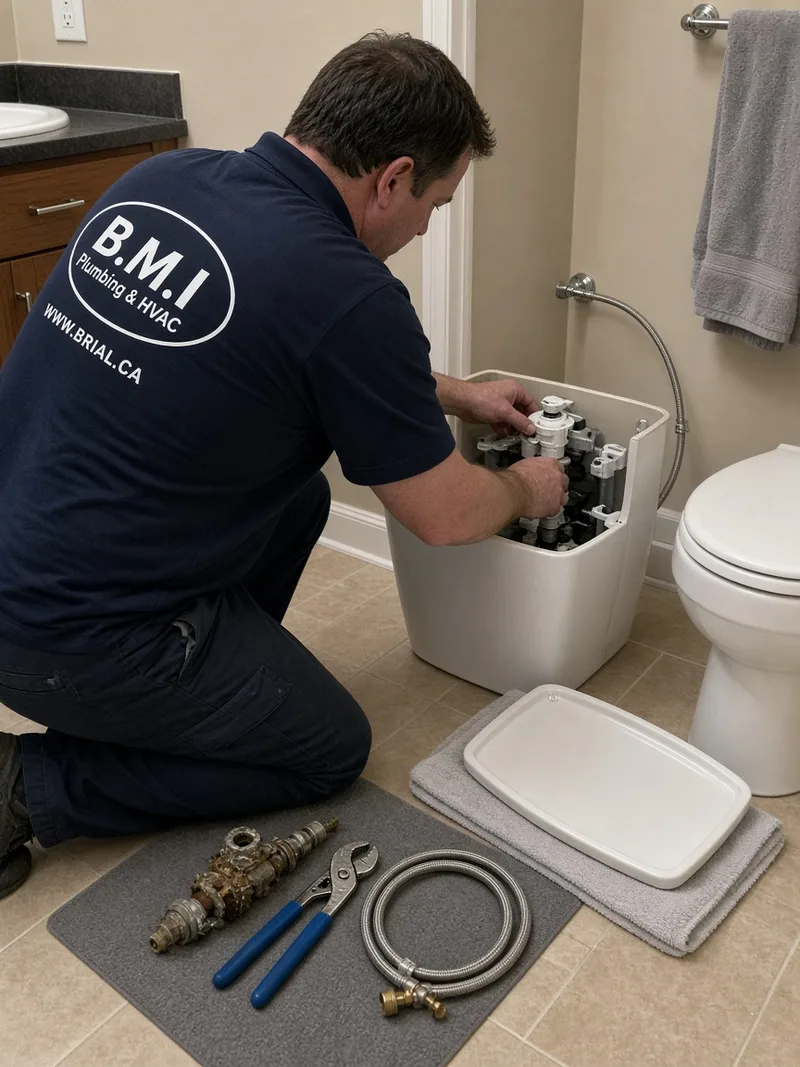
Fixture components are not usually treated as a risk category, and the loss record does not support that. In-suite water damage in a high-rise originates from a short and predictable list: a failed flexible supply line, a fill valve stuck open, a degraded wax seal under a water closet, and a fixture shut-off that could not be closed when it was needed.
The exposure is structural rather than mechanical. In a serviced tower the escape path runs through the slab into a finished ceiling, which turns a single-unit fixture fault into a multi-unit claim with two policies and a deductible attached. Component condition inside the suite is therefore a building risk, not only an owner's inconvenience.
And the continuous-flow loss that goes unreported
A degraded flush valve seal passes several thousand litres a month with no audible or visible sign. In a bulk-metered building that consumption is a corporation operating cost recovered through common expenses; in a suite-metered building it falls directly on the owner. Measured against the cost of the part, it is the highest-return repair in the building.
Things residents live with that they should not
None of these are emergencies. All of them become more expensive the longer they are left.
A toilet that keeps running
Thousands of litres a month through a hardened flapper or a failed fill valve. The component costs a fraction of a single month's consumption.
A tap that drips when it is off
A worn cartridge or seat. Turning it tighter accelerates the wear and eventually damages the tap body itself.
A shut-off that will not turn
The single component that prevents a small failure becoming a flood, and it is seized. It should be replaced, not forced.
Old rubber supply lines
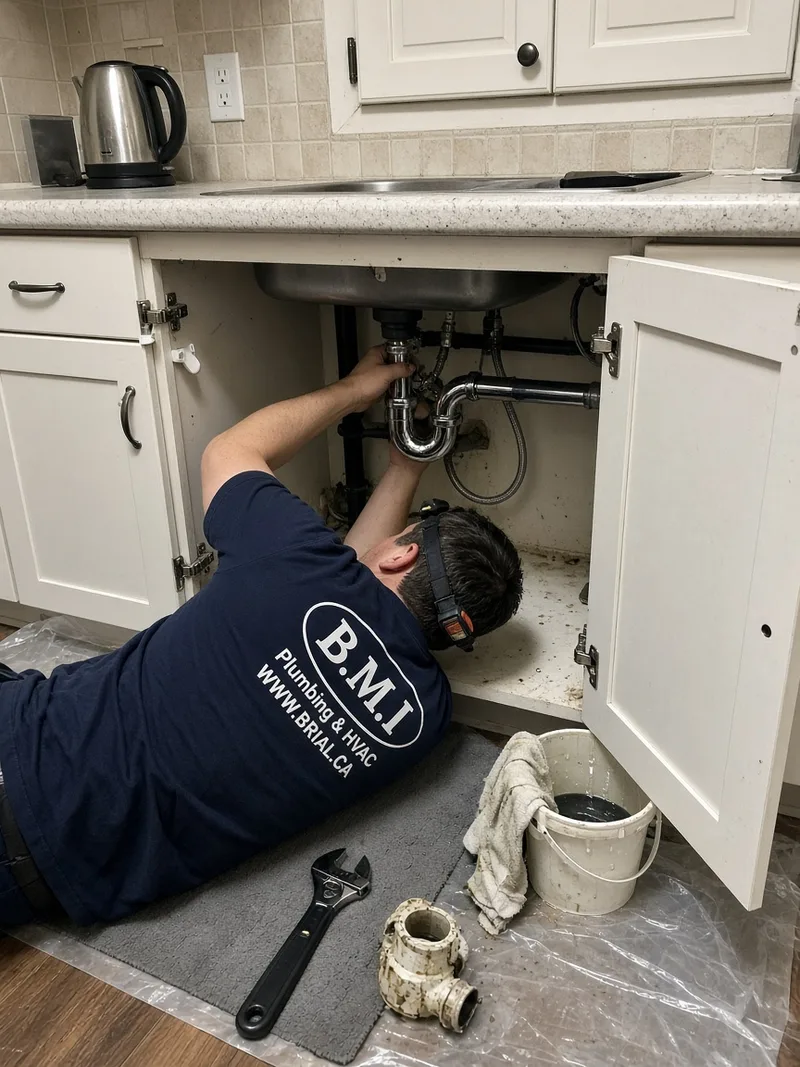
Under sinks, behind toilets and at the washing machine. They harden and split, and account for a substantial share of suite floods.
A toilet that rocks
Movement breaks the seal underneath, and what escapes at the base goes into the floor and then into a ceiling below.
Every fixture failing at once
Where cartridges and fill valves across a suite fail early, the delivered pressure is a more likely cause than the components.
Take the lid off and look: three causes, three tells
How we do a fixture repair
Seven stages for a short scope. The fifth is the one most often omitted.
-
Confirm what is actually leaking
A running toilet has three likely causes and they need different parts, so the fault is diagnosed rather than the assembly replaced. A dripping tap is a cartridge, a seat or an O-ring. Diagnosis is what avoids a return visit for the wrong component.
-
Protect the room
Protection down, containment under the work and a bucket for whatever comes out of the line. Bathrooms and kitchens are finished rooms, and a repair should leave no evidence of itself.
-
Isolate at the fixture
We close the fixture shut-off, not the suite and certainly not the stack. If the shut-off is seized, that becomes part of the job rather than something we force, because a sheared stem on a live line is how a small repair turns into a flood.
-
Replace the part that failed
Fill valves, flappers, flush valve seals, cartridges, seats and supply lines are carried on the van, so the common jobs are done on the first visit. Where a fixture is genuinely past economic repair we say so and quote the replacement rather than rebuilding it twice.
-
Upgrade what is going to fail next
If the shut-off is an old multi-turn type that barely moves, we offer to replace it with a quarter-turn while the line is already isolated. The same applies to a rubber supply line past its service life. Both are short additions now against a flood later.
-
Test it properly
The toilet is flushed and watched through a full cycle, and the tap is run hot and cold and checked at the connections under the sink. A repair verified for five seconds has not been verified.
-
Leave it clean, and note what we found
Old parts out, packaging out, surfaces wiped, and a written note of anything else observed in the suite, such as a fixture approaching the end of its life or a shut-off requiring attention.
The failed component replaced, and the next one identified
Fixture repair is where standards most often slip across this trade. We hold it to two tests: the fault is demonstrably resolved, and the adjacent components were assessed while the line was already isolated.
- The fault diagnosed to the component, rather than the assembly replaced on speculation
- Common components carried on the vehicle, so standard work completes on the first visit
- Seized shut-offs replaced with quarter-turn ball valves rather than forced
- Degraded supply lines replaced with braided stainless while the line is isolated
- Tested through a full operating cycle and checked at every connection
- Removed components and packaging taken away, surfaces reinstated
- A written note of adjacent components approaching the end of service life
Fixture repairs at a glance
| Service | Toilet, faucet, shut-off and supply line repair and replacement |
|---|---|
| Common work | Fill valves, flappers, flush seals, cartridges, seats, wax seals, shut-offs |
| Typical visit | Under an hour per fixture |
| Water shut off | The fixture only, not the suite or the stack |
| Parts | Mainstream parts carried on the van; proprietary fixtures identified then ordered |
| Booked by | Property management, or directly by an owner |
| Multiple jobs | Encouraged: attendance costs more than the parts |
| Protection | Floor and surface protection in every suite entered |
| Responsibility | In-suite fixtures are normally the owner's; we bill common element causes separately |
| Service area | Toronto, North York, Etobicoke, Scarborough, Mississauga and the wider GTA |
| Emergency line | 24/7, (416) 845-3756 |
Small scopes, run on the building's schedule
Most contractors price attendance rather than work, which makes individual fixture repairs poor value for owners and administratively expensive for management. BMI consolidates resident requests and works through a floor or a stack in a single attendance. Where a pattern of early component failure points to a building cause such as excessive zone pressure, we hold the PRV and valve capability to investigate and correct it rather than continuing to replace cartridges.
Toilet and faucet questions
Almost always one of three things. The flapper or flush valve seal at the bottom of the tank has hardened or warped, so water leaks continuously from tank into bowl and the fill valve keeps topping it up. Or the fill valve itself has failed and will not shut off, so water runs into the overflow tube. Or the water level is set above the top of the overflow tube, which produces the same endless trickle. All three are inexpensive parts and a visit under an hour, and all three waste a startling amount of water while you wait.
Take the lid off and look. If water is running into the open top of the overflow tube, the problem is the fill valve or the level setting. If the tube is dry but the bowl keeps refilling itself, the flapper is leaking. The dye test settles a silent leak: put a few drops of food colouring in the tank, do not flush, and come back in twenty minutes. Colour in the bowl means the flapper is passing. Running that test before you call tells us which component to bring.
Yes, and more than most people expect. A leaking flapper can pass thousands of litres a month, and in a bulk-metered condominium that lands on the corporation and eventually on everyone's fees. In a suite-metered building it lands directly on you. Either way, the part costs very little against what the water costs over a few months, which is why this is the single most worthwhile small repair in a condo.
Because the sealing surface inside has worn, and turning it harder makes that worse rather than better. On a modern single-lever tap it is the cartridge; on an older two-handle tap it is the seat and the washer or the O-rings. The fix is replacing the part rather than tightening, and if it is a cartridge we can often get an exact match for the brand. Excessive building water pressure accelerates all of this, which is worth knowing if every tap in your suite is failing at once.
Some people do, and a flapper swap is genuinely simple. Two cautions specific to condominiums. First, try the shut-off before you start: if it is seized, you have no way to stop the water and the job has to stop, and forcing it is how the bathroom floods. Second, an in-suite leak in a high-rise does not stay in your suite. If you are not confident about getting the connection back watertight, the downside here is not a wasted afternoon, it is water in your neighbour's ceiling.
Leave it and have it replaced. A valve that has not moved in ten years has corroded around the stem, and the failure mode when you lean on it is a sheared stem or a split body on a live line. Replacing it with a quarter-turn ball type is a short job and it means the valve works the next time you need it in a hurry. If the fixture is leaking right now and the shut-off will not close, call us and call the concierge so the branch can be isolated upstream.
Yes, and it is one of the cheapest pieces of flood insurance available to an owner. Old rubber and plastic supply lines and washing machine hoses harden, crack and eventually split under constant pressure, and they are behind a large share of the in-suite floods we attend. Braided stainless steel lines are inexpensive and far more durable. Replace them proactively rather than reactively, and do the washing machine hoses at the same time.
Check the tank first: a flapper that closes too early, a chain with too much slack, or a water level set low all shorten the flush and leave it weak. Then the bowl: mineral build-up in the rim jets restricts the water that is meant to scour it, and that is cleanable. If the tank and the jets are fine and it still will not clear, the restriction is in the trap of the bowl or in the branch beyond it, which is a drain call rather than a fixture one.
Treat it as urgent in a condominium. A toilet that moves has usually broken the wax seal underneath it, and what escapes at the base goes straight into the floor and, in a high-rise, into somebody's ceiling. It is not a big job: the toilet is lifted, the seal is replaced, the flange is checked and the fixture is set and shimmed properly. Left alone it is one of the more expensive small leaks there is, because the damage is done out of sight.
Somebody has to let us in, but it does not have to be you. Many residents leave a key with the concierge or with management. Fixture repairs are usually well under an hour, so if you can be there it is rarely a long wait, and you get to see what failed and ask about the other things you have been meaning to mention.
For the common work, one visit. Fill valves, flappers, flush seals, faucet cartridges for the mainstream brands, quarter-turn shut-offs and braided supply lines all travel on the van. The exceptions are genuinely proprietary or discontinued fixtures, particularly imported or high-end taps, where we identify the part on the first visit and come back with the exact one rather than fitting something that nearly fits.
Repair, in most cases. A decent toilet with a failed flapper or fill valve is worth a twenty dollar part, and a quality tap is worth a cartridge. We will recommend replacement when the fixture is cracked, when the internals are obsolete and no longer available, when a tap body itself is eroded, or when we are on the third repair to the same fixture. What we will not do is quote a new toilet for a fault that is a five minute part.
Fixtures inside a unit are normally the owner's responsibility, including toilets, taps, cartridges, supply lines and usually the shut-offs serving them, though your declaration governs the specifics. That is why we can be booked directly by an owner as well as through property management. If we find that the actual cause is on the common element side, such as a pressure problem or a failing branch valve, we say so and bill that part to the corporation instead.
Please do it that way. The efficient thing for an owner is to save up the list: the toilet that runs, the tap that drips, the shut-off that sticks, the shower head, the loose fixture. Attendance is the expensive part of a small repair, not the parts or the time, so one booked visit with five items on it costs far less than five calls. Buildings we hold contracts with often collect resident requests and we work through a floor at a time.
Related services
In-Suite Plumbing Repairs
The wider list inside the unit: shut-offs, supply lines, drains, water heaters and leak tracing.
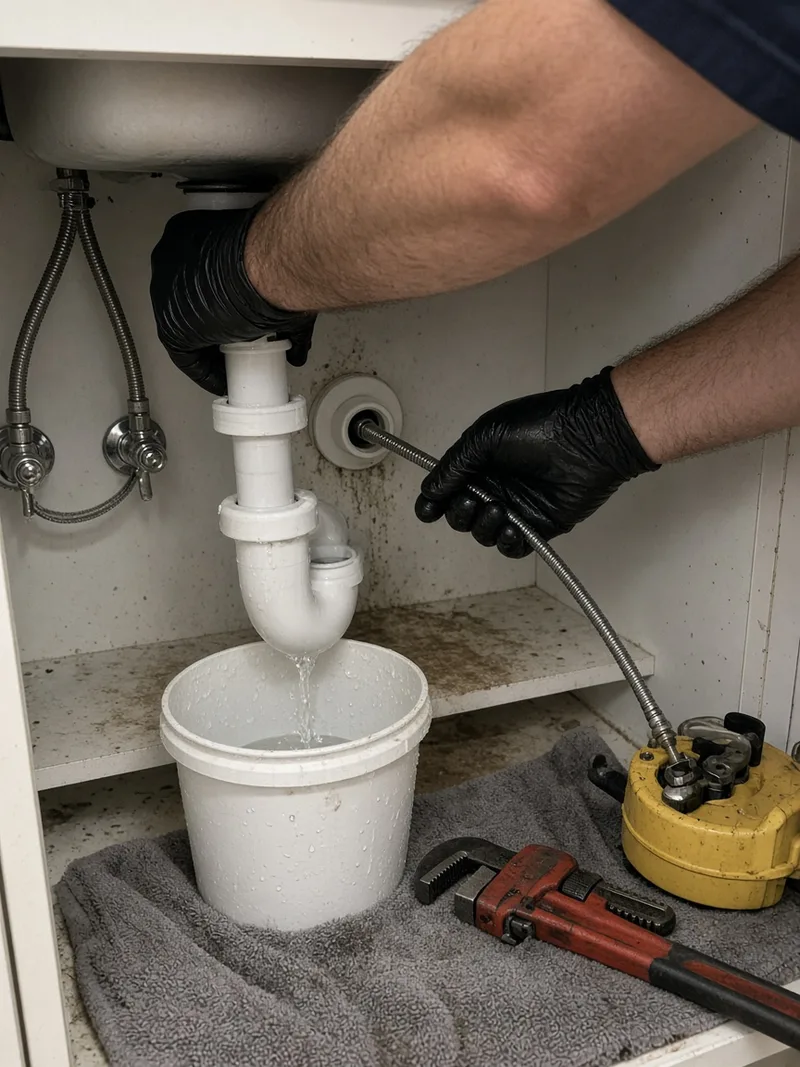
Clogged Drains & Snaking
Blocked sinks, tubs, toilets and floor drains cleared, with the cause identified rather than guessed.
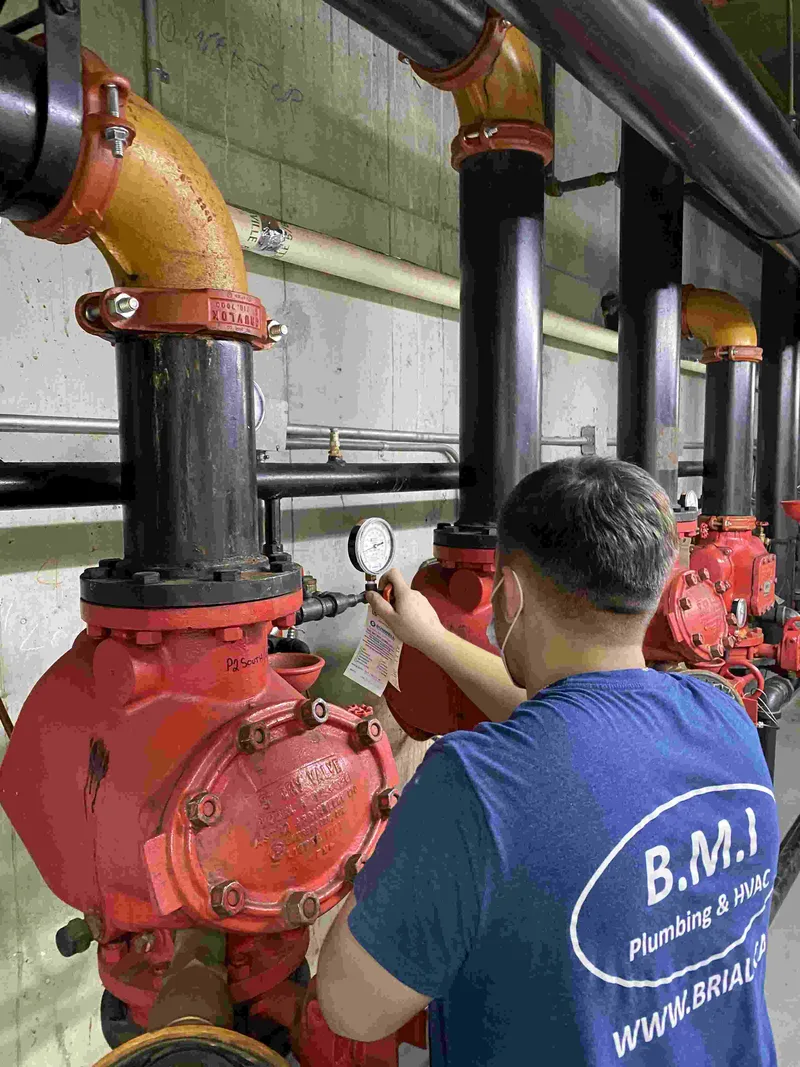
PRV Maintenance & Replacement
If every tap in the building is failing early, the pressure the suites are being fed is worth checking.
Save the list up and book one visit
The running toilet, the dripping tap, the shut-off that sticks. Attendance is the expensive part of a small repair, so send us the whole list and we will do it in one go.