
In-Suite Plumbing Repairs, Booked Around Residents
Taps, toilets, shut-offs, supply lines, drains and leak tracing inside the unit. Booked windows, floor protection in every suite, and the unit reinstated before we leave it.
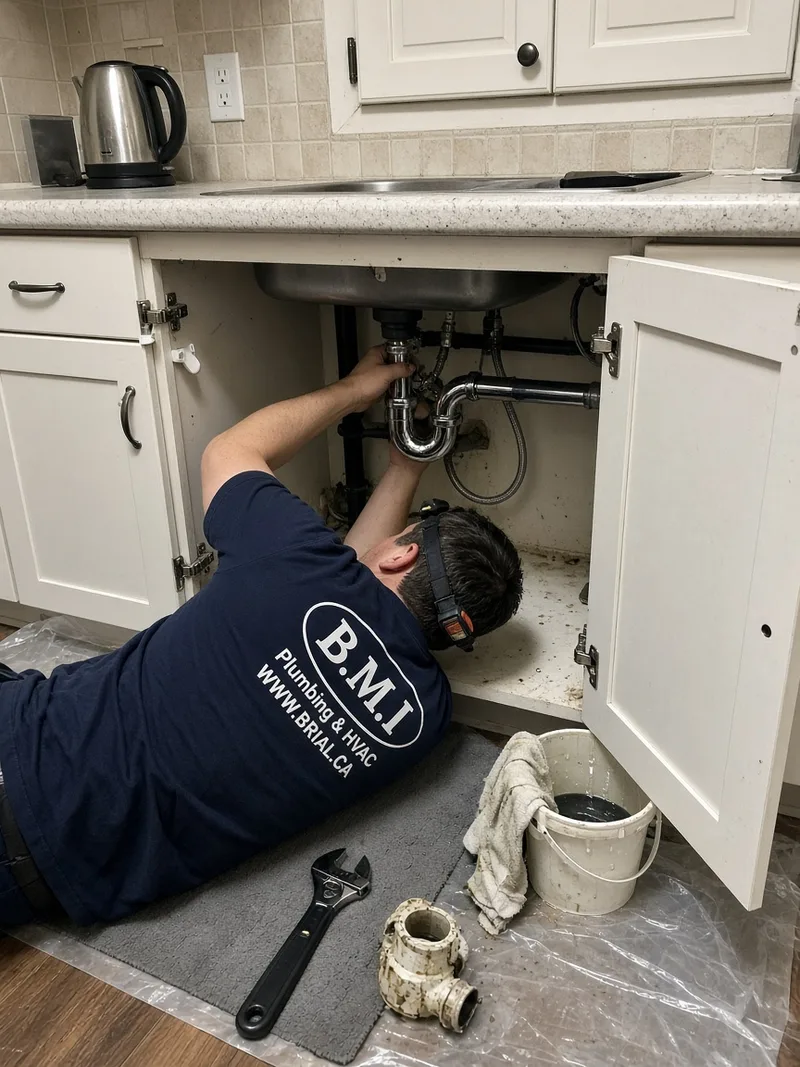
In-suite work is a logistics discipline as much as a plumbing one
A suite repair is a short, well-defined scope: isolate, replace the failed component, test, reinstate. Delivering that scope across ninety occupied units in a serviced tower is a different undertaking. Access is the binding constraint, not labour, and a programme that does not manage access does not close out.
We run in-suite work on a scheduled basis: notice issued through management with a defined window, one coordinator holding the status of every unit, protection installed on entry, and a documented walk-through at completion. That is what separates a programme that finishes on schedule from one that leaves management reconciling missed suites against a technically sound repair.
Jurisdiction, established and documented
Nearly every in-suite call raises the same question: does the failure fall to the owner or to the corporation. The boundary follows the pipe and the declaration governs the specifics. We identify the failed component, record which side of that boundary it sat on, and invoice the two portions separately, so management receives an allocation rather than a figure to divide.
Inside the unit
One suite or a whole floor, on booked windows, coordinated through property management or directly with an owner.
Fixtures and taps
Toilets, kitchen and bathroom taps, shower valves, cartridges, seals and fixture replacement.
Shut-offs and supply lines
Seized valves swapped for quarter-turn ball type, and old rubber lines replaced with braided stainless.
In-suite drains
Traps, branch lines, blocked sinks, tubs and toilets, and the failed connections behind them.
Leak tracing
Moisture meter and thermal imaging before anything is opened, so the correct wall is opened rather than the first one.
Water heaters and tanks
Owner-held tanks replaced with new isolation and a compliant drain connection, including the logistics of a high-rise replacement.
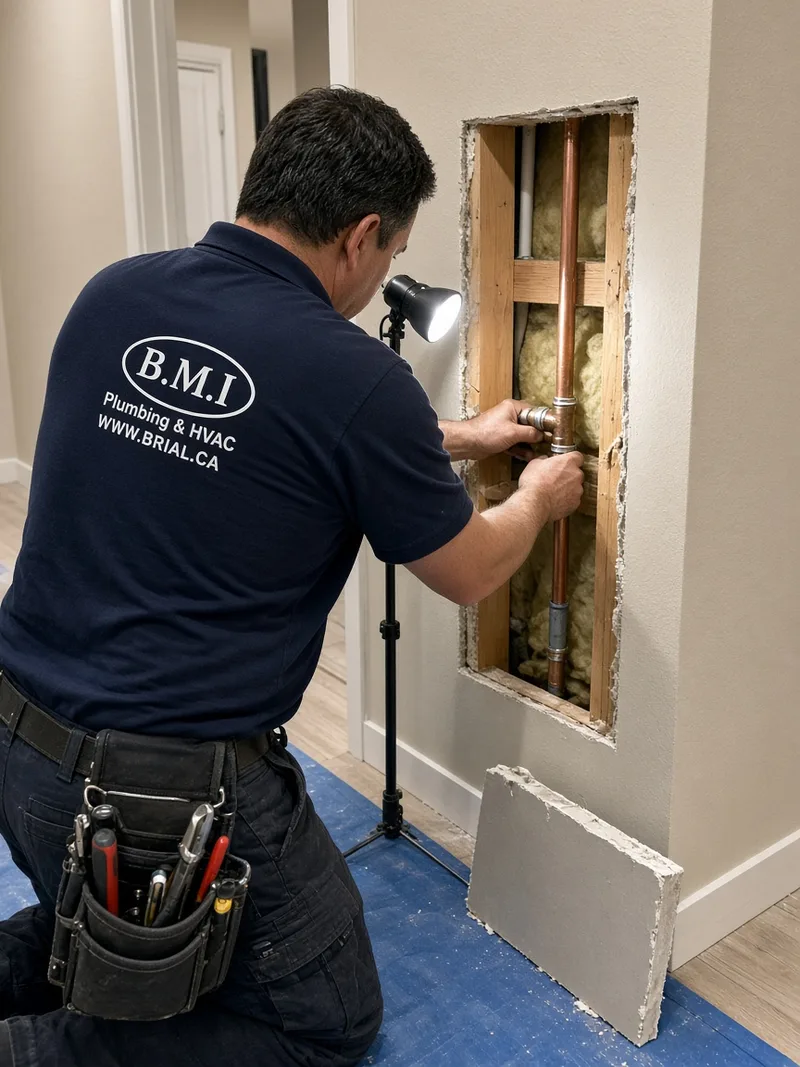
Access panels and in-wall work
Branch pipework behind the wall, opened neatly, and a panel left where the next repair will need one.
Where the owner's plumbing ends and the corporation's begins
How we run in-suite work
The mechanical scope is straightforward. This is the process that delivers it across an occupied building.
-
Written notice with a real window
Residents get the date and a time window in advance, in writing, through property management. A window narrow enough to plan a day around is what separates a programme that completes on its first pass from one that rebooks half its suites.
-
One point of contact
Management deals with one person on our side who knows which suites are scheduled, what is outstanding and what was found. Nobody should have to chase a crew member for the status of a suite.
-
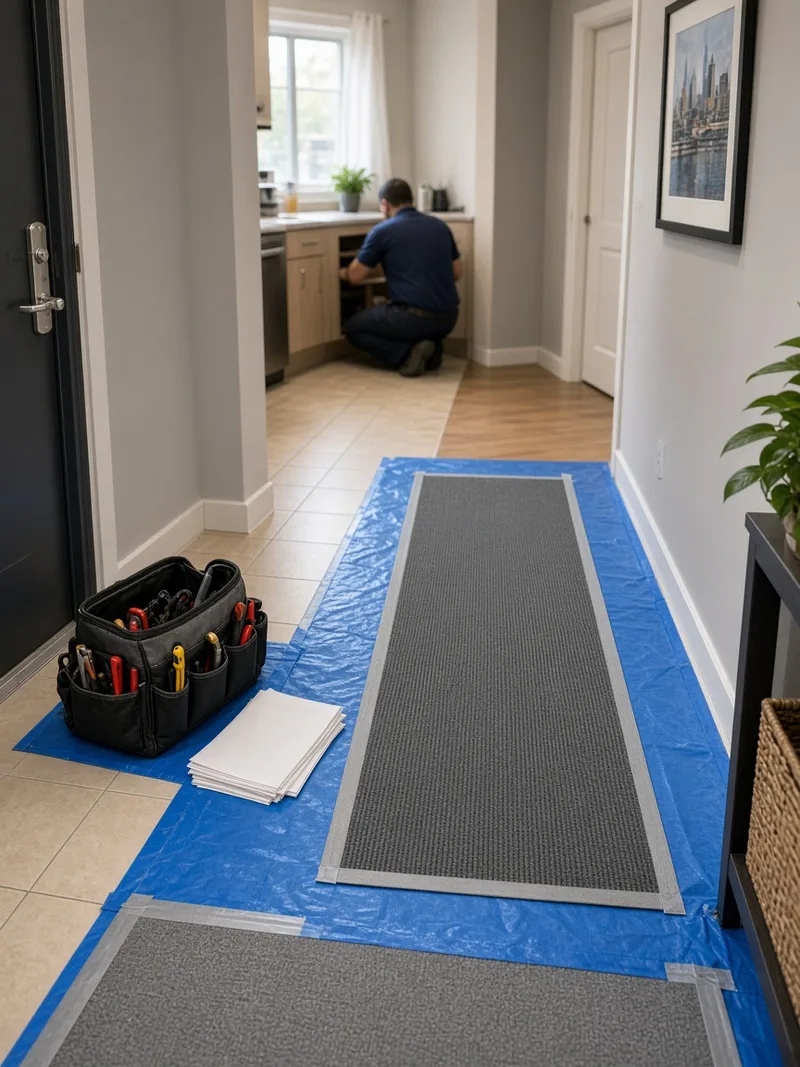
Protection before tools
Protection runs from the suite door to the work area and over the surfaces around it, in every suite, whatever the duration of the scope. Reinstating the unit to the condition we found it is part of the work.
-
Isolate as small as possible
The fixture shut-off if it works, the branch if it does not, and the stack only if there is no alternative. Each step up that hierarchy affects more residents, so we work at the smallest isolation the scope permits, including freezing a live line where that avoids a shutdown.
-
Repair, and catch what is next
We fix what was reported, then look at what is beside it while the water is off: a seized shut-off, a rubber supply line past its life, a weeping connection. Each is a short addition now against a callout later, and each is quoted rather than added silently.
-
Test and walk the suite
The work is tested properly, the area is cleaned, and the resident or management walks it before we leave. Anything we could not complete is recorded on the day rather than discovered when the invoice arrives.
-
Report and split the billing
A suite-by-suite record is issued covering work completed, conditions found and items outstanding. Work on the owner's side of the line and work on the common element side are invoiced separately, so management is never left dividing a single bill.
A scheduled programme and a complete record
The constraints on in-suite plumbing are access, resident communication, status visibility and cost allocation. Our process is built around those four, and each produces a document management can file.
- Written notice with a defined window, issued through property management
- One coordinator accountable for the status of every unit
- Floor and surface protection installed on entry, every visit
- Isolation at the smallest available point, including live-line freezing where it avoids a shutdown
- Completion walk-through with the resident or management before we leave the unit
- A unit-by-unit record of work completed, conditions found and items outstanding
- Owner and corporation portions invoiced separately against the failed component
In-suite repairs at a glance
| Service | Scheduled plumbing repairs inside occupied condominium suites |
|---|---|
| Covered | Fixtures, shut-offs, supply lines, in-suite drains, water heaters, leak tracing, in-wall branch work |
| Scale | A single unit through to a floor or a stack at a time |
| Access | Written notice with a time window, issued through property management |
| Water shut off | Fixture only where possible; branch or stack with notice where not |
| Protection | Entrance to work area, every suite, every visit |
| Sign-off | Walk-through with resident or management before leaving |
| Reporting | Suite-by-suite record of work done, found and outstanding |
| Billing | Owner and corporation portions invoiced separately |
| Booked by | Property management, or directly by an owner for their own side of the line |
| Service area | Toronto, North York, Etobicoke, Scarborough, Mississauga and the wider GTA |
| Emergency line | 24/7, (416) 845-3756 |
One contractor for the suite and for the building
In-suite faults are rarely independent of the building's plumbing. BMI holds maintenance contracts and delivers riser and stack replacement in the same buildings, so a recurring in-suite failure is traced to its common element cause rather than repaired repeatedly. Crews are our own, licensed and insured, and the company that schedules your suite work is the one that answers the emergency line at three in the morning.
In-suite plumbing questions
Your declaration is the document that decides it, but the usual division follows the pipe. The fixtures, taps, toilets, their supply lines, the traps and the branch drain inside your unit are typically the owner's. The vertical risers and stacks, the building drain, the mechanical plant and the valves on the common element piping are the corporation's. The grey area is the shut-off valve where your branch leaves the riser, which is why the first question on any repair is where exactly the failure sits. We document that and bill accordingly.
In most Toronto condominiums it is not inside the unit. Suite isolation usually sits on the branch where it leaves the riser, which means behind an access panel in a hallway, a closet or a bathroom soffit, and in some buildings there is no suite-level valve at all and the smallest isolation is the whole stack. Ask property management where yours is and whether there is a panel. Find out before you need it, and try it once a year to be sure it turns.
Somebody has to provide access but it does not have to be you. Most residents either attend, arrange for management to use a key, or have a family member or neighbour present. What does not work is nobody being available, because the suite gets rebooked and on stack-wide work one inaccessible unit can hold up an entire column.
Written notice in advance with the date and a time window, issued through property management. For work on common elements inside a unit, the Condominium Act sets out notice requirements and the corporation follows them. For an owner's own repair, we simply book a window that suits you. Either way the window is meant to be something you can plan around rather than a whole day of waiting.
Yes, and in every suite regardless of how small the job is. Protection runs from the suite entrance to the work area and over surfaces around it, and the area is cleaned before we leave. We ask you to clear the immediate work area and move anything fragile or valuable out of the room, and to secure pets somewhere else for the duration.
Tell us the same day and we deal with it directly rather than sending you into a claims process. That is the whole reason we walk each suite with the resident or management before leaving: it is much easier to resolve something identified on the day than something reported three weeks later. Documented walk-throughs protect residents and us equally.
For a fixture repair, minutes, because we close the fixture shut-off and nothing else. For a branch repair, an hour or two for your unit. For work that needs the stack isolated, part of a working day for every suite on that column, with notice in advance. We always look for the smallest isolation available, and where a valve is missing or seized a freeze kit will often let us work on a live line instead of draining anything.
Report it to property management immediately and let it be traced properly, because the source is very often not where the stain is. Water escapes, runs along the underside of the slab, and appears wherever it finds a penetration, which may be several metres and sometimes several suites away from the failure. We trace it with a moisture meter and a thermal camera before anyone opens a ceiling, and then it is clear whose side of the line the cause is on.
Both work. For repairs on your own side of the line, such as your fixtures, cartridges, supply lines and traps, you can book us directly. Anything touching common element piping, risers, stacks or building valves goes through the corporation, because that is their asset and their decision. If you call us and it turns out to be the corporation's, we will tell you rather than doing it and arguing about it afterwards.
Yes, and for the buildings we hold contracts with this is the efficient way to do it. Management collects resident requests, we work through a floor or a stack at a time, and one attendance covers a dozen suites instead of a dozen separate callouts. Buildings doing shut-off replacements, supply line upgrades or fixture programmes almost always do it this way.
Yes, and it is worth planning rather than waiting for it to fail. Many Toronto suites have a rented tank, in which case the rental provider owns it and there are contract terms involved, so tell us what you have and we will say plainly whether it is ours to touch. Where it is an owned tank we replace it, fit new isolation and a proper drain connection, and deal with the logistics of getting it in and out of an occupied high-rise.
Often, yes, and it is one of the most worthwhile upgrades in an older building. Whether it is practical depends on how your branch leaves the riser and whether there is usable access, so it needs looking at rather than quoting blind. Where the branch is reachable, suite isolation with an access panel means every future repair in your unit stops needing the whole stack taken off.
Five things, and they take ten minutes. Turn your suite shut-off and make sure it moves. Look under every sink for damp, corrosion or a hardening supply line. Check behind the toilet for the same, and make sure the fixture does not rock. Look at your washing machine hoses and replace them if they are rubber rather than braided. Do a dye test on each toilet tank for a silent leak. Almost every in-suite flood we attend was one of those five, visible months earlier.
If you have a working suite shut-off, yes, and it is close to free. The majority of catastrophic in-suite floods start at a supply line, a toilet fill valve or a washing machine hose, and all of those are harmless without pressure behind them. Test the valve while you are home with time to deal with it, not on the morning of a flight, and if it does not turn easily have it replaced first.
Constantly, and it is worth being clear about the coordination. Notice goes to the unit, and the practical issue is usually that an owner is arranging work in a suite they do not live in. We deal with whoever is nominated as the contact, tenant or owner or management, and we report back to the person paying for the work so an off-site owner knows exactly what happened in their unit.
Related services
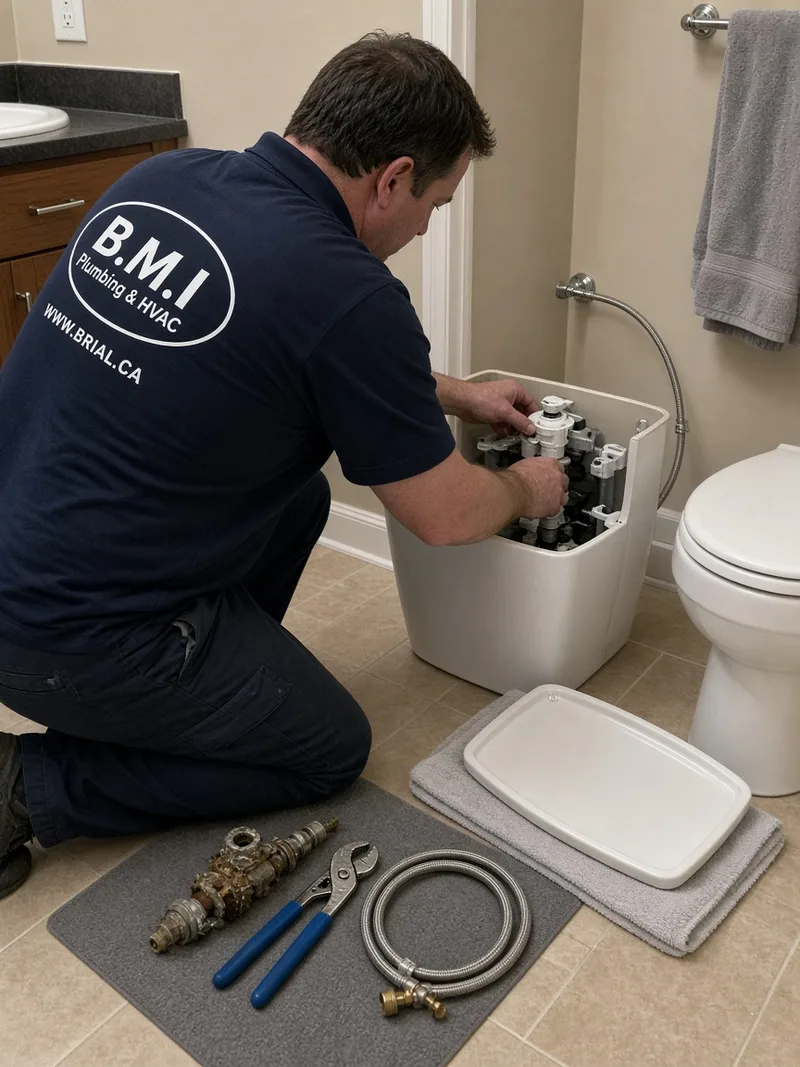
Toilet & Faucet Repairs
Running toilets, dripping taps, seized shut-offs and supply lines. The small list, done in one visit.
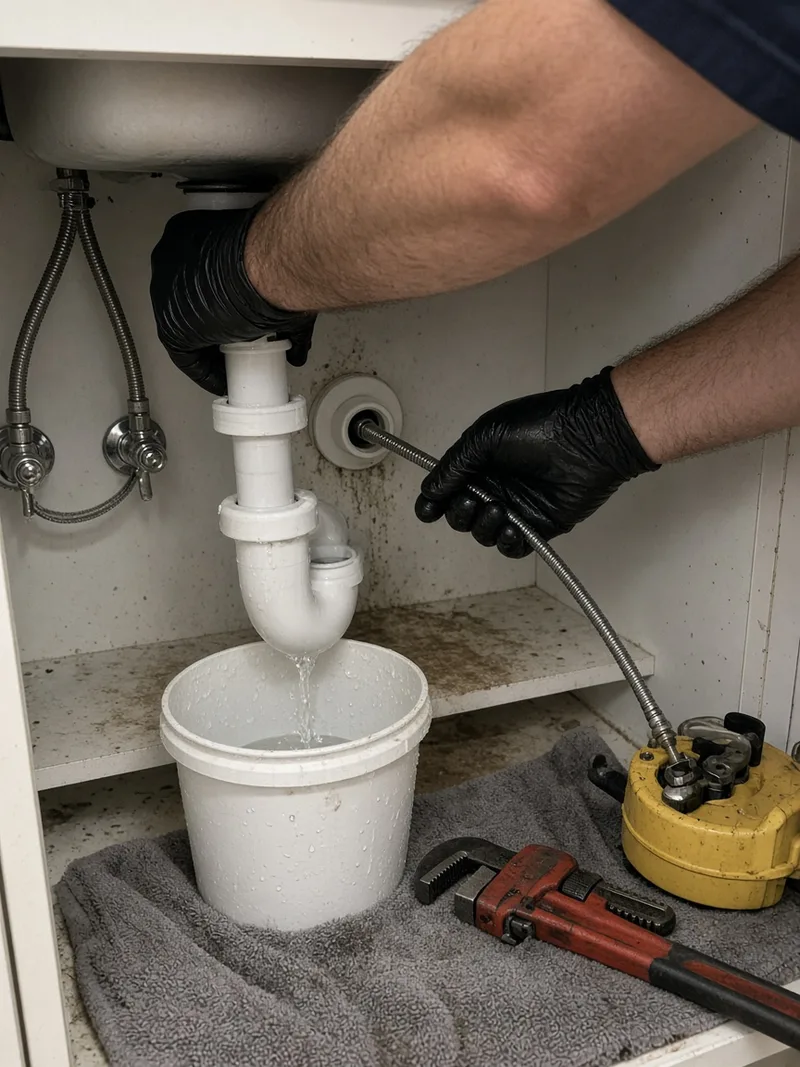
Clogged Drains & Snaking
Blocked sinks, tubs, toilets and floor drains cleared, with the cause identified rather than guessed.
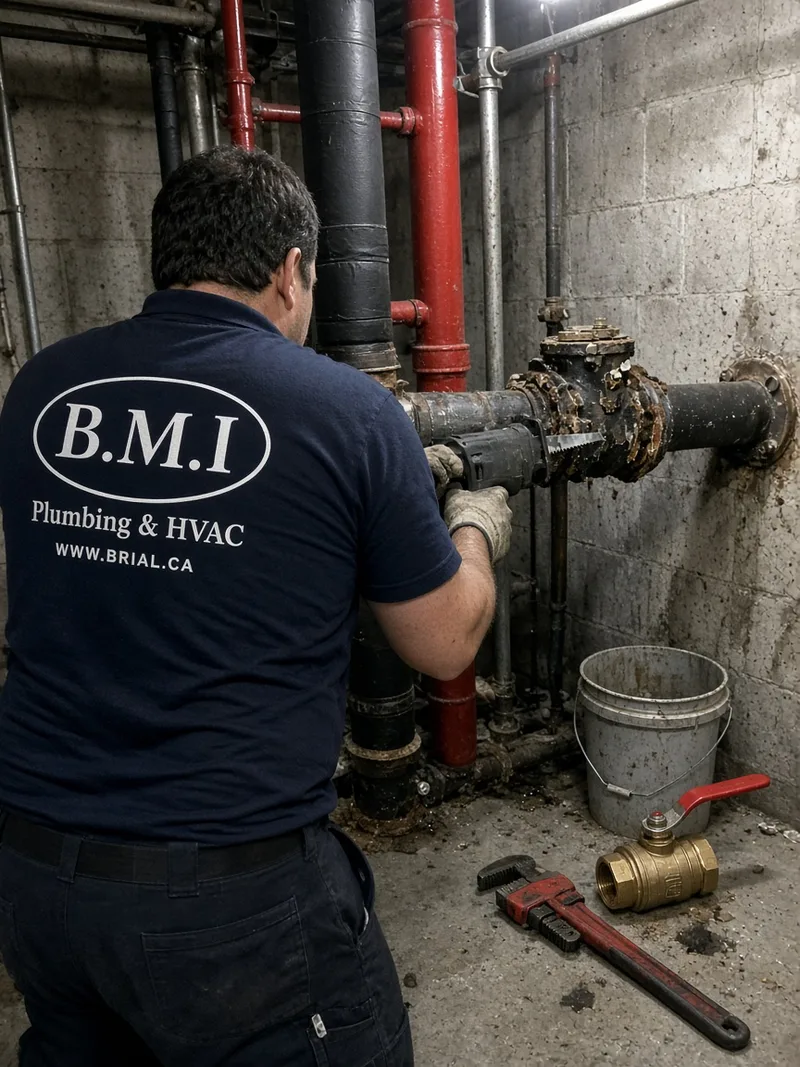
Valve Replacements
Seized suite and branch shut-offs replaced with quarter-turn valves, so the next repair is a small one.
Collect the list, and we will work through a floor at a time
In-suite work in an occupied building is a logistics job as much as a plumbing one. Tell us how many suites and what is on the list, and we will schedule it around your residents.