Condominium Plumbing in Vaughan
Vaughan has the newest condominium stock in the GTA. Almost nothing here is failing from age, which means the problems are pressure, commissioning and the things a builder's warranty stops covering.
The youngest towers in the region, and the oldest habits
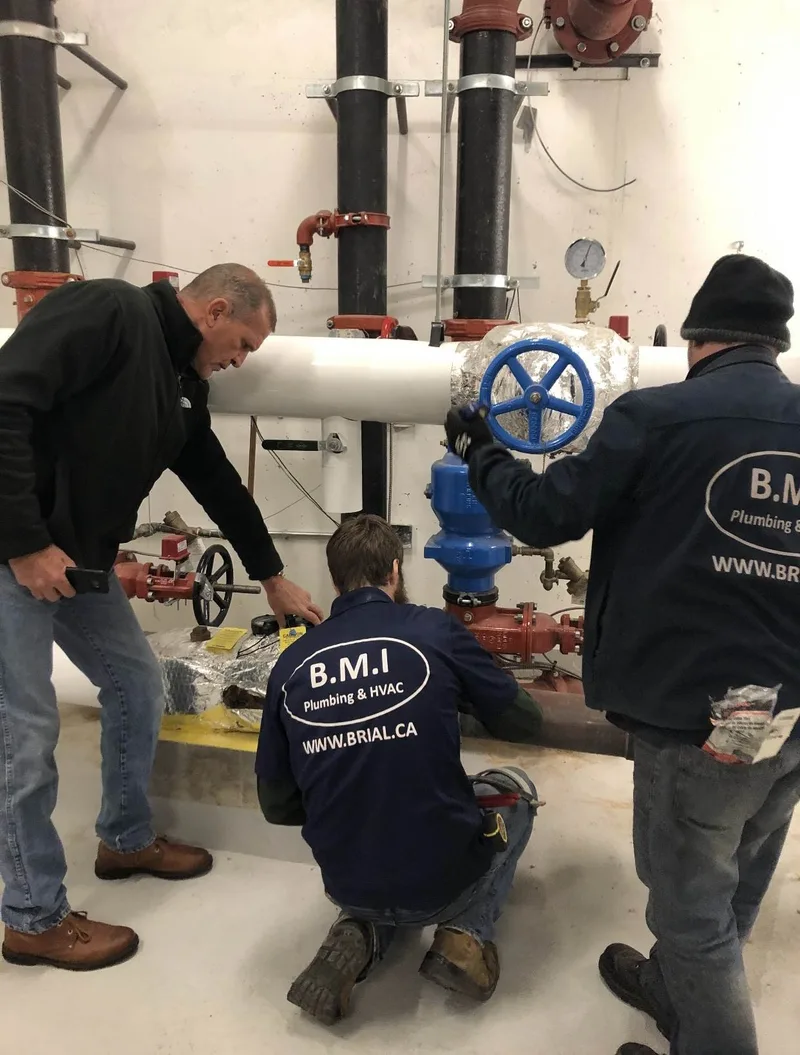
Vaughan is the one GTA municipality where a condominium plumbing page cannot lead with pipe age, because most of the stock does not have any. The Vaughan Metropolitan Centre went from a subway station and parking lots to a cluster of towers inside a decade, and its buildings are largely 2016 and newer.
What that changes is the entire nature of the work. Nobody is replacing a riser at the VMC. What these buildings need is the unglamorous set of things that determine whether a new tower runs well or badly for its first twenty years.
Pressure, zoning and booster pumps
A tall building needs enough pressure at the top and not too much at the bottom, which is done with booster pumps and pressure reducing valve stations splitting the tower into zones. These are set during commissioning against a design assumption, and design assumptions rarely survive full occupancy. When a station drifts, an entire zone feels it, and it shows up as repeatedly failing supply hoses and water hammer rather than as anything that looks like a pressure fault.
The things handover leaves behind
Air that was never fully purged from risers. Balancing signed off on an empty building. Valves that have not been turned since the day they were installed. And kitchen stacks with no cleaning cycle, which will restrict with grease within a decade no matter how new the pipe is.
Thornhill, which is a different building entirely
The Vaughan side of Thornhill includes 1970s and 1980s stock in the same position as older Toronto towers: original risers and valves at end of life, repairs repeating on the same stack, and a reserve fund conversation about riser replacement and valve replacement.
What a newer Vaughan building should have done first
The point at which the builder's warranty ends is the point at which the corporation becomes responsible for things it has probably never inspected.
Valve audit and chart
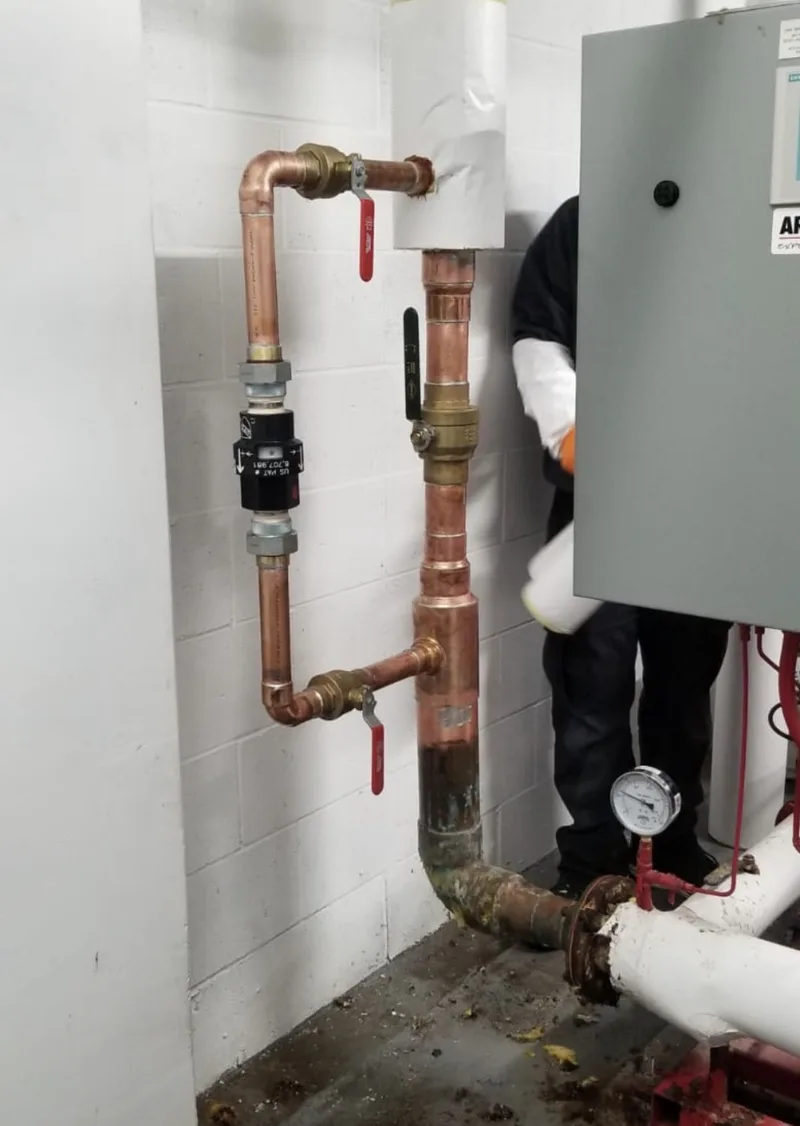
Confirm every isolation valve exists where the drawings say, is tagged, and actually turns. New valves seize too. Valve audits.
Verify the pressure zones
Check each PRV station against what the occupied building actually demands, not the commissioning assumption. PRV service.
Start a stack cycle
Before the first backup, not after. Grease does not care how new the building is. Kitchen stack cleaning.
Get the backflow filing right
Filed locally and through York Region, not to Toronto. A portfolio spanning both needs two filings. Backflow testing.
Baseline the drains
A camera survey early gives you something to compare against in ten years, which is worth more than the survey itself. Camera inspection.
Know who answers at night
A new building floods exactly as fast as an old one. 24/7 emergency response.
Where our named buildings are
We publish completed capital work building by building with the scope on each one, and there are no Vaughan addresses on that list yet. Putting invented ones here would be worth nothing to a board and we are not going to do it.
What is relevant is that North York, which runs directly into Vaughan, holds five of our completed towers, including a complete low-zone and high-zone riser replacement at 131 Beecroft Road and expansion compensator replacement across both Four Springs Avenue buildings. Zoned high-rise work and pressure station work are the same disciplines a VMC tower needs, in buildings a short distance away.
Vaughan is inside our normal working area for maintenance contracts and capital projects alike.
Condominium plumbing in Vaughan
| Area covered | All of Vaughan, including the Vaughan Metropolitan Centre, Thornhill, Woodbridge, Maple, Concord and Kleinburg |
|---|---|
| Water and wastewater | York Region |
| Building permits | City of Vaughan |
| Newer stock needs | Booster pumps, PRV zones, valve charting, stack cleaning cycles |
| Thornhill stock needs | Riser replacement, valve replacement, expansion compensators |
| Backflow testing | Filed locally and through York Region, not to the City of Toronto |
| Residents | Stay in their homes throughout |
| Nearest completed work | 131 Beecroft Rd and 5025 / 5033 Four Springs Ave, North York |
| Emergency response | 24/7, (416) 845-3756 |
Vaughan condominium questions
York Region supplies water and handles wastewater for Vaughan, while the City of Vaughan issues building permits. That split matters when a building has a pressure problem: the supply figures and the pressure zone come from York Region, and York's network is a pumped and stored system serving a large area at varying elevation rather than a lake-side gravity-and-pumping arrangement like Toronto's. A tall VMC tower sits on top of that, and its internal zoning has to work with it.
Quite a lot, and it is rarely the pipe. New buildings bring commissioning issues that only appear once the tower is fully occupied and the real demand pattern shows up: booster pumps short-cycling, pressure reducing valves set for a design condition that does not match reality, air in risers that was never fully purged, and balancing that was signed off on an empty building. Add kitchen stacks that nobody has put on a cleaning cycle and valves that have not been turned since handover, and a five-year-old tower has a real maintenance list.
The corporation becomes responsible for things it may never have inspected. This is the point at which we are most often called into a newer Vaughan building, and the most useful thing to do first is a valve audit: locate, tag and chart every isolation valve in the building and confirm they actually turn. New valves seize just as thoroughly as old ones if nobody operates them, and finding out during a burst supply line at two in the morning is the expensive way to learn that the chart in the binder does not match the building.
Height and zoning. A tower at the Vaughan Metropolitan Centre needs enough pressure at the top floors, which means the lower floors would see far too much without pressure reducing valve stations breaking the building into zones. Those stations are the single most consequential mechanical component in the building for residents: when one drifts, an entire zone feels it, and the symptoms are usually indirect, showing up as repeatedly failing flexible supply hoses, water hammer, or noise complaints rather than as an obvious pressure fault.
Completely different. The Vaughan side of Thornhill includes stock going back to the 1970s and 1980s, and those buildings are in the same position as older Toronto towers: original risers and valves at or past the end of their service life, and repairs that start repeating on the same stack. That is riser and valve replacement territory, phased stack by stack with the building occupied, rather than the commissioning and pressure work the VMC needs.
Cross-connection control requirements in Vaughan are set locally and by York Region rather than by the City of Toronto, so a property manager running buildings in both places should not assume one filing satisfies the other. The devices and the test procedure are the same; the schedule, the forms and the receiving authority are not. We test, repair or rebuild what fails, retest, and file to whichever authority the building actually falls under.
Yes. Our completed capital work is concentrated inside the City of Toronto, which is why Toronto, North York and Etobicoke are the pages with named buildings on them, and we are not going to pretend otherwise. Vaughan is inside our normal working area, and North York, where five of our completed towers are, runs directly into it. For a capital programme the crew is on site for weeks at a time, so the base location matters far less than people expect.
Other areas we work in

Markham
Three decades of condominium building in one city, on York Region water, with very different needs by vintage.
Richmond Hill
A tight corridor of mid and high-rise buildings along Yonge, served by York Region water pressure zones.
Toronto
Nine completed towers through the downtown core and midtown, from Yonge and Jarvis across to Richmond and Carlton.
Have a plumbing problem in a Vaughan building?
Send us the scope and we will come and look at the building before we quote it. Emergencies are answered at any hour.