
The MEV Water-Saving Valve
Almost no water meter can tell water from air, so it bills the building for both. The MEV valve holds steady back pressure through the meter and stops it over-registering. BMI is the exclusive installer in Toronto and the GTA.
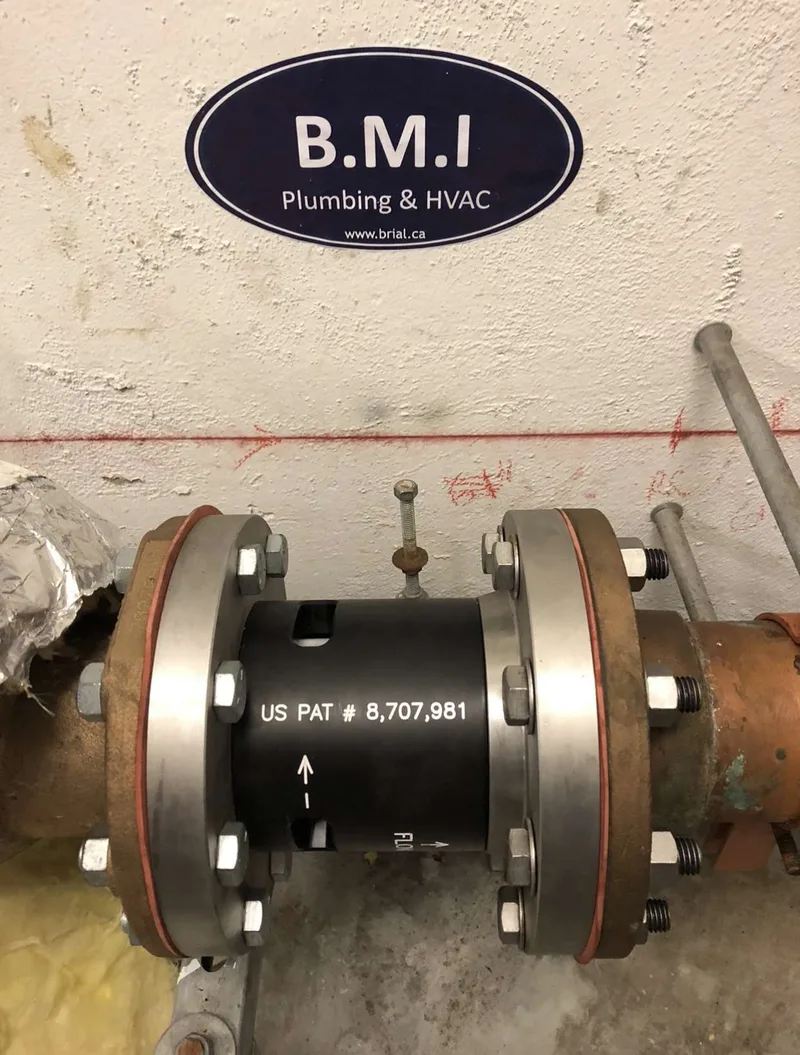
A water meter does not measure water. It measures movement.
Single jet, multi jet and turbine positive displacement meters, which between them account for the overwhelming majority of meters in service, register consumption by counting the rotation of an internal element as flow passes through. Air moving through the meter turns that element in exactly the same way water does, and with less resistance. The meter records the rotation and the building is billed for it.
Air in a municipal service is normal and unavoidable. It enters through main breaks, repairs, hydrant draw and pumping operations, and dissolved air comes out of solution wherever pressure falls across the system. In a high-rise with booster pumps and demand that swings all day, that is a continuous condition. Nobody notices it, which is precisely why it goes on being paid for.
What the valve changes
The MEV is installed on the user side of the meter and holds a steady back pressure through it, so the meter sees a consistent column of water rather than a flow broken up by pockets of air. Consumption inside the building is unchanged and no resident notices any difference in pressure or flow. What stops is the over-registration.
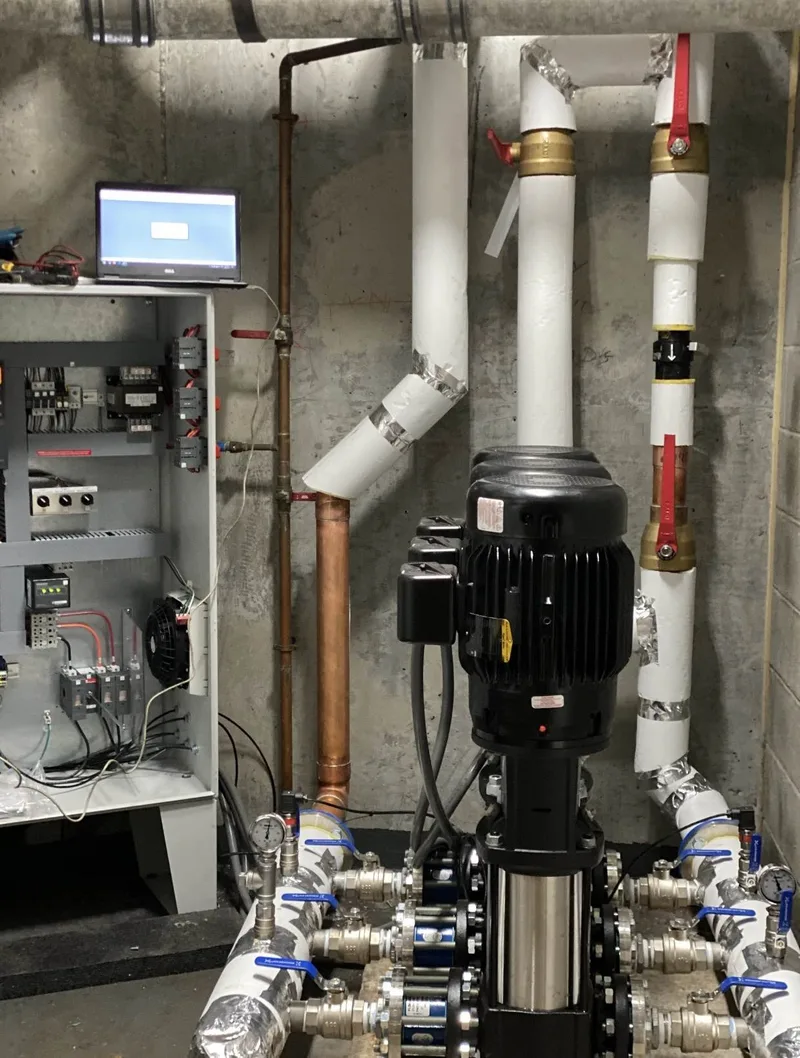
Indicators that a meter is registering more than it delivers
None of these prove over-registration on their own. Together they are the pattern we look for before recommending a valve.
Consumption high against comparables
Metered volume well above buildings of similar size and occupancy, with no leak or irrigation to account for it.
Readings that swing without cause
Month-to-month variation that does not track occupancy, season or any known event in the building.
Spluttering at the taps
Air discharging at fixtures, particularly after municipal work nearby, is direct evidence of air entering the service.
Frequent municipal work on your street
Main breaks, repairs and hydrant use all introduce air into the local distribution and into your service with it.
A leak search that found nothing
Where consumption is high and a thorough search has ruled out losses, the measurement itself is the remaining candidate.
Water among the largest line items
In most Toronto high-rises it is, which makes a measurement error worth confirming rather than assuming away.
The same water, measured two different ways
How we assess, install and verify
Seven stages, and the first happens on your billing history rather than in your mechanical room.
-
Review the building's consumption history
We start with the billing history and the meter readings rather than the pipework. Consumption that is erratic against occupancy, or high against comparable buildings of the same size, is the signature worth investigating. A building with genuinely low entrained air will see little benefit and we would rather establish that first.
-
Inspect the service and the meter installation
We confirm the size and type of the meter, the configuration of the incoming service, the available space on the user side, and whether the room has a drain and adequate clearance. The valve is selected to the service size, from two and a half inches up to twelve.
-
Agree the shutdown window
Installation requires the incoming service to be closed, so it is scheduled with property management and the building is notified in advance. The outage is a matter of hours and is normally taken early in the day.
-
Install on the user side of the meter
The valve is fitted downstream of the meter on the building side, flanged into the main in the preferred horizontal orientation, with clearance kept for later service. It is never installed where it could be submerged.
-
Set the back pressure and restore service
The valve is adjusted for the service, the main is refilled and vented, and pressure is confirmed upstream and downstream before the building is returned to normal supply.
-
Verify against the meter
Readings are taken at commissioning and the consumption is compared against the building's own history over the following billing cycles. The result is measured on the corporation's meter rather than asserted from a brochure.
-
Leave it alone
There is no filter to change, no servicing interval and no consumable. The valve is adjustable and removable if the building's circumstances change, and it carries a ten year warranty.
Buildings running an MEV valve
Recorded reduction in metered volume, measured on each corporation's own meter against its own consumption history. We are happy to put a board in touch with the property managers at any of these.
| Building | Installed | Reduction in metered volume |
|---|---|---|
| 7161 Yonge St | January 2019 | 25% |
| 2 & 8 Maison Parc Dr | June 2020 | 25% |
| 797 Don Mills Rd | November 2018 | 20% |
| 56 Annie Craig Dr | January 2019 | 20% |
| 3985 Grand Park Dr | August 2018 | 18% |
| 21 Carlton St | July 2018 | 18% |
| 12 Yonge St | January 2019 | 15% |
| 28 Ted Rogers Way | June 2018 | 15% |
| 36 Lisgar St | Installed | 25% projected |
| 2470 Prince Michael Dr | Installed | 20% projected |
| 2480 Prince Michael Dr | Installed | 20% projected |
A device that is verified, then left alone
This is an unusually simple scope with an unusually specific obligation attached: the result has to be demonstrable on the corporation's own meter. Everything else about the valve is designed to require nothing of the building afterwards.
- A consumption review before any valve is quoted, using your billing history
- The valve sized to your incoming service, from two and a half through twelve inches
- Installed on the user side of the meter, clear of any submersion risk
- A notified shutdown of hours, taken early in the day
- Commissioning readings, and a comparison against your own consumption history
- No filter, no consumable and no servicing interval afterwards
- A ten year manufacturer warranty, handled by the company that installed it
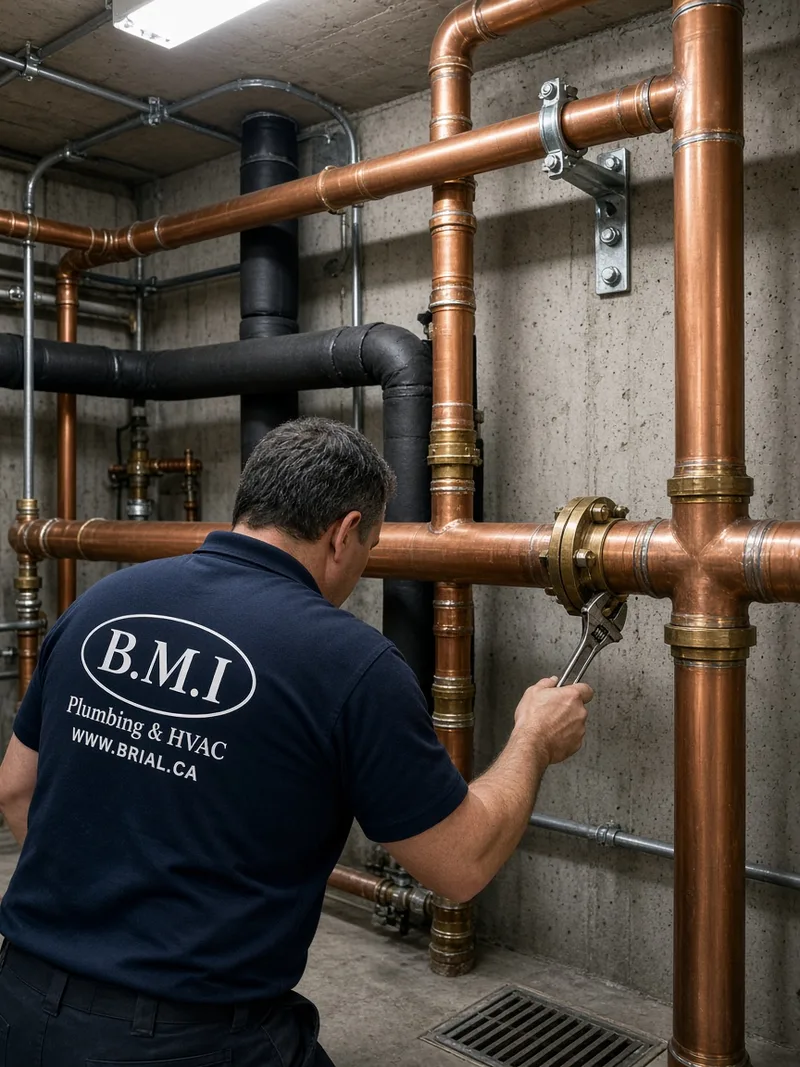
The MEV valve at a glance
| Device | Meter efficiency valve, ductile iron flanged "Y" pattern |
|---|---|
| Function | Holds steady back pressure through the meter so entrained air is not registered |
| Distribution | BMI holds exclusive rights for Toronto and the GTA |
| Position | User side of the water meter, on the building's own piping |
| Sizes | 2½, 3, 4, 6, 8, 10 and 12 inch |
| Rating | 200 psi at 150°F |
| End connections | ASME B16.42 Class 150 flanged |
| Body and cover | Ductile iron, ASTM A536, fusion epoxy finish inside and out |
| Internals | Acetal and 304 stainless steel |
| Certification | NSF/ANSI 372 and NSF/ANSI/CAN 61; MIL-S-16293F Type 2 |
| Orientation | Horizontal preferred; functions in any orientation, never submerged |
| Maintenance | None; adjustable and removable |
| Warranty | Ten years on the valve, plus BMI workmanship warranty |
| Recorded results | 15% to 25% reduction in metered volume across installed buildings |
| Service area | Toronto, North York, Etobicoke, Scarborough, Mississauga and the wider GTA |
The exclusive installer, and the contractor already in the room
BMI holds the exclusive right to distribute and install the MEV valve in Toronto and the GTA, so there is no reseller chain between the building and the manufacturer on a warranty question. We are also the plumbing contractor in many of these buildings already, which means the installation, the shutdown, the notice and the commissioning are handled by people who know the mechanical room rather than by a supplier attending once.
MEV valve questions
The MEV, or meter efficiency valve, is a patented American-made device installed on the user side of a building's incoming water line. It creates a steady back pressure through the water meter so that the meter sees a consistent, solid column of water rather than a flow broken up by pockets of air. Because almost no water meter can distinguish air from water, removing that inconsistency stops the meter registering air as consumed volume. BMI holds the exclusive right to distribute and install it in Toronto and the GTA.
Because it does not measure water. It measures movement. Single jet, multi jet and turbine positive displacement meters, which between them account for the overwhelming majority of meters in service, register the rotation of an internal element as flow passes through. Air moving through the meter turns that element in exactly the same way water does, and often faster, because it meets less resistance. The meter counts the rotation and bills it. It has no way of knowing what caused it.
It is normal and unavoidable. Air enters the distribution network at the municipal side through main breaks, repairs, hydrant use, pumping operations and pressure changes, and dissolved air comes out of solution whenever pressure drops across the system. In a tall building with booster pumps and constantly varying demand, pressure is changing all day. The air is not a fault in your building, which is why nobody notices it and why it goes on being billed.
Across the Toronto buildings where we have installed it, the recorded reduction in metered volume has run between fifteen and twenty-five percent, and those figures are listed on this page building by building. The variation depends on how much entrained air a given service carries, the meter type and size, and the building's consumption pattern. We review your consumption history before quoting, and if the indicators are not there we will tell you.
It is correcting the measurement, which is an important distinction to be clear about. Residents use exactly the same amount of water and notice no difference whatsoever in pressure, flow or service. What changes is that the building stops paying for volume it never received. It is a metering accuracy device rather than a conservation fixture, and it is worth presenting to owners in exactly those terms.
Yes. The valve is installed on the private side of the meter, on the building's own piping, and it does not touch, modify, bypass or interfere with the meter or with any municipal equipment. It does not slow or restrict the flow of water into the building. It conditions the flow so that the meter measures water accurately. It is standard plumbing work installed by a licensed contractor on the owner's side of the service.
No. The valve holds back pressure through the meter itself, which sits at the incoming service well upstream of the booster pumps and the pressure reducing stations that actually set what arrives at a suite. Flow and pressure at the fixture are unaffected. In the buildings listed on this page, no resident complaint has been attributed to the installation.
No. There is no filter, no cartridge, no strainer to clean and no scheduled maintenance interval. The internals are acetal and stainless steel inside a ductile iron body with a fusion epoxy coating, and the unit is designed to sit in the line and do nothing that requires attention. It is adjustable if circumstances change, and removable if the building ever wants it out.
It is manufactured in sizes from two and a half inches through to twelve inches, and the selection follows the size and configuration of your incoming service rather than the size of the building. We confirm the service size, the meter type and the available run on the user side during the site visit, before anything is ordered.
Yes. The valve is certified to NSF/ANSI 372 for lead content and to NSF/ANSI/CAN 61 for drinking water system components, and it also meets MIL-S-16293F Type 2. The body and access cover are ductile iron to ASTM A536 with an NSF-certified fusion epoxy finish inside and out, and the internals are acetal and 304 stainless steel.
Yes, briefly. The valve is fitted into the incoming main, so the building supply has to be closed while it goes in. The outage is a matter of hours rather than a day, it is scheduled with property management, residents are notified in writing in advance, and it is normally taken early in the day. Once the main is refilled and vented, service is back to normal.
It does provide a secondary benefit. The device is designed to protect downstream equipment from the pressure spikes that travel in on the incoming service, which are among the causes of premature failure in meters, valves, fixtures and appliances. That is not the reason most buildings install it, but it is a real characteristic of the product rather than a marketing claim.
On your own meter, against your own history. We record readings at commissioning and then compare metered volume over the following billing cycles against the same period in previous years, normalising for occupancy and for any unusual events such as a main flush or a filled pool. The comparison is made on the corporation's data, so the board is not asked to take a supplier's word for the result.
On the user side of the water meter, in the incoming service room or mechanical room, downstream of the meter and upstream of the building distribution. Horizontal is the preferred orientation, although the device will function in any orientation. It has to be installed where it cannot be submerged, and with enough clearance around it for later service, which we confirm before ordering.
Ten years on the valve itself, from the manufacturer, alongside our own workmanship warranty on the installation. Because BMI is the exclusive distributor for Toronto and the GTA, a warranty question is handled by the company that installed it rather than routed through a chain of suppliers.
No. If the corporation is not billed on metered volume, there is no over-registration to correct and the valve has nothing to act on. It is worth confirming, because some buildings are metered for part of their consumption and not for the rest, and some have separate services for irrigation or a commercial component that are metered independently. We will look at how your building is actually billed before quoting.
The measurement is the trial, and it runs after installation rather than before. What we can do beforehand is review your consumption history against the building's size, occupancy and comparable properties, which is a reasonable indicator of whether entrained air is likely to be a material factor. Speaking to the property managers at the buildings listed on this page is also something we encourage.
Related programs and services
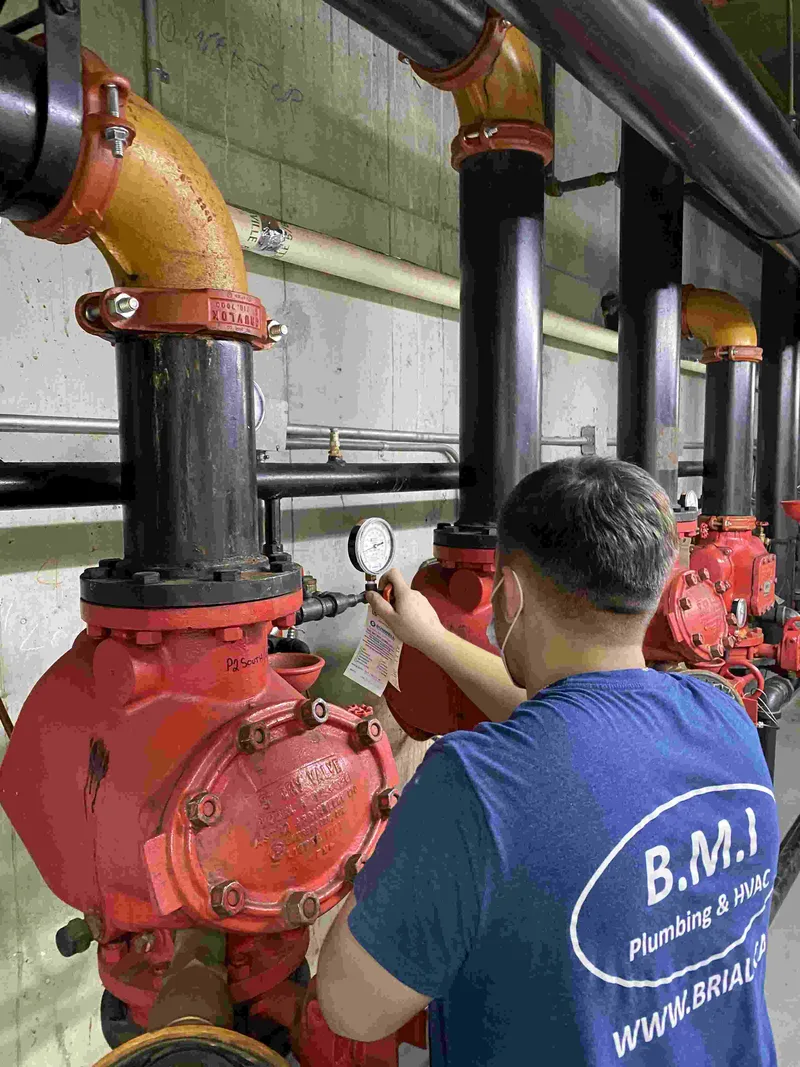
PRV Maintenance & Replacement
Pressure reducing valve service, rebuilds and replacement, set properly for every zone in the building.
Backflow Prevention Testing
Annual testing, repair and certification, with the report filed on the corporation's behalf.
Valve Audit & Exercise Programs
Every valve located, tagged and charted, then exercised annually so it still turns.
Find out whether your meter is over-registering
Send us two years of water billing and the size of your incoming service. We will tell you whether the indicators are there before anybody quotes a valve.