 Riser & Fan Coil Replacement
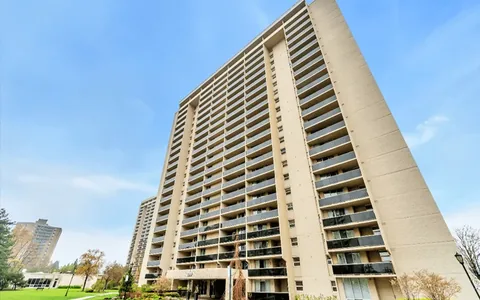
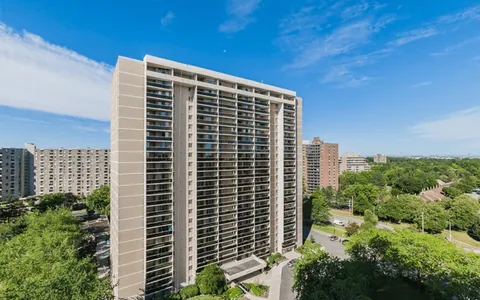
299 Mill Rd
Etobicoke, Ontario · 436 unitsRiser replacement across 436 units including asbestos abatement and air-quality testing throughout. Delivered two months ahead of the eight-month schedule.
If your building went up between 1995 and 2007, it may have Kitec in the walls. It fails from the inside without warning, and we remove it suite by suite on a schedule the building sets.
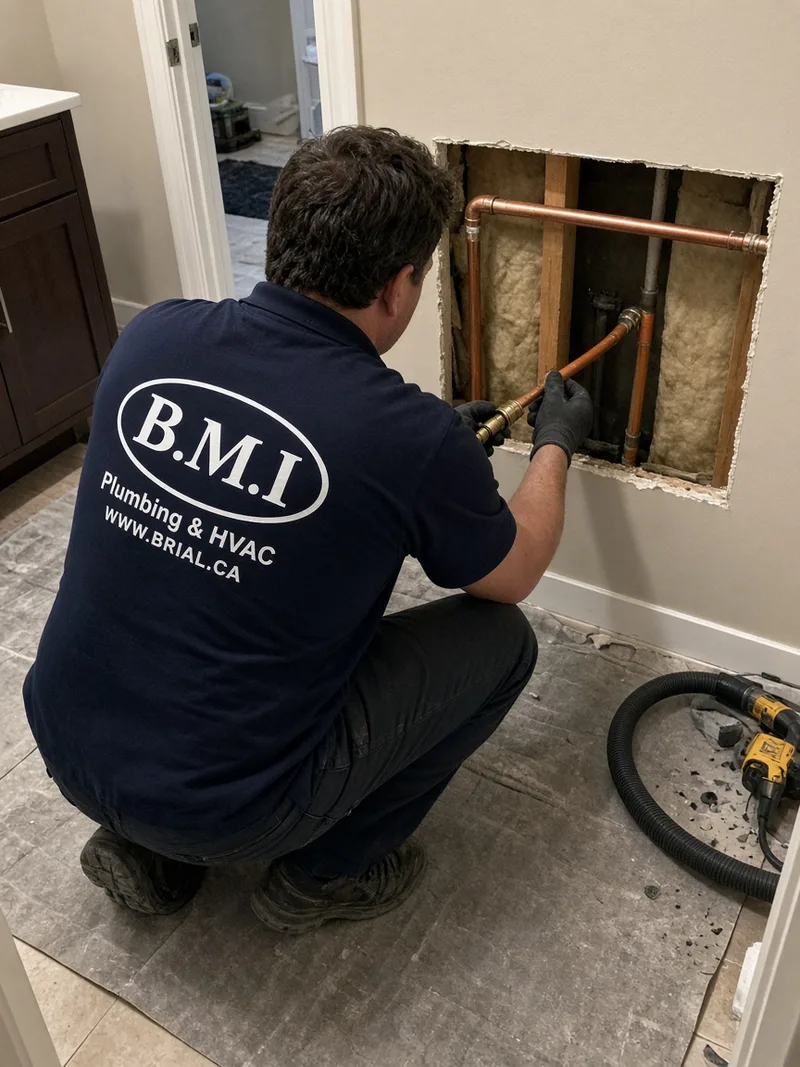
Most plumbing gives notice. Copper thins, eventually weeps, and somebody finds a stain. Kitec does not behave that way. Dezincification occurs inside the brass fittings and within the pipe wall, where it cannot be observed, and the exterior of the system looks as it did on the day it was installed. The first indication is generally a fitting failing outright, at full pressure, in a finished bathroom.
That is what makes the usual deferral argument inapplicable. There is no inspection that establishes a remaining service life, and no early leak to respond to. A building either addresses the system on a schedule it sets, or it addresses it one failure at a time on a schedule set for it.
The Kitec class action was settled and a fund established to contribute toward replacement, but the claims deadline passed in January 2020. A building addressing it now is funding the work itself, which makes it a reserve fund matter rather than a recovery one. Insurers have continued to tighten in parallel: loaded premiums, higher water damage deductibles, restricted coverage, and renewals that ask what the corporation's plan is.
A planned programme is a booked window, protection installed, a re-pipe, a tested system and a finished wall. The emergency version is several suites with water damage, remediation contractors, a claim, a deductible, and the replacement still outstanding afterwards.
Unlike most plumbing problems, the strongest indicators here are documentary rather than physical.
The period in which the product was sold in Canada. On its own it warrants investigation rather than alarm.
Flexible plastic pipe with brass fittings, visible under sinks and at the suite shut-offs. Grey and black were also sold.
Kitec, Kitec XPA, KTC, PlumbBetter, IPEX AQUA, WarmRite, AmbioComfort, or PEX-AL-PEX printed on the wall of the pipe.
A loaded premium, a higher water deductible, or a renewal conditional on having a replacement plan.
One failure in a building of identical fittings installed on the same day is not an isolated incident.
Once it is disclosed, buyers and lenders ask what the plan is. A funded programme is the answer that settles it.
Identify, pilot, schedule, then repeat to the same standard in every suite in the building.
Kitec was installed alongside copper in plenty of buildings, and in-floor heating was often a different system again. We open a small number of representative points and confirm what you have before anybody quotes a building-wide programme.
Most towers have a handful of repeating layouts. Once we have priced the real work in each layout, the building-wide number stops being a guess and the schedule can be built around it.
We do a few units before committing the building to a sequence. Pilots tell us the real duration per suite, where the awkward access is, and what the notices need to say, and they give the board something finished to look at.
Suites are grouped so the work moves logically through the building, and each resident gets written notice of their date and window with a short list of what to clear. Owners who cannot make their date get rebooked rather than skipped.
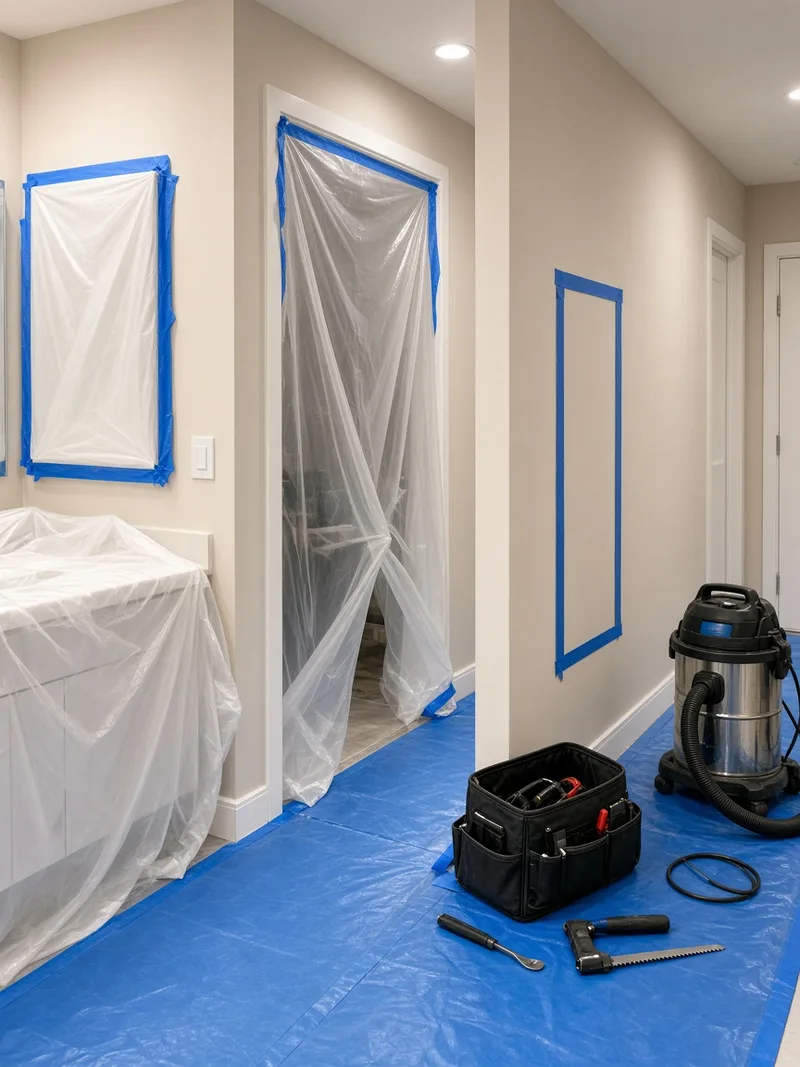
Protection runs from the door through to the work area and over the vanity, the counters and the floor. Kitec work happens in finished bathrooms and kitchens, so the protection is not optional.
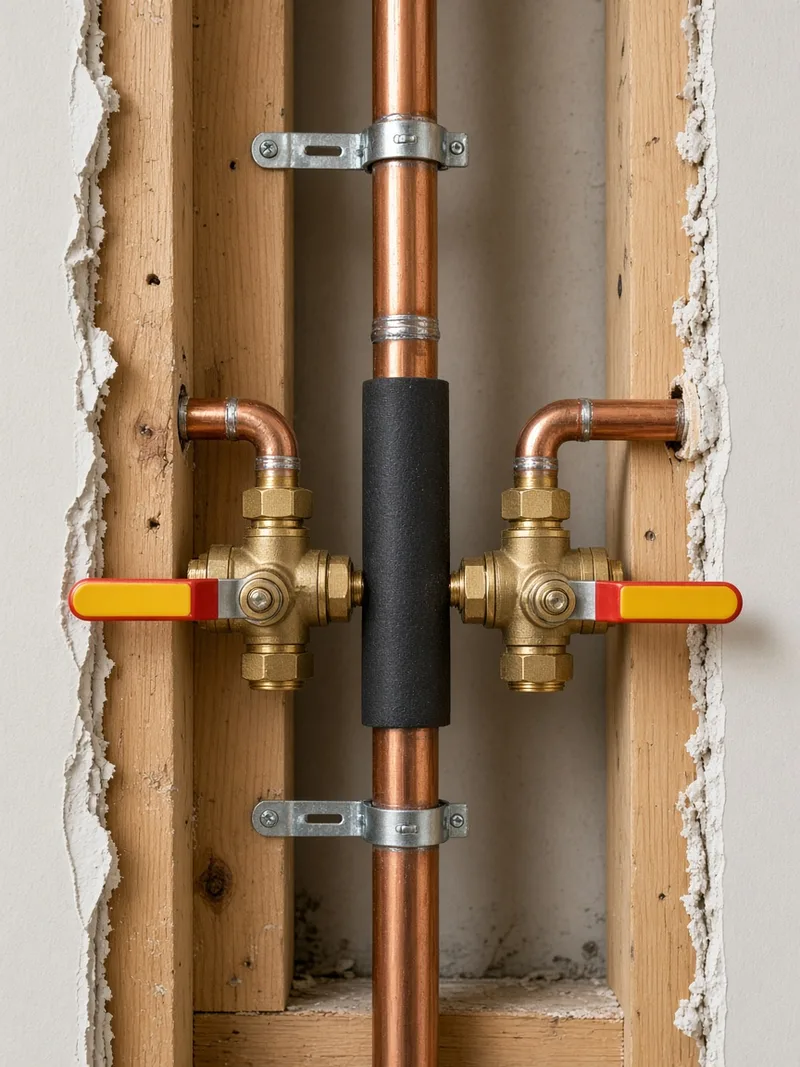
The old pipe and its brass fittings come out, and the suite is re-piped in copper with new shut-off valves at the fixtures. We do not leave short lengths of the old system connected in awkward corners to save an hour.
The new pipework is tested and held before the wall goes back. Nothing is covered up until it has proven it holds, because a weeping joint behind new drywall is a second opening and a second reinstatement.
Our own finishing crew boards, tapes, sands and paints, the suite is cleaned, and it is walked with the resident before the crew leaves the floor.
Suite-by-suite re-piping in occupied towers, including the removal of Kitec and PEX-AL-PEX systems. Hundreds of units entered on schedule, tested before anything closed, and finished by our own crew.
Riser & Fan Coil Replacement
Riser replacement across 436 units including asbestos abatement and air-quality testing throughout. Delivered two months ahead of the eight-month schedule.
 Riser & Fan Coil Replacement
Building-wide riser replacement with asbestos abatement and air-quality monitoring, carried out suite by suite with full floor protection in every unit.
 Complete Riser Replacement
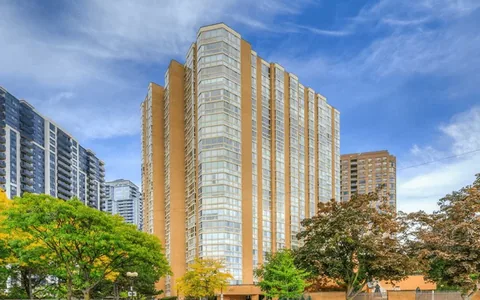
Complete low-zone and high-zone riser replacement with new isolation valves and access panels at every unit. All drywall repair completed by BMI's own finishing team.
The purpose of the programme is that it concludes. A completed suite contains conventional copper plumbing, and the corporation holds a record it can put in front of an insurer, a purchaser or an engineer.
| Service | Kitec, Kitec XPA, PEX-AL-PEX and Uponor pipe replacement |
|---|---|
| Brands affected | Kitec, Kitec XPA, KTC, PlumbBetter, IPEX AQUA, WarmRite, AmbioComfort, XPA |
| Installed | Roughly 1995 to 2007 in Canadian buildings |
| Failure mode | Dezincification of brass fittings and corrosion of the aluminium core |
| Replaced with | Copper as standard, or to the engineer's specification |
| Programme | Pilot suites, then phased suite by suite on a published schedule |
| Suite water off | Hours on that suite's scheduled day |
| Residents | Stay in their homes throughout |
| Wall repair | Boarded, taped, sanded and painted by BMI's own finishing crew |
| Testing | Pressure tested and held before anything is closed up |
| Class action | Settlement claims closed in January 2020; replacement is now owner and corporation funded |
| Service area | Toronto, North York, Etobicoke, Scarborough, Mississauga and the wider GTA |
| Emergency response | 24/7, (416) 845-3756 |
Replacing supply piping in an occupied tower is a scheduling and finishing exercise as much as a mechanical one. BMI books suites in blocks, re-pipes, tests and closes the wall inside the same week with its own finishing crew, and issues completion records suite by suite so the board can report progress at every meeting. We deliver riser replacement in the same buildings, so the in-suite work and the common element piping are sequenced together.
Kitec is a composite pipe, with plastic inner and outer layers around an aluminium core and brass fittings, sold for potable water and in-floor heating and installed in Canadian buildings from roughly 1995 to 2007. It fails from the water side: the brass fittings lose zinc and weaken, and the aluminium core corrodes, so a system can look perfect and let go without warning. Replacement means taking the Kitec and its fittings out and re-piping in copper, suite by suite on a schedule, with the walls closed and finished afterwards.
Start with the age of the building, because Kitec was installed in Canada from roughly 1995 to 2007. Then look where the pipe is visible without opening anything: under the kitchen and bathroom sinks, at the shut-offs serving your fixtures, at the water heater connections, and at an in-floor heating manifold. You are looking for flexible plastic pipe with brass fittings, usually orange or blue, sometimes grey or black, normally printed with a brand name. Photograph any markings and send them to property management.
Orange and blue are the ones most people know, used for hot and cold, but it was also sold in grey and black, and the colour on its own proves nothing either way because other plastic systems use the same colours. The markings are what settle it. Look for Kitec, Kitec XPA, KTC, PlumbBetter, IPEX AQUA, WarmRite, AmbioComfort or PEX-AL-PEX printed along the pipe wall, and for brass fittings rather than plastic ones at the joints.
The problem with Kitec is a failure risk, not a health scare: the concern is a fitting letting go at full pressure and flooding suites, not the water quality at your tap. What you may notice is reduced flow, because the deposits from corroding brass build up inside the fittings and narrow the bore. If you have specific concerns about your water, your municipality and a testing lab are the right people rather than a plumber.
No. The class action was settled and a fund was set up to contribute toward replacement, but the claims deadline passed in January 2020. Any building or owner dealing with Kitec now is paying for it themselves, which is why it belongs in the reserve fund conversation rather than in a recovery one. Anyone telling you there is still money available is mistaken.
In practice, yes, on both sides. Corporations with known Kitec have seen loaded premiums, much higher water-damage deductibles, restricted coverage and renewals made conditional on having a replacement plan. Owners have had the same questions asked of them on unit policies. The thing that changes the conversation is a scheduled, funded programme with work already completed, because it turns an open-ended risk into a project with an end date.
It comes up. Known Kitec appears in status certificates and in the questions buyers and their lenders ask, and a building with no plan invites a discount or a walk-away. A building that has identified what it has, priced the programme and started work is a very different proposition, and in a phased programme owners in completed suites have documentation showing their own unit is done.
Talk to property management before you spend anything. If a building-wide programme is coming, doing your own suite early usually means paying twice for access and possibly doing work that does not match the corporation's specification. If there is no programme and no date, some owners choose to re-pipe their own suite for insurance and peace of mind, and that is a reasonable decision. Either way, get it in writing from the corporation about what is and is not their scope.
No, and this matters because plenty of buildings are told they have a problem when they do not. PEX is cross-linked polyethylene, widely used and generally trouble-free. Kitec is PEX-AL-PEX, a composite with an aluminium core, and its trouble came from that core and from the brass fittings used with it. If your pipe is plastic, that alone is not a reason for concern. The markings and the fittings are what tell you which system you have.
Yes to the first: this is in-suite work, so we need access on your scheduled day and you get written notice with the window in advance. On the second, we open drywall wherever we possibly can and we plan the route to avoid tile, stone and cabinetry. Where there is genuinely no alternative it is identified and agreed before the work starts rather than discovered on the day, and the reinstatement is part of the scope.
Start with the age: Kitec was sold for potable water and in-floor heating and installed in Canadian buildings from roughly 1995 to 2007. Then look at the pipe. It is a flexible plastic pipe, usually orange or blue but sometimes grey or black, joined with brass fittings, and it is normally stamped with a brand name and often with PEX-AL-PEX. The places you can see it without opening a wall are under the kitchen and bathroom sinks, at the suite shut-off valves, at the water heater connections and at an in-floor heating manifold.
Kitec is the name most people know, but the same family of product was sold under several: Kitec, Kitec XPA, PlumbBetter, IPEX AQUA, WarmRite, AmbioComfort, XPA and Plomberie Amelioree. If your building's documents mention any of those, or if a fitting is stamped KTC, you are looking at the same system. The markings matter, because a board is often told there is no Kitec in the building when what is actually meant is that nobody recognised the brand on the pipe.
Two mechanisms, both on the water side. The brass fittings lose zinc over time, a process called dezincification, which leaves the metal porous and weak and can build up deposits that restrict the bore. The aluminium core in the pipe can corrode where water reaches it. Neither of those is visible from the outside: the pipe looks as good as the day it went in right up until a fitting lets go, and when it does it is a full-bore release rather than a drip that someone notices early.
No, and this is the part boards are most often surprised by. The class action over Kitec was settled and a fund was set up to contribute toward replacement costs, but the claims deadline passed in January 2020. A building dealing with Kitec today is paying for the work out of its own reserve fund. That is worth knowing before anyone delays a decision in the hope that somebody else will cover it.
Not every plastic pipe is Kitec, and we will not tell you otherwise to sell a project. Uponor and other PEX systems are widely and successfully used. What we do get called about is brass fittings failing by dezincification in those systems too, and the remedy is the same work: identify the affected fittings, decide whether it is a fitting programme or a full re-pipe, and carry it out suite by suite. If your pipe is sound and only the fittings are failing, we will quote the smaller job.
Insurers have taken a hard line on known Kitec buildings. In practice that shows up as a loaded premium, a much higher water-damage deductible, restricted coverage, or a renewal conditional on the corporation having a replacement plan. A board that can show a scheduled, funded programme with pilot suites completed is in a materially different conversation at renewal than one with no plan and a claim history.
Yes. Known Kitec in a building turns up in status certificates and in buyers' questions, and it affects what purchasers and their lenders will do. The presence of a funded replacement programme is the thing that settles it: buyers are far more comfortable with a building that has identified the problem, priced it and started work than with one where the subject is still being avoided.
Yes. This is ordinary in-suite work: floor protection goes down, the wall is opened where the pipe runs, the suite is re-piped and tested, and the wall is closed and painted. Water is off in that suite for hours on its scheduled day. Residents stay in their homes, and the rest of the building is unaffected because only the suites being worked on that day are opened.
Almost always in phases, because that is what a reserve fund can carry and what residents can absorb. The useful thing is to phase it deliberately rather than by accident: pilot suites first, then the stacks or floors with the worst history, then the rest on a published schedule. What we would steer a board away from is the accidental version, where the building replaces pipe only in the suites that have already flooded and pays remediation costs for the privilege.
Copper is our default for this work and it is what our riser projects are built in. It is proven over decades in Toronto high-rises, it takes the temperature and pressure without argument, and any plumber in the city will be able to work on it in twenty years. For a building that has just been through a failed piping system, the value of boring and well-understood should not be underestimated. Where an engineer specifies something else, we will build to the specification.
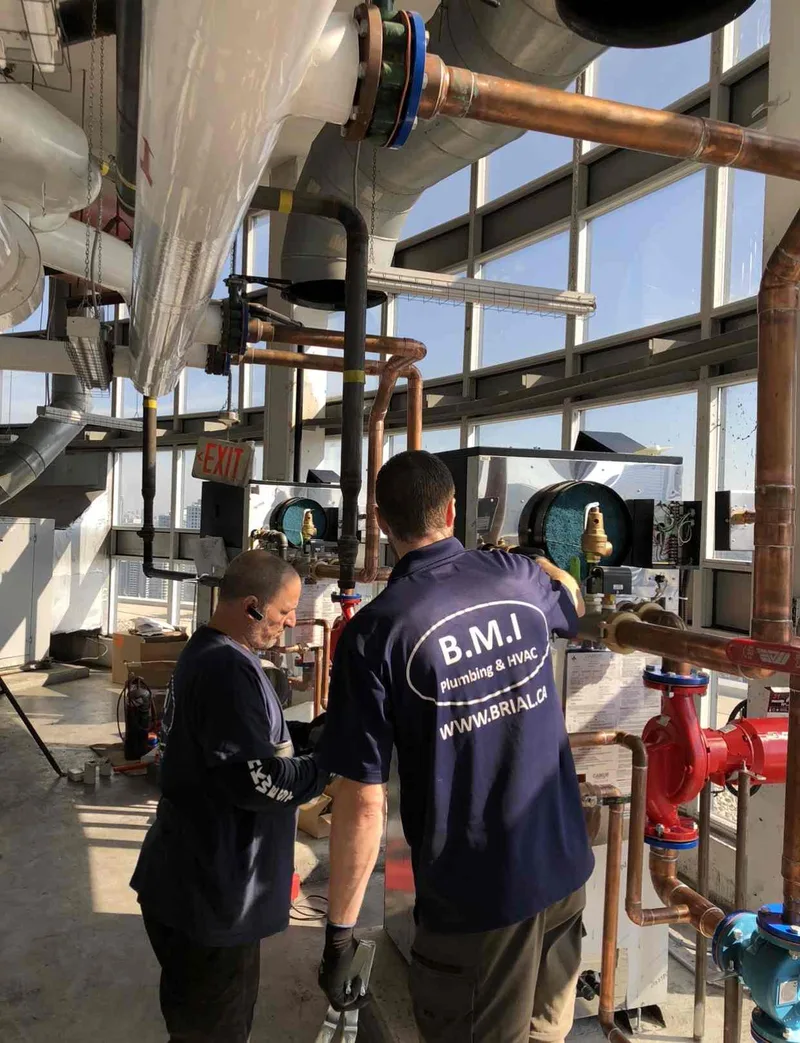
Domestic water, heating and cooling risers replaced stack by stack, with our own crew closing the walls.
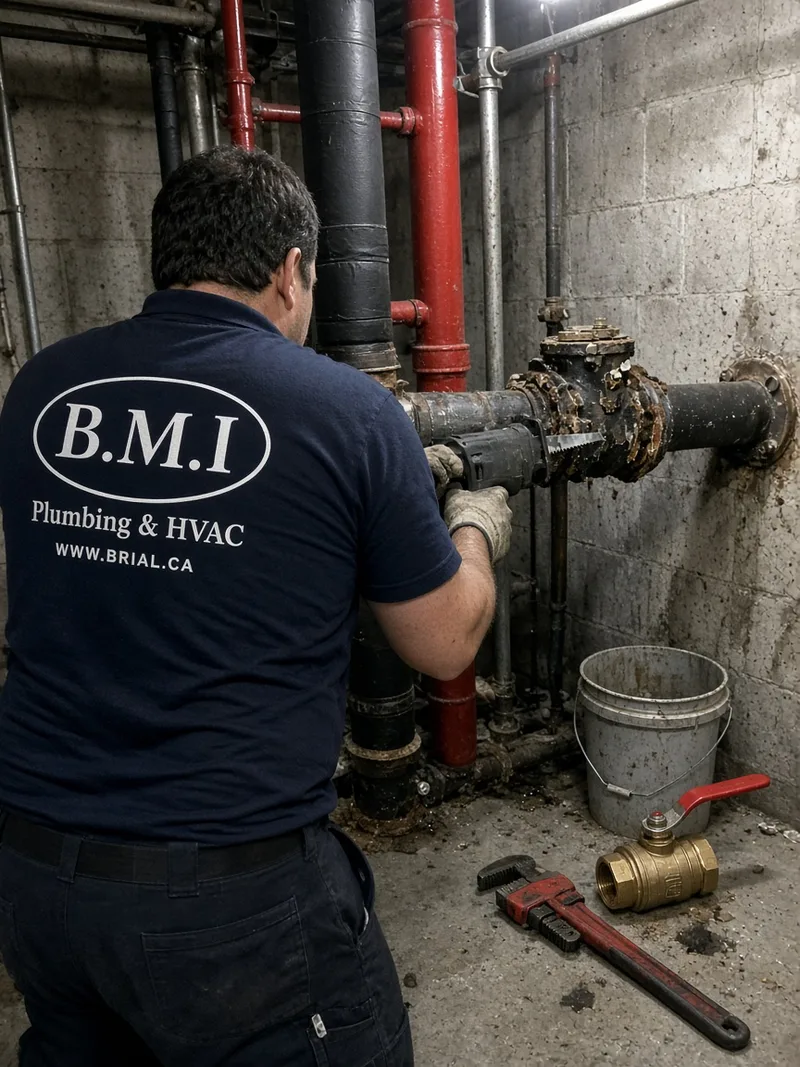
Seized and leaking isolation valves replaced building-wide, with your valve chart updated to match.
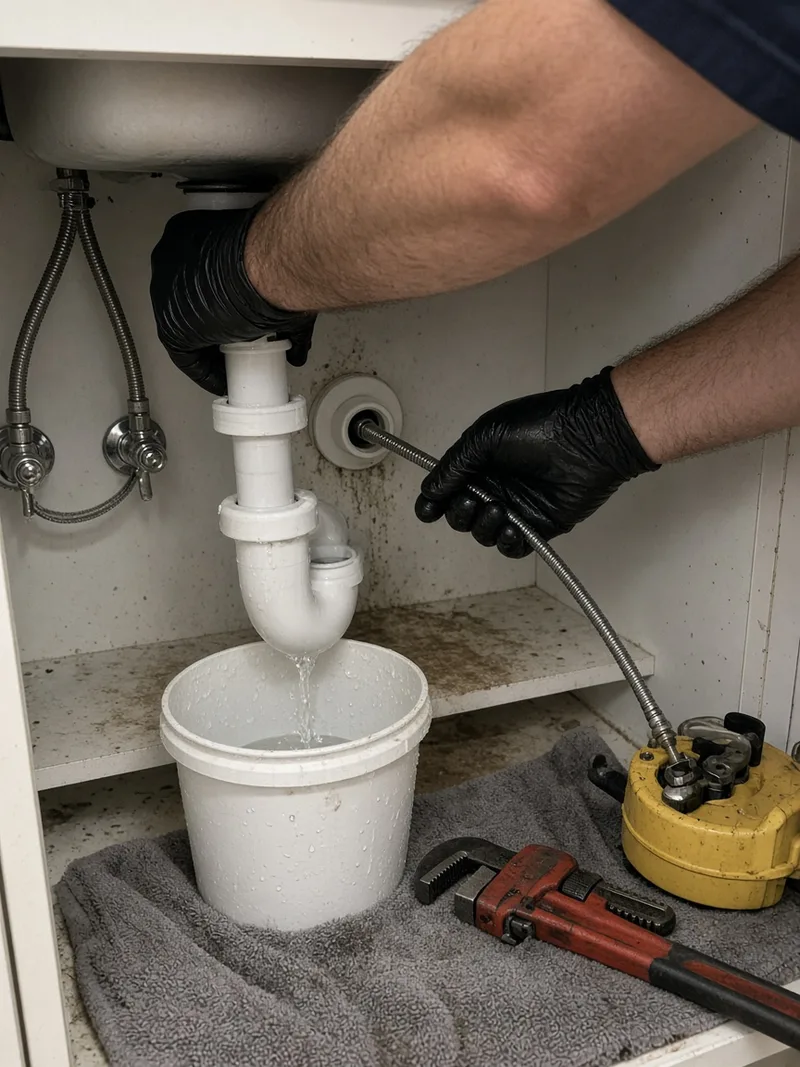
Blocked sinks, tubs, toilets and floor drains cleared in suites and common areas, with the cause identified.
The first step is cheap and it is worth doing properly. We will open a few representative points, tell you what you actually have, and price the programme suite type by suite type.